标签: Jamaica

牙买加

  • Policeman dies in Ewarton bike crash

    Policeman dies in Ewarton bike crash

    A serving member of Jamaica’s national police force has died following a traumatic road traffic collision that unfolded in the parish of St Catherine early Monday. The fallen officer has been formally identified as Constable Shanki Gordon, a member of the St Catherine North Operations Team, a unit tasked with targeting criminal activity across the northern part of the parish.

    According to details confirmed by local media outlet Observer Online, the incident occurred shortly after 2 a.m. local time. Gordon was operating his private motorcycle along a roadway in the Ewarton community when the collision occurred, striking another vehicle being driven at the time.

    First responders dispatched to the crash scene quickly assessed Gordon’s condition, finding he had sustained life-threatening traumatic injuries in the impact. He was immediately transported by emergency medical services to the nearest hospital for urgent intervention, but medical staff were unable to save his life, and he was pronounced dead a short time after arrival.

    Local law enforcement authorities have not yet released additional details about the circumstances leading up to the crash, including information about the condition of the driver and passenger of the other vehicle involved, or any potential contributing factors such as weather conditions, road hazards, or speed that may have played a role in the fatal incident. The tragedy marks the latest line-of-duty death for a member of the Jamaican police force, bringing renewed attention to the risks that law enforcement officers face both on and off active duty.

  • Woman dead, multiple injuries reported following three-vehicle crash on Rose Hall main road

    Woman dead, multiple injuries reported following three-vehicle crash on Rose Hall main road

    ST JAMES, Jamaica — A devastating road traffic collision on the Rose Hall main road has left one local construction worker dead and multiple other people injured, triggering major traffic disruptions in the area on the day of the incident.

    The victim, identified by local authorities as 22-year-old Bianca Wallace, was employed on an ongoing infrastructure project running along the busy thoroughfare. Initial investigations into the crash confirm Wallace was standing adjacent to a work tractor assigned to the project when the chain of collisions began; she was struck and dragged by one of the involved vehicles, and later died from her critical injuries despite emergency response efforts.

    The crash involved three separate vehicles: a public Toyota Hiace motor bus carrying multiple passengers, a private Toyota Rush, and the construction tractor that was on-site to complete a municipal pipe-laying exercise. According to early witness reports, the bus first collided with the stationary work tractor before striking the parked Toyota Rush, and the out-of-control vehicle ultimately hit Wallace in the worksite zone adjacent to the road.

    Among the injured passengers on the bus are two female students, though details on their specific conditions have not yet been released. All injured parties were immediately transported to nearby medical facilities for urgent treatment, and as of the latest update, medical teams have not disclosed a full update on their current health statuses.

    Emergency response teams were dispatched to the crash site within minutes of the first report. Personnel from both the Jamaica Fire Brigade and the Jamaica Constabulary Force (JCF) are currently on location conducting crash reconstruction, clearing debris, and managing traffic flow through the affected area.

    The collision has caused severe traffic congestion along the dual carriageway, as one full lane has been closed to facilitate the ongoing investigation and cleanup work. To ease the resulting gridlock, JCF traffic officers have rearranged traffic patterns, reconfiguring the remaining open carriageway to accommodate two-way traffic through the zone.

  • Serena Williams announces return to tennis at Queen’s Club

    Serena Williams announces return to tennis at Queen’s Club

    LONDON — In a bombshell announcement that has sent shockwaves through the global tennis community, American tennis legend Serena Williams confirmed Monday that she is stepping back onto the competitive court after nearly four years away from professional play. The 44-year-old icon, who holds a record 23 Grand Slam singles titles in the Open Era, will make her long-awaited return competing in women’s doubles at the Queen’s Club Championships, scheduled to kick off in London later this month.

    Williams, who last competed professionally with a third-round exit at the 2022 US Open, broke the news on her social media channels. She shared the short, teasing line “Good news travels fast” alongside a clip of herself training on court, clad in an all-white Nike tennis outfit, with the constant buzz of incoming messages audible over the footage — a clear nod to the frenzy of speculation that has surrounded a potential comeback for months.

    Rumors of a possible return first began to circulate back in December, when public records revealed Williams had reenrolled in the World Anti-Doping Agency’s testing program, a mandatory requirement for any athlete hoping to compete on the global professional tennis tour. At that time, Williams swiftly pushed back on the speculation, posting to social media to shut down reports: “Omg yall, I’m NOT coming back. This wildfire is crazy.” That denial has now proven to be a temporary deflection, ahead of her official confirmation this week.

    Tournament organizers have awarded Williams a wildcard entry into the women’s doubles draw, and multiple industry reports indicate she will partner with 17-year-old rising Canadian star Victoria Mboko for the competition.

    For Williams, who claimed a historic seven Wimbledon singles titles over her legendary career, the grass courts of Queen’s Club felt like the ideal venue to launch this new phase of her competitive journey. “Queen’s Club feels like the perfect place to begin this next chapter,” Williams said in a statement released after her announcement. “Grass has given me some of the most meaningful moments of my career, and I’m excited to be back competing on one of the sport’s most iconic stages.”

    The women’s draw at the 2025 Queen’s Club HSBC Championships gets underway on June 8. Laura Robson, tournament director for the WTA stop and a former top British pro, expressed immense excitement over Williams’ participation, framing the comeback as a landmark moment for the event and women’s tennis as a whole.

    “Serena Williams is one of the greatest athletes the world has ever seen, and we’re delighted that she will be making her return to tennis at the LTA’s HSBC Championships,” Robson said. “Women’s tennis made a historic return to the Queen’s Club last year, and now we have an icon of the game stepping back on to court.”

    Back in 2022, when Williams stepped back from the full-time tour, she pushed back against the term “retirement,” framing her departure as a period of evolution rather than a permanent end to her playing career. “I never wanted to use the word retiring, I’m just evolving away from tennis,” she explained at the time. That evolution has now come full circle, bringing one of the sport’s most influential figures back to competitive play.

    Williams’ 23 Grand Slam singles titles remain unmatched by any other female player in the Open Era, and place her second on the all-time women’s list, just one trophy behind Australian legend Margaret Court’s record 24 major singles titles.

  • UN says armed attacks have led to more displacements in Haiti

    UN says armed attacks have led to more displacements in Haiti

    Amid a years-long deepening humanitarian crisis in Haiti, fresh outbreaks of armed violence in the country’s northern Artibonite department have driven more than a thousand people from their homes, piling additional strain on already overstretched and vulnerable local communities, United Nations officials confirmed in a Monday briefing.

    Speaking to reporters at the UN’s daily press briefing, spokesperson Stéphane Dujarric outlined the latest humanitarian fallout from the May 26 attack in the commune of Petite Rivière de Bayonnais. Data collected by the International Organization for Migration (IOM) confirms that at least 1,100 residents have been displaced by the violence, with nearly all of those forced to flee seeking shelter with host families in the nearby regional hub of Gonaïves.

    Dujarric emphasized that the sudden influx of new arrivals has stretched the already limited, threadbare resources of Gonaïves’ communities to breaking point. For many of those displaced by the recent attack, this is not the first time they have been forced to leave their homes: repeated cycles of violence have left hundreds of thousands of Haitians in constant, dangerous movement across the country.

    The scale of unmet need among newly displaced people stretches far beyond basic survival supplies, Dujarric explained. Alongside critical urgent needs for shelter, clean drinking water, and food, displaced residents also require access to life-saving medical care, psychosocial support, and dedicated protection services — particularly for survivors of gender-based violence, a crisis that has reached catastrophic levels across Haiti amid ongoing instability.

    “While we and our humanitarian partners continue to respond under challenging conditions, the pace and the scale of needs are rising rapidly,” Dujarric told journalists.

    To meet the growing demand for emergency aid, a cross-organizational humanitarian consortium called REZILYANS AYITI has launched a large-scale multi-sector emergency response targeting three of Haiti’s worst-affected departments: West, Central, and Artibonite. The initiative, which is backed by funding from the Regional Humanitarian Fund for Latin America and the Caribbean, brings together five leading global and local humanitarian organizations: Plan International, Haiti’s Centre for Rural Development and Community Action (CAPAC), Mercy Corps, the Norwegian Refugee Council (NRC), and Save the Children.

    Over the course of the project, which runs through October 2026, the consortium aims to deliver life-saving support to more than 400,000 people impacted by escalating armed violence and mass population displacement across the three regions. The initiative will operate in 10 target communities, delivering multifaceted support to both displaced households and the local communities that have opened their homes to those fleeing violence. Core programming includes flexible cash and financial assistance to boost household stability, as well as targeted interventions to strengthen food security, expand access to clean water, improve hygiene and sanitation infrastructure, and scale up nutrition services.

    A key focus of the nutrition component is expanding access to prevention, early screening, and treatment for global acute malnutrition, a growing threat across displacement camps and overstretched host communities. The response also integrates dedicated child protection services, including psychosocial support, individual case management, and community outreach, to safely identify at-risk children and connect them to the essential services they require. Particular priority is given to supporting girls and other marginalized, vulnerable groups that face disproportionate risk amid Haiti’s ongoing crisis.

    The new response comes as the overall humanitarian situation in Haiti continues to deteriorate at an alarming rate. Current UN data shows that roughly 6.4 million Haitians — more than half of the country’s total population — require urgent humanitarian assistance. An April update from the Integrated Food Security Phase Classification (IPC) found that 5.8 million people across the country are currently at high risk of life-threatening acute food insecurity.

  • US green card holder found dead at rental house in Hanover; spouse being questioned by police

    US green card holder found dead at rental house in Hanover; spouse being questioned by police

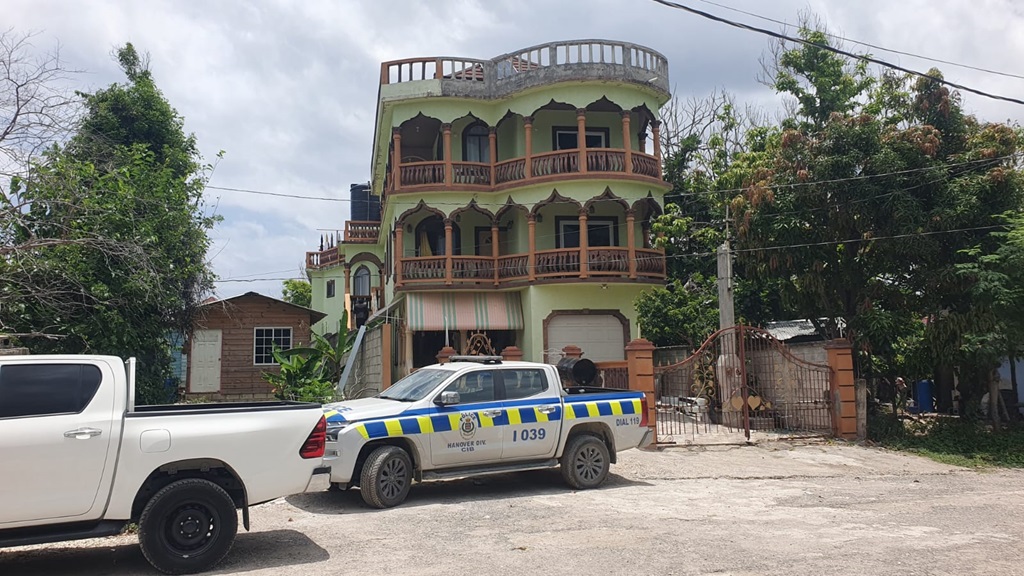
    A man who holds a United States passport remains in police custody in Hanover, Jamaica, for interrogation following the discovery of his wife’s body at the couple’s rented residence in the parish, local law enforcement has confirmed. The pair, along with their infant child, had been living in the Bulls Bay region of Hanover for roughly 12 months leading up to the fatal incident, according to initial details from the investigation.

    Assistant Commissioner Glenford Miller, head of the area’s police division, has publicly confirmed the woman’s death as a homicide. However, the senior officer noted that the investigation is still in its early stages, and no official conclusions have been drawn about who is responsible for the killing. The victim’s remains were located in a bedroom of the rental property, and investigators have not yet released additional identifying details about the couple to the public.

    Local community members first alerted authorities to suspicious activity in the pre-dawn hours, when they spotted the man traveling along the main highway toward the nearby town of Lucea while carrying the couple’s young baby. Alarmed by the unusual timing and circumstances of the sighting, residents contacted the Hanover police to report their concerns, which prompted officers to respond and take the man into custody. The infant has been placed in the care of local child protective services while the investigation proceeds, according to unofficial law enforcement sources.

    Police have confirmed that they are continuing to process evidence from the crime scene and interview potential witnesses as they work to piece together the events leading up to the woman’s death. No formal charges have been filed against the man in custody as of press time, and investigators are asking anyone with additional information about the incident to contact the Hanover police hotline.

  • Vivian Thomas charting new horizons

    Vivian Thomas charting new horizons

    In Jamaica’s globally influential dancehall scene, household names and chart-topping performers grab all the public attention: their voices blare from festival speakers, their social media posts spark viral conversations, and their lyrics enter everyday slang as cultural touchstones. But for every high-profile star, there is a network of skilled, dedicated professionals working behind the curtain, building the industry’s infrastructure while staying out of the limelight. For decades, Vivian Thomas, a veteran producer, manager, and music strategist, preferred this quiet, invisible role — that is, until now, as he steps forward to elevate underrepresented authentic Jamaican artistry on the global stage.

    Thomas cut his teeth in the industry at King Jammy’s Studio, one of the most legendary and influential institutions in dancehall history. Unlike the performers who took the mic, Thomas worked behind the mixing boards, honing his craft as a sound engineer, adjusting frequencies, and learning how subtle tweaks could turn a rough recording into a culturally resonant movement. That early training shaped every part of his career, he says. “That taught me everything,” Thomas shared in a recent interview. “You learn to hear what doesn’t belong.”

    After mastering the precision of studio engineering, Thomas parlayed that skill set into founding two companies: Push A Yute Ent Inc and Urbanvine Media, bringing the same attention to detail to artiste development, management, and media strategy. Over decades in the business, he has collaborated with and produced for a roster of artists that shaped decades of Jamaican popular music, including Black Ryno, Deva Bratt, Mr Peppa, I-Wayne, Mr Lexx, and Munga. His resume includes career-defining credits: he earned a Grammy nomination as a producer for his work with singer Da’Ville, produced *Fyah Pon the Bay* alongside Grammy-winning artist Kabaka Pyramid, and released Lisa Hyper’s 2018 full-length album *Boss Up*. During his time at King Jammy’s, he also served as recording engineer for Sizzla’s *Get to the Point* and Bushman’s iconic single *Fire Pon a Weak Heart*.

    Seeking to expand Jamaican music’s global reach, Thomas later extended his work into Europe, holding roles as an A&R representative at Star Search Media before signing with Switzerland’s Dancing City under Jean Singellos. Operating across a fragmented network of independent promoters, labels, and venue owners, he became an indispensable guide for Jamaican artists navigating unfamiliar international industry systems, all while working to introduce European audiences to dancehall and reggae that went beyond shallow commercial stereotypes. He also toured with spoken-word artists and poets, creating space for Jamaican performance traditions to connect with continental audiences, who often connected with the emotion of the work before grasping its linguistic nuance.

    Reflecting on his cross-Atlantic career, Thomas notes: “Europe taught me systems. Jamaica taught me soul. The challenge was learning how to protect one without sacrificing the other.” That balancing act required equal parts strategic diplomacy and gut instinct; time and again, he pushed back against European industry leaders who sought to sanitize dancehall for mainstream audiences, arguing that stripping the genre of its raw, cultural identity would erase what made it special. Over the years, he earned a quiet reputation as a trusted fixer, the first call artists made when tours fell apart, managers hit dead ends, or careers lost direction. He has brokered deals for performers including Tanto Blacks and coordinated full European tours for acts ranging from Richie Spice and TOK to emerging poetess Simone “Fruittree” Dewar, handling everything from visa applications and venue politics to payment disputes and the fragile economics of international touring for Jamaican artists.

    Long before social media dominated music promotion, Thomas built his audiences through proven grassroots tactics: radio campaigns, on-the-ground street teams, connections to the vast Jamaican diaspora, and early digital marketing networks. Through every venture, his core mission has remained consistent: expand Jamaican music’s global footprint without diluting its unique cultural character.

    Today, after decades behind the scenes, Thomas is stepping into the public eye to lift up new, eclectic Jamaican work that reflects the full diversity of the island’s culture. He is currently the driving force behind rising spoken-word poet Simone Dewar, who just released her debut three-track EP *Thoughts Uncut*. Thomas explains the shift in his approach: “I am doing more eclectic projects now that mirror the true nature of Jamaican culture: the spoken word, the rhythms and the invincible spirit of black consciousness.”

    Despite his decades of success, Thomas is open about the challenges that come with working behind the scenes in Jamaica’s entertainment industry. He argues that the local scene rarely offers formal infrastructure or support for off-camera professionals. “Entertainment doesn’t have HR,” he points out. “If you’re a manager, marketer or media owner in Jamaica, you’re building the plane while flying it.”

    Years of instability, including crippling debt, failed business partnerships, and missed opportunities, shaped his pragmatic worldview. He notes that major labels often prioritize quick, chart-topping hits over long-term artist development, while local media outlets often shape coverage to fit industry alliances rather than tell unvarnished stories. For behind-the-scenes builders and artists alike, success depends as much on survival as it does on talent.

    His career has also carried personal grief: he was a close mentor to late artist Al’Qual, whose death left a lasting impact on him. These hard-won experiences have cemented core beliefs that guide his work today: “Contracts matter more than promises. Information is leverage. Popularity without ownership is temporary.”

    Through every phase of his decades-long career, Thomas has circled back to the core lesson he learned as a young engineer at King Jammy’s, a philosophy that shapes every project he takes on today: “Strip it down to the signal. Cut the noise. Amplify what’s real.”

  • Prosecutor’s fixation on spent shell puzzles judge

    Prosecutor’s fixation on spent shell puzzles judge

    The high-profile murder trial involving six active-duty Jamaican law enforcement officers is set to reconvene on Tuesday, with a key procedural dispute over a single spent bullet casing taking center stage for courtroom arguments.

    The six officers — Sergeant Simroy Mott, Corporal Donovan Fullerton, Constables Andrew Smith, Sheldon Richards, Orandy Rose, and Richard Lynch — stand accused of the 2013 shooting deaths of three men: Matthew Lee, Ucliffe Dyer, and Mark Allen. Fullerton faces an additional charge of submitting a false statement to Jamaica’s Independent Commission of Investigations, the country’s police oversight body.

    The incident dates back to January 12, 2013, when the three victims were travelling through the Barbican neighborhood of St Andrew in a blue Mitsubishi Outlander. According to initial official accounts, officers signaled the vehicle to pull over, and after a brief delay, the driver stopped. Prosecutors allege that three men exited the vehicle and opened fire on police, triggering a shootout that left the three men dead, while a fourth suspect escaped the scene. Two unregistered firearms were recovered from the area after the gunfight.

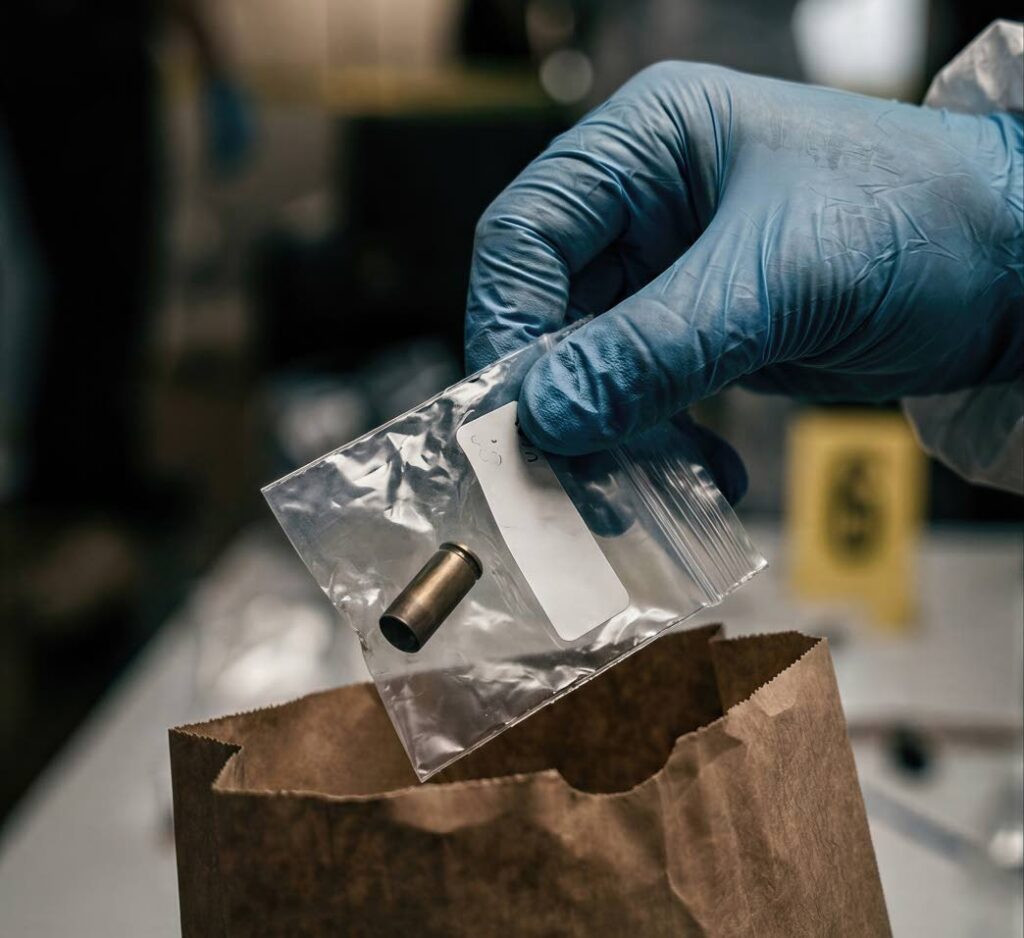
    Investigators collected dozens of spent bullet casings from the Acadia Drive crime scene, near its intersection with Evans Avenue, and submitted all evidence to the Government Forensic Laboratory for ballistics testing. A total of 14 5.56mm casings, alleged to have been fired by the responding officers’ service weapons, were packaged together in a single envelope for analysis. Of these 14 casings, 12 were definitively matched to three police rifles used on the day of the shooting. Two casings, however, had no matching weapon on record — one of which was visibly damaged after being run over by a vehicle.

    Lead prosecutor Kathy-Ann Pyke has made the unmatched damaged casing a point of focus, demanding that the case’s veteran ballistics expert, a laboratory superintendent with nearly 20 years of experience in firearms analysis, re-examine the casing by running it through the lab’s computerized matching system to determine its origin. Pyke has argued that the extra step is necessary to properly label the casing as corresponding to crime scene marker number one, which has already been presented to the court via photographic evidence. She said the request comes as a precautionary measure to avoid mixing the casing up with other 5.56mm ammunition evidence collected from the scene.

    But High Court Judge Sonia Bertram-Linton has repeatedly questioned the relevance of the request since proceedings began on Friday, expressing confusion over why the single casing needs to be singled out for additional testing. The judge noted that the request introduces new evidence that would require full disclosure to the defense, and that she could already anticipate an objection from the defense team. Before the judge could finish her remark, lead defense attorney Hugh Wildman immediately voiced his objection to the proposal.

    Wildman’s unusual offhand comment — “I did not attend Ward 21 before I came here” — sparked a brief back-and-forth in the courtroom, before the judge encouraged the prosecution to move forward with the proceedings. Wildman’s co-counsel, Althea Grant-Coppin and John Jacobs, have formally objected to allowing any additional analysis of the casing, arguing that the full ballistics report has already been submitted to the court as evidence.

    When the trial resumes today, both the prosecution and defense will present full arguments on whether the additional testing should be allowed, after which Judge Bertram-Linton will issue a formal ruling. Following the ruling, the defense is scheduled to begin its cross-examination of the ballistics expert witness.

  • Three Monymusk Plantation rums win gold at 2026 Beverage Testing Institute Awards

    Three Monymusk Plantation rums win gold at 2026 Beverage Testing Institute Awards

    CLARENDON, Jamaica — Jamaican rum producer National Rums of Jamaica has turned a successful new page in the island nation’s long legacy of premium spirit manufacturing, with three expressions from its iconic Monymusk Plantation line taking home top honors at the 2026 Beverage Testing Institute (BevTest) World Spirits Championship.

    In an official press statement, the company shared that two of its rums — Monymusk Plantation White Overproof Rum and Classic Gold Rum — earned an identical score of 93 points, while the third entry, Special Reserve Rum, scored a 92. All three products were awarded Gold Medals by the competition, a Chicago-based industry contest that stands as one of the most enduring and respected spirits awards globally. Unlike many public-facing awards, BevTest’s judging process relies on blind tastings conducted by panels of seasoned trade professionals, ensuring that scores and medals are awarded based solely on product quality rather than brand recognition. The full results of the championship, including the three winning Jamaican rums, are featured in Forbes’ May 2026 roundup of the world’s highest-rated rums.

    Martha Miller, Chief Executive Officer of National Rums of Jamaica, framed the triple win as a point of national and company pride. “This recognition from the Beverage Testing Institute is a proud moment for National Rums of Jamaica, the Monymusk brand, and the entire country of Jamaica,” Miller said. “To have all three of our entries — White Overproof, Classic Gold, and Special Reserve — counted among the world’s best rums speaks volumes about the consistent quality that defines our entire product portfolio.”

    Miller emphasized that the award-winning quality of the rums is no accident, and directed praise to the in-house teams that oversee every step of production. “A tremendous amount of credit has to go to our technical, production, quality control, and blending teams, who pour enormous care into their work every single day,” she explained. “Exceptional rum is not a random outcome. It requires generations of distilled expertise, unwavering consistency, and a long-term commitment to upholding the highest possible quality standards.”

    The Forbes feature includes official tasting notes compiled from the BevTest judging panel’s evaluations. The White Overproof rum was praised for its layered aroma profile of green banana, whipped cream, and sugar cookie, paired with flavor notes of warm baking spices, ripe pineapple, and toasted coconut. Judges called it “a great overproof rum with a creamy body and subtle sweet banana esters, perfect for cocktailing.”

    For the Classic Gold rum, judges highlighted notes of dunder, charred oak wood, and fresh pomegranate, describing the expression as “a complex, fruity rum to save for special occasions.” The Special Reserve, meanwhile, was singled out as “an excellent choice for experienced rum drinkers” who appreciate the distinct character of traditional Jamaican product.

    All rums in the Monymusk Plantation portfolio are manufactured, aged, and blended entirely at the Clarendon Distillery, located in southern Jamaica’s Clarendon Parish. The line stays true to the centuries-old traditional Jamaican rum-making style, defined by extended fermentation periods, a blend of pot-still and column-still distillation, and the iconic high-ester, fruit-forward profile that rum enthusiasts around the world refer to as “Jamaican funk.”

  • Jamaican-born matriarch launches memoir to acclaim in Nigeria

    Jamaican-born matriarch launches memoir to acclaim in Nigeria

    On Sunday, May 10, 2026, a landmark literary launch unfolded at Lagos’ iconic Oriental Hotel on Victoria Island, drawing a crowd of prominent Nigerian and international dignitaries to celebrate the release of *Echoes of Survival*, the extraordinary autobiography of 83-year-old Lolo Betty Patricia Mgbenwelu. Born in Jamaica, Lolo Patricia’s decades-long life has woven together experiences across three continents, multiple cultures, and some of the 20th century’s most tragic upheavals, making her memoir one of the most anticipated personal narratives of the year.

    The memoir traces the author’s remarkable life trajectory from her early years growing up in Kingston, Jamaica, to her life-altering marriage that led her to relocate to newly independent Nigeria in the 1960s. Unlike many accounts of the Nigerian-Biafran Civil War that center military or political figures, *Echoes of Survival* offers an intimate, unfiltered perspective from an ordinary Caribbean civilian mother, whose highest stake in the conflict was protecting her family and keeping them alive through years of chaos and deprivation.

    Serving as the event’s special guest of honour, Jamaica’s High Commissioner to Nigeria, Lincoln C Downer, paid tribute to Lolo Patricia as one of Jamaica’s most outstanding representatives in the West African nation. He called her a proud cultural ambassador who has embodied Jamaican resilience and grace for six decades in her adopted home. Reviewing the memoir, Downer described the work as authentic, bold, and deeply uplifting, noting that it bears every mark of a future bestseller. He specifically highlighted Lolo Patricia’s survival of the Kendal train crash — Jamaica’s deadliest recorded rail disaster — as a early demonstration of the grit and divine protection that have shaped her purpose-driven life, commending her choice to preserve these experiences for coming generations.

    The guest list at the launch reflected the cross-border and cross-sector significance of the book and its author. Attendees included Dr Bamidele Abiodun, First Lady of Ogun State; former Cross River State Governor Donald Duke; Ambassador Dr Maureen Tamuno, Nigeria’s former High Commissioner to Jamaica; Dr Christopher Kolade, former Nigerian High Commissioner to the United Kingdom; and Aima Lijadu, Honorary Consul of Jamaica to Lagos. Ego Boyo, founder and managing director of leading Nigerian entertainment firms Temple Productions and Temple Media, fulfilled the role of chief book launcher at the event.

    Lolo Patricia’s husband of 64 years, Chief Barr Peter Chukwuemeka Mgbenwelu — one of Imo State’s longest-serving active legal practitioners, known colloquially as the “Cock of the Imo Bar” — called his wife one of the greatest blessings in his life, and urged families across the world, particularly women and mothers navigating life’s challenges, to engage with the memoir and learn from its lessons of perseverance.

    Born Betty Patricia Bethel Monica Bingham in Kingston, Jamaica in August 1943, Lolo Patricia first met her future husband in London in 1962, before building a life and legacy in Nigeria that has now spanned six decades. She is a mother of six, grandmother of 18, and great-grandmother to three children. A graduate of London Guildhall University, she built a respected corporate career, holding roles at Cadbury Nigeria Plc and Golden Guinea Breweries Ltd where she earned multiple professional awards, before founding her own travel agency, Genika Travel and Tours Ltd. She also served as president of the Nigerwives Owerri Chapter, supporting other women building cross-cultural lives in Nigeria.

    Beyond the war years, *Echoes of Survival* delves into Lolo Patricia’s childhood in Jamaica, her brush with death in the Kendal train disaster, the joys and challenges of a cross-continental marriage, and the decades of post-war life defined by unwavering faith, constant resilience, and repeated personal reinvention. The memoir is currently available for purchase through all major global book retail platforms and at selected independent bookstores across Nigeria and beyond.

  • ‘Commit to lifelong learning’

    ‘Commit to lifelong learning’

    As the Fourth Industrial Revolution, anchored by rapid advances in artificial intelligence, reshapes global labor markets and economic systems, a leading Caribbean academic is urging Jamaica to embrace systemic education reform and a national culture of lifelong learning to secure long-term prosperity.

    Anthony Clayton, a professor of sustainable development at The University of the West Indies, Mona, shared his analysis in an exclusive interview with the Jamaica Observer over the weekend, warning that widespread automation of technical roles is rapidly redefining the core skills required for gainful employment. Going forward, Clayton argues, the most in-demand workers will not rely on routine technical capabilities that can be easily replicated by AI and automated systems. Instead, employers will prioritize candidates with advanced problem-solving acumen, creative thinking, and well-developed emotional intelligence.

    To cultivate these high-value skills and build the digital and institutional infrastructure needed to compete on the global stage of the Fourth Industrial Revolution, Clayton says Jamaica must fundamentally reorient its existing education and training frameworks. This shift, he emphasizes, will require bold new policy thinking and cross-sector collaboration that departs from outdated traditional models.

    Clayton points to shifting trends in the United States, where major technology corporations have already begun to carve out a larger role in workforce development that was once the exclusive domain of traditional higher education institutions. Unlike many traditional universities that prioritize theoretical knowledge, these leading tech firms prioritize practical, hands-on learning focused directly on solving real-world industry challenges.

    Looking to global examples of successful reform, Clayton highlights innovative models adopted by Germany and the United Kingdom. Both nations have implemented hybrid education frameworks centered on deep industry-university partnerships. These models include structured work experience placements embedded in academic programs, and industry-sponsored engineering doctorates where students conduct original research targeted at solving company-specific problems or developing new commercial products.

    According to Clayton, these collaborative, hybrid learning arrangements are set to become the global standard in technology-driven sectors first, as they align educational outcomes directly with the evolving needs of modern labor markets. Early adoption of this approach in Jamaica, he argues, would smooth the country’s transition to an integrated digital economy, where every sector from manufacturing and logistics to finance, governance, and marketing relies on interconnected digital systems.

    In this new economic landscape, nearly all workers will need to operate as knowledge workers, capable of driving value through specialized expertise, critical reasoning, interpersonal collaboration, and an ongoing commitment to updating their skills. Clayton notes that this large-scale transition will also require a reevaluation of the core roles of government and public institutions to support the shift.

    Clayton concludes that if Jamaica makes the targeted adjustments needed now, the country can leverage the opportunities created by the Fourth Industrial Revolution to break free from its long history of stagnant low growth and emerge as a dynamic, competitive economic hub in the digital age.