标签: Jamaica

牙买加

  • Sagicor Bank reopens in storm-hit Black River

    Sagicor Bank reopens in storm-hit Black River

    Sagicor Bank Jamaica has successfully restored banking services to the isolated community of Black River, St. Elizabeth, following the devastating impact of Hurricane Melissa in late October. The branch, which constitutes the town’s sole financial institution, resumed operations on Friday after sustaining severe structural damage from storm surges that shattered windows and flooded the interior.

    Facing a critical lack of financial access, local residents and businesses had been without essential banking services for nearly two months. Bank CEO Chorvelle Johnson Cunningham emphasized the institution’s commitment to rapid recovery, stating, “Our immediate priority was to reestablish operations in Black River to support our clients and the community’s rebuilding efforts during this challenging period.”

    The bank implemented an innovative temporary banking facility on the original site, which processed approximately 500 transactions during its two-day soft launch beginning December 15. This reopening forms part of Sagicor Group Jamaica’s comprehensive $200-million recovery initiative, with significant allocations addressing broader community needs.

    Christopher Zacca, President and CEO of Sagicor Group Jamaica, highlighted the strategic importance of the banking restoration: “While this branch reopening stimulates economic recovery at the community level, our parallel initiatives focus on reconstructing healthcare facilities, educational infrastructure, and social support systems across western Jamaica.”

    The parent company has designated $100 million specifically for clinic restoration in affected regions, with $40 million already distributed for staff relief programs. Sagicor Bank Jamaica, the nation’s third most profitable commercial bank and part of the Sagicor Financial Company Ltd network, conducted an official reopening ceremony on December 19, 2025, marking a significant milestone in the region’s recovery journey.

  • ‘Why I backed the JLP’s crime plan?’

    ‘Why I backed the JLP’s crime plan?’

    In a significant political development, Government Senator Keith Duncan has publicly articulated his rationale for endorsing the Jamaica Labour Party Administration’s crime prevention blueprint, despite his lineage to the opposing People’s National Party. The revelation came during Friday’s Senate session where Duncan detailed his conversion after intensive consultations with National Security Minister Dr. Horace Chang and former Police Commissioner Major General Antony Anderson.

    Duncan, appointed to the Senate by Prime Minister Andrew Holness following the September general elections, recalled his initial skepticism during his 2019 tenure as president of the Private Sector Organisation of Jamaica (PSOJ). Amid widespread criticism about the government’s perceived lack of strategic direction against crime, Duncan sought direct engagement with security leadership rather than joining popular criticism.

    The senator described being presented with the comprehensive ‘Plan Secure Jamaica’ framework, which outlined multi-faceted approaches including social transformation initiatives, modernization of police forces, military reforms, and legislative enhancements. Duncan emphasized the plan’s detailed resource allocation strategies covering both financial investments and human capital deployment.

    Central to Duncan’s endorsement was the creation of Project Star – a public-private partnership developed collaboratively with police leadership that operationalized community safety measures through the Jamaica Constabulary Force’s Community Safety and Security Branch. The senator specifically highlighted the Zones of Special Operations (ZOSOS) as evidence of structured socio-economic transformation efforts in vulnerable communities.

    Citing unprecedented crime reduction statistics showing murders dropping below 700 annually for the first time in three decades – representing over 40% reduction compared to previous years – Duncan urged nationwide support for the continuation of these strategies. He framed crime reduction as a national imperative requiring collective action similar to Jamaica’s achievement of macroeconomic stability through fiscal responsibility.

    The senator acknowledged that not all security measures would enjoy universal approval but maintained that governing requires making difficult decisions. Duncan concluded that demonstrated leadership in executing this comprehensive strategy has produced measurable results that justify sustained implementation and broader societal support.

  • Not so Grand Market for St Elizabeth

    Not so Grand Market for St Elizabeth

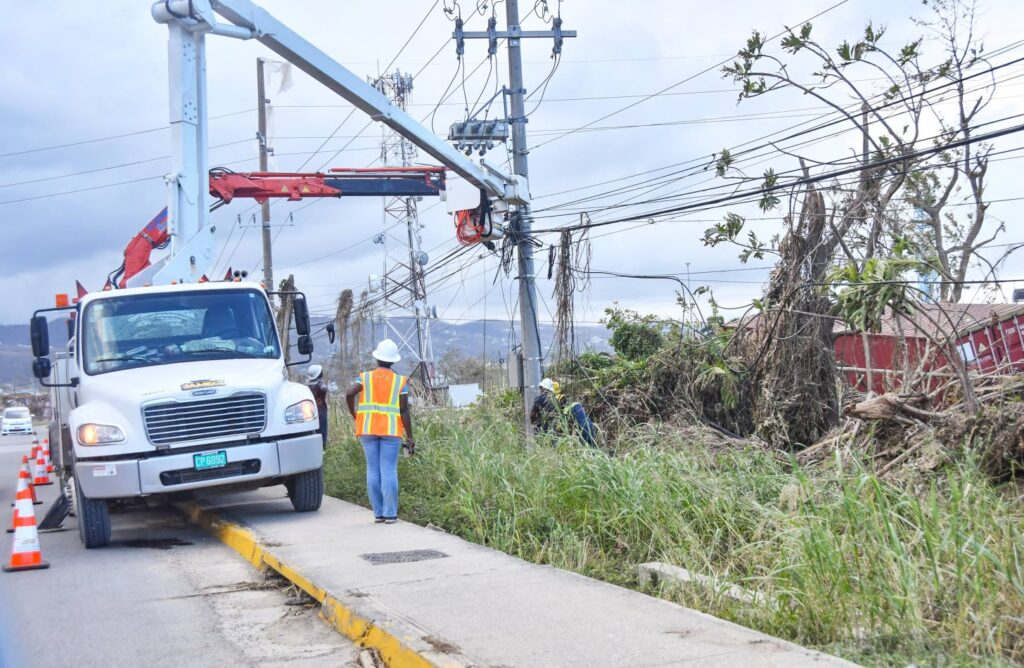
    The historic Jamaican tradition of Grand Market faces severe disruption in St Elizabeth this Christmas Eve, with local business leaders predicting a dramatically scaled-back celebration due to ongoing recovery efforts from Hurricane Melissa’s devastation.

    Howard Hendriks, President of the St Elizabeth chapter of the Jamaica Chamber of Commerce, revealed that approximately 93 establishments in the parish remain non-functional or severely compromised since the October 28 storm. The hurricane’s impact has particularly affected the three major towns that traditionally host the vibrant celebrations—Black River, Santa Cruz, and Junction.

    Black River’s commercial district remains at a complete standstill, while Santa Cruz experiences significantly slowed business activity. This has shifted commercial momentum to Junction, which has unexpectedly become the parish’s primary commerce hub as it was cleared of debris earliest.

    “The biggest Grand Market in Jamaica you can ever see is in Santa Cruz,” Hendriks told the Jamaica Observer. “Santa Cruz is always full on Grand Market night, and I don’t envision seeing that capacity of crowd this year because you need businesses to sustain it.”

    The tradition of Grand Market dates to colonial times when enslaved Africans were granted limited freedom during Christmas to sell surplus produce and handmade goods. Today, it transforms town centers into all-night street fairs featuring last-minute shopping, street food, music, and festivities that often continue into Christmas morning.

    Hendriks described the likely scenario: “It may be a minuscule version of Grand Market because people are going to want to get some things, but you have to have electricity to have the sound system going to build that party vibe.”

    The recovery disparity between urban and rural businesses has become particularly apparent. Small businesses—including grocery shops and bars that operate “hand to mouth”—face existential challenges without access to formal banking support or disaster recovery resources.

    “The recovery for the small business sector is non-existent,” Hendriks explained. “These people don’t really go to the bank to borrow money to sustain their business. They rely on informal financial systems like round robin and partna draws, which have been completely disrupted.”

    Energy infrastructure remains a critical obstacle, with generator costs running approximately $5,000 Jamaican dollars per night for fuel—an unsustainable expense for businesses already struggling with transportation challenges for perishable goods into hill communities.

    Hendriks has engaged with the Office of Disaster Preparedness and Emergency Management (ODPEM) to address recovery needs, but acknowledges that without restored electricity and substantial support, “commerce is basically totally ripped up, and we don’t know when it will return.”

  • Carl Meeks rides timeless beats with ‘Classeeks’

    Carl Meeks rides timeless beats with ‘Classeeks’

    Veteran dancehall artist Carl Meeks has unveiled his latest musical project, “Classeeks,” marking his second album release for 2025. The collection debuted on December 12th under the RubADub MKRT label, with production handled by French music producer Cedrik “Kiko” Ynesta.

    True to its evocative title, the album serves as a deliberate homage to dancehall’s foundational years. Meeks and Ynesta have carefully selected thirteen tracks built upon iconic riddims that have shaped the genre across four decades. These include legendary rhythmic patterns such as Throw Me Corn, Movie Star, and Mr Bassie—each reimagined for contemporary audiences while preserving their original character.

    The conceptual framework originated from Ynesta, who proposed revisiting these timeless musical foundations that first captivated Meeks during his regular attendance at dancehall events in 1970s and 1980s Kingston. The North Carolina-based artist acknowledged the emotional resonance of these productions, stating: “These riddims are so special because that’s where dancehall music started, so it gives me that vibe.

    Among the standout tracks is “What’s Going On,” a collaborative piece with deejay Screechy Dan currently gaining traction within music circles. The album also features previously released singles including “No Regrets,” “Ram Dance Master” featuring Johnny P, and “Walking Dead” with Derrick Parker.

    Meeks first rose to prominence in the late 1980s through hits like “Weh Dem Fah” and “Youthman,” both produced by Hugh “Redman” James during the peak era of Redman International’s influence. This new release follows Meeks’ “Legendary” album from eight months prior, produced by Big Bout Ya Records.

    Ynesta’s production strategy deliberately bridges generational divides, seeking to introduce classic sounds to newer audiences while allowing longtime fans to rediscover their musical heritage through fresh compositions. Meeks explained the curator’s vision: “He wanted to capture the younger audience and let the older ones indulge in the new songs on these riddims. I select the artistes knowing that they are vintage singers just like the riddims and also artistes I admired.”

  • CMU student Jamiel Powell becomes Trelawny’s lifeline after one viral video

    CMU student Jamiel Powell becomes Trelawny’s lifeline after one viral video

    When Jamiel Powell, a 25-year-old engineering student, filmed the storm damage in Trelawny parish and shared it on TikTok, he anticipated minimal engagement. Instead, his casual post triggered an overwhelming flood of messages from concerned Jamaicans worldwide, desperately seeking updates on unreachable family members. This digital plea for help transformed the Caribbean Maritime University fourth-year student into an indispensable lifeline for isolated communities.

    Returning home that weekend to check on his mother and grandmother—both safe but without basic utilities—Powell hadn’t comprehended the parish’s near-total isolation until his video went viral. “People were pleading for me to locate their families,” Powell recounted. “Some didn’t even know if their relatives had survived.” Despite initial intentions to merely document damage, he instinctively transitioned into action, becoming an unofficial emergency responder for entire communities.

    Powell’s background prepared him for this unexpected role. Growing up in Falmouth Gardens and Albert Town—communities where water access was never guaranteed—forged the resilience that now defines his relief efforts. His established TikTok presence, previously focused on academic guidance and Alaskan travel experiences, had already earned him credibility within the Jamaican diaspora. When traditional communication systems collapsed, this digital trust became critical infrastructure.

    As grateful families began sending monetary appreciation, Powell faced an ethical dilemma. “I couldn’t keep the money,” he stated firmly. “Not when entire districts lacked food.” He converted every contribution into essential supplies—rice, flour, canned goods, water—personally delivering packages to households beyond the reach of conventional aid organizations.

    Powell’s operation demands extraordinary personal sacrifice. Each week, he balances rigorous industrial systems engineering studies with weekend relief missions across treacherous terrain. Navigating debris-blocked roads often requires abandoning his vehicle and hiking long distances to reach bedridden residents in remote areas. “Small help means everything out here,” he noted.

    His compassion extends beyond material support. In Bunkers Hill, after delivering supplies to an elderly man whose home had lost walls and roofing, Powell collaborated with volunteer Sandy and her team to reconstruct the structure. This project expanded to assist additional families, demonstrating how individual initiative catalyzes broader community recovery.

    The initiative has since attracted institutional support. Malta beverages donated supplies, while local businesses including Keims Auto Services, Humble Calf Trucking, Infinity Auto, and Paris Auto provided material assistance. Powell’s brother Noah now regularly joins delivery missions, expanding the operation’s capacity.

    Yet challenges persist. Powell acknowledges financial constraints that threaten the mission’s sustainability: “I don’t always have money to continue, but someone always needs help.” Despite his own family members remaining without electricity or water, he consistently prioritizes the wider community’s needs.

    For many interior communities remaining outside national relief efforts, Powell has become the only consistent source of updates and assistance. “If I help once and never return, some people would receive no help at all,” he explained. His commitment has transformed a simple social media post into a sustained support system, proving how individual compassion can bridge critical gaps when institutional responses fall short.

  • WATCH: Barnswell honoured for rescuing abducted six-year-old

    WATCH: Barnswell honoured for rescuing abducted six-year-old

    KINGSTON, Jamaica — In a heartening ceremony that highlighted community heroism, Clarendon Municipal Corporation has formally recognized Councillor Scean Barnswell and his wife for their courageous intervention in rescuing an abducted child. The honor was bestowed during the Corporation’s annual Christmas tree lighting event on Friday evening, where Mayor Joel Williams of May Pen presented the award before assembled dignitaries including Member of Parliament Pearnel Charles Jr.

    The incident unfolded in early December when six-year-old Anka Glasgow from Inglewood Drive, Clarendon, was reported missing from her school. While traveling along the Bustamante Highway, Councillor Barnswell and his wife observed a man accompanying a young child under suspicious circumstances. Trusting their instincts that the situation appeared abnormal, the couple immediately intervened.

    Their decisive actions resulted in the safe recovery of the child and the subsequent detention of the suspect, who remains in police custody. Mayor Williams emotionally commended the Barnswells during the ceremony, stating: ‘We could not ask for anything better from a citizen of our parish, someone who has saved a life, a baby, a six-year-old child. We want to express our deepest gratitude for your exemplary actions.’

    The recognition underscores the vital role of community vigilance and courageous citizenship in ensuring public safety, particularly concerning vulnerable children. The municipal ceremony transformed into an unexpected celebration of civic responsibility and swift action preventing potential tragedy.

  • KCCC delivers tidings of joy!

    KCCC delivers tidings of joy!

    The festive season commenced in spectacular fashion at St. Augustine’s Chapel on Kingston College’s North Street Campus last Sunday, as the renowned Kingston College Chapel Choir (KCCC) delivered a breathtaking Christmas concert that perfectly captured the spirit of ‘Tidings of Comfort & Joy’.

    Under the masterful direction of Choirmaster Audley Davidson, the 35-strong choir, adorned in purple vests and bow ties, opened the 17-piece program with a powerful rendition of Franz Joseph Haydn’s storied ‘Te Deum in C.’ This canticle of praise, composed around 1799, featured two ebullient outer sections contrasting with a serene middle, leaving the audience in awe and responding with thunderous, continuous applause upon its 15-minute conclusion.

    The musical feast seamlessly blended classical masterpieces with modern compositions and works by local Jamaican talents. The program featured Clyde Hoyte’s ‘O’er our Blue Mountain,’ delivered by soloist Matthew Hylton, Andrew Marshall’s ‘Fanfare’ introduction to ‘Hark The Herald Angels Sing,’ Noel Dexter’s ‘Sing de Chorus,’ and Richard Beckford’s ‘Joy,’ a piece dedicated to the KCCC this past September.

    Highlights included an exquisitely controlled performance of John Rutter’s ‘Angel Carol,’ where the choir’s underparts created beautiful harmonic support. The recently restored chapel pipe organ, played by Livingston Burnett, made a triumphant debut with ‘Fanfare for Christmas,’ filling the sacred space with familiar carols that had attendees tapping their feet. The organ featured again in the lullaby-esque ‘Infant Holy, Infant Lowly,’ with the gentlemen of the choir showing distinct attention to conductor Davidson.

    The evening also served a charitable purpose. Emcee Karnette Batchelor Evering engaged the audience, rallying support for relief efforts for St. Hilda’s Diocesan High School in the wake of Hurricane Melissa. She led the entire audience in a fun-loving singalong of ‘The Twelve Days of Christmas’ and ‘Hark The Herald Angels Sing.’

    The concert culminated with the stirring ‘The Sounds of His Love’ by Don Marsh, providing a fitting climax to an evening that celebrated the school’s centenary. The performance was not merely a concert but a profound community event, attended by dignitaries including former Governor General Sir Kenneth Hall and the Lord Bishop of Jamaica, offering a moment of shared joy and comfort through the universal language of glorious music.

  • Nigerian government frees 130 kidnapped Catholic schoolchildren

    Nigerian government frees 130 kidnapped Catholic schoolchildren

    ABUJA, Nigeria—In a significant development for Nigeria’s ongoing security challenges, authorities have successfully secured the liberation of 130 schoolchildren who were abducted from a Catholic educational institution in November. This announcement, made by presidential spokesman Sunday Dare via social media platform X, marks the conclusion of a harrowing captivity that gripped the nation.

    The incident originated in late November when armed assailants stormed St Mary’s co-educational boarding school in north-central Niger state, seizing hundreds of students and staff members. This attack echoed the traumatic 2014 Boko Haram kidnapping in Chibok, highlighting the persistent security vulnerabilities facing educational institutions in the region.

    Initial reports from the Christian Association of Nigeria (CAN) indicated approximately 315 individuals were unaccounted for following the assault on the rural Papiri community. While around 50 managed to escape immediately after the attack, and another 100 were released on December 7, the fate of the remaining captives remained uncertain until Sunday’s breakthrough.

    The resolution of this case proved particularly complex due to logistical challenges in verifying the exact number of captives. According to United Nations sources, many children originally thought kidnapped had actually fled during the attack and returned directly to their remote villages, scattered across Nigeria’s vast rural landscape where transportation can require hours of motorbike travel.

    While the specific mechanics of the release remain undisclosed, security analysts suggest ransom payments likely facilitated the children’s freedom, despite technical prohibition under Nigerian law. This incident represents part of a broader pattern of kidnappings that have evolved into a structured, profit-driven industry in Nigeria, with recent reports indicating militant groups have generated approximately $1.66 million through such operations between July 2024 and June 2025.

    The November abduction wave, which included not only schoolchildren but also church worshippers, wedding parties, and farmers, has drawn international attention to Nigeria’s security crisis. This has prompted diplomatic responses, including allegations from former US President Donald Trump regarding religious persecution, though Nigerian authorities and independent analysts reject these characterizations.

    With the students’ release confirmed, attention now turns to their reintegration and the ongoing challenge of securing Nigeria’s educational institutions against similar threats in the future.

  • BIG BOYS RUMBLE!

    BIG BOYS RUMBLE!

    The National Stadium prepares to host a monumental clash in Jamaican schoolboy football as undefeated St Elizabeth Technical High School (STETHS) confronts Glenmuir High in the ISSA daCosta Cup final this evening at 6:00 pm. This championship duel represents a classic showdown between STETHS’s impeccable defensive record and Glenmuir’s proven resilience, setting the stage for a tactical battle between two battle-hardened squads.

    STETHS enters this final pursuing a historic achievement: becoming the sixth team in recent history to complete an entire season undefeated while simultaneously chasing their sixth hold on the prestigious daCosta Cup trophy. Their campaign has been characterized by defensive mastery, conceding merely six goals across 19 matches while keeping 13 clean sheets. Coach Omar ‘Rambo’ Wedderburn emphasizes that statistical dominance means little unless players “follow instructions” and “carry out their responsibilities” effectively in the championship decider.

    Standing opposite them is Glenmuir High, a three-time champion program that has established itself as the most consistent rural area school over the past three seasons. Despite winning back-to-back ISSA Champions Cup titles, Glenmuir seeks redemption after suffering heartbreak in last year’s daCosta Cup final and semifinal exits in previous campaigns. Their journey to this final demonstrated remarkable character, rallying from a goal deficit to defeat Dinthill Technical 2-1 in Wednesday’s semifinal clash.

    The narrative extends beyond the pitch, with both teams overcoming adversity beyond athletic competition. Their seasons were extended by several weeks due to Hurricane Melissa’s late October passage, which left trails of destruction across Jamaica, adding emotional weight to their championship pursuits.

    Glenmuir’s evolution under Coach Andrew Peart, who now prepares for his second final in three seasons, reveals a team transformed since their humbling 2-6 defeat to Clarendon College three years ago. Peart notes their semifinal comeback exemplifies newfound resilience: “We can win in more ways than one — whether we lead from the start or we have to come from behind.” His tactical emphasis focuses on starting stronger, controlling game tempo, and converting opportunities clinically.

    The match also represents a regional power shift challenge. Clarendon-based schools have dominated the past six daCosta Cup titles, with Clarendon College claiming four and Garvey Maceo securing two. STETHS, as the only St Elizabeth school to win since 1964, last raised the trophy in 2015, making this final an opportunity to break Clarendon’s stronghold on rural schoolboy football supremacy.

  • Rickey Teetz ready for ‘High Flight’

    Rickey Teetz ready for ‘High Flight’

    Jamaican dancehall artist Rickey Teetz is generating significant anticipation for his forthcoming single ‘High Flight,’ while simultaneously engaging in substantial humanitarian efforts following Hurricane Melissa. The track, produced by Streetfame Productions, has already created substantial buzz through social media previews on TikTok and Facebook, with early listeners hailing it as a potential chart-topper. Capitalizing on this momentum, Teetz has confirmed plans to film a music video for the project in January, following successful live performances at the ‘Wild Out’ and ‘Bee Hive’ events in mid-December.

    Beyond his musical endeavors, Teetz has emerged as a significant voice in post-hurricane recovery efforts, emphasizing the particular impact on children. ‘Like COVID, this hurricane experience is something new to them,’ he noted, urging Jamaicans to support youth during the rebuilding process that may affect lifestyles for six months or more.

    The artist has personally distributed relief packages to communities across Lethe Hanover, Westmoreland, and St. James, but maintains a principled stance against what he terms ‘publicising philanthropy.’ In an era where charitable acts are frequently documented for social media, Teetz consciously avoids recording his assistance efforts. ‘Calling attention to your generosity shifts the focus from the person in need to the giver’s own image and self-interest,’ he explained. ‘I could not find the heart to do videos or pictures because no one put themselves in this distress.’

    Teetz, previously recognized for his work with Montego Bay’s homeless and mentally challenged populations, emphasizes the importance of preserving dignity and privacy even during crises. He acknowledges the widespread nature of the hardship, noting that even those with financial resources struggled to access basic necessities due to non-functional ATMs in the hurricane’s aftermath. This perspective informs his commitment to discreet philanthropy as he prepares to intensify both his musical career and humanitarian work in the coming year.