标签: Jamaica

牙买加

  • Xenophobic violence in South Africa fuels World Cup backlash across Africa

    Xenophobic violence in South Africa fuels World Cup backlash across Africa

    Long-simmering tensions over xenophobic violence against African migrants in South Africa boiled over into the global football spotlight this week, as fans from across the continent turned a World Cup group stage match into a platform to protest deadly attacks on foreign nationals. For months, South Africa has been roiled by violent anti-immigrant demonstrations targeting migrant workers from other African nations, with locals accusing foreign residents of displacing native workers in the country’s tight labor market. The unrest has already claimed two confirmed lives—both Mozambican citizens, aged 27 and 43—forced hundreds of vulnerable migrants to abandon their homes and flee for safety, and unleashed a wave of hateful xenophobic rhetoric across South African social media platforms.

    The flashpoint for continental pushback came on Thursday, when South Africa kicked off its 1970 World Cup campaign against co-host Mexico at Mexico City’s Estadio Azteca. Far from seeing the match as an opportunity for African football solidarity, fans from across the continent gathered in the stands and online to openly back Mexico, turning their frustration with South Africa’s anti-migrant violence into visible, public protest.

    One viral post from Gambian football outlet Gamfoot Transfers shared footage of a group of fans who identified themselves as Nigerians outside the stadium, all decked out in Mexico’s iconic national team kit, nicknamed El Tri. “We are Mexicans today!” one supporter declared to the camera. The post’s caption made clear the political motivation behind the unexpected show of support: “Today many Africans are supporting Mexico, not necessarily because they have a special connection with Mexico, but because of the frustration and anger over how some African brothers and sisters have been treated in South Africa.”

    Inside the stadium, additional footage captured Congolese fans chanting pro-Mexico slogans in Spanish, declaring “Congo hermano, ya eres mexicano” — “Congo brother, you are already Mexican” — and “Viva Mexico!” while waving Mexican flags alongside their Congolese banners. Other social media content shared in the wake of the match included lighthearted but pointed trolling of South Africa, including jokes blending African and Hispanic names to mark the cross-continental alliance against xenophobia.

    The current wave of violence accelerated after a citizen-led anti-immigration group focused on undocumented migration issued an ultimatum earlier this month, ordering all foreign nationals without formal residency status to leave South Africa by the June 30 deadline. South African President Cyril Ramaphosa has pushed back against the unauthorized campaign, stating publicly that only official government agents have the authority to enforce immigration law. At the same time, Ramaphosa has acknowledged that the economic grievances driving anti-immigrant sentiment among South Africans “deserve to be heard, and they deserve to be addressed,” a stance that has drawn criticism from migrant advocates and other African nations.

    To date, many African governments have moved quickly to evacuate their citizens from the violence rather than engage in high-level diplomatic pressure to resolve the crisis. Ghana, Mozambique, Malawi and Nigeria have already organized repatriation flights for hundreds of their nationals who fled the unrest, leaving empty homes and abandoned communities in affected South African areas.

    Mexico went on to defeat South Africa 2-0 in the Thursday match, a result that was celebrated far beyond North American borders by fans across the African continent, turned political by months of unresolved anti-migrant violence that has split what is often framed as pan-African solidarity.

  • Sangster International Airport achieves Level 3 ACI Airport Carbon Accreditation

    Sangster International Airport achieves Level 3 ACI Airport Carbon Accreditation

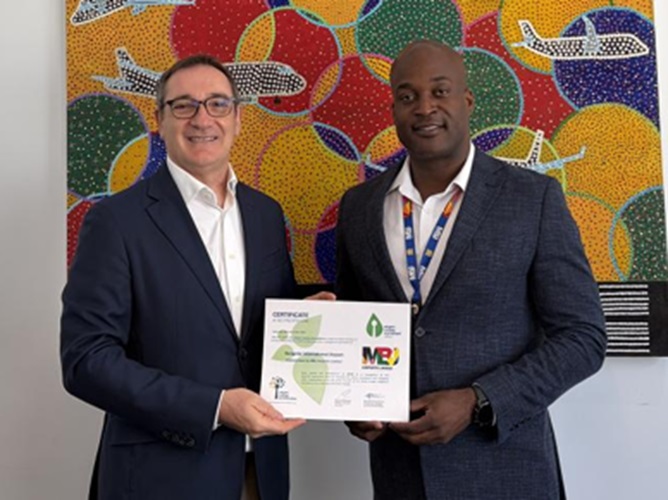
    Jamaica’s Sangster International Airport (SIA) has achieved a landmark milestone in sustainable aviation, securing official upgrade to Level 3 status under Airports Council International’s (ACI) globally respected Airport Carbon Accreditation (ACA) program, the leading international benchmark for airport carbon management. The certification was formally confirmed by MBJ Airports Limited, the operator that manages the Montego Bay-based airport.

    Unlike lower accreditation levels that focus on individual operator action, Level 3 accreditation requires airports to build coordinated cross-stakeholder carbon reduction frameworks, uniting airlines, ground handling firms, on-site tenants and other operational partners around a shared, measurable commitment to cutting emissions. This shift moves environmental responsibility from a single-entity initiative to a collective effort that spans the entire airport community.

    The announcement comes just days after the United Nations’ World Environment Day on June 5, the global campaign designed to drive awareness and coordinated action for environmental protection. For MBJ Airports, the new accreditation marks both a celebration of progress already delivered and a public renewal of the organization’s long-term sustainability commitments that will shape the airport’s strategic direction for years to come.

    Shane Munroe, Chief Executive Officer of MBJ Airports Limited, emphasized that this collaborative, holistic approach places SIA among a small, elite group of airports worldwide that are delivering tangible, ecosystem-wide climate action. “This accreditation validates the tireless work of our team to build a culture of environmental responsibility that touches every part of our operations,” Munroe explained. “Sustainability is not an afterthought for us—it is a core value embedded into every stage of planning, every daily operation, and every partnership we build at Sangster International Airport. We are proud of what we have accomplished so far, and we are even more energized to continue raising the bar for environmental management across the Caribbean and the broader region.”

    The achievement earned formal recognition from the accrediting body, with ACI-Latin America and the Caribbean (ACI-LAC) offering official congratulations to the MBJ team. Francisco M Medela Alonso, Industry Affairs Director for ACI-LAC, noted in his statement that reaching Level 3 is a substantial accomplishment that clearly demonstrates the airport’s dedication to engaging all stakeholders in the collective fight against carbon emissions.

    Administered locally by Environmental Minds, the new Level 3 certification adds further prestige to SIA’s already robust portfolio of environmental management credentials. The airport already holds ISO 14001 certification, the globally recognized standard for Environmental Management Systems. According to MBJ, this existing certification highlights the airport’s consistent, standards-aligned strategy for minimizing its environmental footprint across every dimension of its operations.

    MBJ confirmed that together, these dual certifications solidify SIA’s standing as a regional leader and a replicable model for sustainable airport management across the Caribbean and beyond.

  • Vaz highlights JUTC revenue surge, fleet upgrades as ridership climbs

    Vaz highlights JUTC revenue surge, fleet upgrades as ridership climbs

    KINGSTON, Jamaica — Jamaica’s state-run public transit provider, the Jamaica Urban Transit Company Limited (JUTC), has delivered standout progress across key performance metrics, including revenue growth, rising passenger volumes, fleet modernization, and streamlined operations, according to Minister of Energy, Transport and Telecommunications Daryl Vaz. Vaz shared these positive updates during a formal ministerial briefing hosted by the Jamaica Information Service (JIS) on Thursday, where he zeroed in on the exceptional performance gains posted by the JUTC’s Portmore depot as a clear example of the broader turnaround.

  • Fire destroys businessplace, house in Westmoreland

    Fire destroys businessplace, house in Westmoreland

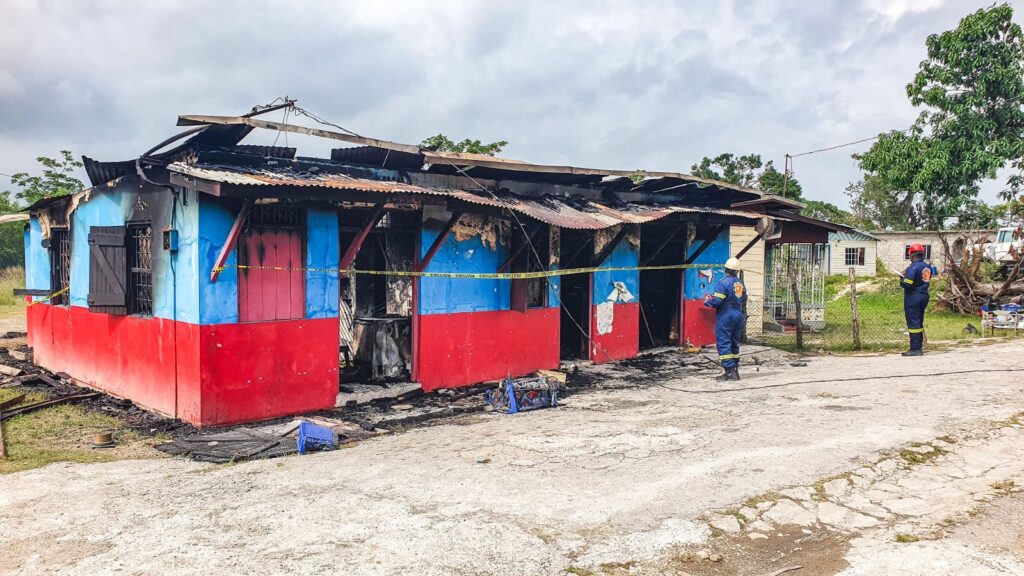
    On a Thursday morning just before 10 a.m., an out-of-control fire swept through a commercial building and connected private residence in the Big Bridge community of Westmoreland Parish, Jamaica, leaving a local small business owner with nothing after years of hard work and a recent rebuilding effort. The origin of the blaze remains undetermined as investigators from the Jamaica Fire Brigade continue to comb through the charred remains of the property.

    Two fire response units from the nearby Savanna-la-Mar Fire Station were dispatched to the scene after emergency calls came in, confirmed O’Neill Kerr, District Officer for Investigation with the Jamaica Fire Brigade. No lives were lost in the incident, though a small number of people sustained minor injuries while attempting to extinguish the fire before first responders arrived.

    The business lost in the fire is a neighborhood variety store operated by a local woman who identified herself only as Sharon. The shop stocked a wide range of daily essentials for community members, from plumbing hardware and personal hair care products to household detergent, groceries and beverages. Sharon recalled the moments she discovered the fire, explaining that she first spotted flames spreading through the middle section of the building, wedged between a residential stove and a refrigerator. She had just been retrieving bottled products from the back storeroom when she noticed the smoke and fire, she said. Immediately after making the discovery, she alerted her husband, who was speaking with a friend at the front of the store. By the time he reached the fire’s starting point, the entire space between the two appliances was already fully engulfed in flames.

    Sharon and her husband, assisted by a neighboring resident who joined the fight from the back of the property, attempted to put out the blaze themselves before firefighters could arrive. The group disconnected a water pipe from a large on-site water tank to access water, passing buckets of water to Sharon’s husband, who was inside the building battling the spread. However, the fire grew too quickly for their efforts to make a meaningful difference.

    For Sharon, the destruction comes as an especially devastating blow, following recent hardship that she had only just started to recover from. After a recent hurricane passed through the region, her shop was burglarized, with thieves taking nearly all of her inventory and assets. She had spent time and resources rebuilding the business, restocking the store just one day before the fire, on Wednesday, because she prioritizes keeping goods available for her regular customers. Even worse, she had purchased a brand new point-of-sale software system less than a week before the fire, and that new equipment was also destroyed in the blaze. All of her personal belongings, including her mobile phone, purse, and important identity documents such as her driver’s license and passport, were inside the connected dwelling when the fire hit, meaning she now faces the lengthy process of replacing every critical document. With four children between the ages of 8 and 17 to support, Sharon says the total loss represents a crippling setback that has left her struggling to process her emotions.

    Kerr told reporters that in the immediate aftermath of the fire, investigators are still in the early stages of their work, and it is too soon to confirm the exact cause of the blaze. Fire investigation teams have already been deployed to the site to collect evidence and assess the scene, he said, and work is ongoing to pinpoint what sparked the fire. Kerr added that officials have also not yet been able to calculate the total monetary value of the losses from the blaze, as the assessment process is still in its early phases.

    This report was contributed by Anthony Lewis.

  • Cuba opens more sectors to private business amid US pressure

    Cuba opens more sectors to private business amid US pressure

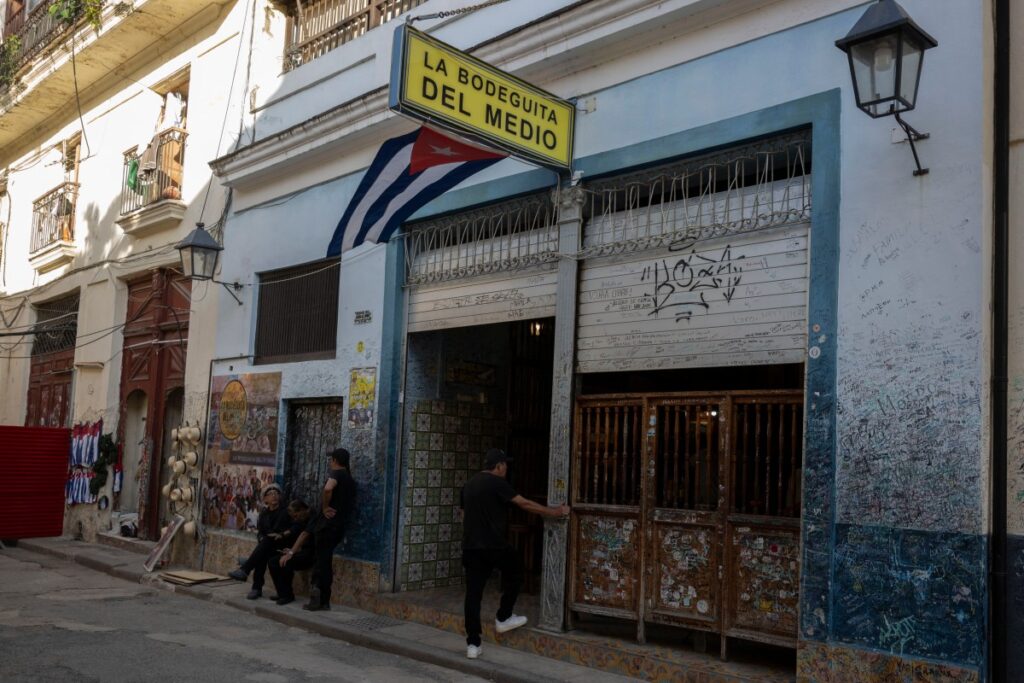
    HAVANA, Cuba – In a bold move to counter the devastating economic impact of the long-running United States blockade, Cuban President Miguel Diaz-Canel announced Friday a sweeping package of reforms designed to expand freedoms for small private enterprises across the island nation.

    Delivering a nationally televised address to the Cuban people, Diaz-Canel outlined a series of policy shifts that will open more economic sectors to private participation, cut red tape for new business approvals, and level the playing field for domestic private entrepreneurs. “For non-state management models, the roster of off-limits activities will be narrowed to expand operational scope as widely as possible,” Diaz-Canel stated. “We have launched an urgent process to clear all pending business applications in the shortest timeline achievable.”

    The reforms represent the latest in a series of liberalization measures rolled out by the Cuban communist government, which has faced mounting pressure after Washington tightened its oil blockade against the island in January. Private enterprise, which was first authorized with a 100-employee cap in 2021, has already emerged as a vital pillar of Cuba’s struggling economy. Earlier this year, private firms gained the right to import fuel – a sector that had remained under exclusive state control for decades.

    Under the new policy framework, domestic private businesses will now be granted the same investment rights as foreign investors, a change crafted to shore up economic activity after multiple foreign firms exited the country over fears of U.S. secondary sanctions. Diaz-Canel also revealed that policymakers are evaluating the elimination of mandatory state intermediaries for private import and export operations, a change that would drastically reduce business costs and streamline cross-border trade for non-state actors.

    Beyond private sector liberalization, the president reaffirmed the government’s commitment to decentralizing economic governance and granting expanded autonomy to state-owned enterprises, which still control approximately 80 percent of Cuba’s total economic output. He also announced a sweeping restructuring of state bureaucracy that will cut the number of national ministries and reduce the size of the public sector workforce. The restructuring plan is scheduled for parliamentary debate and approval in July, and Diaz-Canel emphasized that all new reforms would move through the approval process at an accelerated pace.

    Despite mounting economic headwinds that have deepened long-running crises in energy, food security, and public welfare, Diaz-Canel struck a defiant and confident tone, pushing back against what he called Washington’s “maximum pressure” campaign against Cuba. “The country is not paralyzed; we are confronting this challenge with intelligence and unity,” he said.

    The U.S. trade embargo on Cuba dates back to 1962, making it one of the longest-running economic blockades in modern history. In recent years, successive U.S. administrations have expanded sanctions beyond the core embargo, including the oil restriction imposed earlier this year, which has significantly worsened the island’s chronic economic, social, and energy crises.

  • From Deed to Key’ makes successful South Florida debut

    From Deed to Key’ makes successful South Florida debut

    South Florida recently played host to the first-ever From Deed to Key Investment and Housing Conference, a gathering centered on unlocking property and wealth opportunities in Jamaica that has been declared an unqualified success by its leadership.

    Built around the rallying theme “Invest in Your Piece of Di Rock”, the one-day event pulled together a cross-section of stakeholders: seasoned industry specialists, active investors, local professionals, and a large contingent of members of the Jamaican diaspora based in the United States. Attendees packed the venue, participating actively in panel discussions and breakout sessions that covered everything from navigating land purchase processes to developing long-term wealth through Jamaican real estate.

    Event founder and lead organizer Maxine Miller shared that the level of turnout and audience engagement far outpaced the team’s pre-event projections. “We intentionally curated the right group of stakeholders in the room,” Miller explained in a post-event statement. “We brought together a delegation of accomplished entrepreneurs and industry leaders who share our core vision for this conference, each with hands-on experience in their sectors relevant to Jamaican property investment.”

    The speaker lineup featured a diverse range of subject-matter experts, including real estate attorneys, land surveyors, civil engineers, renewable energy consultants, and financing specialists, alongside key diplomatic and local government figures such as Jamaica’s Consul General Oliver Mair and Miramar Vice Mayor and Commissioner Carson Edwards. Speaking during the event, experts emphasized that post-Hurricane Melissa recovery has created a unique window for transformative investment, framing the current moment as an opportunity to reset development frameworks, rebuild resilient communities, and drive renewed investment across Jamaica’s property sector.

    From its inception, the conference set clear core goals: to deliver actionable, practical guidance for Jamaicans both on the island and in the diaspora looking to navigate the full journey from acquiring land to securing homeownership. The event addressed a long-unmet need for diaspora communities, providing a structured platform for open dialogue on the most pressing barriers they face. These included regularizing title for long-held family lands, resolving disputes over inherited property, unlocking value from underused or idle real estate assets, and demystifying the regulatory and financial processes for investing in and developing property in Jamaica.

    The overwhelming success of the South Florida debut has already generated significant momentum for future editions, with inquiries flooding in from other major diaspora hubs across the United States. Miller confirmed that Jamaican community groups in Atlanta and New York have formally requested to host upcoming iterations of the conference, signaling strong unmet demand across the diaspora.

    “The level of interest we’ve received from Atlanta and New York has been incredibly encouraging,” Miller noted. “This response confirms what our team suspected: there is a clear, widespread appetite within the global Jamaican diaspora for credible, accurate information, practical solutions to common barriers, and meaningful conversation about building generational wealth through investment in Jamaica.”

    Organizers expect to confirm the location and date for the next conference staging by mid-July, with plans to expand the event’s reach to serve more diaspora communities in the coming months.

  • Shantae Foreman finishes second in long jump at NCAA championships

    Shantae Foreman finishes second in long jump at NCAA championships

    The second day of the 2024 NCAA Division 1 Outdoor Track and Field Championships delivered a string of stunning upsets, personal bests, and historic records at Eugene Oregon’s iconic Hayward Field on Thursday, headlined by a once-in-a-generation 100-meter run from University of Georgia’s Adejah Hodge.

    The British Virgin Islands Olympian left spectators and competitors stunned as she crossed the 100m semi-final finish line in a blistering 10.63 seconds with a legal +0.9 m/s wind reading. The time not only smashed her previous personal best of 10.77 seconds set in April, it also elevated her position as the world’s top-ranked 100m sprinter this season, and broke both the collegiate and championship meet records. The prior mark of 10.75 seconds, set by American star ShaCarrie Richards in 2019, stood for five years before Hodge’s historic run. The result also ranks Hodge’s performance as the fifth-fastest women’s 100m in history globally.

    In the women’s long jump, Clemson University’s Shantae Foreman pulled off one of the day’s biggest personal breakthroughs to claim a surprise second-place finish. The Jamaican athlete jumped 6.69 meters, with a +0.2 m/s wind reading, an massive improvement of 22 centimeters over her previous outdoor personal best of 6.47 meters. That mark, which Foreman had matched twice before — first at the 2021 World Athletics U20 Championships in Nairobi, Kenya, and again at the NCAA East Regional just two weeks prior — was left far behind, and Foreman’s new jump catapults her into the top 10 all-time for Jamaican women in the event. Now, she enters Saturday’s triple jump competition as the overwhelming pre-event favorite to claim the national title.

    Multiple other athletes from Caribbean nations competing for U.S. collegiate programs earned spots in upcoming finals through strong semi-final showings. University of Florida’s Gabrielle Matthews turned in a rare double qualification, advancing to both the women’s 100m and 200m finals after impressive performances. In the 100m, Matthews clocked 11.02 seconds (+0.6 m/s) to secure her spot, behind Florida State University’s Shenese Walker who ran 10.94 seconds (+0.3 m/s). Texas’s Carleta Bernard just missed out on a finals spot, finishing with a 11.17 second run that left her outside qualification.

    In the 200m semi-finals, Matthews continued her strong form by lowering her own personal best to 22.22 seconds (+1.7 m/s) to take second place behind Hodge, chopping 0.19 seconds off her prior top mark of 22.41 seconds.

    University of Georgia’s Dejanae Oakley, the current world leader in the women’s 400m, put on a dominant display in the 400m heats, cruising to a win in her semi-final heat with a 49.93 second clocking. The result secured her place as the top qualifier heading into Saturday’s final, where she will look to improve on her second-place finish at the 2023 championships.

    In the women’s 100m hurdles, Ohio State’s Janela Spencer clocked a season’s best 12.77 seconds (+1.2 m/s) and Texas Tech’s Tonie-Ann Forbes ran 12.86 seconds in the same wind conditions to secure their spots in the final. Clemson’s Oneka Wilson just missed out on qualification, crossing the line in 12.93 seconds (+1.0 m/s). In the day’s only field event for other competing athletes, Purdue University’s Britannie Johnson placed 20th overall in the women’s shot put with a throw of 16.02 meters.

  • USF brings free connectivity to western Jamaica through ‘Connec’ Di West’ road tour

    USF brings free connectivity to western Jamaica through ‘Connec’ Di West’ road tour

    WESTMORELAND, Jamaica — Jamaica’s Universal Service Fund (USF) has brought high-speed, no-cost internet connectivity to thousands of local residents with the official launch of 19 new community and public Wi-Fi hubs across Westmoreland, kicking off the ambitious regional Connec’ Di West Road Tour initiative.

    The Westmoreland activation, held June 5 at Independence Park in Savanna-la-Mar, marks the opening phase of a three-parish outreach campaign that will deliver a total of 65 new Wi-Fi sites across the western Jamaican parishes of Westmoreland, St James, and Hanover, the USF announced in an official statement.

    Infrastructure installed across Westmoreland is projected to extend free internet access to roughly 4,750 local residents, while the full western Jamaica rollout will bring connected coverage to close to 15,000 people across the three participating parishes.

    The cross-parish road tour is a core component of the USF’s broader strategy to close the digital divide across underserved Jamaican communities. Beyond expanding access to digital infrastructure, the initiative aims to boost public awareness of available community Wi-Fi services, drive adoption among local residents, and bring critical government and support resources directly to doorsteps in under-connected regions. Attendees at launch events can access a full range of on-site services, from government program registrations and social benefit application assistance to utility bill inquiries and payment planning, alongside interactive and recreational activities for the whole community.

    Speaking at the Westmoreland launch, USF Chief Executive Officer Charlton McFarlane emphasized the non-negotiable importance of reliable connectivity, particularly in the wake of widespread disruption caused by Hurricane Melissa, which battered western Jamaica last year.

    “As many residents of western Jamaica know first-hand, Hurricane Melissa caused severe damage to local infrastructure, knocking out communication and connectivity networks across dozens of communities. Moments of crisis like this make clear that internet access is no longer an optional luxury for modern life — it is a fundamental essential service,” McFarlane stated.

    “We prioritized restoring and expanding connectivity to these western communities specifically because access to the internet shapes every critical part of daily life: educational access for students, emergency communication during crises, healthcare access for remote consultations, continuity for small local businesses, and the ability for families to stay updated when disaster strikes. Building out these Wi-Fi sites was never just about installing new technology; it was about reopening access to opportunity, reconnecting isolated communities, strengthening local resilience, and renewing hope for residents still recovering from the storm,” he added.

    McFarlane also acknowledged persistent challenges that come with maintaining digital connectivity infrastructure in rural Jamaican communities, where severe weather and frequent lightning storms pose ongoing risks to equipment. He pointed to the recent full restoration of the Whithorn community Wi-Fi site, which suffered catastrophic damage during an earlier storm this year, as an example of the agency’s rapid response to outages.

    “The USF moved quickly to rebuild the Whithorn site, investing approximately $2 million Jamaican dollars to restore service for local residents. While unplanned outages will occasionally occur due to unpredictable weather events, our commitment to serving Jamaican communities never wavers. We will always prioritize prompt responses to repair and restore service for the people who depend on us,” McFarlane said.

    One of the flagship sites launched in Westmoreland is the Savanna-la-Mar public Wi-Fi network, the largest hub in the parish. Built with five access points distributed across the town, the network can support up to 500 concurrent users without sacrificing speed or reliability.

    Dwayne Vaz, Member of Parliament for Westmoreland Central, echoed McFarlane’s remarks, noting that the widespread connectivity outages following Hurricane Melissa made clear just how dependent modern communities are on reliable internet access.

    “I think it was only after Hurricane Melissa hit that many of us realized we had taken consistent connectivity for granted. When networks went down, people were scrambling to find any way to get online to find updates on the storm, connect with family, and access emergency resources. That experience drove home how critical it is to have reliable, accessible connectivity for all community members,” Vaz said.

    “What the Universal Service Fund is delivering for communities across this parish is transformative: free Wi-Fi right where people live and work, no hidden costs, no monthly fees. This opens up opportunity for everyone, from students trying to do homework to small business owners who need to connect with customers,” he added.

    The USF emphasized that the initiative would not have been possible without coordinated cross-sector collaboration, noting that government agencies, municipal corporations, private sponsors, utility providers, and local community stakeholders all worked together to deliver the free service directly to residents.

    The remaining stops on the Connec’ Di West Road Tour are already scheduled: the St James leg will launch June 19 at Sam Sharpe Square in Montego Bay, followed by the Hanover launch June 26 at the Lucea Bus Park in Lucea.

  • Police Federation faces leadership change as McBean earns promotion to ASP

    Police Federation faces leadership change as McBean earns promotion to ASP

    A leadership transition is underway at the Jamaica Police Federation, after the body’s long-serving chair Sergeant Arleen McBean earned a promotion to the senior ranks of the Jamaica Constabulary Force (JCF) as an Assistant Superintendent of Police. McBean’s elevation to the senior command brings her tenure at the helm of the representative organization for rank-and-file police officers to an end, opening a top leadership vacancy that will be filled through an upcoming selection process.

    The promotion ceremony was held Thursday at JCF Commissioner Dr Kevin Blake’s office in St Andrew, where McBean was among multiple committed law enforcement officers recognized for advancement to higher ranks. Joining her in the round of promotions were Assistant Commissioner of Police DeVaughn Colquhoun, who heads the JCF’s Supernumerary Corporate Services division, Senior Superintendents Adrian Hamilton and Arielle Brown Blake, and Superintendents Keisha Oakley and Alfred McDonald. The JCF’s senior officer corps was further expanded with promotions to Deputy Superintendent for Howard Wilks, Nicholas Shorter and Arlene Robinson Johnson, while Robert Bailey earned a promotion to Assistant Superintendent.

    In an official statement following the announcement, the Jamaica Police Federation extended its warm congratulations to the newly promoted ASP McBean. The organization highlighted McBean’s decades of distinguished service across multiple leadership roles within the federation, noting that her work has delivered irreplaceable value advancing the welfare and quality of life for both current and former rank-and-file officers.

    The federation’s statement emphasized that McBean’s consistent dedication, steadfast commitment, and unyielding advocacy for the association’s membership have garnered widespread respect and admiration from colleagues across the entire Jamaica Constabulary Force. “We wish her every success in her new role and pray for God’s continued guidance, favour, and abundant blessings as she embarks on this new chapter of service,” the statement concluded.

  • Afreximbank opens another financing door for Jamaica

    Afreximbank opens another financing door for Jamaica

    KINGSTON, Jamaica – For Jamaican enterprises seeking capital to scale operations, boost exports, and modernize production capabilities, the African Export-Import Bank (Afreximbank)’s expanding footprint in Jamaica represents far more than a routine diplomatic milestone. It opens a critical alternative funding channel that could reshape growth trajectories for businesses across the island’s key economic sectors.

    On June 2, Afreximbank hosted its inaugural Jamaica roadshow at Kingston’s AC Hotel, bringing its full suite of trade finance, direct investment, and business advisory services directly to local company leaders, domestic financial stakeholders, and senior government officials. The event came on the heels of two landmark developments: Jamaica formalized a partnership agreement with Afreximbank in July 2025, followed quickly by the pan-African lender’s approval of a $5 billion regional financing facility earmarked for Caribbean economies, Jamaica included.

    The core challenge Afreximbank is targeting is a practical, widespread pain point for Jamaican businesses: while many firms have demand for their goods and services, they lack the upfront capital to scale. Whether a manufacturer needs to purchase new equipment, a tourism operator wants to renovate hospitality properties, a logistics firm aims to expand distribution capacity, or a small producer wants to transition to large-scale commercial operations, access to flexible, affordable capital is often the rate-limiting step to growth. Afreximbank has positioned itself as a strategic financing partner to fill this gap.

    As a pan-African multilateral financial institution, Afreximbank’s core mandate is to fund and facilitate intra-African trade, as well as commercial exchange between Africa and global markets. Its expanding engagement in the Caribbean falls under its flagship “Global Africa” agenda, an initiative designed to strengthen economic and commercial ties between Africa, Caribbean nations, and the broader African diaspora worldwide.

    Delivering the roadshow’s keynote address, Jamaica’s Minister of Finance and Public Service Fayval Williams emphasized that collaboration between Kingston and Afreximbank is on a steady upward trajectory. “We recognize that for over three decades, Afreximbank has delivered targeted financing solutions that underpin trade and accelerate inclusive economic growth across the African continent,” Williams noted. “Today, its influence extends beyond Africa’s borders, with the bank building a growing, robust presence across the Caribbean.”

    She added: “It is undeniable that the partnership between Afreximbank and Jamaica continues to deepen. I encourage every Jamaican institution represented here today to strengthen their engagement with the bank, so that together we can unlock expanded opportunities for two-way trade and mutual investment between Jamaica and the African continent.”

    For Jamaica, the value of this partnership extends far beyond having another international financial institution express interest in the market. What makes Afreximbank’s entry unique is the breadth of its product offerings, which cover trade finance lines, growth capital for investment, strategic advisory support, and dedicated funding for key sectors from manufacturing and tourism to industrial park development and special economic zone expansion.

    This breadth of coverage matters because sustained trade growth cannot exist without expanded domestic production capacity. A manufacturer aiming to grow export volumes needs upfront financing for new machinery, quality certification, packaging, and working capital to support large production runs. A hospitality business requires capital to renovate properties, expand capacity, or rebrand for new target markets. Agro-processing and logistics firms need funding to scale output, meet new international regulatory standards, and serve larger regional customer bases. In every scenario, securing financing is the critical first step before any export growth can occur.

    Eric Monchu Intong, Afreximbank’s Group Managing Director for Client Relations and Regional Office Operations, emphasized that intentional industrial development must be the foundation of deeper trade ties between Jamaica and Africa. “At Afreximbank, we firmly believe that industrialization is the bedrock of sustainable trade and lasting economic transformation,” Intong explained. “To trade successfully with Global Africa, we must first build productive capacity at home.”

    He added: “Through strategic investments in industrial parks, special economic zones, and domestic manufacturing, Jamaica has a transformative opportunity to cut reliance on costly imports, grow the share of value-added exports, create new formal jobs, and strengthen overall national economic resilience. This development model has already delivered proven results across 18 African countries.”

    This is where the promise of the partnership meets its key test. Afreximbank is not only pitching expanded trade between Africa and the Caribbean; it is also advocating for broader systemic progress: more domestic manufacturing, more value-added production, more export-ready small and medium enterprises (SMEs), and stronger local investment enabling environments. Even with the $5 billion facility in place, financing alone cannot solve Jamaica’s production capacity gaps.

    Local Jamaican businesses still need to develop bankable project proposals, maintain transparent, standardized financial records, outline clear, actionable expansion blueprints, secure credible commercial partners, and build the operational capacity to fulfill large, consistent export orders. Local public agencies and domestic financial institutions will also need to collaborate to structure access: will smaller Jamaican firms be able to access the facility directly, or will most funding flow through large domestic banks, major established corporations, and government-backed projects?

    This structural question is make-or-break for Jamaica’s SME community, which forms the backbone of the island’s private sector. If access requirements are overly complex and burdensome, the benefits of the facility will likely be limited exclusively to large corporations and major infrastructure projects. But if financing can be structured to flow through local intermediaries and tailored to meet the needs of export-ready small and medium firms, it can dramatically expand the number of Jamaican businesses able to participate in and benefit from growing Africa-Caribbean trade.

    The $5 billion Caribbean regional facility gives this new partnership meaningful scale, but the funding will only deliver tangible value if it reaches viable projects that generate increased output, new formal jobs, expanded export volumes, and durable, mutually beneficial trade links between Jamaica and Africa.

    For Jamaica right now, the opportunity is unambiguous: at a time when hundreds of local companies are eager to expand beyond the constraints of the small domestic market, Afreximbank’s entry adds a valuable new source of growth capital to the market. The next critical question that remains unanswered is: are Jamaican businesses ready to leverage this opportunity?