标签: Jamaica

牙买加

  • Vassell Reynolds takes charge at St Catherine High

    Vassell Reynolds takes charge at St Catherine High

    One of Jamaica’s most decorated schoolboy football coaches, Vassell Reynolds, has been named the new technical director of St Catherine High School’s football program, stepping into the role previously held by Anthony Patrick following his departure from powerhouse Kingston College (KC).

    Reynolds has solidified his reputation as one of the most successful coaches in Jamaican schoolboy football history, with a trophy haul that few can match. In 2024, he led Kingston College to the coveted Manning Cup title, and seven years prior, he claimed the daCosta Cup with Ruseas High — a double achievement that stands as a rare milestone in the sport’s local history. His earlier trophy collection includes the 2015 Walker Cup with Wolmer’s Boys and the 2016 all-island Flow Super Cup, further cementing his track record of delivering major honors.

    Ironically, Reynolds’ most recent title came at St Catherine High’s expense: his 2024 KC side defeated St Catherine 3-1 in the Manning Cup final to deny the school its first shot at the prestigious trophy. Now, he is tasked with helping the St Catherine program finally claim that long-sought Manning Cup glory.

    In an interview with the Jamaica Observer, Reynolds expressed his excitement about the new opportunity, saying, “The feeling is great. The offer to take over a programme of this magnitude is a clear recognition of my hard work and accomplishments over the years.”

    He was quick to acknowledge the solid foundation left by his predecessor, noting, “St Catherine High has been one of the most consistent performers over the past five to six years at the Manning Cup level under the leadership of coach Anthony Patrick and his support staff. I’m aware of the work and structure Patrick implemented, and I’ll use my experience to build on that and take the programme to the next level.”

    Outlining his core priorities as technical director, Reynolds explained that the program is currently in a rebuilding phase, and his work will center on strengthening its long-term foundation. “My role as a technical director will be to direct the overall football programme, which is at a rebuilding stage. There will be a great emphasis on building a solid youth system, which will give us the kind of foundation to perform well at all levels and to aid with the transition from one age group to the other,” he said.

    Beyond structural development, Reynolds plans to focus on cultivating player potential holistically, emphasizing the development of strong mental outlooks, technical proficiency, and professional work habits that will drive consistent high-level performance.

    Reflecting on his ultimate goals for the program, Reynolds made his ambitions clear: “Having won the Walker Cup multiple times, the overall aim is to add more success to the school, including the elusive Manning Cup title.”

    Reynolds’ exit from Kingston College comes after a transformative three-year tenure with the storied institution. He joined KC in 2023 when the program was struggling and in disarray, and within two years, he guided the “Famed Purples” to both the 2024 Manning Cup and all-island Olivier Shield titles. Despite the on-field success, his three-year contract was not renewed ahead of the 2025 season.

    Looking back on his time at Kingston College, Reynolds framed his tenure as a rewarding experience that left the program stronger than he found it. “My three-year stint at Kingston College was a gratifying one. I’ve left the programme in a better position compared to where it was when I started. The results of my role as the technical director of the entire programme is there to be seen. I’ve created and built my own legacy at KC. I’ve encountered many challenges, to which I had to navigate. I’ll definitely be better off for the experience. Life lessons were learnt that will help me in my future endeavours,” he said.


  • NCBJ says it has won multiple international banking awards

    NCBJ says it has won multiple international banking awards

    KINGSTON, Jamaica — Jamaica’s largest financial institution, National Commercial Bank Jamaica Limited (NCBJ), has capped off a standout year of operational performance by collecting a suite of prestigious international banking awards from four of the sector’s most respected global organizations: The Banker, Global Finance Magazine, JP Morgan, and Capital Finance International. The announcement of the recognitions was made public by the bank in a press statement issued this Friday.

    Among the most notable accolades, The Banker, a leading global financial publication, placed NCBJ at the top spot among all Jamaican banks across five critical performance metrics: overall profitability, operational efficiency, risk-adjusted returns, liquidity position, and aggregate banking sector performance.

    Global Finance Magazine, another influential voice in international finance, extended NCBJ’s long-running winning streak with three separate 2026 honors: the title of Best Bank in Jamaica, Best FX Bank in Jamaica for the eighth consecutive year, and Best Trade Finance Provider in Jamaica for 2026. The bank also earned JP Morgan’s Elite Quality Recognition Award 2026, an honor reserved for financial institutions that achieve exceptional straight-through processing rates — a key metric that measures the share of automated payment transactions processed without requiring manual intervention, a key marker of operational efficiency.

    Across all the recognitions, judges highlighted NCBJ’s strengths across core business areas: reliable access to foreign exchange, robust support for cross-border trade, consistent service reliability, and customer-centric service delivery. In particular, the eighth consecutive Best FX Bank win underscores the bank’s leading position in foreign exchange liquidity management, digital transaction execution, and customized structured FX solutions. NCBJ reported that its total annual foreign exchange activity across major global currencies reached $8 billion this year, a figure that reflects its market dominance in the segment.

    Regional industry publication Capital Finance International further recognized NCBJ’s expanding influence across the Caribbean, naming it the 2026 Trusted Partner in Retail and Corporate Finance Leadership for the Caribbean region. The award acknowledges the bank’s long-standing work supporting both individual retail clients and large corporate entities across multiple Caribbean markets.

    Speaking on the recognitions, NCBJ Interim Chief Executive Officer Sheree Martin framed the awards as a validation of the bank’s multi-year strategic transformation agenda. “These awards carry special weight because they are independently assessed, and they are rooted in measurable performance, operational discipline, and real impact for our customers and communities,” Martin explained. “They are a testament to the trust that our customers have placed in our institution, the incredible strength and dedication of our team, and our unwavering focus on building a bank that delivers consistent, high-quality results for all stakeholders.”

    Martin emphasized that NCBJ remains committed to its core mission of building a stronger, more financially resilient institution to serve Jamaica and the broader Caribbean region. “At a moment when global benchmarking and independent validation of performance matter more than ever, our recognition on this global stage proves that a Jamaican financial institution can compete, outperform, and earn top honors alongside the world’s leading banks,” she added.

  • Faster Flow Internet lands

    Faster Flow Internet lands

    Jamaica has officially entered the 5G era, as telecommunications provider Flow flipped the switch on the country’s first next-generation mobile network on Thursday following a $74 million investment in infrastructure and spectrum. Thousands of customers can immediately access dramatically faster mobile internet, though the rollout brings a gradual transition for most subscribers as the company works to lower adoption barriers across the island.

    The launch event, held at Flow’s Kingston headquarters, was attended by company leadership and Telecommunications Minister Daryl Vaz, marking what both public and private stakeholders call a transformative milestone for Jamaica’s digital and economic growth. The new network already reaches approximately 70% of Flow’s customer base, with coverage currently live in major population centers including Kingston, Portmore, Spanish Town, May Pen and North Coast communities. Flow plans to extend coverage to additional locations including Mandeville, Santa Cruz, Black River, Savanna-la-Mar, Bull Bay and Morant Bay by the end of June.

    While wide infrastructure coverage is already in place, access remains limited to customers with both 5G-compatible smartphones and upgraded SIM cards. Data from Flow shows that only 25% of its subscribers currently meet both requirements, meaning three-quarters of customers will need to take proactive steps to connect to the faster service.

    Flow’s Head of Marketing Latoy Lawrence noted that many consumers may already own 5G-capable handsets without realizing their older SIM cards block access. To smooth the transition, the company is offering free SIM upgrades at all 15 of its company-owned stores nationwide. Customers swapping out non-LTE SIM cards will also receive bonus data, and postpaid subscribers qualify for bill discounts. To address the barrier of upgrading devices, Flow will soon expand its inventory of affordable 5G phones and introduce flexible payment plans, allowing customers to spread costs over 12 or 24 months, with special discounts and rewards for new and existing buyers.

    This staged rollout reflects a common challenge for 5G deployments around the world: even after operators invest billions in new infrastructure, mass adoption depends on consumers updating their personal devices and access cards. Flow has framed its customer support initiatives as a core part of the project, designed to eliminate unnecessary barriers to access.

    Beyond faster download speeds, the $74 million investment breaks down to $50 million for nationwide network upgrades and more than $24 million for spectrum acquisition, following months of extensive modernization work across the country. Stephen Price, vice-president and general manager of Flow Jamaica, emphasized that the 5G rollout is far more than a consumer telecom upgrade — it is a foundational investment in Jamaica’s national development.

    “We have seen growing ambition across our government, businesses, entrepreneurs, and young innovators who want to build, create, and compete globally,” Price said at the launch. “This 5G infrastructure supports these ambitions, enabling smart operations and innovation across every sector.”

    In addition to faster mobile internet, the network includes upgrades to core communication services: improved call quality and reliability via Voice over Wi-Fi, Voice over LTE, and extra backup systems at mobile cell sites. Price added that 5G will act as a catalyst for the next phase of Jamaica’s digital economy, noting “5G is a game-changer for businesses and ordinary citizens in Jamaica, and we are deeply committed to enabling this future.”

    Minister Vaz welcomed the launch as a key milestone for the Jamaican government’s broader digital transformation agenda. “The roll-out of 5G marks a pivotal point where our digital vision takes concrete form,” Vaz said. “The Government has made digital transformation a top priority — we have introduced digital IDs, streamlined government processes, and explored emerging technologies to ensure Jamaica benefits from modern infrastructure.”

    Vaz highlighted that the new network will unlock new opportunities across critical sectors including education, healthcare, small business entrepreneurship, and public services, while driving sustained innovation and economic growth across the island.

  • OUR sets up internal team for JPS blackout investigation

    OUR sets up internal team for JPS blackout investigation

    KINGSTON, Jamaica — In the wake of a crippling island-wide power outage that disrupted daily life across Jamaica, the country’s Office of Utilities Regulation (OUR) has launched a targeted internal task force to lead a full investigation into the incident, marking the next formal step after the state-owned utility provider Jamaica Public Service Company Limited (JPS) turned over its initial findings on the blackout.

    The newly formed specialist team carries a broad set of mandated responsibilities, the OUR outlined in an official statement. Beyond setting clear guidance for JPS as the company continues its own internal probe, the group will handle all pre-investigation preparations, conduct a rigorous audit of JPS’s upcoming final report, and verify the credibility of the utility’s conclusions. It will also assess whether JPS’s proposed corrective measures and policy recommendations align with regulatory requirements and public safety needs.

    The task force has also been granted full authority to assess resource needs for the investigation, including approval to contract independent external experts if necessary to guarantee a comprehensive, unbiased examination of the blackout. Additionally, the team is tasked with developing its own independent recommendations and flagging any regulatory interventions that may be needed to prevent similar outages in the future.

    In its release, the regulator emphasized that no findings, policy actions, or enforcement measures will be drawn from JPS’s preliminary document. The initial report, regulators explained, only provides limited insight into the underlying causes of the system-wide collapse, making it insufficient to base any final conclusions on.

    Despite these limitations, OUR Director-General Ansord E. Hewitt noted that the preliminary submission serves as a valuable foundational step for the full investigation. “The preliminary report, however is a helpful signpost to alert the OUR to immediate post-restoration concerns, and to enable the regulator to give further directions to JPS as to the expected scope and the critical inputs that must be addressed in JPS’s investigation and reflected in the final detailed report, which is due within thirty days of the full restoration of electricity,” Hewitt explained in the statement.

    In its initial filing, JPS offered regulators reassurance that early reviews of grid operations and post-outage adjustments have not uncovered any immediate or lingering threats to the stability of Jamaica’s electrical grid.

    According to JPS’s preliminary analysis, the outage was triggered by a series of unexpected failures on critical transmission infrastructure in Jamaica’s Corporate Area, which coincided with a period of severe weather that brought heavy rain and frequent lightning strikes. The company’s early probe points to a potential misoperation of the primary protection system linked to the Hunts Bay-Rockfort 69kV transmission line. Officials said this malfunction, combined with other contributing factors, led to extended unaddressed fault conditions that triggered a chain reaction of generator outages, ultimately resulting in the total system shutdown that cut power to every parish on the island.

  • ‘A Jamaican Path: from Hills to Ocean’ project benefits wetland and coastal ecosystems, says NEPA

    ‘A Jamaican Path: from Hills to Ocean’ project benefits wetland and coastal ecosystems, says NEPA

    KINGSTON, Jamaica — After six years of coordinated planning, field research, and community-focused action, Jamaica has wrapped up one of its most ambitious landscape and marine conservation initiatives in recent history: the “A Jamaican Path from Hills to Ocean” project. Designed to bridge watershed protection, coastal ecosystem management, and community climate resilience, the initiative concludes having delivered a robust foundation for safeguarding the island nation’s irreplaceable natural assets against the accelerating impacts of climate change.

    First announced in 2019 and launched in 2020, the project operated on a €6 million total budget, split between a €4.9 million contribution from the European Union’s Global Climate Change Alliance Plus and €1.1 million in matching funding from the Government of Jamaica. The Planning Institute of Jamaica served as the lead implementing agency, partnering closely with core national stakeholders including the National Environment and Planning Agency (NEPA), the Rural Agricultural Development Authority (RADA), and the Public Gardens Division under the Ministry of Agriculture, Fisheries and Mining.

    A core priority of the multi-year initiative was to generate foundational, science-backed data to guide future conservation decision-making across Jamaica’s key ecosystems. Between 2023 and 2024, research teams completed Rapid Ecological Assessments (REAs) across three critical watersheds: Rio Bueno, Wagwater, and Rio Nuevo. These surveys generated detailed baseline data on local flora, fauna, and habitat conditions, laying the groundwork for targeted restoration planning, biodiversity protection, and community-led management while strengthening the country’s national ecosystem monitoring framework.

    The project also delivered a historic first for Jamaica’s marine conservation efforts: the first comprehensive assessment of seagrass health and distribution across three key coastal areas — Hellshire Bay, Half Moon Bay, and the Ocho Rios Marine Park Protected Area. To map these ecologically vital nearshore habitats, researchers combined cutting-edge high-resolution drone and satellite imagery with on-the-ground field validation, water quality testing, and geospatial modeling. The resulting maps and baseline datasets will enable consistent, long-term monitoring of seagrass ecosystems, which play a critical role in carbon sequestration, shoreline stabilization, and supporting commercial fish populations.

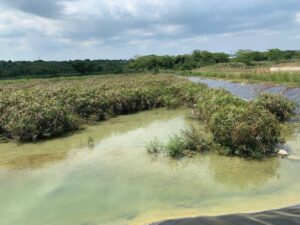
    A landmark hydrological assessment of the Mason River Protected Area (MRPA), completed in 2024, yielded key insights into the ecological vulnerabilities and assets of the internationally recognized Ramsar wetland site that spans Clarendon and St Ann parishes. The assessment confirmed that the MRPA supports an extraordinary diversity of wetland ecosystems, including peat bogs, freshwater marshes, and scrub savannah, and is home to multiple endemic species of birds and reptiles. However, the study also identified significant threats: the area’s naturally low soil permeability limits groundwater storage, increasing its vulnerability to both flooding and prolonged drought. Water quality testing found that while most of the reserve meets global freshwater standards, localized pollution from agricultural runoff and unsustainable land use has raised nutrient and mineral levels, highlighting the urgent need for improved farming and water management practices. Socioeconomic research additionally found that surrounding communities depend heavily on small-scale farming and trucked drinking water, underscoring the need for climate-resilient livelihood opportunities and expanded water access for local populations.

    To address these on-the-ground challenges, RADA supported the launch of Integrated Sustainable Landscape Management Farmer Field Schools across four communities: Mason River, Three Hills, Sommerhill, and Clonmel. The initiative paired hands-on training for smallholder farmers with the development of a specialized training manual covering sustainable production for pig and ruminant livestock operations. The manual outlines climate-smart farming techniques, disaster risk reduction, farm biosecurity, waste management, financial record keeping, and herd health planning. A dedicated training workshop was also held for RADA livestock extension officers to equip them to provide ongoing support to participating farmers after the project concluded.

    Among the project’s lasting institutional gains is the adoption of the new Jamaica Watershed Classification Tool (JWCT), a custom decision-support system that enables policymakers and conservationists to evaluate watershed health, model changing environmental conditions, and plan evidence-based conservation interventions. The tool features an interactive mapping platform that lets users visualize watershed boundaries and layered environmental data, making it accessible to stakeholders across the country working in natural resource management.

    The project also invested heavily in upgrading national monitoring capacity, supplying NEPA with a full suite of modern field research and environmental monitoring equipment, including rugged laptops, professional dive gear, data loggers, GPS units, and specialized marine research gear. This upgrade will allow NEPA to conduct more frequent, accurate monitoring of both marine and terrestrial ecosystems, ensuring future management decisions are rooted in real-time, on-the-ground data.

    Two key site-specific improvements were also completed as part of the initiative. Jamaica’s historic Castleton Botanical Gardens, a popular tourist and educational site, received long-overdue infrastructure upgrades, including new garden furniture, solar power installations, refurbished restrooms, stabilized gabion erosion control barriers, and repaired gazebos, with ongoing work underway for an accessibility ramp, walking paths, perimeter fencing, and a boundary wall. Most recently, on May 14, 2026, project teams completed the installation of 500 meters of protective fencing around the Mason River Protected Area, the final formal activity of the six-year initiative. The fencing will prevent encroachment from unregulated farming, grazing, and illegal dumping, protecting the fragile wetland ecosystem and ensuring the long-term effectiveness of restoration and conservation work at the site.

    NEPA described the fencing installation as the “proverbial icing on the cake” for the project, a final practical safeguard that complements the broader policy, research, and community interventions delivered through the multi-pronged initiative. As Jamaica prepares for the upcoming Atlantic hurricane season, the project’s outcomes position the island to better withstand extreme weather events that are growing more frequent and intense due to climate change. “In the face of natural disasters and climate change, the project is a life-jacket, helping to ensure that Jamaica’s path to recovery, from the hills to the ocean, is not a lengthy journey,” NEPA noted in its official announcement.

  • NO PLACE LIKE HOME

    NO PLACE LIKE HOME

    The 2026 FIFA World Cup, the largest edition of global football’s flagship tournament in history, officially got underway on Thursday, with co-host Mexico claiming a dramatic 2-0 victory over South Africa in the opening Group A clash at Mexico City Stadium.

    This historic venue made its own mark on the tournament before kickoff, becoming the first stadium in the world to welcome World Cup matches across three different editions of the competition. It did not take long for the first goal of the tournament to arrive: Julian Quinones put Mexico ahead just nine minutes into the match, before veteran 35-year-old striker Raul Jimenez doubled the host’s lead with a well-placed header to seal the three points.

    The match was defined by chaotic on-pitch discipline, with three players sent off by Brazilian referee Wilton Sampaio in front of a sold-out crowd of 80,000 fans. South Africa was reduced to nine men after midfielder Sphephelo Sithole was dismissed for denying a clear goalscoring opportunity, followed by Themba Zwane, who received a red card for a physical altercation involving a slap. Mexico was also down to 10 men late in the game, as center-back Cesar Montes was sent off for a dangerous late foul.

    After the final whistle, Mexico head coach Javier Aguirre opened up about the unforeseen challenges his side overcame to secure the win, revealing the squad had struggled with severe opening-match nerves. “When you’re starting out the World Cup, of course your legs will shake,” Aguirre explained. “Never in 25 years had anyone had any cramps but three of them had cramps today. We were in awe when we saw the stadium and they got a little bit of stage fright. But we never suffered.”

    Thursday’s kickoff launched the first 48-team World Cup in history, a tournament co-hosted by North American nations Mexico, the United States and Canada. The 39-day competition will conclude with the final on July 19 at MetLife Stadium in New Jersey.

    Before the match kicked off, the official opening ceremony entertained the packed crowd, featuring performances from Colombian global pop icon Shakira, Nigerian afrobeats star Burna Boy performing the tournament’s official anthem *Dai Dai*, and a closing set from celebrated Italian tenor Andrea Bocelli. While the energy inside the stadium was overwhelmingly festive, the scene outside the venue was far more tense: dozens of protesters made up of teachers, student activists, and relatives of missing Mexican people clashed with heavy police presence outside the stadium. A small group of protesters breached security barriers and exchanged blows with officers shortly after Mexico scored its opening goal.

    The opening match drew massive viewing crowds across North America beyond the stadium: tens of thousands of fans packed into an official fan zone in central Mexico City to watch the game on large screens, while hundreds of fans from Los Angeles’ large Mexican community gathered at the city’s iconic Coliseum to follow the action together.

    The start of on-pitch action comes as a long-awaited relief for FIFA, which has faced widespread backlash and criticism heading into the tournament over the soaring cost of match tickets for fans.

  • 43 JCF members graduate from Jamaican Sign Language and Deaf Culture Training Programne

    43 JCF members graduate from Jamaican Sign Language and Deaf Culture Training Programne

    On Thursday, a landmark graduation ceremony took place at the Jamaica Pegasus hotel, where 43 officers from the Jamaica Constabulary Force marked the successful completion of an intensive seven-week training program focused on Jamaican Sign Language and Deaf cultural competence.

    The training initiative, a collaborative effort between the Jamaica Association for the Deaf, the Social Justice Programme, the United Nations Development Programme (UNDP), and the Government of Canada, was designed to equip participating law enforcement officers with the practical skills and cultural awareness needed to bridge communication gaps with Deaf and hard-of-hearing community members.

    Speaking on behalf of Commissioner of Police Dr. Kevin Blake, Senior Superintendent Dennis Brooks delivered the keynote address at the event, where he praised the graduates for their commitment to advancing professional growth and advancing inclusive policing practices across the island.

    “This ceremony stands as a defining milestone for every participant in this room,” Brooks stated. “Completing any rigorous course of study demands consistent commitment, self-discipline, and a genuine openness to learning. These are traits that deserve recognition in any field, but they hold unique weight in law enforcement—where new capabilities directly shape how we serve, protect, and uplift communities across Jamaica.”

    Brooks emphasized that the training program is far more than a professional development exercise: it is a structural change that will enable more thorough, accessible criminal investigations, and remove long-standing barriers for one of the country’s most marginalized population groups.

    “The officers honored today have gained hands-on skills that will strengthen communication, build mutual understanding, and improve every interaction they have with Deaf community members,” Brooks explained. “These capabilities will make a difference in every setting—from routine visits to a police station, to active criminal investigations, to on-site response at crime scenes, to high-stakes crisis moments, and the thousands of daily interactions that build public trust in policing.”

    For Deaf and hard-of-hearing Jamaicans, communication barriers have long created unnecessary obstacles when seeking emergency assistance, filing police reports, or navigating the complexities of the national justice system, Brooks noted. “Every step we take to tear down these barriers expands equal access to justice and reinforces public confidence in our public institutions,” he said. “This training program is a direct investment in building a safer, fairer, and more inclusive Jamaica for all.”

    Multiple divisional police commanders attended the ceremony to celebrate the graduates’ accomplishment, signaling the senior leadership’s full support for this push toward more accessible policing.

  • St Catherine man charged with murder following death of fiancée

    St Catherine man charged with murder following death of fiancée

    A horrific domestic incident in St Catherine, Jamaica, has left a 29-year-old woman dead and her 51-year-old fiancé facing formal murder charges, local law enforcement has confirmed.

    Paul Stephenson, who also goes by the alias ‘Pablo’ and resides at Sunset Crescent in New Harbour Village I, Old Harbour, was taken into police custody following the violent altercation that unfolded at his residence on Saturday, May 9. The victim, identified as Tieah Singh, was a resident of Francis Avenue in Clarendon.

    According to initial police reports, the conflict erupted between the couple at approximately 10 a.m. that morning. As the argument escalated, Stephenson allegedly injected Singh with an undetermined toxic substance and also deployed pepper spray directly into her face, according to witness and investigative accounts.

    Immediately after the attack, Singh began experiencing severe adverse reactions to the toxic exposure. She was rushed quickly to a nearby medical facility for emergency treatment and was admitted in critical condition.

    Initially, Stephenson was taken into custody and charged with assault occasioning actual bodily harm, as Singh remained hospitalized. However, when Singh ultimately succumbed to her injuries days after the attack, prosecutors moved to upgrade the charge against the suspect to the more severe offense of murder.

    As of the latest update from law enforcement, court proceedings for Stephenson are still being arranged, with a formal hearing date expected to be announced in the coming days. The investigation into the exact type of toxic substance used and the full sequence of events leading up to the argument remains ongoing.

  • Anti-migrant violence leaves even South Africans living in fear

    Anti-migrant violence leaves even South Africans living in fear

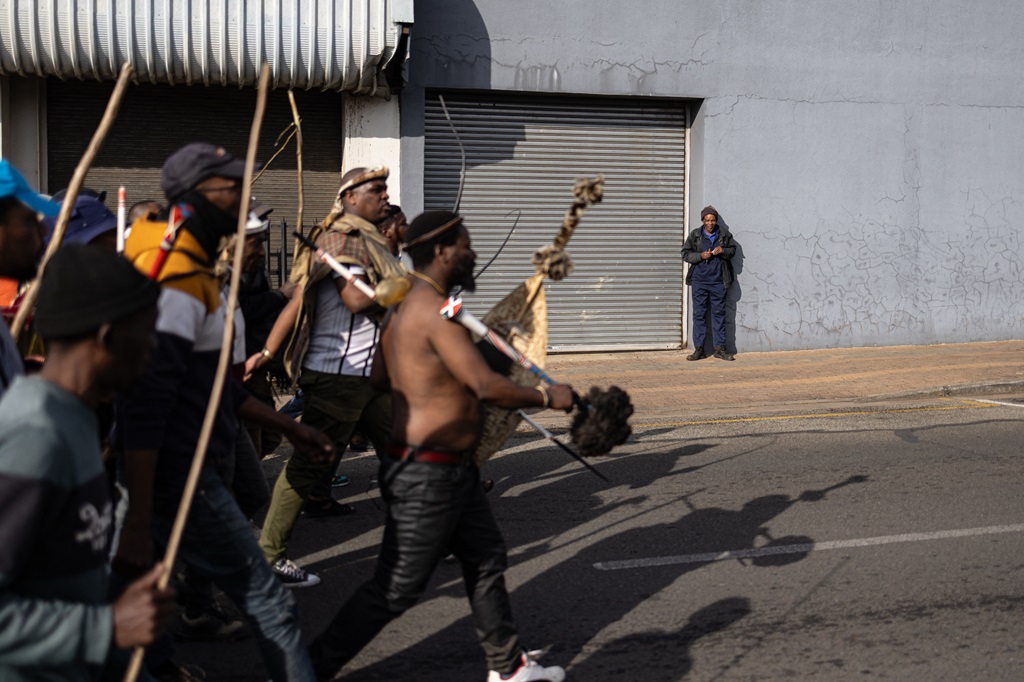
    Along the sun-scorched southern coast of South Africa, the informal Giyani settlement in Mossel Bay now bears the brutal scars of a wave of targeted violence that has pitted neighbor against neighbor, killed three people, and forced hundreds to flee their homes. What started as growing anti-migrant sentiment, stoked by a months-long campaign against undocumented foreign nationals, has exploded into open bloodshed, spilling over into neighboring coastal communities and sending waves of panic across the region.

    Walking through the settlement today, visitors are met with a landscape of charred, blackened remains of torched shacks, gutted structures stripped clean by looters, and skeletal frames of abandoned homes being dismantled by locals looking to seize the empty plots. On the flimsy wooden doors of a handful of surviving dwellings, a crude graffiti message marks them as off-limits to attackers: “I’m taken, Xhosa” — a signal that the home belongs to a member of South Africa’s Xhosa ethnic group, and should be spared.

    Even South African natives not belonging to the Xhosa group now find themselves targeted, caught up in the spreading unrest. A 30-something South African woman, too afraid to share her name but showing her official South African identity document to an AFP reporter, described how she was ordered to leave her corrugated metal shack just days after the initial violence broke out. Attackers falsely accused her of living with a Shangaan man, another South African ethnic group seen as an outsider by local attackers. “They said they don’t care about IDs,” she explained, her voice trembling. “Now it seems like nobody is safe. A lot of my neighbours, they are citizens, they just ran.”

    In total, 55 homes have been completely destroyed in the unrest, which erupted after a public protest targeting foreign nationals, who attackers falsely claim are stealing local jobs. In the days following the initial violence, locals told reporters that abandoned homes left empty by fleeing residents are dismantled daily, their materials taken and plots repossessed by local people.

    Official data from South Africa’s border management authority confirms that nearly 600 Mozambicans have fled Mossel Bay and crossed back into their home country since the violence began. Nearly a week after the worst of the clashes, around 100 foreign nationals from Malawi, Mozambique, and Zimbabwe remain crowded into a local community hall, their belongings piled around them, under constant police guard. Joining them are 17 South African natives from the northern province of Limpopo, who also face targeting because they speak Tsonga and are not ethnically Xhosa.

    “Seventeen South Africans were chased away from their house,” explained Ernest Sithole, who has been coordinating support for displaced people at the community hall since Sunday. He added that all those displaced spoke Tsonga, the majority language of their home province.

    The violence has already claimed three lives. Two Mozambican nationals, aged 27 and 43, were killed in the initial outbreak of unrest — making them the first known foreign casualties in a months-long national wave of anti-migrant sentiment that has seen mass protests across the country and a flood of xenophobic hate speech on social media. A 19-year-old South African Tsonga man was also stabbed to death the same night. While police have so far refused to officially link his killing to the anti-migrant and ethnic tensions, his stepfather is adamant the murder was a targeted attack.

    “I understand they killed my son because of a tribal war,” Steve Winston Kamwendo told AFP, standing beside his stepson’s coffin ahead of the young man’s burial in Limpopo.

    The violence comes after a citizen-led group opposing irregular migration recently issued a public ultimatum ordering all undocumented foreign nationals to leave South Africa by the June 30 deadline. In response, several African nations including Ghana, Mozambique, Malawi, and Nigeria have already repatriated hundreds of their citizens who chose to flee the growing hostility.

    Mossel Bay, long viewed as one of South Africa’s quieter coastal towns in the Western Cape province, has become the flashpoint for the worst violence to date, and the unrest has already spread to neighboring communities. Municipal authorities confirm that around 400 displaced foreign nationals are now sheltering in community centers in the towns of Kleinmond, Gansbaai, and Stanford, roughly 155 miles east of Mossel Bay. In Gansbaai, just one morning last week, around 100 local residents went door-to-door through the town’s informal settlement, issuing a blunt warning to all African-born foreigners: leave the town by the end of June, regardless of whether you hold valid documentation to live in South Africa.

  • USA play first World Cup finals game on home soil since 1994

    USA play first World Cup finals game on home soil since 1994

    The 2026 FIFA World Cup, the first expanded 48-team edition of football’s most prestigious tournament co-hosted by the United States, Mexico, and Canada, officially got underway Thursday with a dramatic opening match that set the tone for a month of high-stakes competition. The action will ramp up further Friday, with the United States playing its first Group D fixture against Paraguay at Los Angeles’ cutting-edge SoFi Stadium, marking the first time the US men’s national team has contested a World Cup match on home soil in 32 years.

    As co-hosts, the US squad carries massive expectations from fans and leadership alike, and head coach Mauricio Pochettino has made clear that anything less than lifting the trophy will fall short of his definition of success. The former Tottenham Hotspur manager, speaking to reporters on the eve of the opening fixture, doubled down on his ambitious outlook: “For me, successful is to win, is to win tomorrow and win after. If we don’t arrive to the final and we don’t win the World Cup, to talk about ‘successful’? I don’t know.”

    Led by star attacking midfielder Christian Pulisic, a young, talented US core is aiming to turn home-field advantage into a deep tournament run, even as they navigate the pressure of competing in front of their home supporters. Pulisic expressed confidence in his side’s ability to compete with any contender in the draw, telling reporters: “We want to be a real force in this tournament. We’ve got three really good games to show everyone what we’re all about.”

    The historic Los Angeles match will draw high-profile attendees, including US Secretary of State Marco Rubio, while former President Donald Trump has confirmed he will attend at least one World Cup fixture during the tournament, though he has not specified which match he will attend. Ahead of the US-Paraguay showdown, a star-studded Hollywood-themed opening ceremony will take place, featuring headlining performances from pop icon Katy Perry and a roster of other A-list music artists.

    Friday’s matchday will also feature another historic co-host fixture: Canada will face Bosnia and Herzegovina in Toronto, in the side’s quest to claim the first men’s World Cup win in its nation’s history. The Canadian squad will face a major setback, however, as star left back Alphonso Davies remains sidelined, still recovering from a nagging hamstring injury that kept him out of pre-tournament training.

    Off the pitch, a visa controversy has disrupted Ghana’s tournament preparations, with FIFA announcing Friday that Arsenal star midfielder Thomas Partey has been denied entry to Canada by the country’s government. Partey, who is currently facing rape charges in a British court, was set to travel with the Ghanaian squad from their US-based team base camp in Boston for their Group L opening fixture against Panama on June 17. In a formal statement, FIFA confirmed: “FIFA can confirm that player Thomas Partey will be unable to travel from Ghana’s Team Base Camp in Boston, USA, to Canada for their first match against Panama on Wednesday, 17 June, as his visa application has been refused by the Canadian government.” The governing body also noted it has no oversight over host nations’ immigration processes, including visa adjudication. While Partey will miss the Panama fixture, reports indicate he will be eligible to compete in Ghana’s remaining two Group L matches against England and Croatia, both of which are scheduled to take place on US soil.

    Partey’s visa denial marks the second high-profile immigration issue for the tournament in as many days: Last weekend, US immigration officials refused entry to Somali referee Omar Artan, who was scheduled to officiate matches during the tournament.

    For European powerhouse England, which is aiming to end a 60-year drought without a major senior men’s trophy, Real Madrid star midfielder Jude Bellingham has emphasized the importance of team cohesion ahead of the side’s opening fixture. Bellingham, referencing the squad’s off-field tensions during their 2024 Euro final run under former manager Gareth Southgate where they fell to Spain, noted that every squad member needs to feel valued to succeed. Current manager Thomas Tuchel, who succeeded Southgate after Euro 2024, has made building a cohesive “brotherhood” in the squad a core priority of his World Cup preparations.

    The tournament kicked off in spectacular yet chaotic fashion Thursday at Mexico City’s iconic Estadio Azteca, where a sold-out crowd of 80,000 fans packed the stands for the opening match and opening ceremony. The ceremony featured showstopping performances from global superstars Shakira and Nigerian afrobeats icon Burna Boy, who got the crowd on their feet ahead of kickoff. Estadio Azteca made tournament history Thursday as the first stadium ever to host World Cup matches across three different editions of the tournament.

    Host Mexico got their campaign off to a strong start with a 2-0 victory over South Africa, though the match was marred by discipline issues that saw three players sent off with red cards. Julian Quinones netted the first goal of the entire tournament just nine minutes into the match, followed by a second-half header from 35-year-old veteran striker Raul Jimenez that sealed the three points for the hosts. While the atmosphere inside the stadium was consistently festive, chaotic unrest unfolded outside the venue, where dozens of protesters clashed with local police.

    In the second fixture of the tournament’s opening day, South Korea earned a hard-fought 2-1 opening win over the Czech Republic to kick off their campaign with three valuable points. After a month of group-stage and knockout play across all three host nations, the 2026 World Cup will conclude with the final held on July 19 at MetLife Stadium in New Jersey.