标签: Jamaica

牙买加

  • MoBay adds automated car park in move towards becoming smart city

    MoBay adds automated car park in move towards becoming smart city

    MONTEGO BAY, Jamaica — Montego Bay’s ambition to evolve into a fully connected smart city has reached a new milestone, after the St James Municipal Corporation officially opened the city’s first automated public parking facility last Thursday. The project forms part of the municipality’s broader urban renewal and smart city development strategy, marking one of the first tangible tech-focused upgrades delivered to local residents.

    The municipal corporation invested roughly $4 million to upgrade the existing public car park on Harbour Street, replacing the legacy manual parking system with a fully digital automated framework. According to Nicholas Thompson, a representative from Innovative Core Solutions — the private firm contracted to complete the transformation — the new system eliminates paper-based processes like handwritten parking receipts, cutting administrative waste and simplifying transaction workflows.

    Under the new system, drivers receive a physical entry card upon entering the facility. When exiting, users scan their card at a payment terminal to view the calculated parking fee, then complete payment at an on-site cashier booth. Unlike the old manual system that left room for unreported parking and underpayment, Thompson noted that the automated framework closes all revenue leakage loopholes: there is no way for drivers to exit the facility without paying the full correct fee. Flexible card options are also available for daily users, monthly subscribers, and registered guests of the facility, with future upgrades already planned. Thompson added that the project team intends to roll out new features including automatic license plate recognition in the coming months to further improve efficiency.

    Speaking at the official ribbon-cutting ceremony opening the upgraded facility, Montego Bay Mayor Richard Vernon framed the new car park as a critical incremental step toward his administration’s long-term vision of a tech-integrated smart city. “It is these small procedural steps that feed into the whole. After enough time, we can integrate all separate systems together to build a complete smart city,” Vernon shared in an interview with the Jamaica Observer.

    Vernon explained that the automated car park is one of many small technological investments the municipality is rolling out under its urban renewal programme, all aimed at building long-term urban sustainability and improving quality of life for Montego Bay residents. He pointed to earlier smart city wins already delivered by the administration, including moving multiple municipal application services online and deploying security cameras that helped eliminate several persistent illegal dump sites across the city. The mayor also revealed that a new smart bus stop project is on track to be completed soon, emphasizing that building a smart city is a gradual, cumulative process rather than an overnight transformation.

    The Harbour Street car park automation was funded and implemented under MoBay’s STEP UP programme — short for Striving Towards Environmental Protection & Urban Preservation — an initiative focused on strengthening environmental protection standards and improving urban public order.

    Vernon shared that ahead of launching the project, the municipal corporation conducted a months-long internal review to identify underperforming revenue streams that could be upgraded to generate more consistent public income. Car parks emerged as a high-priority target for improvement, with Vernon noting that a multi-storey expansion of the Harbour Street facility remains the long-term ideal for the site.

    “Developing multi-storey car parks across Montego Bay serves two key goals: it boosts municipal revenue and helps alleviate chronic city center traffic congestion,” the mayor explained. “Right now, illegal on-street parking is a persistent problem that clogs roads and reduces local economic productivity. Better organized parking facilities will help cut congestion and lift productivity.”

    Vernon expressed confidence that the public investment in the automated car park will deliver strong long-term returns for the municipality. “When we approve municipal projects, we don’t make decisions frivolously. We carefully evaluate return on investment and long-term public value before moving forward,” he said. The mayor also confirmed that the administration has already identified additional city-owned car parks to convert to automated systems, with the municipal library car park marked as the next project to follow the Harbour Street facility. By starting small with a pilot project, the corporation can work out any implementation kinks before scaling the model across more public facilities.

  • Trump says Strait of Hormuz will be ‘completely open’ Friday

    Trump says Strait of Hormuz will be ‘completely open’ Friday

    EVIAN-LES-BAINS, France — On the eve of the G7 summit hosted in France, U.S. President Donald Trump made a sweeping announcement Monday during opening remarks for bilateral negotiations with French President Emmanuel Macron: the strategically critical Strait of Hormuz will return to full, unrestricted navigation starting Friday, following a landmark agreement between the United States and Iran that brings an end to the regional conflict that had restricted commercial and military passage through the global energy bottleneck.

    The narrow waterway, which carries roughly a fifth of the world’s daily oil consumption and a large share of global liquefied natural gas trade, has been a flashpoint for regional tension for decades. Trump’s announcement comes after the United Kingdom and France had recently put forward a proposal for a coordinated multinational naval escort mission to secure the strait, a framework the U.S. leader indicated would likely not be necessary moving forward. “I don’t think we are going to need much help” to maintain open access through the passage, Trump told reporters.

    Trump added that the strait is already partially open to traffic, with de-mining operations currently underway to clear any unexploded ordnance left from the recent conflict, describing the ongoing work as “hunting” for residual explosive threats.

    Central to the new agreement, Trump emphasized, is a core commitment from Iran that it will abandon any pursuit of a nuclear weapons program. “The main thing is Iran will not have a nuclear weapon,” he said, hailing the negotiated deal with the Islamic Republic.

    The announcement follows a major upheaval in Iran’s leadership: on February 28, the first day of what Trump described as a U.S.-Israeli war on Iran, the country’s long-serving Supreme Leader Ayatollah Ali Khamenei was killed. In remarks Monday, Trump claimed that Washington now enjoys positive relations with Iran’s new governing establishment. “The first set (of leaders) is gone, the second set is gone, and we found the third set to be very smart… We ended up making a deal,” Trump said, declining to elaborate on which specific leaders he was referencing when describing the successive leadership transitions.

    Looking ahead, Trump expressed optimism about the future of the Middle East, saying “I think a lot of great things are going to happen in the Middle East right now.” He confirmed that U.S. Vice President JD Vance will attend the official signing ceremony for the agreement this coming Friday, though he offered no details on the location of the event.

  • McKay Security pleased with performances of sponsored teams vying for Jamaica Football Championship

    McKay Security pleased with performances of sponsored teams vying for Jamaica Football Championship

    A dramatic, last-minute contest unfolded at Jamaica’s Xpress Sports Complex on Sunday, as two late penalty kicks ended in a 1-1 draw between home side York United and visiting Browns Town FC, a result that has left the Jamaica Football Championship (JFC) playoff qualifying race wide open.

    Jason McKay, chief executive of McKay Security — the event’s lead corporate sponsor — says he could not have asked for a more exciting showcase of the competitiveness his sponsorship aims to foster. Both York United and Browns Town entered the playoff round after claiming parish league titles, each earning a J$1 million incentive from McKay Security for their victories. York won the St Thomas Major League, while Browns Town took home the Kingston and St Andrew Football Association Championship crown.

    The match lived up to pre-game hype, delivering all the tension fans hoped for right until the final whistle. In the 90th minute, York looked set to secure all three points when Kemar Beckford converted a penalty to put the home side up 1-0. But Browns Town had other plans: Nataf Tomlinson stepped up to the spot in the fourth minute of stoppage time and slotted home the equalizer, splitting the points and keeping both teams in the qualifying hunt.

    McKay, who had just presented York with their J$1 million winners’ cheque on Friday, says he is cheering on all three McKay Security-incentivized teams in the playoff series. “I am really excited that the McKay Security-sponsored teams are giving no quarter in their quest to qualify for the Jamaica Football Championship,” he said. “This is exactly the intent of the $1m sponsorship. We want teams to give their all, and that is exactly what we are seeing.”

    After two matches, York sits atop the three-team South-Eastern regional group with two points, following a 0-0 draw against St Catherine Major League champions Cedar Grove last Wednesday. Browns Town and Cedar Grove trail with one point each, and both hold games in hand as the home-and-away round-robin plays out. Only the top finisher from the South-Eastern group will advance to next season’s JFC, the second tier of Jamaican football sitting directly below the country’s Premier League. Three other group winners from the North-Eastern, Central, and Western regions will also claim spots in the next season’s competition.

    Alfred Wilson, an executive with York United, recalled the club’s history in top-tier qualifying, noting the side came just one point short of promotion to the Premier League in a past campaign. That same season, Portmore United and the University of the West Indies earned promotion to the top flight, and York has been working to recapture that form ever since. “McKay Security’s $1 million sponsorship will go a long way in helping us achieve our ambitions of returning to the highest level,” Wilson added.

    Sunday’s playoff action delivered multiple other thrilling contests across the country. In another fixture, Cross United edged Vineyard 3-2 thanks to a late winner from Tyrique Henry in the 90th minute. Rawnie Rampasaul netted a brace for Cross in the 18th and 55th minutes, after Connie Parchment had scored twice to put Vineyard up 2-1 going into halftime. Andre Walcott scored two late goals in the 79th and 83rd minutes to lead Lucea United to a dominant 5-0 victory, while Cooper’s Pen shut out Faulkland FC 2-0. In the North-Eastern regional group, Axum FC rallied from an early deficit to earn a 1-1 home draw against local rival King Football Academy. Chemar Lattibeaudiere equalized for Axum in the 35th minute, canceling out Kaneil Brown’s 12th-minute opener for King Academy.

  • JCC celebrates businesses driving recovery, resilience and growth at 41st annual awards

    JCC celebrates businesses driving recovery, resilience and growth at 41st annual awards

    Last October, Hurricane Melissa left widespread destruction across swathes of Jamaica, leaving the island’s business community grappling with unprecedented disruption to operations and supply chains. On Thursday, that same community gathered at Jamaica Pegasus hotel to celebrate the trailblazing organizations and entrepreneurs whose grit, creative problem-solving and decisive leadership have steered the country toward meaningful economic recovery in the storm’s aftermath.

    Hosted by the Jamaica Chamber of Commerce (JCC), the 41st Annual Awards Banquet centered on the theme “Building Forward: Recognising Excellence in Recovery, Resilience & Growth”. The event shone a spotlight on honorees that did not merely adapt to the chaotic, fast-shifting post-disaster landscape, but emerged more competitive, operationally robust and well-positioned for long-term, sustained expansion across every major sector of Jamaica’s economy.

    The evening’s keynote address was delivered by Jamaica’s Prime Minister Dr Andrew Holness, who earned rapt attention from the packed room of business leaders. Holness opened by commending the private sector for its unwavering commitment to national development in the wake of the crisis, before highlighting the critical role of the National Reconstruction and Resilience Authority (NaRRA) in unlocking opportunities for inclusive, long-term economic growth.

    Holness emphasized that national reconstruction extends far beyond rebuilding damaged physical infrastructure, framing private sector participation as a core pillar of Jamaica’s transformed future. “As we advance the work of the NaRRA, all of the private sector entities in this room are part of that story,” he said. “Local contractors, engineers, suppliers, financiers and logistics operators who build capability through this process are not just serving the reconstruction. We would like you all to work in partnership with the Government to become the private sector infrastructure of a stronger Jamaican economy. That is the ambition — not to return to where we were [but] to arrive somewhere better.”

    A centerpiece of the award ceremony was the inaugural Resilience In Action Honour, created to recognize individuals and corporate entities that stepped up with extraordinary leadership and community support to speed Jamaica’s recovery after the storm. This year’s recipients included Jaimie Ogilvie, Vice President at Jamaica Broilers Group Limited; management consultant Lisa Bell; Lisa Soares Lewis, founder and CEO of Great People Solutions; Olive Downer Walsh, Special Advisor for Government and Industry Affairs at Hardware & Lumber; and major corporate players Jamaica Public Service Company Limited, Digicel Jamaica, and FLOW Jamaica.

    Multiple other awards were distributed to recognize excellence across diverse business categories and priorities. Sagicor Group Jamaica claimed the JCC CG United Marketing Excellence Award, which honors campaigns that deliver both public engagement and measurable impact, for its widely popular Sagicor Sigma Walk/Run initiative. The Best of Chamber Awards, which celebrate top performance across enterprise size segments, went to Joan Latty Realty (micro), EPIC Technologies (small), Allied Insurance Brokers (medium), Chas E Ramson (large), and Seprod Group (extra-large).

    Additional honors included the JCC CARRERAS Environmental, Social & Governance (ESG) Award, which went to National Commercial Bank Jamaica Ltd; the Entrepreneur Award, presented to Chef Brian Lumley of Foodie Focused Limited; and the All-Star Award, granted to Janine Chen — JCC Vice President and Chair of the organization’s Pharmaceutical Subcommittee — for her years of extraordinary service and contributions to the chamber’s work.

    In closing remarks, JCC President Emile Leiba reflected on the unique significance of this year’s ceremony, tying the achievements of the honorees to Jamaica’s broader post-disaster journey. “In the aftermath of Hurricane Melissa, businesses across the country were required to make difficult decisions, adapt quickly, and rethink how they operate,” Leiba said. “What we have witnessed since then is a remarkable commitment to strengthening systems, embracing innovation, and building greater resilience. Tonight’s awardees have demonstrated that recovery is not simply about returning to normal but about creating stronger, more sustainable organizations that are prepared for future opportunities and challenges.”

  • Spain held to goalless draw by Cape Verde at World Cup

    Spain held to goalless draw by Cape Verde at World Cup

    ATLANTA, Ga. – In a result that will go down as one of the most astonishing upsets in men’s World Cup history, World Cup debutants Cape Verde defied all pre-match expectations to lock in a hard-fought 0-0 draw against reigning European champions Spain on Monday.

    Spain, long considered one of the tournament’s top contenders, dominated possession for nearly the full 90 minutes, controlling the tempo of play and pinning Cape Verde deep in their own half for large stretches of the match. But the African side’s backline put on a masterclass in organized, resolute defending, turning away every attacking threat Spain threw their way. Block after block, interception after interception, and spectacular save after spectacular save kept the Spanish offense off the scoreboard, even as wave after wave of attacks crashed against the Cape Verde goal.

    When the final whistle blew at the Atlanta venue, thousands of Cape Verde supporters in attendance erupted into wild, jubilant celebration, soaking in a result that few soccer analysts or fans predicted ahead of kickoff. For a country making its first ever appearance at the men’s World Cup, holding one of the most talented teams in international soccer to a draw is already a landmark achievement that has captured the attention of the global soccer community.

  • Bishop Hudson-Wilkin calls for Jamaica’s moral voice on world stage

    Bishop Hudson-Wilkin calls for Jamaica’s moral voice on world stage

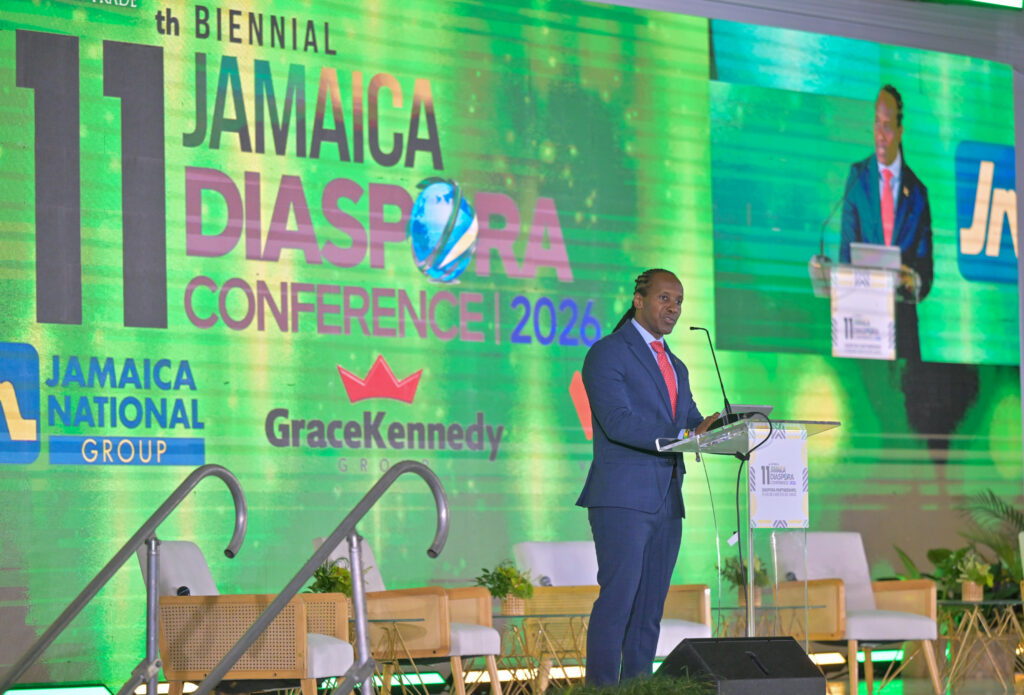
    On the opening weekend of the 11th Biennial Jamaica Diaspora Conference, a powerful call for interconnected global morality and collective care echoed through the halls of Calvary Baptist Church in Montego Bay, St James. The event, held under the overarching conference theme *Diaspora Partnerships: Rebuilding a More Resilient Jamaica*, drew senior government officials, diplomatic representatives, and hundreds of diaspora delegates from across the world, all gathered for the conference’s official opening church service.

    The keynote address was delivered by the Right Reverend Rose Hudson-Wilkin, Bishop of Dover and Canterbury, a trailblazing religious leader who made history as the first Black woman appointed as a bishop in the Church of England, and previously served as personal chaplain to the late Queen Elizabeth II. In her remarks, Bishop Hudson-Wilkin challenged Jamaicans both on the island and in the global diaspora to retain their strong moral voice on the world stage, even as they work to strengthen domestic resilience and national development.

    She emphasized that building a more resilient Jamaica is rooted in collective uplift, particularly for the most marginalized members of society. “At the core of this work will always be how we lift each other up, and how we care for those who are most vulnerable,” she told the congregation. Extending this logic beyond Jamaica’s borders, she argued that shared humanity demands attention to injustices unfolding across the globe, from the long-standing economic blockade of Cuba to ongoing instability in Haiti, the Democratic Republic of Congo, Sudan, and the Middle East.

    Rejecting the common stance that distant crises are “none of our business,” Bishop Hudson-Wilkin used a well-known folk parable of a mousetrap to illustrate the danger of disengagement. She recounted how a rat, facing a set mousetrap, begged for help from the farm’s chicken, pig, and cow, all of whom dismissed the threat as unrelated to their own lives. When the trap snapped on a snake instead of the rat, the snake bit the farmer’s wife. To feed the visitors who came to care for her, the farmer killed the chicken for soup; when her condition worsened and she died, he slaughtered the pig to feed mourners, and butchered the cow for the large funeral gathering. In the end, every animal that claimed the crisis was “nothing to do with me” paid the ultimate price. “We are involved because we are part of the one human race,” she told the congregation, drawing on the South African concept of Ubuntu to frame her argument: “I am because you are. I am because we are. All our lives are inextricably linked together. We must speak out against injustices wherever we see it.”

    Jamaica’s Minister of Foreign Affairs and Foreign Trade, Senator Kamina Johnson-Smith, echoed the call for unity in her opening greetings. She noted that the gathering offers a rare opportunity to reflect on the enduring core values that have sustained Jamaica through decades of challenge: faith, perseverance, unity, and mutual service. “As a Government, we strive to apply our God-given talents and wisdom to the service of every Jamaican,” Johnson-Smith said. “We have taken seriously our mission to engender true respect for all and to strengthen our country so that we may care for all, especially the most vulnerable.”

    Johnson-Smith highlighted the central role that the Jamaican diaspora plays in driving the nation’s growth and development, noting that even during the most difficult periods in the country’s history, the transnational Jamaican family has demonstrated unwavering love and support for the island. Running from June 14 to 18 at the Montego Bay Convention Centre, the 11th Biennial Jamaica Diaspora Conference aims to rethink and reinvigorate collaborative partnerships between the island and global Jamaican communities to build greater national resilience, while strengthening the shared cultural identity that unites Jamaicans across oceans and continents.

  • Parents urged to secure household chemicals to prevent accidental poisoning

    Parents urged to secure household chemicals to prevent accidental poisoning

    As Jamaican schools prepare to close for the annual summer break, public health authorities in Westmoreland are sounding an urgent call to parents and caregivers to strengthen safeguards against childhood accidental poisoning, a persistent regional public health challenge that spikes when children spend more unsupervised time at home.

    The appeal comes on the heels of troubling new data that places western Jamaica among the country’s hotspots for preventable childhood poisoning incidents. Gerald Miller, Health Promotion and Education Officer for the Westmoreland Health Department, confirmed that accidental poisoning remains a top priority public health concern for the region. Recent findings shared during a dedicated industry webinar revealed that Westmoreland logs the second-highest volume of childhood poisoning cases across Jamaica, trailing only neighboring St. James.

    Further analysis from the Western Regional Health Authority (WRHA) underscores the scope of the risk: more than two-thirds, or 67.1 percent, of all accidental poisoning cases recorded across western Jamaica impact children between the ages of one and four, an age group defined by heightened curiosity and exploratory behavior. With summer break set to shift children’s daily routines from structured school environments to unsupervised time at home, Miller says proactive outreach and public education are critical to reversing worrying trends.

    Miller explained that accidental poisoning occurs when an individual, most often a young child, unintentionally ingests, inhales, or absorbs a toxic substance through skin contact. In Jamaica, the most common hazards stem from everyday household items that many caregivers store incorrectly: common household bleaches and all-purpose cleaning products top the list, with these substances capable of causing severe internal poisoning or chemical burns if ingested or inhaled. Other high-risk items include kerosene, turpentine, prescription and over-the-counter medications, improperly stored industrial or gardening chemicals, and single-use detergent pods and tablets, which are often brightly colored and attractive to young children.

    “Children between one and four are in an incredibly curious, oral phase of development,” Miller noted. “Anything bright, colorful, or easy to grab acts like a magnet for them. That’s why proper storage and consistent supervision are non-negotiable.” To that end, Miller is encouraging all households to adopt the public health campaign’s simple, actionable mantra: “high up and lock it up.”

    Miller outlined a clear set of prevention guidelines for caregivers: all medications should be kept with child-resistant safety caps, toxic chemicals should never be transferred to unlabeled food or beverage containers, all hazardous products should remain in their original labeled packaging, and low-level cabinets holding dangerous substances should be fitted with childproof safety locks. For households with young children, consistent active supervision when children are playing in areas where hazardous products are stored remains the simplest way to prevent incidents.

    To help caregivers respond quickly in the event of an emergency, Miller also shared common warning signs of accidental poisoning that require immediate medical attention: nausea, persistent vomiting, diarrhea, chemical burns around the mouth or on the hands, labored or difficult breathing, unexplained drowsiness, seizures, and sudden disorientation. In the event of a suspected poisoning, Miller urged caregivers to remain calm, avoid forcing the child to vomit, which can worsen internal damage from corrosive substances, and seek emergency medical care immediately.

    “Accidental poisoning is 100 percent preventable,” Miller emphasized. “If you don’t lock it up and put it high out of reach, kids will find it. We’re asking every parent, caregiver, and community partner to take this simple step to protect our children.”

    Members of the public seeking additional guidance or emergency support can reach the Caribbean Poison Information Network (CARPIN) 24/7 at their toll-free hotline: 1-888-764-7667.

  • Seiveright touts Jamaican rum as economic powerhouse

    Seiveright touts Jamaican rum as economic powerhouse

    At a recent industry cocktail reception hosted by the West Indies Rum and Spirits Producers’ Association (WIRSPA) and the Spirits Pool Association (SPA) at Kingston’s Courtleigh Hotel & Suites, a top Jamaican trade official has made a forceful case for elevating the island’s iconic rum sector to its rightful place as a foundational driver of national and regional prosperity.

    Delano Seiveright, Minister of State in Jamaica’s Ministry of Industry, Investment and Commerce, told assembled regional industry leaders that the rum sector is far more than a consumer beverage—it is an interconnected ecosystem that touches every corner of the Jamaican economy, from agricultural production to international tourism. Unlike common public perceptions that frame rum as simply a popular alcoholic drink, Seiveright emphasized that the Jamaican government views the industry as a strategic asset that delivers widespread benefits across agriculture, manufacturing, logistics, export revenue, intellectual property protection, rural employment, and national branding.

    “Rum is one of the few products that tells Jamaica’s story every time it is poured anywhere in the world,” Seiveright told attendees, noting that the sector generated roughly US$57 million in export earnings alone in 2024, cementing its status as one of the country’s top export industries. Beyond trade, he added, the industry creates cascading economic opportunities for thousands of people across the island, supporting small-scale farmers, logistics providers, manufacturing workers, tourism employees, marketing teams, local retailers and entire rural communities.

    A central focus of Seiveright’s remarks was the critical role of geographical indication (GI) protection for Jamaican rum, which he framed not just as an intellectual property measure, but as a core tool for equitable economic development. By enforcing GI rules, Seiveright explained, the country can ensure that key high-value stages of production—including ageing, bottling and quality control—remain anchored in Jamaica, retaining skilled jobs and greater economic value within the country rather than seeing them leak to foreign operators.

    The minister also addressed ongoing industry concerns around taxation and global competitiveness, acknowledging the burdens of regulatory costs while contextualizing the government’s recent fiscal policy choices in the wake of major natural disaster. Hurricane Melissa caused an estimated US$12.2 billion in widespread damage across Jamaica’s critical infrastructure, and the government faces the delicate task of balancing the need for post-disaster reconstruction with support for competitive private enterprise. “Nobody welcomes additional taxes — Government included. But neither can Government ignore the need to rebuild homes, schools, roads, bridges and critical infrastructure, and balancing the books,” Seiveright said, adding that policymakers are working to strike a balance between competitiveness, reconstruction, sustainable growth and long-term fiscal responsibility.

    Opening the event, WIRSPA Chairman Clement “Jimmy” Lawrence echoed Seiveright’s comments on the industry’s regional importance, noting that Caribbean rum is one of the region’s most globally recognized exports and a cultural ambassador for Caribbean heritage worldwide. Lawrence said that WIRSPA’s recent annual general meeting centered heavily on growing challenges facing the sector, from shifting global trade rules and market access barriers to evolving tariffs, supply chain disruptions, and changing regulatory requirements that impact regional exporters.

    He warned that proposed adjustments to regional trade arrangements that affect the cost and availability of critical manufacturing inputs, including glass bottles and product labels, must prioritize export competitiveness and supply chain resilience to avoid undermining the sector. During the event, Lawrence officially launched WIRSPA’s 2024 sustainability report, which outlines the industry’s ongoing progress in embedding environmental stewardship, community investment and responsible business practices across all levels of regional production.

    The highlight of the evening’s program came as organizers presented a lifetime achievement award to Dr. Joy Spence, the world-renowned Jamaican master blender, in recognition of her decades-long contributions to advancing the profile of Jamaican and Caribbean rum globally. Accepting the honor, Spence paid tribute to generations of Caribbean distillers, blenders and product innovators who built the sector’s global reputation for quality and authenticity, and credited WIRSPA with unifying the regional industry to secure international recognition for its products.

    “WIRSPA has ensured that what we produce in this region is recognised and respected worldwide as being authentically Caribbean,” Spence said, adding that Jamaican rum remains inseparable from the country’s national heritage and cultural identity.

  • Why does this empty house keep getting $200,000 water bills?

    Why does this empty house keep getting $200,000 water bills?

    A Jamaican-based property dispute over inexplicably high water bills has cast a spotlight on gaps in regulatory communication and utility accountability, after an overseas property owner was hit with hundreds of thousands of dollars in unexpected charges for an unoccupied home.

    VB, the complainant, purchased a residential property in Trelawny, Jamaica in September 2022, and rented it out for nine months before the tenant vacated in June 2023. For six months following the tenant’s departure, the property sat completely unoccupied, with VB only making a single visit in August that year.

    It was in October 2023 that VB first received the shocking bill from the National Water Commission (NWC): a $202,000 charge for that month, while the preceding November’s bill clocked in at just $15,000. Perplexed by the exorbitant charge for an unused property, VB filed a formal complaint with the NWC, which only suggested setting up a small payment plan. After the NWC replaced the property’s water meter, the following month’s bill dropped to just $600, yet the utility claimed tests found neither leaks nor meter damage on the original line.

    Frustrated by the NWC’s stance, VB escalated the issue to Jamaica’s Office of Utilities Regulation (OUR), the independent body tasked with overseeing utility sector disputes. What followed was a year-long wait for a ruling that ultimately left VB locked out of the appeals process.

    The OUR told VB it had mailed the final decision to him because it lacked an email address for correspondence – a claim VB rejects, noting he had already held regular email conversations with OUR staff member Jodian Coultman. VB never received the mailed decision, and by the time the ruling was finally sent to him via email, the 10-day deadline to appeal against the ruling that he was responsible for the full bill had already expired. VB says he has full documentary proof to back up his claim that the OUR never sent the mailed decision as stated.

    The issue did not end there. In September 2025, VB received another water bill of $264,000, marking a pattern where annual bills between August and September consistently top $200,000, far out of line with other months.

    Seeking resolution through the *Tell Claudienne* consumer advocacy column of the *Jamaica Observer*, VB pushed the NWC to open a second review. In an official response to the column, Horace Binns, acting NWC regional manager for St James/Trelawny, said a full re-investigation had confirmed the 2023 bill was accurate. The original meter was tested and found to be functioning correctly, so the charge remained valid.

    For the 2025 inflated bill, Binns explained the charge stemmed from a toilet leak identified during a September 25, 2025 inspection of the property. The new meter installed after the 2023 dispute was also tested and found to be registering correctly, he added. The NWC closed the inquiry after concluding all concerns had been addressed, advising VB to monitor usage and repair any leaks promptly.

    VB remained skeptical, pointing out that even after the alleged leak was reported, he never made any repairs, yet the 2026 bills for May and June came in at just $5,089.10 and $7,661.85 respectively, far lower than the 2025 September charge.

    NWC corporate public relations manager Charles Buchanan offered further clarification, noting that the 2025 leak was reported to a property representative who was present during the inspection. He explained that the leak may have been caused by a loose toilet flapper ball connection, which can cause intermittent, temporary leaks that sometimes resolve on their own after jiggling the handle valve. He added that the reduced 2026 bills were not evidence of incorrect billing, but rather a reflection of two partial payments VB made after his water supply was disconnected in April 2026. A $150,000 partial payment cleared most of the outstanding arrears, with the remaining $144,731.31 covering the balance and disconnection/reconnection fees, resulting in the lower balance reflected on the most recent bills once the account was reconnected on April 27, 2026.

    The *Tell Claudienne* column, which helps local consumers resolve disputes with utilities, retailers and service providers, invites other consumers with unresolved issues to contact them via phone, WhatsApp, mail or email to seek assistance.

  • Young Jamaicans encouraged to engage in policy discussions and to drive innovation

    Young Jamaicans encouraged to engage in policy discussions and to drive innovation

    MONTEGO BAY, St James – Against the backdrop of the 11th Biennial Jamaica Diaspora Conference, a senior government official has made a forceful case for centering young Jamaicans – both domestic residents and members of the global diaspora – in the island nation’s policy development and growth agendas. Speaking at the opening commencement session held at the Montego Bay Convention Centre on the event’s opening day, Alando Terrelonge, Minister of State in Jamaica’s Ministry of Foreign Affairs and Foreign Trade, laid out a clear vision for expanded youth participation in shaping the country’s future.

    Terrelonge opened his remarks by celebrating the strong representation of young professionals, students, and emerging leaders in attendance at the four-day gathering, which runs from June 15 to 18 under the overarching theme “Diaspora Partnerships: Rebuilding a More Climate-Resilient Jamaica”. He referred to these young attendees as Jamaica’s “young kings and queens”, stressing that their active involvement in national efforts is non-negotiable for meaningful progress.

    The state minister emphasized that young people bring unique, irreplaceable value to national problem-solving: they carry the creative drive, relentless energy, and unfiltered fresh perspectives required to tackle not only Jamaica’s most urgent domestic challenges, but also pressing shared issues facing the global community. “The future we seek to build belongs to you,” Terrelonge told the young audience. “It belongs to your ideas, your creativity, and energy, which are indispensable to that effort.”

    Against the backdrop of an increasingly interconnected and complex global landscape, Terrelonge argued that young Jamaicans must be intentionally empowered to contribute across four critical pillars: policy design, entrepreneurial innovation, technological advancement, and sustainable development initiatives. To unlock this potential, he said, the government and broader stakeholders must consistently build intentional pathways that open doors for youth, regardless of whether they live on the island or abroad as part of the diaspora.

    Crucially, Terrelonge pushed beyond the common practice of token youth consultation, noting that genuine engagement requires far more than just hearing young voices. Young people must be integrated directly into decision-making processes, he insisted, so their input directly shapes the policies and initiatives that will define Jamaica’s long-term trajectory. “Your voices must not only be heard but actively incorporated into the decisions that shape our future,” he said.

    Terrelonge highlighted the biennial diaspora conference itself as a model of the kind of opportunity that should be expanded for young leaders. The event brings together hundreds of stakeholders, including diaspora members, government policymakers, private sector leaders, global development practitioners, and innovators, creating space for cross-community dialogue that would not otherwise happen. This exposure to a wide range of diverse perspectives and lived experiences, he explained, helps young people build the skills, connections, and professional networks they need to drive impact at both the national and global level.

    He urged all attendees – especially young participants – to make the most of the conference’s full slate of programming, including plenary discussions, skills-focused workshops, and structured networking sessions. Meaningful, long-lasting partnerships that drive real change often grow out of intentional dialogue and collaborative problem-solving, he noted, and the conference is designed to foster exactly those kinds of connections.

    In closing, Terrelonge framed youth empowerment as a foundational priority for Jamaica’s long-term success. Investing in the next generation of leaders, he argued, is the only way to guarantee that Jamaica remains resilient in the face of emerging challenges, competitive in the global economy, and innovative in its approach to national development.

    Hosted this year in St James, the 11th iteration of the conference brings together a diverse cohort of stakeholders united around two core goals: advancing inclusive national development and strengthening Jamaica’s capacity to adapt to and withstand the impacts of climate change. The gathering provides a dedicated space to co-design actionable solutions that leverage the resources, expertise, and connections of the global Jamaican diaspora to support progress on the island.