标签: Jamaica

牙买加

  • Missing plane found, no loss of lives

    Missing plane found, no loss of lives

    In an official update released Monday, the government of St Vincent and the Grenadines has confirmed that a Dominican Republic-registered aircraft that disappeared mid-flight last weekend while traveling to Tobago has been located, with all people on board alive. The announcement came from Deputy Prime Minister and National Security Minister St Clair Leacock during a local radio address, who noted that a coordinated search effort involving international, regional and local agencies successfully tracked down the twin-engine plane. However, he declined to disclose the exact location of the recovered aircraft.

    A prior public notice from the Ministry of Tourism, Civil Aviation and Sustainable Development outlined the basic details of the flight: the plane, identified as a B58T or 58P Pressurized Beechcraft Baron with registration number HI-1145, departed Argyle International Airport in St Vincent at 11:52 a.m. local time this past Friday, carrying only two people on board. The aircraft was scheduled to complete its 65-minute journey and land at Tobago’s A.N.R. Robinson International Airport shortly after departure.

    Leacock told radio listeners that he had maintained constant communication with local police leadership and regional security bodies throughout the search operation, including the Barbados-headquartered Regional Security System (RSS) and the Trinidad-based Caribbean Community (CARICOM) Implementation Agency for Crime and Security (IMPACS). He added that local authorities have already compiled information on all individuals linked to the missing aircraft, but refused to publicly share full details of the ongoing investigation.

    The security minister explained that disclosing sensitive operational details at this stage would put the ongoing work of search and investigative agencies at risk, adding that intelligence and security teams are continuing to closely monitor all developments related to the incident. He emphasized that authorities are prioritizing the investigation of the people operating and traveling on the aircraft over the plane itself, noting that the aircraft cannot operate without human control, and that investigators are working to determine the appropriate next steps in the probe.

    Before contact with the plane was lost, its flight path was tracked by popular public flight monitoring platform Flightradar24. Data from the site showed the aircraft was operating under visual flight rules (VFR), maintaining an altitude of 4,025 feet and a cruising speed of 142 knots. All tracking signals cut off abruptly while the plane was over the Southern Caribbean Sea, with the last recorded position placing it in the vicinity of Grenadian or Venezuelan territorial waters.

  • Diaspora urged to help provide resources to assist children with special needs

    Diaspora urged to help provide resources to assist children with special needs

    MONTEGO BAY, St James — As Jamaica grapples with a sharp, nationwide increase in the number of children requiring specialized educational support, Education Minister Dr. Dana Morris-Dixon has issued an urgent, heartfelt call for resource and expertise backing from members of the Jamaican diaspora community around the world. Speaking Monday at the 11th Biennial Jamaica Diaspora Conference, hosted at the Montego Bay Convention Centre, the minister openly conceded that the country’s current education infrastructure is not prepared to meet this growing demand, even as the government remains committed to upholding the principle that no child will be left behind.

    “Our special education children cannot be left behind. They’re just as important as every other child, and they have a lot to give to this country,” Morris-Dixon told the assembled audience, drawing a show of commitment from attendees after framing her appeal: “We have to do a lot of work in that area, and as a diaspora, I need your help. You need to commit to helping me — you’re clapping, so you’re committing to helping me!”

    The most pressing gap the system faces is a lack of dedicated diagnostic facilities to identify and assess children’s special needs, the minister explained. Currently, the only public diagnostic centers operating under the Ministry of Education are based at Mico University College in Kingston and Sam Sharpe Teachers College in St James, forcing families in more rural regions to travel hundreds of kilometers to access critical evaluations. Morris-Dixon did highlight one upcoming improvement: a new diagnostic facility in Portland, set to open before the end of the year. Once operational, the center will cut travel times and improve access for families in Portland and neighboring St Mary, a development the minister called a meaningful win for local communities.

    Even as the government expands diagnostic capacity, a second, more persistent challenge remains: a critical shortage of specialized therapy professionals. “That’s where we don’t have a lot of experts,” Morris-Dixon said. To address this gap, she extended an open invitation to international academic institutions and training programs: if they are educating speech therapists, occupational therapists, or other specialists focused on supporting children with special needs, the Jamaican Ministry of Education stands ready to welcome students and practitioners for clinical placements and collaborative work.

    “We’re open. We’re a very flexible ministry,” she noted. “We understand that we may not have all of the resources here, but we’re open to getting the support for the students in different ways.” Alongside recruiting outside expertise, the minister emphasized that ongoing professional development for local special education teachers remains a top priority.

    In a key policy update, Morris-Dixon revealed that the Ministry of Education has finalized the country’s first formal special education needs policy, which will soon be submitted to Parliament for approval. A core component of the new framework is expanding public education to build greater awareness and understanding of special needs across Jamaican society.

    The appeal comes just days after Observer Online reported that the ministry is already moving ahead to create new specialized learning spaces, following a surge in demand for special education services nationwide. One senior official noted that demand has reached alarming levels in the Kingston and St Andrew Corporate Area, a trend that may be linked to higher numbers of school-aged children born during recent viral epidemics and the COVID-19 pandemic.

  • Bishop Hudson-Wilkin calls for Jamaica’s moral voice on world stage

    Bishop Hudson-Wilkin calls for Jamaica’s moral voice on world stage

    On the opening weekend of the 11th Biennial Jamaica Diaspora Conference, a powerful call for interconnected global morality and collective care echoed through the halls of Calvary Baptist Church in Montego Bay, St James. The event, held under the overarching conference theme *Diaspora Partnerships: Rebuilding a More Resilient Jamaica*, drew senior government officials, diplomatic representatives, and hundreds of diaspora delegates from across the world, all gathered for the conference’s official opening church service.

    The keynote address was delivered by the Right Reverend Rose Hudson-Wilkin, Bishop of Dover and Canterbury, a trailblazing religious leader who made history as the first Black woman appointed as a bishop in the Church of England, and previously served as personal chaplain to the late Queen Elizabeth II. In her remarks, Bishop Hudson-Wilkin challenged Jamaicans both on the island and in the global diaspora to retain their strong moral voice on the world stage, even as they work to strengthen domestic resilience and national development.

    She emphasized that building a more resilient Jamaica is rooted in collective uplift, particularly for the most marginalized members of society. “At the core of this work will always be how we lift each other up, and how we care for those who are most vulnerable,” she told the congregation. Extending this logic beyond Jamaica’s borders, she argued that shared humanity demands attention to injustices unfolding across the globe, from the long-standing economic blockade of Cuba to ongoing instability in Haiti, the Democratic Republic of Congo, Sudan, and the Middle East.

    Rejecting the common stance that distant crises are “none of our business,” Bishop Hudson-Wilkin used a well-known folk parable of a mousetrap to illustrate the danger of disengagement. She recounted how a rat, facing a set mousetrap, begged for help from the farm’s chicken, pig, and cow, all of whom dismissed the threat as unrelated to their own lives. When the trap snapped on a snake instead of the rat, the snake bit the farmer’s wife. To feed the visitors who came to care for her, the farmer killed the chicken for soup; when her condition worsened and she died, he slaughtered the pig to feed mourners, and butchered the cow for the large funeral gathering. In the end, every animal that claimed the crisis was “nothing to do with me” paid the ultimate price. “We are involved because we are part of the one human race,” she told the congregation, drawing on the South African concept of Ubuntu to frame her argument: “I am because you are. I am because we are. All our lives are inextricably linked together. We must speak out against injustices wherever we see it.”

    Jamaica’s Minister of Foreign Affairs and Foreign Trade, Senator Kamina Johnson-Smith, echoed the call for unity in her opening greetings. She noted that the gathering offers a rare opportunity to reflect on the enduring core values that have sustained Jamaica through decades of challenge: faith, perseverance, unity, and mutual service. “As a Government, we strive to apply our God-given talents and wisdom to the service of every Jamaican,” Johnson-Smith said. “We have taken seriously our mission to engender true respect for all and to strengthen our country so that we may care for all, especially the most vulnerable.”

    Johnson-Smith highlighted the central role that the Jamaican diaspora plays in driving the nation’s growth and development, noting that even during the most difficult periods in the country’s history, the transnational Jamaican family has demonstrated unwavering love and support for the island. Running from June 14 to 18 at the Montego Bay Convention Centre, the 11th Biennial Jamaica Diaspora Conference aims to rethink and reinvigorate collaborative partnerships between the island and global Jamaican communities to build greater national resilience, while strengthening the shared cultural identity that unites Jamaicans across oceans and continents.

  • Parents urged to secure household chemicals to prevent accidental poisoning

    Parents urged to secure household chemicals to prevent accidental poisoning

    As Jamaican schools prepare to close for the annual summer break, public health authorities in Westmoreland are sounding an urgent call to parents and caregivers to strengthen safeguards against childhood accidental poisoning, a persistent regional public health challenge that spikes when children spend more unsupervised time at home.

    The appeal comes on the heels of troubling new data that places western Jamaica among the country’s hotspots for preventable childhood poisoning incidents. Gerald Miller, Health Promotion and Education Officer for the Westmoreland Health Department, confirmed that accidental poisoning remains a top priority public health concern for the region. Recent findings shared during a dedicated industry webinar revealed that Westmoreland logs the second-highest volume of childhood poisoning cases across Jamaica, trailing only neighboring St. James.

    Further analysis from the Western Regional Health Authority (WRHA) underscores the scope of the risk: more than two-thirds, or 67.1 percent, of all accidental poisoning cases recorded across western Jamaica impact children between the ages of one and four, an age group defined by heightened curiosity and exploratory behavior. With summer break set to shift children’s daily routines from structured school environments to unsupervised time at home, Miller says proactive outreach and public education are critical to reversing worrying trends.

    Miller explained that accidental poisoning occurs when an individual, most often a young child, unintentionally ingests, inhales, or absorbs a toxic substance through skin contact. In Jamaica, the most common hazards stem from everyday household items that many caregivers store incorrectly: common household bleaches and all-purpose cleaning products top the list, with these substances capable of causing severe internal poisoning or chemical burns if ingested or inhaled. Other high-risk items include kerosene, turpentine, prescription and over-the-counter medications, improperly stored industrial or gardening chemicals, and single-use detergent pods and tablets, which are often brightly colored and attractive to young children.

    “Children between one and four are in an incredibly curious, oral phase of development,” Miller noted. “Anything bright, colorful, or easy to grab acts like a magnet for them. That’s why proper storage and consistent supervision are non-negotiable.” To that end, Miller is encouraging all households to adopt the public health campaign’s simple, actionable mantra: “high up and lock it up.”

    Miller outlined a clear set of prevention guidelines for caregivers: all medications should be kept with child-resistant safety caps, toxic chemicals should never be transferred to unlabeled food or beverage containers, all hazardous products should remain in their original labeled packaging, and low-level cabinets holding dangerous substances should be fitted with childproof safety locks. For households with young children, consistent active supervision when children are playing in areas where hazardous products are stored remains the simplest way to prevent incidents.

    To help caregivers respond quickly in the event of an emergency, Miller also shared common warning signs of accidental poisoning that require immediate medical attention: nausea, persistent vomiting, diarrhea, chemical burns around the mouth or on the hands, labored or difficult breathing, unexplained drowsiness, seizures, and sudden disorientation. In the event of a suspected poisoning, Miller urged caregivers to remain calm, avoid forcing the child to vomit, which can worsen internal damage from corrosive substances, and seek emergency medical care immediately.

    “Accidental poisoning is 100 percent preventable,” Miller emphasized. “If you don’t lock it up and put it high out of reach, kids will find it. We’re asking every parent, caregiver, and community partner to take this simple step to protect our children.”

    Members of the public seeking additional guidance or emergency support can reach the Caribbean Poison Information Network (CARPIN) 24/7 at their toll-free hotline: 1-888-764-7667.

  • Seiveright touts Jamaican rum as economic powerhouse

    Seiveright touts Jamaican rum as economic powerhouse

    At a recent industry cocktail reception hosted by the West Indies Rum and Spirits Producers’ Association (WIRSPA) and the Spirits Pool Association (SPA) at Kingston’s Courtleigh Hotel & Suites, a top Jamaican trade official has made a forceful case for elevating the island’s iconic rum sector to its rightful place as a foundational driver of national and regional prosperity.

    Delano Seiveright, Minister of State in Jamaica’s Ministry of Industry, Investment and Commerce, told assembled regional industry leaders that the rum sector is far more than a consumer beverage—it is an interconnected ecosystem that touches every corner of the Jamaican economy, from agricultural production to international tourism. Unlike common public perceptions that frame rum as simply a popular alcoholic drink, Seiveright emphasized that the Jamaican government views the industry as a strategic asset that delivers widespread benefits across agriculture, manufacturing, logistics, export revenue, intellectual property protection, rural employment, and national branding.

    “Rum is one of the few products that tells Jamaica’s story every time it is poured anywhere in the world,” Seiveright told attendees, noting that the sector generated roughly US$57 million in export earnings alone in 2024, cementing its status as one of the country’s top export industries. Beyond trade, he added, the industry creates cascading economic opportunities for thousands of people across the island, supporting small-scale farmers, logistics providers, manufacturing workers, tourism employees, marketing teams, local retailers and entire rural communities.

    A central focus of Seiveright’s remarks was the critical role of geographical indication (GI) protection for Jamaican rum, which he framed not just as an intellectual property measure, but as a core tool for equitable economic development. By enforcing GI rules, Seiveright explained, the country can ensure that key high-value stages of production—including ageing, bottling and quality control—remain anchored in Jamaica, retaining skilled jobs and greater economic value within the country rather than seeing them leak to foreign operators.

    The minister also addressed ongoing industry concerns around taxation and global competitiveness, acknowledging the burdens of regulatory costs while contextualizing the government’s recent fiscal policy choices in the wake of major natural disaster. Hurricane Melissa caused an estimated US$12.2 billion in widespread damage across Jamaica’s critical infrastructure, and the government faces the delicate task of balancing the need for post-disaster reconstruction with support for competitive private enterprise. “Nobody welcomes additional taxes — Government included. But neither can Government ignore the need to rebuild homes, schools, roads, bridges and critical infrastructure, and balancing the books,” Seiveright said, adding that policymakers are working to strike a balance between competitiveness, reconstruction, sustainable growth and long-term fiscal responsibility.

    Opening the event, WIRSPA Chairman Clement “Jimmy” Lawrence echoed Seiveright’s comments on the industry’s regional importance, noting that Caribbean rum is one of the region’s most globally recognized exports and a cultural ambassador for Caribbean heritage worldwide. Lawrence said that WIRSPA’s recent annual general meeting centered heavily on growing challenges facing the sector, from shifting global trade rules and market access barriers to evolving tariffs, supply chain disruptions, and changing regulatory requirements that impact regional exporters.

    He warned that proposed adjustments to regional trade arrangements that affect the cost and availability of critical manufacturing inputs, including glass bottles and product labels, must prioritize export competitiveness and supply chain resilience to avoid undermining the sector. During the event, Lawrence officially launched WIRSPA’s 2024 sustainability report, which outlines the industry’s ongoing progress in embedding environmental stewardship, community investment and responsible business practices across all levels of regional production.

    The highlight of the evening’s program came as organizers presented a lifetime achievement award to Dr. Joy Spence, the world-renowned Jamaican master blender, in recognition of her decades-long contributions to advancing the profile of Jamaican and Caribbean rum globally. Accepting the honor, Spence paid tribute to generations of Caribbean distillers, blenders and product innovators who built the sector’s global reputation for quality and authenticity, and credited WIRSPA with unifying the regional industry to secure international recognition for its products.

    “WIRSPA has ensured that what we produce in this region is recognised and respected worldwide as being authentically Caribbean,” Spence said, adding that Jamaican rum remains inseparable from the country’s national heritage and cultural identity.

  • Why does this empty house keep getting $200,000 water bills?

    Why does this empty house keep getting $200,000 water bills?

    A Jamaican-based property dispute over inexplicably high water bills has cast a spotlight on gaps in regulatory communication and utility accountability, after an overseas property owner was hit with hundreds of thousands of dollars in unexpected charges for an unoccupied home.

    VB, the complainant, purchased a residential property in Trelawny, Jamaica in September 2022, and rented it out for nine months before the tenant vacated in June 2023. For six months following the tenant’s departure, the property sat completely unoccupied, with VB only making a single visit in August that year.

    It was in October 2023 that VB first received the shocking bill from the National Water Commission (NWC): a $202,000 charge for that month, while the preceding November’s bill clocked in at just $15,000. Perplexed by the exorbitant charge for an unused property, VB filed a formal complaint with the NWC, which only suggested setting up a small payment plan. After the NWC replaced the property’s water meter, the following month’s bill dropped to just $600, yet the utility claimed tests found neither leaks nor meter damage on the original line.

    Frustrated by the NWC’s stance, VB escalated the issue to Jamaica’s Office of Utilities Regulation (OUR), the independent body tasked with overseeing utility sector disputes. What followed was a year-long wait for a ruling that ultimately left VB locked out of the appeals process.

    The OUR told VB it had mailed the final decision to him because it lacked an email address for correspondence – a claim VB rejects, noting he had already held regular email conversations with OUR staff member Jodian Coultman. VB never received the mailed decision, and by the time the ruling was finally sent to him via email, the 10-day deadline to appeal against the ruling that he was responsible for the full bill had already expired. VB says he has full documentary proof to back up his claim that the OUR never sent the mailed decision as stated.

    The issue did not end there. In September 2025, VB received another water bill of $264,000, marking a pattern where annual bills between August and September consistently top $200,000, far out of line with other months.

    Seeking resolution through the *Tell Claudienne* consumer advocacy column of the *Jamaica Observer*, VB pushed the NWC to open a second review. In an official response to the column, Horace Binns, acting NWC regional manager for St James/Trelawny, said a full re-investigation had confirmed the 2023 bill was accurate. The original meter was tested and found to be functioning correctly, so the charge remained valid.

    For the 2025 inflated bill, Binns explained the charge stemmed from a toilet leak identified during a September 25, 2025 inspection of the property. The new meter installed after the 2023 dispute was also tested and found to be registering correctly, he added. The NWC closed the inquiry after concluding all concerns had been addressed, advising VB to monitor usage and repair any leaks promptly.

    VB remained skeptical, pointing out that even after the alleged leak was reported, he never made any repairs, yet the 2026 bills for May and June came in at just $5,089.10 and $7,661.85 respectively, far lower than the 2025 September charge.

    NWC corporate public relations manager Charles Buchanan offered further clarification, noting that the 2025 leak was reported to a property representative who was present during the inspection. He explained that the leak may have been caused by a loose toilet flapper ball connection, which can cause intermittent, temporary leaks that sometimes resolve on their own after jiggling the handle valve. He added that the reduced 2026 bills were not evidence of incorrect billing, but rather a reflection of two partial payments VB made after his water supply was disconnected in April 2026. A $150,000 partial payment cleared most of the outstanding arrears, with the remaining $144,731.31 covering the balance and disconnection/reconnection fees, resulting in the lower balance reflected on the most recent bills once the account was reconnected on April 27, 2026.

    The *Tell Claudienne* column, which helps local consumers resolve disputes with utilities, retailers and service providers, invites other consumers with unresolved issues to contact them via phone, WhatsApp, mail or email to seek assistance.


  • Young Jamaicans encouraged to engage in policy discussions and to drive innovation

    Young Jamaicans encouraged to engage in policy discussions and to drive innovation

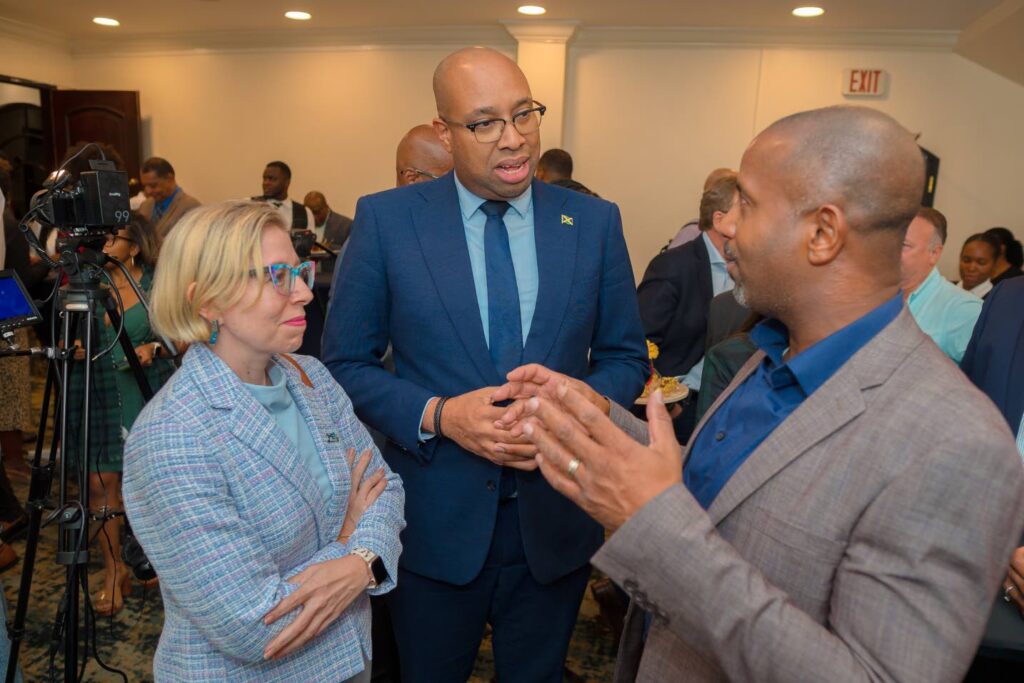
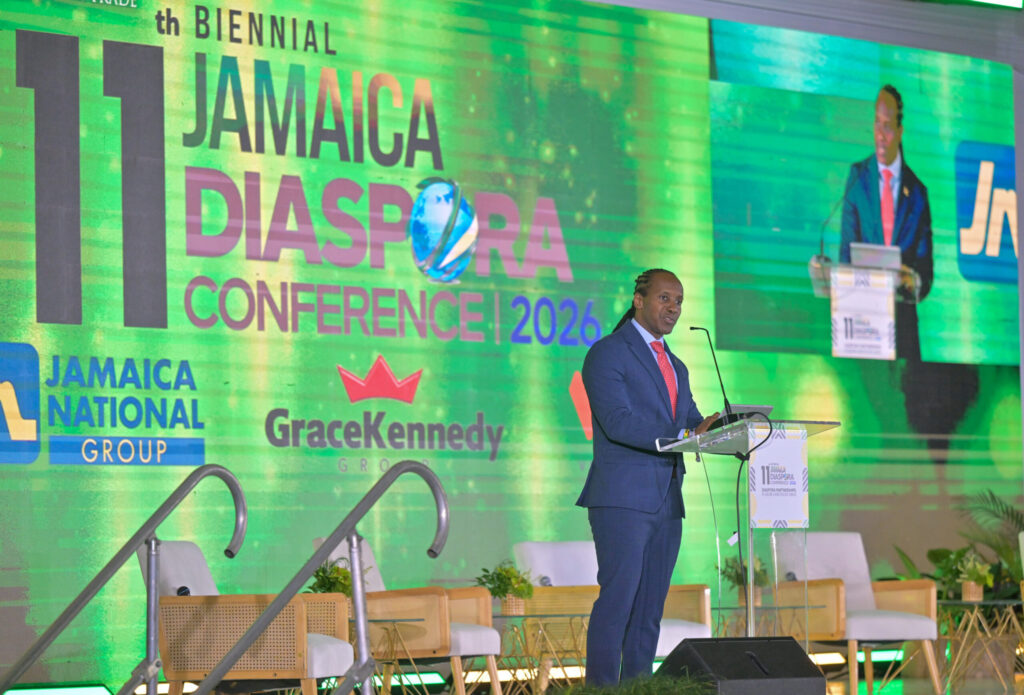
    MONTEGO BAY, St James – Against the backdrop of the 11th Biennial Jamaica Diaspora Conference, a senior government official has made a forceful case for centering young Jamaicans – both domestic residents and members of the global diaspora – in the island nation’s policy development and growth agendas. Speaking at the opening commencement session held at the Montego Bay Convention Centre on the event’s opening day, Alando Terrelonge, Minister of State in Jamaica’s Ministry of Foreign Affairs and Foreign Trade, laid out a clear vision for expanded youth participation in shaping the country’s future.

    Terrelonge opened his remarks by celebrating the strong representation of young professionals, students, and emerging leaders in attendance at the four-day gathering, which runs from June 15 to 18 under the overarching theme “Diaspora Partnerships: Rebuilding a More Climate-Resilient Jamaica”. He referred to these young attendees as Jamaica’s “young kings and queens”, stressing that their active involvement in national efforts is non-negotiable for meaningful progress.

    The state minister emphasized that young people bring unique, irreplaceable value to national problem-solving: they carry the creative drive, relentless energy, and unfiltered fresh perspectives required to tackle not only Jamaica’s most urgent domestic challenges, but also pressing shared issues facing the global community. “The future we seek to build belongs to you,” Terrelonge told the young audience. “It belongs to your ideas, your creativity, and energy, which are indispensable to that effort.”

    Against the backdrop of an increasingly interconnected and complex global landscape, Terrelonge argued that young Jamaicans must be intentionally empowered to contribute across four critical pillars: policy design, entrepreneurial innovation, technological advancement, and sustainable development initiatives. To unlock this potential, he said, the government and broader stakeholders must consistently build intentional pathways that open doors for youth, regardless of whether they live on the island or abroad as part of the diaspora.

    Crucially, Terrelonge pushed beyond the common practice of token youth consultation, noting that genuine engagement requires far more than just hearing young voices. Young people must be integrated directly into decision-making processes, he insisted, so their input directly shapes the policies and initiatives that will define Jamaica’s long-term trajectory. “Your voices must not only be heard but actively incorporated into the decisions that shape our future,” he said.

    Terrelonge highlighted the biennial diaspora conference itself as a model of the kind of opportunity that should be expanded for young leaders. The event brings together hundreds of stakeholders, including diaspora members, government policymakers, private sector leaders, global development practitioners, and innovators, creating space for cross-community dialogue that would not otherwise happen. This exposure to a wide range of diverse perspectives and lived experiences, he explained, helps young people build the skills, connections, and professional networks they need to drive impact at both the national and global level.

    He urged all attendees – especially young participants – to make the most of the conference’s full slate of programming, including plenary discussions, skills-focused workshops, and structured networking sessions. Meaningful, long-lasting partnerships that drive real change often grow out of intentional dialogue and collaborative problem-solving, he noted, and the conference is designed to foster exactly those kinds of connections.

    In closing, Terrelonge framed youth empowerment as a foundational priority for Jamaica’s long-term success. Investing in the next generation of leaders, he argued, is the only way to guarantee that Jamaica remains resilient in the face of emerging challenges, competitive in the global economy, and innovative in its approach to national development.

    Hosted this year in St James, the 11th iteration of the conference brings together a diverse cohort of stakeholders united around two core goals: advancing inclusive national development and strengthening Jamaica’s capacity to adapt to and withstand the impacts of climate change. The gathering provides a dedicated space to co-design actionable solutions that leverage the resources, expertise, and connections of the global Jamaican diaspora to support progress on the island.

  • GERMAN BLITZ!

    GERMAN BLITZ!

    HOUSTON, Texas – Four-time World Cup champions Germany kicked off their 2026 World Cup Group E campaign in dominant fashion on Sunday, securing their first opening-match victory at the global tournament since their 2014 title run with a lopsided 7-1 win over first-time qualifiers Curacao at Houston Stadium. The resounding result puts the German side in a strong position to reach the knockout round for the first time in 12 years, though stiffer tests await against group opponents Ecuador and Ivory Coast in the coming matches.

    The match got off to a fast start for Germany, as 22-year-old midfielder Felix Nmecha – who previously represented England at youth level before pledging his allegiance to Germany – curled a stunning strike past Curacao goalkeeper Eloy Room in the sixth minute, collecting a well-placed pass from Florian Wirtz to outmaneuver a defender and open the scoring. The early goal drew a jubilant roar from German head coach Julian Nagelsmann, and Nmecha nearly doubled his tally just minutes later with a blistering long-range effort that sailed just off target.

    Against all expectations, Curacao hit back to draw level in the first half, as Livano Comenencia’s deflected shot wrong-footed German captain and goalkeeper Manuel Neuer. At 40 years old, Neuer is the oldest German player to ever feature at a World Cup, and this appearance marks his fifth participation in the global tournament – a historic milestone for the veteran shot-stopper. He was left shaking his head at the deflection, but Curacao’s 78-year-old head coach Dick Advocaat, the oldest manager to ever lead a side at the World Cup finals, leapt from his bench with arms raised in celebration. The underdog Caribbean side’s equalizer sent their traveling fan group, known as the Blue Wave, into a frenzy in the Houston stands.

    A mandatory mid-first-half drinks break gave Germany time to reset and refocus after the unexpected concession. “The goal we conceded was unnecessary, but that’s part of football,” said young full-back Nathaniel Brown after the match. “I’m proud that we didn’t let our heads drop after that.”

    Curacao’s defense held firm for several minutes after the restart, with Room pulling off a spectacular save to tip Nico Schlotterbeck’s header over the crossbar as the four-time champions pinned the debutants back in their own half. Desperate last-ditch blocks repeatedly kept Germany at bay, but the Curacao backline finally cracked in the 38th minute: Schlotterbeck found himself unmarked at the near post from a corner, and powered a header home for his first ever senior international goal, putting Germany back in the lead.

    Germany extended their advantage before halftime to 3-1, when Kai Havertz calmly converted a penalty after Nmecha was brought down in the box by Riechedly Bazoer. The floodgates fully opened just 69 seconds into the second half, when another former youth England international Jamal Musiala ran onto a pinpoint through ball from Joshua Kimmich and slotted home from a tight angle to make the score 4-1.

    Leroy Sane missed a clear chance to add a fifth just after the hour mark, sending his shot wide with only Room to beat, but Brown made no such mistake moments later, firing home his first ever goal for Germany just before the second hydration break. “It is indescribable,” the 22-year-old said of the milestone. “To score in the first World Cup match, my family is there, then to celebrate with the guys — simply incredible.”

    Substitute Deniz Undav, who has been in red-hot form for Germany on the international stage, made the score 6-1 with his seventh goal in his last seven senior appearances. Havertz put the final nail in the coffin with a late second goal of his own – his 24th overall for the national side – that brought the final score to 7-1, a mirror image of Germany’s iconic 7-1 semi-final victory over host Brazil at the 2014 World Cup.

    The lopsided win sends Germany to the top of the Group E table early in the tournament, boosting their hopes of progressing to the knockout stage for the first time since they lifted the trophy in Rio 12 years ago.

  • Sheila Lee, businesswoman and widow of Byron Lee, passes away at 83

    Sheila Lee, businesswoman and widow of Byron Lee, passes away at 83

    Renowned Jamaican businesswoman Sheila Lee, whose quiet but impactful contributions shaped decades of Caribbean music and cultural events, passed away on June 6 at her home in Florida at the age of 83. The news was confirmed by her daughter Julianne in an interview with Observer Online.

    Born Sheila Khouri in Kingston, Jamaica, Lee grew up as the oldest of 10 children in a family of Lebanese heritage with deep roots in Jamaica’s emerging music sector. Her family connection to the industry ran early: her father Michel was a cousin to Ken Khouri, the trailblazing founder of Federal Records who laid the foundational infrastructure for Jamaican popular music. Growing up in Kingston’s tight-knit creative circle, Lee became close with Ronnie Nasralla, a fellow St George’s College graduate and friend of bandleader Byron Lee, which sparked the first meeting between Sheila and Byron. The pair went on to marry 41 years, raising three daughters together before Byron’s death in 2008 at age 73.

    Throughout her husband’s decades-long career, Lee worked as a behind-the-scenes driving force across nearly all of his professional ventures. When Byron founded his iconic band The Dragonaires at St George’s College in 1955, Lee stepped into a key supporting role, and during the ska revolution of the early 1960s, she helped popularize the global dance craze by making public appearances alongside the band as their track *Jamaican Ska* climbed the regional charts. She also played a central role in the operations of Dynamic Sounds, the influential recording and distribution company Byron launched in 1964, which hosted countless iconic Jamaican music sessions over decades of operation.

    In 1990, when Byron Lee launched Jamaica Carnival, the landmark annual celebration that brought Eastern Caribbean soca culture to Kingston’s streets and drew tens of thousands of attendees each year, Lee was integral to the event’s organization and long-term success. Beyond her work alongside her husband, Lee built a lasting legacy of her own as the founder and operator of Sheila Music, a successful music publishing company that supported Jamaican creators for years.

    Lee is survived by her three daughters Judith, Julianne and Danielle, three grandchildren, four brothers, and four sisters. One brother predeceased her. A thanksgiving service to honor her life and legacy is scheduled for June 19 at the Kingdom Hall of Jehovah’s Witness in Pembroke Pines, Florida.

  • Zagga, Tarrus Riley deliver I’m Alright vid

    Zagga, Tarrus Riley deliver I’m Alright vid

    Two of Jamaica’s most celebrated recording artists, Zagga and Tarrus Riley, have unveiled the official music video for their much-hyped collaborative track *I’m Alright* — a fan-favorite cut from Zagga’s latest full-length album, *Piece of Paradise*. The project leans hard into core themes of unshakable positivity, steady perseverance, and unwavering inner strength, crafting an uplifting narrative that encourages listeners to push through life’s hurdles while holding fast to faith, gratitude, and resilient spirit.

    The accompanying visual brings the song’s heartfelt message to vivid life, pairing authentic storytelling and bright, energetic cinematography with the palpable, organic chemistry that exists between the two Jamaican musicians. Speaking on the new release, Zagga shared that the final product aligns perfectly with the team’s original creative vision. “Everybody had an input so it’s personal for everyone. As usual collaborating with Tarrus Riley is always seamless because that’s my fam in real life. I genuinely hope everybody get to watch and enjoy the vibes,” he explained.

    Genre-bending at its core, the collaboration merges Zagga’s signature high-octane dancehall dynamism with Tarrus Riley’s soul-soaked reggae roots. The resulting track is a powerhouse anthem that strikes a deep chord with audiences navigating routine hardships, reminding them that hope and optimism remain accessible choices even in hard times. Even before the video’s debut, *I’m Alright* had already built a loyal global fanbase, holding strong as a widely shared reminder that strength and hopefulness can outlast even the toughest moments. With the launch of the official visual, the track’s encouraging message gets a powerful new layer, marking another key milestone in the successful rollout of Zagga’s *Piece of Paradise* album.