
A government-commissioned independent review of Jamaica’s flagship medical facility, the University Hospital of the West Indies (UHWI), has uncovered critical systemic failures rooted in 75-year-old governing legislation that opened the door to widespread misconduct and significant institutional harm. The review panel, led by seasoned Jamaican attorney Howard Mitchell, concluded that the aging 1948 University Hospital Act is riddled with unaddressed loopholes that have effectively created an unregulated space for abuse across multiple areas of the hospital’s operations. Mitchell is now pushing for urgent, comprehensive overhauls to the decades-old law, emphasizing that outdated regulatory frameworks have left gaping holes in institutional accountability that cannot be allowed to remain in place. He argues that modernizing the legislation is a non-negotiable step to realign UHWI’s governance structure with the operational and ethical demands of 21st-century public healthcare. Beyond the systemic governance gaps, the committee’s findings paint a stark picture of tangible harm to both public finances and patient care: the weak regulatory environment allowed the hospital to lose billions of dollars over time, while thousands of Jamaican residents relying on the premier facility have been failed by the system and denied access to appropriate medical treatment. The full, detailed findings of the review committee are scheduled to be published in extended reports on pages 4 and 5 of the relevant publication.
标签: Jamaica
牙买加
-
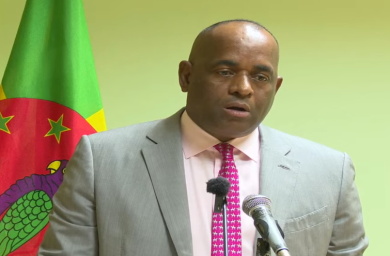
Dominica PM expresses support for Barnett’s reappointment as Caricom secretary general
Amidst a growing public rift across the Caribbean Community (Caricom) over the reappointment of Belizean economist Dr. Carla Barnett as the bloc’s secretary-general, Dominica’s Prime Minister Roosevelt Skerrit has publicly thrown his full weight behind the move, confirming his government’s endorsement of the outcome of the regional vote.
Speaking at a press briefing held in Roseau on Wednesday, Skerrit made clear that from his administration’s perspective, Barnett’s reappointment is a settled matter. “As far as I’m concerned, Dr. Carla Barnett has been reappointed as secretary-general, and in Dominica’s style, we are team players, we support the decision and we move on,” Skerrit told reporters. He added that while he would not object to reopening discussions if the Caricom Bureau or Conference of Heads of Government chooses to do so, the existing process already followed proper procedure, delivered a clear majority in Barnett’s favor, and should be respected as the final outcome.
The controversy surrounding Barnett’s second term dates back to February’s Caricom summit hosted in Basseterre, St. Kitts and Nevis. In March, Caricom chairman and St. Kitts and Nevis Prime Minister Dr. Terrance Drew released a short statement confirming that Barnett had secured the “required majority” of regional leader votes to earn reappointment. However, the process has been challenged by several high-profile regional leaders ever since.
Prime Minister Kamla Persad-Bissessar of Trinidad and Tobago, who was absent from the closed-door retreat where the vote was held, has openly questioned the legitimacy of the procedure. She has rejected Drew’s claim that Trinidad and Tobago was not uninvited to the meeting, and is demanding access to official meeting minutes, documentation of Barnett’s performance appraisal, and records of the 2021 appointment process to verify that current procedures align with the rules established for that cycle. Though Trinidad and Tobago first called for a special regional leaders’ meeting to debate the dispute, it did not attend a virtual heads gathering held to address the issue in April.
Last month, the debate escalated when Sir Ronald Sanders, Antigua and Barbuda’s ambassador to the United States and the Organization of American States, publicly called on Barnett to step down. Speaking on ABS Television, Sanders argued that the ongoing controversy created a barrier to regional integration progress. “If I were the secretary general of Caricom and I’m being quite serious here and this had occurred, I would have resigned and I would have resigned because I would have said I must not stand in the way of Caribbean integration and the movement forward,” Sanders said.
Jamaica’s Prime Minister Andrew Holness has meanwhile pushed for a full special heads of government meeting to resolve the deadlock, noting that public discourse around the dispute has sown widespread unease across the bloc. Speaking to the *Trinidad Guardian* in New York in April, where he was honored by the American Foundation for the University of the West Indies, Holness said behind-the-scenes talks are already underway to organize direct engagement between all regional leaders. “I think it is distressing for a lot of persons within the region regarding what is being said in the public domain, but I know that all the heads are working behind the scenes to have this matter resolved,” he said, adding that further diplomatic consultations are imminent, including a planned conversation with Persad-Bissessar as part of the process.
-

National ride-hailing policy coming — Vaz
Nearly a year after a brutal murder of a schoolteacher linked to unregulated ride-hailing services prompted an immediate industry ban, Jamaica’s government has taken a major step toward formalizing long-term rules for the rapidly growing mobility sector. Transport Minister Daryl Vaz confirmed Tuesday that the national Cabinet has formally signed off on plans to develop a country-wide ride-hailing policy, which will serve as the bedrock for a full regulatory regime to govern all app-based ride services operating across the island.
Speaking during his contribution to the 2026/27 Sectoral Debate in Parliament, Vaz emphasized that bringing structure and oversight to ride-hailing remains one of the administration’s top priorities as it works to modernize Jamaica’s entire transport network. “Our goal is to build a system that delivers safe, regulated, and accessible mobility for every Jamaican,” he told lawmakers.
To keep the policy development process on track and ensure all affected parties have a seat at the table, Vaz announced that a dedicated steering committee has already been formed to provide cross-sector oversight and facilitate ongoing stakeholder engagement. The next critical milestone in the process will be the drafting of a policy Green Paper, which outlines the government’s initial proposals for public discussion. Vaz confirmed that work on this draft is already progressing at pace, with a target to table the document in Parliament within the next four months.
In a commitment to full transparency, the minister added that once the draft policy is completed, it will be opened up to wide-ranging public scrutiny. This open consultation period will allow ordinary citizens, existing ride-hailing operators, transport unions, and other key stakeholders to share feedback that will shape the final regulatory framework. Vaz outlined the core priorities the new policy will deliver: beyond just bringing unregulated services into compliance, the framework will protect public safety, foster fair competition between all transport providers, and improve overall mobility access for communities across Jamaica.
Vaz also issued a clear warning to any unlicensed operators currently working outside existing Jamaican transport laws. “There are already laws and regulations that govern the transport sector in this country, and nobody — no matter how large or powerful they are — will be allowed to undermine that,” he said. “You either operate within the rules we have put in place, or we will take appropriate enforcement action.”
In a parallel move to address ongoing industry concerns, Vaz noted that he has agreed with Tourism Minister Edmund Bartlett to hold a dedicated meeting with sector stakeholders, following multiple requests for discussions to align ongoing industry needs with the government’s policy rollout.
The current push for formal regulation traces back to June 2024, when Vaz announced an immediate ban on all unregulated ride-hailing and ride-sharing apps, a decision that came in direct response to a national tragedy. Just one day before the ban was announced, Jamaican police confirmed that human remains found in Salt River, Clarendon, were believed to be those of Danielle Anglin, a missing primary and infant school teacher from St Peter Claver. Anglin had disappeared on May 13 while traveling to work from her home in Hellshire, St Catherine, after booking a trip through a ride-hailing app.
Then Deputy Commissioner of Police Fitz Bailey told reporters at the time that the primary suspect in Anglin’s kidnapping and murder had already been arrested on sexual assault charges back in 2015. He also highlighted a critical gap in oversight: the lack of formal information sharing between local law enforcement and unregulated ride-hailing companies had created major barriers to the investigation. In July 2024, forensic testing officially confirmed the remains belonged to Anglin, and 45-year-old Lascelles Morgan, a convicted sex offender and taxi operator from Willowdene, St Catherine, was arrested and charged with murder and kidnapping. Morgan died in November 2024, 12 days after attempting suicide while in custody at Portmore Police Station.
When announcing the 2024 ban during his contribution to that year’s Sectoral Debate, Vaz explained he had been compelled to act after receiving formal correspondence from a senior police official outlining the public safety risks. At the time, he proposed the ban remain in place until formal regulations could be put in place to require mandatory background checks for all ride-hailing drivers, conducted jointly by app operators and Jamaican law enforcement and transport authorities. The new national policy is designed to address exactly these gaps, tackling longstanding safety vulnerabilities while creating a fair, level operating environment for all transport service providers across the country.
-

Mexico threatens World Cup ban for no-show players
With just five weeks remaining until Mexico kicks off its 2026 World Cup campaign on home soil, a high-stakes dispute between the Mexican Football Federation (FMF) and domestic club sides has thrown the nation’s final preparations into chaos. In a sharp, unprecedented ultimatum issued Wednesday, national team leadership announced that any domestic-based player who fails to report for the scheduled pre-tournament training camp in Mexico City will be immediately excluded from the final World Cup squad.
The conflict stems from a scheduling conflict that violates FIFA’s official international match calendar framework: the FMF scheduled the three-day preparation camp outside of the governing body’s designated international window, leaving clubs facing critical continental and domestic fixtures with a direct conflict of interest. The most high-profile dispute centers on Liga MX side Toluca, which is set to host Los Angeles FC in the decisive second leg of the CONCACAF Champions Cup semi-finals Wednesday. The match is scheduled to kick off just 30 minutes before the formal opening of Aguirre’s training camp, leaving two of Toluca’s star Mexico internationals — Alexis Vega and Jesus Gallardo — caught between club and country obligations.
Multiple local Mexican football reports confirm that Vega and Gallardo trained with their Toluca teammates on Tuesday, and Toluca head coach Antonio Mohamed has publicly signaled his intention to start both players in the critical continental semi-final clash. The pair’s decision to prioritize club commitments has already sparked a ripple effect across Liga MX, drawing fierce pushback from another top Mexican side, Chivas de Guadalajara. Chivas had initially agreed to release five of its called-up internationals to the national camp despite the club preparing for a decisive Liga MX playoff quarter-final fixture this coming weekend. After seeing Toluca refuse to release its stars, Chivas president Amaury Vergara reversed course and recalled all five of his club’s players from the national camp: Raul Rangel, Luis Romo, Brian Gutierrez, Roberto Alvarado and Armando Gonzalez.
In a public post on social platform X, Vergara emphasized the importance of collective adherence to previously struck deals, writing, “Agreements are valid only when all parties respect them.” All 20 players called to this training camp are currently based in the Mexican domestic league, and the camp is being hosted at the FMF’s state-of-the-art High Performance Center in Mexico City. The current standoff contradicts a deal reached back in February between the FMF and Liga MX club owners, which stipulated that clubs would release their players after the conclusion of the domestic regular season and the first leg of the CONCACAF Champions Cup semi-finals.
The pre-World Cup training camp is a precursor to three critical warm-up matches Mexico has scheduled ahead of the tournament: against Ghana on May 22, Australia on May 30, and Serbia on June 4. Mexico is set to open its World Cup Group A campaign at the iconic Estadio Azteca in Mexico City on June 11, with a opening group stage clash against South Africa.
-

Chris Martin readies new music
Over 21 years in the competitive global music industry, Jamaican recording artist Christopher Martin has cultivated a quiet, unshakable confidence that comes only from sustained, long-term success. Martin first stepped into the spotlight as a teenage contestant on the 2005 season of Digicel Rising Stars, and his decades-long career stands as a testament to his greatest professional strength: endurance.
Rather than boasting about his staying power in an industry that often chases fleeting viral trends, Martin approaches his craft with intentional gratitude, grounded perspective, and a steady, unassuming commitment to creating new work. In a recent exclusive interview with the *Jamaica Observer*, the *Big Deal* singer shared his philosophy on navigating a career in music: “With everything in life there’s challenges and rewards, so we have to learn to just take our punches, roll with it, and make the best of every situation.”
Looking back on a creative journey that now stretches across more than two decades, Martin acknowledged that remaining a relevant, respected artist in a constantly evolving entertainment landscape is no small achievement — even as he continues to embrace humility. For him, this 21-year milestone is not a victory lap for simply surviving the industry’s ups and downs, but an opportunity to celebrate the people who have supported him along the way.
“It’s been 21 years in the business for me and, to still be relevant, it’s a blessing,” he said. “I give thanks to the fans. Without the people this journey wouldn’t have got to where it’s at, and so I’m grateful.”
Martin’s gratitude extends far beyond looking back at past success; it fuels his ongoing creative work and shapes the next chapter of his career. His newest single, *Don’t Have to Ask*, has already begun gaining steady traction with listeners around the world, and its accompanying music video continues to build momentum across streaming platforms.
The seasoned artist teased that the upcoming months will bring even more new content for his fanbase. “Right now we have a single out that’s doing well… and we have a body of work coming out this summer, so just keep an eye out,” he said. “A lot is going to happen; lots of new music. We can’t give away too much just yet, but just know, it’s going to be good.”
-

Spain says hantavirus ship evacuees need new plane to leave Canaries
An international public health emergency centered on a hantavirus outbreak aboard a Dutch cruise ship took an unexpected turn Wednesday, when a flight carrying evacuees from the vessel was forced to divert to Spain’s Canary Islands and later grounded by a critical technical fault, Spain’s national health ministry has confirmed.
The crisis began late last week, when three passengers aboard the MV Hondius, a cruise ship sailing off the coast of West Africa, died from what public health officials suspect is hantavirus—a rare rodent-borne pathogen that spreads through contact with infected animals’ urine, droppings, or saliva. The World Health Organization was alerted to the outbreak over the weekend, triggering a multi-nation effort to evacuate remaining passengers and crew.
Two flights carrying a total of three evacuees departed Cape Verde, where the ship had been anchored, en route to Amsterdam. One of the aircraft, which was originally scheduled to refuel in Morocco, was denied landing permission by Moroccan authorities, forcing it to divert to Gran Canaria Airport in the Canary Islands for refueling. During the unscheduled stop, the medical team onboard reported a failure in the electrical system that powers life support for a patient being evacuated.
Spanish health ministry officials confirmed the patient remains onboard the grounded aircraft, connected to external power from the airport while awaiting replacement aircraft to continue the journey to the Netherlands. Officials emphasized that the isolated patient poses no public health risk to people on the ground and will remain contained until the situation is resolved, though no timeline for a new flight has been released.
Regional authorities in the Canary Islands have taken a harder line, however, confirming that no passengers will be allowed to board or disembark the grounded plane. Regional officials say the patient’s isolation bubble, designed to prevent potential transmission of the virus, was compromised during the unscheduled stop.
Flight tracking data from Flightradar24 shows the plane was originally scheduled to make a second stopover in Malaga, southern Spain, before reaching its final destination in Amsterdam. The remaining evacuees from the MV Hondius face further uncertainty as well: Spanish Health Minister Monica Garcia confirmed the ship itself will dock in Tenerife, one of the Canary Islands, by Saturday to allow for mandatory medical screenings and coordinated passenger repatriation.
The decision to bring the ship to the archipelago has already sparked political tension, with Canary Islands regional authorities rejecting the plan and calling for all medical care and repatriation operations to be carried out from Cape Verde, where the ship was originally anchored.
-

Mace fallout intensifies
The political fallout from a chaotic mace confrontation during last week’s parliamentary sitting in Jamaica deepened dramatically on Tuesday, as House Speaker Juliet Holness publicly called out Opposition Member of Parliament Angela Brown Burke, revealing a pattern of defiance against the presiding officer’s authority that stretches back months. The high-profile clash, which unfolded during debate on the critical National Reconstruction and Resilience Authority (NaRRA) Bill, has thrown a spotlight on long-simmering divisions between the government and opposition inside Gordon House, Jamaica’s parliamentary building.
Opening Tuesday’s scheduled sitting of the House of Representatives, Holness opened with a lengthy, formal statement addressing the explosive scenes from the prior week, centering her remarks on defending the foundational role of parliamentary discipline and the authority of the institution itself. The Speaker confirmed that Brown Burke, who represents the St Andrew South Western constituency, had already disrupted legislative business during a tense sitting held on March 5 this year. Holness recalled that on that earlier occasion, Brown Burke left her seat and loudly declared, “Yuh waan mi fi behave like a virago? Mi a go behave like a virago.”
“This was not the first occasion on which conduct of this nature has tested the authority of the Chair by the same member,” Holness told assembled lawmakers. “Restraint was exercised in the hope that the matter would not be repeated. But restraint must never be mistaken for permission, patience must never be mistaken for weakness, and silence must never be mistaken for acceptance.”
The Tuesday remarks came days after Brown Burke was formally named and suspended from Parliament after grabbing the ceremonial mace — a centuries-old symbol of parliamentary authority — during heated committee-stage debate on the NaRRA Bill. The incident triggered chaotic scenes in the chamber that forced officials to temporarily suspend all proceedings.
But in an interview with the Jamaica Observer conducted hours after Holness’ Tuesday address, Brown Burke forcefully pushed back against the Speaker’s narrative, rejecting the framing of her actions as an unprovoked breach of protocol. She argued that the confrontation was the end result of months of growing frustration, rooted in what she describes as systemic efforts to sideline and silence opposition lawmakers during parliamentary debates.
“We haven’t made the case to the Jamaican people. We have sat quietly, we have protested inside of the House, we have spoken to the Speaker, we have spoken to others about the attitude in the House, which prevents individuals on the Opposition side from actually participating in the discussions and in the debate,” Brown Burke said.
The opposition MP alleged that parliamentary standing orders are enforced inconsistently across government and opposition members, with opposition lawmakers routinely blocked from accessing speaking time during key debates. “What someone on the Government side will get away with, we won’t,” she said, accusing the Speaker of overt partisan bias in how she presides over proceedings. She further claimed that the parliamentary microphone system has been “weaponized” against opposition members, who are often muted or blocked from having their remarks included in the official parliamentary record.
Brown Burke explained that tensions boiled over during last week’s NaRRA debate after she made three separate attempts to intervene in discussion, only to be intentionally ignored by the Speaker. “On three different occasions I wanted to make a statement to intervene in the discussion… The Speaker looked at me and just turned her head and looked to the other side,” she claimed.
While she openly acknowledged that grabbing the mace violated formal parliamentary rules, she maintained that her action was a deliberate act of protest against what she called consistent, ongoing disrespect toward opposition representatives. “And so I got up. And, as I put it, I interfaced with the mace. And we know what the standing order says. I’m not pretending that it is sanctioned by the standing orders. Not at all. But it was because of that pushing, that ignoring, that disrespectful behaviour of the Speaker, time and time again,” she said.
Brown Burke also pushed back against Holness’ recounting of the March 5 “virago” incident, saying her original remarks were misrepresented. “I said, ‘Do I have to behave like a virago for me to be heard?’ That was what I said, and I thought that was an appropriate question. Because I don’t believe that I should have to behave like a virago to be heard,” she told the Observer.
In her address to parliament, Holness emphasized that the dispute goes far beyond the conduct of a single lawmaker, framing it as a fundamental challenge to the institutional order and authority of Jamaica’s parliament. “The mace is not a decoration. It is not a prop. It is not an object to be used in protest. It is the symbol of the authority of this House,” the Speaker declared.
She also criticized broader opposition behavior after Brown Burke’s suspension, noting that the opposition leader and other opposition lawmakers staged a standing protest with chants in direct defiance of the Chair’s authority. Holness further revealed that she had previously overlooked “derogatory sotto voce references, slurs, and disrespectful posturing” from a small group of opposition lawmakers, choosing to allow legislative business to proceed rather than escalate conflict.
Despite the sharp escalation of tensions between the two sides, both Holness and Brown Burke have called for a broader reassessment of the tone and rules of engagement inside Jamaica’s parliament. “Order is not the enemy of democracy. Order is what makes democracy possible,” Holness told lawmakers.
For her part, Brown Burke said she hopes the high-profile controversy will force the institution to confront and address the systemic inequities that have stoked tension between government and opposition members. “Let’s draw a line. Let’s determine how we interface with each other. But let us stop the hypocrisy,” she said.
-
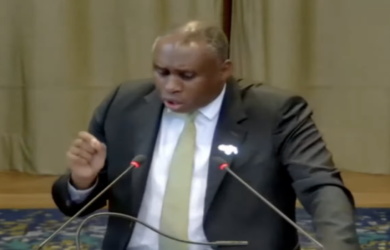
Venezuela insists ICJ does not have jurisdiction to hear border dispute with Guyana
THE HAGUE, Netherlands — In ongoing high-stakes oral arguments at the International Court of Justice (ICJ), Venezuela has reaffirmed its long-held stance that the United Nations’ highest court for state-to-state disputes lacks authority to rule on its centuries-old territorial conflict with neighboring Guyana. The dispute centers on the resource-rich Essequibo region, a 61,600-square-mile territory that makes up nearly two-thirds of modern Guyana, which Venezuela claims as its own sovereign land.
Speaking as Venezuela’s second representative to the ICJ, Professor Makane Moise Mbengue pushed back against Guyana’s core argument that the 1899 Arbitral Award — which originally set the disputed border between the two nations — is legally valid and binding. While Mbengue acknowledged that the 1899 award provides historical context for the conflict, he emphasized that it should not block a genuine negotiated resolution between the two South American nations. Both Mbengue and lead Venezuelan representative Samuel Moncada displayed pins showing Essequibo as part of Venezuelan territory during their presentations.
Moncada opened Venezuela’s arguments earlier this week by rejecting what he called Guyana’s “erroneous and misleading narrative” surrounding the dispute. He stressed that the 1966 Geneva Agreement, reached by both parties to settle the conflict after Venezuela declared the 1899 award null and void in 1962, remains the sole binding legal framework governing the issue. Unlike a court-imposed ruling — which inevitably leaves one side victorious at the other’s expense — Moncada noted the Geneva Agreement was crafted as a peace pact that prioritizes direct bilateral negotiation to reach a practical, mutually acceptable outcome. He added that the agreement is explicitly designed to help the two nations move past the harmful legacy of colonialism, which created the dispute in the first place.
Guyana first brought the case to the ICJ in 2018, asking the court to formally affirm the legal validity of the 1899 border award. The territorial dispute lay dormant for more than 60 years after the award was issued, until Venezuela revived its claim to Essequibo in 1962. Following the 1966 Geneva Agreement, which established formal mechanisms for peaceful negotiation, years of bilateral talks failed to produce a resolution, leading the United Nations Secretary-General to refer the dispute to the ICJ. The ICJ previously ruled that it has jurisdiction to hear the case, clearing the way for the current merits hearings, where both sides are presenting their full legal arguments.
During opening arguments that began Monday, Guyana maintained that the 1899 award permanently and definitively settled the border, and that it remains legally binding and entitled to international recognition. But Mbengue countered that the 1899 award is a discredited artifact of British imperialism, and that the ICJ’s earlier jurisdiction ruling did not validate Guyana’s underlying claim. He argued that the ICJ panel failed to account for Venezuela’s core legal position in its initial jurisdiction ruling, and that any lasting resolution must center on the terms of the 1966 Geneva Agreement, not the 1899 award.
“The real issue is the pursuit of a mutually satisfactory agreement to the controversy generated by the 1899 award, a solution that consign this artifact of British imperialism to the past where it belongs and to chart a way forward — this is the only proper meaning of the Geneva agreement,” Mbengue told the court, noting that Guyana has failed to offer any alternative interpretation of the pact that aligns with the parties’ original goals. He urged the ICJ to examine every provision of the Geneva Agreement, rather than limiting its review to Guyana’s narrow claims. “The court should not be constrained by the allegations that Guyana made,” Mbengue argued. “In particular, it must carefully ascertain whether Guyana’s request remains within the bounds of what the parties to the Geneva agreement sought to resolve. Guyana’s claims cannot exist within the framework established by the Geneva agreement, nor can the court decide on those matters as framed by Guyana.”
The first round of oral arguments is scheduled to run through three-hour sessions over multiple days, wrapping up next Monday.
-
WiPay launches new solution for ROOFS programme
Following the destructive path of Hurricane Melissa, Jamaica’s $10-billion Restoration of Owner or Occupant Family Shelters (ROOFS) program has marked a major leap forward in disaster recovery delivery with the launch of an artificial intelligence-driven management solution from regional fintech leader WiPay Group.
The ROOFS initiative, first rolled out in January 2024 to support thousands of households impacted by the storm, has long relied on WiPay’s robust digital infrastructure to power fund and resource tracking, delivered in partnership with the National Payments Company of Jamaica (NPCJ). Up until this upgrade, however, the program faced notable growing pains, particularly when distributing the $75,000 in discretionary recovery cash allocated to eligible households. Long wait times, overcrowded pickup locations, and duplicated scheduling left many recipients frustrated and slowed the pace of rebuilding.
To resolve these bottlenecks, WiPay has rolled out its upgraded GovPay2.0, an AI-first platform designed to overhaul the entire end-to-end recovery fund disbursement experience. Unlike the early iteration of the program, which focused only on getting funds to recipients, the new system manages every step of the process from scheduling to delivery. To date, the ROOFS program has already distributed more than $8.25 billion in support to affected households, with the vast majority of that allocated as construction materials available through more than 200 partner hardware stores across storm-impacted regions. Eligible households with moderate to severe damage can access between $125,000 and $425,000 in building supplies, accessed via a streamlined system of text notifications and scannable QR codes that eliminates fraud and speeds up pickup.
Kibwe McGann, Chief Marketing Officer of WiPay Group, explained the core value of the AI upgrade in an official press statement. “We’ve moved from simply distributing funds to managing the entire experience around it. When people no longer have to guess, wait for hours, or deal with overcrowding, the system starts to work the way it should,” he said. The new AI algorithm is built to eliminate scheduling errors, allocating time slots to recipients in a way that avoids overcapacity at any of the more than 100 authorized cash pickup locations across the island, in partnership with local financial services provider Lasco Financial Services Limited. For recipients who prefer not to travel to pickup points, the platform also enables direct, express deposits of cash allocations to personal bank accounts, cutting down on travel costs and the security risks associated with carrying large amounts of physical cash.
McGann noted that the new solution draws directly from WiPay’s experience delivering similar digital relief management during the COVID-19 pandemic, when the company supported large-scale government grant distribution across the region. “Between the cash appointment management solution and express direct-to-bank solutions, we expect to alleviate the current challenges and pain points,” he added.
Beyond resolving immediate delivery issues, McGann emphasized the long-term strategic value of digitizing disaster relief programs. The AI-powered system captures granular, real-time data on every step of the recovery process, from how much construction material is requested in specific regions to the pace of fund distribution. This data not only ensures that all funds are used for their intended recovery purposes, eliminating misallocation and fraud, but also provides the Jamaican government with actionable, data-driven insights to improve disaster preparedness for future extreme weather events.
“As Jamaica continues to address the challenges in western Jamaica, McGann pointed to the benefits of digitising targeted grant relief. Apart from being able to ensure that the funds are used for their intended purpose, he pointed to the data management aspect to support government insights into future events — this includes the quantity of materials demanded and in which specific parts of the country, after a storm. The system that we developed tracks all of that in detail to ensure that if something like this happens again, the Government is now able to take data-driven insights to better prepare the country for what is needed,” McGann said in closing.
-

PSG knock out Bayern to set up Champions League final with Arsenal
In a tense, rain-soaked semi-final second leg at Munich’s Allianz Arena on Wednesday, defending champions Paris Saint-Germain held firm to secure a 1-1 draw against Bayern Munich, booking their spot in the 2025 UEFA Champions League final against English Premier League leaders Arsenal with a narrow 6-5 aggregate victory across the two legs.
Luis Enrique’s squad carried a narrow 5-4 advantage into the second encounter from a thrilling first leg in Paris a week earlier, and they wasted no time extending their lead against the six-time European champions. Just three minutes after kickoff, Georgian winger Khvicha Kvaratskhelia cut a low pass back across the Bayern penalty area, finding Ousmane Dembele, who drilled a clinical strike into the top corner of the net to put PSG two goals up on aggregate.
Bayern, who last lifted the Champions League trophy when they defeated PSG in the 2020 Lisbon showpiece, struggled to create clear-cut chances for most of the match, leaving their attacking line largely toothless despite the home crowd’s roaring support. The German side grew increasingly frustrated with first-half refereeing calls, a controversy that added tension to an already high-stakes fixture but failed to shift the momentum of the game in their favor.
Bayern captain and goalkeeper Manuel Neuer kept his side in the tie with two outstanding saves in the second half, first denying Kvaratskhelia and then turning away a shot from substitute Desire Doue to prevent PSG from putting the result beyond doubt earlier. As the clock ticked into the fourth minute of stoppage time, England captain Harry Kane, who has enjoyed a breakout first season at Bayern, drilled home his 14th Champions League goal of the campaign to level the score on the night. But the late strike came too late to power a Bayern comeback, with the final whistle blowing just moments after kickoff resumed.
The result means PSG will advance to their second consecutive Champions League final, where they will face Arsenal on May 30 in Budapest. The Allianz Arena already holds special significance for the French giants: it was the site of their maiden Champions League title win over Inter Milan last season. If PSG can defeat Arsenal in Budapest, they will become only the second club to win back-to-back Champions League titles since 1990, joining Spanish giants Real Madrid in achieving that rare feat, and are currently installed as pre-tournament favorites heading into the showpiece fixture following their resilient defensive display against Bayern.