A government-appointed review committee has sounded the alarm over widespread governance vulnerabilities at Jamaica’s University Hospital of the West Indies (UHWI), tracing decades of systemic flaws to the facility’s outdated 76-year-old founding legislation. The UHWI Institutional Review Committee, led by chairman Howard Mitchell, is pushing for comprehensive updates to the 1948 University Hospital Act, arguing that the decades-old law has left gaping accountability loopholes that have opened the door to institutional abuse.
The call for legislative reform comes as a direct response to a damning auditor general’s report that exposed significant governance failures at the public teaching hospital, prompting the Jamaican government to task the independent committee with investigating identified weaknesses and drafting actionable remedies to strengthen oversight, accountability and long-term operational performance.
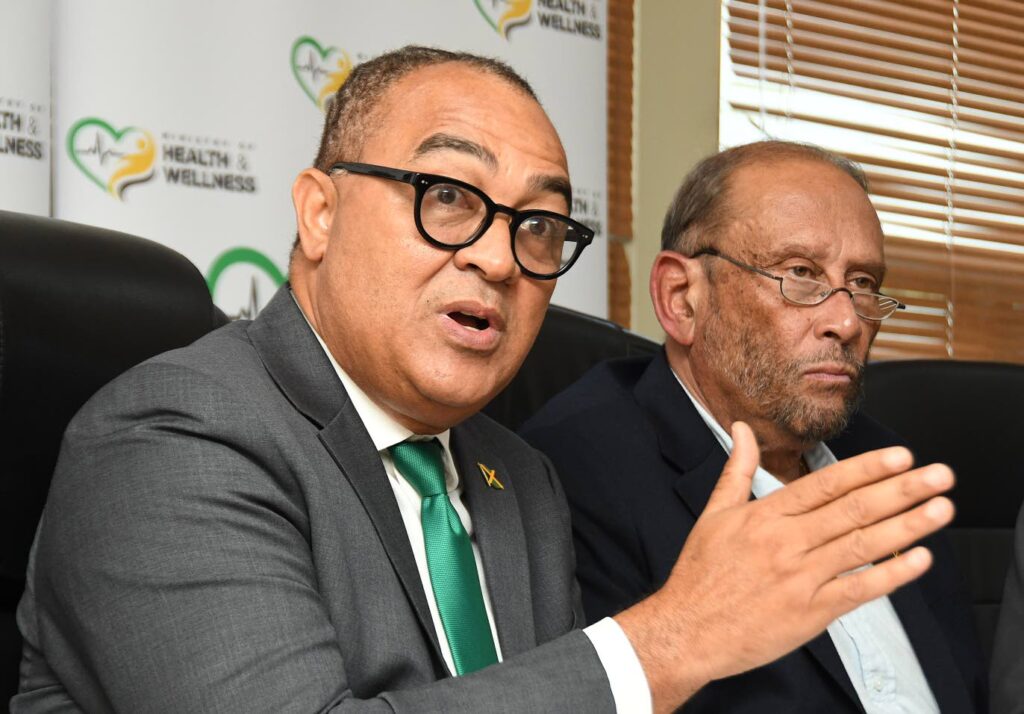
Addressing reporters at a Tuesday press briefing, Mitchell emphasized that the 1948 legislation was crafted for a vastly different healthcare and governance landscape, and has failed to adapt to Jamaica’s modern standards of public sector accountability. He cited one striking example of regulatory gaps in the law: Section 14 of the act grants the hospital’s board of management unrestricted duty-free import privileges, with no clear limitations on what types of goods can be imported or under what conditions. While the provision was intended for hospital-related imports, the unregulated open door has evolved into a pathway for misuse that demands urgent correction, Mitchell explained.
The committee’s final assessment confirmed that the law, which established UHWI’s governance structure nearly 80 years ago, is completely misaligned with the practical demands of running a 21st-century public teaching hospital. Beyond broad regulatory gaps, investigators identified a litany of specific structural issues: an oversized board of management, overlapping official appointments, ambiguous lines of operational authority, weak internal oversight mechanisms, and persistent confusion over the division of responsibilities between the Jamaican government and The University of the West Indies (UWI), which shares governance of the facility.
Mitchell noted that this dual governance model has created dangerous ambiguity around accountability and decision-making power. “The legislation may have been acceptable at the time and appropriate at the time, but it has created a confusion between board oversight and operational roles, and that is a cardinal sin in management. The board governs, the management manages, and we have seen situations where that line has been crossed,” he said.
Another critical finding centered on long-running uncertainty around UHWI’s legal status as a public body, which has enabled years of non-compliance with mandatory government procurement and financial reporting rules. Many hospital officials have operated under the incorrect assumption that UHWI’s partial UWI administration and position outside the traditional public health system exempts it from full adherence to Jamaica’s public sector accountability framework.
Committee member Professor Alvin Wint, an emeritus professor of international business at UWI, revealed that this confusion persisted as recently as 2023, months before the current review was launched. Prior to the appointment of current UHWI chairman Patrick Hylton, UHWI’s own legal officer retained a private law firm to issue a formal determination on whether the hospital qualified as a public body under Jamaican law. This step struck the review committee as particularly remarkable, Wint explained, because Jamaican law clearly defines a public body as any entity established by statutory legislation under government control — a description that applies unambiguously to UHWI.
This fundamental misunderstanding fostered a years-long institutional culture where compliance with the Public Bodies Management and Accountability Act was treated as optional rather than mandatory, the committee found.
To address these systemic flaws, the panel has put forward a series of core recommendations: downsizing the hospital’s oversized board, implementing formal term limits for board appointments, immediately hiring a dedicated corporate secretary to strengthen administrative compliance, tightening procurement oversight, and restructuring UHWI’s operational framework to meet modern teaching hospital standards. Additional proposals include clarifying the authority of UHWI management over UWI clinical staff assigned to the facility, and rebuilding strategic governance systems that have eroded over decades of neglect.
Health and Wellness Minister Dr Christopher Tufton confirmed that the Jamaican government has already prioritized the legislative reform process, after Cabinet discussed the committee’s findings and formally backed the overhaul. “That’s a Government of Jamaica, Ministry of Health mandate, and we intend to put whatever systems are in place to immediately commence a review of the legislation in keeping with modern times and the mandate of the institution,” Tufton said.
The minister added that the reform push is a core component of a broader government effort to rebuild public trust in UHWI, which was severely damaged following the release of the auditor general’s report and the subsequent public controversy. “There is a confidence issue that we need to resolve. We need to bridge that gap and we need to show that we are willing to confront the issues, to face them head on, and to do something about them,” Tufton said.