标签: Jamaica

牙买加

  • Raise age of consent to 18 to combat teenage pregnancies, says Crawford

    Raise age of consent to 18 to combat teenage pregnancies, says Crawford

    A senior Jamaican opposition lawmaker has reignited debate over the nation’s age of consent, calling for a two-year increase from 16 to 18 to address the country’s long-standing crisis of teen pregnancy that pushes thousands of adolescent girls out of school annually.

    Damion Crawford, the opposition’s spokesperson on education, made the formal proposal during his scheduled address to the House of Representatives’ Sectoral Debate on Tuesday. The call comes amid stagnant high rates of unintended pregnancy among teenage students, a public health and social issue that has plagued Jamaican education systems for decades.

    Crawford told parliamentary colleagues that on average, 6,000 school-aged girls become pregnant each year across Jamaica. For the vast majority of these adolescents, an unplanned pregnancy leads to an early exit from formal education, derailing long-term academic and career trajectories and deepening cycles of socioeconomic disadvantage.

    “This is a major problem that we have to consider. Teen pregnancy has become an intractable problem in this country,” Crawford told the chamber.

    Linking the policy shift to ongoing changes to Jamaica’s secondary education structure, Crawford added: “We therefore are asking for a reconsideration once again of the age of consent, and I once again believe that this Parliament should consider the movement from 16 to 18 as we move from a five-year secondary institution to a seven-year secondary experience going forward.”

    The proposal is the latest effort by political leaders to tackle teen pregnancy in Jamaica, where the issue remains one of the highest barriers to educational equity for girls. It is expected to spark broader public and parliamentary discussion around youth protection, sexual health policy, and education reform in the coming months.

  • Oil rises, stocks mixed as US-Iran peace talk hopes dim

    Oil rises, stocks mixed as US-Iran peace talk hopes dim

    Global financial markets kicked off a high-stakes trading week with mixed trading across equities and rising crude oil prices on Monday, as diplomatic efforts to de-escalate tensions between Iran and the United States hit an unexpected standstill. What began as a surge of optimism over potential new negotiations between Washington and Tehran over the weekend quickly fizzled out, after former US President Donald Trump called off a planned meeting between negotiating envoys this past Saturday.

    The breakthrough in hopes came after Iranian Foreign Minister Abbas Araghchi’s diplomatic visit to Islamabad over the weekend, which spurred early speculation that both sides could return to the bargaining table to resolve ongoing conflict. However, on Monday, Araghchi publicly placed blame for the collapsed talks squarely on Washington, citing what he called “excessive demands” from US negotiators during the first and only planned round of negotiations in Pakistan. He also reaffirmed that unobstructed safe passage through the Strait of Hormuz, the critical global chokepoint for energy shipments that remains largely closed amid the ongoing standoff, is a non-negotiable priority for the international community.

    Speaking to Fox News, Trump downplayed tensions following the cancellation, noting that Iran could reach out to initiate new talks at any time if it is willing to negotiate, and added that the scrapped meeting does not mean a return to open military hostilities. According to anonymous sources familiar with the proposal cited by US news outlet Axios over the weekend, Iran had tabled a new peace proposal that would prioritize reopening the Strait of Hormuz and ending the US naval blockade of the waterway, while pushing controversial nuclear negotiations back to a future date. That proposal had been enough to temper sharp gains in crude oil markets, as traders held out some residual hope that a diplomatic agreement could still be reached eventually.

    Against this geopolitical backdrop, both benchmark global crude oil contracts climbed higher on Monday. Brent crude, the global benchmark for two-thirds of the world’s oil trade, pushed above $108 per barrel, lifted by persistent concerns over disrupted energy supplies through the Strait of Hormuz, which carries roughly a fifth of all global oil shipments. Gains were held in check however by lingering hopes that the new Iranian proposal could open a path to a diplomatic resolution.

    Global stock markets traded unevenly through the session, as investors shifted to a cautious wait-and-see approach ahead of a packed week of monetary policy decisions from major central banks and a wave of high-profile corporate earnings reports. On Wall Street, both the S&P 500 and the Nasdaq composite posted small incremental gains to close the day at new all-time record closing highs, bucking the broader cautious trend. In contrast, the Dow Jones Industrial Average pulled back from recent highs, joining leading indices across Europe and Asia that finished the trading session in negative territory.

    Derren Nathan, head of equity research at leading UK financial services firm Hargreaves Lansdown, noted that investor optimism for a quick diplomatic breakthrough on Iran was always muted from the start. “It may be that hopes of a diplomatic breakthrough were pretty faint to start with, and markets are now in wait-and-see territory ahead of a heavy week of earnings and economic touchpoints,” Nathan explained.

    With energy prices remaining elevated and persistent inflationary pressures still being felt across major advanced economies, market analysts broadly expect the US Federal Reserve will hold interest rates steady at its policy meeting on Wednesday. The Federal Reserve’s decision will be followed by similar policy announcements from the European Central Bank and the Bank of England later in the week, with all three central banks widely projected to keep borrowing costs unchanged as they assess incoming economic data.

  • Players who cover mouths to face red cards in new anti-racism rule at World Cup

    Players who cover mouths to face red cards in new anti-racism rule at World Cup

    VANCOUVER, Canada – Global football governing body FIFA has announced sweeping new disciplinary rules for this summer’s 2026 men’s World Cup, co-hosted by Canada, Mexico and the United States, that will see players issued straight red cards for two controversial on-pitch behaviors, designed to address longstanding issues of racial abuse and unsportsmanlike protest. The changes were formally signed off during a recent meeting of the International Football Association Board (IFAB), held this week in Vancouver, ahead of the upcoming FIFA Congress scheduled for Thursday.

    The first and most high-profile of the new regulations targets deliberate attempts to hide verbal racial abuse from match officials and cameras. Under the new rule, any player caught covering their mouth during a confrontational exchange with an opposing player can be issued a red card at the referee’s discretion, with final authority resting with the competition’s organizing body. The policy was directly prompted by a high-profile controversy in February’s Champions League fixture between Benfica and Real Madrid, where Benfica winger Gianluca Prestianni was accused of repeatedly calling Real Madrid star Vinicius Junior a racial slur while covering his mouth to avoid being caught on audio recording. While Prestianni has repeatedly denied the allegation of racial abuse, he was ultimately banned for six matches (three of which were suspended) by governing bodies for homophobic conduct arising from the incident. The case highlighted a common loophole used by players seeking to hurl abusive language without being identified, which FIFA is now moving to close.

    A second equally sweeping rule change introduces red card penalties for any player who leaves the field of play in protest of a referee’s decision, and extends the penalty to any team official who incites players to stage such a walkout. In the most serious cases, FIFA confirmed that any team that causes a match to be abandoned through a mass walkout will automatically forfeit the fixture. This change comes in response to the widespread uproar following the 2025 Africa Cup of Nations final, where Senegal’s entire team, led by head coach Pape Thiaw and his technical staff, walked off the pitch in Rabat after Morocco was awarded a late stoppage-time penalty. Morocco forward Brahim Diaz ultimately missed the penalty, and Senegal went on to secure a 1-0 win in extra time. However, the Confederation of African Football (CAF) issued a shocking ruling last month stripping Senegal of the continental title over the walkout, bringing global attention to the need for clearer, stricter rules around pitch protests.

    The new regulations come as hundreds of FIFA delegates converge on Vancouver for Thursday’s FIFA Congress, the final major gathering of global football’s governing body ahead of the World Cup kickoff in June. FIFA officials have framed the changes as targeted, proactive steps to clean up the sport and address gaps in the existing rulebook that have allowed bad behavior to go unpunished in high-stakes matches.

  • Many four-year-olds not developmentally ready for formal education, says Crawford

    Many four-year-olds not developmentally ready for formal education, says Crawford

    Jamaica’s early childhood education system is facing systemic, widespread shortcomings that leave tens of thousands of young children unprepared for formal primary schooling, according to the country’s opposition education spokesperson Damion Crawford. Crawford laid out the details of these gaps during his scheduled contribution to the annual Sectoral Debate held in Jamaica’s House of Representatives on Tuesday.

    Drawing from 2024 developmental assessment data, Crawford broke down troubling statistics that highlight the scale of the crisis. Out of the nearly 29,729 four-year-olds that officials did manage to assess this year, just 54.4 percent successfully hit all age-appropriate developmental milestones. Even more alarmingly, 19 percent of four-year-olds already enrolled in early childhood programs received no developmental screening at all. When the data is adjusted to account for the total population of four-year-olds across the country, that share drops to just 37 percent of all children in the age cohort that meet all expected developmental benchmarks.

    Crawford emphasized that these gaps do not reflect inherent biological differences among children, but rather stem from systemic and environmental failures that have left the early childhood sector chronically underresourced. The end result, he argued, is that the system is failing young Jamaican children before they ever step foot into a formal primary school classroom.

    Access to affordable, quality early childhood programming is particularly scarce for children under the age of four, Crawford explained. Most early childhood services are currently run by private providers or community groups, meaning access to consistent, structured care is directly tied to a family’s ability to pay tuition and related fees. This creates significant barriers for low-income households that are already most likely to face systemic disadvantages.

    Beyond access gaps, the sector struggles with low regulatory compliance and chronically insufficient government funding. Only around 15 percent of all early childhood institutions across Jamaica hold full operating certification from national regulators. Government investment in the sector currently sits at just 0.24 percent of the country’s gross domestic product, a figure that falls far short of the international recommended benchmark of 1 percent of GDP. Compounding these challenges is a widespread gap in educator qualification: fewer than 19 percent of early childhood teachers in Jamaica hold a minimum of a bachelor’s degree in the field, a standard that is required to deliver high-quality developmentally appropriate care.

  • Crawba Genius teams up DJ Mac, Julian Marley for new inspirational single

    Crawba Genius teams up DJ Mac, Julian Marley for new inspirational single

    When three creative forces from the music industry – producers Crawba Genius, DJ Mac and reggae icon Julian Marley – joined to create a new single, their mission stretched far beyond topping global music charts. Their collaborative track *Give to Life* arrives at a cultural moment when audiences are craving earnest, purpose-driven messages of resilience, and the creative team has built the entire project around that universal hunger for hope and inspiration.

    Rooted in authentic, relatable everyday experience, the track carries the core reggae tradition of conscious, uplifting storytelling that has defined Marley’s decades-long career. In conversations about the project, Marley explained that the track’s lyrics and melody grew directly from ordinary life experiences, grounding its message in tangible truth that listeners can connect to. For the Grammy-nominated reggae artist, the song’s core purpose is clear: it is crafted to encourage people to stay anchored to their personal values and long-term goals, even when navigating life’s most difficult challenges. The overarching goal, he notes, is to inspire fans to keep pushing forward toward their dreams – a mission that fits perfectly with reggae’s long history of delivering messages of perseverance and social consciousness.

    Early audience and industry reception has already proven the track’s resonant power, with overwhelmingly positive feedback rolling in from both long-time Marley fans and fellow music industry peers. “I think this message is very important, so the inspiration is coming from everyday life experiences,” Marley shared. “I think we just wanted the fans to be inspired to keep pushing through with their dreams and to keep doing the right thing and keeping true in all righteousness.”

    For co-producer Crawba Genius, the process of creating *Give to Life* was far more than a standard studio project – he described the collaboration as a deeply spiritual experience, noting that reggae consistently carries a higher, more transformative vibrational energy than any other musical genre. What makes this track stand out from Marley’s previous work, he explains, is the intentional blend of classic authentic reggae and a modern, contemporary production twist, a choice made to help the track connect with younger generations of listeners who may not engage with traditional reggae. “The reception has been good, because I believe the song is something different from what Julian Marley always does. We’re trying to tap into the younger audience, so we added a modern twist to the authentic reggae vibe he usually brings, and it’s doing extremely well; I couldn’t complain. I love reggae, and when I’m producing it it’s a spiritual experience because it’s inspirational music,” Crawba Genius said.

    The success of the track begins with the natural creative synergy that binds the three collaborators, a partnership that extends far beyond the walls of the recording studio. Marley praised the pair’s shared creative chemistry and deep personal bond, referring to the producers as “great producers” and “very good bredrens,” emphasizing that their work together is built on mutual respect and a shared vision for using music to lift up audiences. Crawba Genius echoed that warmth, noting that he has a long working history with Marley and that every collaboration between them feels natural and inspired. He also highlighted DJ Mac’s unique creative perspective, calling him one of the most impactful producers of his generation, and noting that the combination of their individual creative styles created a one-of-a-kind energy for the project. “Working with Julian has always been great. I have previous tracks that I produced for him, and it’s always a vibe when we get to join hands and minds. DJ Mac, like myself, is a creative, so we have that in common. He’s one of the producers of our generation that’s really making an impact, and so us joining forces and just adding our special touches to the project, it was a great vibe,” he explained.

    That collaborative unity has already translated to a coordinated, multi-platform rollout designed to help the track reach the widest possible diverse audience. Marley confirmed that a full cross-channel promotional campaign is already underway, and fans can expect to see official accompanying visuals in the near future that will add an extra layer of storytelling to the track’s core message, helping amplify its call for resilience and purpose-driven living to even more listeners around the world.

  • Former FBI director James Comey indicted again

    Former FBI director James Comey indicted again

    Less than six months after a federal judge tossed out a politically charged case against James Comey, the former FBI director and persistent critic of President Donald Trump faces a new indictment, multiple U.S. media outlets reported Tuesday. The fresh legal action renewes questions about the Trump administration’s pattern of targeting political opponents through the Department of Justice, a departure from longstanding norms of prosecutorial independence.

  • Sigh of relief!

    Sigh of relief!

    After weeks of widespread supply disruptions that forced many Jamaican women to either pay steep out-of-pocket costs for prescription birth control or switch to alternative contraceptive methods that caused unwanted side effects, the injectable contraceptive shortage in Jamaica’s public health system has finally eased, according to on-the-ground reporting from the Jamaica Observer.

    During checks conducted Friday at two major public health facilities in Kingston’s Corporate Area — Maxfield Park Health Centre and Slipe Pen Road Comprehensive Health Centre — journalists confirmed that the contraceptive injections are once again available to patients who rely on the public system for free or low-cost reproductive care.

    One anonymous patient at Slipe Pen Road, who had been unable to access the injection during a prior visit, shared her experience with the Observer. She had been offered a choice between purchasing the contraceptive through a private pharmacy prescription or switching to oral birth control when stock ran out. Opting for the pill due to cost, she stopped using it after developing severe adverse side effects, and was relieved to finally receive her preferred injection during Friday’s visit. She added that women who chose to purchase the contraceptive privately reported paying roughly J$4,100 per dose — a major expense for many low-income households.

    The patient also echoed widespread public speculation about the cause of the shortage, linking it to comments from Health Minister Christopher Tufton that framed Jamaica’s declining birth rate as a policy concern. “When people have children they are not getting good care in hospitals or proper food,” she noted, pointing to inadequate postnatal support for new mothers as evidence that policy pushes for higher birth rates are out of step with on-the-ground needs. Her 10-month-old child recently received inadequate food assistance through the country’s new mother support program, she added.

    A second patient at the same facility confirmed she faced identical barriers to access last month. Unable to afford the private purchase option, she also switched to the pill, which caused unwanted side effects including increased appetite that led her to seek out the injectable form as soon as it became available again.

    A senior public health nurse at Slipe Pen Road confirmed the supply disruption lasted throughout the month of March, triggered by unexpected delays in a routine national order. She confirmed that supplies have been replenished, and patients have been able to access their regular injections for the past two weeks.

    At Maxfield Park Health Centre, multiple patients emphasized that financial need is the primary reason the vast majority of women seek contraceptive care through the public system rather than private markets. Teresa McKenzie, a mother who accessed the injection alongside her sister, explained that she relies on the public service because she is currently out of work, and her partner already struggles to cover basic household costs for their existing children. “Taking care of children is more manageable this way, when you can plan when you have another,” she said, noting that unplanned pregnancy would make covering food and school fees far more difficult for her family.

    Dr. Julia Rowe-Porter, director of the Ministry of Health and Wellness’ Family Health Unit (FHU), clarified the root causes of the facility-level shortages in a statement. While the National Health Fund (NHF), which manages national stockpiles of public health supplies, has confirmed there is no national shortage at its central storage facility, recent changes to national order management protocols created gaps that left local clinics without stock for several weeks. Rowe-Porter confirmed that the FHU is currently working alongside the NHF and regional health authorities to resolve the systemic issues that led to the disruptions and prevent future stock-outs.

  • Climate Change legislation coming this fiscal year, says Samuda

    Climate Change legislation coming this fiscal year, says Samuda

    Jamaica is moving forward with landmark climate governance reforms that could reshape the country’s approach to environmental action and economic development, according to top government official Matthew Samuda, Minister of Water, Environment and Climate Change.

    Samuda outlined the government’s climate agenda Tuesday during his address to the 2026/27 Sectoral Debate held in Jamaica’s House of Representatives, highlighting two core initiatives that frame the country’s long-term climate vision: pending national climate change legislation and the recently finalized Long-Term Emissions Reduction and Climate Resilience Strategy (LTS 2050).

    The proposed climate legislation, developed in partnership with the United Kingdom’s Foreign, Commonwealth and Development Office, will mark a major leap forward in strengthening Jamaica’s national climate governance framework, Samuda emphasized. Once enacted, the law will formalize legal foundations for national climate policies, enforce cross-sector accountability, and deliver a range of systemic benefits ranging from greater policy transparency to more consistent, measurable climate action outcomes. It will also streamline policy implementation and boost confidence among private and institutional investors looking to support Jamaica’s transition.

    Beyond immediate governance improvements, Samuda noted that embedding climate action into formal law will institutionalize sustainable development efforts across successive governments, ensuring long-term continuity regardless of political shifts. This robust legal foundation will also position Jamaica to unlock billions in additional international climate finance and expand strategic global partnerships, he added. Per the government’s current timeline, the legislation is on track to be finalized and passed within the ongoing 2026/27 fiscal year.

    Alongside the legislative push, Samuda highlighted the recently completed LTS 2050, which was finalized in July 2025, as a blueprint for Jamaica’s transition to a climate-smart, climate-resilient national economy. The strategy lays out a clear pathway for Jamaica to reach net-zero greenhouse gas emissions by no later than 2060, while tying climate action directly to inclusive, sustainable economic growth that benefits all Jamaican communities.

    Unlike traditional climate plans that focus solely on environmental targets, the LTS 2050 is framed as a holistic cross-sector development strategy that takes a whole-economy approach to planning. It maps out required transitions for eight key sectors that underpin Jamaica’s economy and environment: energy, transport, agriculture, infrastructure and urban development, and forestry and ecosystems, among others.

    The economic case for the long-term strategy is unambiguous, Samuda told lawmakers. LTS 2050 projections estimate that the plan will deliver approximately US$13.9 billion in net economic benefits to Jamaica by 2050, while generating more than 26,000 new jobs, concentrated primarily in fast-growing green and emerging climate sectors.

    These projections are more than just economic modeling, Samuda explained: they reflect a fundamental repositioning of Jamaica within the global low-carbon economy, shifting the country from a climate-vulnerable developing nation to a leader in sustainable Caribbean development. The strategy also explicitly maps out high-priority investment areas that will drive innovation, growth and resilience, including utility-scale renewable energy development, climate-smart sustainable agriculture, and flood and storm-resilient public infrastructure.

    By formalizing this long-term transition pathway, Samuda added, the LTS 2050 sends a clear, predictable signal to global investors and international development partners that Jamaica is fully committed to its climate and development goals. This certainty, he noted, is a critical prerequisite for attracting the large-scale financing, cutting-edge clean technology, and strategic global partnerships needed to turn the strategy’s vision into tangible action for Jamaican people.

  • NO HAND-OFF

    NO HAND-OFF

    Reigning men’s 100m world champion Oblique Seville will not join Jamaica’s national team for this weekend’s World Athletics Relays in Gaborone, Botswana, but his agent has firmly quashed online speculation of a falling-out between the sprinter and the Jamaica Athletics Administrative Association (JAAA) over the exit.

    The athletics community was caught off guard on Sunday when news broke that both Seville and Kishane Thompson — the Olympic and World Championships silver medalist — had pulled out of the event, just weeks after they were named as headline contenders in Jamaica’s men’s 4x100m relay pool. The Caribbean nation is traveling to Botswana chasing automatic qualification spots for the 2025 World Athletics Championships scheduled to be held in Beijing, making the absences of two of its top sprinters a notable setback.

    While Thompson’s exit has been widely linked to an ongoing injury issue, an unconfirmed report emerged Monday claiming Seville withdrew because the JAAA refused to cover the cost of a shorter, earlier flight to Botswana that would fit the sprinter’s schedule. The Jamaica Observer reached out to JAAA President Garth Gayle for an official response to the claim, but did not receive a reply before this article went to press.

    Shortly after the speculative report circulated, the JAAA issued an official public statement Monday refuting the claims, labeling them “factually inaccurate”. According to the association’s account, the conflict centered entirely on Seville’s pre-existing contractual commitments in Miami, Florida, which required him to return from Botswana by a specific date that the available flight schedules could not accommodate.

    The JAAA explained that after checking all available commercial routes, the earliest flight that could get Seville back to Miami would arrive after 12 p.m. next Tuesday, and the association could not guarantee an earlier return that would meet his contractual deadline. Following these negotiations, the association says Seville’s agent Norman Peart formally notified the JAAA last Tuesday of the sprinter’s decision to withdraw, and extended well wishes to the rest of the Jamaican team ahead of the competition. The JAAA added that it remains eager to see Seville represent Jamaica in future international competitions as a core member of the national team.

    Peart has since confirmed that the JAAA’s official account of the withdrawal is fully accurate, adding that Seville is deeply disappointed to miss the chance to compete for his home country this weekend. “We had some challenges; we really worked hard to get this done but it couldn’t happen. The logistics coming out of Botswana just could not work. We’ve been at it for a while but it just couldn’t work,” Peart told the Jamaica Observer in an interview.

    Peart stressed that there is no personal friction or public fallout between Seville and the JAAA leadership, calling the entire situation an unfortunate confluence of competing commitments. “We had our challenges but I must say the JAAA really went out of their way to see [if it could be resolved], but the timing and the whole logistics of getting back from Botswana is very challenging and could not work out because he had to get back to the United States — and it’s [something] he cannot miss,” Peart explained.

    Seville, who claimed his first senior 100m world title at the 2023 World Athletics Championships in Tokyo, has never competed at a World Relays event. However, he was critical to Jamaica’s qualification for the 2023 World Championships last summer, helping the nation secure its slot at the London Diamond League meet after Jamaica failed to finish two qualifying races at the previous World Relays. At the Tokyo World Championships, Seville was part of Jamaica’s sprint relay team that missed out on a medal after dropping the baton during the heat rounds.

    The JAAA has not yet announced whether it will name replacement sprinters for Seville and Thompson ahead of the travel window for the Botswana event. Even with the two absences, Jamaica’s 4x100m relay pool still boasts top 100m talents including Ackeem Blake, Rohan Watson and Kadrian Goldson, who will step into contention to secure the qualifying spot for Beijing next year.

  • US regulator orders review of ABC license after Trump criticises Kimmel

    US regulator orders review of ABC license after Trump criticises Kimmel

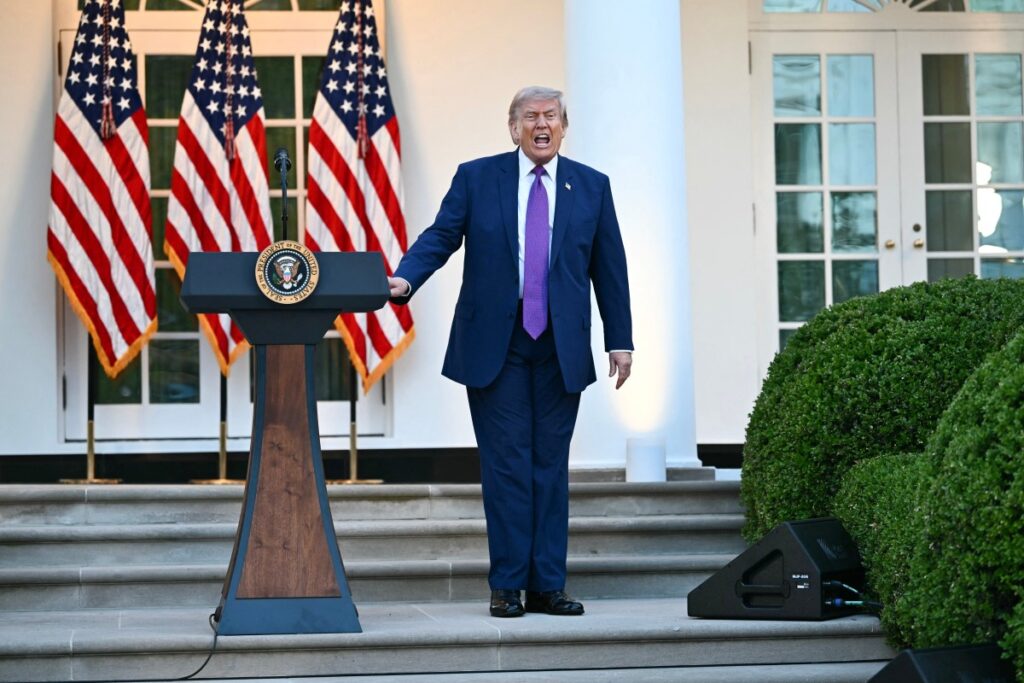
    A fresh chapter has opened in the escalating clash between former President Donald Trump and late-night political comedy, after the U.S. federal agency overseeing national broadcast regulations launched an expedited review of ABC’s operating license this week. The move from the Federal Communications Commission targets ABC’s parent company The Walt Disney Company and all of its broadcast television subsidiaries, and comes in direct response to public demands from both Donald Trump and former first lady Melania Trump for the network to sever ties with long-running late-night host Jimmy Kimmel.

    The controversy ignited last month, when Kimmel delivered a satirical bit during his show pretending to serve as emcee for the 2025 White House Correspondents’ Association dinner, an annual high-profile media event held in Washington D.C. Directing a playful jab at the former first couple’s 24-year age gap, Kimmel joked, “Mrs. Trump, you have a glow like an expectant widow.” Donald Trump, who will turn 80 this June and holds the distinction of being the oldest person ever to serve as U.S. president, called for Kimmel’s immediate termination over the quip, which he and his team have framed as a thinly veiled incitement to violence.

    The former president’s claims have gained new traction after a man was arrested last Saturday on charges of attempting to assassinate Trump at a campaign event just days after Kimmel delivered the joke. Melania Trump, 56, the Slovenia-born former first lady, released a public statement doubling down on the call for action, urging ABC leadership to “take a stand” against the comedian and distance the network from his commentary.

    Kimmel pushed back against the criticism during his show’s Monday broadcast, dismissing the accusations of inciting violence as a blatant misinterpretation. He clarified that the line was nothing more than a lighthearted “roast joke” centered entirely on the former couple’s well-documented age difference, noting that “it was not by any stretch of the definition a call to assassination, and they know that.”

    The White House, however, reaffirmed the administration’s opposition to Kimmel on Tuesday. White House Communications Director Steven Cheung took to social platform X to unleash a harsh personal attack, calling Kimmel a “shit human” for refusing to issue an apology and instead defending his original joke publicly.

    This is not the first time Kimmel, one of the most politically vocal late-night hosts in modern U.S. media, has found himself at the center of a national debate over the boundaries of First Amendment protected free speech. Last September, the comedian was briefly suspended from his show after facing intense pressure from the Trump administration over comments he made claiming Trump’s hard-line MAGA movement was attempting to exploit the assassination of conservative influencer Charlie Kirk for political gain.

    Media freedom advocates have raised alarm over the FCC’s decision to launch an expedited license review, noting that the move marks an unusual instance of executive pressure influencing regulatory action against a critical media voice, and has sparked renewed conversation about the intersection of political power, comedy, and free expression in modern American politics.