标签: Jamaica

牙买加

  • High awareness, low understanding

    High awareness, low understanding

    A landmark national study mapping Jamaica’s readiness for the artificial intelligence revolution has delivered a stark warning: just 6 percent of the island’s population has received any formal training to work with AI tools, leaving the country at risk of falling further behind in the fast-evolving global digital economy.

    The research, carried out by a team of analysts from the Sir Arthur Lewis Institute of Social and Economic Studies (SALISES) at The University of the West Indies Mona campus, gathered responses from 1,072 Jamaicans across all 14 of the country’s parishes between October and December 2025, making it one of the most comprehensive national AI attitude surveys ever conducted in the Caribbean.

    Lead researcher and SALISES research fellow Dr. Stephen Johnson, who presented the findings at the study’s official launch held at The UWI Regional Headquarters in St. Andrew on Tuesday, outlined a key paradox at the heart of the results: while most Jamaicans have heard of artificial intelligence, their actual technical understanding of how the technology works remains extremely limited.

    The study’s data breaks down stark inequities in access to AI skills: the small share of Jamaicans that have received training are overwhelmingly concentrated in high-income households, holders of postgraduate degrees, and residents of suburban areas. Even accounting for these disparities, Johnson emphasized that the national average of 6 percent trained confirms Jamaica is currently falling behind global benchmarks for AI preparedness.

    On a 100-point scale measuring public AI awareness, Jamaica scored a relatively strong 76, with most respondents able to identify common AI applications in everyday sectors including customer service, digital communication, and education. But Johnson explained that this surface-level awareness is often shaped by popular media depictions of sentient “science fiction style machines”, rather than a concrete, conceptual grasp of core AI functions like algorithmic operation and decision-making.

    “Many respondents lack understanding of how AI actually works; struggle to distinguish AI from general technology; have low awareness of algorithmic decision making, weak risk literacy; limited understanding of deep fakes misinformation systems. AI knowledge remains shallow rather than deep, experience based rather than conceptual,” Johnson told attendees at the launch.

    Despite the skills gap, the survey uncovered significant untapped public demand for AI education: 62 percent of respondents said they were interested in accessing AI training programs. The research team warned that failing to expand affordable, accessible training opportunities across the country would only widen the existing socioeconomic gap between high-income and low-income Jamaicans, as those with existing privilege lock in access to the high-value skills AI brings to the modern workforce.

    Public trust in AI remains another major barrier to wider adoption, the study found. On a 10-point trust scale, Jamaicans rated their confidence in the technology at just 5.45. An overwhelming 81 percent of respondents backed calls for moderate to strict government regulation of AI systems, a result that Johnson says links directly to low public trust. He noted that building stronger public confidence in AI would encourage more widespread, innovative use of the technology across all sectors of the economy.

    To address the gaps in AI skills and trust, the study put forward a series of actionable policy recommendations. These include launching a national public AI literacy campaign to deepen public understanding beyond surface-level awareness, expanding heavily subsidized AI skills training through existing national institutions like the HEART/NSTA Trust, providing targeted support for small businesses to integrate AI tools into their operations, and embedding AI education into primary and secondary school curricula to build AI skills from an early age.

    When asked whether Jamaica is overall prepared to harness the full potential of generative AI, Johnson said the study shows the country has strong foundational potential, but needs to move far beyond the basic consumer use of AI tools that is currently common. He emphasized that regulation is a key, achievable step to boost readiness: “We’re ready for regulation. As you can see persons are aware of it, they are willing to use it but trust is a major factor. One of the factors that will drive trust is having necessary regulations in place to build that confidence. So when we say readiness that’s what we mean. Older persons, persons in the lower-income bracket, they are ready for training.”

    Speaking during a post-launch panel discussion that included lead researchers and industry stakeholders, Christopher Reckford, chairman of Jamaica’s National AI Task-Force, echoed the call for urgent action. Reckford urged Jamaicans across all demographic groups to seize the economic opportunity presented by generative AI, noting that the technology has the unique potential to narrow long-standing digital and economic inequalities if access to skills is expanded broadly.

  • Five Italians die in scuba accident in Maldives

    Five Italians die in scuba accident in Maldives

    On Thursday, Italy’s foreign ministry confirmed a tragic deep-sea diving accident in the Maldives that claimed the lives of five Italian nationals, marking the deadliest single diving incident the Indian Ocean archipelago has recorded in modern memory. As of Thursday’s initial search operation, local security forces had recovered one body from the deep cave system where the group was exploring.

    World-renowned for its powdery white sandbanks, crystal-clear turquoise waters and pristine coral reef systems, the Maldives has long held top rank as a luxury bucket-list destination for scuba diving enthusiasts. Travelers from across the globe flock to the island nation to explore remote dive sites, often basing their trips on isolated island resorts or purpose-built liveaboard dive vessels that access less crowded, more challenging dive spots.

    In an official brief confirmation of the incident, Italy’s foreign ministry stated that the fatal accident unfolded on a diving expedition in Vaavu Atoll, a remote diving region located south of the Maldivian capital, Male. Initial investigations indicate the group was attempting to navigate submerged cave systems at a depth of approximately 50 meters when the incident occurred. After the team failed to return to the surface from their expedition, local authorities were alerted to the emergency.

    Local Maldivian officials emphasized that this accident is the worst single diving fatality event in the history of the nation, which is made up of 1,192 small coral islands spread across 800 kilometers of the Indian Ocean along the equator. Immediately after the five divers were reported missing Thursday afternoon, the Maldives National Defence Force (MNDF) launched a large-scale multi-asset search operation, deploying both fixed-wing aircraft and high-speed search speedboats to the area.

    In an update on the search, the MNDF confirmed that the first recovered body was found inside the target cave system. Authorities currently believe the remaining four missing divers are also trapped within the same cave system, which extends to a maximum depth of roughly 60 meters. In a further detail that may shed light on the accident, local police confirmed that Vaavu Atoll was under a yellow weather warning Thursday, with rough sea conditions reported across the region that posed risks to small passenger vessels and fishing craft.

    As of Thursday night, a MNDF coastguard vessel remained on site coordinating search efforts around the clock, with additional specialist coastguard dive teams dispatched to the area to assist with the challenging deep-cave recovery operation.

    While diving and water activity-related fatalities are statistically rare in the South Asian island nation, public records show a steady stream of fatal incidents over recent years. In December of last year, a British female tourist died during a recreational dive, and her 71-year-old husband suffered a fatal illness just days later, grief-stricken after the incident. In June the previous year, a 26-year-old Japanese tourist disappeared after a diving trip near the capital Male. Local Maldivian media analysis of public safety data shows that over the past six years, at least 112 tourists have died in marine-related incidents across the archipelago, with 42 of those fatalities linked directly to diving or snorkeling activities.

  • Sagicor Group Jamaica delivers resilient Q1 performance amid global volatility

    Sagicor Group Jamaica delivers resilient Q1 performance amid global volatility

    KINGSTON, Jamaica – Leading Jamaican financial services conglomerate Sagicor Group Jamaica (SGJ) has announced solid first-quarter financial results for the three months ending March 2026, delivering a net profit of $2.01 billion attributable to its shareholders, even as it navigates persistent global market volatility and unexpected storm-related costs.

    Against a challenging macroeconomic backdrop defined by elevated geopolitical friction, persistent inflationary pressures, and widespread investor uncertainty driven largely by ongoing Middle Eastern conflict, SGJ’s performance outpaced many industry expectations, powered by robust growth across its insurance lines and steady expansion of its overall balance sheet. The firm did face one notable headwind during the quarter: an additional financial provision set aside to cover claims from Hurricane Melissa, which hit its short-term insurance segment and weighed on that division’s bottom line.

    Across both its long-term and short-term insurance divisions, SGJ recorded solid improvements in core insurance revenue, underscoring the strength of its sales pipeline through the first three months of the year. By the end of the quarter, the group reported earnings per share (EPS) of $0.52 for stockholders, alongside a seven percent Return on Equity (ROE).

    Christopher Zacca, President and Chief Executive Officer of SGJ, emphasized that the Q1 2026 results speak to the inherent stability of the firm’s diversified business model. “Against the backdrop of heightened geopolitical tensions, inflationary pressures, and continued market uncertainty, our first quarter performance reflects the resilience of our diversified business model and the strength of our core operations,” Zacca said.

    He added: “While market conditions impacted investment valuations during the period, we continued to see robust insurance sales, strong banking activity, and disciplined execution across the Group. Importantly, we remain well capitalised and focused on delivering long-term value for our shareholders, clients and wider stakeholders.”

    Year-over-year, SGJ’s total insurance revenue climbed by $0.90 billion, a six percent increase that reflects strong new business uptake across both long- and short-term coverage lines. Net investment income hit $7.34 billion for the quarter, including substantial realised and unrealised investment gains, while fees and other operating revenue reached $4.59 billion, a gain driven largely by growing activity in the group’s commercial banking division.

    Breaking down results by segment, the Long-Term Insurance division – which offers products with contract terms exceeding one year and reports under the International Financial Reporting Standards (IFRS) 17 framework – delivered a net profit of $2.08 billion for the quarter. The segment maintained strong double-digit revenue growth, benefiting from a $1.63 billion release of Contractual Service Margin (CSM) alongside $1.72 billion in new business CSM generated during the period. Insurance service results for the division came in at $1.53 billion, marking a clear improvement over the same period last year.

    For the Short-Term Insurance segment, which covers products with terms of less than one year and uses the Premium Allocation Approach (PAA) under IFRS 17, the division reported an increase in insurance revenue to $9.36 billion. However, that revenue growth was fully offset by $9.36 billion in higher reinsurance-net insurance expenses, which included the aforementioned Hurricane Melissa claims provisions. As a result, the short-term division closed the quarter with a modest net loss of $0.02 billion. Despite this, new business sales for group health and life products hit $0.20 billion, with most of that growth coming from the firm’s corporate client portfolio.

    SGJ’s Commercial Banking segment turned in a strong performance, posting a net profit of $0.83 billion. The division recorded healthy revenue growth, supported by higher net interest income and increased transaction volumes across its card payment business. The group’s total loan portfolio continued to expand, with $12.46 billion in new loans issued during the quarter, which contributed to a $0.56 billion increase in interest income. Deposits and other funding liabilities also grew by $8.65 billion over the three-month period, strengthening the division’s capital position.

    The group’s Investment Banking segment recorded a net profit of $0.12 billion for the quarter, with net investment income coming in at $1.12 billion. Results for the segment were affected by comparison to the prior year, when the division booked large one-off trading gains that inflated its 2025 Q1 results.

    Looking at the broader operating context, global economic conditions in Q1 2026 remained heavily influenced by geopolitical conflict, sticky inflation, and increased market volatility, most notably fallout from tensions in the Middle East. Rising energy costs, ongoing supply chain disruptions, and uncertainty across global equity markets combined to dampen broader investor sentiment during the quarter.

    On the local front, Jamaica continued its transition into the post-Hurricane Melissa reconstruction phase during the quarter, with utility services largely restored and domestic economic activity gradually improving. The Bank of Jamaica has maintained its policy focus on reining in inflation and preserving foreign exchange stability, while continuing to project moderate full-fiscal-year economic growth for the island nation.

    Zacca noted that even as the operating environment remains unpredictable, the company is optimistic about its trajectory and the resilience of the Jamaican economy. “While the operating environment remains dynamic, we are encouraged by the continued strength of our core businesses and the resilience of the Jamaican economy,” he said. “Our focus remains on disciplined risk management, operational efficiency, innovation, and creating sustainable long-term value. We believe the Group remains well positioned to navigate uncertainty while continuing to support our clients and communities.”

  • Accompong Maroons dispute heads to court

    Accompong Maroons dispute heads to court

    A high-stakes legal battle has erupted over the upcoming leadership election for the Accompong Maroon community in Jamaica’s St Elizabeth parish, as a former leader and potential candidate has petitioned the country’s Supreme Court to halt the vote and remove sitting colonel Richard Currie from office. Lawyers representing Meredith Rowe, one of multiple contenders challenging the planned May 22 election, filed an injunction request last week with the Supreme Court in Kingston, seeking to immediately block Currie from continuing to exercise the powers of the community’s top leadership post.

    The legal challenge comes after Currie formally announced the election timeline earlier this month, setting nomination day for this Friday—one week ahead of the scheduled vote. Rowe’s tenure as colonel officially ended on February 18, when Currie’s elected term was also set to expire, triggering the requirement for a new leadership contest. But Rowe and other opposing candidates argue that Currie has overstepped his authority by unilaterally setting the terms of the election without following longstanding community customs and including key stakeholders in the process.

    In the court documents, Rowe outlines a series of demands beyond halting the current election and removing Currie from office. The former colonel is calling for the immediate appointment of an interim Maroon council, the creation of an independent election oversight body, the finalization of a verified list of eligible voters, and a court order voiding all official actions Currie has taken since his term expired. Additionally, Rowe is asking the court to compel Currie to follow longstanding tradition by requiring all potential candidates to jointly select two representatives to sit on the independent election council, and to surrender all community assets, funds, and official documents in his possession to a local justice of the peace or the nearest police station pending a resolution to the dispute.

    Opposition candidates have raised multiple red flags about the fairness of the election as currently structured. Their primary complaint is that the Electoral Office of Jamaica, which has overseen Accompong’s leadership elections since the 1950s, will not be participating in the upcoming vote—an absence that Rowe says makes it impossible to guarantee a free and fair process. Critics also point to the incomplete voter roll, which remains undrafted just days before nomination day, as evidence that the process has been rushed to benefit Currie.

    The most divisive point of contention is Currie’s claim that the election is being held under the terms of a ratified, gazetted Maroon constitution that introduces new candidacy requirements, including a three-year continuous residency rule for colonel candidates. Rowe, one of two surviving former colonels of the community, says he and the other living former leader were never consulted on the proposed constitution, and that Accompong has never operated under a formal written constitution in its history. He further argues that several potential candidates who do not currently meet the three-year residency requirement—while maintaining deep family and property ties to the community—are being unfairly locked out of the race by the new rule.

    In comments to Nationwide News Network, Currie defended his actions, insisting that the constitution is legally recognized and the election process adheres to its stipulations. But Rowe has dismissed these claims, launching a scathing personal attack on Currie’s legitimacy as a leader of the Accompong Maroons. Rowe claims Currie was not born, raised, or educated in Accompong, and that his connection to Maroon heritage is questionable, noting that his grandmother came from Jamaica’s Manchester parish.

    “No one man should be allowed to come and violate every aspect of our culture, customs and traditions,” Rowe said in a statement to reporters. “We are seriously upset and we are going to fight it tooth and nail through the legal channel to block him and when that is done he has to leave Accompong because he is not belonging to there.” Rowe is not alone in his opposition: another anonymous potential candidate confirmed to the Jamaica Observer that at least five contenders are united in the legal fight to stop Currie’s planned election, vowing to use all legal avenues to block a process they call rigged in Currie’s favor.

  • Madonna, Shakira, BTS to headline first World Cup final half-time show

    Madonna, Shakira, BTS to headline first World Cup final half-time show

    The 2026 expanded FIFA World Cup, the largest iteration of the tournament in history with 48 competing nations, is set to add a groundbreaking new cultural centerpiece to its decider, FIFA announced Thursday in a press briefing. When the tournament culminates on July 19 at New Jersey’s MetLife Stadium, the first-ever World Cup final halftime show, curated by Coldplay frontman Chris Martin, will take the stage headlined by three of the biggest names in global music: pop legend Madonna, Colombian international icon Shakira, and Korean pop sensation BTS.

    FIFA President Gianni Infantino called the three co-headliners global trailblazers whose work unites audiences across borders and age groups, expressing the governing body’s pride in welcoming them to this historic first for men’s World Cup. The star-studded lineup will also include surprise guest appearances from beloved characters from Sesame Street and The Muppets, with the entire event serving as a platform to advance FIFA’s Global Citizen Education Fund, an initiative that aims to raise $100 million during the tournament to support children’s access to education worldwide.

    For the artists involved, the opportunity carries deep personal and global meaning. Madonna called the chance to perform in support of expanding global education a deeply meaningful experience, while BTS emphasized in a joint statement that music acts as a universal language of hope and global harmony, noting the group was honored to leverage the World Cup’s massive global audience to connect with millions and advance the cause of children’s education. Shakira, who has a long-standing connection to FIFA’s flagship tournament, will take the stage to perform the 2026 World Cup’s official song, “Dai Dai”, which is scheduled for its full official release Thursday.

    Shakira is no stranger to World Cup audiences: she created and performed the iconic 2010 tournament anthem “Waka Waka”, and most recently headlined the halftime show for the 2024 Copa America final in Miami. Last week, she gave fans a first preview of her new World Cup track in a 67-second teaser video filmed at Rio de Janeiro’s legendary Maracanã Stadium. In the clip, which was shared across FIFA’s official social channels, Shakira stands on the Maracanã pitch holding Trionda, the official 2026 World Cup match ball, performing snippets of “Dai Dai” in English alongside backup dancers wearing colors representing participating nations including the United States and Colombia. The teaser ended with a rallying cry: “We’re ready!” The track was produced in collaboration with Nigerian Afrobeat star Burna Boy. The teaser came weeks after Shakira drew a crowd of 2 million fans to a free open-air concert on Rio’s Copacabana Beach.

    The 2026 World Cup, the first edition of the tournament co-hosted by three nations (the United States, Canada, and Mexico), will kick off on June 11, with three separate opening ceremonies, one hosted in each host nation: the first will take place in Mexico on opening day, followed by ceremonies in Canada and the United States the next day. A host of other global music stars will perform across the three opening events, including Katy Perry, Future, Alanis Morissette, Michael Bublé, J Balvin, and Blackpink’s Lisa. Infantino also added that FIFA has plans to transform New York’s iconic Times Square for a major fan engagement event during the tournament’s final weekend.

    While the announcement has generated widespread excitement among football and music fans alike, it has also sparked questions over logistics, particularly regarding the length of the halftime break. Infantino first unveiled plans for a “world-class halftime show befitting the biggest sporting event on the planet” last year, and the concept was tested at the 2025 FIFA Club World Cup final, also hosted at MetLife Stadium. That trial run saw the halftime break extend well beyond the 15-minute regulation break mandated by tournament rules, leaving fans and analysts wondering how the longer show will impact the flow of the final. To date, FIFA has not released any official details on the scheduled run time for the 2026 final halftime performance.

  • Diabetes is more than ‘just a little sugar’; UK-based advocate urges Jamaicans to take disease seriously

    Diabetes is more than ‘just a little sugar’; UK-based advocate urges Jamaicans to take disease seriously

    KINGSTON, Jamaica — As Jamaica grapples with a rapidly rising national diabetes prevalence, a prominent UK-based diabetes awareness advocate has called on both healthcare leaders and the general public to abandon the common dismissive attitude toward the condition and confront its growing public health threat head-on.

    Tony Kelly, who has managed his own diabetes diagnosis for over 20 years, traveled to Jamaica at the invitation of the Jamaica Medical Foundation (JMF) to headline a series of public health education forums kicking off at Mico University College. Addressing a crowd that included insurance industry leaders and public health stakeholders, Kelly pushed back against the widespread misperception that diabetes is a harmless condition often referred to casually as “just a little sugar”.

    Kelly emphasized that when left unmonitored and unmanaged, diabetes can trigger life-altering, fatal complications. These severe downstream outcomes include cardiovascular disease, permanent vision loss, end-stage kidney failure, and lower-limb amputations, outcomes he has avoided through decades of consistent clinical care and disciplined lifestyle adjustments. Drawing from his personal experience, Kelly shared that following his healthcare team’s guidance on medication, diet, and regular exercise has allowed him to live without major secondary health issues, a model he says all people living with diabetes can follow.

    To help the public catch the condition early when it is most manageable, Kelly outlined the four key early warning signs of undiagnosed diabetes, which he calls the “Four Ts”: persistent tiredness, more frequent urination than usual, unrelenting excessive thirst, and unexplained weight loss. Anyone experiencing these symptoms, he stressed, should seek immediate medical testing for diabetes. He added that individuals with a family history of the condition face elevated risk and should maintain extra vigilance around their blood sugar levels and overall health.

    A core pillar of Kelly’s message centered on proactive prevention through healthy daily habits. He noted that regular physical activity is non-negotiable for maintaining steady blood sugar, and encouraged Jamaicans to shift away from frequent fast-food consumption by prioritizing home-cooked, nutrient-dense meals. Most importantly, he urged all residents to get regular diabetes screenings, even if they do not display obvious symptoms, to catch the condition early before complications develop.

    Kelly’s outreach comes as new 2024 data paints a concerning picture of diabetes’ spread across Jamaica: approximately 12.5% of all Jamaican adults between the ages of 20 and 79 — equal to more than 235,000 people — currently live with diabetes. That marks a more than 40% jump in prevalence since 2017, a surge driven primarily by three modifiable risk factors: nutrient-poor diets, widespread physical inactivity, and rising obesity rates. Diabetes is already ranked among the leading causes of death in Jamaica, making the upward trend a critical public health emergency.

    The series of educational forums led by Kelly is a joint public health initiative organized by the JMF in partnership with Jamaica’s Ministry of Health & Wellness. The events are held as a tribute to the late Dr Winston “Winty” Davidson, the foundation’s former director who passed away two years ago and was a passionate champion for accessible public health education across the country. Following the opening forum in Kingston, the JMF hosted a second session at Manchester Parish Church Hall in Mandeville on May 14, with a third public event scheduled for May 29 at 8:00 a.m. at Harmony Beach Park in Montego Bay.

    During the opening launch at Mico University College, JMF Chairman Emeritus Dr Oliver Jones presented a special tribute to Dr Davidson’s widow, Dr Sonia Davidson. JMF Chairman Orville Johnson also publicly recognized the event’s supporters, naming main sponsor Guardian Life Ltd, as well as associate sponsors Cari-Med, the National Health Fund, and the Ministry of Health and Wellness for their ongoing commitment to the initiative.

  • Inter Milan win Italian Cup to secure domestic double

    Inter Milan win Italian Cup to secure domestic double

    In a dominant display at Rome’s Stadio Olimpico on Wednesday, Inter Milan claimed their 10th Coppa Italia title with a comfortable 2-0 win over Lazio, capping off a remarkable domestic season that already includes their 21st Serie A championship to secure a coveted league-and-cup double.

    Both of Inter’s goals came within the first 40 minutes of the first half, effectively putting the result out of reach long before the final whistle. The opening score came in the 14th minute, when an awkward deflection off Lazio defender Adam Marusic turned a misdirected header from Inter’s Marcus Thuram—set up by a Federico Dimarco corner—into an own goal that put Simone Inzaghi’s side ahead early.

    By the 34th minute, Inter had doubled their advantage, sealing the contest. Lazio full-back Nuno Tavares was caught dallying on the ball just outside his own penalty area, allowing Inter defender Denzel Dumfries to intercept and play a low square pass across the six-yard box to Argentine striker Lautaro Martinez. Martinez, who has missed extended portions of the 2024-25 campaign with injury, slotted the simple tap-in home to notch his 22nd goal across all competitions this season.

    The one-sided final slowed to a sluggish tempo in the second half, as Inter comfortably contained Lazio’s lackluster attacking efforts and maintained their clean sheet. With 20 minutes remaining, Luis Henrique squandered Lazio’s best chance to get on the scoreboard, dragging a close-range effort wide of the post after meeting Dimarco’s low volleyed cross. Shortly after, Lazio striker Boulaye Dia summed up his side’s disappointing day when he stumbled over his own feet and redirected a shot straight into the chest of Inter goalkeeper Josep Martinez, failing to test the shot-stopper.

    For Inter, the victory marks a historic milestone, cementing their status as the dominant side in Italian football this season. They were able to see out the remainder of the match with little pressure, walking off the pitch to lift the trophy at full time.

    For Lazio, however, the defeat adds another low point to a tumultuous, draining season. The club’s hardcore supporters have staged widespread boycotts of home matches all campaign, protesting against the long-running stewardship of owner Claudio Lotito. While fans turned out in force for the Coppa Italia final and created a noisy atmosphere through the first half, their frustration boiled over in the closing stages, with repeated chants of “Lotito piece of shit” directed at the owner. That fan anger will resume this coming weekend, when supporters will again boycott the stands for Lazio’s Rome derby against Roma, a match that could see their hated local rivals take a major step toward qualifying for next season’s UEFA Champions League.

  • Cops escape with minor injuries after service vehicle overturns in Trelawny

    Cops escape with minor injuries after service vehicle overturns in Trelawny

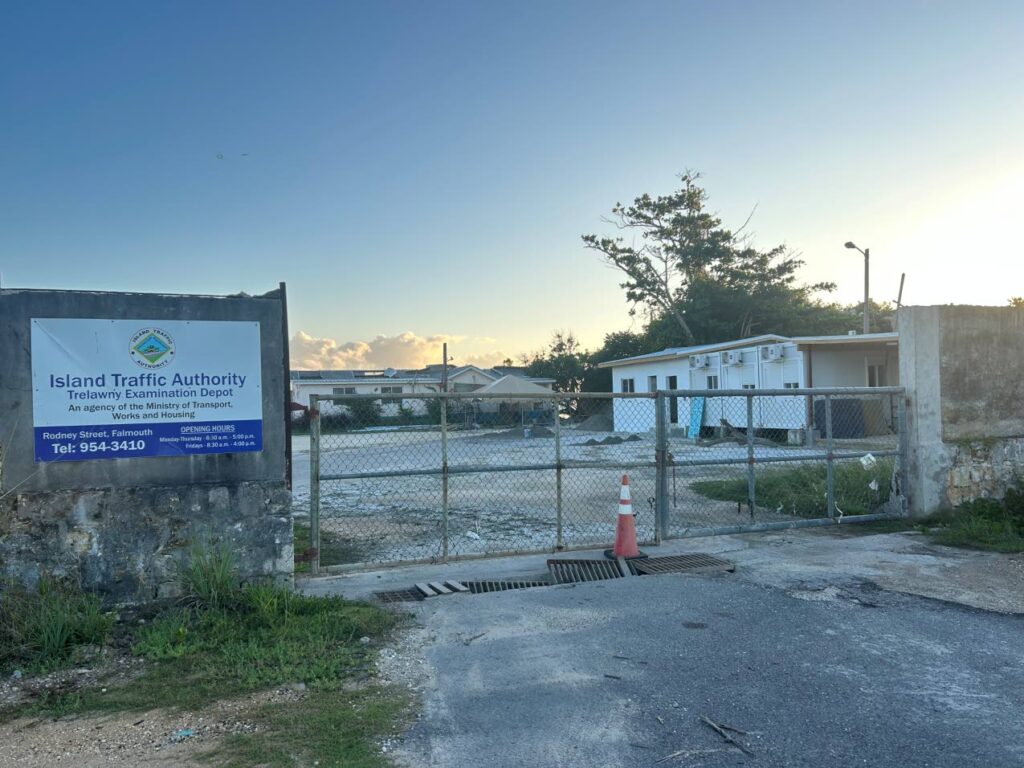
    On a Wednesday morning in Trelawny, Jamaica, a routine work trip took an unexpected turn for five members of the Jamaica Constabulary Force’s Trelawny Division, when their official service vehicle overturned on Foreshore Road, leaving all five with only minor injuries.

    According to details shared by an anonymous police source, the collision unfolded shortly after 7:15 a.m. as the group traveled west toward Montego Bay. While navigating a stretch of Foreshore Road in the town of Falmouth, the driver lost control of the vehicle, resulting in the rollover.

    At the time of the incident, the three male and two female officers were heading to a scheduled shooting range training exercise, a standard part of law enforcement preparedness in the region.

    Following the crash, first responders coordinated to extract the officers from the overturned vehicle and transported them to Falmouth Public General Hospital to receive prompt medical evaluation and care for their minor injuries. No other vehicles or bystanders were involved in the incident, per initial reports.

  • St James police alarmed by rise in killings of women

    St James police alarmed by rise in killings of women

    MONTEGO BAY, Jamaica — Law enforcement in Jamaica’s St James parish has raised urgent alarms over an unprecedented string of fatal attacks targeting women in recent weeks, with senior officers confirming that most of the killings trace back to avoidable interpersonal conflicts between acquaintances and intimate partners. The string of violent deaths began on April 22, when 38-year-old Cora Thompson was gunned down in cold blood while she operated a book sales booth at the Montego Bay New Testament Church of God. One week later, on April 29, the body of 35-year-old Melissa Kerry Samnath, a U.S. national visiting Jamaica for a birthday trip, was discovered; a subsequent post-mortem examination officially ruled her death a homicide. Just two days after Samnath’s body was found, on May 1, neighbors alerted police to screams coming from a Catherine Hall residence, where 38-year-old Kadene Beswick was found dead with multiple stab wounds across her body. Most recently, on May 9, 32-year-old Jassett Blake was fatally shot near Montego Bay’s busy People’s Arcade, marking the fourth woman killed in less than three weeks in the parish. In a press briefing held with reporters on Tuesday evening, Senior Superintendent Eron Samuels, head of the St James Police Division, opened up about the force’s deep distress over the escalating violence targeting women across the region. “We are extremely concerned that such a large share of our recent homicide cases have been women,” Samuels stated, drawing specific attention to the high-profile investigation into Samnath’s killing. The senior officer confirmed that Dean Watson, Samnath’s Jamaican husband, has been named a person of interest in her murder, and law enforcement has launched an intensive manhunt to locate him. What has left the St James police force particularly disturbed, Samuels explained, is the clear pattern linking most of the recent killings to personal conflicts between people who know one another, rather than random acts of violence or gang-related crime. “We are deeply saddened that so many of these incidents grow out of interpersonal disputes, and we are appalled by how many violent acts have been committed against women in our community,” he said. He added that since the beginning of 2024, 12 homicides recorded in St James have stemmed directly from unaddressed personal conflicts, a statistic that underscores how pervasive preventable violence has become in the parish. Despite the alarming surge in killings, Samuels reported that investigators have already secured major breakthroughs in several of the recent cases, offering a small measure of progress amid the crisis. “For multiple active investigations, we have made significant headway,” he said. “In the Catherine Hall case involving Kadene Beswick, the suspect is already in custody and has been formally charged with the young woman’s murder.” Turning back to the high-profile probe into Samnath’s death, Samuels noted that investigators have advanced the case significantly, but are still working to locate Watson, the key person of interest. “We are actively searching for Mr. Watson, and we are asking the Jamaican public to assist our efforts to bring him in for questioning,” Samuels said. The senior commander confirmed that intelligence indicates Watson has been moving between the Montego Bay area and neighboring St Ann parish, and that public tips could be the key to taking him into custody quickly. Beyond ongoing investigations, Samuels used the briefing to issue a urgent public call for proactive intervention before personal conflicts turn deadly. He urged St James residents to contact local police at the first sign that domestic disputes or interpersonal conflicts are escalating into violence, saying that early police intervention is the most effective tool to prevent more unnecessary deaths. “We are asking every member of the St James community: if you become aware of an interpersonal situation, whether it is domestic violence or a one-on-one conflict between two people that is growing tense, reach out to us immediately,” Samuels said. “That allows us to step in early and stop these disputes from turning into murders that tear our community apart.”

  • RJR Gleaner enters agreement for sale of North Street property

    RJR Gleaner enters agreement for sale of North Street property

    KINGSTON, Jamaica — One of Jamaica’s most prominent media conglomerates has announced a key strategic property deal that will reshape its operational footprint for years to come. RJR Gleaner Communications Group, the parent company of the decades-old Jamaica Gleaner publication, has entered into a binding sales agreement with local enterprise LP Azar Limited for its iconic former headquarters located at 7 North Street in downtown Kingston.

    The announcement, made publicly this Tuesday, confirmed that the deal includes not only the main building that housed the Jamaica Gleaner for generations, but also adjacent parcels of land and existing parking areas attached to the property.

    In an official news release detailing the transaction, the media group emphasized that the sale is not an isolated move, but a core component of its company-wide strategic restructuring and modernization agenda. The overarching goals of these initiatives are to streamline the organization’s physical operational footprint, cut unnecessary overhead, boost efficiency across all of its commercial divisions, and ultimately deliver greater long-term value to its shareholders.

    The proceeds and freed-up resources from the sale will support the ongoing consolidation of all of the group’s operations at its updated Lyndhurst Road campus, where the Jamaica Gleaner newsroom has already completed its relocation. By centralizing operations at this single site, the group expects to eliminate redundant costs and improve cross-department collaboration between its print, digital and broadcast teams.

    Furthermore, the sale allows leadership to reallocate capital and management attention away from non-core real estate holdings and back to the company’s primary business lines: print journalism, digital media content, and broadcast operations.

    Like most commercial property transactions of this scale, the final closing is contingent on the completion of standard regulatory and procedural conditions. The deal is currently projected to be finalized within the next 45 days.