标签: Guyana

圭亚那

  • St. Lucians vote for a new government on Monday

    St. Lucians vote for a new government on Monday

    Citizens of St. Lucia are heading to the polls on Monday, December 1st, in a crucial general election that will determine the political trajectory of this Caribbean Community (CARICOM) nation. The electoral contest presents a direct confrontation between Prime Minister Phillip J. Pierre’s incumbent St. Lucia Labour Party (SLP) and the main opposition United Workers Party (UWP), led by former Prime Minister Allen Chastanet.

    Prime Minister Pierre, 71, called the election nearly a year before the constitutional deadline, expressing confidence that the SLP will maintain or even surpass its current majority of 13 seats secured in the July 2021 elections. In his final appeal to voters on social media, Pierre emphasized continued progress under his administration, invoking spiritual guidance with references to Psalm 33:12: “Blessed is the nation whose God is the Lord.”

    Opposition leader Chastanet, 65, seeks to reverse his party’s previous electoral defeat, campaigning on a platform of hope and change. Addressing supporters at his party’s final rally in Choiseul, Chastanet positioned the UWP within a broader regional trend, noting recent victories by “yellow” parties across the Caribbean, including in Trinidad and Tobago and St. Vincent and the Grenadines.

    The electoral landscape features 44 nominated candidates alongside eight independents, with political observers noting particularly competitive races in constituencies where government ministers Richard Frederick and Stephenson King are seeking reelection as independents after previously winning as UWP members before aligning with the SLP.

    The St. Lucia Electoral Department reports approximately 180,000 registered voters for this election, with Chief Elections Officer Herman St. Helen noting a significant surge in registrations following the November 9th election announcement, particularly among young voters. The Department maintains full preparedness to ensure a free and fair electoral process, including addressing allegations of corruption through legal channels when necessary.

    International observer missions from the Caribbean Community (CARICOM) and the Organization of American States (OAS) will monitor the electoral process, underscoring its regional significance. The outcome will determine whether St. Lucia continues its current development path or embraces a new political direction for the next five years.

  • APNU accuses gov’t of politically motivated withholding of population count, finance minister to seek update from Stats Bureau

    APNU accuses gov’t of politically motivated withholding of population count, finance minister to seek update from Stats Bureau

    Guyana’s political landscape is embroiled in controversy as the opposition coalition A Partnership for National Unity (APNU) has launched serious allegations against the ruling People’s Progressive Party Civic (PPPC) administration. APNU claims the government is deliberately suppressing the results of the 2022 national population and housing census to secure political advantages in upcoming local elections.

    The opposition party, holding 12 parliamentary seats, asserts that the Irfaan Ali-led administration is engaging in ‘institutional corruption’ by withholding taxpayer-funded census data that cost approximately GY$2 billion. APNU Chairman Aubrey Norton emphasized that accurate population figures are essential for political planning, strategic decision-making, and maintaining a fair democratic process.

    According to unofficial estimates, Guyana’s population has grown significantly from 746,955 in 2012 to approximately 812,000 in 2022. This growth includes substantial immigration, with Foreign Secretary Robert Persaud noting nearly 100,000 persons of Venezuelan ancestry currently in Guyana, alongside increasing numbers of Cubans, Indians, Bangladeshis, and Trinidad and Tobago nationals.

    The absence of official census data has created planning challenges for businesses, NGOs, civil society organizations, and international institutions that rely on current demographic information. APNU warns this opacity undermines transparency, weakens institutional credibility, and erodes public trust in government institutions.

    Finance Minister Dr. Ashni Singh, who previously acknowledged the census’s importance for policy-making and public investment decisions, recently stated he would seek an update from the Bureau of Statistics. ‘This is very high on my agenda for discussion with the Chief Statistician because I, too, would like to see it… because we, as a government, would like it to be concluded and issued very soon,’ Dr. Singh commented earlier this month.

    APNU has demanded immediate publication of the 2022 census report, a transparent breakdown of census expenditures, stronger institutional safeguards for future censuses, and a detailed explanation for the delays with a clear timetable for completion. The enumeration process began on September 15, 2022, following Guyana’s standard ten-year national cycle, with field workers returning to various areas in August 2023 to ensure comprehensive household coverage.

  • Suriname President cuts ministries’ year-end ‘social’ budgets

    Suriname President cuts ministries’ year-end ‘social’ budgets

    In a significant move toward fiscal responsibility, Surinamese President Jennifer Geerlings-Simons has implemented substantial reductions to year-end social event budgets across all government ministries. The presidential directive slashes ministry allocations from 2.4 million Suriname dollars to 500,000 Suriname dollars, representing a nearly 80% reduction in discretionary spending for holiday celebrations.

    The decision, announced through the Suriname Government Communications Service on Saturday, November 29, 2025, follows consultations between President Geerlings-Simons and Vice President Gregory Rusland. Officials emphasized that this austerity measure aligns with the administration’s commitment to efficient public spending and responsible financial management amid economic challenges.

    Government spokespersons clarified that these budget cuts specifically target ministry social events and will not affect previously announced financial support programs for vulnerable populations. The separate one-time payment of 1,000 Suriname dollars for civil servants, disabled citizens, pensioners, and economically vulnerable households remains intact and will be distributed as scheduled in December 2025.

    The Communications Service statement elaborated: ‘This decision stems from the government’s social responsibility and aligns with its commitment to an efficient and frugal spending policy. While taking austerity measures into account, this allows ministries to still implement their year-end closing.’

    The administration reinforced its dedication to both fiscal discipline and social support, stating unequivocally that ‘the government is unconditionally working towards a sustainable economic recovery’ while maintaining essential citizen assistance programs during the holiday season.

  • Suriname, Guyana preparing for Joint Border Commission meeting

    Suriname, Guyana preparing for Joint Border Commission meeting

    The neighboring South American nations of Suriname and Guyana are intensifying diplomatic efforts to convene a crucial Joint Border Commission meeting before the conclusion of 2025. This development follows high-level discussions between officials from both countries, signaling a renewed commitment to bilateral cooperation.

    Suriname’s outgoing Ambassador to Guyana, Liselle Blankendal, confirmed that preparatory work is underway for the seventh session of the border commission. “We are striving to hold the 7th border commission meeting before year-end,” Blankendal stated during a press briefing, revealing that Suriname’s commission chair has already initiated engagement with Guyanese counterparts to determine optimal timing.

    The diplomatic momentum stems from the September 2025 meeting between Guyanese President Irfaan Ali and Suriname’s newly elected President Jennifer Geerlings-Simons in Nickerie, Suriname. During this initial presidential encounter, both leaders reached a consensus that commission co-chairs should meet “as soon as possible” to facilitate the full border commission assembly.

    Parallel diplomatic channels are being activated through foreign ministry officials. Guyanese Foreign Affairs Minister Hugh Todd disclosed plans for bilateral discussions with his Surinamese counterpart during the upcoming Caribbean Community (CARICOM) Council of Foreign Ministers meeting scheduled for December in Georgetown. The agenda encompasses multiple cooperation areas, including the Strategic Dialogue Cooperation Platform—particularly relevant following Suriname’s recent governmental transition.

    Minister Todd elaborated that working groups have maintained engagement across several critical domains: “We’re progressing on multiple fronts including the Corentyne River Bridge project, agricultural cooperation, border commission matters, and fishing licenses.” He emphasized the target of concluding substantive discussions by year-end, while acknowledging potential extension into early 2026 should coordination requirements dictate.

    Ambassador Blankendal, a career diplomat, provided technical insights into the commission’s preparatory work, noting that relevant historical documents have undergone comprehensive review with subsequent reporting to both foreign ministries. The proposed procedural framework involves initial talks between commission chairs preceding the full joint session.

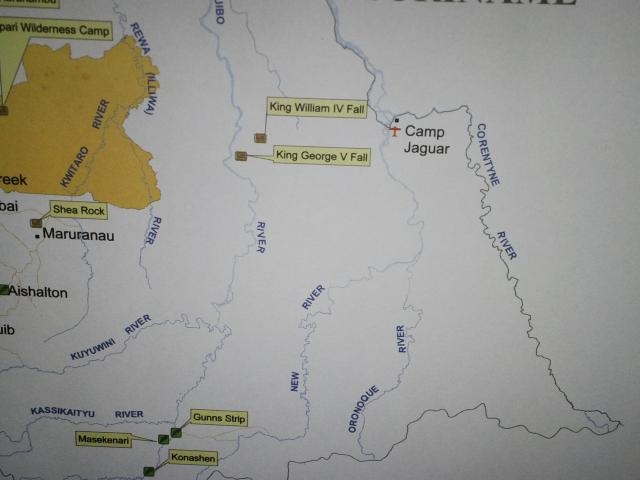
    When questioned regarding potential discussions about the New River Triangle—a 6,000-square-mile territory in southeastern Guyana—the Surinamese envoy indicated the commission’s comprehensive mandate: “The border commission addresses all matters pertaining to that sphere. Our primary focus remains identifying constructive pathways forward.”

  • Guyana’s airspace open despite neighbouring Venezuela’s closure

    Guyana’s airspace open despite neighbouring Venezuela’s closure

    Guyana’s aviation authorities have confirmed uninterrupted flight operations despite neighboring Venezuela’s airspace closure declared by US President Donald Trump. The Guyana Civil Aviation Authority (GCAA) Director-General Retired Lt. Col. Egbert Field assured that both domestic and international flights remain unaffected by the US policy targeting “airlines and flights engaged in illegal activities” above Venezuelan territory.

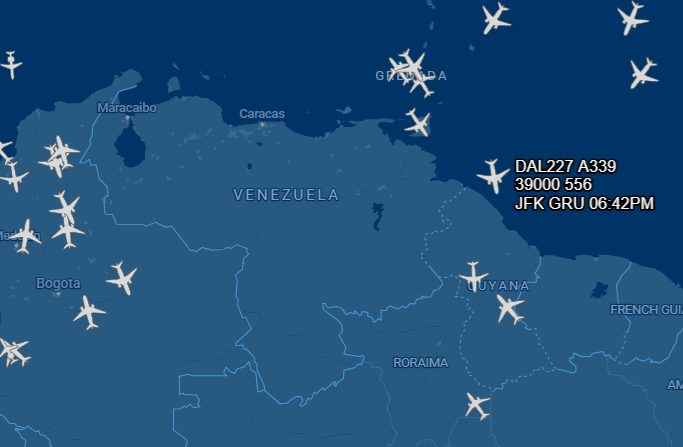
    Flight tracking services show normal air traffic over Guyana while Venezuelan airspace appears empty, demonstrating the practical implementation of Trump’s declaration posted on his Truth Social platform. The US President stated: “To all Airlines, Pilots, Drug Dealers, and Human Traffickers, please consider THE AIRSPACE ABOVE AND SURROUNDING VENEZUELA TO BE CLOSED IN ITS ENTIRETY.

    Regional aviation adjustments have been implemented smoothly, with flights to Trinidad and Colombia successfully rerouted through alternative paths. Field emphasized that even domestic flights to interior destinations near the Guyana-Venezuela border continue normally, as all Guyanese airstrips remain within national airspace boundaries under different flight information regions (FIR).

    The Trinidad and Tobago Ministry of Defence corroborated this stability, confirming that commercial airlines continue operations without disruption. Defence Minister Wayne Sturge reassured the traveling public to maintain normal flight plans.

    This aviation scenario unfolds against heightened military tensions, with Trump threatening potential ground operations against “narco-terrorists and narco-traffickers” in Venezuela. The US administration has labeled Venezuelan President Nicolás Maduro and associated cartels as narcoterrorists, though legal experts question the justification for deadly force amid absent concrete evidence of narcotics transportation in 21 strikes that have killed 83 people to date.

  • Magistrate to rule next month on whether Azruddin Mohamed’s case should go to High Court

    Magistrate to rule next month on whether Azruddin Mohamed’s case should go to High Court

    A pivotal judicial decision awaits Guyanese opposition leader Azruddin Mohamed and his father, Nazar ‘Shell’ Mohamed, as Principal Magistrate Judy Latchman prepares to rule on December 10 regarding their potential extradition to the United States. The case centers on whether the US request for extradition on alleged financial crimes will be referred to Guyana’s High Court based on constitutional considerations.

    The magistrate is expected to adjudicate multiple constitutional arguments presented by the Mohameds’ legal team, who are challenging the validity of amendments made to the Fugitive Offenders Act in 2009. Defense lawyer Roysdale Forde characterized these amendments as unconstitutional, stating they fundamentally altered Guyana’s extradition landscape following a previous High Court ruling that had struck down significant portions of the existing legislation.

    Prosecutors have submitted extensive evidence, including an 11-count US indictment accusing the Mohameds of wire fraud, mail fraud, and money laundering related to their gold trading operations. However, the defense team expressed concerns about receiving redacted documents just one month before the deadline, with attorney Siand Dhurjon describing the situation as nearing an ‘ambush’ by the prosecution.

    Lead prosecutor Terrence Williams, a Jamaican legal expert, dismissed allegations of procedural unfairness while emphasizing his team’s readiness to proceed with the extradition hearing. The court has established a strict timeline requiring defense submissions by December 5, followed by oral arguments on December 8 ahead of the magistrate’s final ruling.

    The outcome will determine whether Guyana’s judicial system will allow the extradition process to advance, potentially setting significant legal precedents regarding constitutional protections in international criminal proceedings.

  • Ali congratulates newly-elected St Vincent Prime Minister

    Ali congratulates newly-elected St Vincent Prime Minister

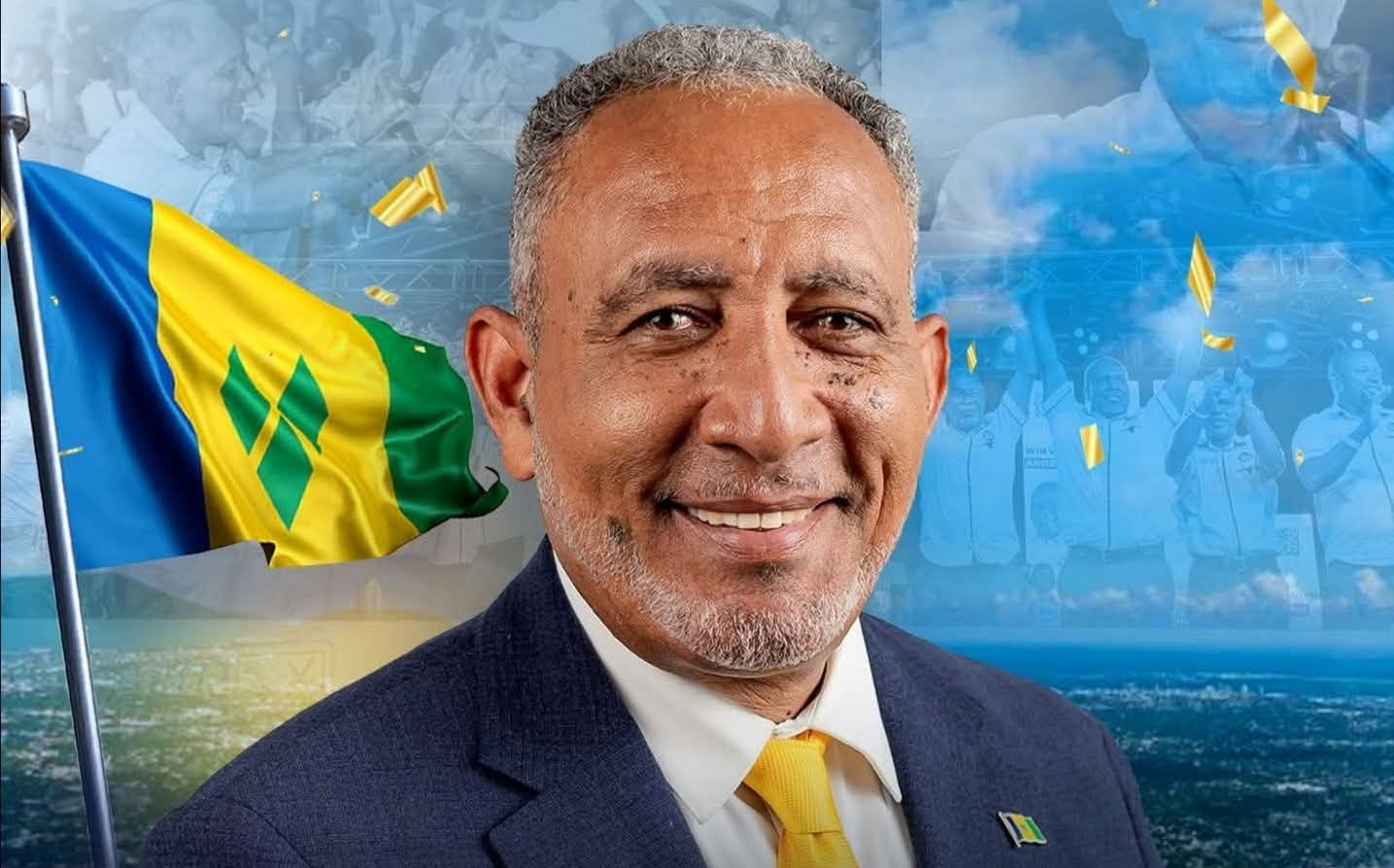
    In a significant political transition for the Eastern Caribbean, St. Vincent and the Grenadines has elected Dr. Godwin Friday as its new Prime Minister following a decisive electoral victory. The New Democratic Party (NDP), under Friday’s leadership, secured a remarkable 14-1 parliamentary majority in Thursday’s general elections, effectively ending the 25-year administration of Dr. Ralph Gonsalves and his Unity Labour Party.

    Guyanese President Irfaan Ali extended official congratulations to the incoming leader on behalf of the Cooperative Republic of Guyana. In his formal statement, President Ali expressed anticipation for strengthened bilateral relations between the neighboring Caribbean nations. “I look forward to working closely with the Prime Minister-elect to deepen the bilateral cooperation between Guyana and St. Vincent and the Grenadines and to advancing regionalism,” Ali stated, emphasizing the importance of regional unity amid evolving challenges and opportunities facing the Caribbean Community (CARICOM).

    The Guyanese leader simultaneously acknowledged the contributions of outgoing Prime Minister Gonsalves, recognizing his quarter-century of service to both his nation and regional integration efforts. “His long and dedicated service to the people of St. Vincent and the Grenadines and to Caribbean regionalism have earned him respect across our Community,” President Ali remarked, noting that Gonsalves’ contributions to CARICOM’s advancement would be long remembered.

    This political shift marks one of the most significant changes in Caribbean leadership in recent decades, potentially signaling new directions in regional diplomacy and cooperation frameworks. The transition occurs as Caribbean nations navigate complex global challenges including climate vulnerability, economic transformation, and evolving international partnerships.

  • St Vincent’s Ralph Gonsalves suffers crushing defeat after 25 years in office

    St Vincent’s Ralph Gonsalves suffers crushing defeat after 25 years in office

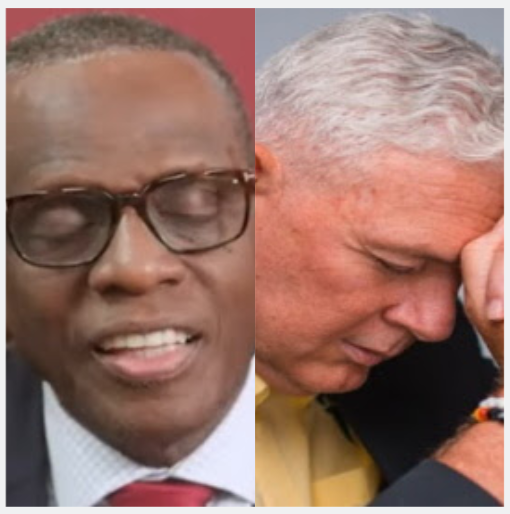
    KINGSTOWN, St. Vincent – In a seismic political shift that has reshaped the Caribbean’s political landscape, St. Vincent and the Grenadines has witnessed the dramatic fall of one of the region’s most enduring political dynasties. The New Democratic Party (NDP) achieved a near-total electoral landslide in Thursday’s general election, capturing 14 of the 15 parliamentary seats according to preliminary results.

    The decisive victory marks the stunning conclusion to Prime Minister Ralph Gonsalves’ quarter-century tenure, preventing his Unity Labour Party (ULP) from securing an unprecedented sixth consecutive term. The 79-year-old leader, the Caribbean’s longest-serving prime minister, suffered a humiliating defeat that also claimed the political careers of his son and Finance Minister Camillo Gonsalves, along with Agriculture Minister Saboto Scofield Caesar – both previously considered potential successors.

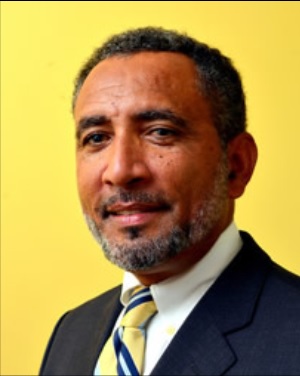
    Prime Minister-designate Dr. Godwin Friday, addressing the nation on state-owned NBC Radio, announced plans to declare a public holiday for national recuperation and celebration. The 66-year-old attorney, who comfortably retained his Northern Grenadines seat, emphasized national unity and immediate action. “The election is behind us now and I want to see this country come together,” Friday stated. “We put ourselves and our backs to the wheel and quickly work to build St. Vincent and the Grenadines for all of us.”

    Friday outlined his intention to be sworn in promptly, noting he would contact the Governor General “bright and early” to arrange the ceremony and avoid any governance vacuum. When asked about communication with his predecessor, Friday revealed Gonsalves had not yet conceded or made contact, though he expected the outgoing leader would eventually “wish me well.”

    The incoming prime minister characterized his new role as “an awesome responsibility” filled with public hope and expectation. He pledged to immediately implement the NDP’s campaign platform, including a detailed 60-day plan, while emphasizing servant leadership and collaborative governance. “I really look forward to serving the people of this country and try to make St. Vincent and the Grenadines better,” Friday affirmed.

    Regional analysts attributed the political upset to a consistent 5% swing away from the ULP over recent elections. Former NDP chairman Dr. Linton Lewis noted the powerful appeal of the “time for a change” message after 25 years of continuous governance, while acknowledging the party had skillfully avoided contentious issues including the proposed shift from Taiwanese to Chinese relations and a controversial Citizenship by Investment program.

    The transition has drawn international attention, with Jamaican Prime Minister Andrew Holness extending “warm congratulations” to the Vincentian people for their peaceful democratic process. Similar commendations came from St. Lucia’s Opposition Leader Allen Chastanet and Trinidad and Tobago’s Prime Minister Kamla Persad-Bissessar, who praised the “resounding democratic mandate” despite earlier allegations of foreign campaign interference during the heated election period.

  • GNBS developing national policy, adds more products, services for testing

    GNBS developing national policy, adds more products, services for testing

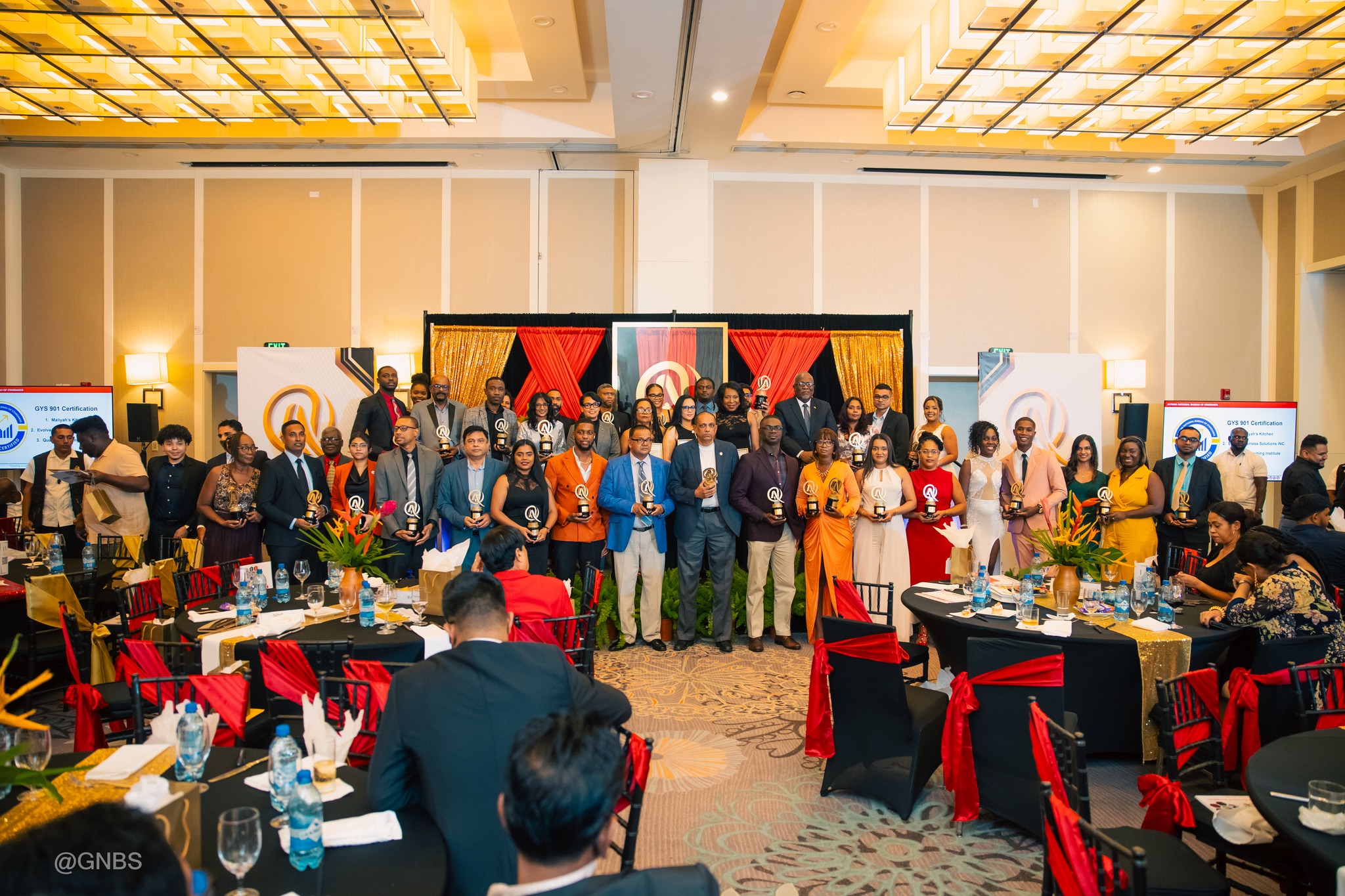
    Guyana is taking significant strides in enhancing its national quality infrastructure through a comprehensive standardization strategy. Minister of Industry and Commerce Susan Rodrigues announced Wednesday that the Guyana National Bureau of Standards (GNBS) is developing a national policy to formalize stakeholder interactions and strengthen quality assurance mechanisms across sectors.

    The policy initiative, revealed during the GNBS’s National Quality Awards ceremony, aims to ensure both public and private sector products and services meet rigorously defined standards. This development comes as the bureau recognized 35 enterprises for excellence in quality standards, including state-owned Guyana Sugar Corporation (GuySuCo), selected from over 100 qualified contenders.

    In collaboration with the Caribbean Regional Organisation on Standards and Quality (CROSQ) and the United Nations Industrial Development Organisation (UNIDO), GNBS has formulated a national standardization strategy for 2025-2028. Minister Rodrigues emphasized this strategy supports digital transformation while focusing on economic growth and competitiveness.

    The bureau has substantially expanded its operational scope, adopting 22 new national standards covering diverse products including salt, ice cream, milk, abattoirs, helmets, and liquid petroleum gas. Beginning in 2026, GNBS will introduce verification services for electric vehicle chargers and expand the ‘Made in Guyana’ certification program to include export requirement criteria through partnership with Guyana Office for Investment (GO-Invest).

    With over 600 standards already developed and 11 additional standards awaiting approval, GNBS has exceeded key performance indicators. The bureau’s capabilities are enhanced through 26 laboratories at its Sophia Exhibition Center facility and expanded legal and metrology services. Administrative improvements include digitizing the metrology database to reduce processing times and enable real-time certificate issuance.

    CROSQ CEO Sharonmae Smith-Walker commended GNBS’s ‘remarkable journey’ since its 2017 establishment, noting that several Caribbean nations have followed Guyana’s lead in developing quality recognition ceremonies. She highlighted Guyana’s commitment to regional collaboration through free training and mentorship programs, specifically mentioning technical assistance provided to Belize in metrology.

  • WIN weighing legal options for Region 10 Council chairmanship

    WIN weighing legal options for Region 10 Council chairmanship

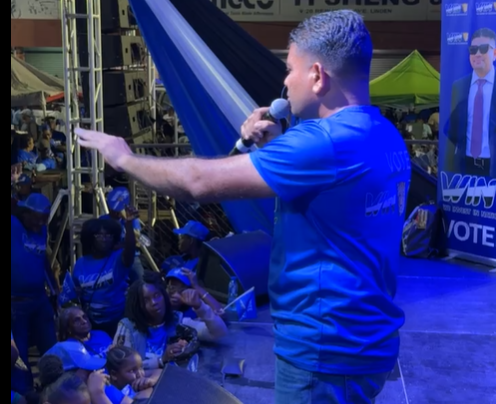
    A constitutional impasse over the leadership of Guyana’s Region 10 (Upper Demerara-Upper Berbice) has escalated into a potential legal confrontation, with the We Invest in Nationhood (WIN) party contemplating litigation against Regional Executive Officer Dwight John. The political stalemate stems from John’s failure to convene additional council meetings following September’s general and regional elections, which resulted in an unprecedented 9-9 tie between WIN and A Partnership for National Unity (APNU) for the regional chairmanship.

    WIN Leader Azruddin Mohamed revealed his party is consulting legal counsel before proceeding with potential judicial intervention. “I have to consult with my attorney because to be honest, I don’t know if we take legal action now even that will delay the process further,” Mohamed stated in an interview with Demerara Waves Online News. He expressed frustration with the administration’s handling of the situation, alleging deliberate delays by the governing People’s Progressive Party (PPP).

    The deadlock has created unprecedented consequences for regional governance. President Irfaan Ali notably excluded Region 10’s leadership from Thursday’s swearing-in ceremony for all other regional chairs and vice-chairs. The President maintained constitutional compliance, stating: “I am sure that within the ambit of the Constitution and within the ambit of the rules of any elections that the chair and vice chair of Region 10 will be sworn in at the appropriate time when they conclude their elections.

    Complicating matters further, the impasse has created jurisdictional complications within local government structures. Linden Town Clerk Lennox Gasper confirmed that the situation involves APNU’s Dominique Blair, who refuses to resign as Deputy Mayor while potentially assuming the regional chairmanship. Gasper has sought legal guidance from Attorney General Anil Nandlall regarding whether Blair can simultaneously hold both positions, as no existing legislation explicitly prohibits such dual roles.

    The ongoing constitutional crisis highlights growing tensions in Guyana’s decentralized governance system and raises questions about procedural mechanisms for resolving electoral deadlocks at the regional level.