标签: Guyana

圭亚那

  • Guyana tells Exxon Mobil no exploration in area nearer Venezuela until World Court ruling

    Guyana tells Exxon Mobil no exploration in area nearer Venezuela until World Court ruling

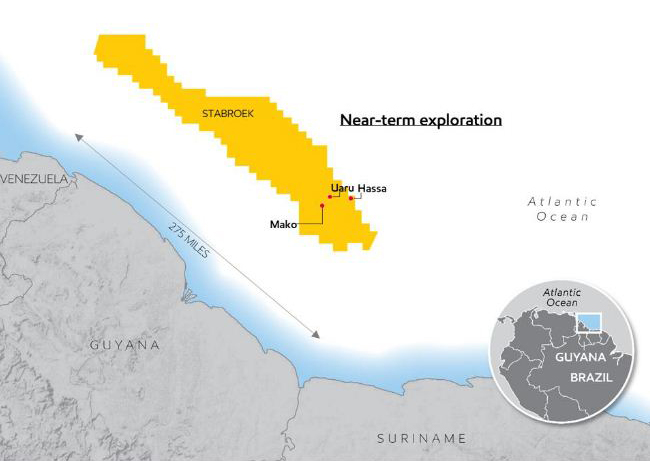
    In a significant geopolitical move, Guyana has formally denied ExxonMobil permission to conduct exploratory drilling in the northwestern sector of the prolific Stabroek Block, citing ongoing border tensions with Venezuela. The decision, announced by Natural Resources Minister Vickram Bharrat on February 20, 2026, mandates that all exploration activities in the contested maritime zone must await the International Court of Justice’s ruling on the validity of the 1899 Arbitral Tribunal Award.

    Minister Bharrat clarified the government’s position during the Youth Forum of the Guyana Energy Conference, stating, “Exxon sought authorization to commence drilling operations, but we explicitly instructed them to pause until the ICJ delivers its judgment. Our priority is to avoid escalating regional tensions or provoking military aggression.” The World Court is expected to issue its decisive ruling on the century-old territorial dispute by the end of 2026.

    The minister simultaneously refuted claims by Guyanese attorney Christopher Ram regarding multiple force majeure declarations, confirming that ExxonMobil had invoked the clause only once in response to Venezuelan naval interventions. Other international energy companies operating in the region have similarly activated force majeure provisions following incidents where Venezuelan military vessels expelled seismic research ships from contested waters.

    ExxonMobil’s leadership has characterized the pending ICJ decision as a “critical milestone” for determining the company’s future operations in the Stabroek Block, which has already yielded over 50 hydrocarbon discoveries. The northwestern portion remains under force majeure status due to the unresolved border demarcation issue between Guyana and Venezuela.

    Historical precedents underscore the operational risks, with Venezuelan forces detaining the MV Teknik Perdana in 2013 and expelling the MV Ramform Tethys in 2018 from waters off Guyana’s Essequibo Region. These incidents demonstrate the persistent volatility in the disputed maritime territory that continues to impact energy development timelines.
  • Guyana assisting T&T to search for financing to restart Petrotrin refinery

    Guyana assisting T&T to search for financing to restart Petrotrin refinery

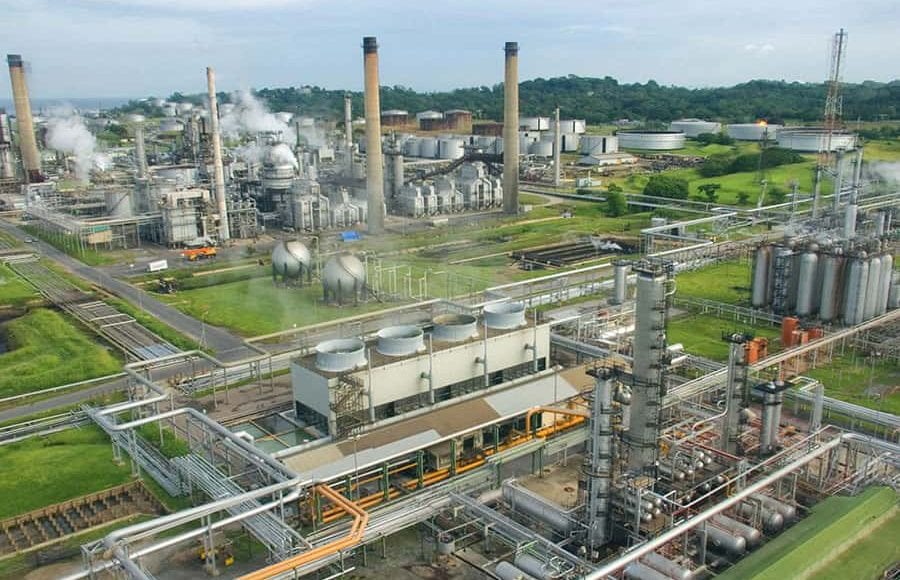
    In a significant move for Caribbean energy cooperation, Guyana is actively assisting Trinidad and Tobago in securing crucial financing to restart the long-dormant Petrotrin oil refinery. The development emerged during the 5th Guyana Energy Conference held in Georgetown from February 17-20, 2026.

    Guyana’s Energy Minister Roodal Moonilal revealed that President Irfaan Ali’s administration has been instrumental in connecting Trinidadian officials with potential Arab investors and local banking representatives. The collaborative effort aims to secure approximately US$200 million needed for the comprehensive revitalization of the refinery complex.

    Minister Moonilal expressed optimism about the project timeline, suggesting that if financial arrangements are finalized by mid-year or the third quarter, preparatory work could commence as early as the last quarter of 2026. This would potentially allow operations to resume within approximately one year thereafter.

    The financial requirements are structured in two phases: an initial US$50 million injection for short-term recommencement of operations, followed by a larger US$200 million investment to restore the refinery’s full capacity. This expanded capability would enable Trinidad to resume its historical role as a primary fuel supplier to the 15-nation Caribbean Community (CARICOM).

    Minister Moonilal highlighted that the Saudi Arabian investment community has shown particular interest in the venture during discussions held in Guyana. The allocated funds would address critical technical upgrades, design modifications, and essential health and safety improvements at the facility.

    While acknowledging Trinidad’s substantial domestic expertise in refinery operations, Moonilal indicated that international partnerships might be necessary. Potential collaborators could include specialized subcontractors from Houston, Texas, alongside technical experts from energy giants Shell and BP.

    Addressing questions about crude compatibility, Moonilal clarified that technological advancements have largely eliminated the historical distinction between heavy and light crude processing. Modern conversion technologies and potential oil swap arrangements would allow the refinery to efficiently process various crude types, including Guyana’s light sweet crude.

    The Petrotrin refinery was shuttered in November 2018 by the previous People’s National Movement administration following years of financial challenges and substantial debt accumulation.

  • Nine proposals submitted to build cooking gas bottling plant

    Nine proposals submitted to build cooking gas bottling plant

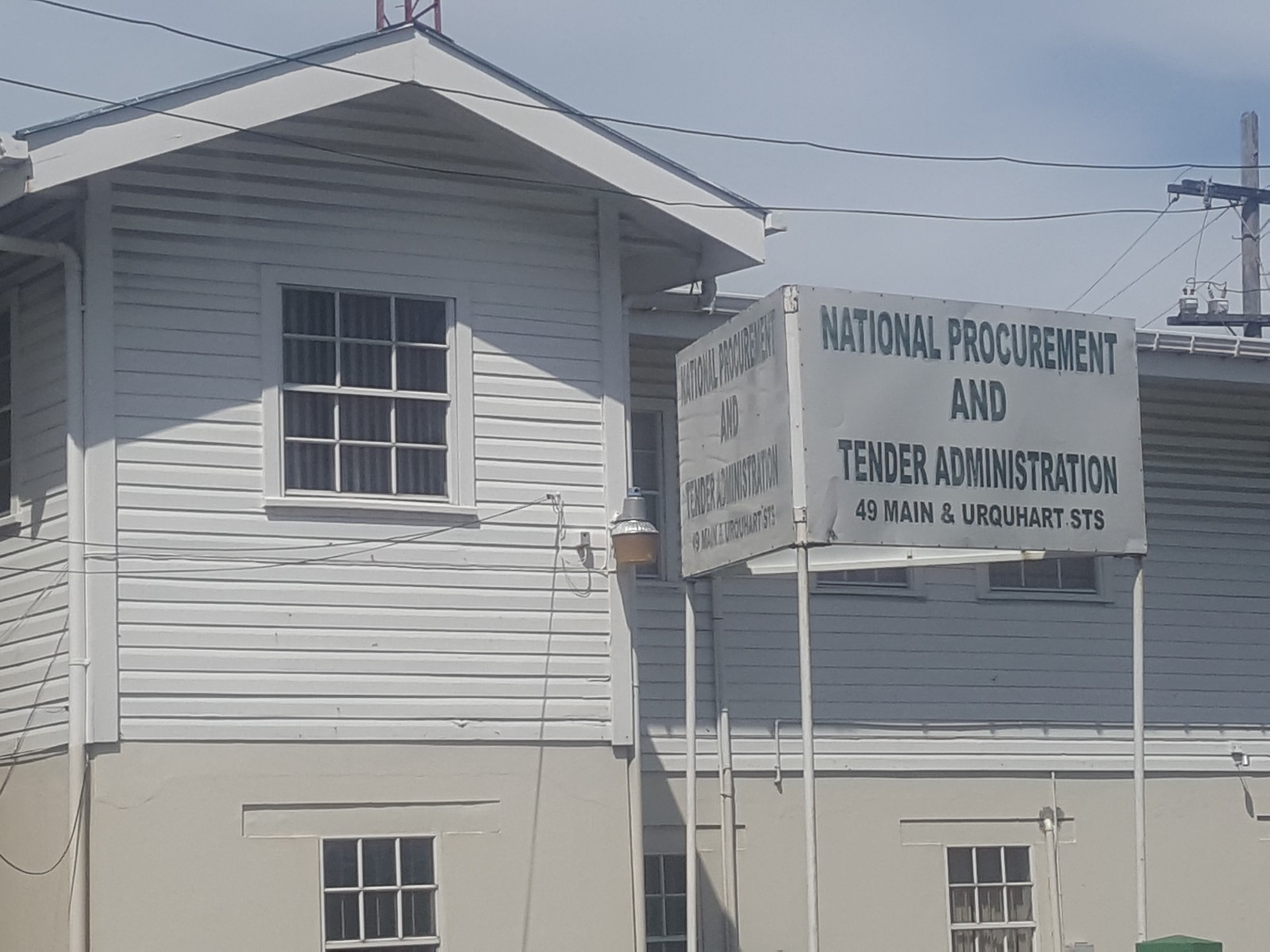
    Guyana’s energy sector is witnessing significant international investment interest as nine competitive proposals have been submitted for the construction of a major cooking gas bottling plant. The National Procurement and Tender Administration Board (NPTAB) confirmed the submissions from a diverse consortium of local and international energy companies.

    The bidding consortium includes Guygas, which has formed strategic partnerships with Denmark’s Makeen Energy and India’s RAMCO Industries. Other prominent contenders include Massy Gas Products, SOL Guyana Inc, and RUBIS Guyana Inc. International participation extends to Houston-based LINDSAYCA, currently engaged in constructing the 300-megawatt natural gas-fired power plant and NGL facility at Wales, West Bank Demerara.

    Additional joint venture proposals have been submitted by Divyan International Inc, along with a collaborative effort between Gate Ventures and Consulting Guyana Inc with Canada’s Propak Systems Limited and Makeen Energy. Further international interest comes from Colombia’s Gas Zipa SASESP partnering with Fix It Depot and Standard Energy Company, and India’s ILF Consulting Engineering Inc. collaborating with Mahatma Phule Renewable and Infrastructure Technology Limited.

    Winston Brassington, Project Lead for the Gas-to-Energy Project, revealed during the Guyana Energy Conference that the proposed facility is projected to bottle approximately 63 million gallons of cooking fuel annually, representing a substantial advancement in the country’s energy infrastructure development.

  • Wales power plant to generate at full capacity next year; plans moving apace for “explosive growth” in electricity demand

    Wales power plant to generate at full capacity next year; plans moving apace for “explosive growth” in electricity demand

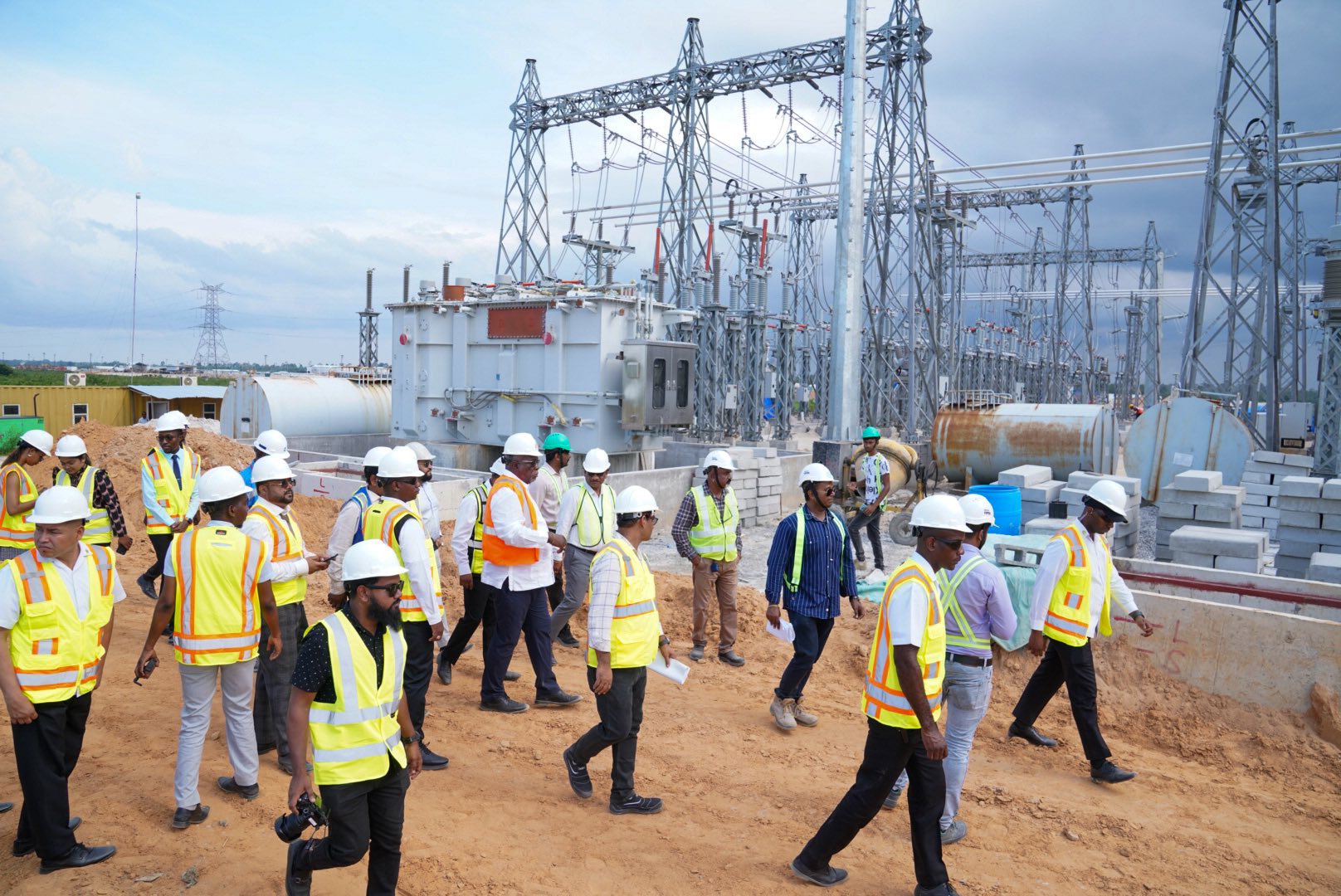
    Guyana is rapidly advancing its energy infrastructure development to accommodate unprecedented growth in electricity consumption, with officials outlining ambitious plans at the recent Guyana Energy Conference. The 300-megawatt natural gas-fired power plant at Wales is projected to achieve full operational capacity by mid-2026, according to Ministry of Natural Resources Consultant Winston Brassington. The facility, currently under construction by Texas-based contractor LINDSAYCA, is expected to initially generate 228 megawatts through its four simple cycle gas turbines before reaching maximum output with combined cycle completion. This development coincides with Guyana’s significant grid modernization effort, transitioning from 69 kV to 230 kV transmission systems to handle what officials describe as ‘explosive growth’ in electricity demand. The new transmission infrastructure already extends from Wales to Eccles, with additional substations and control centers scheduled for completion by May. Guyana Power and Light CEO Kesh Nandlall revealed that electricity consumption has surged by 65% over five years, from 903 gigawatt hours in 2020 to 1,485 gigawatt hours in 2025. Current peak demand reaches 221.5 megawatts against available reliable capacity of 260 megawatts. With projections indicating demand could reach 1,650 megawatts by 2030—requiring a 600% capacity increase—authorities are already planning a second gas-to-energy plant at Wales. Five firms have been prequalified for this expansion, which will include urea fertilizer production and glass manufacturing facilities.

  • Fmr police officer Slowe not guilty of sexual offence; police to appeal

    Fmr police officer Slowe not guilty of sexual offence; police to appeal

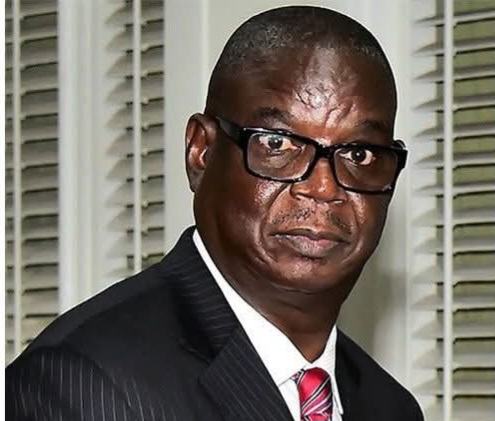
    In a significant judicial development, retired Assistant Police Commissioner Paul Slowe has been acquitted of all three counts of sexual assault by a Georgetown magistrate. The ruling, delivered Friday by Senior Magistrate Fabiyo Azore, concluded that the prosecution failed to meet the stringent evidentiary threshold required for conviction under Guyanese law.

    The case centered on allegations made by a female police officer who claimed Slowe sexually assaulted her on three separate occasions between March and April 2019 at Police Headquarters, Eve Leary. The prosecution, led by Senior Police Legal Advisor Mandel Moore, presented evidence that was ultimately deemed by the court to be of equal weight to the defense’s counterarguments.

    In her landmark decision, Magistrate Azore applied the fundamental legal principle that when evidentiary scales are balanced, the benefit of doubt must invariably favor the accused. The court explicitly clarified that this verdict does not constitute a finding that the complainant fabricated her testimony, but rather reflects the prosecution’s failure to establish guilt beyond reasonable doubt.

    Within hours of the verdict, the Guyana Police Force issued an official statement announcing their intention to appeal the decision. This rare move by law enforcement against a judicial ruling involving one of their own former high-ranking officials signals the case’s continued significance within Guyana’s criminal justice system.

    The outcome has sparked renewed discussions about institutional accountability, evidentiary standards in sexual offense cases, and the complex dynamics of power within police hierarchies. Legal observers note this case may establish important precedents for how similar allegations are handled within Guyana’s law enforcement community moving forward.

  • Suriname police arrest trio with fuel allegedly smuggled from Guyana

    Suriname police arrest trio with fuel allegedly smuggled from Guyana

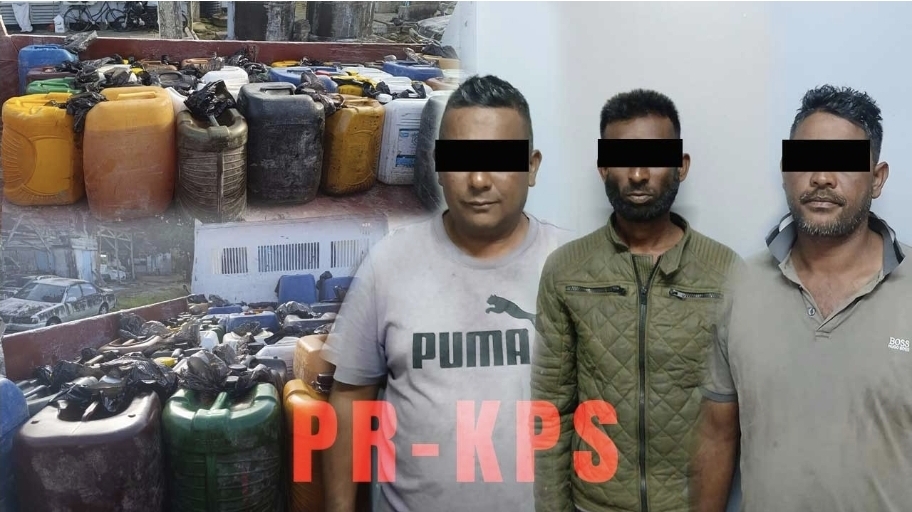
    Surinamese law enforcement has apprehended three individuals on charges of illicit fuel trafficking from neighboring Guyana, marking a significant interception in regional border security operations. The arrests occurred Wednesday along the South Drain roadway following an intelligence-led operation.

    According to official statements from the Suriname Police Corps, authorities discovered approximately 1,000 liters of contraband petroleum products during a vehicle inspection. The seizure included 310 liters of gasoline and 690 liters of diesel fuel contained in multiple jerry cans. Forensic examination confirmed the fuel’s characteristics matched petroleum products commonly smuggled from Guyanese territory.

    The suspects, identified by initials KR (40), PN (38), and BP (48), were traveling in a pickup truck allegedly loaded through a sophisticated smuggling network. Investigation revealed the fuel had been transported via high-speed “Go Fast” watercraft before being transferred to the vehicle at a boat owner’s storage facility.

    Police investigators noted inconsistencies in suspect statements and presented documentation, raising suspicions of document forgery. The discrepancies in alleged invoices and transportation timelines prompted deeper scrutiny of the operation’s legitimacy.

    Following judicial consultation with the Public Prosecution Service, all three individuals remain in custody pending further investigation. The confiscated vehicle and fuel products have been impounded as evidence in the ongoing case. This interception highlights increasing collaboration between Surinamese and Guyanese authorities addressing cross-border petroleum smuggling networks exploiting regional price disparities.

  • One Communications announces US$25m digital infrastructure expansion

    One Communications announces US$25m digital infrastructure expansion

    In a significant move to bolster Guyana’s digital ecosystem, telecommunications leader One Communications has unveiled a comprehensive $25 million infrastructure investment plan for 2026. CEO Abraham Smith made the announcement during his keynote address at the Guyana Energy Conference and Supply Chain Expo, framing the initiative as essential to supporting the nation’s rapidly expanding economy.

    The strategic investment will focus on three primary areas: extending fiber optic connectivity into emerging economic corridors, enhancing both subsea and terrestrial network capacity, and building robust redundancy systems for mission-critical operations. Smith emphasized that modern telecommunications infrastructure has evolved from merely supporting operations to actively powering them, making reliable connectivity fundamental to national development.

    This latest commitment continues One Communications’ substantial investment history, having deployed over $250 million in network development throughout the past fifteen years, including $100 million dedicated specifically to fiber infrastructure. The company’s expansion strategy specifically targets economic growth zones such as the Wales corridor—home to Guyana’s landmark Gas-to-Energy development—where fiber connectivity has already been extended to communities including Vriesland, Patentia, Belle Vue, and Goed Intent.

    Beyond physical infrastructure, the company is advancing financial inclusion through upgrades to its mobile wallet platform, MMG, which expands digital payment capabilities and supports broader participation in the digital economy. Geographic expansion priorities for 2026 include Linden, Parika, the East Coast corridor, and Berbice, where One Communications is actively involved in digital infrastructure and data center initiatives supporting Region Six.

    Smith stressed that sustainable national development requires inclusive connectivity that reaches beyond urban centers. “Opportunity cannot stop at the city limits,” he stated, adding that digital infrastructure must extend to every region to ensure development is both genuine and sustainable. The company’s approach emphasizes building systems resilient enough to withstand pressure while ensuring coastal and inland communities alike benefit from technological advancement.

    With its fiber network already serving approximately 180,000 homes and businesses nationwide—79% located outside central Georgetown—One Communications positions itself as a crucial partner in building the digital backbone that will keep Guyana competitive and future-ready in an increasingly connected global economy.

  • Iwokrama, Guyana Tourism Authority ink accord to promote tourism development in Region 9.

    Iwokrama, Guyana Tourism Authority ink accord to promote tourism development in Region 9.

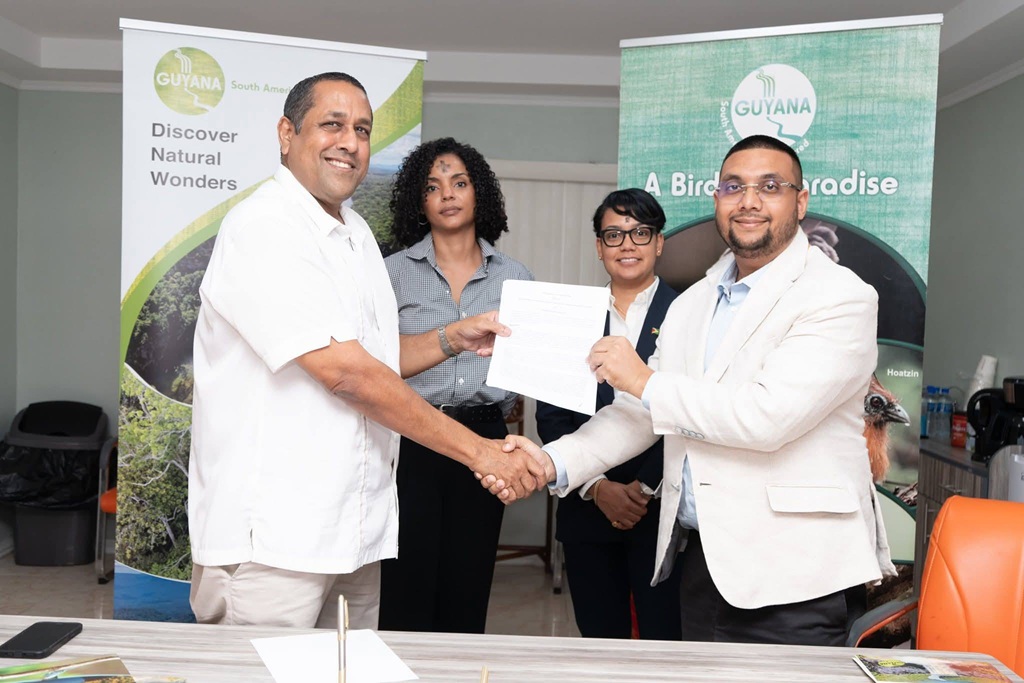
    In a landmark move for sustainable tourism development, the Iwokrama International Centre for Rainforest Conservation and Development has formalized a collaborative partnership with the Guyana Tourism Authority (GTA) through a newly signed Memorandum of Understanding. This strategic alliance, announced on February 19, 2026, aims to accelerate tourism growth in Guyana’s North Rupununi area (Region 9) through comprehensive capacity building, market development, and sustainable product enhancement.

    The agreement establishes a community tourism training institute at the Iwokrama River Lodge, creating an educational hub for developing professional expertise across various tourism disciplines. This initiative represents a significant advancement in Guyana’s community-based tourism infrastructure, combining conservation excellence with economic development.

    Iwokrama CEO Dane Gobin emphasized the alignment between both organizations’ operational objectives, noting the Centre’s unique position as “the only internationally certified area for Recreational Services in the region.” This certification includes the prestigious Good Travel Seal, initially awarded in 2023 and successfully renewed in 2026 following demonstrated commitments to sustainability benchmarks.

    GTA Director Kamrul Baksh characterized the partnership as a crucial step in strengthening Guyana’s global positioning as a premier nature-based tourism destination. “This reflects our shared commitment to sustainable tourism development that protects our natural heritage while creating meaningful opportunities for communities and visitors alike,” Baksh stated.

    The collaboration builds upon Guyana’s remarkable tourism performance, which recorded 34,923 visitor arrivals in January 2026 alone—a 17.2% increase compared to January 2025, representing the highest January arrivals in the nation’s history. This growth trajectory underscores Guyana’s emerging status as a leading ecotourism destination.

    Established in 1996 through a joint initiative of the Guyanese government and Commonwealth Secretariat, the Iwokrama International Centre manages 371,000 hectares of protected rainforest with a mandate to generate ecological, economic, and social benefits for both local communities and the international community. The GTA operates as a semi-autonomous governmental entity focused on developing sustainable tourism that maximizes socio-economic benefits while preserving Guyana’s natural and cultural heritage.

  • Wood, Massy and Tagman launch new joint-venture business in Guyana

    Wood, Massy and Tagman launch new joint-venture business in Guyana

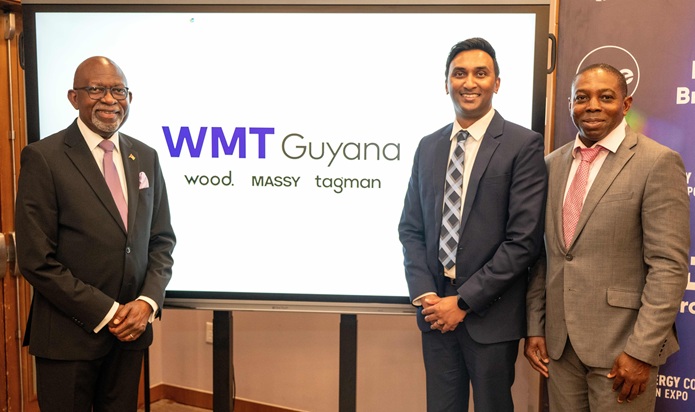
    In a significant development for Guyana’s burgeoning energy industry, three major firms—Wood, Massy, and Tagman—have officially established a new joint-venture operating company named WMT Guyana. The announcement, made on February 19, 2026, reveals a strategic partnership where Guyanese consultancy Tagman Inc. holds a controlling 51% stake, emphasizing the venture’s commitment to local leadership.

    The collaboration unites Wood’s global engineering prowess, Massy’s regional operational strength, and Tagman’s three decades of in-country expertise. WMT Guyana will specialize in engineering-led studies, brownfield maintenance, modifications, and early-phase project solutions tailored for Guyana’s specific market needs. This fusion of international standards with deep regional knowledge aims to provide stability and confidence for energy sector clients operating in the country.

    Executive leadership from all three companies expressed strong confidence in the venture. Alex Graham, CEO of Tagman Inc., described it as a “long-term commitment to building a strong, locally anchored operating company.” Vaughn Martin, Group Executive Vice President of Massy Group, characterized the partnership as a “natural progression” for serving Guyana’s expanding energy sector. Jason Mohan of Wood highlighted the venture’s focus on “safe, high-quality and predictable delivery” backed by global technical expertise.

    The new entity will absorb the existing Massy Wood Guyana joint venture, signaling a consolidation of resources and capabilities. Company representatives emphasized their commitment to developing local talent and building a robust, Guyanese-driven supply chain as part of their investment in the country’s energy future.

  • Trinidad and Tobago proposes CARICOM energy ministers forum

    Trinidad and Tobago proposes CARICOM energy ministers forum

    In a landmark move to foster regional energy collaboration, Trinidad and Tobago’s Energy Minister Dr. Roodal Moonilal has formally proposed establishing a dedicated forum for CARICOM natural resources and energy ministers. The initiative, unveiled during the ‘Regional Energy Security’ panel at the 2026 Guyana Energy Conference, aims to synchronize policies among the Caribbean’s major hydrocarbon producers.

    Dr. Moonilal expressed astonishment that such a collaborative mechanism didn’t previously exist, emphasizing that regular ministerial engagement would prevent duplicated efforts and enhance investment coordination. ‘We need to work together on investment policies and strategies to ensure we’re aware of each other’s activities across the Caribbean,’ he stated during the conference opening.

    The proposal comes amid significant shifts in the region’s energy landscape. Trinidad, historically the Caribbean’s sole major oil producer for nearly a century, now shares the stage with Guyana—currently producing approximately one million barrels of crude daily—and emerging producer Suriname, which anticipates output of 220,000 barrels from its offshore Gran Morgu project by 2028.

    Critical developments are accelerating regional cooperation: Trinidad is advancing toward large-scale gas production following OFAC licensing approvals, while Guyana and Suriname are finalizing a memorandum of understanding for joint gas production within the coming month. Notably, substantial gas reserves have been identified in maritime territory spanning both nations.

    Suriname’s Minister of Oil, Gas and Environment Patrick Loys Brunings endorsed the forum concept, highlighting its potential to support the region’s transition from fossil fuels to renewables. ‘Gas will play a crucial role in powering electricity and transportation during this transition,’ Brunings told Demerara Waves Online News, suggesting Trinidad and Suriname could lead regional sustainability efforts.

    Guyana’s Minister of Natural Resources Vickram Bharrat immediately backed the initiative, characterizing regular energy ministerial meetings as ‘critical and important’ for achieving scaled collaborative projects. He advocated expanding participation beyond the three primary producers to include wider CARICOM representation, signaling broad regional commitment to energy integration.