标签: Guyana

圭亚那

  • Jamaican, St Kitts-Nevis leaders call for CARICOM humanitarian relief to Cuba, say region can be interlocutor between Havana, Washington

    Jamaican, St Kitts-Nevis leaders call for CARICOM humanitarian relief to Cuba, say region can be interlocutor between Havana, Washington

    Caribbean Community (CARICOM) leaders have positioned the regional bloc as a potential diplomatic bridge between the United States and Cuba while urgently calling for humanitarian assistance to alleviate the island’s escalating crisis. The appeals were made during the opening session of the CARICOM mid-term summit in St. Kitts on January 24, 2026.

    Jamaican Prime Minister Andrew Holness, former CARICOM chairman, emphasized the critical need for “responsible statecraft rather than rhetoric” in addressing Cuba’s severe economic hardships, energy shortages, and growing humanitarian strain. While acknowledging Jamaica’s status as a moderate U.S. ally, Holness asserted that “space exists, perhaps more than in years past, for pragmatic engagement that protects the Cuban people from further deterioration.”

    Current CARICOM Chairman Dr. Terrance Drew, Prime Minister of St. Kitts and Nevis, echoed these sentiments, highlighting the community’s potential role as “a conduit to ensure communication and dialogue between the forces that be.” Drawing from his personal experience as a former student in Cuba, Drew expressed profound concern about the distressing messages he receives from Cuban contacts describing food shortages, electricity outages, and garbage accumulation.

    Both leaders issued stark warnings about regional implications, with Holness cautioning that “a prolonged crisis in Cuba will not remain confined to Cuba” but would inevitably affect “migration, security, and economic stability across the Caribbean basin.” Drew reinforced this assessment, noting that a destabilized Cuba with its 9-12 million population would inevitably impact CARICOM nations whose combined population remains under 10 million.

    The humanitarian advocacy emerged against a complex geopolitical backdrop. Several CARICOM members, including Guyana, have recently terminated decades-old Cuban Medical Brigade agreements under U.S. pressure regarding forced labor concerns. Meanwhile, the U.S. has further tightened its 64-year economic embargo following Venezuela’s political changes.

    Not all CARICOM voices aligned with this approach. Trinidad and Tobago’s Prime Minister Kamla Persad-Bissessar, a self-declared U.S. ally, criticized fellow members for what she characterized as diplomatic hypocrisy. “We cannot advocate for others to live under communism and dictatorship while we want to live under democracy and capitalism,” she asserted, maintaining her government’s refusal to support “dictatorships in Cuba or anywhere else.”

  • French community hospital wants Cuban doctors

    French community hospital wants Cuban doctors

    In a striking geopolitical divergence, a community hospital in France’s Cévennes region is pursuing medical cooperation with Cuba even as Caribbean nations sever ties with Havana’s medical program under US pressure. The Cuban Foreign Ministry announced that the Defense Committee of the Cévennes Hospital formally presented a cooperation proposal to Cuban embassy officials on Monday, seeking to bring Cuban doctors to serve multiple communes including Alès, Ardèche, and Lozère.

    The diplomatic engagement occurred amid heightened tensions following the January 2026 capture of Venezuelan President Nicolás Maduro by US forces, which disrupted Cuba’s vital fuel supplies from Venezuela. The Trump administration has threatened severe tariffs against countries supplying fuel to Havana and visa revocations for officials involved in what the US State Department characterizes as ‘trafficking in persons’ through Cuba’s medical missions.

    Cuban Second Chief of Mission Justo Rodríguez met with French officials including Sylvain André, mayor of Cendras, and Jean-Michel Suau representing the Hospital Defense Committee. According to Cuban authorities, Rodríguez expressed Cuba’s willingness to ‘respond positively’ once France establishes necessary legal and administrative frameworks. The proposal currently exists as a pilot program in selected municipalities.

    The Cuban diplomat subsequently toured the Alès Cévennes Hospital Center with Director General Christian Cataldo to discuss practical implementation details. The visit concluded with expressions of political support from the French Communist Party’s Gard Federation and solidarity associations including Cuba Cooperation France.

    This development contrasts sharply with recent actions by Guyana and other CARICOM members who have terminated medical agreements with Cuba following US allegations that Havana confiscates 75-95% of medical workers’ salaries, leaving them with inadequate compensation. The US maintains that Cuba’s program constitutes forced labor, while Cuba defends its international medical cooperation as humanitarian assistance.

  • US boosts Guyana’s synthetic drug detection capacity

    US boosts Guyana’s synthetic drug detection capacity

    In a significant move to combat the transnational threat of synthetic narcotics, the United States has enhanced Guyana’s drug detection capabilities through a specialized forensic training program. From February 9-13, 2026, professionals from the Guyana Forensic Science Laboratory (GFSL) participated in an intensive technical exchange hosted by the U.S. Drug Enforcement Administration’s Southeast Laboratory in Miami, Florida.

    The training initiative, funded by the U.S. State Department’s Bureau of International Narcotics and Law Enforcement Affairs (INL) under the Caribbean Basin Security Initiative, combined theoretical instruction with hands-on laboratory practices. Participants received advanced training in Gas Chromatography–Mass Spectrometry (GC-MS) techniques specifically tailored for detecting synthetic drugs including fentanyl—a potent opioid responsible for numerous fatalities across the Americas.

    The program provided forensic scientists with real-world operational context, including observation of DEA laboratory personnel processing a 200-kilogram bulk seizure of suspected cocaine. This collaborative effort brought together forensic experts from multiple Caribbean nations, including laboratory directors, chemists, and quality assurance managers from Saint Lucia, Jamaica, and The Bahamas.

    The U.S. Embassy in Georgetown emphasized that this training represents a concrete step in implementing Executive Order 14367, which designates fentanyl as a weapon of mass destruction. The initiative directly addresses critical capability gaps in regional synthetic narcotic detection, safe handling procedures, evidence preservation, and standardized reporting protocols.

    This capacity-building effort forms part of the broader GUARDS program (Global Uniform Analysis and Reporting of Drug-Related Substances) administered by the DEA, aimed at establishing consistent forensic standards across participating nations. The collaboration underscores the United States’ commitment to regional security cooperation in dismantling transnational criminal organizations and curbing illicit narcotics trafficking throughout the hemisphere.

  • ExxonMobil launches US$100 million science, tech, math initiative for Guyana

    ExxonMobil launches US$100 million science, tech, math initiative for Guyana

    In a landmark move for educational development, global energy giant ExxonMobil has unveiled a comprehensive decade-long initiative valued at US$100 million to revolutionize Science, Technology, Engineering, and Mathematics (STEM) education throughout Guyana. The announcement was formally made by ExxonMobil Chairman and CEO Darren Woods during a high-profile dinner event at the Guyanese State House, the official presidential residence, on Monday evening.

    The ambitious program, designed to span ten years, will fundamentally reshape Guyana’s educational infrastructure by implementing multiple strategic projects targeting both students and educators. Central to the initiative is the establishment of an extensive teacher training framework for secondary-level mathematics and science instruction, developed through a collaborative partnership with Guyana’s Ministry of Education and the University of Guyana.

    A cornerstone of the project involves creating a nationwide network of specialized STEM centers dedicated to hands-on learning experiences for teenagers and young adults. The inaugural facility is scheduled for construction at the University of Guyana’s Turkeyen Campus in Georgetown, with completion targeted for the 2028-2029 timeframe. This center will emulate a successful model previously observed by Guyanese President Irfaan Ali during his visit to Houston, Texas, last year.

    President Ali emphasized the critical importance of adhering to the 2028 completion deadline during his address, noting that trainer and facilitator development would commence almost immediately. The president highlighted that situating the center within a university environment would provide younger students with early exposure to campus life while significantly elevating the quality of STEM education nationwide.

    The high-level event, broadcast via delayed livestream on the president’s official Facebook platform, gathered government ministers, private sector representatives, senior military and police officials, ExxonMobil executives, and diplomatic personnel from the United States Embassy.

  • International flights in loss of safety buffer distance over Guyana’s air space

    International flights in loss of safety buffer distance over Guyana’s air space

    The Guyana Civil Aviation Authority (GCAA) has suspended two air traffic controllers and initiated a formal investigation following a significant aviation incident earlier this month. Two international flights violated mandatory separation protocols while traversing Guyanese airspace, creating a potentially hazardous situation.

    According to Aviation Minister Deodat Indar, the incident occurred when the mandated 10-mile safety buffer between aircraft was compromised, shrinking to approximately five miles. The event was logged around 1 AM on February 16, 2026, and involved United Airlines Flight UAL860, traveling from São Paulo, Brazil to Washington D.C. at 34,000 feet, and Turpial Airlines Flight VTU9905, en route from Guyana to Venezuela while climbing to 36,000 feet. Data from open-source aircraft tracking services confirmed the proximity alert.

    Minister Indar emphasized that despite the breach, neither aircraft declared an emergency nor was there any risk of collision. Modern commercial aircraft of this type typically cruise at speeds between 8-9 miles per minute, making precise separation critical. The minister expressed particular concern about publicizing the event, noting that Guyana’s aviation authorities had recently earned significant praise for their management standards. The suspended controllers have been removed from active duty pending the investigation’s outcome, which aims to determine the root cause of the procedural failure.

  • Miami bar employee shot, police silent on injury

    Miami bar employee shot, police silent on injury

    A weekend road rage incident in Georgetown has resulted in the shooting of a bar security employee and the subsequent arrest of a local businessman, exposing discrepancies in initial police reporting.

    Omaly Ross, 30-year-old Head of Security at Miami Bar on Robb Street, sustained a gunshot wound to his lower hip during an alleged confrontation that occurred approximately at 5 AM on Sunday. According to eyewitness accounts, Ross was traveling in a vehicle that was gradually exiting the area when the suspect, attempting to park, allegedly opened fire on the rear of the car.

    Contrary to police statements that initially reported no injuries and incorrectly timed the incident at 5 PM, reliable sources confirm Ross underwent successful surgery to remove the bullet and remains conscious while recovering.

    Law enforcement officials have since arrested a 42-year-old businessman from Shell Road, Kitty, Georgetown, identified only by the initials S.B. During the apprehension, police recovered a 9mm Taurus pistol containing two magazines and 20 rounds of 9mm ammunition. The suspect additionally produced a precept and firearm license registered under a Transportation Service name.

    Further investigation revealed the firearm license, while corresponding to the weapon in question, had not been renewed for the current year 2026. Authorities also located and impounded a motor vehicle allegedly used during the incident, parked at the suspect’s premises.

    The suspect remains in custody at Kitty Police Station as investigations continue into the discharge of a loaded firearm with intent against two male individuals. The case highlights ongoing concerns about firearm violence and reporting accuracy in urban crime incidents.

  • Noted Guyanese politician Rupert Roopnaraine dies

    Noted Guyanese politician Rupert Roopnaraine dies

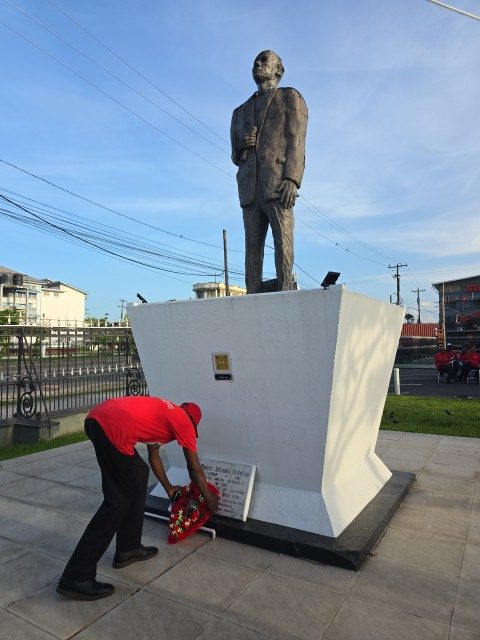
    The Guyanese political landscape is in mourning following the passing of Dr. Rupert Roopnaraine, a revered politician and intellectual, who died at Georgetown Hospital on Monday morning after a prolonged illness. He was 83 years old.

    Dr. Roopnaraine’s legacy is profoundly marked by his pivotal role in bridging deep political divides. As a co-leader of the Working People’s Alliance (WPA), he was instrumental in healing decades of animosity with the People’s National Congress (PNC). His efforts were central to the formation of the A Partnership for National Unity (APNU) coalition in 2011, a strategic alliance forged alongside WPA’s Dr. Clive Thomas and PNC-Reform’s Robert Corbin. Following the coalition’s electoral victory in 2015, Dr. Roopnaraine served as Minister of Education.

    Colleagues and political adversaries alike celebrated his unique capacity for reconciliation. WPA co-leader Dr. David Hinds highlighted Dr. Roopnaraine’s relentless pursuit of peace, describing APNU as ‘Rupert’s baby’ and crediting him as the leading force behind the WPA’s decision to reconcile with its historical rivals for the national interest. This was a significant move, given the WPA had long blamed the PNC for the 1980 assassination of its leader, Walter Rodney.

    APNU Chairman Aubrey Norton praised Dr. Roopnaraine’s application of the WPA’s principle of co-leadership in cross-party relations, noting his exceptional ability to accommodate diverse viewpoints. Norton stated that the society had lost ‘one of the best patriots we have ever had,’ a sentiment that underscores the profound respect he commanded across the political spectrum.

    Beyond his political acumen, Dr. Roopnaraine was hailed as one of Guyana’s most brilliant orators. He notably transcended the country’s ethnic divisions; an Indo-Guyanese who connected deeply with Afro-Guyanese communities. Long-serving PPP executive Clement Rohee remembered him and Dr. Rodney for ushering in a new political era, attracting massive crowds with erudite speeches that blended literary brilliance with sharp political analysis. His parliamentary contributions were similarly impactful, captivating colleagues with his intellectually rich discourse.

    Dr. Rupert Roopnaraine’s multifaceted life also encompassed achievements as a filmmaker, author, and cricketer, cementing his status as a true Renaissance man of Guyanese public life.

  • Guyana tells Exxon Mobil no exploration in area nearer Venezuela until World Court ruling

    Guyana tells Exxon Mobil no exploration in area nearer Venezuela until World Court ruling

    In a significant geopolitical move, Guyana has formally denied ExxonMobil permission to conduct exploratory drilling in the northwestern sector of the prolific Stabroek Block, citing ongoing border tensions with Venezuela. The decision, announced by Natural Resources Minister Vickram Bharrat on February 20, 2026, mandates that all exploration activities in the contested maritime zone must await the International Court of Justice’s ruling on the validity of the 1899 Arbitral Tribunal Award.

    Minister Bharrat clarified the government’s position during the Youth Forum of the Guyana Energy Conference, stating, “Exxon sought authorization to commence drilling operations, but we explicitly instructed them to pause until the ICJ delivers its judgment. Our priority is to avoid escalating regional tensions or provoking military aggression.” The World Court is expected to issue its decisive ruling on the century-old territorial dispute by the end of 2026.

    The minister simultaneously refuted claims by Guyanese attorney Christopher Ram regarding multiple force majeure declarations, confirming that ExxonMobil had invoked the clause only once in response to Venezuelan naval interventions. Other international energy companies operating in the region have similarly activated force majeure provisions following incidents where Venezuelan military vessels expelled seismic research ships from contested waters.

    ExxonMobil’s leadership has characterized the pending ICJ decision as a “critical milestone” for determining the company’s future operations in the Stabroek Block, which has already yielded over 50 hydrocarbon discoveries. The northwestern portion remains under force majeure status due to the unresolved border demarcation issue between Guyana and Venezuela.

    Historical precedents underscore the operational risks, with Venezuelan forces detaining the MV Teknik Perdana in 2013 and expelling the MV Ramform Tethys in 2018 from waters off Guyana’s Essequibo Region. These incidents demonstrate the persistent volatility in the disputed maritime territory that continues to impact energy development timelines.

  • Guyana assisting T&T to search for financing to restart Petrotrin refinery

    Guyana assisting T&T to search for financing to restart Petrotrin refinery

    In a significant move for Caribbean energy cooperation, Guyana is actively assisting Trinidad and Tobago in securing crucial financing to restart the long-dormant Petrotrin oil refinery. The development emerged during the 5th Guyana Energy Conference held in Georgetown from February 17-20, 2026.

    Guyana’s Energy Minister Roodal Moonilal revealed that President Irfaan Ali’s administration has been instrumental in connecting Trinidadian officials with potential Arab investors and local banking representatives. The collaborative effort aims to secure approximately US$200 million needed for the comprehensive revitalization of the refinery complex.

    Minister Moonilal expressed optimism about the project timeline, suggesting that if financial arrangements are finalized by mid-year or the third quarter, preparatory work could commence as early as the last quarter of 2026. This would potentially allow operations to resume within approximately one year thereafter.

    The financial requirements are structured in two phases: an initial US$50 million injection for short-term recommencement of operations, followed by a larger US$200 million investment to restore the refinery’s full capacity. This expanded capability would enable Trinidad to resume its historical role as a primary fuel supplier to the 15-nation Caribbean Community (CARICOM).

    Minister Moonilal highlighted that the Saudi Arabian investment community has shown particular interest in the venture during discussions held in Guyana. The allocated funds would address critical technical upgrades, design modifications, and essential health and safety improvements at the facility.

    While acknowledging Trinidad’s substantial domestic expertise in refinery operations, Moonilal indicated that international partnerships might be necessary. Potential collaborators could include specialized subcontractors from Houston, Texas, alongside technical experts from energy giants Shell and BP.

    Addressing questions about crude compatibility, Moonilal clarified that technological advancements have largely eliminated the historical distinction between heavy and light crude processing. Modern conversion technologies and potential oil swap arrangements would allow the refinery to efficiently process various crude types, including Guyana’s light sweet crude.

    The Petrotrin refinery was shuttered in November 2018 by the previous People’s National Movement administration following years of financial challenges and substantial debt accumulation.

  • Nine proposals submitted to build cooking gas bottling plant

    Nine proposals submitted to build cooking gas bottling plant

    Guyana’s energy sector is witnessing significant international investment interest as nine competitive proposals have been submitted for the construction of a major cooking gas bottling plant. The National Procurement and Tender Administration Board (NPTAB) confirmed the submissions from a diverse consortium of local and international energy companies.

    The bidding consortium includes Guygas, which has formed strategic partnerships with Denmark’s Makeen Energy and India’s RAMCO Industries. Other prominent contenders include Massy Gas Products, SOL Guyana Inc, and RUBIS Guyana Inc. International participation extends to Houston-based LINDSAYCA, currently engaged in constructing the 300-megawatt natural gas-fired power plant and NGL facility at Wales, West Bank Demerara.

    Additional joint venture proposals have been submitted by Divyan International Inc, along with a collaborative effort between Gate Ventures and Consulting Guyana Inc with Canada’s Propak Systems Limited and Makeen Energy. Further international interest comes from Colombia’s Gas Zipa SASESP partnering with Fix It Depot and Standard Energy Company, and India’s ILF Consulting Engineering Inc. collaborating with Mahatma Phule Renewable and Infrastructure Technology Limited.

    Winston Brassington, Project Lead for the Gas-to-Energy Project, revealed during the Guyana Energy Conference that the proposed facility is projected to bottle approximately 63 million gallons of cooking fuel annually, representing a substantial advancement in the country’s energy infrastructure development.