标签: Dominican Republic

多米尼加共和国

  • Gas-tank explosion at Villa Marina apartment tower injures several

    Gas-tank explosion at Villa Marina apartment tower injures several

    A significant gas explosion severely shook the Intempo residential tower in Santo Domingo’s Villa Marina sector on Wednesday evening, resulting in multiple casualties and a full-scale emergency response. The incident, occurring at approximately 8:00 p.m. local time, sent shockwaves through the surrounding neighborhood and prompted immediate evacuation protocols.

    Preliminary investigations by fire authorities indicate a kitchen gas leak within one apartment unit as the probable cause, though official forensic analysis remains ongoing. Emergency medical services confirmed at least five individuals sustained injuries, with two victims suffering critical burns requiring urgent hospitalization. Initial media reports had underestimated the casualty count at three.

    Eyewitness accounts depicted chaotic scenes as residents fled the building while emergency crews including police, firefighters, and paramedics secured the perimeter. Multiple neighbors reported detecting gas odors hours before the detonation, raising questions about preventive measures.

    The explosion’s force generated substantial structural concerns, leading authorities to temporarily close the residential complex for comprehensive safety evaluations. The incident has ignited community demands for enhanced gas safety regulations in modern residential developments, particularly in newer constructions like the Intempo building.

    Fire department officials continue investigating whether the accident resulted from infrastructure failures, improper maintenance, or human error, with final conclusions pending detailed examination.

  • Dominican Republic launches WEIDE Fund to empower women in international trade

    Dominican Republic launches WEIDE Fund to empower women in international trade

    SANTO DOMINGO – In a landmark move for gender equality in international commerce, the Dominican Republic has become a pioneering nation in the launch of the WEIDE Fund, a $50 million global initiative designed to bolster female participation in digital trade. The program, formally unveiled on December 9, represents a strategic partnership between the World Trade Organization (WTO), the International Trade Centre (ITC), and the nation’s export promotion agency, ProDominicana.

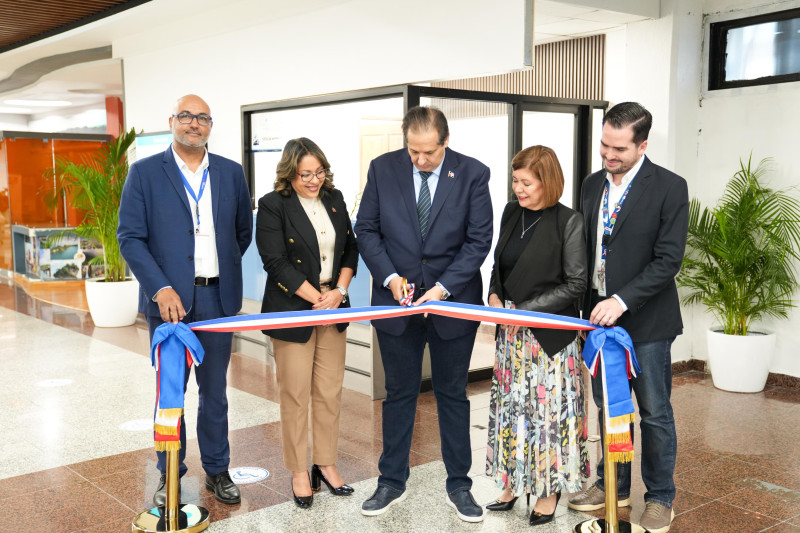
    The initiative positions the Dominican Republic as one of only four selected countries globally to pilot this ambitious project. At the official commencement, a consortium of high-ranking officials—including WTO Deputy Director-General Johanna Hill, ITC Executive Director Pamela Coke-Hamilton, and Minister of Industry, Commerce, and SMEs Víctor Bisonó—revealed that 34 women-led export firms have been chosen as the first beneficiaries. This support is strategically tailored to enhance the digital infrastructure, financial literacy, and market penetration capabilities of micro, small, and medium-sized enterprises (MSMEs).

    Preceding the formal launch, the program initiated its mission with a series of intensive technical workshops. These sessions provided participants with practical, hands-on training in leveraging e-commerce platforms and mastering financial management principles. This foundational training is part of a sustained commitment, with ongoing, customized technical assistance planned to fortify the long-term competitiveness of these enterprises on the world stage.

    The overwhelming response to the initiative underscores its critical need, with over 200 Dominican entrepreneurs submitting applications. This robust demand highlights a significant appetite among women business leaders for enhanced pathways to global export markets. Biviana Riveiro, Director of ProDominicana, stated that the country’s inclusion in this pilot phase is a testament to its national dedication to cultivating and championing female entrepreneurship.

    By providing crucial capital, advanced digital tools, and access to international networks, the WEIDE Fund is poised to fundamentally transform trade dynamics. Its implementation is a clear indicator of the Dominican Republic’s broader commitment to driving sustainable economic growth and achieving greater gender parity through the power of digital trade.

  • Dominican government and judiciary join forces to secure protected areas

    Dominican government and judiciary join forces to secure protected areas

    SANTO DOMINGO – In an unprecedented institutional collaboration, the Dominican Republic has established a powerful legal framework to defend its ecological treasures. The Ministry of Environment and Natural Resources and the Council of the Judiciary have cemented a four-year strategic alliance, signed on December 10, designed to fortify the legal security of the nation’s protected zones through enhanced data sharing and judicial oversight.

    This pioneering agreement merges environmental conservation with legal enforcement, creating a robust system for land governance. The Ministry will provide the Judiciary’s land registry officials with comprehensive, consolidated geospatial data encompassing protected territories, their buffer zones, and adjacent lands. This transfer of critical information is fundamental for precise cadastral mapping and establishing incontestable legal boundaries.

    Minister Paíno Henríquez characterized the pact as a reaffirmation of the state’s duty to protect the nation’s natural heritage. ‘This ensures every inch of our protected areas is correctly delimited and under legal security,’ he stated, highlighting the move’s significance for long-term conservation.

    In return, the Judiciary will deploy its legal expertise and technical resources to support the Ministry. This collaboration will streamline title processing, implement real-time registry systems, and, crucially, identify and officially record all state-owned lands within protected areas. This process is vital for preventing illegal land grabs and enabling efficient legal action against encroachment or unauthorized use.

    A core tenet of the agreement is a strict mandate to uphold the confidentiality and integrity of all shared data, ensuring its use remains in the public interest. By integrating authoritative environmental data with judicial power, the Dominican Republic is ushering in a new era of transparency and inter-agency cooperation, setting a formidable precedent for national resource defense and sustainable land-use management.

  • Guarantee set for three teachers in Stephora Anne-Mircie Joseph case

    Guarantee set for three teachers in Stephora Anne-Mircie Joseph case

    A Santiago court has imposed judicial control measures on three educators connected to the tragic death of 11-year-old Stephora Anne-Mircie Joseph during a school excursion. Judge Yerixa Cabral mandated a cash guarantee of RD$500,000 (approximately USD $8,500) through an insurance provider and required regular court check-ins for defendants Yris del Carmen Reyes Adames, Francisca Josefina Tavárez Vélez, and Vilma Altagracia Vargas Morel.

    In a contrasting decision, the court granted unconditional release to Gisela González, director of Leonardo Da Vinci Institute, citing absence of direct evidentiary connection to the incident. Legal representative María del Pilar Zuleta affirmed her client’s physical absence during the occurrence, characterizing the judicial determination as “aligned with principles of justice.”

    The Public Prosecutor’s Office, operating through PEPCA (Specialized Prosecutor’s Office for Administrative Corruption), has declared its intention to file an immediate appeal against the ruling. Prosecutor Olga Dina Llaverías publicly criticized the preventive measures as disproportionately lenient relative to case severity, confirming formal challenge proceedings upon official notification.

    Defense counsel for the accused teachers, led by attorney Lorenzo Fermín, committed to full compliance with judicial requirements while acknowledging the profound emotional dimensions of the case. Legal representatives extended sympathies to the grieving family while maintaining their clients’ dedication to judicial transparency and factual clarification throughout investigative proceedings.

  • Dominican Army seizes 44,800 smuggled cigarettes at Montecristi checkpoint

    Dominican Army seizes 44,800 smuggled cigarettes at Montecristi checkpoint

    MONTE CRISTI, Dominican Republic – In a significant border security operation, Dominican military forces successfully intercepted a major cigarette smuggling attempt on Wednesday. The incident occurred at the La Solitaria security checkpoint where authorities apprehended a white Daihatsu Hijet minibus attempting to evade inspection.

    The operation resulted in the detention of driver Modesto Ogando and passenger Johanny Portorreal Guzmán, who were transporting contraband identified as Capital brand cigarettes of foreign origin. Military inspections revealed the vehicle contained over 44,000 illegally smuggled cigarettes concealed within its structure.

    This interception forms part of an intensified campaign by Dominican defense and customs authorities to combat cross-border smuggling networks, particularly in border provinces like Monte Cristi. The region has witnessed multiple sophisticated smuggling attempts, including concealment within vehicle chassis and rural stockpiles, indicating established trafficking operations.

    The confiscated contraband has been transferred to Fortaleza San Fernando under Dominican Army custody while judicial proceedings advance against the suspects. This seizure represents both a tactical victory and strategic demonstration of the government’s commitment to strengthening border integrity.

    Defense officials emphasize that such operations are critical for protecting national revenue streams from tax evasion while disrupting organized crime financing. The consistent pattern of interceptions along the border region highlights ongoing challenges in securing the nation’s frontiers against illicit trade activities that undermine legitimate commerce and economic stability.

  • Dominican Congress approves 2026 budget report without salary adjustment

    Dominican Congress approves 2026 budget report without salary adjustment

    SANTO DOMINGO – After five days of intensive deliberations, a bicameral congressional commission has greenlit the 2026 budget framework, notably excluding the historically mandated salary indexing mechanism that adjusts wages for inflation. This controversial decision has ignited immediate backlash from opposition leaders who contend it erodes worker purchasing power and violates established fiscal regulations.

    The commission’s president, Francisco Javier Paulino, verified that the current budget proposal contains a specific clause suspending obligatory discussions on wage adjustments. Vice-Chair Senator Pedro Tineo elaborated that despite considerable public discourse, no political bloc formally presented a motion addressing salary indexing during committee sessions, leading to the report’s approval through majority consensus.

    Opposition legislators mounted swift resistance to the omission. PLD representative Charlie Mariotti declared intentions to contest the decision during upcoming full chamber debates and threatened constitutional litigation against the budget legislation. Mariotti asserted that eliminating salary indexing constitutes both a violation of worker rights and a breach of the nation’s tax code, which has mandated inflation-adjusted wages since 1992.

    Senator Edward Espiritusanto of Fuerza del Pueblo simultaneously criticized the budget’s disproportionate emphasis on operational expenditures, characterizing its investment allocations as fundamentally inadequate. His party has pledged to oppose final ratification.

    The proposed budget, amounting to RD$1.744 trillion (approximately 20.1% of GDP), now advances to both legislative chambers for decisive voting. This exclusion of inflation-based salary adjustments is poised to trigger extensive debates regarding economic equity and statutory compliance, potentially reshaping public confidence in the nation’s fiscal governance structures.

  • Edesur unveils RD$155 million grid expansion to power Dominican growth

    Edesur unveils RD$155 million grid expansion to power Dominican growth

    Santo Domingo’s primary electricity distributor, Edesur Dominicana, has initiated a comprehensive RD$155 million (approximately US$2.6 million) modernization project to significantly enhance its power infrastructure. This strategic investment targets critical upgrades across ten major substations—including Paraíso, UASD 138 kV, Herrera, and Bayona—while deploying new distribution lines to manage escalating electricity consumption during high-demand periods.

    The initiative specifically aims to reduce technical energy losses, which currently range between 10% and 17% in affected circuits. Key engineering enhancements involve installing additional transformers, establishing new medium-voltage transmission lines, and substantially increasing substation capacities. Notable technical improvements include a 10-14 MVA transformer at Herrera’s operational hub and a new 40 MVA Alfa substation designed to redistribute approximately 25.9 MVA of electrical load from overburdened network segments.

    Approximately 400,000 customers across 70 communities in Santo Domingo and the National District will benefit from these infrastructure improvements. The project focuses on enhancing distribution stability and reducing prolonged outage risks, particularly during the upcoming summer months when cooling demand peaks.

    This substantial investment marks a strategic shift from reactive maintenance to proactive infrastructure development. By modernizing its grid architecture, Edesur not only addresses immediate service reliability concerns but also establishes a scalable foundation for future energy demands aligned with the country’s urban expansion and economic growth trajectory.

  • Senasa scandal: Public Prosecutor brands health scheme betrayal most “cruel and sinister”

    Senasa scandal: Public Prosecutor brands health scheme betrayal most “cruel and sinister”

    SANTO DOMINGO – A massive corruption scandal involving the embezzlement of billions from the Dominican Republic’s national health insurance fund has triggered severe condemnation from top judicial officials, who describe it as an unprecedented assault on public welfare.

    Deputy Prosecutor Wilson Camacho, in a grave public statement, characterized the unfolding Senasa case as “the most sinister and cruel” ever prosecuted by the nation’s Public Prosecutor’s Office. He asserted that the systematic plunder of resources directly targeted a healthcare system vital to over eight million citizens, deliberately stripping medical aid from the most impoverished and vulnerable populations.

    Investigative authorities, under the banner of “Operation Cobra,” currently estimate that approximately RD$15 billion (Dominican pesos) has been misappropriated from the National Health Insurance (Senasa). Law enforcement officials anticipate both the financial scale and the number of suspects to increase significantly as the probe expands. Key figures implicated include former Senasa director Santiago Hazim and at least nine other individuals, now facing a comprehensive slate of charges encompassing corruption, large-scale embezzlement, document forgery, and organized money laundering.

    The high-priority investigation is being spearheaded by the Specialized Prosecutor’s Office for Administrative Corruption (PEPCA), highlighting the state’s focused intent on eradicating deeply embedded institutional fraud.

    Prosecutor Camacho underscored the profound human tragedy underlying the financial figures, stating that this elaborate corrupt network operationally denied life-saving medicines to ailing citizens, effectively sentencing the poor to suffer without care. He conveyed profound indignation that organizations established as guardians of public health were perverted into instruments for orchestrating widespread deceit.

    With preventive detention hearings now in process and additional arrests considered imminent, the judicial proceedings are poised to set a new benchmark for accountability within the nation’s health governance. Legal experts suggest that if convictions are secured, the Senasa scandal could emerge as a definitive watershed moment, catalyzing sweeping anti-corruption reforms and serving as a stark testament to the catastrophic societal impact of breaching public trust.

  • Paramount’s Dominican connection: how a film empire anchored in the Caribbean

    Paramount’s Dominican connection: how a film empire anchored in the Caribbean

    Long before the Dominican Republic became a hotspot for international film productions, a pivotal Hollywood acquisition set the stage for this cinematic transformation. In 1966, industrial magnate Charles Bluhdorn, through his conglomerate Gulf+Western, acquired Paramount Pictures. Bluhdorn, who maintained profound personal and business connections to the Dominican Republic, leveraged his dual passions to create an unexpected bridge between Hollywood and the Caribbean nation.

    Bluhdorn’s vision extended far beyond corporate boardrooms. Under his leadership, Paramount strategically utilized the Dominican Republic’s diverse landscapes as production locations. Most notably, the country served as a stand-in for 1950s Havana in Francis Ford Coppola’s masterpiece, ‘The Godfather Part II’ (1974). This decision proved transformative, demonstrating the island’s cinematic potential to the world while simultaneously injecting vital capital, creating employment opportunities, and transferring technical filmmaking expertise to the local economy.

    This foundational investment has yielded a remarkable long-term legacy. Today, the Dominican Republic stands as a premier destination for international co-productions and major studio shoots, boasting advanced infrastructure and a thriving community of local creative talent. The country’s film industry, catalyzed by Bluhdorn’s early initiatives, now attracts significant global partnerships and continues to expand its footprint on the world cinematic stage.

    The relationship between Paramount and the Dominican Republic transcends mere historical anecdote. It represents a powerful case study in cultural exchange and sustainable economic development driven by the film industry. From hosting iconic scenes of cinematic history to nurturing a homegrown production sector, this unique partnership illustrates how Hollywood’s influence can catalyze industry growth and shape cultural identity across international borders.

  • Santiago to host record-breaking job fair with over 5,750 offers

    Santiago to host record-breaking job fair with over 5,750 offers

    SANTIAGO, Dominican Republic – The northern Dominican city of Santiago is preparing to host an unprecedented employment fair on December 11, marking the largest initiative of its kind in the region’s history. Organized under the government’s flagship RD-Trabaja program, the event will transform the UTESA Convention Center into a major hiring hub featuring more than sixty participating corporations.

    Diverse sectors including advanced manufacturing, hospitality services, technology enterprises, and free trade zone operators will conduct immediate interviews with prospective employees. Beyond traditional recruitment, the fair will feature specialized career development workshops designed to enhance professional skills. Collectively, employers will offer over 5,750 permanent positions with full-time contracts.

    The high-profile event enjoys leadership from Vice President Raquel Peña and Labor Minister Eddy Olivares Ortega, who have championed the transition from informal to formal employment structures. Strategic collaboration with the National Employment Service has enabled sophisticated digital tracking systems for monitoring job vacancies in real-time throughout the recruitment process.

    This comprehensive approach underscores the administration’s dedication to creating sustainable employment opportunities that provide legal protections, social security benefits, and workplace stability. For the northern Dominican Republic, this initiative represents a crucial step toward stimulating regional economic development while strengthening confidence in formal labor markets.