标签: Dominican Republic

多米尼加共和国

  • U.S. donates emergency equipment to strengthen rural fire departments in DR

    U.S. donates emergency equipment to strengthen rural fire departments in DR

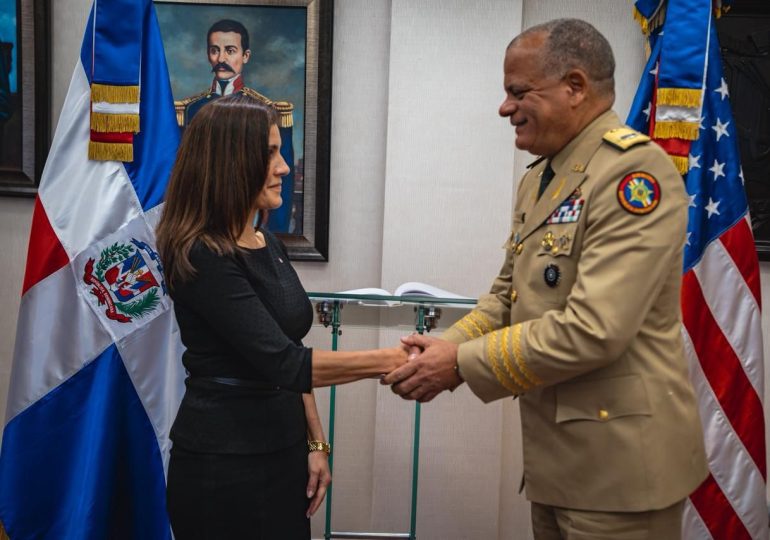
    SANTO DOMINGO – A significant enhancement to emergency response capabilities in the Dominican Republic’s southwestern regions is underway following a strategic donation from the United States Department of Defense. Facilitated by the U.S. Embassy, the aid was delivered under the framework of the C5 Denton Program, a cornerstone of bilateral cooperation.

    The latest consignment comprises a state-of-the-art fire engine, advanced structural firefighting suits, and a comprehensive array of critical response supplies. This equipment is specifically designated to fortify rural fire departments, which often operate with limited resources, thereby directly boosting community resilience and disaster preparedness.

    Embassy officials highlighted that this initiative is not an isolated act but part of a sustained, long-term partnership. The C5 Denton Program has a established track record of delivering tangible support, with previous shipments including multiple emergency vehicles and vital gear. Cumulative data indicates that these collaborative efforts have already positively impacted the safety and security of over 300,000 residents in underserved rural communities across the nation.

    This ongoing collaboration underscores a mutual commitment to strengthening national security infrastructure, improving regional emergency readiness, and providing essential support to vulnerable populations. The donation exemplifies a shared dedication to fostering a safer environment through international aid and strategic alliance.

  • Opposition party accuses Environment Ministry of “selling” permits amid alarming volume

    Opposition party accuses Environment Ministry of “selling” permits amid alarming volume

    SANTO DOMINGO – The Dominican Republic’s political opposition has launched a severe indictment against the nation’s environmental authority, alleging systemic corruption and administrative failure within its permitting operations. Fuerza del Pueblo (FP), the primary opposition party, has publicly accused the Ministry of Environment of issuing an ‘astronomical’ and ‘operationally unviable’ total exceeding 6,000 environmental permits within an 11-month timeframe.

    Paino Abreu, the FP Secretary for Environmental Affairs, contends that the ministry possesses neither the technical infrastructure nor the administrative bandwidth to process such an immense volume of applications while simultaneously upholding mandated legal and ecological safeguards. The allegations extend far beyond numerical concerns, pinpointing a purportedly ‘distorted’ management framework. This model is accused of enabling data manipulation, diluting the rigor of environmental impact assessments, and fostering a network of intermediaries who allegedly expedite permits in exchange for illicit financial compensation.

    In a formal escalation, the party has submitted a comprehensive dossier labeled ‘Worrisome Licenses and Permits’ to relevant state bodies. FP is formally petitioning for an immediate forensic audit to be conducted by the Chamber of Accounts, the supreme audit institution. Furthermore, they have called for the urgent intervention of the Office of Ethics and Government Integrity (OEIG) to probe these grave accusations.

    The opposition’s critique also challenges the government’s environmental reporting, casting doubt on the authenticity of official statistics concerning national forest coverage and timber import data, which they claim are significantly inflated or misleading. Abreu additionally highlighted worsening working conditions for park rangers and a concerning pattern of institutional neglect towards protected areas, citing these as evidence of a broader degradation in environmental governance.

    Drawing stark parallels to historical corruption scandals, such as the infamous case involving the National Health Insurance (SeNaSa), Fuerza del Pueblo warned that confirmed irregularities would constitute a severe blow to both environmental sustainability and eroding public trust. The party is urging for swift, transparent, and decisive action from authorities, framing the situation not as a mere procedural failure but as a full-blown crisis in the nation’s environmental stewardship.

  • Finance Ministry earns dual ISO certification for anti-bribery and compliance management

    Finance Ministry earns dual ISO certification for anti-bribery and compliance management

    In a landmark achievement for governmental integrity, the Dominican Republic’s Ministry of Finance and Economy (MHE) has obtained dual ISO certifications validating its anti-bribery and compliance management systems. The certifications, conforming to the rigorous international benchmarks of ISO 37001 (Anti-Bribery Management Systems) and ISO 37301 (Compliance Management Systems), signify a major advancement in the ministry’s institutional governance framework.

    The formal certification ceremony was presided over by Néstor Julio Matos, Director of the Dominican Institute for Quality (Indocal), with Finance Minister Magín Díaz formally accepting the accolades. Minister Díaz characterized this accomplishment as a testament to the ministry’s ‘mature and effective’ internal control mechanisms, underscoring a renewed dedication to ethical administration and public accountability.

    Independent auditors conducting the exhaustive evaluation reported exceptional findings, praising the ministry’s deeply embedded culture of integrity. The assessment commended the cohesive involvement across all departmental units, the clarity and implementation of policy directives, and the robustness of procedural compliance. Specific initiatives that drew acclaim included the comprehensive modernization of internal controls, enhanced safeguards for whistleblowers, and sustained educational programs focused on integrity standards.

    Looking forward, Minister Díaz outlined the ongoing challenge of not only preserving these elevated standards but also further embedding a zero-tolerance philosophy towards corruption within the institution’s ethos. He stated that the certification establishes the MHE as a ‘benchmark within the Dominican state,’ and confirmed the ministry’s unwavering commitment to the perpetual identification of compliance risks and the strengthening of reporting channels for misconduct.

  • Dominican government launches “Christmas in the Classrooms 24/7”

    Dominican government launches “Christmas in the Classrooms 24/7”

    SANTO DOMINGO – The Dominican Republic has launched an ambitious educational infrastructure initiative titled “Navidad en las Aulas 24/7” (Christmas in the Classrooms 24/7), allocating over RD$300 million to execute critical maintenance across more than 250 schools nationwide during the holiday recess. The program, spearheaded by the Education Infrastructure Directorate, is strategically timed to leverage the absence of students and faculty, thereby eliminating disruptions to the academic calendar.

    Scheduled to commence on December 11 in the Los Mina sector of Santo Domingo Este, the operation will mobilize dozens of specialized work brigades throughout the Christmas, New Year, and Three Kings Day vacation period. Under the leadership of Director Roberto Herrera and with coordinated support from the Ministry of Education and municipal authorities, the initiative will focus on comprehensive upgrades including interior and exterior painting, electrical system overhauls, plumbing repairs, asphalt restoration, and overall campus beautification. The primary objective is to ensure all targeted institutions reopen in January as safer, more functional, and aesthetically improved learning environments.

    This holiday maintenance drive represents a significant phase in a broader governmental strategy to revitalize public education infrastructure. Officials highlighted that this effort builds upon substantial recent progress, noting that over 800 schools have been renovated or upgraded within the past eight months. Looking further ahead, the administration has set a target to complete 2,000 new classrooms by the conclusion of 2025. To bolster the logistical capacity of such expansive projects, the program has been reinforced with 50 new service vehicles, enhancing operational mobility to support an educational community encompassing more than 2 million students and 100,000 teachers.

    Endorsed by President Luis Abinader, the ’24/7′ model is characterized by authorities as a strategic investment in the nation’s future. The concentrated, round-the-clock holiday work schedule is designed to maximize efficiency and cost-effectiveness. This initiative stands as a testament to the government’s deepened commitment to fortifying the foundational pillars of public education and systematically elevating the quality of classroom conditions across the Dominican Republic.

  • Dominican Republic leads global response with first UN resolution on sargassum

    Dominican Republic leads global response with first UN resolution on sargassum

    NAIROBI – In a landmark environmental diplomacy achievement, the United Nations Environment Assembly (UNEA-7) has formally adopted the world’s first resolution addressing the escalating sargassum seaweed crisis. Spearheaded by the Dominican Republic with co-sponsorship from Barbados and Jamaica, the resolution titled “Strengthening the global response to massive sargassum influx” establishes the first international framework to combat the massive seaweed blooms devastating coastal regions across the Caribbean and West Africa.

    The groundbreaking resolution officially recognizes the sargassum surge as a severe multidimensional threat, explicitly acknowledging its damaging impacts on marine ecosystems, tourism economies, fisheries, public health systems, and community livelihoods. The UNEA has mandated the UN Environment Programme (UNEP) to produce a comprehensive global assessment report, organize high-level international meetings, and strengthen cooperative mechanisms among affected nations.

    Claudia Taboada, lead negotiator for the Dominican Republic, characterized the resolution as the culmination of a persistent four-year campaign to elevate the issue onto the global stage. “While the final text does not encompass all our initial ambitions, it represents a decisive milestone – both our nation’s first resolution before UNEA and the planet’s first dedicated international instrument on sargassum,” Taboada stated.

    The adoption establishes a critical foundation for coordinated action, though its practical effectiveness hinges on implementation. Affected governments must now develop monitoring systems, cleanup operations, and sustainable management protocols, while securing essential financing and technical expertise. The Dominican Republic’s diplomatic leadership has created an unprecedented platform for response, but tangible relief for vulnerable coastal communities will require sustained commitment and resource mobilization across international boundaries.

  • Dominican Interior Minister urges stronger global action against migrant smuggling

    Dominican Interior Minister urges stronger global action against migrant smuggling

    BRUSSELS – In a stark warning delivered at a European Commission conference, Dominican Interior Minister Faride Raful revealed that criminal networks orchestrating migrant smuggling operations are experiencing rapid expansion, necessitating immediate multinational collaboration for their dismantlement. Addressing representatives from over 60 nations, Minister Raful emphasized that combating these syndicates demands a dual focus on victim protection and financial disruption of their transnational enterprises.

    The Dominican official showcased her nation’s recent countermeasures, including the deployment of 865 specialized migration agents across all provinces and enhanced probes into trafficking operations. Government statistics from 2024 demonstrate substantial enforcement actions: over 200 investigations launched, 275 individuals prosecuted, cumulative sentences totaling 228 years, and 137 victims successfully rescued. “These are not isolated crimes but interconnected criminal chains worth billions,” Raful stated, referencing estimates that smuggling networks generate approximately $10 billion in annual revenue.

    Minister Raful further highlighted the Dominican Republic’s improved standing in the U.S. State Department’s Trafficking in Persons Report, crediting enhanced interagency coordination and a 77% surge in cross-border cooperation. She advocated for widespread adoption of the “Follow the Money” strategy, focusing on disrupting the illicit financial pipelines that empower smuggling operations, while pressing for intensified intelligence sharing among governments.

    During bilateral meetings with European officials, Raful explored collaborative approaches to border security and criminal investigations. While Dominican authorities position these actions as regional leadership, security experts note that the immense scale and financial resources of global smuggling operations require sustained international enforcement beyond individual national reforms.

  • Dominican Republic bolsters child protection amid rising vulnerability

    Dominican Republic bolsters child protection amid rising vulnerability

    SANTO DOMINGO – The Dominican Republic is significantly scaling up its national child welfare initiatives through the National Council for Children and Adolescents (CONANI). Current data reveals the institution is providing critical support to more than 1,700 at-risk minors throughout the country. This protective network is facilitated through a collaborative model, with 1,206 children placed in the care of vetted non-profit organizations and another 525 residing in 11 state-administered transition homes.

    The operational backbone of this effort includes 69 residential programs, 59 of which benefit from direct government financial backing. Demonstrating a strong fiscal commitment, CONANI allocated over RD$166.8 million to its non-profit partners in the first ten months of 2025. In a move to further amplify its impact, a substantial budget augmentation of RD$186 million is slated for 2026. These funds are designated to enhance key service areas including child protection mechanisms, nutritional aid, medical services, educational access, and essential psychosocial support.

    Upon entry into CONANI’s system, each child is the subject of an intensive, multi-disciplinary evaluation conducted within a critical 72-hour window. This assessment covers health status, psychological well-being, social circumstances, and educational level, forming the basis for a highly individualized care plan. The transition homes are meticulously organized, grouping children by age, gender, and specific case profile to ensure a supportive environment. A core policy prioritizes keeping sibling groups together, while specialized units cater to victims of severe trauma, abuse, human trafficking, and cases of extreme vulnerability.

    Moving beyond basic sustenance, CONANI’s framework emphasizes holistic development and future readiness. Educational integration is a primary focus, with 284 of the 525 youth in state care currently enrolled in formal schooling. This educational spectrum encompasses early childhood programs, standard K-12 education, and tailored special education curricula. For adolescents aged 14 and older, the council provides extensive vocational training to equip them with marketable skills. Courses in barbering, pastry arts, information technology, culinary arts, and English language are offered, frequently taught by dedicated volunteers from the community, paving the way for sustainable independence.

  • Government to launch new bus route in Ciudad Colonial starting early 2026

    Government to launch new bus route in Ciudad Colonial starting early 2026

    Santo Domingo has unveiled plans for a groundbreaking public transportation initiative set to launch in early 2026. The government announced a new electric bus route specifically designed to serve the historic Ciudad Colonial district, marking a significant step in urban mobility enhancement and heritage area revitalization.

    The innovative transit solution will deploy a fleet of five fully electric buses along a 12.5-kilometer route featuring approximately 30 strategically placed stops. Sixteen stops will be situated within the historic zone’s core, while 14 additional stops will connect surrounding areas. Each vehicle incorporates universal design principles with capacity for 22 passengers, dedicated wheelchair spaces, and priority seating for elderly and mobility-impaired individuals.

    This new service will establish crucial connectivity between Ciudad Colonial and the Plaza de la Cultura while integrating seamlessly with Santo Domingo’s existing public transit network, including direct links to Metro Line 1 for broader metropolitan access. Operational management will be shared between local bus operators and the national transit authority.

    Government officials emphasize multiple anticipated benefits including enhanced accessibility to the historic center, reduced traffic congestion, decreased air and noise pollution, and improved mobility options for both residents and tourists. In a notable commitment to gender equity, the pilot project will feature an all-female driving workforce—surpassing initial targets of 60% female representation. All operators have received specialized eco-driving training.

    The transportation initiative forms part of comprehensive infrastructure rehabilitation efforts currently underway in the historic district, encompassing heritage facade restoration, street and public space renovations, and social housing improvements.

  • Attorney General defends new criminal-procedure code as “most rights-guaranteeing in Ibero-America”

    Attorney General defends new criminal-procedure code as “most rights-guaranteeing in Ibero-America”

    SANTO DOMINGO – In a robust defense of the nation’s judicial overhaul, Dominican Attorney General Yeni Berenice Reynoso has positioned the newly implemented criminal-procedure reform as a landmark advancement for human rights. Declaring it the most protective legal framework in Ibero-America, Reynoso characterized opposition to Law 97-25 as emanating from entities with vested interests, including sectors affiliated with organized crime.

    The Attorney General refuted claims that the reform curtails due process, asserting instead that it fortifies judicial equity. A central point of contention involved attempts by critics to mandate private legal representation for filing complaints, a measure Reynoso argued would systematically disenfranchise economically vulnerable citizens from seeking justice.

    Reynoso clarified that the legislation does not expand the powers of the Public Prosecutor’s Office beyond their pre-2004 scope but rather refines procedural mechanisms. Key enhancements include extended deadlines for defense arguments, provisions for counter-expert evaluations, and the expanded application of plea agreements across all trial phases. Furthermore, the code introduces structured sentencing guidelines to promote legal predictability, enshrines a comprehensive charter of victims’ rights, and integrates stronger legal instruments to combat organized criminal networks.

    Emphatically challenging detractors, Reynoso invited scrutiny to identify any specific power granted to prosecutors that did not exist two decades ago. The reform took immediate effect upon promulgation, with prosecutors swiftly applying its statutes in active cases, notably in the high-profile ‘Operation Cobra’ corruption investigation.

  • Court orders psychiatric treatment for man who threatened Dominican president Abinader

    Court orders psychiatric treatment for man who threatened Dominican president Abinader

    A Dominican court has mandated psychiatric intervention and financial guarantees for a man who issued violent threats against President Luis Abinader in a widely circulated social media video. The Judicial District of El Seibo delivered the ruling on Wednesday following a preliminary hearing that prioritized the defendant’s mental health assessment.

    Identified as Héctor Julio Mercedes Rodríguez, the individual was taken into custody last Friday after posting a video that allegedly showed him brandishing a high-caliber weapon while making explicit threats against the nation’s leader. The footage rapidly gained traction across digital platforms, prompting immediate law enforcement response.

    The court’s disposition requires Mercedes Rodríguez to undergo a six-month psychiatric treatment program at Teófilo Hernández Provincial Hospital. Additionally, he must post bond amounting to RD$100,000 (approximately US$1,700) and remain under continuous family supervision throughout his therapeutic regimen.

    Legal representative Alberto Mercedes Ruiz presented medical documentation indicating his client has battled a degenerative condition since 2022, resulting in significant anxiety and psychological disturbances. The defense successfully argued that these mitigating circumstances warranted rehabilitative measures rather than incarceration.

    While the Public Prosecutor’s Office maintains an active investigation, the judicial outcome demonstrates an attempt to balance public safety concerns with appropriate mental health considerations. The accused currently remains at liberty under strict conditions requiring periodic medical evaluations and ongoing judicial monitoring as proceedings continue.