标签: Dominica

多米尼克

  • Dominica Youth Business Trust set for complete revamp, says Pm Skerrit

    Dominica Youth Business Trust set for complete revamp, says Pm Skerrit

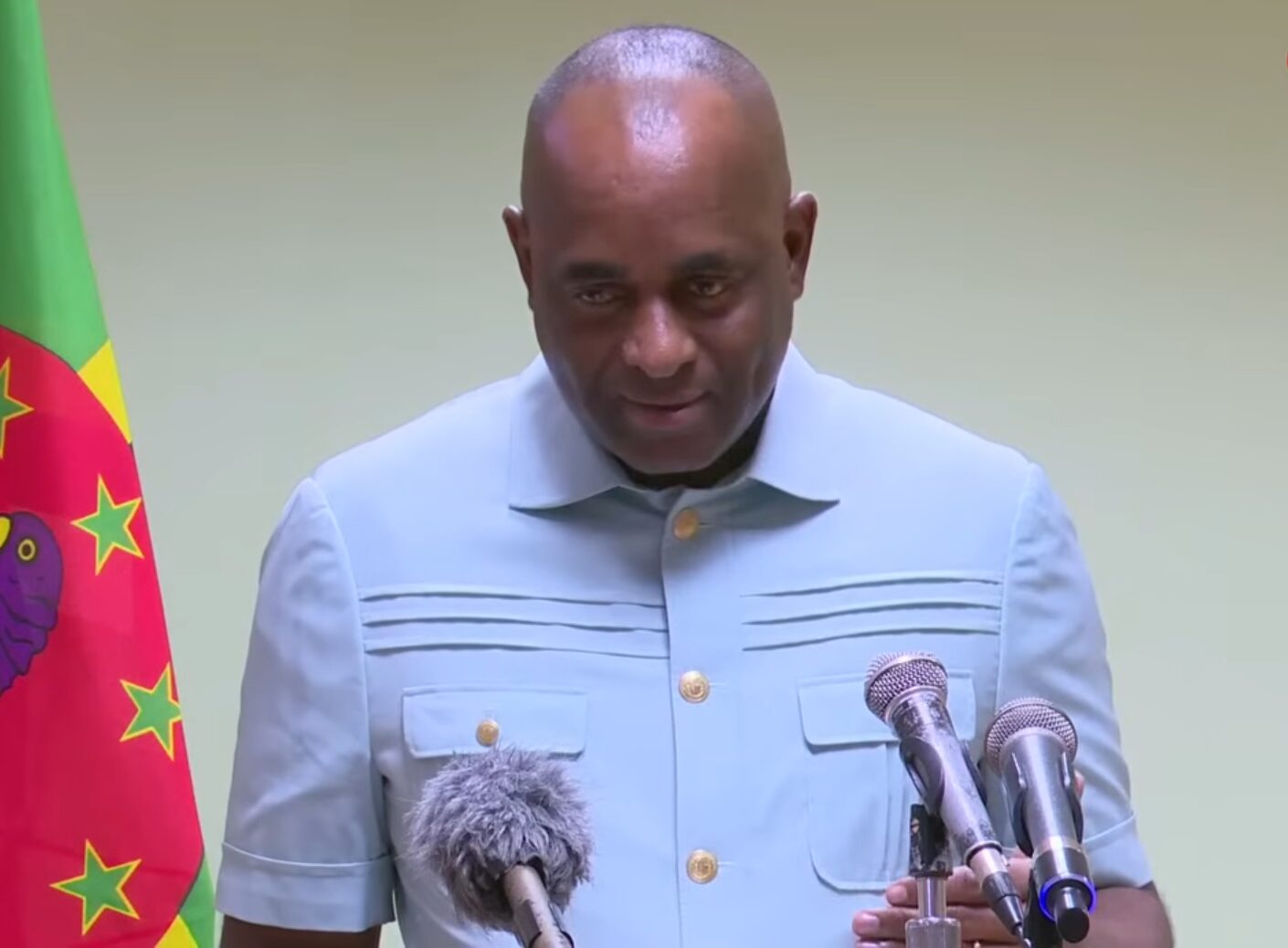
    In a significant move to bolster youth entrepreneurship, Prime Minister Roosevelt Skerrit has unveiled comprehensive reforms for the Dominica Youth Business Trust (DYBT). The announcement came during a direct engagement with young citizens, signaling a government-wide commitment to empowering the next generation of business leaders.

    The centerpiece of this restructuring involves dramatically reducing interest rates on business loans to unprecedented lows of just 2-3 percent. This strategic reduction aims to eliminate financial barriers that have traditionally hindered young entrepreneurs from accessing capital. ‘We are implementing a complete revamping of the Dominica Youth Business Trust to make it more accessible to more young people in a more timely fashion,’ Prime Minister Skerrit emphasized during his address.

    Complementing these favorable lending terms, the government has allocated $5 million in dedicated funding to expand the program’s reach. This substantial financial injection will facilitate increased access to both loans and grants, providing comprehensive support for small business development across the island nation.

    Established in May 2004, the DYBT represents a collaborative model that consolidates resources from multiple institutions and donor partners. The organization’s core mission focuses on enabling Dominican youth to achieve their entrepreneurial ambitions through integrated financial, technical, and social support systems. The program distinguishes itself through its emphasis on robust training and mentorship components, ensuring participants receive holistic guidance throughout their business development journey.

    The overhauled initiative promises to accelerate the materialization of business concepts into tangible enterprises, effectively transforming innovative ideas into economic contributors for Dominica’s sustainable development.

  • Deputy Police Chief stresses  ‘zero tolerance’ for disorder during upcoming Carnival

    Deputy Police Chief stresses ‘zero tolerance’ for disorder during upcoming Carnival

    Dominica’s law enforcement authorities have issued stringent warnings ahead of the upcoming Carnival celebrations, emphasizing a uncompromising stance against public safety violations. Deputy Police Chief Jeoffrey James, speaking during the ‘Disaster and You’ program on state-owned Radio DBS, outlined specific security measures that will be rigorously enforced throughout the festival period.

    The senior police official clarified that the designated Carnival route through Roseau—established by ministerial order under Statutory Rules and Regulations—will be strictly protected against unauthorized vehicle access. ‘Any individual found cycling, riding, or operating motor vehicles within the official Carnival perimeter will be committing a criminal offense,’ James stated. ‘This constitutes a significant danger to both participants and operators themselves, and consequently will not be tolerated under any circumstances.’

    James emphasized that public familiarity with the published route details creates an expectation of compliance, noting that violators will face immediate legal consequences. The police strategy extends beyond traffic control to encompass broader public safety concerns, with explicit prohibitions against fireworks, weapons, and disorderly conduct.

    The enforcement framework will involve rapid response to any criminal activities, with offenders facing expedited processing through magistrate’s courts. While the primary Carnival route remains substantially unchanged from previous years—running from Independence Street at Kennedy Avenue to King George V Street, then proceeding along Dame Eugenia Charles Boulevard between the National Bank of Dominica and Issa Trading Limited—authorities acknowledge potential minor adjustments might be implemented.

    This comprehensive security approach reflects the government’s commitment to maintaining the Carnival’s tradition while ensuring participant safety through strict regulatory enforcement and public awareness campaigns.

  • Three winning students to be awarded by Dominica Community Tourism Association in essay contest

    Three winning students to be awarded by Dominica Community Tourism Association in essay contest

    The Dominica Community Tourism Association will honor three laureates from La Salette Agricultural and Industrial University (LAIU) today for their winning contributions to the organization’s second annual essay competition. The ceremony, scheduled for 3:30 PM at the LAIU Clubhouse, celebrates student excellence in addressing this year’s critical theme: ‘Our Rivers, Their Contribution to Community and Tourism Development.’

    In an official audio statement, the Association—which serves as the primary body for community-based tourism groups nationwide—expressed profound concern regarding the deteriorating condition of Dominica’s river systems. While acknowledging the island’s remarkable natural endowment of approximately 365 rivers, which earned it the moniker ‘Nature Isle,’ the organization warned that these aquatic treasures face insufficient protection and preservation efforts.

    Rivers constitute the lifeblood of Dominican society, the Association emphasized, providing indispensable economic, environmental, and social benefits. These waterways sustain livelihoods, drive tourism revenue through attractions like the renowned Emerald Pool, and serve as hubs for community gatherings and recreational activities.

    However, escalating threats from littering and pollution jeopardize river health and long-term sustainability. The Association identifies environmental degradation as a direct challenge to its core mission, prompting intensified advocacy for public awareness campaigns and stronger legislative safeguards.

    By engaging youth through academic competitions, the organization aims to cultivate environmental stewardship among younger generations. This community-driven initiative aligns with global conservation movements, including World Rivers Day, underscoring the universal importance of watershed protection.

    The Association extended appreciation to all sponsors and participants while encouraging continued student involvement in future competitions. This event reflects its broader commitment to integrating environmental preservation, community engagement, and sustainable tourism development as interconnected pillars of national progress.

  • Dominican president receives first Pakistan Ambassador to country

    Dominican president receives first Pakistan Ambassador to country

    In a significant diplomatic development, Shahbaz Malik has been officially installed as Pakistan’s inaugural ambassador to the Commonwealth of Dominica. The credential presentation ceremony occurred this week with Dominica’s President Sylvanie Burton presiding over the proceedings at the presidential office.

    President Burton characterized the diplomatic milestone as reflecting both nations’ demonstrated resilience when confronting adversities. She formally acknowledged Pakistan’s internationally recognized contributions to global peacekeeping operations, humanitarian aid initiatives, and developmental cooperation programs.

    Emphasizing Dominica’s position as a small island developing state, Burton highlighted the nation’s advocacy for climate justice, sustainable development frameworks, and protection mechanisms for vulnerable communities. ‘Our shared experiences form a substantial foundation for developing deeper, more purposeful bilateral partnerships,’ the president stated during the ceremony.

    The Dominican leader specifically noted Ambassador Malik’s commitment to strengthening political and commercial connections while fostering people-to-people exchanges between the Caribbean nation and the South Asian republic. Burton identified numerous potential collaboration areas including educational capacity-building through scholarship programs, academic exchanges, and technical training initiatives.

    ‘Cooperation in agriculture, tourism security, renewable energy, and climate resilience holds particular relevance as both nations address climate change impacts and pursue sustainable development pathways,’ President Burton emphasized.

    Ambassador Malik conveyed formal greetings from Pakistan’s leadership to the Dominican government and citizens, expressing optimism about strengthening bilateral relations in coming years. The diplomatic engagement marks a new chapter in cooperation between the two Commonwealth members, with focus areas spanning climate resilience, economic development, and educational exchange programs.

  • A CCJ delegation concludes Suriname visit discuss the country’s accession to the Caribbean Court of Justice

    A CCJ delegation concludes Suriname visit discuss the country’s accession to the Caribbean Court of Justice

    PARAMARIBO, SURINAME – In a landmark development for Caribbean judicial cooperation, the Caribbean Court of Justice (CCJ) has advanced a groundbreaking proposal to establish a specialized Civil Law Chamber specifically designed to accommodate Suriname’s unique legal system. The initiative emerged during a high-level delegation visit from January 20-24, 2026, at the invitation of Suriname’s Court of Justice President, Honourable Mr. Justice Iwan Rasoelbaks.

    The centerpiece of the visit was the Congress on Modernizing the Judiciary held at the Torarica Resort on January 22, where CCJ President Honourable Mr. Justice Winston Anderson addressed Surinamese judicial officials, lawmakers, and legal stakeholders. Justice Anderson presented a comprehensive vision for Suriname’s potential integration into the CCJ’s Appellate Jurisdiction, emphasizing that such a move would significantly enhance the nation’s judicial sovereignty while strengthening regional institutions.

    The proposed Civil Law Chamber represents an innovative structural adaptation within the CCJ framework. Recognizing that Suriname operates under a civil law tradition – contrasting with the common law systems predominant in most Caribbean Community (CARICOM) member states – the chamber would operate with judges specializing in civil law jurisprudence. All proceedings would follow civil law procedures conducted entirely in Dutch, with all legal filings, evidence, and correspondence processed in Suriname’s official language.

    The CCJ delegation, which included Justice Peter Jamadar, former CCJ President Sir Dennis Byron, and Registrar Gabrielle Figore-Jones, also conducted a courtesy meeting with Her Excellency Jennifer Geerlings-Simons, President of Suriname. Discussions focused on broader judicial reform initiatives and the CCJ’s supportive role in Suriname’s ongoing modernization efforts.

    The Court expressed strong commitment to continuing collaboration with Surinamese authorities, aligning with its foundational mission to promote equitable access to justice, reinforce regional unity, and uphold the rule of law throughout the Caribbean community.

  • Jamaica’s prime minister calls for a stronger Caribbean presence on the global stage

    Jamaica’s prime minister calls for a stronger Caribbean presence on the global stage

    Jamaican Prime Minister Andrew Holness has delivered a compelling address at CAF’s second International Economic Forum in Panama City, challenging Latin American and Caribbean nations to redefine their international standing. Speaking before an assembly of regional leaders, policymakers, and global investors, Holness articulated a vision of regional transformation from perceived vulnerability to recognized global leadership.

    The Prime Minister categorically rejected the conventional narrative of regional fragility, asserting that “vulnerability is not destiny.” He positioned the Caribbean not as peripheral to the global system but as fundamental to its stability, sustainability, and future expansion. Holness enumerated the region’s considerable advantages, including strategic geographical positioning, demographic youth, abundant natural resources, agricultural capacity, renewable energy potential, creative industries, and robust democratic frameworks.

    To translate these assets into global influence, Holness outlined a tripartite strategic approach: developing a cohesive regional competitiveness agenda focused on connectivity, logistics, energy security, and digital transformation; strengthening institutional frameworks to ensure stability; and pursuing dynamic diplomacy that engages both traditional partners and emerging markets.

    Drawing from Jamaica’s recent experience, the Prime Minister highlighted how disciplined fiscal management and institutional reforms enabled rapid recovery from Hurricane Melissa, a Category Five storm that caused extensive damage. This resilience, he noted, demonstrates the region’s capacity to withstand external shocks when supported by strong governance and international cooperation.

    Holness extended specific invitations to investors to explore Jamaica’s expanding opportunities in infrastructure, logistics, energy, manufacturing, tourism, and digital innovation. The Jamaican government, in partnership with CAF, has organized a dedicated Investment Forum to channel resources toward rebuilding efforts and sustainable development.

    The overarching message emphasized that the Caribbean’s future as a significant global actor depends on deliberate collective action, regional cohesion, and proactive international engagement rather than passive reaction to global trends.

  • OP-ED: The Caribbean labour market paradox – What the 2026 ILO report reveals

    OP-ED: The Caribbean labour market paradox – What the 2026 ILO report reveals

    A new report from the International Labour Organization reveals a troubling dichotomy in Caribbean and Latin American labor markets. While unemployment rates continue their downward trajectory across the region, underlying structural weaknesses are creating what experts term a “hollow victory” in employment metrics.

    The ILO’s 2026 Employment and Social Trends report indicates that beneath surface-level improvements lies a more complex reality of stagnating work quality, declining productivity, and entrenched informality. This paradox presents particular challenges for Caribbean nations, where fewer unemployed persons masks the reality that many workers remain trapped in low-productivity, informal, and insecure employment arrangements that ultimately undermine long-term economic growth and social cohesion.

    Informality persists as the region’s most stubborn challenge, with over 51% of workers across Latin America and the Caribbean engaged in informal employment since 2015—showing virtually no improvement over the past decade. The Caribbean demonstrates striking disparities, with Haiti recording 91.0% informality rates, followed by Barbados at 62.0% and Jamaica at 54.6%.

    Youth employment presents particularly alarming trends. After years of gradual improvement, the percentage of young people not in employment, education, or training (NEET) reversed its downward trend in 2024 and is projected to worsen. This development carries dual consequences: diminished lifetime earnings and employment prospects for youth, and weakened productive capacity for regional economies.

    Compounding these challenges, critical sectors including healthcare, education, and agriculture face acute labor shortages despite persistent unemployment elsewhere. This paradox stems largely from outward migration, as highly educated and skilled workers seek better compensation and working conditions in OECD countries. While migration generates benefits through remittances and skills circulation, unmanaged outflows leave essential services understaffed and weaken domestic productive capacity.

    The region’s productivity crisis reveals alarming comparative data. Between 2015 and 2025, labor productivity in Latin America and the Caribbean fell by an average of 0.4% annually, with the Caribbean alone experiencing a 0.6% decline. This contrasts sharply with global productivity growth of 1.7% and high-income countries’ 1.1% average growth during the same period.

    Addressing these challenges requires moving beyond job creation to fundamentally transform job quality. Policy priorities must include revitalizing investment, accelerating technological adoption, supporting formalization within sectors, and expanding access to quality education and training. Regional cooperation on labor mobility and skills development has transitioned from optional to essential for sustainable development.

    The CARICOM Secretariat, alongside member states and social partners, is currently developing a regional labor migration policy and action plan—a promising step toward addressing these systemic challenges. The Caribbean labor market stands at a critical crossroads, where the central question is no longer whether people are working, but whether work itself can become a genuine engine for prosperity, inclusion, and resilience.

  • UWP set to explain ’10-Pillar Plan’ to public at rally on Sunday

    UWP set to explain ’10-Pillar Plan’ to public at rally on Sunday

    The United Workers Party (UWP) of Dominica is organizing a significant political gathering termed the ‘National Unity Rally,’ scheduled for February 1, 2026, in the village of Grand Fond. Party Leader Dr. Thomson Fontaine characterized the event as a strategic effort to consolidate member support and outline the party’s forward-looking agenda.

    Dr. Fontaine emphasized the rally’s dual purpose: to energize party members for full participation in the ongoing voter confirmation process and to foster greater political engagement in preparation for impending general elections. While the election date remains undetermined, the UWP leadership stresses the critical importance of maintaining campaign readiness.

    A central component of the rally will be the formal presentation of the UWP’s comprehensive ’10-Pillar Plan for Shared Prosperity’ – an economic framework addressing multiple national concerns. The plan specifically targets economic revitalization with focused strategies for agriculture, manufacturing, and tourism sectors alongside social development initiatives.

    The policy blueprint directly addresses pressing national issues including youth violence mitigation and wage improvement demands. Dr. Fontaine indicated the rally would maintain an optimistic tone, focusing on hopeful messaging and presenting the Dominican public with concrete policy alternatives that differentiate the UWP’s governance approach.

    The afternoon event, commencing at 2:00 PM, anticipates attendance from supporters across all constituencies, representing a significant mobilization effort by the opposition party as it positions itself for potential leadership.

  • CCJ president wraps Barbados visit

    CCJ president wraps Barbados visit

    The President of the Caribbean Court of Justice (CCJ), Honourable Justice Winston Anderson, has concluded a significant diplomatic mission to Barbados from January 15-20, 2026, marking the third high-level engagement since assuming leadership of the regional judicial body. Accompanied by Registrar and Chief Marshal Mrs. Gabrielle Figaro-Jones, Justice Anderson’s visit featured a prominent keynote address at the Caribbean Natural Resources Institute’s Partners Forum, where he articulated the Caribbean perspective on transnational actions for climate justice accountability.

    The visit included strategic meetings with Barbados’ highest leadership, demonstrating the CCJ’s commitment to regional collaboration. Justice Anderson conferred with His Excellency President Lt. Col. Jeffrey Bostic, Prime Minister Mia Mottley, Chief Justice Leslie Haynes, and Opposition Leader Ralph Thornes, KC. These discussions focused on strengthening judicial cooperation and addressing shared regional challenges.

    This diplomatic initiative forms part of the CCJ’s Strategic Plan 2025–2032, which prioritizes enhanced access to justice, expanded regional influence, and strengthened institutional relationships across CARICOM member states. The Barbados engagement follows similar high-level visits to Guyana in October 2025 and Suriname in November 2025, where Justice Anderson met with respective heads of state, judicial leaders, and academic institutions.

    The Caribbean Court of Justice continues to advance its mandate as both a regional judicial tribunal and appellate court, working to deepen integration efforts and promote legal harmonization throughout the Caribbean Community. These ongoing diplomatic missions represent a strategic approach to building institutional credibility and reinforcing the CCJ’s role in addressing pressing regional issues, particularly climate justice which disproportionately affects Caribbean nations.

  • Fond Cole Improvement Committee slated to elect new members at next meeting

    Fond Cole Improvement Committee slated to elect new members at next meeting

    The Fond Cole community is mobilizing for a significant democratic event as its Improvement Committee prepares to host a general meeting featuring the election of new leadership. Scheduled for Thursday, February 5, 2026, at 5:00 PM local time, the gathering will take place at the Fond Cole Community Centre, serving as a crucial platform for civic engagement.

    In an official communiqué, the committee confirmed that election procedures will be formally supervised by representatives from the Local Government Division, ensuring transparent and standardized electoral protocols. Community members are being actively urged to participate in this democratic process, with emphasis placed on punctual attendance to facilitate smooth proceedings.

    The Fond Cole Improvement Committee operates as a volunteer-driven organization dedicated to community betterment through multifaceted initiatives. Its operational spectrum encompasses public events, youth development programs, environmental clean-up campaigns, and athletic activities, collectively working to elevate quality of life throughout the neighborhood. This election represents a pivotal moment for the community to shape its developmental trajectory through democratically elected representation.