标签: Cuba

古巴

  • A meeting to continue promoting dialogue and inclusion

    A meeting to continue promoting dialogue and inclusion

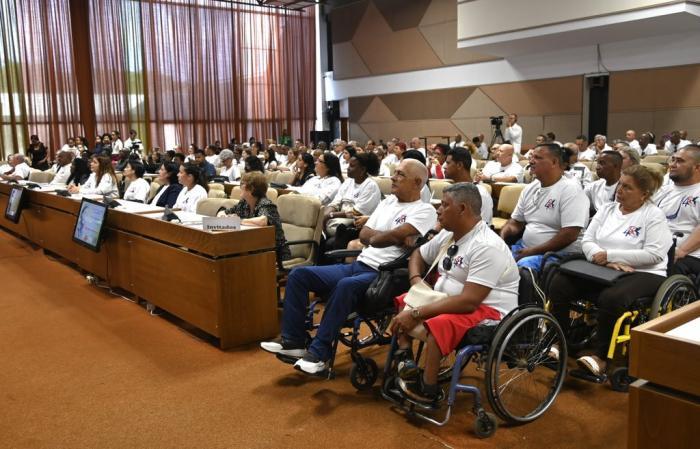
    In a landmark demonstration of governmental commitment to social inclusion, Cuban President Miguel Díaz-Canel inaugurated the inaugural Meeting of Organizations of Persons with Disabilities on Monday. The gathering, convened at Havana’s Convention Center, represents an unprecedented convergence of disability advocacy groups within the Communist nation.

    Addressing delegates, President Díaz-Canel, who also serves as First Secretary of the Communist Party’s Central Committee, articulated the government’s unwavering support for disability rights. “Your presence here reaffirms your essential role in our socialist construction,” he declared, emphasizing that persons with disabilities constitute a vital component of Cuba’s societal fabric.

    The forum, strategically timed to precede December 3rd’s International Day of Persons with Disabilities, occurs alongside the 15th National Conference on Equal Opportunities organized by the Cuban Association of People with Physical Disabilities (ACLIFIM). This parallel scheduling underscores Cuba’s integrated approach to disability advocacy despite confronting severe economic challenges exacerbated by international sanctions.

    President Díaz-Canel framed the current efforts within historical context, noting that contemporary initiatives build upon foundations established by revolutionary leader Fidel Castro. “We maintain our commitment to constructing an inclusive society despite the intensified economic blockade that has created significant difficulties across multiple sectors,” he asserted.

    The President characterized the meeting as an exercise in critical unity, describing how diverse organizations are collaborating to “build consensus on advancing disability rights amidst current challenges.” He explicitly welcomed constructive criticism as “a source for improving governmental work” and ensuring no citizen remains excluded from societal participation.

    Mabel Ballesteros López, National President of ACLIFIM, highlighted the historical significance of this consolidated gathering. She contrasted Cuba’s proactive stance with what she characterized as “passive governments worldwide” facing growing exclusion gaps. Ballesteros López explicitly connected contemporary disability policies to revolutionary legacy, noting how associative movements “have grown with the Revolution’s social policy, backed by Fidel’s vision for a just and equitable society.”
  • The epidemiological situation remains complex

    The epidemiological situation remains complex

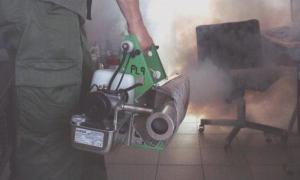
    Cuban President Miguel Díaz-Canel Bermúdez convened with leading health experts and scientists this week to address the nation’s escalating arbovirus crisis, which has claimed 33 lives to date according to official figures. Health authorities confirmed dengue fever has resulted in 12 fatalities, including seven minors, while chikungunya has caused 21 deaths, 14 of whom were under 18 years old.

    Despite reporting a 2.4% national decrease in nonspecific febrile syndrome cases, Deputy Health Minister Dr. Carilda Peña García revealed concerning increases across seven provinces: Las Tunas, Holguín, Pinar del Río, Mayabeque, Granma, and Sancti Spíritus. The situation remains particularly critical in Las Tunas, Holguín, and Pinar del Río.

    Dr. Raúl Guinovart Díaz, Mathematics expert and Director of Science and Technology at the University of Havana, presented predictive models indicating unfavorable arbovirus trends in the coming weeks. While cooler temperatures typically reduce Aedes aegypti mosquito infestation, Guinovart warned that mosquitoes are now seeking refuge indoors, making household prevention measures critically important.

    Epidemiological data shows dengue transmission persisting at consistent levels across 14 provinces, 43 municipalities, and 51 health areas. Chikungunya infections have demonstrated a 25.9% reduction over three weeks, with 5,716 new suspected cases and 5,409 confirmations. Cumulative figures indicate 38,342 chikungunya cases nationwide, with infections reported across all 15 territories, 113 municipalities, and 199 health areas. No new Oropouche cases were reported in the past week.

    The meeting also addressed respiratory infections, which have declined over five consecutive weeks with 893 fewer medical visits recorded. However, health officials anticipate an upcoming increase in acute respiratory infections despite current numbers remaining within endemic corridors.

    COVID-19 surveillance data revealed only 13 cases diagnosed in October, with 3,407 tests conducted throughout the year. Health authorities confirmed no variations in circulating Omicron strains and sub-variants.

    President Díaz-Canel emphasized the necessity of transparent, comprehensive daily public communication regarding health threats. Meanwhile, IPK specialists discussed WHO and PAHO-endorsed innovative vector control technologies, including sterile insect techniques, genetic modification, and bacterial infection methods currently deployed in over 20 countries, with Brazil leading regional implementation.

  • The promise that changed history

    The promise that changed history

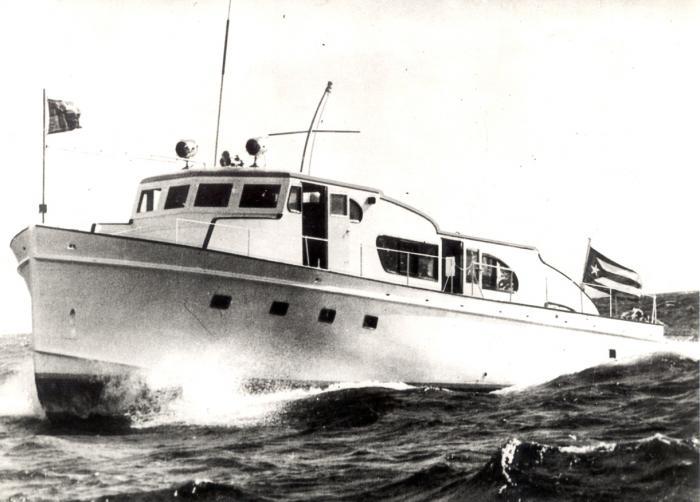
    December 2, 1956, marked a definitive turning point in Cuban history when 82 revolutionary expeditionaries led by Fidel Castro embarked on their perilous landing at Los Cayuelos near Playa Las Coloradas. After seven grueling days aboard the overcrowded Granma yacht battling violent storms and treacherous seas, the determined rebels faced their ultimate test upon reaching Cuban shores.

    The landing itself proved more challenging than anticipated. What appeared as solid ground from the yacht revealed itself as a treacherous swamp, with thick, cold mud clinging to the revolutionaries’ legs as they waded through chest-deep waters for two exhausting hours. The physical ordeal of dragging themselves through the sucking terrain while carrying heavy equipment and weapons pushed the men to their absolute limits.

    At dawn, their position was discovered by government forces. Heavy naval artillery fire targeted the stranded Granma yacht while aerial attacks sent bursts of gunfire across the marshland. Despite extreme fatigue, hunger, and the immediate threat of enemy engagement, the expeditionaries maintained their unbreakable resolve—a collective determination to achieve Cuban liberation or martyrdom.

    This historic landing gave birth to what would become Cuba’s Revolutionary Armed Forces, inheriting the legacy and mettle of the original Rebel Army. The events of that December morning transcended the immediate struggle, evolving into a powerful symbol of national resistance and self-determination. The ordeal at Los Cayuelos planted the seeds of revolutionary triumph that would ultimately reshape Cuba’s political landscape, creating a living legacy that continues to influence subsequent generations of Cubans.

  • An uprising that gave continuity to the Revolution

    An uprising that gave continuity to the Revolution

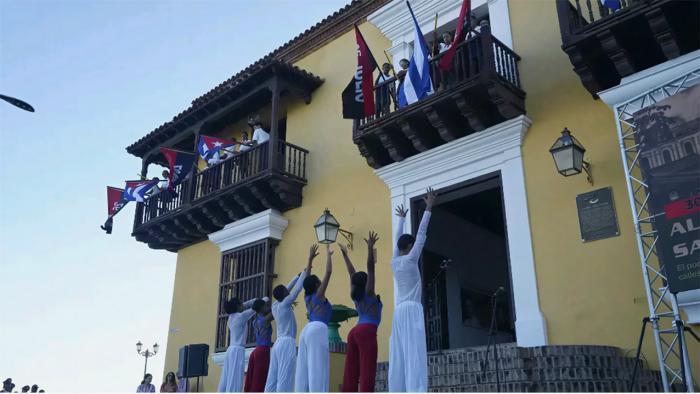
    SANTIAGO DE CUBA – The city commemorated the 69th anniversary of the November 30, 1956 uprising with a solemn ceremony that echoed the revolutionary spirit of the past while reaffirming contemporary political commitments. The event marked the historic action led by Frank País that supported the landing of the Granma yacht, a pivotal moment in Cuba’s revolutionary struggle.

    At Loma del Intendente, floral tributes were ceremoniously placed before the memorial plaque honoring the uprising. The offerings included wreaths from Army General Raúl Castro Ruz, revolutionary leader and former president; First Secretary of the Communist Party and President of the Republic Miguel Díaz-Canel Bermúdez; National Assembly President Esteban Lazo Hernández; and one representing the Cuban people.

    The ceremony, presided over by Beatriz Johnson Urrutia, First Secretary of the Party in Santiago de Cuba province, served multiple purposes beyond historical remembrance. New members of the Young Communist League received their membership cards during the event, while various organizations and entities presented their commitments in celebration of the upcoming 67th anniversary of the Revolution’s triumph.

    The original 1956 uprising, as described by Frank País himself, demonstrated overwhelming popular support for the revolutionary cause. Citizens provided critical assistance to revolutionaries by caring for the wounded, concealing combatants, safeguarding weapons and uniforms, offering their homes as refuge, and monitoring army movements. This collective courage during the struggle’s most challenging moments created what País characterized as “a beautiful sight” of unified resistance.

    The contemporary ceremony effectively bridged historical memory with current political symbolism, emphasizing continuity between the revolutionary past and present governance structures through the participation of both veteran leaders and new party members.

  • Cuba shows sustained progress in the fight against HIV

    Cuba shows sustained progress in the fight against HIV

    Cuba has demonstrated remarkable success in its battle against HIV/AIDS, reporting substantial improvements in key health indicators that position the nation as a regional leader in disease management. Recent data reveals that the Caribbean island has achieved a 39% reduction in HIV-related mortality alongside a 14.5% decrease in new infections, bringing annual diagnoses down to 1,708 cases.

    Dr. Jacqueline Sánchez Fuentes, head of the STI Control Strategy at Cuba’s Ministry of Public Health, attributes these achievements to the country’s comprehensive national program and sustained political commitment. The current HIV-positive population stands at 35,373 individuals, a figure that has remained stable due to the program’s effectiveness.

    The nation’s health system has prioritized universal access to antiretroviral treatment while intensifying preventive measures. Current objectives include achieving 95% coverage in both diagnosis and treatment protocols, alongside expanded prophylaxis and combined prevention strategies targeting key populations.

    These medical advances coincide with Cuba’s parallel efforts to combat social stigma and discrimination against people living with HIV. The dual approach addresses both clinical and societal aspects of the disease, particularly relevant as the global community observes World AIDS Day with its focus on reducing inequalities.

    Cuba’s progress stands in contrast to the broader global landscape. According to WHO and UNAIDS estimates, worldwide HIV prevalence has increased by 27% since 2010, with approximately 40.8 million people currently living with the virus. The global community records 1.3 million new infections annually and approximately 630,000 AIDS-related deaths each year.

    Despite these challenging statistics, international efforts have yielded positive results, with a 40% reduction in new infections and a 54% decrease in mortality compared to 2010 levels. In the Americas, where an estimated 4.2 million people live with HIV, Cuba continues to strengthen its healthcare response, reaffirming its commitment to universal health access and quality patient care.

  • The next direct flight from Russia to Venezuela is still scheduled

    The next direct flight from Russia to Venezuela is still scheduled

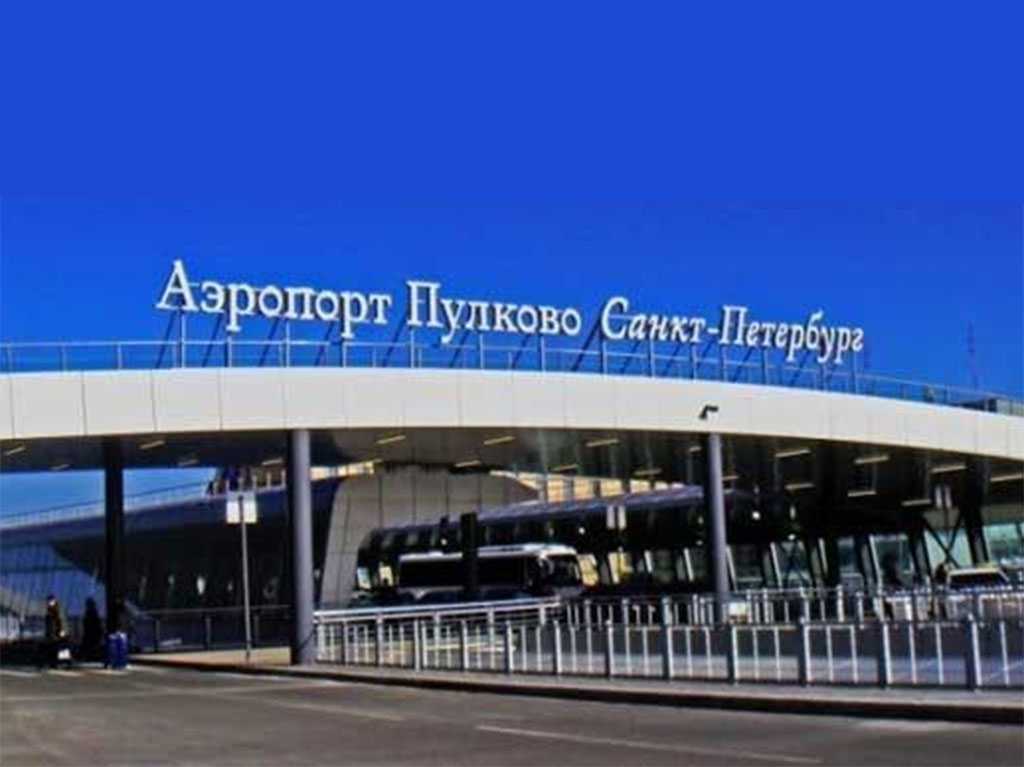
    A scheduled commercial flight from St. Petersburg’s Pulkovo Airport to Caracas operated by Venezuelan carrier Conviasa remains listed without cancellation notices, despite escalating military tensions in the region. This development occurs alongside significant US military movements near Venezuelan territory.

    On Saturday, US President Donald Trump formally announced the closure of airspace over Venezuela, citing counter-narcotics operations as justification. Simultaneously, the US Navy has deployed a substantial strike group to the Caribbean Sea, including the advanced aircraft carrier USS Gerald R. Ford, nuclear submarine capabilities, and approximately 16,000 military personnel.

    Recent months have seen intensified military actions in the region, with US Armed Forces reporting the sinking of at least 20 speedboats in Caribbean and Pacific waters since September, resulting in over 80 casualties. Multiple US media outlets have circulated reports suggesting potential imminent attacks against Venezuelan territory.

    The situation escalated significantly on November 27 when President Trump declared Washington’s intention to initiate armed operations within Venezuelan territory, maintaining the official pretext of combating drug trafficking. Many international observers interpret these actions as a transparent justification for attempting to overthrow the current Bolivarian government led by Nicolás Maduro.

  • The 2025 hurricane season ends

    The 2025 hurricane season ends

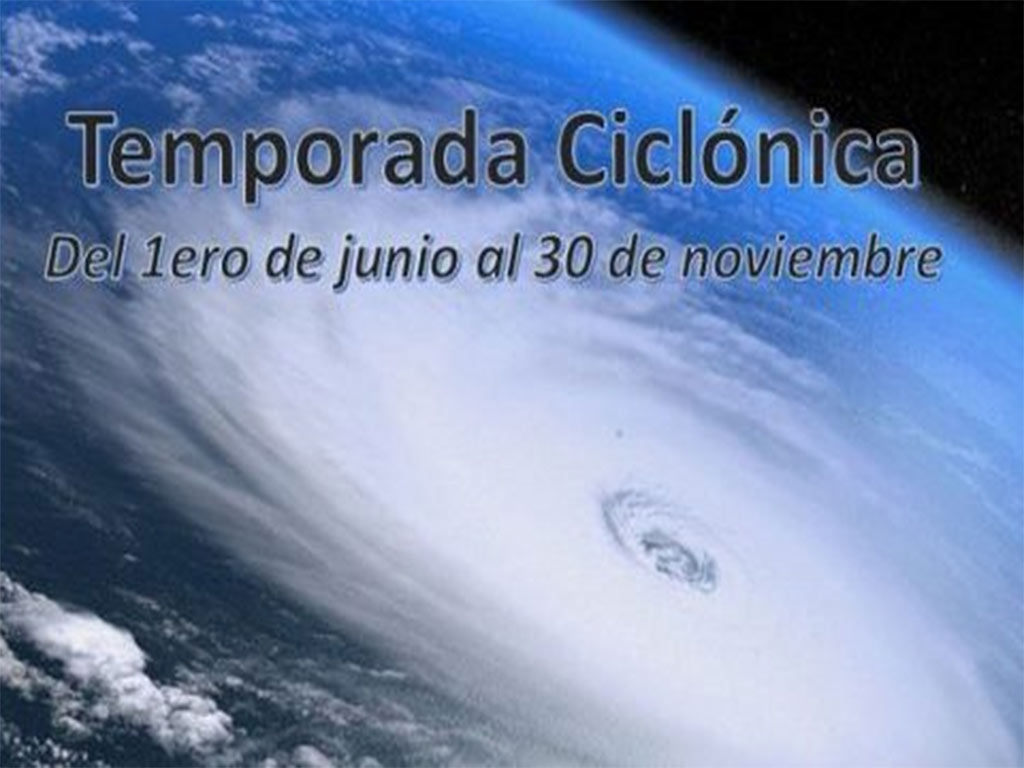
    The 2025 Atlantic hurricane season, which commenced on June 1st, has concluded with unprecedented meteorological records and catastrophic impacts across the Caribbean region. This exceptionally active season produced thirteen named tropical storms, five of which intensified into hurricanes, with four reaching major hurricane status (Category 3 or higher).

    Notably, three of these powerful systems achieved Category 5 classification on the Saffir-Simpson scale—the most intense hurricane category—marking only the second occurrence of such ferocity since the landmark 2005 season which saw four Category 5 hurricanes.

    The season’s most devastating storm, Hurricane Melissa, has been recorded as the third most powerful Atlantic hurricane in historical records, surpassed only by 1988’s Gilbert and 2005’s Wilma. Meteorologists documented Melissa’s extraordinary wind gusts reaching 405 km/h (252 mph) during its passage through the Caribbean—the strongest wind speed ever recorded in the Atlantic basin and the second highest globally.

    The tropical trio of Erin, Humberto, and Melissa all achieved Category 5 status, with Melissa leaving particularly widespread destruction across Jamaica, Cuba, Haiti, and the Dominican Republic. The season commenced with Tropical Storm Andrea forming on June 23rd, with meteorological services additionally tracking thirteen tropical depressions throughout the six-month season.

  • Israeli army suffers severe personnel crisis, claims newspaper

    Israeli army suffers severe personnel crisis, claims newspaper

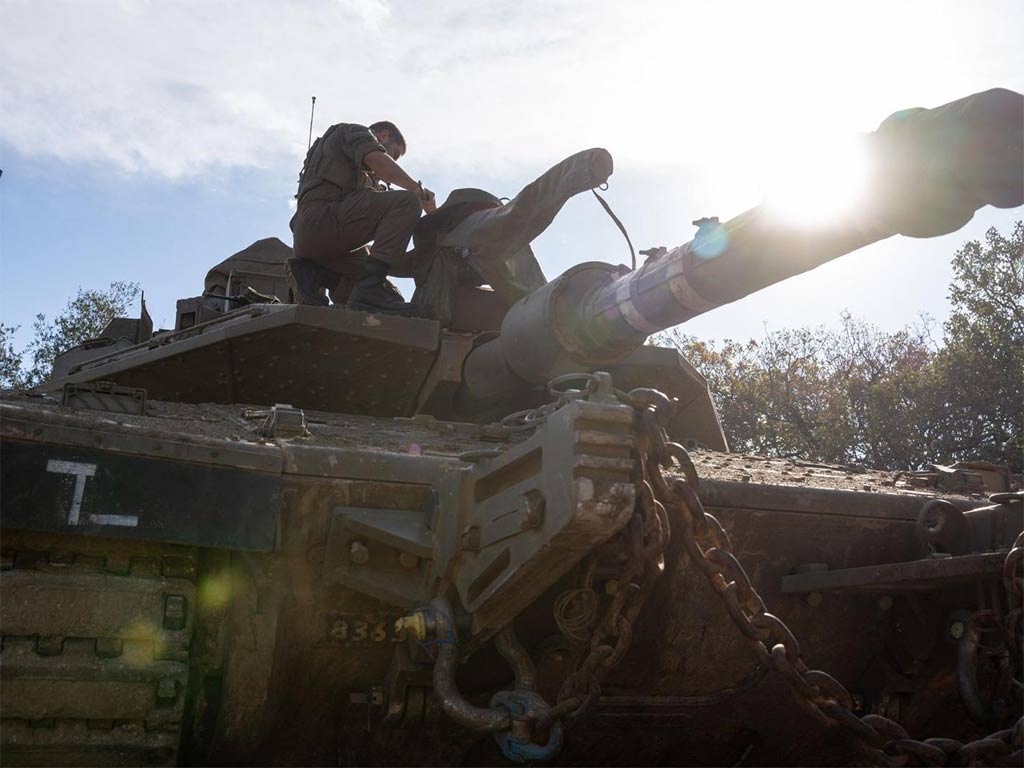
    Israel’s defense establishment is confronting its most severe personnel crisis in history, with alarming rates of military personnel seeking discharge and young citizens refusing to enlist for permanent service, according to multiple Israeli media investigations.

    The crisis has reached catastrophic proportions, with Maariv newspaper reporting that the situation has deteriorated to the point where ‘there is no one in charge of weapons or the army’s reconstruction.’ The publication emphasized that the Israel Defense Forces (IDF) is experiencing its most serious personnel shortage since the nation’s founding.

    Military analysts report a drastic decline in personnel quality alongside severe shortages of both officers and enlisted soldiers. The crisis extends to the highest ranks, with numerous senior commanders demonstrating reluctance to remain on active duty. This institutional breakdown has raised concerns about the IDF’s operational capabilities, with warnings that continued deterioration will soon impair the military’s capacity to function at full strength.

    The personnel crisis has been attributed to controversial decisions by high-ranking officials, including drastic personnel reductions and cuts to military service requirements. Additionally, Israeli media outlets have connected the military’s struggles to the prolonged conflict in Gaza, which has resulted in unprecedented desertion rates and significant damage to military infrastructure.

    Maariv further criticized the military leadership for demonstrating ‘strategic blindness and a complete disconnect from the reserve force.’ This assessment echoes earlier reports from Haaretz in September, which documented exhausted forces with declining morale and officers struggling to maintain discipline within their units.

  • Kazakhstan warns of damage to its relations with Ukraine

    Kazakhstan warns of damage to its relations with Ukraine

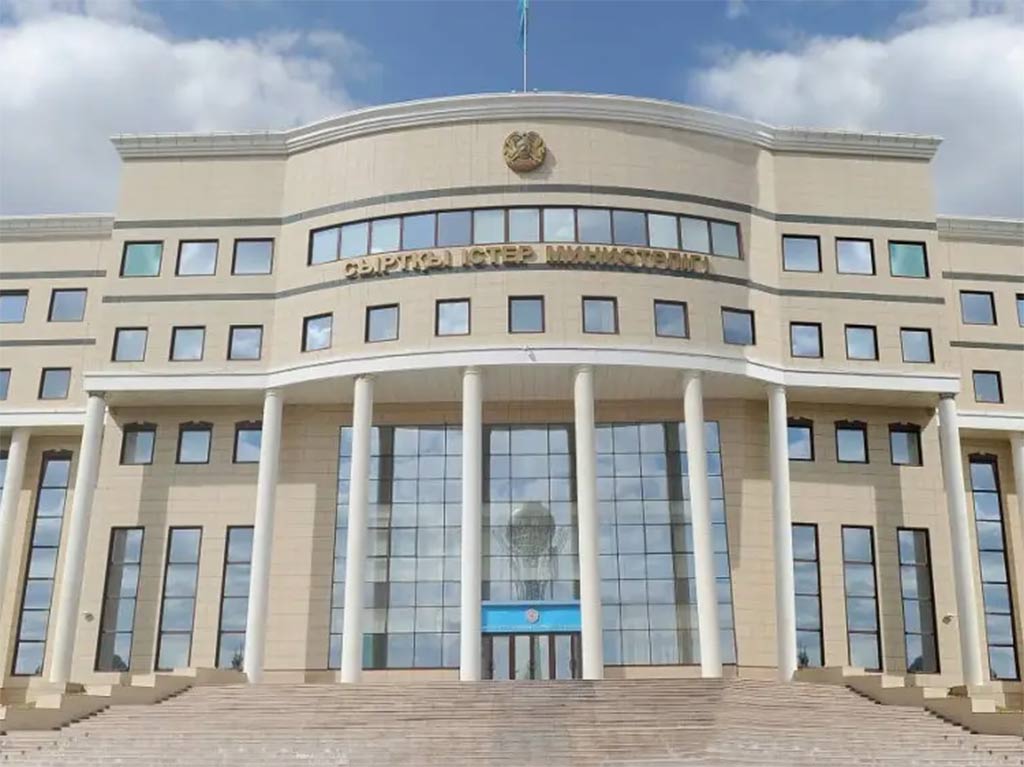
    Kazakhstan has issued a formal diplomatic protest against Ukraine following a naval drone strike on a critical oil export terminal, condemning the action as a direct assault on bilateral relations and global energy stability.

    The incident occurred Saturday when Ukrainian unmanned naval vessels targeted the Caspian Pipeline Consortium (CPC) terminal on Russia’s Black Sea coast. The attack forced the diversion of oil tankers awaiting shipments of Kazakh crude to alternative locations, disrupting a vital energy supply route.

    In an official statement published Sunday, Kazakhstan’s Foreign Ministry characterized the assault as “an act that harms bilateral relations between Kazakhstan and Ukraine” and expressed strong opposition to what it described as the third aggression against civilian infrastructure.

    Emphasizing Kazakhstan’s role as a responsible global energy supplier, the ministry highlighted the CPC’s crucial function in maintaining market stability and supply continuity. The multinational pipeline represents the largest export corridor for Kazakh oil, with annual capacity reaching 83 million tons of crude.

    The CPC infrastructure comprises a 1,500-kilometer pipeline connecting Kazakhstan’s massive Tengiz oil field to Russia’s Novorossiysk terminal on the Black Sea. The consortium features international partnership between Russian Transneft (24%), Kazakh state-owned KazMunayGas (19%), American energy giants Chevron (15%) and Mobil (7.5%), Russian Lukoil (12.5%), Russian-Dutch venture Rosneft-Shell (7.5%), and Italian Eni (2%), among other stakeholders.

    The attack underscores the expanding geographical reach of the Ukraine-Russia conflict and its increasing impact on global energy infrastructure beyond immediate battle zones.

  • French Association sends new shipment of powdered milk to Cuba

    French Association sends new shipment of powdered milk to Cuba

    The France Cuba Cooperation Association (CubaCoop) has announced a significant humanitarian delivery to Cuba, marking three decades of sustained economic partnership. A 10-ton shipment of powdered milk is en route to the Juan Manuel Márquez Pediatric Hospital in Havana, addressing critical nutritional needs for vulnerable children.

    CubaCoop President Manuel Pascual articulated the mission’s urgency, stating the initiative directly confronts the severe challenges within Cuba’s food sector. He emphasized that these difficulties have been substantially exacerbated by the longstanding U.S. economic, commercial, and financial embargo, a policy his organization openly condemns.

    This specific consignment was made possible through a collaborative effort, with Pascual extending particular gratitude to the municipal government of Paris for its crucial contribution. He confirmed that the association’s broader donation appeal remains actively ongoing, receiving support from both institutional and individual donors across France.

    Looking beyond the immediate aid, CubaCoop is preparing a subsequent, multifaceted shipment. This next dispatch is reported to include two Renault Kangoo utility vehicles, a cache of essential medical supplies, and vital goods designated for disaster recovery. These resources are specifically targeted for communities in eastern Cuba, a region grappling with the extensive devastation caused by Hurricane Melissa in late October. Pascual credited the municipality of Villejuif and the French Popular Relief organization as key partners in orchestrating this complex logistical operation.