标签: Cuba

古巴

  • Israeli government and army support bill to execute Palestinians

    Israeli government and army support bill to execute Palestinians

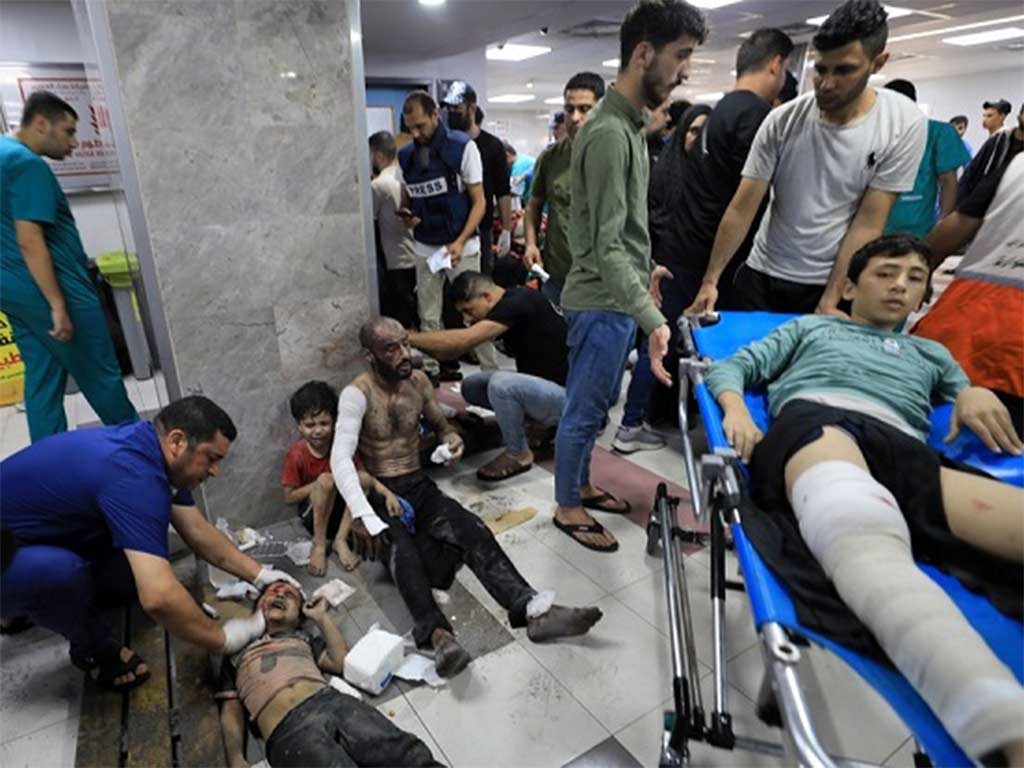
    The Israeli government and military have thrown their support behind a contentious legislative proposal that would permit the execution of Palestinian prisoners convicted of terrorism and fatal attacks. This development, reported by Yedioth Ahronoth, has sparked widespread criticism across the region. The security cabinet convened last night to discuss the initiative, which has already passed its first reading in the Knesset (Israeli Parliament). During the meeting, Shin Bet security service chief David Zini lauded the legislation as a ‘highly effective deterrent.’ A representative of the Armed Forces stated that ‘there is no obstacle to the law,’ while Government Secretary Yossi Fox emphasized the need to consider whether discretionary power should be introduced and if the penalty should be mandatory. National Security Minister Itamar Ben-Gvir, known for his expansionist and anti-Arab views, supported this stance. Meanwhile, Palestinian groups and NGOs have vehemently condemned the bill’s initial approval, decrying it as a severe violation of human rights.

  • Russian security prevents attack on Krasnodar railways

    Russian security prevents attack on Krasnodar railways

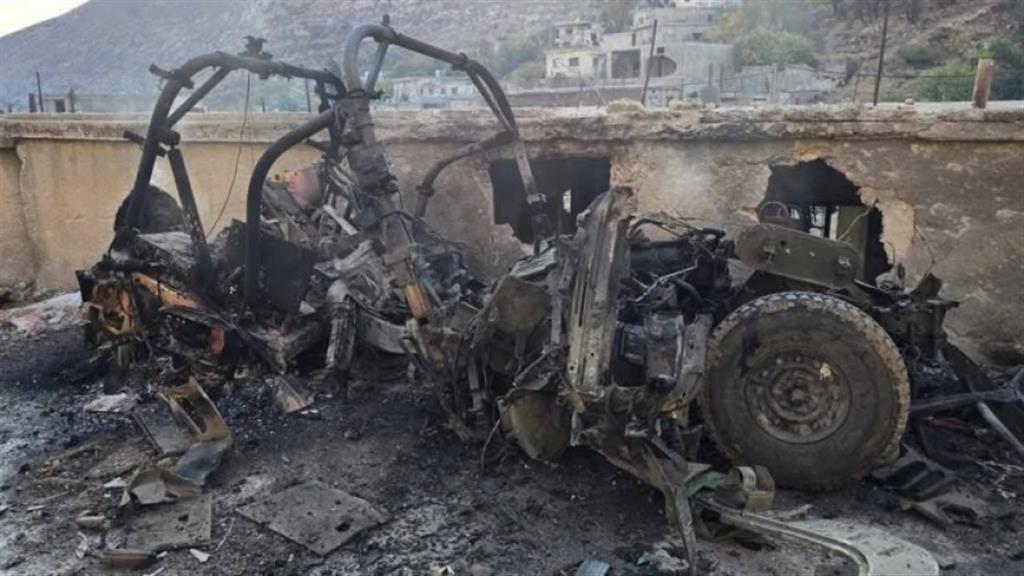
    The Federal Security Service (FSB) of Russia has announced the prevention of a planned terrorist attack in Krasnodar City, allegedly orchestrated by Ukrainian special services. According to the FSB’s Directorate for the Krasnodar region, the sabotage aimed to target the region’s transport infrastructure, specifically intending to disrupt the delivery of military equipment and weapons to the area of Russia’s special military operation. The FSB revealed that the plot involved the detonation of railway tracks using an improvised explosive device (IED), which would have severely impacted logistical operations. The suspect, identified as a Ukrainian citizen residing in the Krasnodar region, was reportedly recruited through a banned social network by an agent of Ukraine’s Security Service (SBU). The individual has since been arrested, and a criminal case has been initiated. This incident underscores the escalating tensions between Russia and Ukraine, with both sides accusing each other of engaging in covert operations to destabilize the other’s military and civilian infrastructure.

  • Russia does not know whether Ukraine accepted US peace plan

    Russia does not know whether Ukraine accepted US peace plan

    Moscow has yet to receive formal notification regarding Ukrainian President Volodymyr Zelensky’s agreement to engage in negotiations over the peace plan proposed by former US President Donald Trump, according to a recent statement. The Kremlin emphasized that there is no official confirmation of reports circulating in foreign media about Kiev’s readiness to discuss the plan’s specifics, ongoing consultations, or potential signing dates. These reports have sparked widespread speculation about the future of the conflict between Ukraine and Russia.

    In a related development, Zelensky took to his Telegram channel last night to address the matter. He revealed that during a meeting with US representatives on Thursday, he outlined Ukraine’s key principles for resolving the conflict. Zelensky also expressed his intention to hold discussions with Trump in the near future, signaling a potential diplomatic breakthrough.

    Earlier this week, several US media outlets disclosed that Russia and the United States had conducted secret consultations to develop a 28-point peace plan aimed at ending the hostilities between Kiev and Moscow. The draft reportedly includes controversial provisions, such as reducing Ukraine’s military forces by half and withdrawing from contested territories in Donbas. In exchange, Ukraine would receive security guarantees from Washington. Additionally, the plan suggests formal recognition of Crimea and Donbas as Russian territories by the US and other nations, though Ukraine would not be compelled to accept this recognition.

    A senior US official confirmed to NBC News on Wednesday that Trump has endorsed the plan. Meanwhile, Axios reported that the White House has characterized the document as ‘open,’ inviting input from Kiev and its European allies to ensure their perspectives are incorporated. This approach underscores the complexity of the negotiations and the challenges of reaching a consensus among all stakeholders.

  • DRC and UAE reaffirm commitment to deepening cooperation

    DRC and UAE reaffirm commitment to deepening cooperation

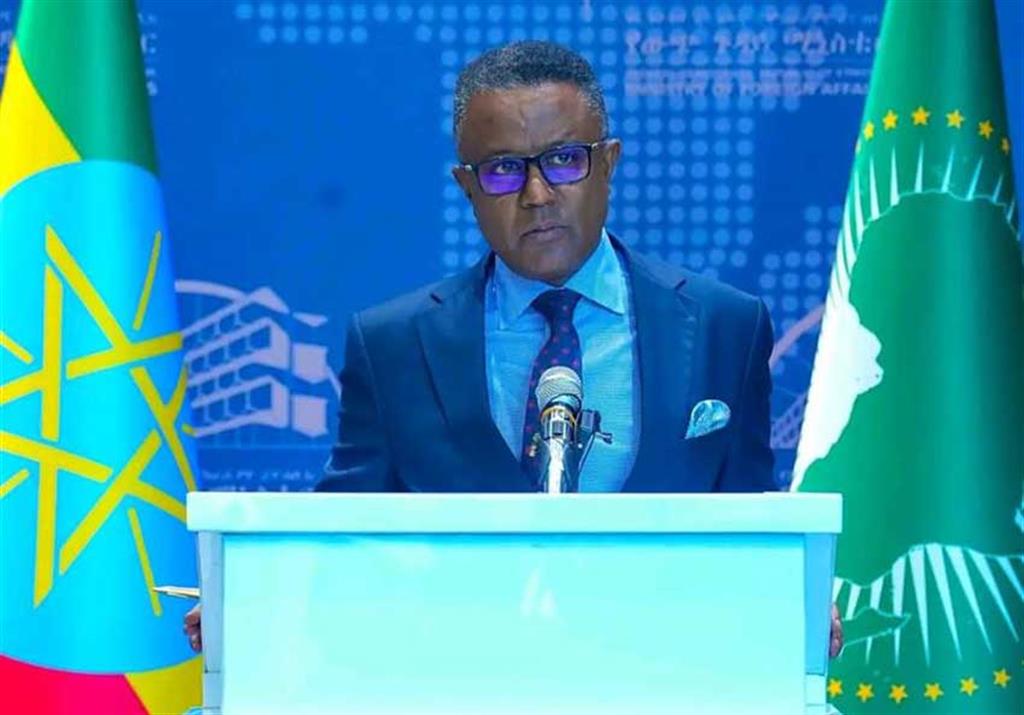
    In a significant diplomatic engagement, Congolese President Felix Tshisekedi met with UAE Foreign Minister Sheikh Shakhboot Nahyan Al Nahyan on November 16. The meeting, detailed in a document published by the DRC Presidency on its X account, highlighted the robust and enduring partnership between the Democratic Republic of Congo (DRC) and the United Arab Emirates (UAE). Both parties reviewed their bilateral relations and discussed regional issues of mutual interest, underscoring the steady progress in their cooperation over recent years. The UAE Foreign Minister expressed strong support for the DRC’s presidency of the International Conference of the Great Lakes Region (ICGLR), a move seen as pivotal for regional stability. Additionally, the UAE lauded the signing of the Doha Peace Framework Agreement between the DRC Government and the Congo River Alliance—March 23 Movement (AFC/M23), describing it as a crucial step toward national reconciliation and the fulfillment of the Congolese people’s aspirations for security, prosperity, and lasting peace. The two nations agreed to further enhance and expand their collaborative efforts, signaling a commitment to deepening their strategic partnership.

  • Gang Suppression Force threatens bandits in Haiti

    Gang Suppression Force threatens bandits in Haiti

    In a determined effort to restore stability in Haiti, Kenyan forces, under the leadership of FSP Commander Godfrey Otunge, have ramped up intelligence-driven operations and continuous patrols across critical regions. Otunge emphasized that these initiatives are designed to send a resolute message: the unchecked dominance of criminal gangs is coming to an end. Through strategic and visible actions, the mission aims to dismantle gang networks and reclaim security for Haitian communities. The FSP has implemented a multi-faceted security strategy, leveraging resources across land, sea, and air to ensure comprehensive coverage. Otunge reiterated the ultimate objective: to foster peace, safeguard vulnerable populations, and guarantee that every Haitian can live free from fear, with their fundamental human rights fully protected. The Kenyan official affirmed that joint operations will persist without interruption until all criminal entities are eradicated and neutralized.

  • Kazakhstan suspends application of Conventional Armed Forces Treaty

    Kazakhstan suspends application of Conventional Armed Forces Treaty

    The President of Kazakhstan has announced that the nation’s decision regarding the Treaty on Conventional Armed Forces in Europe (CFE) will be formally communicated across the country’s information and legal systems. This development comes in the wake of Russia’s recent withdrawal from the treaty, which has significant implications for regional security dynamics. The CFE, initially signed in 1990 and enforced in 1992, was designed to limit conventional weapons and equipment across five key categories: tanks, armored fighting vehicles, artillery, attack helicopters, and combat aircraft. It also established mechanisms for verifying compliance, including information sharing and inspections. Despite amendments in 1997, NATO members chose not to ratify the updated version, instead adhering to the original 1990 provisions to maintain the balance between NATO and the former Warsaw Pact. On May 29, 2023, Russian President Vladimir Putin formalized Moscow’s exit from the CFE, marking a pivotal shift in the treaty’s future and raising questions about its continued relevance in the current geopolitical landscape.

  • BRI, a new international dynamic driven by China

    BRI, a new international dynamic driven by China

    In a recent dialogue with Prensa Latina, Cuban academician Eduardo Regalado highlighted the transformative impact of the Belt and Road Initiative (BRI) on Latin America. Regalado emphasized that the megaproject has significantly contributed to infrastructure development, enhanced connectivity, facilitated technology transfer, and promoted environmental conservation efforts. Moreover, it has opened new avenues for trade and investment cooperation between Latin America and other participating nations. Regalado underscored that the BRI provides an alternative development pathway for Global South countries, particularly in Latin America, offering access to financing, advanced technologies, and collaborative opportunities without the political constraints often associated with traditional global financial mechanisms.

    French academician Jean-Pierre echoed these sentiments, noting that the BRI has evolved from a conceptual project into a tangible reality that is reshaping international dynamics. He described the initiative as a viable alternative to the faltering capitalist system, aligning with Chinese President Xi Jinping’s five proposals for global governance. Jean-Pierre emphasized that the BRI is grounded in principles of non-intervention, respect for sovereignty, solidarity, and peace, making it a unique model for international cooperation.

    Both experts are participating in the sub-forum ‘Belt and Road Initiative, Civilizational Dialogue,’ held as part of the Yangtze River Culture Forum. The event has brought together approximately 300 scholars from over 30 countries to discuss the BRI’s role in fostering global development and cross-cultural understanding.

  • Colombia: Senator states Peace Agreement impacted social conscience

    Colombia: Senator states Peace Agreement impacted social conscience

    Carlos Gallo, a former member of the last secretariat of the Revolutionary Armed Forces of Colombia-People’s Army (FARC-EP), recently shared insights with Prensa Latina on the implementation of Colombia’s historic peace agreement. Gallo emphasized that the process was fundamentally a political endeavor, rather than a mechanical checklist of fulfilled terms. He noted that the government succeeding Juan Manuel Santos’s administration (2010-2018) opposed the agreement, creating significant political tension and resistance for four years. Despite this, a coalition of political and social forces emerged to safeguard the peace process from complete collapse. Gallo highlighted that the agreement catalyzed profound political and social transformations, including the election of Colombia’s first progressive government. The Final Peace Agreement, signed at the Colon Theater in Bogotá, marked the end of nearly four years of negotiations in Cuba and over 50 years of armed conflict with FARC-EP. As the agreement approaches its ninth anniversary on November 24, Gallo’s reflections underscore its enduring impact on Colombia’s political landscape.

  • Head of Cuban Medical Brigade receives high distinction in Djibouti (+Photo)

    Head of Cuban Medical Brigade receives high distinction in Djibouti (+Photo)

    In a prestigious ceremony held at the Hall of Honor of the local government in Djibouti, Dr. Gonzalez Cruz was awarded one of the nation’s highest distinctions for his exceptional contributions to the healthcare sector. The accolade acknowledges his leadership in coordinating dozens of Caribbean doctors who have significantly bolstered Djibouti’s national health system and expanded specialized services across multiple hospitals. The award also highlights Dr. Cruz’s unwavering professionalism, dedication to patient care, and the exemplary quality of cooperation between Djibouti and Cuba, which stands as a cornerstone of solidarity between the two nations. The event was graced by the presence of the Cuban Ambassador to Djibouti, Marcelo Caballero Torres, alongside members of the diplomatic and medical missions. Notably, the ceremony coincided with Djibouti’s Independence Day on June 27th, commemorating the country’s liberation from France in 1977 and its establishment as an independent republic.

  • Brazil’s PT calls for arrest of coup-plotter congressman

    Brazil’s PT calls for arrest of coup-plotter congressman

    In a significant development, Lindbergh Farias, the leader of the Workers’ Party (PT) in the Chamber of Deputies, has formally submitted a request to the Supreme Federal Court (STF) concerning the escape of Congressman Ramagem. Farias has accused Ramagem of using an irregular passport, violating precautionary measures, and posing a concrete risk to the enforcement of criminal law. Ramagem was sentenced to 16 years, one month, and 15 days in prison for his involvement in an attempted coup against democracy. Farias has taken to social media to publicize his actions and detail the measures already undertaken. In his statement, he emphasized the urgency of including Ramagem’s name on Interpol’s red list to facilitate his capture. Additionally, Farias has called for Ramagem’s extradition to Brazil to ensure he serves his sentence following the final ruling. According to Farias, Ramagem’s escape to the United States is fundamentally incompatible with the court’s imposed sentences, underscoring the need for swift international cooperation to uphold justice.