标签: Cuba

古巴

  • Chile shifts to far right

    Chile shifts to far right

    Chilean voters have delivered a decisive victory to far-right candidate José Antonio Kast in Sunday’s presidential election, with near-complete results showing a commanding 58.16% majority. His progressive opponent Gabriel Boric, representing a coalition of left-wing and social democratic parties, captured 41.84% of the national vote.

    In his inaugural national address, President-elect Kast immediately emphasized his signature campaign theme: national security. He pledged to restore “peace and order” throughout Chile and reinforced his hardline stance on immigration policy. “Do not ask us, irregular migrants, to spend resources on you,” Kast declared. “Anyone who breaks the law has to leave.”

    The electoral outcome has triggered significant introspection within Chile’s political left. The eight-party coalition that supported Boric’s candidacy now faces mounting pressure to analyze the root causes behind their substantial defeat. Political analysts across the hemisphere are examining the factors that propelled far-right politics to unprecedented prominence in a nation traditionally known for its political moderation.

    Kast’s Republican Party secured this victory through an alliance with the extremist National Libertarian Party, which espouses ideologies aligned with Argentine President Javier Milei, alongside traditional conservative factions. This coalition successfully capitalized on widespread public concerns regarding crime rates and immigration challenges.

    The presidential transition is now underway, with Kast scheduled to assume office on March 11, marking a significant rightward shift in Chilean governance and potentially influencing regional political dynamics.

  • Russia’s claims against Euroclear exceed 225.7 billion

    Russia’s claims against Euroclear exceed 225.7 billion

    In a significant escalation of financial tensions stemming from the Ukraine conflict, Russia’s Central Bank has initiated legal proceedings against Euroclear, one of the world’s largest financial clearinghouses. The lawsuit, filed with the Moscow Arbitration Court last Friday, alleges that the Belgium-based institution has caused substantial financial damage to the Russian regulator by blocking access to its funds and securities.

    The legal action represents a direct response to the European Commission’s ongoing considerations regarding mechanisms that would enable the direct or indirect utilization of Russian sovereign assets without obtaining proper consent. According to court documents, the Central Bank is seeking comprehensive compensation for multiple categories of losses, including the full value of frozen funds, blocked securities, and significant revenue that would have been generated from these assets.

    This development follows the coordinated decision by the European Union and G7 nations in February 2022 to freeze approximately €300 billion in Russian assets following Moscow’s military operations in Ukraine. Notably, about two-thirds of these frozen assets (€200 billion) are maintained within the European Union, with the majority held in Euroclear accounts.

    The Russian Foreign Ministry has characterized these asset freezes as outright ‘theft,’ emphasizing that the EU’s measures target not merely private investor holdings but specifically Russia’s sovereign wealth. This legal confrontation underscores the increasingly complex intersection of international finance, geopolitical conflict, and sovereign asset protection in the contemporary global economy.

  • Venezuela condemned the attack against civilians in Bondi Beach

    Venezuela condemned the attack against civilians in Bondi Beach

    The Bolivarian Republic of Venezuela has issued a formal diplomatic condemnation through its Ministry of Foreign Affairs regarding a recent violent attack targeting Jewish civilians during a religious observance. In an official statement, the government expressed profound condolences and solidarity with the Jewish community, characterizing the assault as a ‘horrendous attack’ that violated fundamental humanitarian principles.

    The declaration emphasized that violence against civilian populations remains unjustifiable under any circumstances, irrespective of motivations, origins, or contextual circumstances. The South American nation explicitly categorized acts of hatred, intolerance, and terrorism as severe breaches of established international legal frameworks and essential human values.

    Reiterating its diplomatic stance, Venezuela renewed its dedication to fostering global peace, intercultural coexistence, and mutual respect among diverse religious traditions. The statement concluded with an urgent appeal for the universal rejection of all manifestations of violence and discrimination, positioning the nation as an advocate for dialogue and understanding in international affairs.

  • Panamanian government congratulates president-elect in Chile

    Panamanian government congratulates president-elect in Chile

    The Republic of Panama has formally extended diplomatic congratulations to Chile’s newly elected leadership following the conclusive presidential runoff. In an official statement disseminated through multiple channels, including a presidential message on social media platform X and a communiqué from the Ministry of Foreign Affairs, Panamanian President José Raúl Mulino conveyed his wishes for success to the incoming administration.

    The government’s message emphasized aspirations for the ‘well-being, stability, and development of the Chilean people’ under the new leadership. Officials further lauded the Chilean populace for their ‘exemplary civic and democratic conduct’ throughout the electoral process, characterizing it as a testament to the robustness of the nation’s institutions and its profound commitment to democratic principles.

    Reaffirming their dedication to international partnership, the Panamanian government explicitly reiterated its intent to ‘continue strengthening the historic bonds of friendship, cooperation, and mutual respect’ that exist between the two nations.

    This diplomatic exchange follows the decisive victory of right-wing candidate José Antonio Kast in the second round of the Chilean presidential election. Kast, who campaigned on a platform featuring stringent policies on crime and immigration, secured a commanding 58.16 percent of the vote. His opponent, Jeannette Jara, representing a coalition of leftist, progressive, and social democratic factions, garnered 41.84 percent. These results were confirmed with nearly all polling stations fully reporting.

  • Death toll from floods in Morocco rises to 37

    Death toll from floods in Morocco rises to 37

    The coastal province of Safi in southwestern Morocco experienced catastrophic flash flooding described by authorities as exceptional in both intensity and rapid onset. The deluge, which occurred within an extremely condensed timeframe, has resulted in significant casualties and ongoing emergency response efforts.

    Medical authorities at Mohammed V Hospital in Safi confirmed at least 14 individuals sustained injuries during the severe weather event. While many victims are receiving standard medical care, two patients remain in critical condition under intensive care supervision according to hospital officials.

    Rescue and civil protection units are conducting extensive search and recovery operations throughout affected communities. The Moroccan news agency MAP, citing official medical sources, reported that emergency services are working tirelessly to provide assistance to residents impacted by the sudden flooding.

    Local governmental authorities have issued urgent advisories urging residents to maintain heightened awareness of continuing flood risks. Officials emphasized the importance of monitoring official communications channels and adhering strictly to safety instructions as weather conditions develop. The coordinated response involves multiple agencies working to mitigate further danger to vulnerable populations.

  • Moscow confirms meeting between Russian and Iranian foreign ministers

    Moscow confirms meeting between Russian and Iranian foreign ministers

    Iranian Deputy Foreign Minister Abbas Araghchi is embarking on a significant diplomatic tour to Eastern Europe, with high-level meetings scheduled in both Belarus and Russia. The itinerary, confirmed by Iranian Foreign Ministry spokesman Ismail Baghaei, includes a stop in Minsk on December 15th, followed by a working visit to Moscow on December 16th and 17th.

    In the Russian capital, Minister Araghchi’s agenda is packed with strategic dialogues. On December 16th, he is scheduled to engage with representatives from the State Duma, the lower chamber of the Russian Parliament. This will be followed by a pivotal bilateral meeting on December 17th with his Russian counterpart, Foreign Minister Sergey Lavrov.

    The Russian Foreign Ministry has outlined an ambitious agenda for the Lavrov-Araghchi talks. Central to their discussions will be a thorough analysis of pressing international concerns, with particular emphasis on the evolving situation surrounding the Joint Comprehensive Plan of Action (JCPOA), commonly known as the Iranian nuclear deal. The diplomats are also expected to exchange detailed perspectives on critical regional matters of mutual interest.

    A key focal point will be the advancement of Russian-Iranian bilateral relations, which have been elevated to a new tier following the enactment of a landmark interstate treaty. This agreement, which entered into force on October 2, 2025, formally established a comprehensive strategic partnership between the two nations, marking a significant deepening of their political and economic ties. The talks in Moscow are anticipated to build upon this foundation, addressing current priorities within this intensified cooperative framework.

  • Israel sends reinforcements to illegal base in Syria

    Israel sends reinforcements to illegal base in Syria

    Syrian state media has reported a significant escalation of Israeli military activities within the occupied Golan Heights region. According to the Syrian Arab News Agency (SANA), an armored contingent comprising 18 military vehicles and a large armored personnel carrier advanced from interior positions to establish a new operational base at Tel Ahmar Gharbi in the southern sector of Quneitra governorate.

    The military expansion continued with the deployment of forces into the village of Ruehina, where Israeli troops installed two permanent checkpoints as part of broader operational movements across the territory. These developments follow similar incursions conducted the previous day when Israeli forces entered the villages of Bir Ajam and Bariqa al-Qadima, conducting searches of residential properties that generated heightened tensions among local communities.

    Damascus has characterized these actions as systematic violations of the 1974 Disengagement Agreement, which established buffer zones and demilitarized areas between Israeli and Syrian forces. Syrian officials accuse Israel of pursuing increasingly aggressive policies through repeated military incursions into both Quneitra and Daraa governorates, accompanied by reported attacks against civilian populations.

    The Syrian government has formally reiterated its demand for full implementation of relevant United Nations resolutions concerning the occupied territories. Officials have called upon the international community to exercise its responsibilities in curtailing what Damascus describes as illegal occupation practices, urging diplomatic pressure to halt the ongoing military expansion in the region.

  • The unity we need today is that of those who argue strongly, but march together

    The unity we need today is that of those who argue strongly, but march together

    In a pivotal address concluding the 11th Plenary Session of Cuba’s Communist Party Central Committee, President Miguel Díaz-Canel delivered a comprehensive assessment of the nation’s critical challenges while outlining a path forward for the revolutionary government. The December 13, 2025, speech at Havana’s Palace of the Revolution confronted Cuba’s severe economic contraction, with GDP declining over 4% and inflation soaring amid what the president characterized as “brutal persecution” by the United States.

    Díaz-Canel acknowledged the devastating impact of Hurricane Melissa alongside structural economic problems, including paralyzed industrial activities, critical power generation shortages, and unmet food distribution needs. He presented these challenges within the context of six decades of US economic embargo, which he described as a “genocidal policy” designed to suffocate the Cuban Revolution.

    The president emphasized that revolutionary transformation requires more than economic adjustments, demanding fundamental changes in mentality and party work methods. He stressed that authentic leadership emerges not from reports but through direct engagement with communities, stating: “Our most important tasks are in the field, in the neighborhoods, with our ears to the ground and our feet on the ground.”

    Díaz-Canel condemned the new US National Security Strategy as a return to “gunboat diplomacy,” citing the recent seizure of a Venezuelan oil tanker as evidence of escalating aggression in the region. He positioned Cuba within broader Latin American solidarity movements, vowing to strengthen integration with sister nations facing similar pressures.

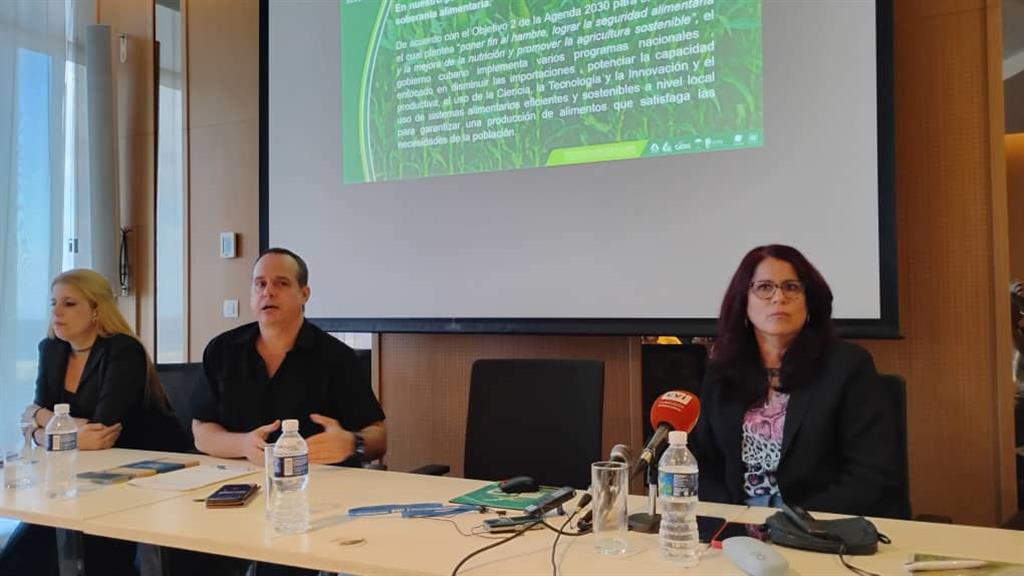
    The address outlined specific economic measures, including prioritizing food production as a national security imperative, reforming state enterprises, responsibly integrating MSMEs and cooperatives, and pursuing monetary reforms while protecting vulnerable populations. The energy transition emerged as a critical focus, with investments in renewable sources and efficiency programs framed as both practical necessities and social justice commitments.

    Díaz-Canel called for renewed youth engagement, transparency in governance, and systematic implementation of plenary agreements with clear accountability mechanisms. He concluded with a rallying cry for unity and revolutionary perseverance, invoking Cuba’s historical resilience against external pressure while acknowledging internal shortcomings that require addressing through criticism and self-criticism.

  • Every day of the Revolution is a victory

    Every day of the Revolution is a victory

    In a significant political decision, Cuba’s Central Committee has unanimously voted to postpone the 9th Communist Party Congress originally scheduled for April 2026. The 11th Plenary Session, conducted virtually on December 13, concluded that the nation must prioritize addressing its severe economic challenges over political gatherings.

    The postponement proposal originated from Army General Raúl Castro Ruz, revolutionary leader and former president, who emphasized the revolutionary principle of always choosing what best serves Cuba’s interests. His recommendation, presented by current First Secretary and President Miguel Díaz-Canel Bermúdez, argued that all national resources and cadre energy should be directed toward resolving pressing economic problems rather than congress preparations.

    The decision reflects Cuba’s deteriorating economic situation amid what officials describe as an intensified U.S. blockade and ongoing media warfare. The Plenary Session identified several immediate priorities: refining the government’s economic program to correct distortions, implementing approved economic measures, ensuring the 2026 budget addresses popular needs and national defense, and strengthening support for regions devastated by recent natural disasters.

    President Díaz-Canel outlined additional critical objectives, including enhancing youth participation in national development and intensifying ideological and cultural efforts to counter what he characterized as anti-Cuban disinformation campaigns. The leadership called for united action to boost production, generate income, and multiply successful economic experiences while eliminating bureaucratic inertia and pessimistic thinking.

    The postponed congress will now focus on 2026 recovery efforts, coinciding with the centenary celebration of Fidel Castro’s birth, which officials hope to honor through tangible economic improvements. The resolution reaffirmed confidence in Cuba’s capacity for self-emancipation through dedicated effort, citing ongoing recovery work in eastern provinces following Hurricane Melissa as evidence of the population’s resilience.

    The statement concluded with revolutionary rhetoric, describing the Cuban people as heir to José Martí’s tradition and faithful to Fidel and Raúl Castro’s teachings, capable of daily creative resistance against external pressures and economic siege.

  • Progress on Green Hydrogen Production Plant in Colombia

    Progress on Green Hydrogen Production Plant in Colombia

    Colombian President Gustavo Petro has announced a groundbreaking green hydrogen initiative following his inspection of the Cartagena Refinery construction site. The project, leveraging newly inaugurated solar infrastructure, is projected to yield an annual production of 800 tons of green hydrogen starting April next year.

    President Petro emphasized the strategic significance of green hydrogen as a versatile energy carrier that can be transported through existing natural gas pipelines. “This development opens pathways for advanced phase exports of clean energy to global markets including Europe, the United States, and China through ammonia shipping,” he stated. The president further highlighted the dual benefit of producing green urea for domestic agriculture, enhancing both energy security and agricultural productivity.

    The announcement comes amid recognition of state-owned energy company Ecopetrol’s progressive strides in Colombia’s energy transition. However, President Petro identified a significant regulatory barrier: current legislation prohibits Ecopetrol from electricity generation for public distribution. Despite energy transition being a government priority, amending this restriction falls entirely under Congressional authority.

    “Ecopetrol must pursue legislative reform to enable commercial electricity generation,” Petro asserted, underscoring the need for regulatory modernization to align with national energy objectives.

    The green hydrogen facility, operating at five megawatts capacity, will produce premium-quality hydrogen for hydrotreating processes at the Cartagena refinery. This integration is projected to reduce carbon dioxide emissions by approximately 7,700 tons annually while simultaneously diminishing the carbon footprint of refined fuels. The project represents a crucial step toward enhancing Colombia’s energy independence and establishing the country as a participant in the global clean energy market.