标签: Cuba

古巴

  • China: International tourism fair opens, Cuba attends

    China: International tourism fair opens, Cuba attends

    The Chinese island province of Hainan is currently hosting the nation’s premier tourism trade exhibition, a significant event organized by China’s Ministry of Culture and Tourism. Spanning three days, the fair marks a historic relocation, being held for the first time in Hainan since its establishment in 2001, after previously alternating between the major mainland cities of Shanghai and Kunming.

    This year’s edition, operating under the vibrant theme “Hello China,” occupies an expansive 65,000 square meters of exhibition space. The event is strategically designed to foster direct business engagement, featuring dedicated rounds of in-person professional negotiations between tourism industry buyers and sellers to facilitate concrete partnerships.

    The fair’s layout is organized into five distinct thematic areas, creating a comprehensive showcase of tourism products and opportunities. The event has attracted global participation, notably including a delegation from the Caribbean nation of Cuba. The Cuban contingent is led by First Deputy Tourism Minister Jorge Alberto García, signaling the importance the country places on the Chinese outbound travel market.

    Highlighting Cuba’s unique offerings, Cuban Ambassador to China Alberto Blanco Silva conducted a specialized presentation titled “Cuba as a Tourist Destination.” During his address, Ambassador Silva emphasized the distinctive attractions promoted under the “Cuba Única” (Unique Cuba) initiative, specifically tailoring the message to highlight the exceptional opportunities awaiting Chinese travelers seeking unique cultural and leisure experiences.

  • Lula inaugurates integration bridge between Brazil and Paraguay

    Lula inaugurates integration bridge between Brazil and Paraguay

    Authorities in Brazil’s southern state of Paraná have initiated a carefully phased opening of a significant new infrastructure project—a 1,300-meter bridge featuring the longest free span in Latin America at 470 meters. The structure, designed to alleviate chronic congestion on the critical Friendship Bridge, represents a major engineering achievement for the region.

    The initial opening comes with notable restrictions following a safety assessment. Currently, only empty trucks are permitted to traverse the bridge in both directions during this preliminary phase. This cautious approach stems from concerns raised by both the National Department of Transport Infrastructure and the Federal Highway Police, who identified that certain roadworks connecting to the bridge remained incomplete and posed potential safety risks to all users if fully opened to traffic.

    Financed primarily through resources from Itaipu Binacional—the massive hydroelectric plant renowned for generating clean, renewable energy—with supplementary funding from the Paraná state government, the project occupies municipal land. The bridge forms part of a broader 14.7-kilometer perimeter road section that state authorities had previously inspected and opened.

    While immediately beneficial for empty truck transportation, the bridge’s full potential for relieving congestion will only be realized in 2027 when Paraguay completes its complementary perimeter road in Puerto Franco, enabling the seamless flow of loaded trucks between Foz do Iguaçu and Puerto Franco. Beyond transportation efficiency, the infrastructure project aims to stimulate regional tourism, enhance commercial exchange, and foster greater integration between Brazil and Paraguay.

  • India and Cuba enhance cooperation in traditional medicine

    India and Cuba enhance cooperation in traditional medicine

    In a significant advancement for global healthcare collaboration, representatives from sixteen nations have formalized a comprehensive partnership in traditional medicine through a newly signed memorandum of understanding. The agreement establishes a Joint Working Group under the leadership of the All India Institute of Ayurveda (AIIA) to drive multinational cooperation in curriculum development, public health integration, and regulatory standardization for Ayurvedic practices.

    This diplomatic initiative coincides with the World Health Organization member states meeting in Delhi, where traditional medicine has emerged as a central theme for international health policy. The summit has entered a critical phase with high-level discussions focusing on scientific validation, research investment, safety protocols, and systemic healthcare integration for traditional therapies.

    Entitled “Restoring Balance: The Science and Practice of Health and Wellbeing,” the conference sessions directly support the recently adopted WHO Global Traditional Medicine Strategy 2025-2034. The proceedings aim to transform strategic vision into practical implementation frameworks for participating nations, positioning traditional medicine as a fundamental component of equitable and resilient global healthcare ecosystems.

    The memorandum specifically addresses Panchakarma training standardization and regulatory coherence, creating structured pathways for international Ayurvedic education and practice. This development represents a concrete step toward mainstreaming traditional healing modalities within contemporary public health infrastructures worldwide.

  • Díaz Canel: “We are making history every day, right now”

    Díaz Canel: “We are making history every day, right now”

    In a comprehensive address concluding the Sixth Ordinary Session of Cuba’s National Assembly, President Miguel Díaz-Canel presented a stark assessment of the nation’s challenges while outlining a path forward through economic reforms and strengthened national unity. The President characterized Cuba’s current situation as an accumulation of structural distortions exacerbated by what he described as an “extremely aggressive external siege” from the United States.

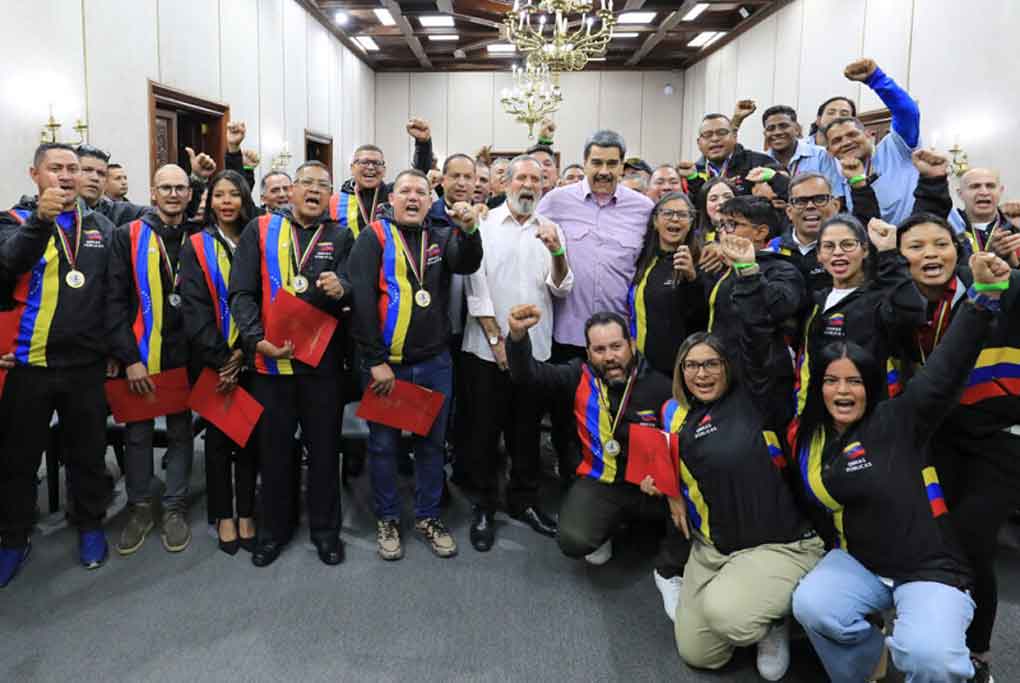
    Díaz-Canel condemned U.S. foreign policy approaches, particularly what he termed the doctrine of “peace through strength,” which he argued represents imperialist ambitions threatening international law and regional stability. He specifically highlighted concerns about U.S. military presence in the Caribbean and threats against Venezuela, while reaffirming Cuba’s solidarity with the Bolivarian Republic.

    The address detailed several approved measures including the Economic Plan, National Budget, and a Government Program designed to correct economic distortions. The President emphasized that these initiatives are interconnected and essential for addressing both domestic challenges and regional threats. A significant focus was placed on the newly approved Science, Technology and Innovation Law, which aims to bridge the gap between research and production while fostering technological sovereignty.

    Economic reforms will prioritize food production through guaranteed inputs and incentives, accelerate investments in the national electricity system combining thermal plant repairs with renewable energy expansion, and regulate foreign currency allocation to favor import substitution sectors. The President called for drastic reduction in unproductive spending and greater territorial responsibility in revenue collection and resource management.

    Díaz-Canel acknowledged the postponement of the 9th Party Congress as a strategic decision to allow focus on economic recovery and implementation of necessary structural adjustments. He proposed designating 2026 as the “Year of the Centennial of Commander-in-Chief Fidel Castro Ruz” to inspire national unity and revolutionary commitment.

    The President concluded by emphasizing that solutions would require “concrete work, systematic control, and active popular participation,” asserting that “the task is complex, but the will of this people is invincible.”

  • Today’s complexity demands deeper, faster, and more responsible responses

    Today’s complexity demands deeper, faster, and more responsible responses

    Cuba’s National Assembly has officially declared 2026 as the “Year of the Centennial of Commander-in-Chief Fidel Castro Ruz” during its fifth regular session, attended by Revolutionary leader Army General Raúl Castro Ruz. The designation, proposed by President Miguel Díaz-Canel Bermúdez, comes as the Caribbean nation confronts severe economic challenges while maintaining its revolutionary legacy.

    President Díaz-Canel delivered a critical assessment of Cuba’s economic situation, describing it as “an accumulation of distortions, adversities, difficulties, and mistakes of our own, exacerbated by an extremely aggressive external blockade.” Despite these challenges, the President emphasized that resigned crisis management was unacceptable, calling instead for “greater creativity, greater discipline, greater control, and a relentless fight against bureaucracy, indolence, and corruption.”

    The parliamentary session resulted in significant legislative advancements, including approval of the 2026 Economic Plan and State Budget Law. Díaz-Canel characterized the economic strategy as “a plan of offensive and readjustment” rather than mere technical adjustments, describing it as “a revolutionary necessity to perfect socialism under construction, to make it more prosperous, sustainable, and fair.”

    A landmark achievement of the session was the passage of the General Law on Science, Technology, and Innovation. This comprehensive legislation introduces modern concepts to stimulate economic innovation through Technology-Based Companies (TBCs), High-Tech Companies (HTCs), science parks, and interface organizations. The law establishes tax incentives, financial benefits, and incubation systems for new enterprises, while creating a Science and Innovation Financial Fund supported by a 10% contribution from TBC profits.

    The assembly also witnessed significant leadership changes, including the election of José Luis Toledo Santander as secretary of the National Assembly, the appointment of Rosabel Gamón Verde as Minister of Justice, and the selection of Oscar Manuel Silvera Martínez as president of the People’s Supreme Court. Eight new deputies joined the assembly, expanding popular representation in Cuba’s highest state authority.

    President Díaz-Canel reiterated concerns about U.S. government hostility, highlighting “relentless economic aggression against Cuba” and similar pressures on Venezuela. He framed these actions as part of a broader regional doctrine seeking “to impose arbitrary will and domination through threats, coercion, and even direct aggression.”

    The session demonstrated Cuba’s dual commitment to honoring its revolutionary heritage while implementing structural reforms to address contemporary economic challenges, setting the stage for a transformative period leading to Fidel Castro’s centennial celebrations.

  • A separate currency market: a means or an end to stabilizing the economy?

    A separate currency market: a means or an end to stabilizing the economy?

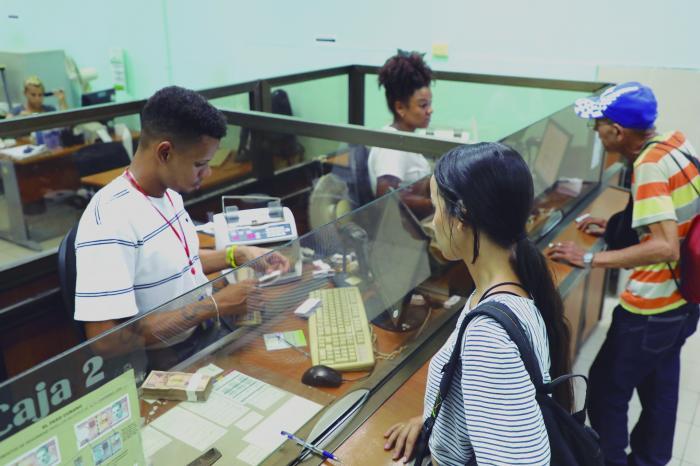
    Cuba has launched a groundbreaking monetary reform initiative establishing three official exchange rate segments as part of a comprehensive strategy to address critical macroeconomic challenges. The Central Bank of Cuba confirmed the implementation of this multi-tier system designed to gradually converge toward a unified exchange rate while stimulating foreign currency earnings through exports.

    The newly structured framework creates distinct segments with varying exchange mechanisms: Segment I maintains the current 1:24 rate for exporting entities; Segment II introduces a 1:120 rate for certain foreign income generators; while Segment III establishes a floating exchange rate for individuals and non-state management forms. This phased approach represents a significant departure from previous monetary policy and aims to create a legal, transparent exchange market accessible to both state and non-state actors.

    According to Ian Pedro Carbonell Karell, Director of Macroeconomic Policy at the Central Bank of Cuba, these reforms address the country’s urgent need to organize foreign currency flows through formal banking channels. “These changes give legal access to foreign currency to many actors who did not have it until now and who resorted to the informal market,” Karell stated, emphasizing the measure’s role in combating speculation and volatility.

    The reform specifically incentivizes export-oriented enterprises by allowing them to exchange retained foreign currency at Segment III’s more favorable floating rate, potentially increasing their Cuban peso earnings. This designed advantage aims to strengthen Cuba’s export sector—the nation’s primary foreign currency generator—while supporting essential population needs through central treasury revenues.

    For non-state management entities, the reforms introduce unprecedented access to foreign currency for investment and restocking purposes, though purchasing power will be limited to 50% of average gross income reflected in fiscal accounts. The banking system will expand exchange services nationwide, with 41 branches currently operational and more planned as market consolidation progresses.

    Authorities acknowledge that eliminating Cuba’s illegal currency market will require time and sustained implementation. The success of these measures ultimately depends on their ability to generate increased foreign currency liquidity and translate into tangible improvements in Cuban citizens’ quality of life amid prolonged economic challenges.

  • Cuba works on recovering the National Power Grid

    Cuba works on recovering the National Power Grid

    Cuba’s national energy authority has reported a significant yet insufficient recovery in its power generation capacity. Recent efforts have successfully restored 422 megawatts (MW) to the distributed generation network, elevating its total operational capacity beyond the 1,000 MW threshold. Concurrently, an additional 228 MW has been brought back online within the centralized generation system.

    A major stride in renewable integration has been achieved with the synchronization of 778 MW of new capacity from 41 photovoltaic solar parks. These installations are now playing a pivotal role in the national grid, contributing more than 30% of Cuba’s total electricity generation during peak sunlight hours.

    Despite these advancements, government officials acknowledge the persistence of a severe energy crisis. The national power system continues to operate under extreme duress, grappling with an average daily generation deficit ranging between 1,500 and 1,700 MW. The situation has deteriorated further in recent days, with the shortfall exceeding 2,000 MW.

    This critical power deficit has resulted in service disruptions occurring throughout the day and night, creating widespread public dissatisfaction and inflicting substantial damage to economic activity. Authorities attribute the ongoing crisis primarily to generation instability and a critical shortage of fuel supplies for distributed generation units. Approximately 1,000 MW of potential generation capacity remains unavailable due to these fuel constraints, highlighting the deep-rooted challenges facing Cuba’s energy infrastructure.

  • Venezuela says Trump wants to turn back the clock 200 years

    Venezuela says Trump wants to turn back the clock 200 years

    At the 80th session of the United Nations General Assembly during the International Day against Colonialism, Venezuela’s diplomatic representative delivered a scathing condemnation of former U.S. President Donald Trump’s controversial statements regarding Venezuelan territory and natural resources. Ambassador Samuel Moncada referenced Trump’s December 16 declaration that “Venezuelan lands and oil belong to him and must be handed over immediately,” accompanied by threats of naval and air blockades using what Trump characterized as “the most powerful navy in history” if compliance was not forthcoming.

    The Venezuelan diplomat characterized this proclamation as a “monstrous declaration” that defies all established international legal frameworks. Moncada systematically cited multiple pillars of international law that Trump’s statement violated, including the UN Charter, customary international law, resolutions from both the Security Council and General Assembly, jurisprudence from international courts, and the German Convention.

    In his address, Moncada labeled the threat as “a grotesque violation of all civilizational norms” and explicitly defined it as modern colonialism and a crime of aggression. He drew historical parallels between current U.S. foreign policy approaches and the destructive behaviors of malign actors preceding World War II, asserting that such gunboat diplomacy has no legitimate place in 21st-century international relations. The ambassador warned that these actions are imposing chaos and destruction on the global diplomatic landscape, undermining decades of progress in international law and cooperation.

  • Cuba committed to social justice, says Prime Minister

    Cuba committed to social justice, says Prime Minister

    Cuban Prime Minister Manuel Marrero Cruz presented a comprehensive economic revitalization report to the National Assembly, outlining both progress and challenges facing the Caribbean nation. In his address, Marrero identified national security and homeland protection as fundamental strategic priorities for the Cuban state, emphasizing the heightened preparedness of military and interior ministry forces in response to escalating regional tensions.

    The government restructuring initiative has shown measurable progress, with authorities working to streamline the Central State Administration by reducing the number of governmental agencies. This administrative overhaul forms part of broader economic correction measures designed to address systemic distortions in the Cuban economy.

    Healthcare indicators revealed concerning trends, with infant mortality rates climbing to 9.8 per 1,000 live births—a significant increase from the 7.0 rate recorded during the same period last year. Despite implemented interventions, the healthcare system continues to face substantial challenges in reversing this negative trajectory.

    Education reforms continue with the ongoing implementation of the Teaching Process Quality Improvement Program, though specific outcomes and metrics were not detailed in the presentation.

    Most alarmingly, Marrero highlighted Cuba’s accelerating demographic crisis as one of the nation’s most pressing challenges. Current projections indicate the population will decline to 9.6 million by 2025 and further plummet to approximately 7.7 million by 2050, representing a severe population contraction that threatens long-term economic and social stability.

    The Prime Minister acknowledged the coordinated efforts between military institutions, the Communist Party, government entities, and mass organizations in addressing these multifaceted challenges while maintaining national security preparedness.

  • The youth of Latin America and the Caribbean deserve to have books in their hands, not just in display cases

    The youth of Latin America and the Caribbean deserve to have books in their hands, not just in display cases

    In a significant cultural initiative bridging Latin American nations, Cuban President Miguel Díaz-Canel has officially launched “Project 25 for 25” from Havana’s National Capitol, simultaneously with Mexican President Claudia Sheinbaum’s parallel ceremony in Mexico City. The ambitious literacy project aims to distribute 25 classic Latin American books to young readers aged 15-30 across the region completely free of charge.

    The project, conceived by the Mexican government and coordinated through Cuba’s Casa de las Américas cultural institution, represents a strategic effort to combat the dominance of digital entertainment and social media among younger generations. President Díaz-Canel emphasized the initiative’s importance in preserving printed literature as a fundamental tool for knowledge acquisition and cultural preservation.

    The Cuban leader drew historical parallels to Fidel Castro’s revolutionary literacy campaigns, noting how Cuba’s first cultural institution established in 1959 was the National Printing House. Its inaugural publication was Cervantes’ “Don Quixote,” followed by educational materials for the nationwide Literacy Campaign that eliminated illiteracy within a year.

    The selected works include 20th century Latin American literary classics, with Gabriel García Márquez’s documentation of Cuba’s African engagements among the featured titles. Distribution will occur through educational institutions, cultural centers, and public reading spaces across participating countries, deliberately bypassing commercial channels to ensure accessibility regardless of economic barriers.

    President Díaz-Canel characterized the project as a “bridge of paper and ink” strengthening historical ties between Mexico and Cuba, nations that have shared centuries of cultural exchange and parallel revolutionary struggles. The initiative specifically targets youth who have never owned physical books by Latin American authors, providing tangible access to literary works that explore regional identity, historical memory, and social justice themes.

    The Cuban government has committed to integrating the collection into educational programs, reading workshops, and community discussion groups, framing literature as both a right and tool for critical thinking rather than merely academic obligation.