标签: Cuba

古巴

  • Colombia emphasizes aggression against Venezuela is for hydrocarbons

    Colombia emphasizes aggression against Venezuela is for hydrocarbons

    Colombia has issued a firm diplomatic declaration reaffirming its commitment to international principles and opposing foreign intervention in Venezuela’s affairs. During a press conference, a senior Colombian official articulated the nation’s position that any resolution to the Venezuelan situation must emerge exclusively through peaceful dialogue and the autonomous will of its citizens, without external pressure.

    The Minister of Foreign Affairs presented a critical analysis of the regional instability, attributing its primary cause to economic interests centered on natural resource acquisition. The official specifically identified the United States’ fossil fuel economy as a driving force behind interventionist policies that violate fundamental international norms.

    Foreign Minister Villavicencio articulated that Washington’s pursuit of energy resources has repeatedly crossed established red lines in international relations, particularly regarding respect for national sovereignty and territorial integrity. The minister referenced historical patterns of US interventionism targeting resource-rich nations to meet economic demands.

    This stance forms the foundation of Colombia’s diplomatic rejection of any external interests that seek to compromise the sovereignty of nations in their management and control of natural resources. The South American nation emphasized its unwavering defense of established diplomatic mechanisms designed to preserve peace and security throughout the region.

    Colombia reaffirmed its commitment to maintaining Latin America as a Zone of Peace, advocating for solutions that prioritize dialogue over coercion and respect the self-determination of all nations in the region.

  • Israel accused of trying to expel Palestinians from Jerusalem

    Israel accused of trying to expel Palestinians from Jerusalem

    A prominent expert has issued a stark warning regarding Israel’s intensified policy of demolishing Palestinian homes in Jerusalem and its surrounding areas. While the practice itself is not new, specialists monitoring the situation report a concerning acceleration over the past two years, signaling a dangerous escalation in urban policy enforcement.

    According to detailed analysis, Israeli authorities have strategically concentrated their recent operations on the southern and eastern peripheries of Jerusalem. The neighborhoods of Silwan, along with the districts of Batn al-Hawa and Ras al-Amud, have become primary targets for these demolition campaigns. This targeted approach suggests a systematic effort to alter the demographic landscape of these specific areas.

    The eviction of the Khalil Basbous family from their home in Batn al-Hawa on Monday serves as a recent and poignant example of this policy in action. This area, along with the entirety of East Jerusalem, has been under Israeli occupation since the 1967 Arab-Israeli war, adding a complex historical and political dimension to the current property disputes.

    Quantitative data reveals the significant scale of these operations. Approximately 320 residential structures were demolished in Jerusalem throughout the previous year alone, illustrating the substantial impact on the Palestinian community. The pattern of displacement extends beyond immediate demolitions, creating an atmosphere of uncertainty and instability for residents.

    Since 2015, a specific pattern of eviction has emerged in Batn al-Hawa, where around 16 families have been forcibly displaced from their homes. These actions frequently follow legal petitions filed by the Ateret Cohanim organization, a Jewish settler group dedicated to establishing a stronger Jewish presence in historically significant areas of Jerusalem. This dynamic highlights the involvement of non-governmental actors in pursuing property claims that result in the displacement of long-term Palestinian residents.

  • EC supports adoption of minimum tax for multinationals

    EC supports adoption of minimum tax for multinationals

    In a historic move for international fiscal policy, the Organisation for Economic Co-operation and Development (OECD) has secured approval from 145 nations for a groundbreaking global tax reform framework. The cornerstone of this agreement is the implementation of a universal 15% minimum tax rate for multinational corporations, representing one of the most significant overhauls of international tax rules in decades.

    The European Commission, serving as the executive branch of the EU, has championed the agreement as a stabilizing force for the global taxation system. According to their official statement, the framework establishes simplified regulations that ensure equity while maintaining corporate competitiveness. The Commission emphasized that the treatment safeguards effective minimum taxation for multinational enterprises while enhancing legal certainty and predictability for European businesses.

    A critical component of the agreement includes a specialized exemption mechanism designed specifically for U.S. companies, addressing Washington’s concerns that threatened to derail the entire initiative. This concession proved essential to securing broad international participation.

    Despite the widespread support, the Independent Commission for International Corporate Tax Reform has expressed reservations since 2021. The watchdog organization has consistently warned that such tax conventions disproportionately affect developing nations, which suffer greater revenue losses from tax abuses and rely more heavily on corporate income taxes for public funding.

    The OECD regards the agreement as both a major political achievement and technical milestone that establishes foundations for stability and legal certainty in the international tax landscape. This multilateral consensus follows years of negotiations and represents a coordinated effort to address tax avoidance strategies employed by large multinational corporations operating across borders.

  • Venezuela:National Armed Forces reiterate support for Delcy Rodriguez

    Venezuela:National Armed Forces reiterate support for Delcy Rodriguez

    In a dramatic escalation of geopolitical tensions, Venezuela’s government has undergone a significant transition of power following what it describes as an armed attack by the United States. According to reports from the multi-state network Telesur based in Caracas, U.S. forces allegedly kidnapped constitutional President Nicolás Maduro and First Lady Cilia Flores on January 3, transporting them to New York.

    In response to this development, the Constitutional Chamber of Venezuela’s Supreme Court of Justice issued an order transferring presidential powers to Delcy Rodríguez, who was formally sworn in before the National Assembly on January 5. The ceremony marked the constitutional continuation of governance amid what Venezuelan authorities characterize as an act of international aggression.

    Defense Minister Vladimir Padrino López affirmed the military’s unwavering commitment to national stability, echoing Maduro’s principle of prioritizing ‘peace as both a means and an end.’ The official emphasized the Bolivarian National Armed Forces’ (FANB) dedication to preserving Venezuela’s ‘sacred good of independence’ while demonstrating commitment to national unity.

    Padrino López further declared that ‘the nation continues its unstoppable march toward economic prosperity, development, and the reconciliation of all Venezuelans,’ projecting confidence in Venezuela’s institutional resilience despite the unprecedented circumstances. The government’s statements frame recent events within a broader narrative of national sovereignty resistance against external intervention.

  • Clashes erupt between Syrian Army and SDF militia

    Clashes erupt between Syrian Army and SDF militia

    The Syrian Arab Army has executed targeted military operations against Kurdish-led forces in eastern Aleppo province, marking a significant escalation in ongoing tensions. According to a military source interviewed by Ikhbariya TV, army units identified and struck drone-launching positions operated by the Syrian Democratic Forces (SDF) near the town of Deir Hafer.

    This military response comes directly after Syria’s Defense Ministry reported six combined civilian and military casualties from an SDF drone attack on Monday evening. Official statements characterized this incident as a ‘new escalation’ despite ongoing negotiations between the government and the militia group.

    The Syrian military institution emphasized that its retaliatory measures would remain ‘limited’ in scope, though no specific operational details were disclosed regarding future operations or strategic objectives.

    This confrontation occurs against a backdrop of fundamental political disagreements. In late December, Syria’s Foreign Ministry formally rejected the SDF’s decentralization proposal, warning that such initiatives threaten national unity and cement the authority of de facto entities in northeastern regions.

    The SDF, which maintains control over approximately one-quarter of Syrian territory across Hasakah, Raqqa, and Deir Ezzor provinces with substantial U.S. support, now faces increased military pressure from government forces amid these unresolved political disputes.

  • UN condemns US aggression against Venezuela

    UN condemns US aggression against Venezuela

    United Nations human rights officials have issued a stern condemnation of recent US actions against Venezuela, warning that such measures have created heightened global insecurity. Ravina Shamdasani, speaking on behalf of UN human rights authorities, declared that the January 3rd operation conducted by Washington—which involved the attempted abduction of President Nicolás Maduro and First Lady Cilia Flores—has compromised the security of all nations.

    Shamdasani emphasized that this aggressive intervention represents a clear violation of established international legal standards and fundamental principles enshrined in the UN Charter. Specifically, she referenced the Charter’s prohibition against member states threatening or using force to undermine the territorial integrity or political independence of any sovereign nation.

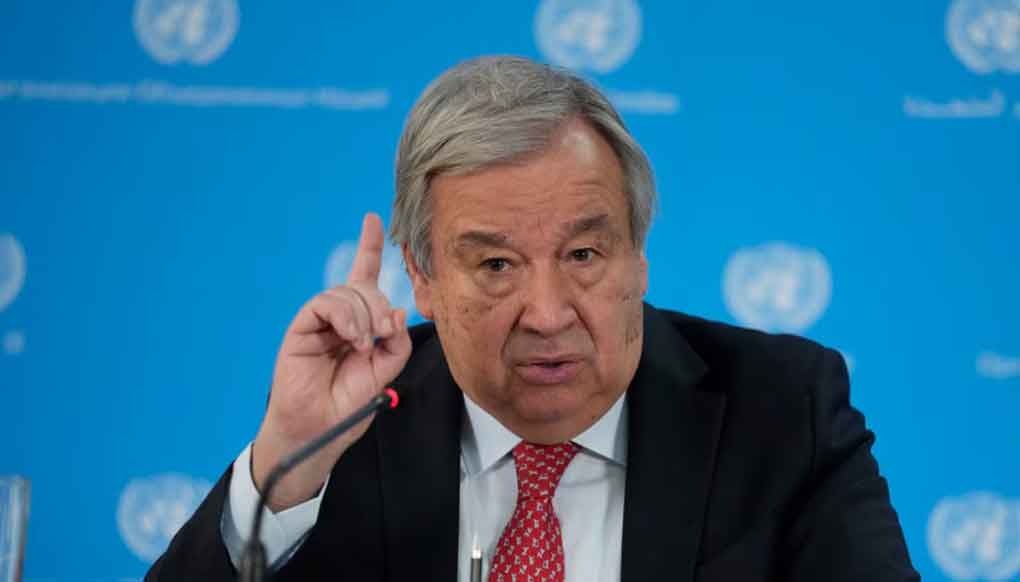
    UN Secretary-General António Guterres separately addressed the escalating situation, expressing deep concern about the regional repercussions and potential damage to international diplomatic relations. Guterres stressed that global peace and security depend entirely on the unwavering commitment of all nations to uphold every provision of the UN Charter without exception.

    The Secretary-General further elaborated that comprehensive respect for the Charter must be accompanied by adherence to all applicable legal frameworks, with particular attention to preserving the political independence and territorial integrity of states.

    Venezuela’s Permanent Representative to the UN, Samuel Moncada, simultaneously demanded immediate respect for his country’s sovereignty and the unconditional release of President Maduro and his wife, characterizing their detention as an illegal act of aggression that requires urgent international resolution.

  • South Africa condemns US kidnapping of President Maduro

    South Africa condemns US kidnapping of President Maduro

    The United Action Transformation (UAT) political formation has issued a formal condemnation of recent military operations, characterizing them as a grave breach of both international statutes and U.S. constitutional law. In an official statement endorsed by UAT President Banter Wonder Mahlatsi, the organization asserted that the violent measures directly contravene the United Nations Charter, which explicitly forbids the use of coercive force against any nation’s territorial sovereignty or political autonomy.

    Beyond international law, UAT’s analysis contends the action represents a domestic legal violation within the United States itself. The statement emphasizes that the U.S. Constitution mandates explicit congressional authorization for any military or paramilitary engagement targeting a sovereign foreign state—a legislative approval that was conspicuously absent in this instance. The formation declared, ‘Any extraterritorial action against a foreign head of state without congressional approval is illegal, unconstitutional and represents a dangerous usurpation of democratic supervision.’

    President Mahlatsi issued a stark warning about the global ramifications of such actions, stating that permitting these violations establishes a perilous precedent that undermines international stability. He argued that this move signals that power, rather than established legal frameworks, governs global affairs. ‘History will harshly judge those who remained silent in the face of such illegality. Today’s silence is a source of repentance tomorrow,’ Mahlatsi cautioned.

    This condemnation aligns with growing international expressions of solidarity. Ravina Shamdasani, spokesperson for the United Nations High Commissioner for Human Rights, concurrently stated that the military intervention constitutes a violation of both the Latin American nation’s sovereignty and the foundational principles of the UN Charter, posing a significant threat to international security.

  • Honor and glory!

    Honor and glory!

    Havana has confirmed the deaths of 32 Cuban military personnel during operations in Venezuela, characterizing the incident as a direct result of what it describes as “U.S. state terrorism” against the Bolivarian Republic. According to official reports from Cuban state media outlet Granma, the casualties occurred during combat operations where Cuban forces exhibited “fierce resistance” against unspecified aggressors.

    The deceased personnel were reportedly deployed on official missions at the request of Venezuelan authorities, operating under both Cuba’s Revolutionary Armed Forces and Ministry of the Interior. Their duties involved collaboration with counterpart agencies within the South American nation, though specific operational details remain undisclosed.

    This development represents a significant escalation in the ongoing geopolitical tensions between Cuba, Venezuela, and the United States. Cuban authorities have framed the incident as another chapter in what they characterize as Washington’s aggressive policies toward leftist governments in Latin America.

    The announcement, accompanied by military photographs of the deceased operatives, appears designed to bolster domestic support while internationally condemning U.S. foreign policy. The timing and nature of the disclosure suggest calculated diplomatic messaging aimed at multiple audiences, both domestic and international.

    This incident marks one of the largest single losses of Cuban military personnel abroad in recent decades and will likely have substantial implications for Cuba-Venezuela relations and their collective stance against U.S. influence in the region.

  • Maduro: I’m innocent, I am still the president of Venezuela

    Maduro: I’m innocent, I am still the president of Venezuela

    In a dramatic legal development, Venezuelan President Nicolás Maduro and First Lady Cilia Flores have entered not guilty pleas against sweeping U.S. federal charges encompassing narcoterrorism, cocaine importation conspiracies, and weapons possession offenses. This courtroom appearance followed an extraordinary operation conducted by U.S. military teams that resulted in the couple’s transfer from Venezuelan territory to New York for prosecution, an action Venezuelan authorities have condemned as a sovereign violation.

    The high-profile defendants appeared before Federal Judge Alvin Hellerstein in Manhattan’s federal court under intense security arrangements, having been transported from Brooklyn’s Metropolitan Detention Center for the proceedings. The hearing initiates what legal experts anticipate will be extensive judicial proceedings potentially stretching over several months.

    President Maduro has retained Barry Pollack, a distinguished trial attorney renowned for representing WikiLeaks founder Julian Assange and negotiating his 2024 release agreement. Flores is represented by Texas-based counsel Mark Donnelly, according to official court documentation. Both defense teams are currently pursuing bail arrangements for their clients.

    The indictment, unsealed last Saturday, names four additional co-defendants including Maduro’s son and Venezuela’s Interior Minister Diosdado Cabello. The case represents the culmination of what U.S. officials describe as sustained pressure campaign against Caracas, though Venezuelan leadership has characterized the extraction operation as an unlawful kidnapping following President Donald Trump’s characterization of the action as a “full-scale attack on Venezuela and its leader.”

  • Mexican President says people can limit Trump

    Mexican President says people can limit Trump

    Mexican President Claudia Sheinbaum has firmly dismissed the possibility of U.S. military intervention in Mexico, emphasizing national sovereignty and a comprehensive domestic approach to tackling organized crime. Her statements came during a routine press conference at the National Palace, where she addressed concerns about former U.S. President Donald Trump’s repeated proposals to deploy American troops into Mexican territory under the pretext of combating drug cartels.

    President Sheinbaum argued that external military involvement would not resolve Mexico’s security challenges, noting that such interventions undermine constitutional principles and national autonomy. Instead, her administration is implementing a four-pillar strategy focused on addressing socioeconomic root causes, ensuring judicial accountability, strengthening institutions, and promoting regional development.

    She also criticized domestic opposition groups that she accused of seeking foreign support to gain political advantage, warning that such approaches ultimately fail to resonate with the Mexican public. The president reaffirmed that unity and a clear vision grounded in Mexico’s legal framework are essential to navigating complex bilateral relations with the United States.

    Sheinbaum expressed confidence that Mexico possesses the capacity and resources to manage its security situation without external interference, highlighting collaboration with international partners on terms that respect Mexican law and self-determination.