标签: Cuba

古巴

  • Atilio Boron warns of implications of US strike on Venezuela

    Atilio Boron warns of implications of US strike on Venezuela

    Prominent Argentine sociologist Atilio Boron has issued a stark warning about the destabilization of international norms following recent US military actions against Venezuela. In a recent interview, Boron characterized Washington’s airstrike on Caracas as representing the definitive collapse of the post-World War II global governance framework.

    Boron emphatically stated that such actions must not be normalized, arguing that validation of unilateral military strikes could trigger dangerous geopolitical consequences extending far beyond South America. The academic specifically cautioned that the United States’ breach of international law might tacitly empower other global powers to resolve territorial disputes through force rather than diplomacy.

    To illustrate his concerns, Boron presented hypothetical scenarios where Azerbaijan might move to seize Armenian territory, or China could attempt to formally incorporate Taiwan within its national jurisdiction—actions that would previously have been constrained by international norms.

    Regarding the White House’s official justification for the military action, Boron dismissed narratives centered on drug trafficking interdiction or democracy promotion as lacking credibility. The sociologist’s analysis suggests the incident represents a fundamental shift in global power dynamics that could undermine decades of established international law and diplomatic protocols.

  • “No subordination,” Mexican President responds to Trump’s threat

    “No subordination,” Mexican President responds to Trump’s threat

    Mexican President Claudia Sheinbaum has articulated a firm stance on her nation’s relationship with the United States, emphasizing a partnership of equals in security matters while unequivocally rejecting interventionist policies. Her statements, reported by La Jornada newspaper, come in direct response to recent aggressive rhetoric from US leadership.

    “We maintain an excellent relationship with the United States regarding security and other critical issues. There exists open communication and mutual understanding on security matters,” President Sheinbaum stated, establishing the foundation of bilateral cooperation.

    The Mexican leader drew a clear distinction in her foreign policy approach, emphasizing: “As we have consistently maintained: our collaboration is based on coordination, never subordination.” This declaration serves as a direct rebuttal to recent interventionist threats emanating from US policy circles.

    Sheinbaum’s comments follow disturbing developments in Venezuela, where military aggression resulted in the abduction of President Nicolás Maduro and First Lady Cilia Flores. In the aftermath of these events, US leadership engaged in speculation about drug cartels allegedly governing the Central American nation, further escalating tensions.

    The Mexican president expressed strong disapproval of US aggression against Venezuela, characterizing such actions as violations of international law and national sovereignty. Her administration’s position reinforces Mexico’s commitment to non-intervention principles while maintaining necessary security cooperation with northern neighbors.

    This diplomatic positioning occurs amid concerning suggestions from US officials that “something must be done with Mexico” to stem the flow of illicit substances across borders, raising concerns about potential unilateral actions that could undermine bilateral relations and regional stability.

  • Zimbabwe joins Cuba decryig US aggression against Venezuela

    Zimbabwe joins Cuba decryig US aggression against Venezuela

    Cuba’s state television network ZBC has broadcast an official statement from the Revolutionary Government delivering a vehement condemnation of United States actions against Venezuela. The declaration characterizes recent US naval deployments in the Caribbean Sea as criminal violations of international law and the United Nations Charter.

    The broadcast emphasized Havana’s firm support for Venezuelan Executive Vice President Delcy Rodriguez while demanding the immediate release of Venezuela’s president and first lady Cilia Flores from US custody. The Cuban government framed these developments as a significant escalation in what it describes as a sustained campaign of warfare that Washington has waged against Venezuela for years.

    According to the statement, this aggressive military mobilization since September has been conducted under what Cuban authorities deem unfounded pretenses and accusations. The Revolutionary Government accused the United States of pursuing control over Venezuela’s substantial natural resources through what it labeled ‘flagrant imperialist and fascist aggression.’

    Cuba further asserted that Washington’s objectives extend beyond resource acquisition to include the intimidation of governments throughout Latin America and the Caribbean. The statement warned that these actions directly undermine regional peace commitments, specifically referencing the Proclamation of Latin America and the Caribbean as a Zone of Peace—a document unanimously adopted by regional governments in January 2014.

    The Cuban government positioned these developments as a revival of US hegemonic ambitions rooted in the historical Monroe Doctrine, suggesting a return to interventionist policies that threaten the sovereignty of nations throughout ‘Our America.’

  • Chilean parliamentarians condemn invasion of Venezuela

    Chilean parliamentarians condemn invasion of Venezuela

    Prominent Latin American senators have launched vehement condemnations against what they characterize as unlawful U.S. aggression targeting Venezuela, framing recent statements from American officials as endorsements of international crimes driven by resource exploitation.

    Senator Daniel Nunez issued a forceful declaration via social media, asserting that military invasion and the abduction of a head of state constitute grave breaches of international law. “Invading a sovereign nation and kidnapping both the president and his wife represent egregious international crimes,” Nunez stated. “These actions serve a singular purpose: to seize control over Venezuela’s oil reserves once again.”

    The parliamentarian further amplified concerns regarding provocative statements emanating from former U.S. President Donald Trump and Secretary of State Marco Rubio directed at Cuba, underscoring a pattern of hemispheric interventionism. Nunez called for global solidarity, emphasizing that “the international community must vocally defend every nation’s inherent right to self-determination. I express my complete solidarity with Cuba and its revolutionary legacy.”

    Echoing these sentiments, legislator and Senator-elect Karol Cariola characterized U.S. military posturing toward Venezuela as flagrant violations of both national sovereignty and established international legal frameworks. Cariola articulated a skepticism toward Washington’s professed motives, stating, “The primary interest for Trump and his administration is not the promotion of democracy—it is the control of petroleum resources. This objective justifies the commission of any atrocity in their view.”

    Adding to the chorus of criticism, legislator Luis Cuello referenced concerning endorsements from Chile’s President-elect Jose Antonio Kast, who has openly supported aggressive U.S. maneuvers against Venezuela. This alignment, according to Cuello, illustrates a dangerous regional divide regarding the principles of non-intervention and national sovereignty.

  • Cuba strongly condemns the cowardly aggression of the United States against Venezuela and expresses its absolute support for that sister nation

    Cuba strongly condemns the cowardly aggression of the United States against Venezuela and expresses its absolute support for that sister nation

    In a strongly worded official statement released on January 3, 2026, the Cuban Revolutionary Government has issued a comprehensive condemnation of what it describes as “cowardly U.S. military aggression” against Venezuela. The Havana administration declared its absolute solidarity with the Bolivarian Republic and its constitutional government while demanding immediate proof of life for President Nicolás Maduro Moros and his wife Cilia Flores, whom it claims have been captured by American forces.

    The Cuban government characterized the operation as a blatant violation of international law and the United Nations Charter, representing a dangerous escalation of Washington’s prolonged campaign against Venezuela. According to the statement, this aggression constitutes part of a broader strategy rooted in the Monroe Doctrine, aimed at establishing U.S. hegemony throughout Latin America and securing unrestricted access to the region’s natural resources.

    Havana’s declaration endorsed earlier demands by Venezuelan Executive Vice President Delcy Rodríguez for verification of the detained leaders’ wellbeing. The statement further emphasized Venezuela’s peaceful nature, noting that the South American nation has not engaged in aggression against the United States or any other country.

    The Cuban government placed full responsibility for casualties and material damage on the Trump administration, specifically naming the President and his Secretary of State, along with what it described as “aggressive elements and enemies of Latin America and the Caribbean” who have gained political influence in the United States.

    Recalling the 2014 Proclamation of Latin America and the Caribbean as a Zone of Peace, signed unanimously by regional governments in Havana, the statement warned that this aspiration is now under direct attack. The Revolutionary Government called upon global governments, parliaments, social movements, and citizens to condemn the operation, which it labeled an act of “state terrorism” threatening international peace and security.

    The declaration concluded with a rallying cry of “Homeland or Death” and expressed Cuba’s willingness to “give, as we did for Cuba, even our own blood” for Venezuela and its people, signaling Havana’s unwavering commitment to regional solidarity against perceived American imperialism.

  • Canadian politicians decry US attack on Venezuela

    Canadian politicians decry US attack on Venezuela

    Canadian political leaders expressed sharply divergent views regarding reported U.S. military operations in Venezuela, creating a notable split in foreign policy perspectives. The development followed confirmation from U.S. President Donald Trump regarding American intervention in the South American nation.

    Interim New Democratic Party Leader Don Davies took to social media to condemn the alleged operations, characterizing them as “a flagrant violation of international law and the rules-based system that the United States claims to support.” Davies urged the Canadian government to “strongly condemn this attack and call for an immediate end to the US aggression against the sovereign state of Venezuela.”

    Bloc Québécois Leader Yves-François Blanchet echoed these concerns, warning that the United States appeared to be “acting as a policeman at the risk of ignoring international law.” Blanchet specifically criticized the purported use of military force that “endangers the lives of civilians” and the reported kidnapping of Venezuelan leadership, even while acknowledging questions about their legitimacy.

    In contrast, Conservative Leader Pierre Poilievre broke with international legal conventions by expressing support for American bombings in multiple Venezuelan states and the alleged capture of constitutional President Nicolás Maduro and his wife Cilia Flores.

    The political division emerged alongside President Trump’s press conference statements explicitly acknowledging U.S. interests in Venezuelan oil resources. During the briefing, Trump made clear that countries failing to align with White House directives regarding Venezuela would face consequences, signaling a firm stance on international compliance with American foreign policy objectives.

  • Venezuela will resist, will not be a colony, says consul in Uruguay

    Venezuela will resist, will not be a colony, says consul in Uruguay

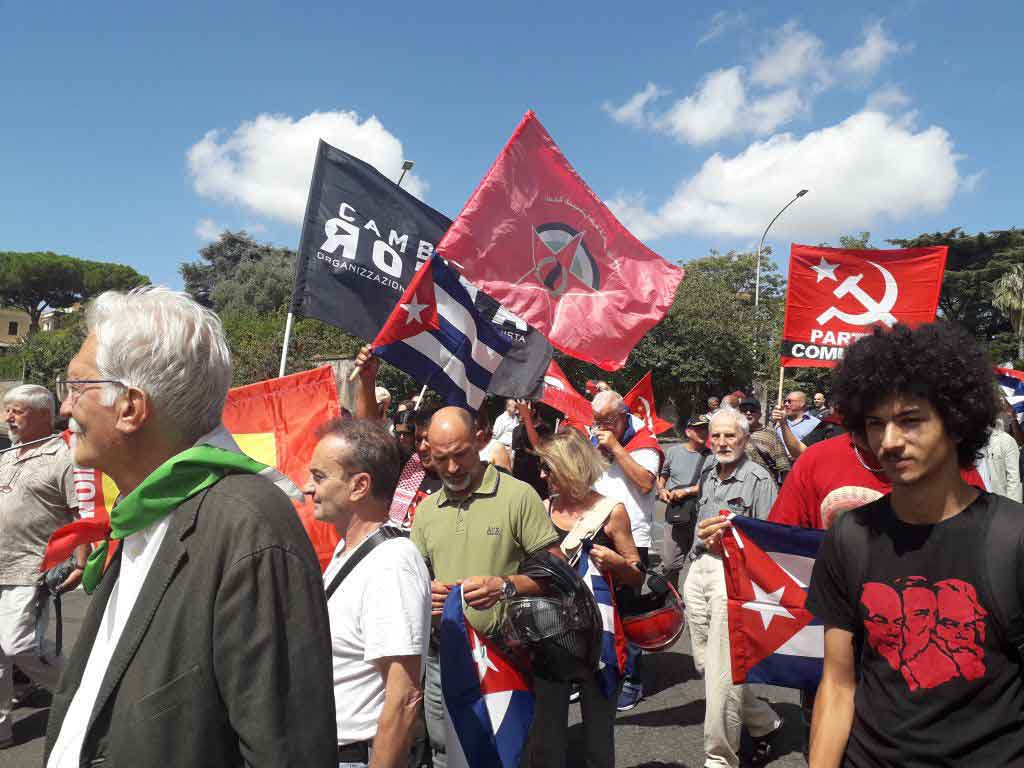
    Montevideo witnessed a significant demonstration of solidarity as protesters gathered before Venezuela’s diplomatic headquarters, voicing strong opposition to perceived U.S. military interventions. The rally, organized by Uruguay’s PIT-CNT labor union alongside various social organizations, featured prominent speaker Sassone who characterized recent American operations as “an unprecedented military action by the United States in terms of violating constitutional and international law.”

    Sassone further asserted that Venezuelan President Nicolás Maduro is effectively held hostage by invading U.S. forces, demanding his immediate liberation. The demonstration gained additional support from the Association of Cuban Residents in Uruguay, which issued statements condemning what they termed “imperialist aggression” against Venezuela.

    The Cuban association’s communiqué specifically urged Cuban expatriates in Uruguay to join both Uruguayan citizens and other organizations in the capital-based protest. According to their published text, the gathering aimed to repudiate “US interference and intervention in our sovereign countries” while simultaneously expressing “solidarity and support for the brotherly Venezuelan people, who will not be alone in their struggle for freedom and self-determination.” The event represents growing Latin American concern over external involvement in regional affairs.

  • Cuba’s UPEC classifies attacks against Venezuela “oil thirst”

    Cuba’s UPEC classifies attacks against Venezuela “oil thirst”

    The Union of Cuban Journalists (UPEC) has issued a forceful condemnation of what it characterizes as unprecedented American aggression against Venezuela. In an official statement, the organization accused the United States of launching direct attacks against multiple Venezuelan regions including Caracas, Miranda, Aragua, and La Guaira before allegedly orchestrating the abduction of President Nicolás Maduro and First Lady Cilia Flores, who have reportedly joined what UPEC describes as the “endless list of the disappeared under imperial auspices.”

    The statement frames these events as validation of historical warnings about what it terms “Northern voracity,” asserting that current actions exceed even the imperial brutality documented during José Martí’s era. UPEC further contends that recent developments have effectively shattered Latin America’s carefully constructed “Zone of Peace” initiative, which sought to maintain regional harmony despite political differences.

    In particularly scathing rhetoric, the journalists’ association referenced former U.S. President Donald Trump’s symbolic renaming of the Defense Department as the “Department of War,” suggesting this semantic shift foreshadowed current events. The statement sarcastically proposed that Trump would merit a “Nobel Prize for War” while criticizing the actual Nobel recognition given to Venezuelan opposition figure Maria Corina Machado, whom UPEC implied celebrates violence disguised as pacifism.

    The organization concluded with a reaffirmation of Cuba’s unwavering solidarity with Maduro and the Bolivarian people, declaring that imperial oil interests cannot override regional aspirations for peace and self-determination. “Latin America and the Caribbean refuse to be anyone’s backyard,” the statement emphasized, “but insist on being their own garden.”

  • Venezuelan Vice President demands iImediate release of Maduro

    Venezuelan Vice President demands iImediate release of Maduro

    Venezuela has activated a national state of emergency following what government officials describe as an act of imperialist aggression. The decree, originally signed by the president, was formally announced by the vice president during a nationwide radio and television address. She subsequently delivered the emergency order to the president of the Supreme Court of Justice for immediate implementation.

    According to the vice president, this armed incursion represents a severe rupture in bilateral relations with the United States. She revealed that President Nicolas Maduro and First Lady Cilia Flores were reportedly captured during the operation, characterizing the event as a savage attack on Venezuela’s sovereignty and territorial integrity in the early hours of the morning.

    The government asserts that the true objective behind the aggression is the seizure of Venezuela’s substantial energy, mineral, and natural resources. Officials have called upon the international community to recognize this alleged resource grab, with the vice president emphasizing that “the world must know this.”

    In response to the crisis, Venezuelan citizens have reportedly taken to the streets following mobilization calls from leadership. The vice president reiterated the president’s previous warning that any threat to his safety would trigger widespread civil mobilization, workplace activism by militant groups, and full deployment of the Bolivarian National Armed Forces.

    The government claims significant international support from nations including China, Russia, and various countries across Latin America, the Caribbean, Africa, and Asia. The vice president added that global governments are reportedly shocked that Venezuela has become the target of an attack with what she characterized as “Zionist undertones.”

    The entire National Power of Venezuela has been activated to defend what officials describe as the nation’s Bolivarian heritage and sacred duty to protect national independence.

  • Cuba strongly condemns US aggression against Venezuela

    Cuba strongly condemns US aggression against Venezuela

    The Cuban Ministry of Foreign Affairs (Minrex) has issued a forceful declaration expressing solidarity with Venezuela and demanding immediate action from the United States government. The statement explicitly endorses the recent address by Venezuelan Executive Vice President Delcy Rodríguez, which called for Washington to provide verifiable proof of life for the country’s constitutional president, Nicolás Maduro Moros, and his wife, Vice President Cilia Flores.

    The Minrex communiqué characterizes recent US military maneuvers in the Caribbean Sea as a ‘cowardly aggression’ and a ‘criminal act,’ alleging they represent a dangerous escalation of a long-standing campaign against Venezuela. These actions, described as being based on ‘mendacious pretexts and unfounded accusations without any evidence,’ are stated to be in direct violation of International Law and the United Nations Charter.

    Cuba’s foreign ministry holds the US government, specifically naming former President Donald Trump and former Secretary of State Marco Rubio, directly responsible for the resultant human casualties and material damage. The statement further implicates ‘aggressive and hostile elements in Latin America and the Caribbean’ as complicit in these actions.

    Reiterating its unwavering support, the Minrex document praises the determination of the Bolivarian government and the Venezuelan people to defend their national sovereignty and independence against what it terms foreign aggression. The Cuban government’s central demand remains the immediate and unconditional release of President Maduro and Vice President Flores by US authorities.