标签: Belize

伯利兹

  • “My Brother Just Wanted to Make It Home”

    “My Brother Just Wanted to Make It Home”

    A devastating incident at Belize’s Western Border has claimed the life of Naser Reyes, a Mango Creek resident who was denied entry into his home country while critically ill. Reyes had previously traveled to Honduras for specialized surgery following a diagnosis of advanced cancer, with his family arranging for his medical repatriation via Honduran ambulance.

    The carefully coordinated transfer plan involved a Belizean medical team scheduled to assume Reyes’ care at the border crossing. Despite being fully informed of his grave medical condition, Belizean border officials reportedly refused him entry. Honduran medical personnel subsequently pronounced Reyes deceased at the border facility.

    The tragedy has triggered an outpouring of grief from Reyes’ family and community members. His sister expressed profound anguish through social media, stating: ‘My brother just wanted to make it home. My emotions are too much to bear; I’m so lost. I’m so sad I’m confused. We had so many future plans.’ Another relative memorialized Reyes’ fight against his illness, writing: ‘Not the news I was hoping to hear; you fought till the very end, cuz.’

    The incident represents the second recent tragedy to impact the small community, following the death of 38-year-old Brandon Coleman in a motorcycle collision just days earlier. One resident captured the collective grief, noting: ‘I swear we village they mourn. All the ones dying dah who we grow up with like breda.’

    News 5 has initiated contact with Belizean immigration authorities seeking official comment regarding the circumstances surrounding Reyes’ death and the border decision-making process.

  • Marco Rubio to Meet with Caribbean Leaders

    Marco Rubio to Meet with Caribbean Leaders

    U.S. Secretary of State Marco Rubio is scheduled to convene with Caribbean community leaders this Wednesday in Saint Kitts and Nevis, with a strategic agenda focusing on pressing regional challenges. The diplomatic engagement will center on three critical areas: enhanced security cooperation, migration management strategies, and coordinated efforts to combat narcotics trafficking.

    The high-level discussions will occur concurrently with the 50th CARICOM Heads of Government Meeting, which assembles leadership representatives from fifteen member nations across the Caribbean region. This timing provides a strategic platform for multilateral dialogue between the United States and Caribbean partners.

    Secretary Rubio, whose political perspective has been shaped by his family’s experience as Cuban exiles, has consistently advocated for stringent policies addressing Cuba’s communist leadership and Venezuela’s former left-wing government. His diplomatic mission follows recent escalated tensions in the region, including a January military operation that resulted in the capture of Venezuelan President Nicolás Maduro and his spouse, alongside casualties that included thirty-two Cuban security personnel.

    Concurrently, United States sanctions have significantly impacted regional energy dynamics, particularly through restrictions on oil shipments to Cuba that have exacerbated existing power shortages on the island nation.

    Among the distinguished attendees at the CARICOM summit is Belizean Prime Minister John Briceño, who departed for the conference accompanied by Foreign Affairs Minister Francis Fonseca, Chief Executive Officer Amalia Mai, and CARICOM Ambassador Lawrence Sylvester. With the Prime Minister’s return scheduled for March 1st, Deputy Prime Minister Cordel Hyde will assume the responsibilities of acting head of government during this absence.

  • More Than 1,500 Jailed Venezuelans Apply for Release

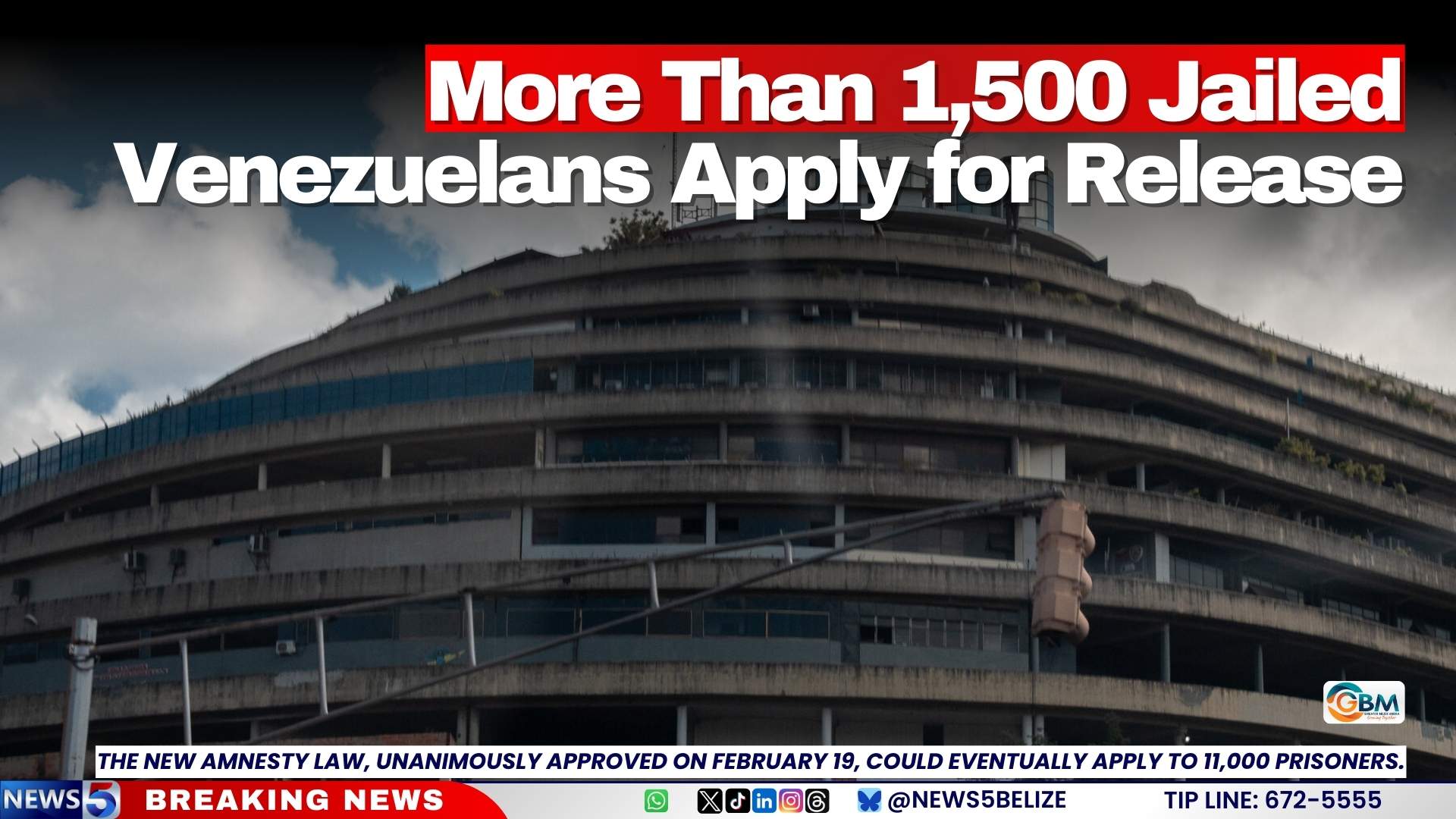
    More Than 1,500 Jailed Venezuelans Apply for Release

    Venezuela’s National Assembly has received over 1,500 applications for prisoner release under a recently enacted amnesty legislation, according to Assembly President Jorge Rodríguez. The announcement Thursday revealed that hundreds of detainees incarcerated for political reasons have already regained freedom, including prominent opposition figure Juan Pablo Guanipa.

    The comprehensive amnesty measure, which gained unanimous parliamentary approval on February 19, possesses the potential to affect approximately 11,000 incarcerated individuals nationwide. Rodríguez confirmed that judicial authorities are processing 1,557 petitions with immediate priority, indicating that prisoner releases have already commenced operationally.

    However, Guanipa’s case exemplifies the complex implementation challenges. Initially released on February 8, the opposition leader was rearrested within hours after prosecutors alleged violation of release conditions. He currently remains under house arrest pending further judicial review.

    The legislation has drawn substantial criticism from human rights organizations and opposition representatives who contend the amnesty excludes critical categories of political prisoners. Notably exempted are military personnel accused of insurrection against President Nicolás Maduro’s administration and individuals advocating for foreign military intervention.

    This development occurs amid heightened international scrutiny following Maduro’s extraordinary detention by United States authorities on January 3. The Venezuelan leader and his wife Cilia Flores currently face narcotics and weapons charges in US jurisdiction, with both maintaining not guilty pleas. Washington has consistently urged Caracas to expedite political prisoner releases throughout this diplomatic crisis.

  • San Marcos Residents: “We Will Not Be Displaced”

    San Marcos Residents: “We Will Not Be Displaced”

    Tensions escalated in San Marcos Village, Toledo, on Saturday as Maya residents staged a significant demonstration against unauthorized land clearing operations within their ancestral territories. Carrying placards with messages such as ‘Our silence is over’ and ‘These lands feed our children,’ a unified assembly of men, women, and children marched to the perimeter of contested lands, asserting their constitutional and customary rights.

    The protest, broadcast via livestream, highlighted growing frustrations over the alleged destruction of forested areas essential for traditional farming, housing materials, and local livelihoods. Community representatives emphasized that their actions constitute a defense of recognized rights, not an encroachment on private property. One resident explicitly invoked the Caribbean Court of Justice (CCJ), stating, ‘The CCJ has affirmed our rights as Maya people,’ referencing the landmark 2015 Consent Order that acknowledged Maya customary land rights in Belize.

    This mobilization occurs months after the CCJ concluded its supervisory jurisdiction over the implementation of the Consent Order. While the court acknowledged procedural progress, numerous Maya leaders have expressed concerns regarding the sluggish and superficial application of the ruling on the ground.

    In a formal joint statement, the San Marcos Village Council and Alcalde declared that any clearing activity within their communal lands breaches constitutional protections established in the Maya Leaders Alliance v Attorney General of Belize case. They urgently called upon national authorities to immediately cease further destruction and ensure strict adherence to the law.

    In response to the escalating situation, Minister of Indigenous Affairs Dr. Louis Zabaneh stated on Friday that the government is actively engaging with both Maya communities and concerned private landowners. A dedicated Cabinet subcommittee—comprising the Ministries of Natural Resources, the Attorney General, Indigenous Affairs, Environment, and National Security—is currently reviewing these complex issues. A formal governmental response is anticipated in due course.

    Simultaneously, a separate group of private landowners in the Toledo district has voiced apprehension regarding the proposed Maya land tenure bill. These individuals are seeking clarity on how the impending legislation might impact their legally held titles, property access, and long-term security, introducing another layer to this multifaceted land rights dispute.

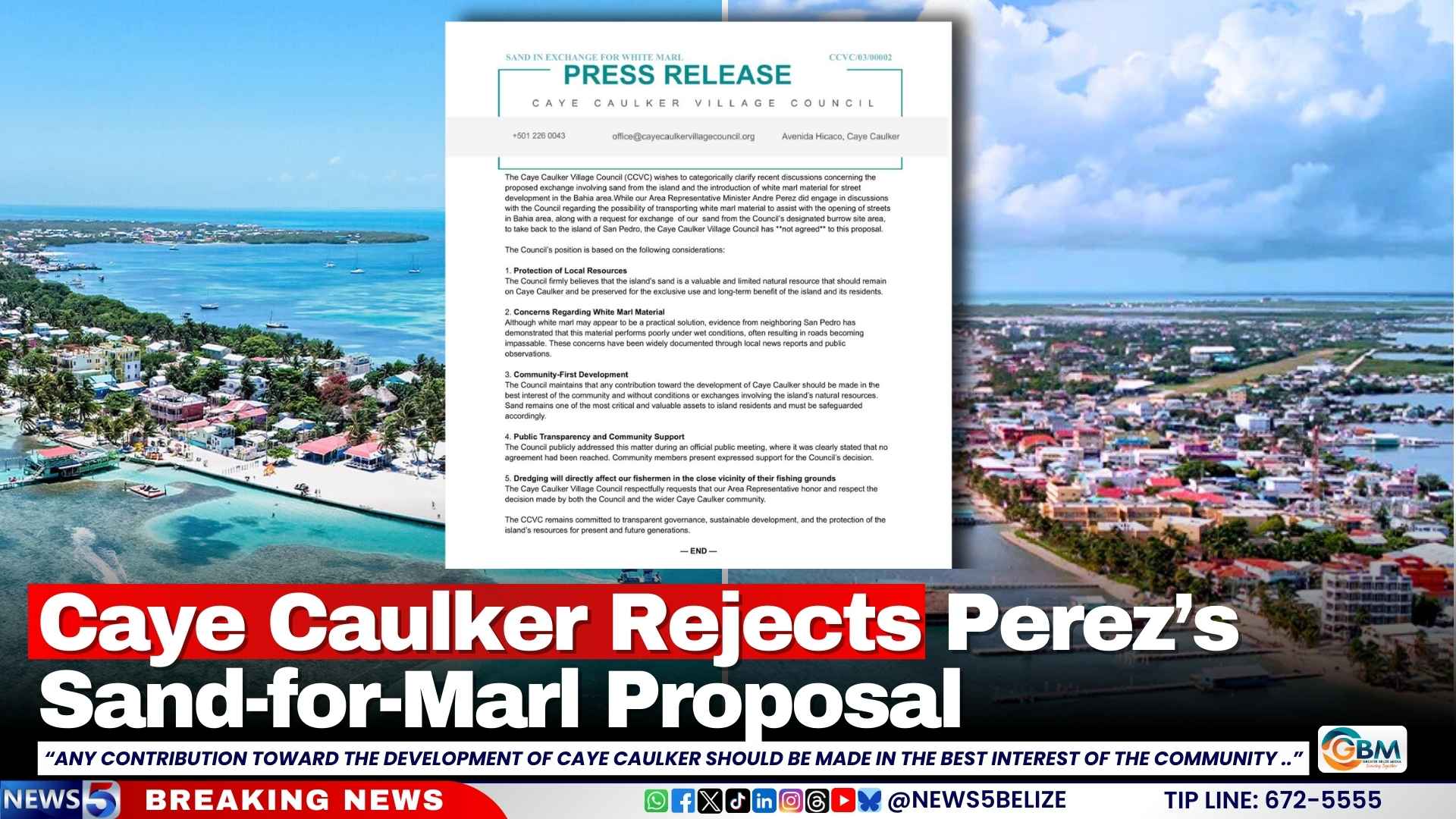
  • Caye Caulker Rejects Perez’s Sand-for-Marl Proposal

    Caye Caulker Rejects Perez’s Sand-for-Marl Proposal

    In a decisive move to protect local environmental assets, the Caye Caulker Village Council (CCVC) has formally declined a resource exchange proposal presented by Area Representative Andre Perez. The controversial plan involved trading sand from Caye Caulker’s designated burrow site for white marl intended for street construction in the Bahia Puesta del Sol region.

    The Council issued an official statement clarifying that while discussions occurred regarding the transportation of white marl to assist with road development projects, no mutual agreement was established. Council representatives emphasized that the island’s sand constitutes a precious and finite natural commodity that must be preserved for the enduring welfare of community members.

    Beyond conservation concerns, the Council raised practical objections regarding the proposed construction material. Officials cited documented performance issues with white marl surfacing in Ambergris Cale, particularly during rainy periods where such roads frequently become unusable due to inadequate drainage and stability.

    The proposal faced additional criticism over potential economic impacts, with the Council highlighting possible adverse effects on local fishing operations near the suggested dredging location. The statement concluded with a respectful petition for the Area Representative to honor the collective decision made by both governing bodies and residents, emphasizing that community development contributions should occur without conditional resource exchanges that compromise environmental integrity.

  • Family Questions Motive Behind Unitedville Double Murder

    Family Questions Motive Behind Unitedville Double Murder

    The tranquil community of Unitedville Village in Belize has been shattered by a brutal double homicide that occurred on the evening of Saturday, February 22, 2026. Local authorities have launched a comprehensive investigation into the shooting deaths of 23-year-old Jerrington Ingram and Miguela Vanegas, whose lives were tragically cut short by fatal gunshot wounds near a riverside area.

    Law enforcement officials responded to reports of gunfire in the vicinity, discovering the two victims at the scene. The incident has sent shockwaves through the small community, raising concerns about violence and public safety in the region.

    The tragedy has prompted an emotional outcry from grieving family members, with one relative of Vanegas turning to social media to express both heartbreak and bewilderment at the senseless violence. In a poignant online tribute, the family member questioned the motive behind the killings, stating, ‘I couldn’t sleep. What could she have done that was so terrible that deserved a death like that?’

    The heartfelt post further memorialized Vanegas as ‘a young, vibrant soul enjoying her life,’ while criticizing the perpetrators who ‘feel they are God out here to be taking lives.’ The message emphasized that ‘nobody truly knows her story,’ suggesting the complex circumstances that may have led to this devastating outcome.

    As police continue their investigation, the community remains on edge, with many residents calling for justice and increased measures to prevent further violence. The case has drawn significant public attention, with social media engagement indicating widespread concern about the incident that has left two families devastated and a community searching for answers.

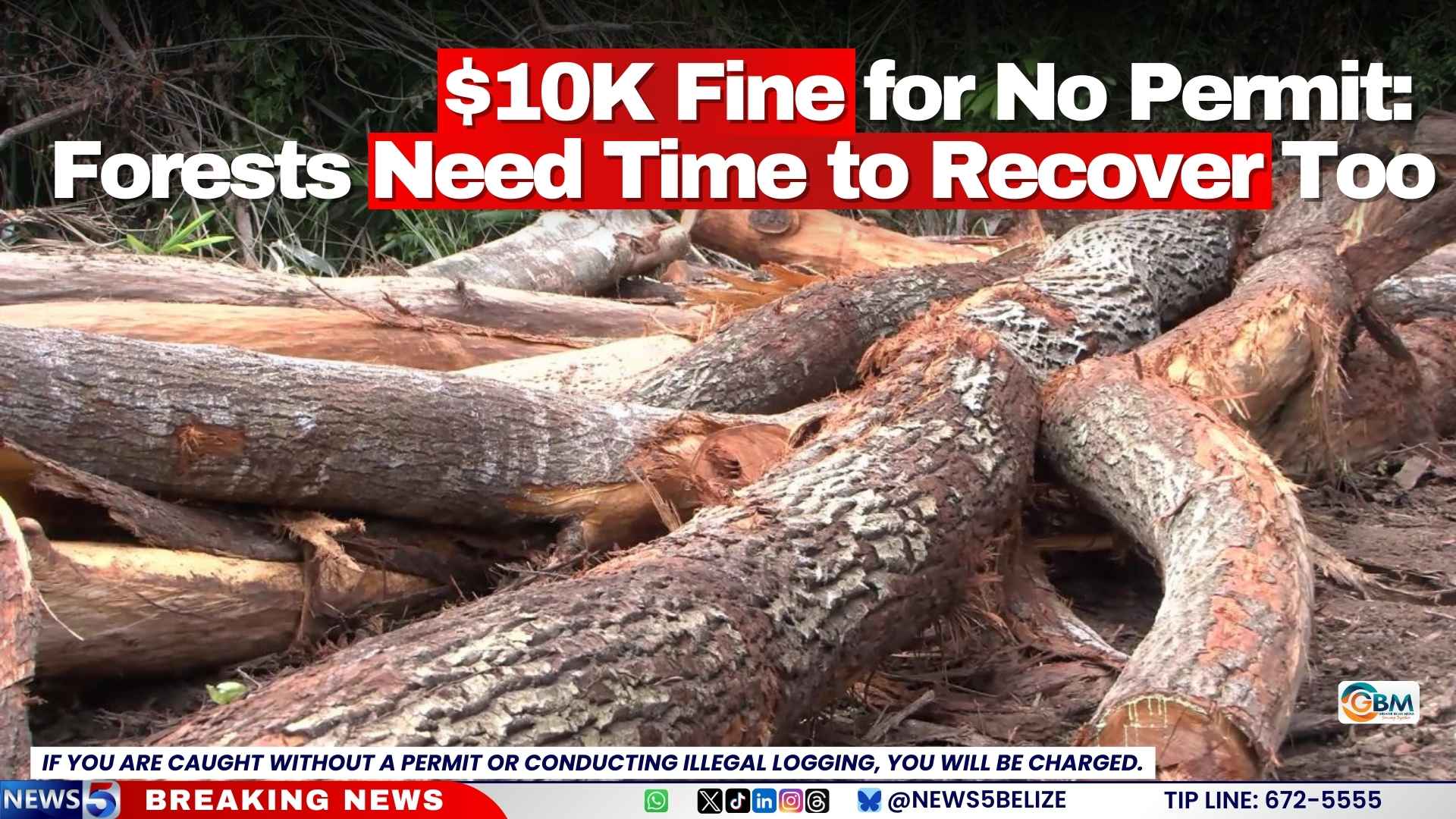
  • $10K Fine for No Permit: Forests Need Time to Recover Too

    $10K Fine for No Permit: Forests Need Time to Recover Too

    The Belize Forest Department has issued a stern warning to citizens regarding unauthorized timber harvesting activities, emphasizing that violators face substantial fines up to $10,000 for logging without proper permits. This enforcement action supports an active five-year moratorium initially implemented in November 2025, designed to facilitate critical recovery of the nation’s forest ecosystems.

    Chief Forest Officer Victoria Chi explicitly stated that all tree cutting activities—whether for firewood, bush sticks, or timber—require formal authorization from the Forest Department. “The public is advised that you must apply for a permit regardless of purpose,” Chi emphasized. “Unauthorized logging will result in criminal charges with penalties reaching $10,000 per violation.”

    The regulatory framework applies comprehensively to government-owned lands, including leased properties pending formal title issuance. Permit pricing varies significantly based on species conservation status, with premium hardwoods like mahogany and cedar commanding higher fees while secondary hardwoods require a $16 per-tree permit. Private landowners must also obtain permits, though at a fifty percent reduced rate.

    Officials describe these measures as essential conservation strategies to prevent further depletion of Belize’s forest resources. The moratorium represents a balanced approach to sustainable resource management, allowing ecosystems to regenerate while maintaining regulated access through permitted harvesting.

  • Pregnant Deer with Twins Killed: “This Is Why We Close Seasons”

    Pregnant Deer with Twins Killed: “This Is Why We Close Seasons”

    Belizean forest authorities have apprehended five individuals in the Los Tambos region of Cayo District for engaging in prohibited deer hunting activities during the legally mandated closed season. The Saturday morning operation uncovered a distressing scene: three slaughtered white-tailed deer, among them a skinned pregnant doe carrying twin fawns that had been extracted from her womb. Additionally, officers discovered a live fawn in the possession of the detained group.

    Victoria Chi, a representative from the Belize Forest Department, emphasized the ecological rationale behind seasonal hunting restrictions: “This tragic incident precisely demonstrates why we implement closed seasons—these animals are either pregnant or nurturing their young. Hunting during these vulnerable periods is strictly prohibited under national legislation.”

    Current regulations established by the Wildlife Protection Act provide comprehensive safeguards for deer populations. Female deer receive protection from July 1st through February 28th of the subsequent year, while male deer may only be legally hunted between October 1st and June 30th. Violations of these conservation laws carry severe penalties, including fines reaching $10,000 Belize dollars or potential imprisonment for up to one year.

    The Forest Department has encouraged public participation in conservation efforts by providing a dedicated hotline (610-1524) for reporting illegal hunting activities. This case has sparked renewed discussion about wildlife protection measures and the importance of seasonal hunting restrictions in maintaining sustainable animal populations.

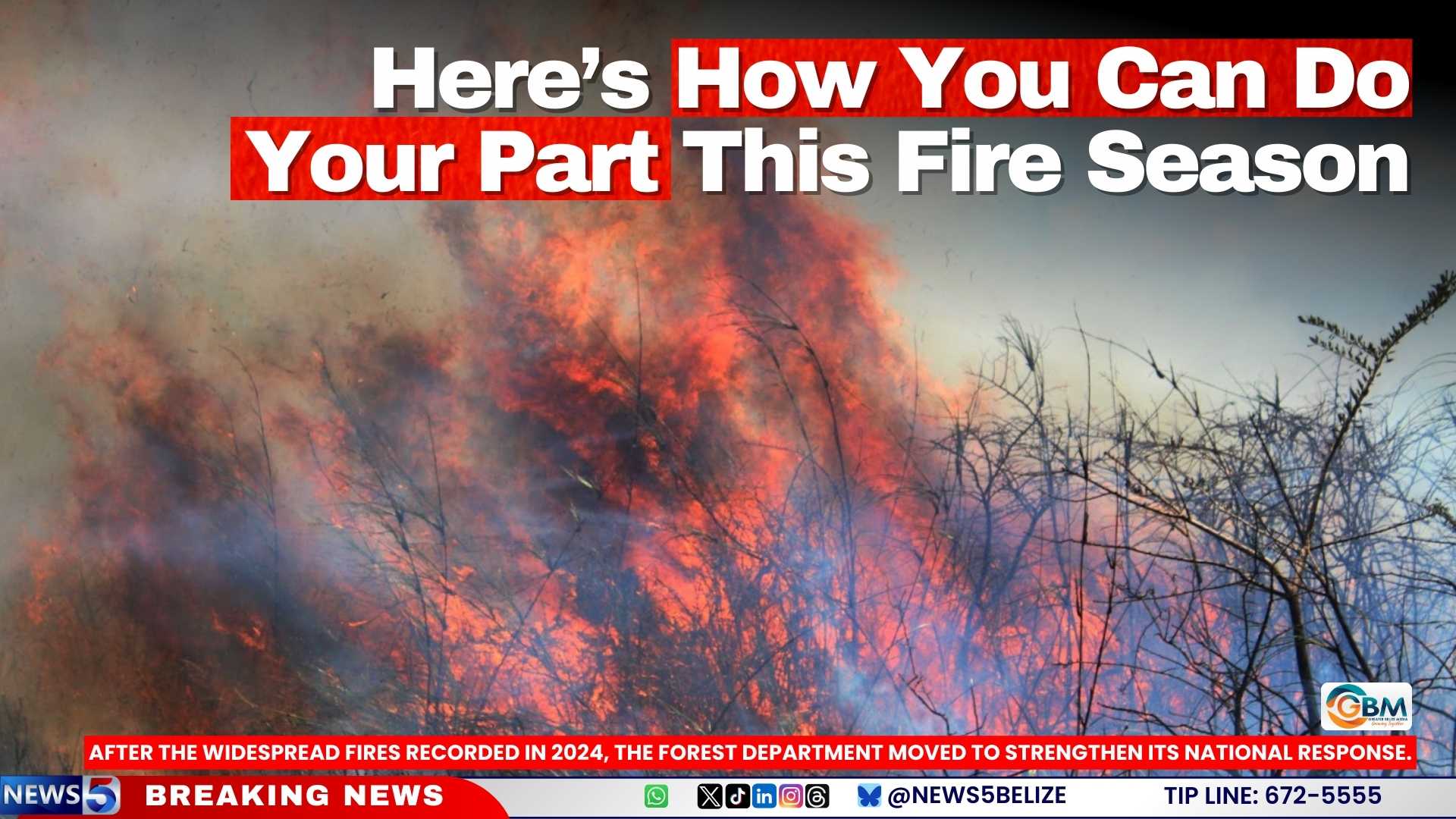
  • Here’s How You Can Do Your Part This Fire Season

    Here’s How You Can Do Your Part This Fire Season

    Belize has officially entered its annual fire season, which spans from February 15 to June 15, with forestry officials warning that human-caused fires represent the most significant threat to forest ecosystems and rural communities. Chief Forest Officer Victoria Chi emphasized that the majority of wildfires originate from agricultural burning practices and residential waste disposal that rapidly escalate beyond control.

    According to Chi, inadequate safety measures during routine farming activities frequently lead to fires spreading into surrounding vegetation. “Individuals often initiate burns for agricultural purposes without implementing necessary precautions or following established best practices, resulting in these fires escaping containment,” she stated. The department has additionally identified hunting-related activities as another contributing factor, where vegetation is cleared to attract game species.

    While human activity remains the primary cause, natural phenomena such as “dry lightning” events in regions like Mountain Pine Ridge also contribute to wildfire outbreaks during periods of low rainfall.

    In response to extensive fires recorded in 2024, the Forest Department has enhanced its national emergency response capabilities through expanded coordination networks and intensified training programs. A recent simulation exercise conducted at San Miguel Camping Ground in Mountain Pine Ridge brought together firefighters and protected area managers for practical wildfire management training.

    The department urges public cooperation through several critical preventive measures: obtaining free burning permits from the Agriculture Department prior to any agricultural burning, establishing proper firebreaks, maintaining water and firefighting equipment on site, avoiding burning during windy conditions, never leaving fires unattended, and immediately reporting wildfires to authorities including the Forest Department (610-1524), NEMO (936), police (911), fire services (990), or regional agricultural departments.

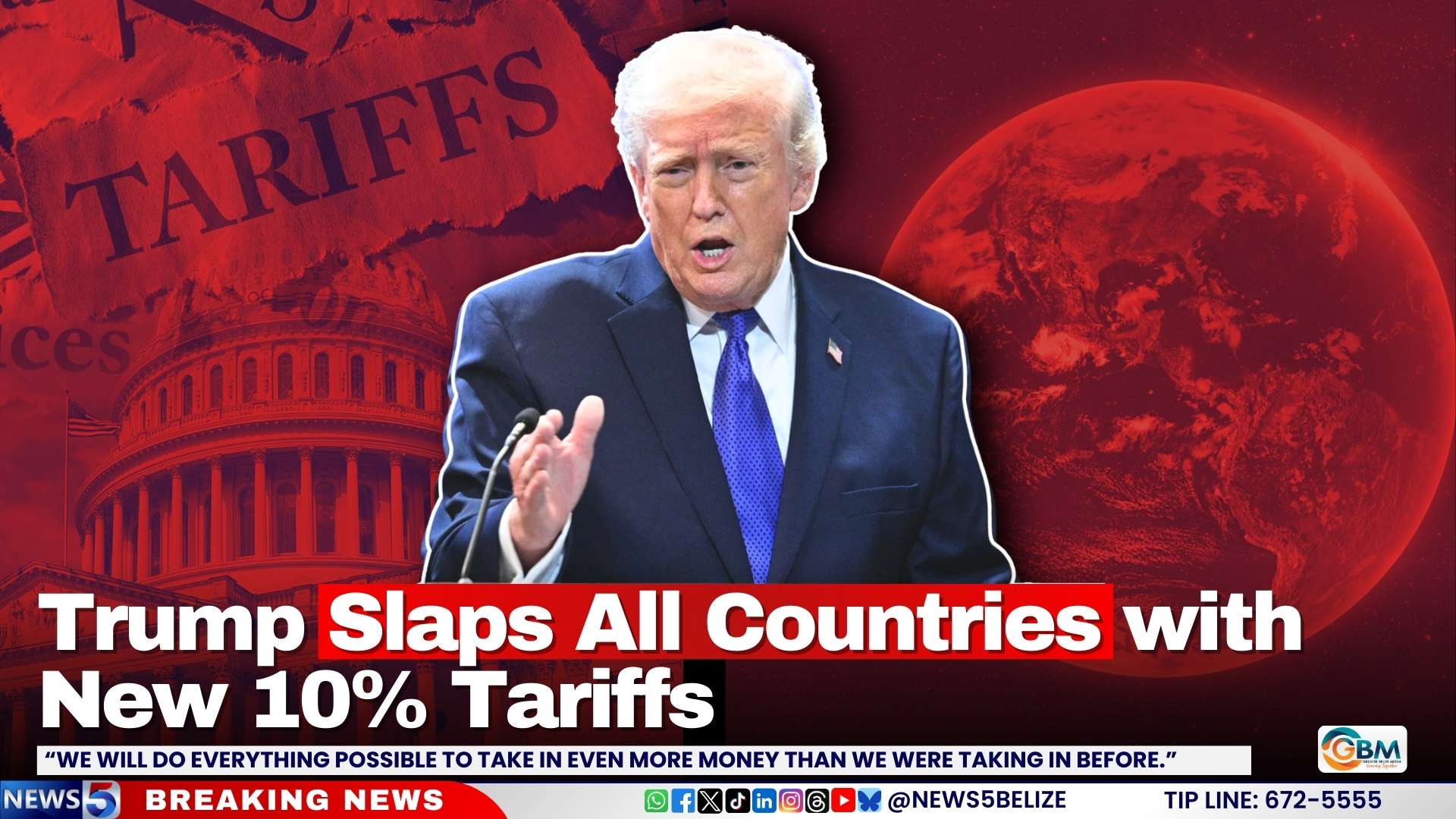
  • Trump Slaps All Countries with New 10% Tariffs

    Trump Slaps All Countries with New 10% Tariffs

    In a dramatic escalation of trade policy, former President Donald Trump has instituted a comprehensive 10% tariff on all imports following a landmark Supreme Court decision that invalidated his previous tariff authority. The high court’s 6-3 ruling determined that Trump had overstepped his presidential powers under the International Emergency Economic Powers Act of 1977, with Chief Justice John Roberts writing that the administration claimed “extraordinary power to unilaterally impose tariffs of unlimited amount, duration, and scope” without proper congressional authorization.

    Within hours of the judicial setback, Trump invoked alternative authority under the Trade Act of 1974 to implement a temporary 10% universal tariff scheduled to take effect February 24 and remain active for 150 days. During an impassioned press conference, the president characterized the court’s decision as “deeply disappointing” and questioned the patriotism of certain justices whom he described as “very unpatriotic and disloyal to our Constitution.”

    The sweeping tariff measure contains exemptions for specific categories including agricultural commodities, essential minerals and metals, pharmaceutical products, electronic devices, and passenger vehicles. Administration officials indicate the policy aims to reduce dollar outflow and stimulate domestic manufacturing capacity.

    Notably, products already subject to existing tariffs—such as steel, aluminum, lumber, and automotive goods—will see the new 10% levy applied additionally, creating compounded duty rates. Trump subsequently declared on his social media platform that the adjustment process “begins, and we will do everything possible to take in even more money than we were taking in before,” suggesting the administration views the tariffs primarily as revenue-generating measures rather than purely trade corrective actions.