标签: Belize

伯利兹

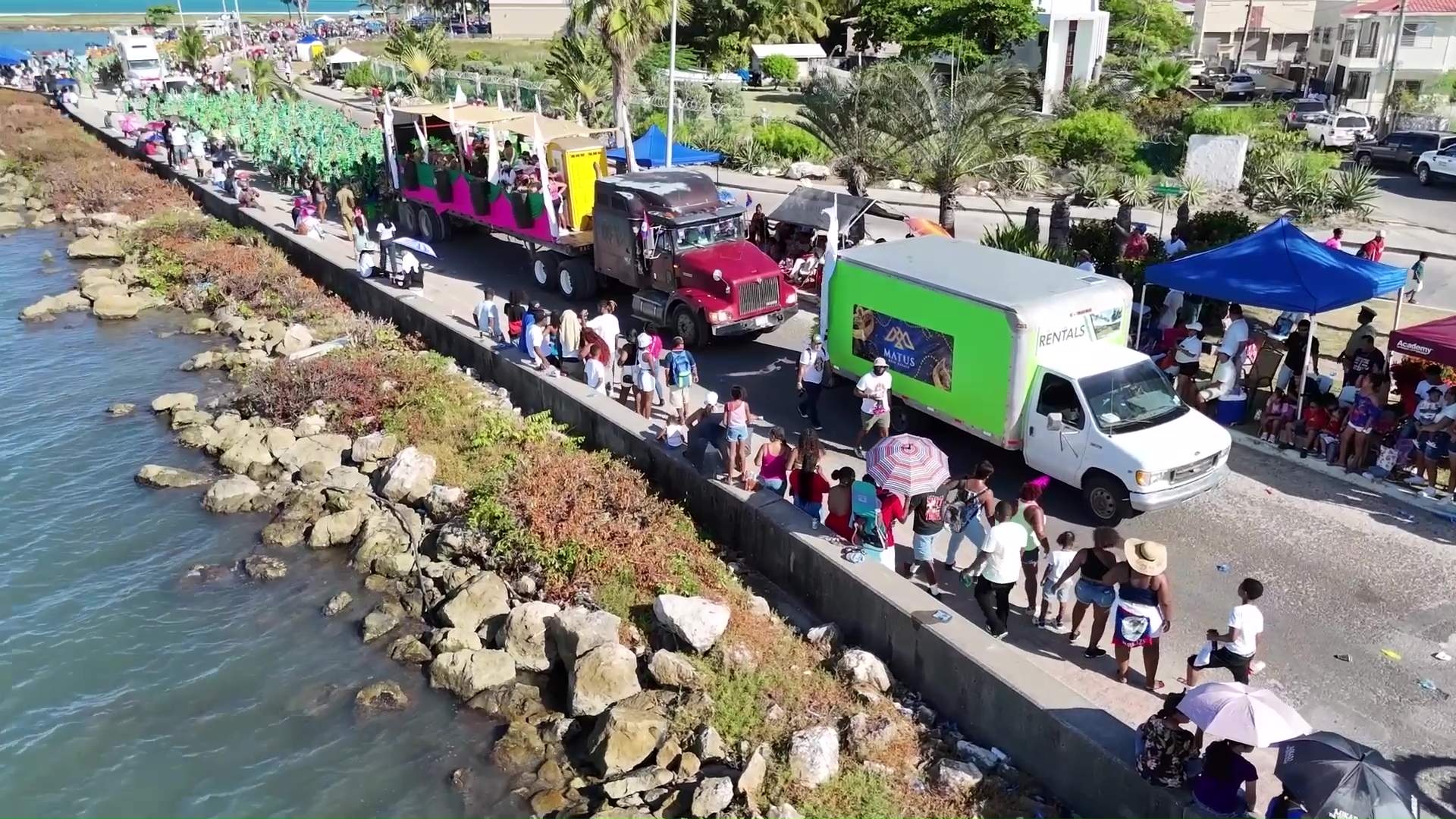
  • Carnival Commission Clarifies Third Prize Controversy

    Carnival Commission Clarifies Third Prize Controversy

    A significant dispute regarding prize money distribution has emerged within Belize’s Carnival celebrations, escalating into a broader debate about organizational transparency. The controversy originated when a band leader publicly challenged the Belize Carnival Association, casting doubt on whether financial awards had been properly distributed to competing groups.

    Eluide Miller, representing the Belize Carnival Commission, has stepped forward to address the growing concerns. While acknowledging he cannot respond to every allegation, Miller provided crucial clarification regarding the missing third-place prize that sparked the initial controversy.

    Miller confirmed that no third-place prize was issued for the specific category in question, explaining the established payment protocol: “The Carnival Association typically informs the NCC of winners across respective categories, and the NCC subsequently remits direct payments to qualifying bands.”

    The Commission member revealed that the decision to withhold the third-place award resulted from bands failing to meet a predetermined performance threshold. This determination was made based on recommendations from the Carnival Association itself.

    “On the advice of the association because they did not meet a specific threshold,” Miller stated, “it was agreed that a third-place prize for that category would not be issued.”

    Emphasizing the collaborative nature of the event organization, Miller stressed that “carnival is bigger than any one individual, any one group. It belongs to the people of Belize.” He reiterated the Commission’s commitment to “unity, collaboration and ensuring that we could deliver a safe and successful celebration.”

    The clarification comes amid increasing public scrutiny of financial practices within the country’s premier cultural celebration, raising questions about accountability mechanisms between coordinating bodies.


  • Why Global Banking Rules Matter for Belizeans

    Why Global Banking Rules Matter for Belizeans

    Belize has concluded a pivotal three-day conference addressing Anti-Money Laundering and Countering the Financing of Terrorism (AML/CFT), gathering banking leaders and financial regulators to deliberate on the nation’s standing within the international financial architecture. The event highlighted the critical importance of maintaining robust global banking connections for the Central American country.

    Heritage Bank’s Managing Director Steven Duncan delivered a stark assessment of the stakes involved, emphasizing that banking compliance transcends bureaucratic formalities. “Our national performance in these regulatory domains carries profound implications that extend well beyond individual financial institutions,” Duncan stated. “The sobering reality is that a single bank’s failure could potentially trigger catastrophic consequences for our entire nation.”

    The banking executive acknowledged widespread public frustration with the perceived administrative burdens, characterizing the compliance process as often feeling like “endless red tape” that delays transactions and tests customer patience. While expressing personal sympathy with these concerns, Duncan appealed for public understanding, framing the compliance requirements as necessary sacrifices for global economic participation.

    “I genuinely comprehend these frustrations and cannot dispute such perspectives,” Duncan conceded. “However, I must urge our citizens to demonstrate patience and recognize that these measures serve purposes far exceeding our national boundaries. The unequivocal truth remains: if we aspire to operate within the global financial ecosystem, we must adhere to its established protocols.”

    This regulatory diligence directly supports vital economic lifelines for Belizeans, including international medical treatment funding and overseas educational tuition payments—financial channels that would face immediate jeopardy should the country fail to meet international banking standards.

  • Is Belize Doing Enough to Protect Its Indigenous Languages?

    Is Belize Doing Enough to Protect Its Indigenous Languages?

    In a landmark regional initiative, Belize has joined neighboring Central American nations in launching a comprehensive strategy to combat the alarming decline of indigenous languages. The Indigenous Language Plan for Central America, formally unveiled during a high-level gathering in Guatemala this weekend, represents a coordinated multinational effort to elevate language preservation to the forefront of national policy agendas.

    The groundbreaking plan emerges from months of intensive collaborative research examining current usage patterns, identifying regions experiencing the most severe linguistic erosion, and developing concrete governmental interventions to reverse these trends. Rather than merely documenting the problem, the initiative focuses on implementing actionable solutions with measurable outcomes.

    Rolando Cocom, Director of the Institute of Social & Cultural Research, emphasized the plan’s transition from theoretical discussion to practical implementation. “We have established shared priorities centered on three critical pillars: preservation through educational integration, promotion via media and cultural programs, and international recognition of language extinction as an urgent humanitarian issue,” Cocom stated.

    Delmer Tzib from the University of Belize highlighted the paradigm shift embodied in the initiative, explaining that indigenous languages are being reframed as fundamental human rights rather than merely cultural artifacts. “This recognizes that speaking one’s mother tongue and transmitting it across generations constitutes an inherent right that demands protection alongside other basic freedoms,” Tzib asserted.

    The regional cooperation framework establishes standardized metrics for tracking language vitality while creating mechanisms for sharing best practices in linguistic revitalization techniques across national boundaries.

  • Over 60 Bus Operators Ticketed in Early-Morning Transport Crackdown

    Over 60 Bus Operators Ticketed in Early-Morning Transport Crackdown

    The Ministry of Transport in Belize has launched a significant enforcement initiative targeting public transportation safety violations, resulting in more than 60 citations issued to bus operators during early-morning inspections. Chester Williams, CEO of the ministry, confirmed the crackdown remains an operational priority amid growing public concern over transportation safety standards.

    Under the direction of senior transportation officials, including the Chief Transport Officer, compliance operations commenced as early as 4:30 a.m. in key areas including Burrell Boom, Hattieville, and adjacent routes connecting to Belize City. The strategic timing of these inspections ensured minimal disruption to commuter travel during peak morning hours while effectively monitoring operator compliance.

    Williams detailed that enforcement officers issued 64 violation notices to bus companies for failing to adhere to road service permit conditions and additional infractions discovered during vehicle inspections. The operation specifically targeted operational buses to assess real-time compliance with safety regulations.

    This heightened enforcement follows increasing public reports of safety incidents involving public transportation, including reckless driving patterns, vehicular accidents, and altercations involving bus operators. Williams emphasized that citizen complaints regarding insufficient enforcement and concerning activities associated with bus services prompted the ministry’s responsive measures.

    The Ministry of Transport has indicated these operations will continue as part of a broader strategy to enhance road safety and regulatory compliance across Belize’s public transportation network, with ongoing monitoring and enforcement actions planned for the foreseeable future.

  • Transport CEO Denies Forced Resignation Claims

    Transport CEO Denies Forced Resignation Claims

    The Ministry of Transport has formally refuted allegations that terminal workers are being compelled to resign prior to the operational transfer to the National Bus Company, scheduled for implementation on March 1st, 2026. Chief Executive Officer Chester Williams issued a definitive denial, asserting that no official directive mandating worker resignations has been circulated. “Assertions that terminal personnel must submit resignations by this Friday are entirely without foundation,” Williams declared. This rebuttal addresses concerns previously voiced by the Public Service Union regarding alleged employee coercion during the transition phase. Williams elaborated that the handover of highway bus terminal management from government control to the National Bus Company is being executed in strict compliance with established labor regulations. Affected employees, approximately 80 individuals across six districts, have been briefed on their available alternatives, with ongoing consultations involving the Labour Department and union delegates. Williams emphasized that workers will be offered positions within the newly formed National Bus Company, which will require staffing in all districts. A six-month transition window, from March 1st through the end of August, will provide personnel with adequate time to elect either to join the new corporate entity or to consider severance packages. “There is absolutely no intention to deprive any individual of their entitled benefits,” Williams concluded, underscoring the commitment to a lawful and equitable transfer process.

  • T&T Prime Minister Delivers Blunt Message to CARICOM Leaders

    T&T Prime Minister Delivers Blunt Message to CARICOM Leaders

    In a politically charged address that reverberated through the Caribbean Community, Trinidad and Tobago’s Prime Minister Kamla Persad-Bissessar delivered a stark message prioritizing national security over regional consensus during the 50th Regular Meeting of CARICOM in St. Kitts and Nevis on Tuesday night.

    The Prime Minister articulated a firm stance on her nation’s autonomous security policies while questioning the regional bloc’s reliability during critical moments. ‘We will work with CARICOM moving forward,’ Persad-Bissessar declared, ‘but we cannot bind ourselves to the same political ideologies and security policies of the entire CARICOM.’

    Her address highlighted specific grievances, including CARICOM’s perceived silence during security threats from Venezuela against both Trinidad and Tobago and Guyana. She further referenced a 2022 incident involving the removal of a Trinidadian citizen from another CARICOM state, noting her administration had yet to receive satisfactory explanations from the CARICOM Secretariat.

    A significant portion of her remarks focused on Trinidad and Tobago’s security cooperation with the United States. Persad-Bissessar explicitly thanked former President Donald Trump and Secretary of State Marco Rubio for military collaboration targeting narcotics and arms trafficking from Venezuela, crediting this partnership with achieving a 42% reduction in homicides during 2025.

    Addressing regional divisions, the Prime Minister defended her nation’s security choices: ‘When crime reaches critical levels, I cannot depend solely on our military resources,’ emphasizing her obligation to prioritize national security despite disagreements within CARICOM regarding foreign military presence.

    On free movement within the Caribbean Single Market, Persad-Bissessar maintained theoretical commitment while citing practical limitations due to strains from undocumented migration. The address concluded with pointed criticism regarding regional democracy support, with the Prime Minister questioning contradictions in CARICOM’s stance and affirming Trinidad and Tobago’s refusal to endorse ‘dictatorship in Cuba or anywhere else.’

  • Police Seize Cocaine in Sandhill Operation

    Police Seize Cocaine in Sandhill Operation

    In a significant law enforcement operation on Wednesday, February 25, 2026, authorities in Maxboro’s Sandhill Village successfully intercepted a substantial quantity of illegal narcotics. The targeted police action resulted in the confiscation of multiple cocaine packages with a combined weight exceeding 4.5 kilograms.

    During the meticulously executed operation, law enforcement officials discovered four separate parcels containing high-purity cocaine, with the bulk seizure amounting to 4,385 grams (approximately 9.66 pounds). Additionally, officers located a further 109 grams of the illicit substance during subsequent searches of the vicinity.

    The substantial seizure represents a major disruption to local drug distribution networks, with the recovered narcotics having an estimated street value in the hundreds of thousands of dollars. While authorities have maintained operational secrecy regarding potential arrests, police representatives confirmed that investigative efforts continue to focus on identifying those responsible for the drug cache and mapping distribution channels.

    Police Commissioner’s office released a statement emphasizing that “this operation demonstrates our continued commitment to combating narcotics trafficking and removing dangerous substances from our communities.” The successful raid forms part of broader ongoing initiatives targeting organized crime and drug distribution networks operating within the region.

  • You Will Have to Pay Entry Fee to Watch La Ruta Maya Finish

    You Will Have to Pay Entry Fee to Watch La Ruta Maya Finish

    Spectators attending the grand finale of Belize’s iconic La Ruta Maya canoe race will be required to pay an entrance fee at the Grand Resort near Haulover Bridge, marking a significant shift in access policy for the annual event.

    Roberto Harrison, Vice Chair of the La Ruta Maya Planning Committee, confirmed the implementation of the fee structure, explaining that the privately organized race operates through sponsorship agreements and management arrangements that necessitate cost recovery measures. “This is not a cheap race to run,” Harrison emphasized, noting that expenses for security deployment, traffic coordination, and crowd control remain substantial despite the venue change.

    The decision follows expressed concerns from Belize Canoe Association Vice President Elvin Penner, who previously warned that monetary barriers could substantially reduce fan participation. “I believe, and I’m almost sure of this, there will be a pretty hefty charge to enter the grounds… which will cut back participation by a lot,” Penner told News Five last week.

    While the final pricing structure remains undetermined, Harrison indicated the fee would align with charges implemented at other points along the race route, including the Burrel Boom bridge which has historically charged admission for one leg of the competition. The financial arrangement between Grand Resort and media partner RSV aims to enhance the event’s viability while minimizing operational costs, according to committee statements.

    The race, sponsored by RF&G Insurance, represents one of Belize’s most cherished cultural sporting traditions, with the new access policy potentially altering the dynamic of public engagement for this national event.

  • Poll Shows Strong Opposition to La Ruta Maya Finish Line Change

    Poll Shows Strong Opposition to La Ruta Maya Finish Line Change

    A recent informal online survey conducted by News Five has revealed substantial public resistance to the controversial decision to alter the finish line location for the iconic La Ruta Maya Belize River Challenge. The proposed change would move the traditional endpoint from the BelCan Bridge to the Grand Resort near Haulover Bridge in Belize City.

    The poll, which garnered nearly 1,000 responses, demonstrated overwhelming opposition with 92% of participants rejecting the relocation plan. Only 5% expressed support for the change, while 3% remained undecided or requested additional information.

    Public commentary revealed deep-seated emotional attachment to the event’s historical traditions. Many respondents emphasized the race’s cultural significance, connecting it to Belize’s heritage and the legacy of Baron Bliss Day on March 9th. Safety considerations emerged as another critical concern, with multiple commenters highlighting potentially hazardous water conditions near the proposed Grand Resort finish line.

    Additional objections centered on accessibility issues, particularly the possibility that spectators might face entrance fees to view the race conclusion at the private resort venue. Many participants questioned whether current paddlers had been adequately consulted about the proposed changes, noting that while adaptations might be necessary, they should respect the event’s original vision and public character.

    The overwhelming consensus among respondents advocated for preserving the race’s historical route, reflecting a broader community commitment to maintaining cultural traditions against commercial influences.

  • It’s Final: La Ruta Maya Finish Line Moved to Grand Resort

    It’s Final: La Ruta Maya Finish Line Moved to Grand Resort

    In a definitive move prioritizing participant security and operational efficiency, the organizing committee of the La Ruta Maya Belize River Challenge has officially ratified the relocation of the race’s concluding segment to the Grand Resort. This resolution, confirmed on February 25, 2026, marks a significant departure from the event’s traditional finish near the Belcan Bridge and Civic Centre.

    Roberto Harrison, Vice Chair of the race planning committee, elaborated on the rationale behind this strategic shift in an interview with News Five. He cited escalating logistical complexities and safety concerns associated with the original venue as the primary catalysts for the change. Harrison emphasized that managing an open area capable of attracting thousands of spectators had become progressively challenging and costly, noting that such environments are prone to unforeseen incidents.

    The newly selected venue at the Grand Resort offers a more controllable environment. Harrison highlighted the proprietors’ investments in preparing the area, ensuring a secure landing zone for the competing paddlers as the foremost priority. On-water safety protocols will be rigorously enforced by the Belize Coast Guard, which will oversee canoe traffic and monitor potentially hazardous tidal movements and undercurrents in the vicinity of the finish line.

    Addressing potential economic impacts on local vendors, Harrison confirmed that small businesses and food stalls traditionally operating at the finish line would retain permission to conduct their activities at the new location. This measure aims to preserve the event’s community atmosphere and economic benefits.

    While some paddlers expressed feelings of exclusion from the decision-making process, Harrison asserted that consultations with participating teams and sponsors were indeed conducted. He acknowledged the weight of tradition but stated that organizational success occasionally necessitates evolution and adaptation for the greater good of the event’s future.