标签: Belize

伯利兹

  • Gun Advocate Says .223 Ban Never Made Sense

    Gun Advocate Says .223 Ban Never Made Sense

    Nearly two years after Belize implemented a controversial moratorium on .223 caliber rifles, the recent decision by the country’s Firearms and Ammunition Control Board to end the ban has reignited fierce discussion over gun regulation and public safety, as the nation grapples with persistent challenges from community gun violence.

    Critics of the policy reversal have raised urgent alarms that rolling back this restriction at a time of ongoing safety risks sends a dangerous message to the public, and could open the door to greater proliferation of high-powered firearms that end up in criminal hands. But government officials have defended the move, noting that the rifles fill a critical practical need for the country’s agricultural sector, particularly cattle ranchers who depend on the firearms to fend off predatory animals that threaten their livestock.

    Now, Abner Murillo, a prominent Belizean gun retailer and outspoken gun rights advocate who owns Locked ‘n Loaded Guns and Ammo, has waded into the debate, pushing back hard against critics who frame the ban’s end as a threat to public safety. In an interview, Murillo argued that widespread fears over the relegalization of .223 rifles are wildly overblown, and that the original moratorium never had a factual basis to begin with.

    Murillo laid out the multiple legitimate, non-criminal uses for the caliber that make it popular among Belizean gun owners: “For the .223 caliber, you have many uses including farm use, recreational use. Many people use it to protect their farms against coyotes or certain animals. You have recreational shooting, you have hunting. They’re excellent for hunting smaller game meat or medium sized game meat.”

    Beyond practical utility, Murillo emphasized that there is no evidence linking legally owned .223 rifles to violent crime in Belize, undermining the core public safety justification for the original ban. “And if you once again look at the facts, it has never been a matter of public security because there hasn’t been anything to warrant any concerns of public security. There hasn’t been shootings with licensed .223s. I believe there’s one or two incidents of brandishing since those firearms were introduced to the public here in Belize,” he explained.

    Murillo also commended the board’s decision, noting that it was rooted in empirical data and on-the-ground knowledge rather than unfounded public opinion. “I think that the board made a decision based on facts once again and based on actual knowledge and not just personal opinion. So we definitely support the removal of a moratorium that wasn’t necessary in the first place, and there wasn’t anything in the first place to warrant such a moratorium. There is nothing there to say, okay, this is a matter of public security and let’s put a moratorium on it,” he added.

    A key detail that has further fueled skepticism of the original 2024 moratorium: when the restriction was first implemented in February 2024, regulators promised a full audit and comprehensive policy review to assess the ban’s impact and justifications. As of April 2026, that audit remains incomplete, leaving the core rationale for the years-long ban unvalidated by official data.

    This report is a transcript of an evening television broadcast, with all Kriol-language statements transcribed using a standardized spelling system for accuracy.

  • BelCan Bridge Progress Forces Roadside Relocations

    BelCan Bridge Progress Forces Roadside Relocations

    A long-awaited infrastructure project is advancing in Belize, but its ripple effects are creating uncertainty for dozens of small business owners and transport operators whose livelihoods depend on their high-traffic roadside locations. The Ministry of Infrastructure Development and Housing (MIDH) has moved forward with pre-construction preparations for the full replacement of the aging BelCan Bridge, a key crossing that serves daily commuter and commercial traffic across Haulover Creek. To avoid total gridlock in the city during the multi-year construction period, MIDH has planned the installation of a temporary bypass bridge, a solution that requires clearing a large stretch of public highway reserve for construction access and the new bridge route.

    Chief Engineer Evondale Moody explained in an interview with local outlet News Five that the government has already finalized a construction contract with Cisco Construction Limited for the full bridge replacement project. The temporary structure will stretch from the Phillip Goldson Highway, across Haulover Creek, to Evergreen Street adjacent to the Belize Water Services (BWS) compound, utilizing vacant government-owned land behind Save U Supermarket for the northern approach. Work on both the temporary bridge and site preparation for the permanent new bridge is scheduled to kick off simultaneously on May 4, requiring the immediate relocation of all unauthorized businesses and operators parked on the public road reserve between the highway and Central American Boulevard.

    “We need to hand the construction site over cleared to the contractor to keep the project on schedule,” Moody noted. “All taxi operators parked along the Phillip Goldson Highway reserve, as well as the car dealers operating on Central American Boulevard in front of Save U Supermarket, must vacate the area to make room for pre-construction layout work for the permanent bridge.”

    The order to relocate by May 4 has split local operators, with many expressing deep concern over the threat to their income. At least five independent car dealers currently display their inventory on the targeted stretch of land, and multiple operators told reporters they have no alternative location to park their vehicles, putting their ability to attract walk-in customers at severe risk. Roadside food vendors and taxi dispatch operators who rely on the high-visibility location for daily business have also raised alarms that the move could cut off their core customer base.

    Not all affected operators are pushing back against the order, however. Nelson Zayden, a car dealer who has operated at the site since 2017 and ran a business near the Hope Center for more than a decade before that, says he accepts the relocation as a necessary part of public development. “We got informal notice many months ago, and the official two-week deadline to move by May 4 is fine with me,” Zayden explained. “To be honest, we never had formal permission to be here anyway; the city council just let us set up. We’ll move, and we’ll adapt – we can shift more of our sales to online advertising to keep customers coming.”

    One local staple, Tony’s Barbeque, will be able to keep most of its current location, but will still need to make adjustments. The popular food stand has operated near the existing overpass for years, but its overhanging storage shed currently blocks the planned pedestrian pathway that will connect users of the temporary bridge to the overpass stairs. The shed will need to be removed to clear the footpath, Moody confirmed.

    The most consequential detail for many affected operators is that the relocation is expected to be permanent. Moody confirmed that once construction of the new permanent BelCan Bridge is completed in 2028, the area will not be open for the return of informal roadside businesses. MIDH has also confirmed it will provide financial compensation to two long-established small businesses that are required to permanently relocate as part of the project, though details of those compensation packages have not been released to the public. Reporting for News Five, Paul Lopez contributed to this report.

  • Belize Plans Ahead to Secure Village Water

    Belize Plans Ahead to Secure Village Water

    As small rural communities across Belize face steadily rising water demand driven by population growth, shifting economic activity, and a changing climate, the country has wrapped up the foundational planning phase for a major initiative to protect long-term access to clean, reliable drinking water for these populations.

    Led by the Belize Social Investment Fund (BSIF), the cross-partner project has completed all community and technical consultations for a first-of-its-kind targeted water demand study focused exclusively on 21 rural villages that have historically faced gaps in water infrastructure planning. The study moves far beyond basic current supply checks: it combines on-the-ground usage data collected in partnership with local stakeholders with long-term projections to ensure new infrastructure will meet community needs for decades to come.

    Unlike many infrastructure projects that size systems only for current population levels, this initiative built collaboration into every step of the process. BSIF worked hand-in-hand with the University of Belize, the Ministry of Rural Transformation, and local Village Water Boards to collect accurate, community-specific data. Village Water Boards, which manage local water systems on the ground, contributed critical local insight that shaped the scope and design of the plan, ensuring it addresses on-the-ground priorities rather than top-down assumptions.

    Rico Nurse, project coordinator at BSIF, explained that the study’s multi-factor projection model accounts for far more than just population growth. “The consultation allowed the University of Belize to determine current water consumption across these 21 villages, then apply projections that factor in population growth, expanding economic activity, and the impacts of climate change to estimate water demand 5, 7, and 10 years from now,” Nurse said. This data directly informs the sizing of water disinfection equipment that will be installed under the project, eliminating the common pitfall of underbuilding infrastructure that becomes obsolete within a few years of completion.

    “This gives us certainty for the public investment we’re making on the ground,” Nurse added. “We can be confident the equipment capacity will match the needs of these communities long into the future.”

    The finalized plan will roll out in phased implementation starting in the coming months, with full completion of infrastructure deployment targeted for mid-2027. The project represents a proactive approach to rural water security, addressing future challenges today to avoid service disruptions and unsafe drinking water shortages as Belize’s rural populations evolve.

  • Heated Land Dispute Draws Three Ministers to San Marcos

    Heated Land Dispute Draws Three Ministers to San Marcos

    On April 24, 2026, escalating tensions over a contested land parcel in southern Belize’s San Marcos Village prompted three high-ranking government officials to travel to the Toledo District to mediate between conflicting parties. The confrontation has pitted local Maya residents against a private landowner, with the community claiming the territory is held as communal land to which all villagers should retain legal access. According to local residents, the private landowner has recently expanded activities beyond agreed boundaries, encroaching on the land the community has long relied on for collective use.

    As public concern over the standoff grew, Dr. Louis Zabaneh, Minister of Indigenous People’s Affairs, led the government’s on-site intervention, accompanied by Oscar Requena, Area Representative for the district, and Oscar Mira, Minister of Home Affairs. The delegation’s primary priority was to hear unfiltered concerns directly from San Marcos residents and prevent the simmering disagreement from boiling over into open conflict.

    Following a closed-door talks with community representatives, Dr. Zabaneh outlined the government’s approach in an on-the-record interview. “We held a very candid and respectful discussion of the issues,” he explained. “We did both an in-depth look at the situation on the ground in San Marcos where the residents are claiming that a private land owner is impinging on areas that should be communal land or land that residents should have access to. Then we looked at the broader picture of the process ahead with the review panel and how we can move forward towards a resolution.”

    Zabaneh noted that community members spoke openly and passionately about their longstanding connection to the land and their concerns over the encroachment. Following the meeting with villagers, the ministerial delegation planned to hold a separate negotiating session with the private landowner, with the explicit goal of identifying common ground for compromise. The ultimate objective, Zabaneh stressed, is to de-escalate immediate tensions and work toward a permanent, mutually acceptable long-term resolution to the conflict. “We are trying at least, we don’t know how it will transpire. But we are giving it our best shot,” he added.

    The local landowners’ association, Toledo Private and Lease Landowners Limited, has pushed back against the community’s claims. In a statement ahead of the mediation, the group confirmed that the family holding the legal title to the disputed parcel has not taken any action to provoke tensions, asserting that the landowner is only carrying out restoration work on territory that had been cleared previously.

    This report is adapted from a transcript of an evening television newscast, originally published online.

  • Solar Power Brings New Hope for Water Security in Rural Belize

    Solar Power Brings New Hope for Water Security in Rural Belize

    Across the rural landscapes of Belize, access to consistent, clean water has long been a daily gamble for thousands of residents, exacerbated by worsening climate volatility that brings longer droughts and more unpredictable rainfall patterns. Now, a landmark $10 million international climate adaptation initiative is set to transform this reality for four vulnerable communities, bringing solar-powered innovation and holistic water management to the region.

    Approved in October 2025, the five-year Solar Ecosystem Adaptation for Water Security (SEAM) project targets four high-need communities: Boom Creek, Dolores, Otoxha, and Copper Bank. When fully implemented, the initiative will expand improved water access to more than 1,800 rural residents, offering a long-term solution to growing climate-related water insecurity that has threatened livelihoods and public health for years.

    Dr. Juana Garcia Saqui, project coordinator at Belize’s Protected Areas Conservation Trust (PACT), framed SEAM as a transformative milestone for the country’s climate resilience and rural development progress.

    “This isn’t just a one-off infrastructure project,” Dr. Garcia Saqui explained. “We’re tackling the core challenge of reliable safe water access amid climate change by integrating multiple solutions into one cohesive strategy: cutting-edge solar technology, large-scale ecosystem restoration, inclusive community governance, and support for sustainable livelihoods.”

    Half of the project’s $10 million budget comes from the Adaptation Fund, a global climate finance body that supports developing countries in building climate resilience. This marks the third time the Adaptation Fund has backed Belize’s national efforts to strengthen climate preparedness across vulnerable regions. PACT leads implementation of the initiative in partnership with Belize’s Ministry of Rural Transformation, which oversees on-the-ground execution.

    Carlos Pol, CEO of Belize’s Ministry of Economic Transformation, emphasized that the project goes far beyond installing new water infrastructure. The core of the project is the design and construction of hybrid solar-powered water systems that will deliver a consistent, sustainable water supply to all residents across the four target communities.

    In addition to new water infrastructure, SEAM includes targeted ecosystem rehabilitation work designed to protect long-term water resources. These efforts cover watershed restoration, large-scale reforestation, and agroforestry initiatives that not only safeguard water supplies but also support livelihoods, with a particular focus on lifting up women and other marginalized vulnerable groups in the target communities.

    “Through SEAM, these communities are no longer just coping with water scarcity,” Pol noted. “They’re building a future where water access is certain, where systems are resilient rather than fragile, and where all residents can count on this fundamental resource to thrive.”

    This report is a transcript of a televised evening news broadcast, with Kriol-language statements transcribed using a standardized spelling system for accessibility.

  • Doing More: How One Dangriga School Is Setting the Standard

    Doing More: How One Dangriga School Is Setting the Standard

    Since 2023, Belize’s Ministry of Education, Culture, Science and Technology (MOECST) has challenged primary and secondary institutions across the country through its MoRE (Ministry of Education Recognition) Campaign. The initiative pushes schools to extend learning beyond traditional classroom walls across five core pillars: digital learning, student health, inclusive education, community involvement, and creative skill-building. Participating schools document their outreach and extracurricular efforts, accumulate points based on the scope and impact of their work, and earn national recognition for going above and beyond standard academic requirements. Today, one small primary school in the Stann Creek District town of Dangriga has emerged as the campaign’s national leader, outscoring every other participating institution in the country to set a new benchmark for what community-centered education can achieve. That school is Epworth Methodist Primary School.

    Walk through the halls and outdoor spaces of Epworth Methodist, and it is immediately clear that learning here extends far beyond textbooks and standardized tests. The campus buzzes with purpose-driven activity, from cultural preservation groups to skill-building clubs that bring students, parents and local community members together as equal participants.

    One of the school’s most beloved student groups is the GAMAE club, which centers Garifuna cultural heritage through a integrated framework of Arts, Medicine, Agriculture and Education. Nine-year-old Evonay Lopez, who has been part of the group since 2025, says the club has let her develop artistic skills while connecting to her roots. “I’ve learned a lot of songs and a lot of dances,” she explained, echoing the sentiment shared by fellow member Nila Mckoy. “I love being in this group because I love talking Garifuna. I love singing and dancing, and I love the history of Garifuna,” Mckoy shared.

    Beyond cultural programming, Epworth’s roster of student-led clubs builds practical, marketable skills that students can carry into adulthood. The school’s crochet club walks students through turning raw yarn into finished handmade goods, with one young student sharing that she completed a beautiful scarf over just three days of focused work. The braiding club centers Black hair education and styling as a cultural and professional skill, with parents actively participating in workshops alongside their children. “You’ll notice that all of our hair is 4C hair. But these are just beautiful styles that they’re beginning to learn and this is an improvement because by the time they’re in their future, they already have talent and businesses that they can start,” explained parent Phrislee Palacio.

    The school’s chess club hones critical thinking and strategic problem-solving, while the recycling club turns everyday waste into useful products to teach environmental stewardship. Under the leadership of coordinator Charles Diaz, students transform discarded plastic water pouches into reusable tote bags, carrying cases, and even handcrafted hammocks. Parent and volunteer Renelyn Tulcey notes that the project delivers a clear, actionable lesson for students and the broader community: “Our world could definitely be a better place if we learn how to use recycled materials—or reuse them.” The school even maintains its own on-campus garden, where students grow fresh fruits and vegetables to learn agricultural skills and sustainable food practices.

    This expansive, community-integrated model of education is not a sudden shift for Epworth—it is the product of nearly a decade of intentional vision from principal Felecia Zuniga Palacio. Palacio emphasizes that high-quality education cannot be delivered by school staff alone; it requires active buy-in and participation from the entire community. “Why is it important that we do more? It takes more than just teachers and students and the principal to run a school. It takes the community and we want to share with our stakeholders who have that faith in us that we are doing more to ensure that our children have quality and sound education here at Epworth Methodist school,” Palacio said.

    The school’s innovative approach has not gone unnoticed by education leaders. Stann Creek District Education Manager David Cano confirms that Epworth has emerged as a trailblazer for the MoRE Campaign across the country. “Epworth is one of the schools in this district that is leading the adoption of the MoRE Program. I believe they have more submissions than others in the district and perhaps leading the country as well in primary schools,” Cano noted. Last year, Epworth secured the top spot nationally with a total of 285 MoRE Campaign points, becoming the first school in Dangriga to earn the program’s official recognition banner—an honor that included a personal visit from the Minister of Education.

    For Cano, the impact of Epworth’s work extends far beyond the walls of the school itself. The MoRE Campaign’s ultimate goal is to shape a new generation of well-rounded Belizean citizens, and Epworth’s model proves that goal is achievable through community collaboration. “We want to create a citizen of Belize that is involved, that is knowledgeable, that is creative, who can problem solve and works well,” Cano explained.

    Unlike many institutions that wait for external investment to expand student opportunities, Epworth Methodist Primary School has built its transformative model from within, leveraging local community resources and parent engagement to lift up its students. In doing so, it has set a national standard that every primary and secondary school across Belize can aspire to match. Primary and secondary schools across Belize can participate in the MoRE Campaign year-round by submitting their programming through the official MOECST website at moecst.gov.bz/more.

  • MOE Issues Warning: Strangers Approaching Students

    MOE Issues Warning: Strangers Approaching Students

    In a recent public advisory dated April 24, 2026, Belize’s Ministry of Education (MOE) has issued an urgent warning to communities across western Belize following multiple reports of unknown individuals targeting students near school compounds. According to official accounts, these strangers have been approaching minors to ask intrusive, sensitive questions while hiding their true intentions behind the cover of conducting public surveys.

    The alert follows growing public anxiety in the town of Benque Viejo, where unconfirmed social media posts claimed a group of people traveling in a white van, who falsely identified themselves as Christian missionaries, had approached and harassed local children. These social media reports sparked widespread concern among parents and school administrators, prompting the MOE to issue a formal, public clarification and safety notice.

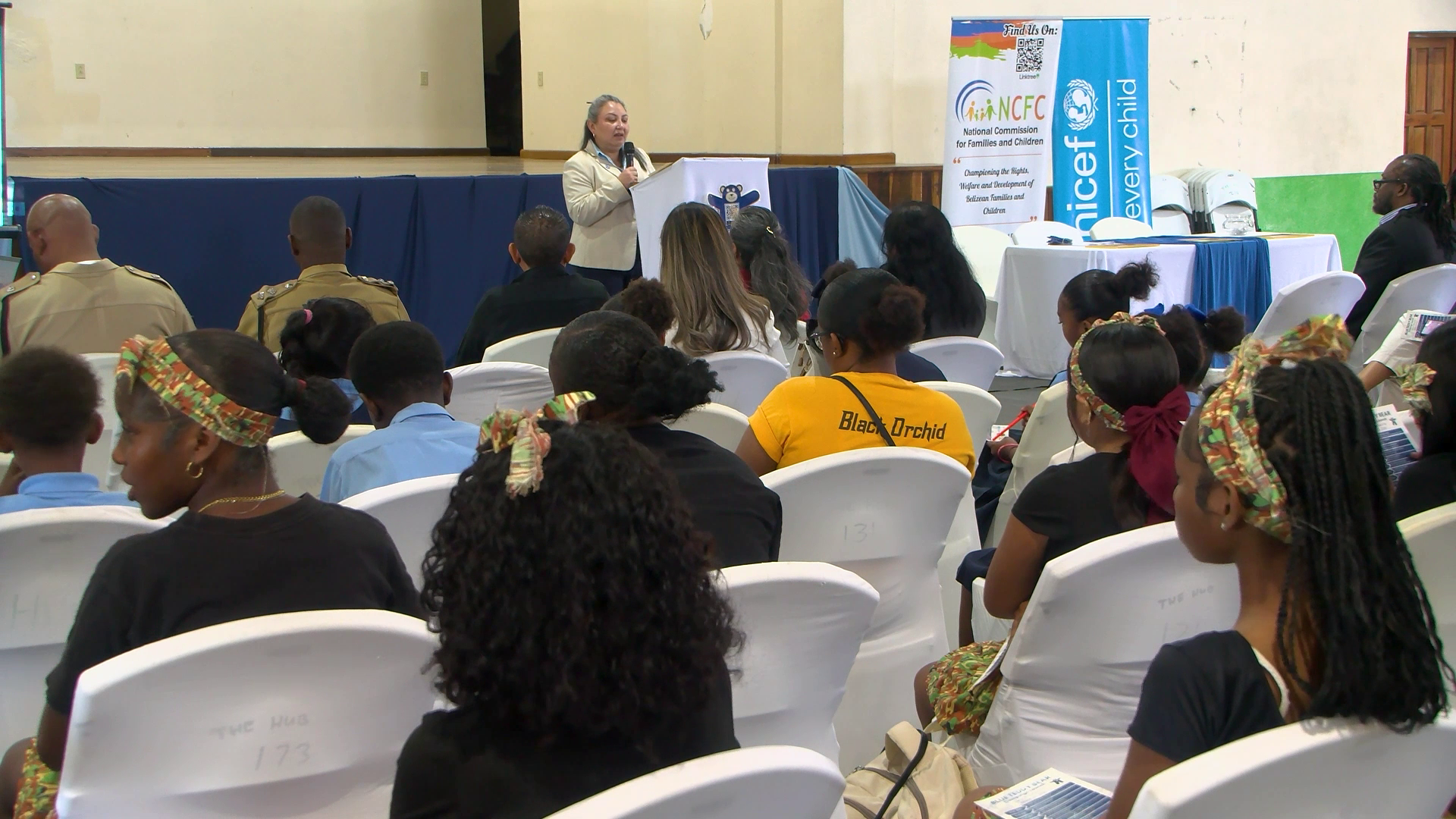
    In its official statement, the Ministry emphasized a clear regulatory rule: no outside individual or organization is permitted to enter or conduct activities on any school property in Belize without formal, written official approval. “All school visits must be formally authorised by the Chief Education Officer,” the statement read. The MOE has already issued formal instructions to all primary and secondary schools across the region to immediately report any unauthorized presence or suspicious activity to district education officials as soon as it is detected.

    To boost campus and surrounding area safety, the Ministry announced it will ramp up proactive monitoring and vigilance across all school premises. This expanded security effort will leverage the existing national network of school wardens, who will work in close coordination with local law enforcement agencies to patrol high-risk areas and respond quickly to reports of suspicious behavior.

    Officials are also urging parents and guardians across the affected region to remain extra vigilant, talk to their children about personal safety protocols, and immediately report any unusual encounters or suspicious behavior to school administrators or local police forces. The MOE has stressed that rapid reporting of potential threats is a critical part of keeping minors safe in school communities.

  • $13 Million Worth of Drugs Destroyed

    $13 Million Worth of Drugs Destroyed

    In a major milestone for local anti-narcotics enforcement, law enforcement officials have carried out the destruction of one of the largest drug hauls seized in recent years, with an estimated total street value of $13 million. The operation, carried out in accordance with national drug control regulations, followed weeks of coordinated seizure activity across two key districts earlier this month. Police Commissioner Dr. Richard Rosado confirmed that the destroyed contraband included cocaine intercepted in Neuland, Corozal, and cannabis seized in the Lords Bank area.

    Under the framework of the Misuse of Drugs Act, law enforcement submitted a formal application to the local magistrate’s court to obtain approval for the destruction of the controlled substances. Rosado explained that the court granted the order after verifying that eliminating the narcotics would not compromise any ongoing criminal investigations or pending legal proceedings against suspects connected to the seizure. In total, authorities disposed of approximately 1,215.6 pounds of cocaine and 1,176.5 pounds of cannabis, marking one of the largest single-volume drug destruction operations in the region in recent memory.

    To ensure the operation went off without incident, heavy security protocols were implemented across every stage of the process. Assistant Commissioner Gualberto Garcia noted that uniformed officers were deployed at multiple locations along the transport and destruction route to secure the contraband and prevent any diversion or tampering. Garcia emphasized that large-scale destruction operations are a core part of the police force’s anti-drug strategy, even though this particular haul stood out for its unusually large volume.

    Despite the successful destruction of the narcotics, law enforcement investigations into the smuggling network behind the haul are far from over. Rosado confirmed that the probe is still ongoing and progressing as planned, with investigators now turning their attention to 15 containers of suspected aviation fuel and lighting equipment discovered in the Neuland area. Law enforcement officials suspect the equipment was intended to support cross-border drug smuggling operations, and additional arrests and seizures are expected as the investigation unfolds.

  • Police Destroy 86 Cannabis Plants Discovered by Drone Surveillance

    Police Destroy 86 Cannabis Plants Discovered by Drone Surveillance

    In a targeted anti-narcotics operation carried out in Toledo District, law enforcement agencies have successfully eradicated nearly 90 illegal cannabis plants, thanks to modern aerial surveillance technology.

    The operation, launched by the Special Branch office, relied on drone reconnaissance to scan the remote, hard-to-reach rural areas of the district where unauthorized cannabis cultivation is often hidden from ground patrols. The unmanned aerial device quickly picked up unusual vegetation activity in a privately owned corn field, guiding the on-ground enforcement team to the first site.

    Upon arriving at the location, officers found dozens of harvested cannabis plants hanging to dry under a makeshift zinc-roofed shelter, tucked away out of sight from nearby roads and settlements. A systematic sweep of the surrounding terrain uncovered a second, separate plot where mature cannabis plants were still growing in the ground.

    Following standard operational protocols, officers uprooted all standing plants and removed the stored harvested crop before destroying the entire illegal haul by controlled fire. A post-operation count confirmed that a total of 86 plants were eliminated, with the mature specimens measuring between three and seven feet in height when they were seized.

    The successful operation highlights how integrating drone technology into rural anti-drug enforcement efforts helps law enforcement overcome the challenges of monitoring vast, remote terrain, cracking down on unauthorized cannabis cultivation that often goes undetected by traditional patrol methods.

  • BelCan Bridge Works to Displace Businesses, Mixed Reactions Emerge

    BelCan Bridge Works to Displace Businesses, Mixed Reactions Emerge

    The long-planned replacement project for Belize’s BelCan Bridge is entering its final preparatory phase, and the immediate impacts of the massive infrastructure upgrade are already disrupting commercial activity along the busy Phillip Goldson Highway. Local business owners, vehicle dealership operators, and taxi service providers that have set up operations in the project zone have recently received official eviction notices, requiring them to vacate their current locations to make space for a temporary crossing that project organizers say is indispensable to maintaining traffic flow through Belize City throughout the main construction period.

    Officials from Belize’s Ministry of Infrastructure Development and Housing have publicly confirmed that pre-construction work is now underway, addressing public concerns over potential gridlock once the original bridge is closed for replacement. Chief Engineer Evondale Moody explained that the temporary structure is a carefully planned mitigation measure designed to cut down on crippling traffic congestion that would otherwise paralyze movement within Belize City during the months-long construction window. While the solution addresses longstanding public worries about travel disruptions, it has imposed unplanned costs and uncertainty on the local commercial operators that have built their businesses along the highway corridor.

    Responses to the relocation order have been deeply divided across the affected community. Many operators are already making reluctant preparations to move their operations, while others have openly pushed back against the timeline and the lack of transitional support. Critics warn that the sudden, unplanned relocation could deliver a devastating financial blow to small, local livelihoods that operate on thin profit margins, with many unable to absorb the cost of moving or afford premium rents in alternative commercial locations. Still, the project does not face universal opposition: one long-tenured car dealer operating in the area expressed a pragmatic acceptance of the disruption, noting that “It is fine, there is no issues with that… we will move on.”

    Full construction work on the bridge replacement is scheduled to kick off in early May, and as the start date approaches, lingering questions remain about the long-term outcomes for the most vulnerable affected businesses, as well as potential adjustments to the project timeline that could reshape impacts on the local community. Belize News 5 will air a full in-depth report with additional details, interviews, and official updates during its 6 p.m. live broadcast tonight.