标签: Belize

伯利兹

  • Business Senator Warns Fuel Shock Already Driving Inflation

    Business Senator Warns Fuel Shock Already Driving Inflation

    As ongoing geopolitical conflict involving major global powers continues to roil international energy markets, small import-reliant economies are already facing tangible economic fallout. Belizean Business Senator Kevin Herrera has confirmed that the regional ripple effects of tensions between the United States, Iran, and Israel have reached the Central American nation, with spiking fuel prices acting as an immediate catalyst for accelerating domestic inflation.

    In an exclusive interview with The Reporter, Herrera outlined how quickly international market volatility translates to local economic pain, pointing to already documented increases in domestic diesel costs as clear evidence of cross-border price transmission. He further noted that nearly 45 percent of the final retail price of diesel goes to government revenue, a structural factor that amplifies the impact of global price hikes on consumers.

    Contrary to projections that frame these economic impacts as a distant risk, Herrera emphasized that the effects are already being felt across every sector of Belize’s economy. As a nation that relies entirely on imported fuel to meet its energy needs, Belize is uniquely vulnerable to disruptions in global oil supply chains. The current standoff between major geopolitical actors has tightened global energy supply projections, driving up benchmark crude prices and raising the total import bill for Belize’s energy needs exponentially.

    The mechanics of this inflationary cycle follow a well-documented pattern: rising fuel costs first push up transportation expenses across the board, as logistics companies and transporters pass higher fuel costs onto commercial clients. Businesses of all sizes then respond to these elevated operating expenses by raising prices on nearly all goods and services, shifting the cumulative cost burden to end consumers in a process economists label cost-push inflation.

    Beyond broad macroeconomic indicators, this price surge hits household finances directly. Higher fuel and transport costs eat away at disposable income, driving up the overall cost of living for all residents. Vulnerable lower- and middle-income households shoulder a disproportionate share of this burden, as these groups already allocate a far larger share of their total income to essential goods and services that are now seeing steep price increases.

    Herrera’s warnings align with the latest consensus from global economic analysts, who have identified geopolitically driven energy shocks as the leading cause of renewed inflationary pressure across small open economies. Leading economists consistently note that smaller nations that depend on energy imports experience far sharper and more immediate economic impacts from global oil market disruptions than larger, more diversified economies.

    With global energy prices already sitting at elevated levels and geopolitical uncertainty showing no signs of easing in the near term, economists expect that this sustained inflationary pressure will continue to shape Belize’s economic conditions for the foreseeable future.


  • Bus Association Demands Gas Subsidies or Two Dollar Fare Increase

    Bus Association Demands Gas Subsidies or Two Dollar Fare Increase

    As of March 31, 2026, Belize’s network of independent bus operators is on the brink of operational collapse, pushed by skyrocketing global fuel prices and steadily climbing overhead operating costs. The industry’s leading body, the Belize Bus Association (BBA), has issued a formal ultimatum to national transport authorities, laying out three non-negotiable policy solutions it says are the only ways to keep service running for commuters across the country — or face imminent industry-wide collective action.

    In a formal letter addressed to Belize’s Transport Minister Dr. Louis Zabaneh, the BBA outlined three immediate relief measures that would stabilize the struggling sector: full exemption from Goods and Services Tax (GST) on fuel and import duties on bus parts and batteries, the reinstatement of COVID-era government fuel subsidies for independent operators, and approval for a regulated upward adjustment to passenger fares.

    BBA President Philip Jones laid out the group’s proposed fare changes in comments to reporters, noting that operators had previously negotiated for a $2 base fare for short routes and higher rates for long-distance trips. Under the current revised proposal, short route fares would rise from an existing $2 to $3, while long-haul fares to destinations like Belmopan would jump from $7-$8 to $9-$10.

    Independent operators warn that without policy intervention from the government, they have no remaining financial buffer to absorb ongoing fuel costs. Ferland Gilharry, a BBA executive committee member, framed the current situation as an existential crisis for small, independent operators — ranging from individual owner-operators to rural school bus providers that are not part of the country’s new public-private partnership (PPP) National Bus Company (NBC).

    “What we are facing right now is not a minor inconvenience — it is a full-blown crisis for every independent operator in the country,” Gilharry explained. “All we are asking for is a level playing field, nothing more.”

    A core point of contention for the BBA is what it calls unequal government support between the publicly backed PPP entity and independent operators, who the association says control the vast majority of Belize’s bus market. Jones noted that the NBC only holds roughly 17 to 18 percent of the national market share, with just 47 to 50 active buses in operation. By contrast, more than 600 independent buses serve communities across the country, covering remote rural village routes, intercity highway corridors, and local urban commutes that form the backbone of Belize’s public transit network. Despite carrying the majority of daily passengers, independent operators receive none of the taxpayer-funded backing that the NBC accesses through its PPP structure.

    The association emphasizes that its request is not for special handouts, but equal treatment as the government advances plans to modernize Belize’s public transit system. Independent operators say they agree with the goal of modernization, but argue that as providers that serve the taxpaying public, they deserve the same support opportunities extended to the national PPP operator.

    “We chose to remain independent, that is true, but we still serve the general public,” Gilharry pointed out. “The taxes that the government uses to fund the NBC’s benefits come from the same public that we carry every single day. It is disingenuous to give one group exclusive privileges and leave the majority that actually serves most commuters out to dry.”

    After submitting the formal letter to the minister yesterday, the BBA says it will give government authorities a short window to respond to its demands. Once the response period ends, Jones says the association’s leadership will convene with its full membership to decide on next steps, with collective industrial action now on the table if no agreement is reached. The organization’s warning comes as authorities have already reiterated that any unapproved fare increase by independent operators would be considered illegal under current transport regulations, leaving operators with little remaining legal option to offset rising costs if the government rejects their demands.

  • Former BEL Workers Demand Long‑Overdue Severance Pay

    Former BEL Workers Demand Long‑Overdue Severance Pay

    Decades of service powering households and businesses across Belize have ended in a high-stakes standoff over unpaid wages, as dozens of former Belize Electricity Limited (BEL) employees have gone public with demands for long-overdue severance pay that they say the state-linked utility has unlawfully withheld for years.

    Organized under the advocacy group Belize Energy Workers for Justice, the former workers say their years-long push for resolution hit a wall of persistent delays, prompting them to take their case to the public in late March 2026. At the core of the conflict is a fundamental disagreement over how severance pay and pension benefits should be structured, a question already settled by a landmark 2025 ruling from the Caribbean Court of Justice (CCJ).

    Dorla Staine, a representative for the advocacy group, explained that the CCJ’s 2025 ruling explicitly prohibits the practice of conflating severance and pension obligations, a move BEL has relied on for years to avoid making separate severance payments. The court’s ruling clearly states that severance pay and pension benefits are distinct legal entitlements, both of which employers must honor separately unless pension plans explicitly structure employer contributions to count toward severance obligations. Staine accuses BEL of deliberately mixing the two benefits to cut costs, violating both the court’s ruling and Belize’s national Labor Act. “They mixed up the two things, just as the CCJ ruled they should not do,” Staine said, referencing a local Creole proverb to describe the company’s deliberate obfuscation of the rules.

    Fellow advocate Elizabeth Crawford outlined the sequence of delays that pushed the group to go public. The workers submitted their formal formal request for owed severance on February 23, 2026, and BEL acknowledged receipt within days. But instead of a clear response, the utility has repeatedly pushed back its deadline to issue a position, most recently delaying any formal comment until April 20 – more than a month and a half after the initial request. “They keep moving the goalpost,” Crawford said. “We don’t even know what BEL’s position is on the CCJ ruling, and that’s why we’re here today: we need public pressure to force them to respond.”

    For the former workers, who each spent decades building and maintaining BEL’s national electricity grid, the fight extends far beyond their own unpaid checks. Many argue that the outcome of this dispute will set a precedent for workers’ rights across Belize, determining whether employers can legally reclassify earned benefits to avoid mandatory compensation obligations.

    In an official statement released the same day the workers held their press conference, BEL pushed back against the allegations, saying it is already conducting a comprehensive case-by-case review of all severance claims dating back to separations from more than 25 years ago, with the review itself stretching back to 1988 employment practices. The utility maintained that it has consistently met – and often exceeded – legal severance requirements over the decades, noting that prior to 2011, it offered employees up to four weeks of pay per year of service, a rate above the legal requirement at the time.

    BEL also argues that it already complies with the 2025 CCJ ruling: the court clarified that workers are entitled to both full pension and separate severance only if pension benefits do not already account for severance obligations. According to BEL, its pension plan has explicitly structured employer contributions to cover severance entitlements since 2007, meaning the company has already met its legal obligations. The utility says it will issue formal responses to each claimant as individual reviews are completed.

    As both sides wait for the review to conclude, the former workers are banking on public awareness to push BEL to speed up the process and honor what they say are their legally earned benefits. What began as an internal labor dispute has now become a high-profile test of worker protections and corporate accountability in Belize’s energy sector.

  • Villagers Protest as Public Sea Access in Warrie Bight Comes Under Threat

    Villagers Protest as Public Sea Access in Warrie Bight Comes Under Threat

    On a normally tranquil stretch of northern Belize’s coastline surrounding Warrie Bight, a heated dispute over public land rights has erupted, as fed-up residents of the nearby coastal village of Sarteneja draw a line against what they call systematic “land grabbing” of critical public access routes to the sea.

    The conflict first began to take shape in September 2025, when the Sarteneja Alliance for Conservation and Development (SACD) sounded an official alarm to Belize’s Minister of Natural Resources Cordel Hyde, alerting authorities that public lands in the high-priority coastal zone were being quietly transferred to private ownership. At the core of the community’s grievance is the reallocation of designated road reserves—legally protected parcels explicitly mapped to guarantee the general public unimpeded access to Warrie Bight’s shoreline. According to the SACD, multiple tracts of land set aside for public use have already been erased from official public land registries through illegal or improper reclassification. Two high-profile examples have become the flashpoint of the movement: a planned public access road that has been reclassified and renamed as private parcel Lot 1955, and a second public right-of-way wedged between private Lots 85 and 86, both originally granted and zoned to serve the entire Sarteneja community.

    For local villagers, the fight extends far beyond bureaucratic land-use paperwork. Losing these public access routes means being cut off from the coastline that has shaped their traditional livelihoods—from small-scale fishing to cultural coastal activities—and feeds widespread fears that all public shoreline in the area will gradually fall into private hands, closing off a resource that has been shared by generations.

    That long-building frustration boiled over into direct action over the weekend of March 29-30, 2026, when dozens of Sarteneja residents traveled to Warrie Bight to stage a physical protest, vowing to defend the remaining public seafront they say legally belongs to the community.

    In an interview Monday with this outlet, Florencio Marin Jr., the area representative for Corozal Southeast—where Warrie Bight and Sarteneja are located—confirmed that the community’s anger has been building for months, and noted he has been raising the alert with national authorities long before the protest. “I have been on top of this issue. I have been communicating directly with Minister of Natural Resources Cordel Hyde, and we have been highlighting all these concerns to him for a long time,” Marin explained. “In one way, I think what occurred on Saturday was a culmination of people’s reaction to the ongoing inaction, and that gives voice to how serious this problem is. But we have been on top of it and we’ve been working very closely with the Minister of Natural Resources to ensure that what is public space remains public space.”

    This report is adapted from a transcribed broadcast of the outlet’s evening television news, transcribed for online publication as originally released on March 31, 2026.

  • Big Plans for the Police Force Emerge from Budget Debate

    Big Plans for the Police Force Emerge from Budget Debate

    After three days of intensive deliberations featuring presentations from all 31 elected area representatives, Belize’s 2026 national budget debate has officially concluded. While the parliamentary session was marked by heated exchanges and competing policy proposals across government departments, one high-impact announcement rose above the discourse: a sweeping planned investment in the Belize Police Department, revealed by Oscar Mira, the Belmopan Area Representative and Minister of Home Affairs.

    News outlets quickly sought reaction from the top of the national law enforcement agency, and Commissioner of Police Dr. Richard Rosado expressed enthusiastic approval of the government’s commitment. In a statement following the budget announcement, Rosado extended gratitude to the Government of Belize for earmarking substantial funding for two key priorities: the full modernization of the police force and the integration of advanced new technologies into daily operations. He further commended the administration for its targeted investment to strengthen policing capacity across every region of the country.

    This report is adapted from a transcript of an evening television newscast originally published online, with formatting adjusted for digital readership.

  • Armed Home Invasion in Ladyville Leaves Elderly Couple Shaken

    Armed Home Invasion in Ladyville Leaves Elderly Couple Shaken

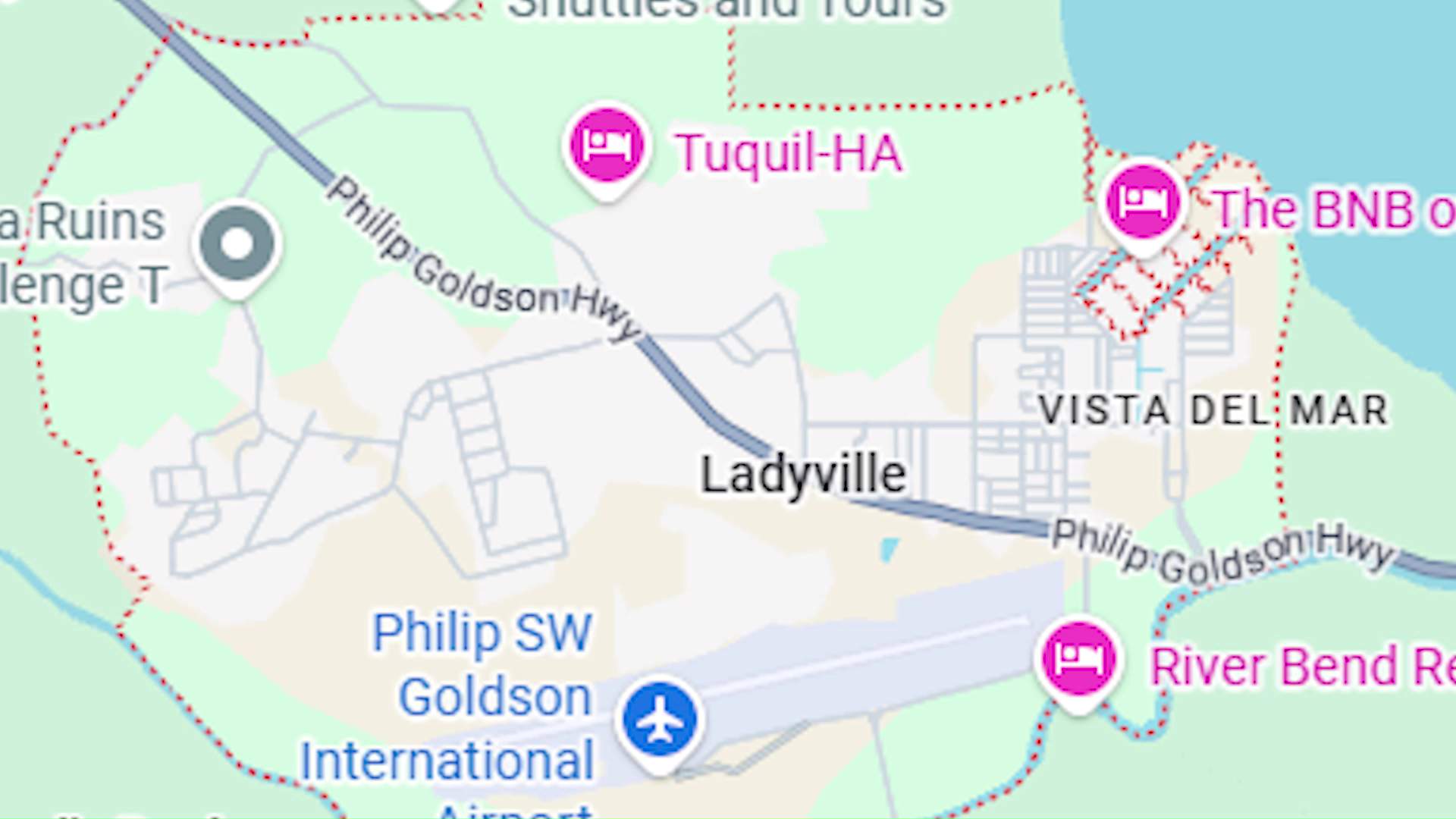
    On a quiet Monday night in late March 2026, what was supposed to be a routine evening of television relaxation for an elderly couple living in Ladyville quickly devolved into a terrifying traumatic encounter that has left the local community on edge.

    According to law enforcement officials, 73-year-old Bobby Austin, a retired American citizen, and his 63-year-old wife Pamela Austin had just settled into their living room just before 9 p.m. when three unknown men forced entry into their private residence. One of the intruders immediately brandished a loaded firearm, intimidating and trapping the couple while the group systematically ransacked the property in search of valuables.

    By the time the assailants fled the scene, they had stolen thousands of dollars worth of personal property. The haul included a luxury Rolex watch appraised at 20,000 Belize dollars, a collection of assorted fine jewelry, sets of keys for both the couple’s home and vehicles, and a newer iPhone 16. Both victims sustained minor physical injuries during the confrontation, and the pair have been left deeply shaken by the violent violation of their home.

    Remarkably, law enforcement officers were dispatched to the neighborhood and arrived at the property while the robbery was still in progress. First responders were able to recover the stolen iPhone shortly after the incident, but the three suspects managed to evade capture and remain at large as of the latest update.

    In the wake of this brazen attack, local investigators have ramped up their manhunt for the perpetrators. Neighbors in the Ladyville community are now grappling with growing fears over personal and property safety, as this armed invasion marks the latest high-profile home invasion to shake the area. As of publication, no new arrests have been announced in the case, and investigations are ongoing.

  • Police, BDF, Coast Guard Heighten Security Ahead of Easter Weekend

    Police, BDF, Coast Guard Heighten Security Ahead of Easter Weekend

    As Belize prepares for the annual Easter holiday weekend, with communities across the nation gearing up for traditional gatherings, public events and recreational outings, national security forces have activated a full-scale coordinated security operation to protect residents and visitors alike. The enhanced initiative brings together three major security agencies — the Belize Police Department, Belize Defence Force (BDF), and the Belize Coast Guard — alongside national transport authorities to cover security across land, road networks and coastal maritime areas.

    Commissioner of Police Dr. Richard Rosado outlined that the 2026 Easter security strategy is centered on three core priorities: increased visible patrol presence, inter-agency collaboration, and proactive threat prevention rather than reactive response. Speaking in an interview ahead of the long weekend, Rosado expressed gratitude to all partner agencies for their unified effort to roll out a cohesive operational framework that safeguards all Belizeans during the holiday period.

    When asked to detail deployment plans for the holiday, Rosado explained that officers have been assigned to cover every public Easter event hosted by municipalities across the country. On major roadways, vehicle checkpoints (VCPs) will operate in peak travel hours, run jointly by police, National Transport officials and traffic wardens to monitor traffic safety and enforce road rules. Along the country’s coastline and key waterways popular with holiday-makers, the BDF and Coast Guard will carry out regular coordinated maritime patrols to respond to any emergency and prevent illegal activity.

    Travelers across Belize can expect to see an increased uniformed presence across all high-traffic areas, including town centers, popular recreation sites, border crossings and coastal access points throughout the Easter weekend. This report is a transcript of an evening television broadcast from a local Belizean news outlet.

  • High-Energy Gospel to Light Up Belize City This Holy Week

    High-Energy Gospel to Light Up Belize City This Holy Week

    As Holy Week approaches in 2026, Belize City is gearing up to host its beloved annual Holy Week Revival Concert, a two-night high-energy gospel gathering designed to bring communities together in faith, fellowship, and collective hope. Now in its fourth iteration, the event traces its origins back to 2023, when it was launched in the aftermath of two devastating crises: the global COVID-19 pandemic and Hurricane Lisa, which left lasting social and economic scars across the city. Conceived by Belize City Mayor Wagner, the concert was originally created to give residents a space for collective healing, renewal, and a rekindled sense of shared purpose after a period of prolonged isolation and disruption.

    This year’s event promises a dynamic lineup that blends homegrown local musical talent with world-famous international gospel acts, headlined by the much-anticipated return of Nigerian gospel superstar Sinach and the internationally renowned reggae gospel group Christafari. Designed to be inclusive for attendees of all ages, the concert frames itself as more than just a musical performance: for city leaders, it is an opportunity to rebuild social connections and strengthen community bonds that were frayed by recent crises.

    Deputy Mayor Eluide Miller shared that the city council has adjusted its approach for the 2026 event, responding to public feedback about event costs that arose after the inaugural 2023 concert. Rather than covering the entire budget with city funds alone, the council prioritized building new public-private partnerships to offset expenses, starting outreach to public agencies and private sector organizations back in late 2025. Those collaborative efforts have already secured more than $100,000 in monetary and in-kind donations from local and regional partners.

    Total projected costs for the 2026 two-night event come out to approximately $236,000, meaning the Belize City Council will cover the remaining $130,000 gap. Miller emphasized that city leaders view this expenditure as a strategic investment in the city’s social fabric, not an unnecessary expense. He noted that widespread business community participation in fundraising reflects broad support for the event’s mission of fostering unity.

    Miller also pushed back against the narrative of significant public pushback, noting that the 2023 event was widely celebrated as the largest gospel concert in Belize’s history, earning warm reception from audiences across the country. For 2026, organizers are doubling down on the event’s core mission: creating a family-friendly, community-focused space where Belize City residents can gather, celebrate their faith, and reaffirm their shared connection. The concert is scheduled to open the evening of March 31 and run through the following night, with organizers expecting large crowds of local attendees and visitors from across the country.

  • BTB Condemns Racist Remark by Licensed Tour Guide

    BTB Condemns Racist Remark by Licensed Tour Guide

    A brewing controversy in Belize’s tourism sector has put issues of racial intolerance and industry professional standards under the spotlight, after a licensed local tour guide made a racist comment targeting Olivia Yacé, Miss Universe Ivory Coast, during her official visit to the Central American nation.

    Yacé was in Belize partnering on collaborative projects with Isabella Zabaneh, the country’s own Miss Universe representative, when the pair shared a public photo of their time together online. It was this post that drew the offensive remark from Alexander Mes, a licensed Belizean tour guide, who published the comment on the public platform.

    Within days of the comment coming to light, the Belize Tourism Board (BTB) issued an official public statement condemning the incident, labeling the remark as deeply unprofessional and highly inappropriate for anyone representing the country’s tourism industry. The regulatory body confirmed that the national Tour Guide Committee has formally launched a full disciplinary review into the incident, which will assess the scope of the violation and determine what formal sanctions are appropriate for Mes.

    Zabaneh, who has hosted Yacé during her visit, publicly shared her disappointment over the incident. She emphasized that the comment was particularly jarring coming from a tour guide, a role explicitly centered on welcoming visitors from around the world and fostering positive cross-cultural connections.

    For her part, Yacé has responded to the incident with a message of resilience, urging young women who face similar online negativity to maintain a positive outlook. She also made clear that the isolated comment would not overshadow her experience in the country, noting that her overall warm impression of Belize and its people remains unchanged.

    Mes issued a formal public apology for his comment on Monday, but public backlash across social media and local communities has not subsided. In the wake of the controversy, BTB has reaffirmed its commitment to upholding strict professional standards across the country’s tourism workforce, stressing that all licensed Belizean tour guides act as representatives of the nation to international visitors. As such, the board says, all guides are required to uphold fundamental standards of respect, inclusivity and professionalism for every guest, regardless of race, nationality or background.

    The disciplinary review remains ongoing as the committee weighs potential outcomes, ranging from fines to suspension or revocation of Mes’ tour guide license, depending on the findings of the investigation.

  • Catalyze Her Potential to Boost Women in Business

    Catalyze Her Potential to Boost Women in Business

    Women entrepreneurs across Belize, particularly those based in underserved rural communities, have gained a transformative new support system to grow their small ventures into sustainable, scalable businesses. Nonprofit organization NIME Belize (International Network of Women in Business) has officially launched the Catalyze Her Potential Catalyzer Project, a three-year strategic partnership with the IDB Lab that addresses long-standing systemic barriers holding women-led businesses back from economic growth.

    As an organization dedicated to advancing women in business across Belize, NIME Belize already serves a network of 280 members spread across the country. This new initiative expands that impact dramatically, with a goal of supporting 250 additional women entrepreneurs through three integrated, high-impact components: hands-on business incubation, one-on-one expert mentorship, and access to critical seed capital that many rural women founders are locked out of through traditional financing channels.

    Katia Montenegro-Hoare, president of NIME Belize, emphasized that the program is designed to deliver far more than just startup funding. Unlike many early-stage entrepreneurship initiatives that focus solely on launching new businesses, the Catalyze Her Potential project prioritizes long-term business sustainability, builds founder confidence, and drives measurable inclusive economic growth that benefits entire communities across Belize. “Our mission has always been to provide the resources, tools, opportunities, and networking that women need to build lasting businesses that contribute to Belize’s economic and social development,” Montenegro-Hoare explained in the official launch announcement.

    Registration for the program is open now and will close on April 10, with all interested women entrepreneurs invited to apply. Full program details, registration instructions, and additional resources are posted to NIME Belize’s official website and social media platforms, making it easy for remote and rural applicants to access information about the opportunity.