标签: Belize

伯利兹

  • ‘I Wouldn’t Put Myself in a Situation to Hurt My Country’, Says New MUB Director

    ‘I Wouldn’t Put Myself in a Situation to Hurt My Country’, Says New MUB Director

    Just weeks ahead of the official casting process for the next Miss Universe Belize (MUB), newly appointed national director Destiny Wagner has broken her silence on the controversy surrounding the franchise’s new ownership, pushing back against criticism and stressing that her top priority remains lifting up Belizean women competing on the global stage.

    Wagner, who took on the role after the franchise was transferred to an El Salvador-based production company, says the appointment came as a completely unexpected turn. “It was definitely not something that I had on my vision board this year, but I’m a firm believer that when an opportunity comes your way, it wouldn’t have come your way if it weren’t meant for you,” she shared in her first public interview since taking the position with local outlet News 5. In fact, Wagner was only contacted about the role the day before her public appointment and signed her contract the night before the official announcement.

    The cross-border transfer of ownership has sparked public pushback, with critics raising concerns about foreign control of the national pageant brand. But Wagner argues that foreign ownership of international beauty pageant franchises is far from an unusual practice, and that outside investment can deliver tangible benefits for emerging local talent. “A lot of pageants in Miss Universe or Miss Earth have franchisees that don’t live in that country but own the franchise, but what they bring is valuable resources that the young women can benefit from,” she explained. She emphasized that she would never accept a role that would harm Belize or the young contestants competing in the pageant, adding, “I have Belize’s best interests at heart, and I always will.”

    Despite initial hesitation about stepping into the high-profile, controversial role, Wagner says she ultimately agreed to take the position after aligning with the production company’s long-term vision for the Miss Universe Belize program.

    The leadership transition has not been without conflict, however. Former national director Destinee Arnold has already publicly stated she plans to mount a legal challenge to reclaim the franchise rights in 2027.

    For the 2026 competition cycle, the process is moving forward as planned. An open casting call is scheduled for July 4 at Belize Pilates, running from 8 a.m. to 2 p.m. Wagner confirmed that the national Miss Universe Belize pageant will be held in mid-August, with the winner going on to compete in the international Miss Universe competition scheduled for November.
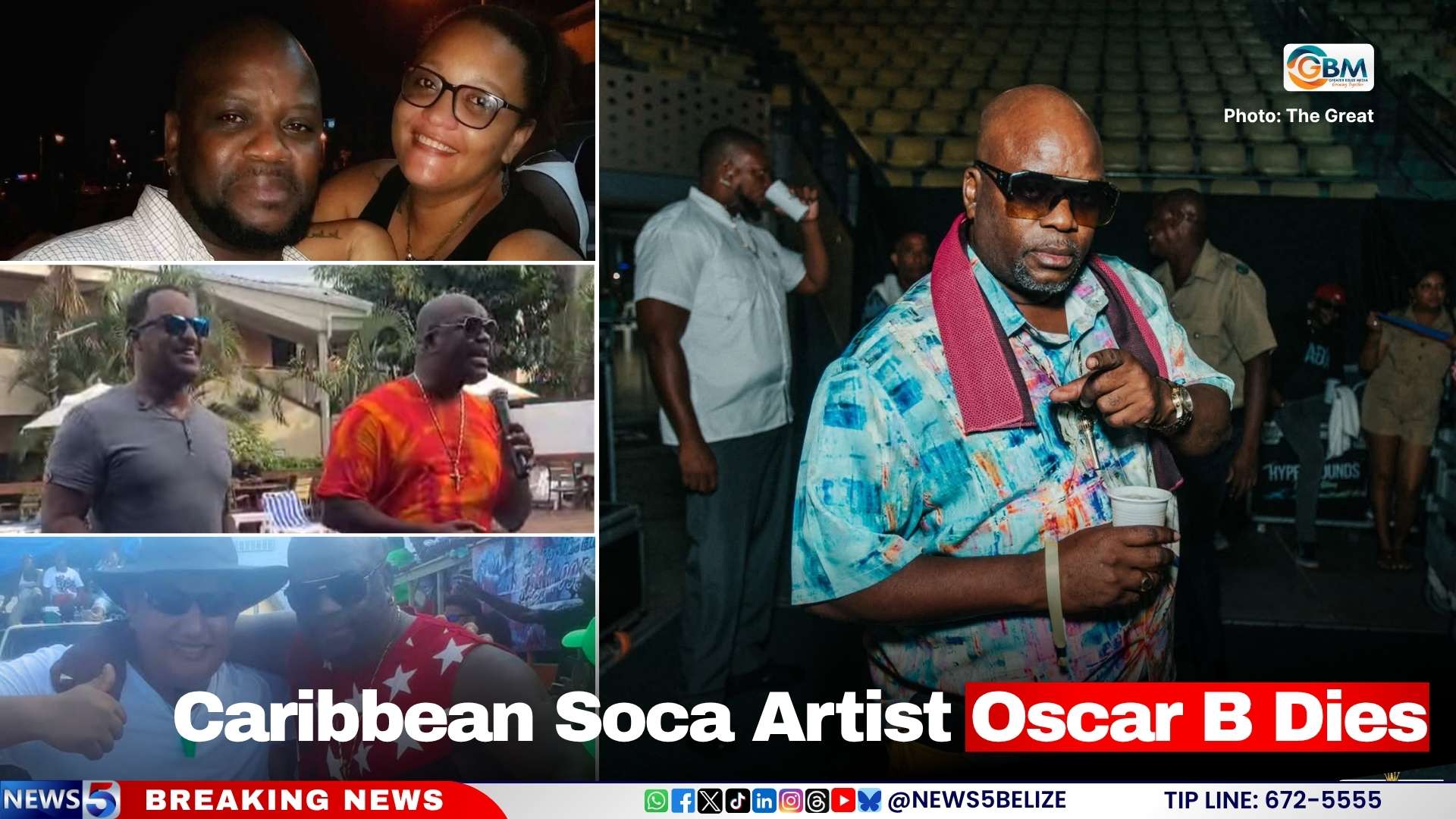

  • Caribbean Soca Artist Oscar B Dies

    Caribbean Soca Artist Oscar B Dies

    The Caribbean music community is in mourning this week following the passing of legendary Trinidadian soca artist Oscar Dennis Benjamin, professionally known as Oscar B, who died on a Sunday morning in June 2026 after a prolonged battle with illness. Fans across Belize – a nation where his upbeat tracks became a staple of annual national September celebrations – are among the thousands grieving the loss of a performer who built a decades-long bond with local audiences.

    Oscar B first catapulted to international recognition as the lead vocalist for Byron Lee and the Dragonaires, a group widely regarded as one of the most influential soca and calypso acts in Caribbean history. It was during his tenure with the band that he first established his deep connection to Belize, joining the group for annual performances during the country’s September independence celebrations, quickly growing from a visiting performer to a familiar, fan-favorite figure.

    After departing the Dragonaires to pursue a solo career, Oscar B refused to let his relationship with Belizean audiences fade. He continued to return to the country for regular tour dates, delivering high-energy live sets that drew sell-out crowds, and became just as famous for his iconic signature “butterfly” dance move as he was for his catchy, rhythm-driven tracks.

    In a touching show of regional support just days before his death, Tobago’s Chief Secretary Farley Augustine announced during a budget debate in the Tobago House of Assembly that lawmakers had approved emergency funding to cover Oscar B’s ongoing medical costs. In his announcement, Augustine highlighted the underrecognized impact the singer had on Caribbean culture, noting, “We have Oscar B ordinarily singing at our functions and not realising his mark on the region and the globe.”

    In the wake of his passing, heartfelt tributes have flooded social media and community spaces from both Tobago and Belize, with countless fans sharing intimate, personal memories of interactions with the star. One woman recalled celebrating her wedding anniversary on Caye Caulker when she and her husband encountered Oscar B at the famous Split beach spot. After asking for a photograph and mentioning their special occasion, she said the singer immediately serenaded the couple with an impromptu performance that made their day unforgettable.

    Another fan shared the story of being pulled on stage at the Biltmore to dance the iconic butterfly alongside the performer, describing the moment as one of the most joyful experiences of her life. Other memories include a private performance at a friend’s 50th birthday party in 2018, and a 2017 encounter at a Belize City store where Oscar B signed a Trinidadian one-dollar bill for a fan as a personalized keepsake. For many, the legacy of Oscar B extends far beyond his music, living on in the small, kind moments he shared with fans across the Caribbean.

  • Hospital Condemns Unauthorised Recording of Patient

    Hospital Condemns Unauthorised Recording of Patient

    Officials from Belize’s largest public healthcare facility, the Karl Heusner Memorial Hospital Authority (KHMHA) based in Belize City, have issued a formal public call for the immediate takedown of an unauthorized patient video circulating widely across social media platforms. The recording, which captures an unidentified patient admitted after a violent assault, has drawn sharp criticism from hospital leadership for flagrant violations of the individual’s fundamental rights to privacy and personal dignity.

    In an official statement released to the public on June 29, 2026, KHMHA leaders outlined deep concern over the unregulated spread of the footage, which was captured without the patient’s consent either by an unauthorized visitor or a member of the public before being shared online. The patient is currently receiving ongoing care at the facility for injuries sustained in the violent attack that led to their hospitalization.

    The KHMHA statement emphasized a core principle of patient-centered care: every individual receiving treatment within the hospital’s wards is more than just a medical case. “Behind every bed in our wards is a person, someone’s mother, father, child, or friend, going through one of the most vulnerable moments of their life,” the statement read. “They deserve compassion, and above all, they deserve privacy.”

    Hospital management is urging all social media platforms users who have shared or reposted the video to remove it immediately, framing the request as a necessary action to uphold the patient’s basic human rights. Officials stressed that the requirement for patient privacy is not merely an internal institutional rule—it is a foundational expectation of basic human decency. “This is not just hospital policy; it is a matter of basic human respect,” the statement concluded.

  • Here’s Who Made It and Who Didn’t in the FIFA World Cup Round of 32

    Here’s Who Made It and Who Didn’t in the FIFA World Cup Round of 32

    After weeks of tense group-stage action across North America, the 2026 FIFA World Cup has moved past its opening round, with the full lineup of the expanded 32-team knockout stage now confirmed. The world’s biggest football tournament is entering its first elimination round, where every match will bring win-or-go-home stakes as sides battle to advance to the Round of 16.

    All of the pre-tournament favorites have lived up to expectations to secure their place in the knockouts. Defending 2022 champions Argentina finished atop Group J, joined by co-hosts the United States and Mexico, and traditional global powerhouses Brazil, France and Germany. Beyond the elite sides, a crop of surprise underdog qualifiers has already cemented this tournament as one of the most unpredictable in recent memory.

    Individual performances have also captured global football fans’ attention throughout the group stage, with three star attackers standing out above the rest. Argentina’s captain Lionel Messi made history during his side’s final group match against Austria, netting two goals to push his career World Cup goal total to 18, making him the tournament’s all-time leading scorer. France’s Kylian Mbappé has matched Messi’s red-hot form, notching four goals across just two group matches to keep Les Bleus as clear title favorites alongside Argentina.

    The breakout star of this year’s group stage, however, is Norway’s Erling Haaland. The elite club striker has exploded onto the World Cup scene in his first tournament appearance, scoring four goals in two group matches. This achievement makes Haaland only the second player in the last half-century to score twice in each of his opening two World Cup matches, a feat last achieved by England’s Harry Kane in 2018, and has sparked a massive wave of global support for Norway’s deep tournament run.

    The biggest story of the 2026 group stage, though, is the unprecedented success of African nations. For the first time in World Cup history, seven African sides have advanced to the knockout round. South Africa has reached the Round of 32 for the first time in its history, while Cape Verde qualified in its World Cup debut. Both DR Congo and Egypt have also booked their first ever spots in the knockout stage, with 2022 semi-finalists Morocco, plus Ivory Coast, Senegal, Ghana and Algeria rounding out the continent’s qualified sides. Analysts widely describe this as the strongest group-stage performance by African nations in World Cup history.

    Not every side walked away from the group stage with a positive result, however. Former 2022 host Qatar suffered a disappointing early exit, finishing the group stage with just one point to crash out before knockouts. Iran, Scotland and South Korea all finished third in their respective groups, but failed to accumulate enough points to claim one of the spots for highest-ranked third-place teams, sending all three home early.

    The single-elimination Round of 32 kicks off June 28 and will run through July 3, with the winner of each matchup moving on to the Round of 16 as the tournament narrows its path to the 2026 World Cup final.

  • Ebola’s Fastest Spread Yet Amps Up Emergency Response

    Ebola’s Fastest Spread Yet Amps Up Emergency Response

    In a development that has elevated global public health concerns, a rapidly expanding Ebola outbreak spreading across the Democratic Republic of the Congo (DRC) and Uganda has prompted the United States Centers for Disease Control and Prevention (CDC) to activate its highest tier of emergency response. As of June 28, 2026, public health experts confirm this outbreak marks the fastest first-month spread of Ebola ever recorded, and the virus has for the first time in this crisis reached European territory.

    According to reporting from Reuters, the CDC elevated its emergency activation status to Level 1 this past Friday. This highest alert classification has only been used for the most severe public health and disaster events in recent U.S. history, including the aftermath of Hurricane Katrina, the 2009 global swine flu pandemic, and the devastating 2014 Ebola crisis that swept West Africa. The outbreak is being driven by the Bundibugyo strain of the Ebola virus, which has already infected more than 1,200 people across the DRC and an additional 20 people in neighboring Uganda. Official counts have confirmed 321 deaths linked to the virus so far.

    To ramp up global containment efforts, the White House has formally requested more than $1.4 billion in emergency funding from U.S. Congress. Of that requested allocation, $800 million is earmarked for the construction and operation of a dedicated regional quarantine facility in Kenya, which would serve as a hub for treating patients and stopping cross-border spread across East and Central Africa.

    In a development that underscores the outbreak’s global reach, French health officials confirmed the first Ebola case diagnosed in Europe earlier this week. BBC reporting confirms the patient is a medical doctor who had recently returned from a humanitarian aid deployment working on the outbreak response in the DRC. The doctor is currently receiving care in a specialized isolation facility and is listed in stable condition. French public health authorities emphasize that the patient was placed into immediate isolation upon returning, and they maintain that the overall risk of wider spread across Europe remains “very low.”

    The World Health Organization (WHO) has echoed that assessment, noting that while the outbreak’s rapid spread demands urgent coordinated action, the overall risk to the rest of the global population remains low. “There is no need to panic,” WHO Director-General Tedros Adhanom Ghebreyesus stated in comments reported by the BBC, calling for targeted investment in response efforts rather than widespread public fear.

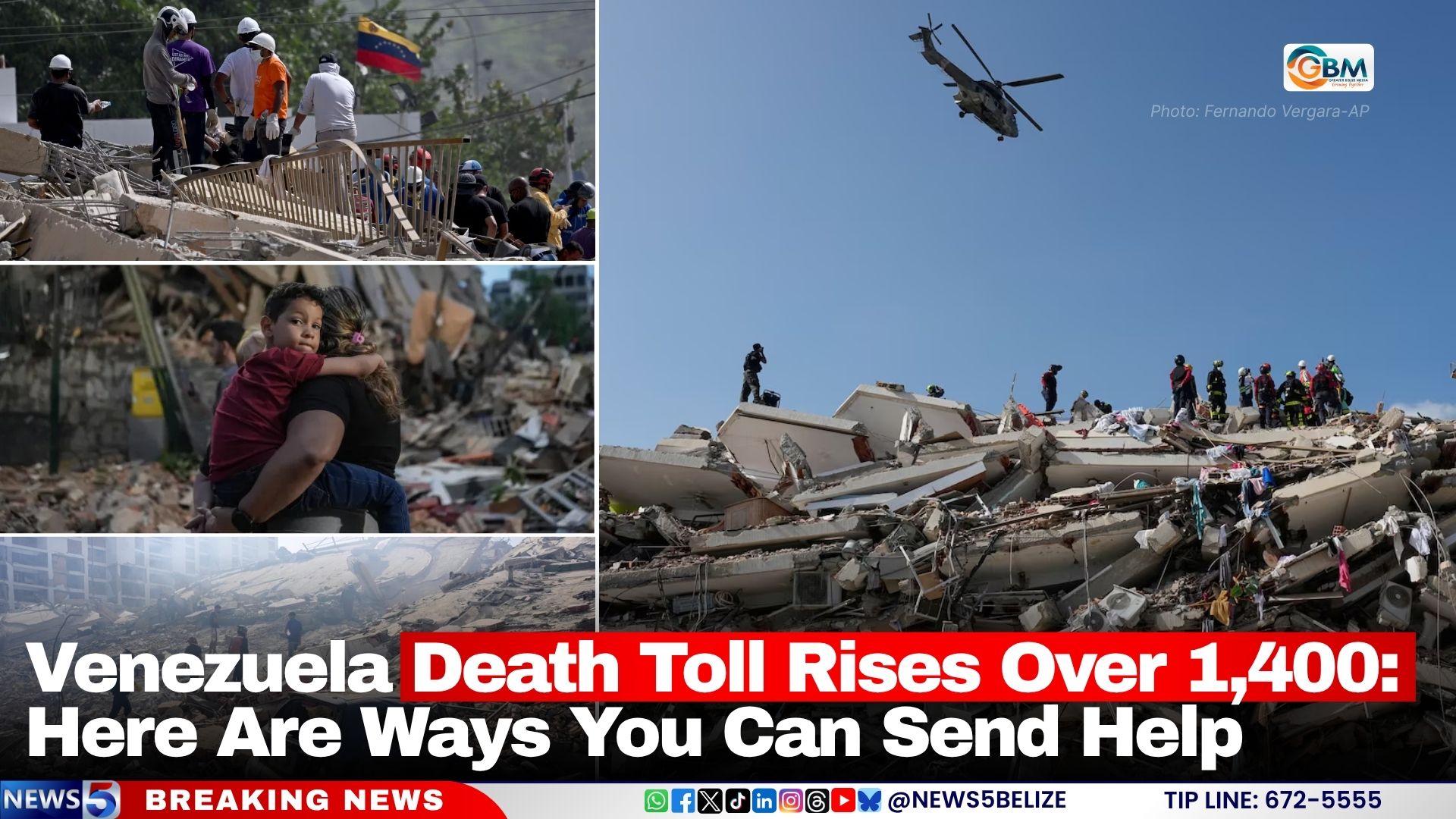
  • Venezuela Death Toll Rises Over 1,400: Here Are Ways Belizeans Can Send Help

    Venezuela Death Toll Rises Over 1,400: Here Are Ways Belizeans Can Send Help

    Three days after a pair of devastating earthquakes struck Venezuela on June 24, 2026, the human cost of the disaster continues to climb. Official updates put the confirmed death toll at 1,430, with nearly 69,000 people still unaccounted for and an estimated 6.76 million residents impacted across affected regions. As international rescue teams ramp up search and recovery operations, Venezuelan officials have shared clear, official channels for residents of Belize who wish to contribute humanitarian support to the crisis response.

    Gerardo Antonio Argote, Venezuela’s Ambassador to Belize, has highlighted two verified avenues for donations: a dedicated national reconstruction fund administered by the Development Bank of Latin America and the Caribbean (CAF), and an emergency fundraising effort run by UNICEF.

    For donors choosing to contribute directly to Venezuela’s long-term recovery and reconstruction, CAF manages the official Fund for the Recovery and Reconstruction of Venezuela, accepting donations in both U.S. dollars and euros. To complete a donation, contributors must first coordinate with CAF, include the reference line “Fondo para la Recuperación y Reconstrucción de Venezuela” alongside the donor’s full name in the transfer details. After processing the transfer, donors are required to send a copy of their bank receipt to alianzas@caf.com and trustfunds@caf.com, along with their full name, donation amount, currency used, transfer date, and contact information.

    The second verified pathway is through UNICEF’s emergency response appeal, which is focused on meeting urgent needs for vulnerable communities, particularly children. The organization estimates that 1.8 million people, including 680,000 children, currently require life-saving humanitarian support across earthquake-impacted areas. UNICEF has already pre-positioned and deployed critical medical supplies, clean water infrastructure, and sanitation materials, but has issued a call for $52 million in additional funding to sustain its operations through the coming weeks and months.

    “Three days into the response, the scale of need is becoming clearer,” explained Manuel Rodriguez Pumarol, UNICEF’s Representative in Venezuela. “Hospitals are operating beyond capacity, thousands of children don’t have reliable access to safe water, and many schools have been damaged.”

    Acroads the worst-hit regions of La Guaira and Caracas, more than 2,000 rescue teams from 21 different international organizations continue working around the clock to pull survivors from collapsed structures and clear rubble. The international community has stepped up with additional support in recent days: the Trump administration confirmed it is preparing a new nine-figure aid package for Venezuela, which comes on top of the $150 million in emergency aid committed the day after the earthquakes struck. Per reporting from NBC News, SpaceX’s Starlink satellite internet service has also committed to providing free connectivity to support emergency coordination and recovery operations throughout the impacted zone.

    Even as rescue efforts progress, survivors are still grappling with the trauma of the disaster. “People are still terrified to reenter what were their homes,” Loyce Pace, regional director for the International Red Cross, told NBC News.

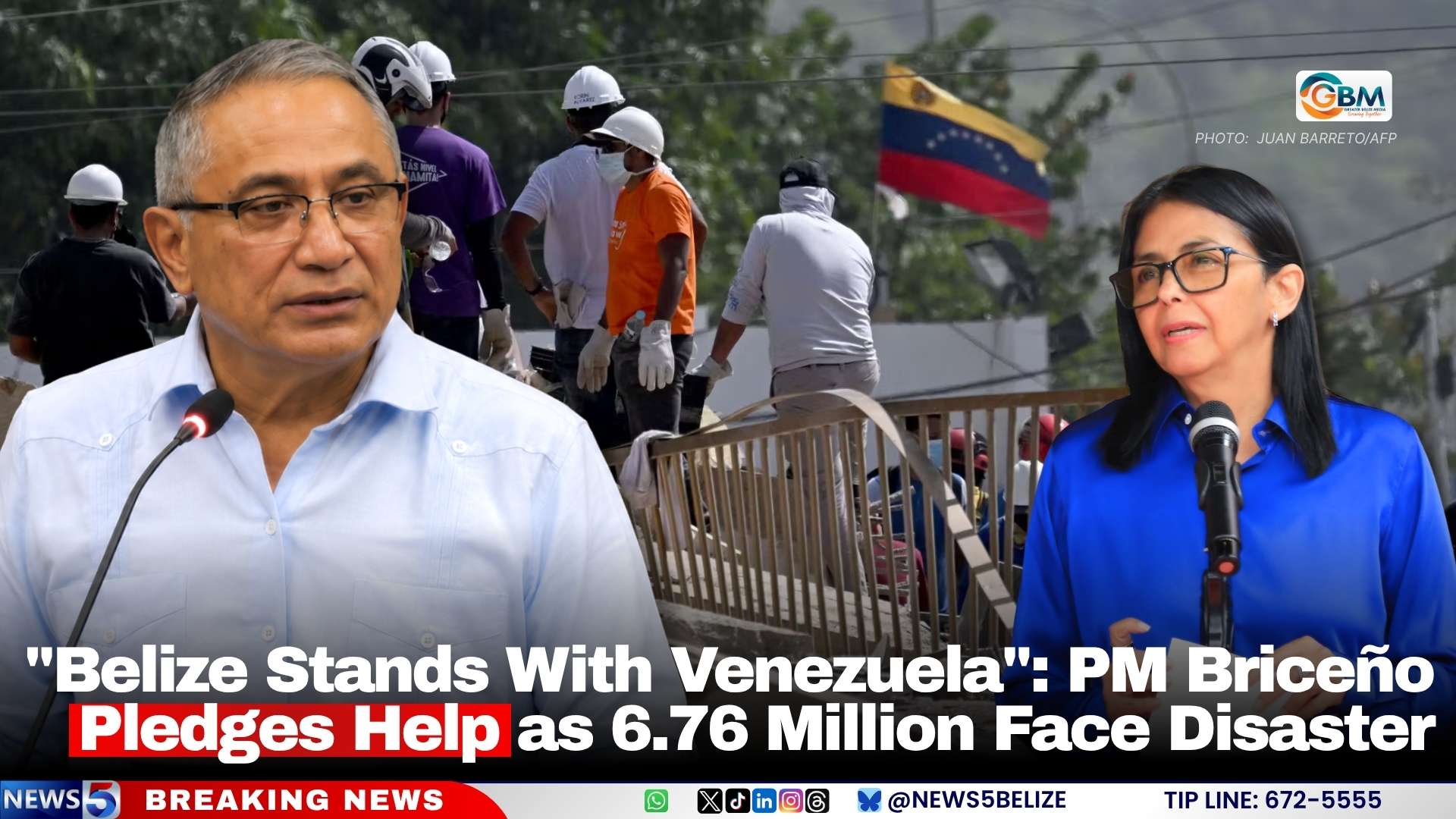
  • “Belize Stands With Venezuela”: PM Pledges Briceño Help as 6.76 Million Face Disaster

    “Belize Stands With Venezuela”: PM Pledges Briceño Help as 6.76 Million Face Disaster

    A devastating sequence of back-to-back earthquakes that hit Venezuela last Wednesday has triggered a large-scale humanitarian emergency, with early assessments from the International Organization for Migration (IOM) projecting that up to 6.76 million people across the country will be impacted by the disaster. The human toll of the tremors is particularly acute in the capital, Caracas, where an estimated 2 million residents have been affected by the damage and disruption.

    In a collaborative analysis combining geospatial data and artificial intelligence, the Microsoft AI for Good Lab and IOM used satellite mapping to assess infrastructure damage. Their initial findings reveal that more than 30 percent of all structures in the coastal city of Catia La Mar have sustained damage, underscoring the widespread destruction of the seismic event. As displaced families flee damaged and unsafe areas to seek refuge, IOM warns that internal displacement will continue to climb in the coming days, and has issued an urgent call for coordinated international support to address the growing crisis.

    “IOM Director General Amy Pope emphasized the critical importance of the immediate post-disaster window, noting, ‘The first hours and days after a disaster are decisive. They shape everything that follows.’ The organization has already begun moving quickly to expand its on-the-ground response: pre-positioned emergency relief stocks are being deployed to affected areas, and IOM is working alongside the Venezuelan government and local humanitarian partners to deliver emergency shelter, life-sustaining supplies, and protection services for vulnerable populations.

    In a show of regional solidarity, Belize’s Prime Minister John Briceño announced on Friday that the Central American nation is ready and willing to contribute to Venezuela’s post-disaster recovery efforts. Briceño shared in an online public statement that he held a direct conversation with Venezuelan President Delcy Rodríguez immediately in the wake of the earthquakes to extend condolences and offers of support. ‘I assured her that Belize stands with the Venezuelan people and is ready to assist, including deploying Belizean linesmen to help restore electricity,’ Briceño stated.

    Beyond disaster relief, the IOM has outlined the most pressing unmet needs for displaced and affected communities: emergency temporary housing, clean drinking water, functional sanitation infrastructure, access to acute healthcare, targeted protection services for vulnerable groups, and basic essential supplies.

    In a reassuring update, Belize’s Ministry of Education confirmed that all Belizean students enrolled in academic programs in Venezuela have been located and confirmed to be unharmed. No physical injuries have been reported among the group, according to officials. Belize’s Ministry of Foreign Affairs continues to closely monitor the evolving situation through the country’s diplomatic mission in Caracas. Oscar Arnold, Chief Executive Officer at the Ministry of Education, explained that Belize’s Ambassador to Venezuela Annie Lou Burns personally reached out to every Belizean student in the country immediately after the earthquakes to confirm their safety. Arnold added that the ambassador had previously conducted emergency preparedness drills with the student community, where students were instructed to maintain pre-packed emergency go-bags with essential supplies in case of a natural disaster – preparation that likely helped them stay safe in the immediate aftermath of the tremors.

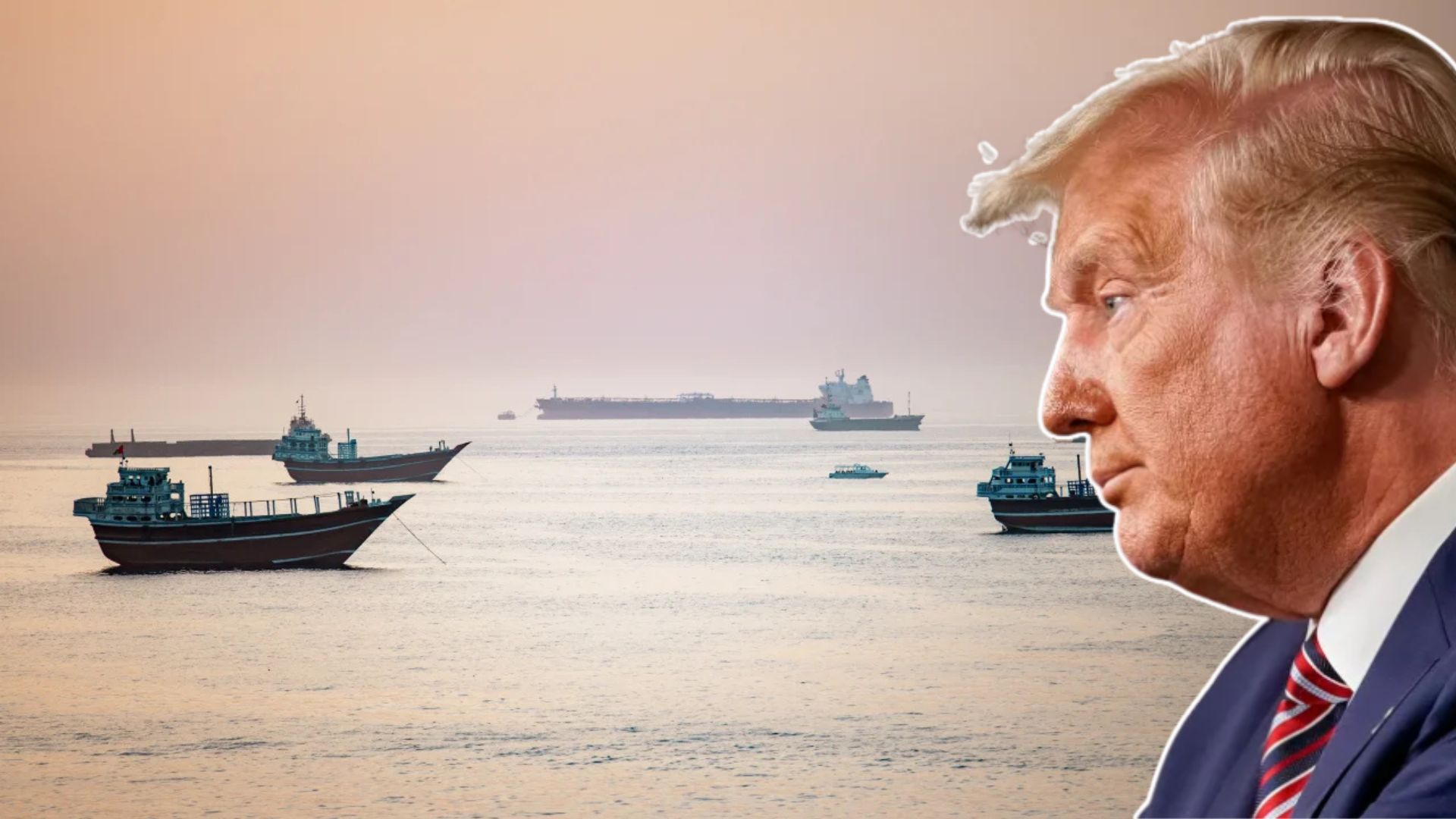
  • Iran’s “foolish violation”: is Trump and Iran’s Interim Truce Over?

    Iran’s “foolish violation”: is Trump and Iran’s Interim Truce Over?

    Just one week after a fragile interim ceasefire was brokered between the United States and Iran, a suspected drone attack on a commercial cargo vessel in the Strait of Hormuz has sent tensions soaring, bringing the already shaky truce to the edge of collapse. The incident, which unfolded Thursday off the Omani coast, targeted the Singapore-flagged Ever Lovely, a vessel owned by Taiwan-based shipping giant Evergreen Marine. According to early reports from BBC News, the ship was traveling along a standard southern route parallel to Oman’s coastline when it was hit by an unmanned projectile. Remarkably, none of the crew members on board suffered injuries, and the Ever remained seaworthy enough to continue its scheduled voyage after the attack.

    Within hours of the incident, former U.S. President Donald Trump, who negotiated the 60-day interim truce, publicly condemned Tehran on his social platform Truth Social, labeling the strike a “foolish violation” of the signed agreement. Trump confirmed that U.S. defense systems intercepted three incoming drones before the attack, but a fourth managed to penetrate defensive lines and hit the cargo ship. “Damage was done, but the ship was able to proceed on its way,” he wrote in his post, setting the stage for a swift military response.

    Shortly after Trump’s public remarks, the U.S. military launched retaliatory strikes against key Iranian military infrastructure, targeting missile and drone storage facilities as well as coastal radar sites along Iran’s Gulf coast. A U.S. military official speaking to Al Jazeera described Tehran’s alleged actions as “unwarranted aggression” that “clearly violated” the terms of the temporary ceasefire.

    To date, Iranian officials have not formally claimed responsibility for the drone strike. However, hours before the incident, the Islamic Revolutionary Guard Corps (IRGC), Iran’s elite military force, issued a stark warning that any commercial vessels failing to coordinate directly with the Iranian navy while transiting the strait would face serious security risks. The IRGC also doubled down on its rejection of diplomatic engagement with Washington, flatly denying that any permanent communication channels had been established between the two governments. “The Strait of Hormuz is Iranian territory and has no connection to the United States,” an IRGC spokesperson told Al Jazeera, reinforcing Iran’s long-standing stance on sovereignty over the critical waterway.

    Beyond the immediate military and diplomatic fallout, the attack has already derailed critical international humanitarian efforts. The International Maritime Organization (IMO) announced it has paused plans to evacuate more than 11,000 seafarers who have been stranded in the Gulf region amid months of escalating tensions. Under the terms of the interim truce, both Washington and Tehran had agreed to a 60-day window to negotiate a permanent, lasting agreement to de-escalate hostilities in the Gulf. That timeline, once seen as a tentative breakthrough after years of open hostility, is now facing unprecedented strain, with many regional analysts warning the truce could collapse entirely within days if both sides do not step back from further escalation.

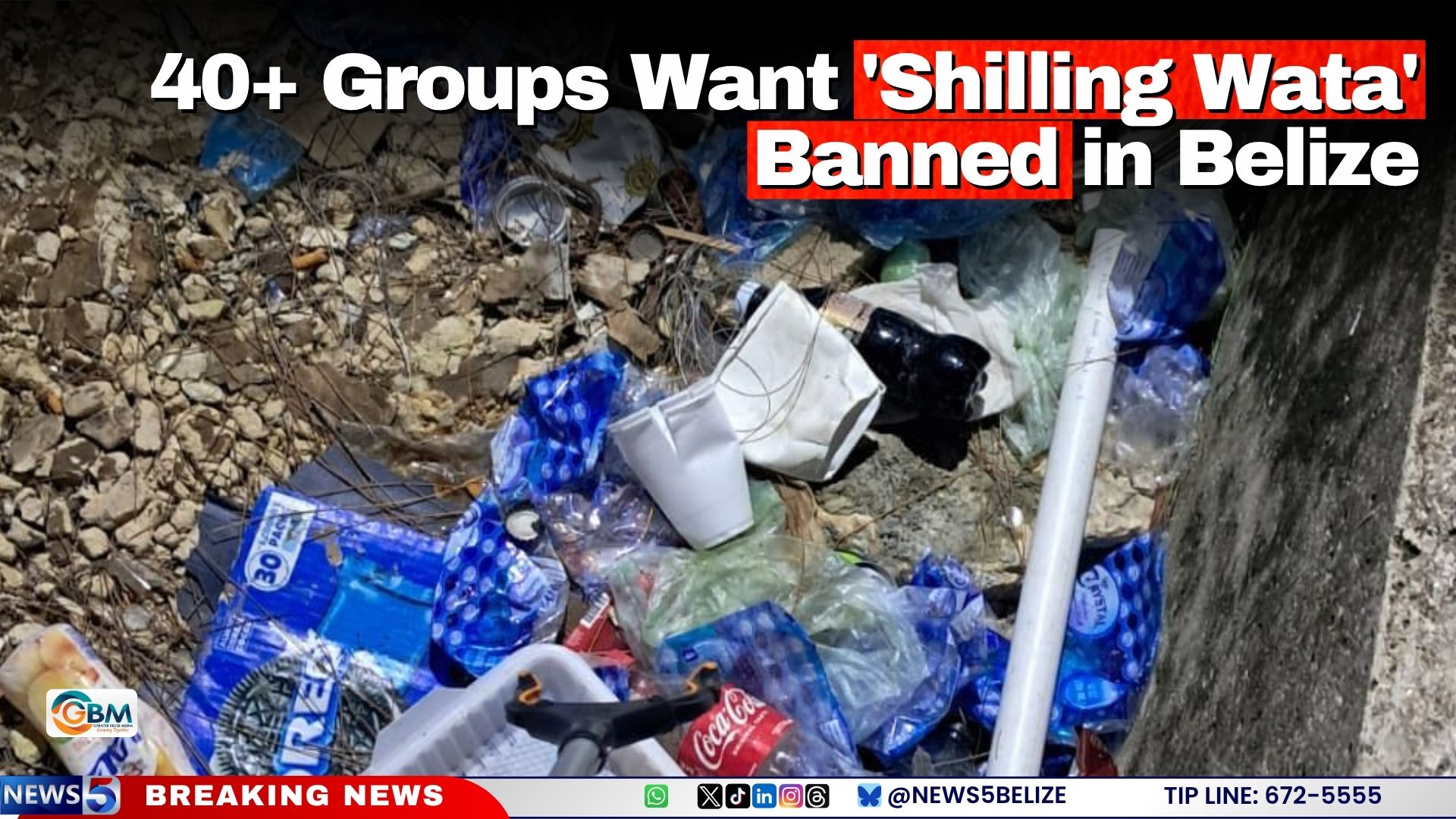
  • 40+ Groups Want ‘Shilling Wata’ Banned in Belize

    40+ Groups Want ‘Shilling Wata’ Banned in Belize

    In a growing push to curb plastic pollution across Belize, a broad coalition of more than 40 civil society organizations, academic institutions, and private businesses is demanding a three-year phased national ban on the ubiquitous single-use plastic water pouches locally known as “shilling wata”.

    The campaign, which first launched with an initial proposal submitted to national regulators in April, gained significant traction this week when coalition members submitted an updated letter to Minister of Sustainable Development Orlando Habet and Chief Environmental Officer Anthony Mai, adding dozens of new supporting organizations to the effort. The revised list of signatories, delivered to officials on Thursday, now includes major national stakeholders such as the University of Belize, Galen University, the Belize Audubon Society, Oceana Belize, the Belize Zoo, the Belize Territorial Volunteers, and a wide range of leading tourism and conservation groups across the country.

    Coalition members emphasize that these low-cost single-use water pouches have emerged as one of the most pervasive and damaging plastic waste products currently circulating in Belize. Discarded pouches are found littered across public spaces nationwide: blown across neighborhood streets, clogging urban canals and rural rivers, scattered across school playgrounds and campuses, and even dumped and discarded across the seafloor of Belize’s ecologically critical coastal ecosystems.

    The coalition’s statement outlines the unique environmental hazards posed by these pouches, noting that they are manufactured from non-recyclable low-density plastic that cannot be processed or recovered through Belize’s existing waste management infrastructure. As the pouches break down over time, they release complex microplastic particles that contaminate marine ecosystems, the country’s freshwater supplies, and agricultural and natural soils, creating long-term risks for both biodiversity and public health.

    To balance environmental action with practical adjustment for industry and consumers, the coalition has laid out a gradual, three-phase timeline for the ban. In the first year following implementation, the restriction would apply only to single-use water pouches sold or distributed in all government-owned buildings and at events officially sanctioned by the Belizean government. In the second year, the ban would expand to all primary, secondary, and post-secondary educational institutions across the country. By the third year, the coalition is calling for a full national ban that covers all production, importation, distribution, and retail sale of the plastic water pouches nationwide. Supporters argue that this gradual rollout will give producers, distributors, and consumers adequate time to transition to more sustainable alternative packaging options, reducing economic disruption while delivering long-term environmental benefits.

  • Marin Faces Questions Over Controversial Mira Transactions

    Marin Faces Questions Over Controversial Mira Transactions

    As of June 26, 2026, political pressure is rapidly building around Florencio Marin Junior, the long-serving Minister of Belize’s Ministry of National Defense and Border Security, over questionable financial transactions linked to the Mira family that all occurred during his tenure leading the department.

    An official audit has been launched to investigate the controversial spending within the ministry, and Marin is required to provide direct testimony to the Auditor General regarding the handling of these deals. During an on-the-record press interview with reporter Paul Lopez on Wednesday, Marin declined to answer most pressing questions, insisting he would not make any public comments that could prejudice the ongoing independent investigation.

    When pressed to guarantee that all products and construction works paid for through public funds were actually delivered and completed, Marin stated: ‘I am prepared to speak, but please let us have the audit finish first. I believe it is ongoing and right now we reserve our comments for when that comes out.’ He also confirmed that the Prime Minister has publicly estimated the audit process will take approximately 90 days to complete, and any decision to release the full final report to the Belizean public falls to the Prime Minister, not his office.

    In addition to the transaction scrutiny, a separate cabinet-level debate has emerged over a proposal from Blue Economy Minister Andre Perez to raise the current $10,000 mandatory spending threshold for government ministries. Perez argues that widespread inflation and rising operational costs have made the current cap too restrictive to allow government departments to carry out work efficiently. When asked for his position on the proposal, Marin again declined to comment, noting that as the minister currently under audit investigation, he prefers not to make any public statements related to government spending rules until the inquiry concludes. He told reporters: ‘I have my opinion on that, but I would rather wait for afterwards. I don’t want for anything in anyway, to comment something that would prejudice the audit.’

    New questions have also arisen about the whereabouts of the former Financial Officer who approved the questioned transactions during the audit period. Marin told reporters that when he returned to lead the ministry in 2025, the officer had already been transferred out of the department, and he has no knowledge of where the officer is currently assigned. When asked if the former Financial Officer will be interviewed as part of the audit, Marin directed all questions about the audit’s scope and process to the Auditor General’s office.

    In response to queries about current operations for the Belize Defense Force, specifically the regular supply of meals and nutrition for service members both at base and in the field, Marin stated that daily operations remain unchanged, and all troops continue to receive their required rations. He directed further questions about military operations to the defense force command. When reporters contacted Commander Velasquez for comment during a public event in Belmopan on Wednesday, he declined to participate in an interview and referred questions to Lieutenant Colonel Burns.

    This report is a transcribed version of an evening television news broadcast, with all Kriol-language statements transcribed using a standardized spelling system for accuracy.