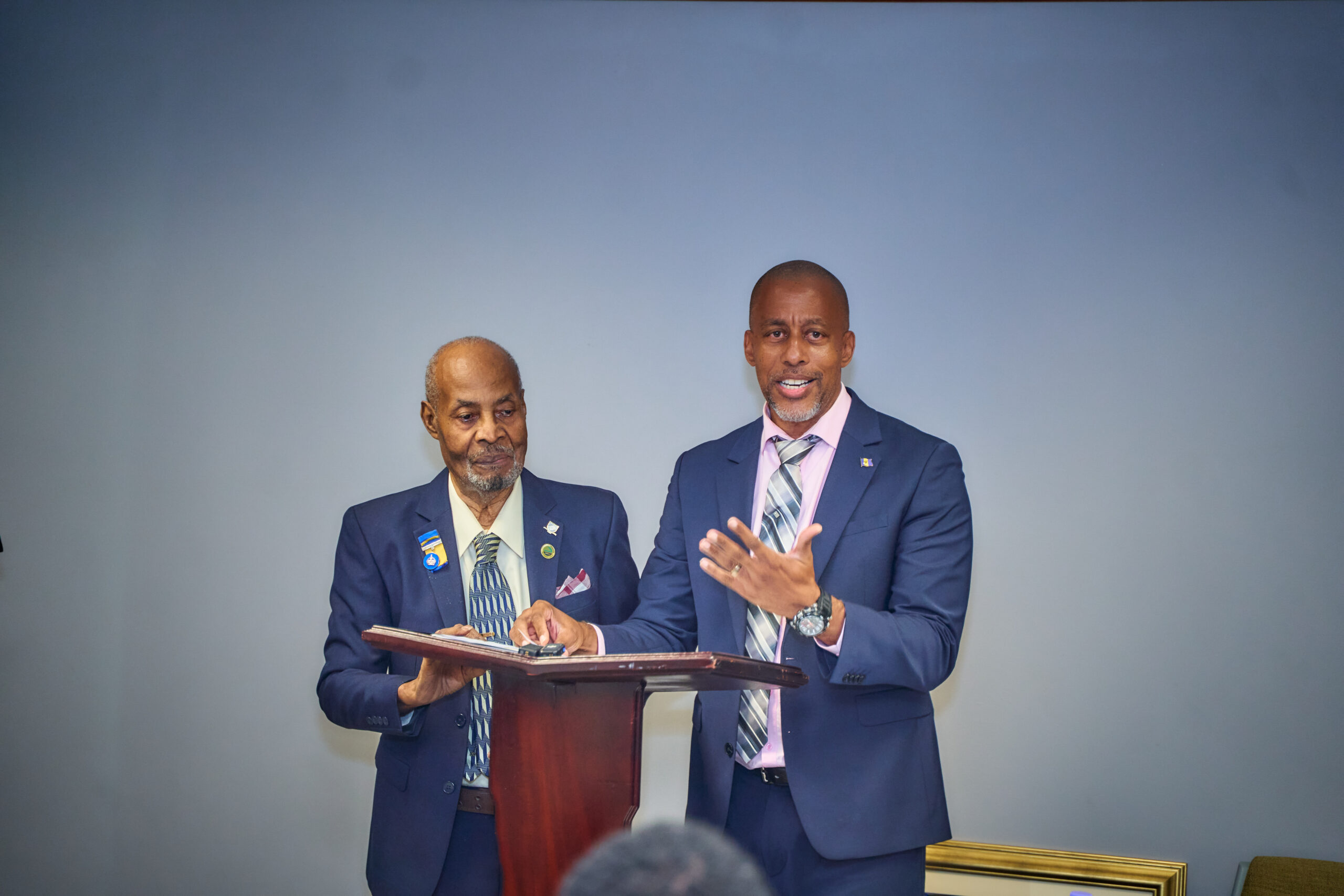
Dudley Rhynd, the inaugural national standards director of Barbados and a key architect of the Caribbean’s quality infrastructure, was celebrated as a transformative figure in regional development during a special ceremony marking World Quality Day 2025. The event, held at the Barbados National Standards Institution (BNSI) headquarters in Warrens under the theme “Quality: Think Differently,” brought together top officials to honor Rhynd’s enduring legacy. Latoya Burnham, CEO of the CARICOM Regional Organisation for Standards and Quality (CROSQ), hailed Rhynd as “a true stalwart of Caribbean quality,” emphasizing his visionary leadership and foundational contributions to regional standards. “Dudley Rhynd’s tireless efforts and unwavering belief in regional integration transformed ideas into actionable frameworks, strengthening trade, protecting consumers, and enhancing competitiveness across the Caribbean,” Burnham remarked. She noted that Rhynd’s influence extends beyond CROSQ’s creation, shaping the Caribbean’s approach to quality as both a technical concept and a cultural mindset. BNSI Chairman Ryah Brathwaite echoed these sentiments, describing Rhynd as “a visionary whose lifetime of purpose has left a lasting impact across Barbados, the Caribbean, and beyond.” Brathwaite highlighted Rhynd’s role in establishing BNSI as a beacon of excellence and his contributions to fostering regional unity through institutions like CROSQ. In his acceptance speech, Rhynd expressed gratitude to his colleagues, emphasizing the collaborative nature of his achievements. “I share these tributes with the many people who supported me along the way,” he said. Rhynd’s 33-year tenure as BNSI’s founding director until his retirement in 2006 laid the groundwork for Barbados’ and the Caribbean’s standards and quality infrastructure. His career, marked by a commitment to quality assurance and regional integration, has been widely recognized for advancing trade, consumer protection, and competitiveness.
标签: Barbados
巴巴多斯
-

Motorists urged to check compliance as new tint rules start Dec 1
Barbados is set to implement new vehicle tint regulations starting December 1, with authorities urging motorists to ensure compliance before the deadline. Deputy Chief Licensing Officer Lynette Williams emphasized that the updated rules, ratified earlier this year, aim to bolster road safety and aid law enforcement in crime prevention by enhancing visibility into vehicles. According to the regulations, front passenger and driver windows must allow at least 25% light transmission, rear windows and rear windscreens 20%, and front windscreens 70%. A three-percentage-point margin of error is permitted during tint testing. To assist drivers, free tint testing services are available at Oistins and the NCF car park in West Terrace. The new rules, part of the Road Traffic Act, prohibit metallic and mirrored tints and apply uniform standards to both private and public service vehicles. Visor tints must also meet a minimum 25% light transmission, with size restrictions based on windscreen height. Exemptions are available for drivers with medical conditions, provided they submit a specialist’s report. The Barbados Licensing Authority (BLA) stated that these measures aim to empower law enforcement by ensuring clear visibility into vehicles, thereby deterring criminal activity and aiding investigations. Motorists with non-compliant tints must remove them to avoid penalties once enforcement begins. Detailed information on the regulations is accessible on the websites and social media platforms of the BLA and the Ministry of Transport and Works. Authorities anticipate heightened public awareness to facilitate a seamless transition when the rules take effect.
-
President marks Queen’s College 25-year Cadet Corps milestone
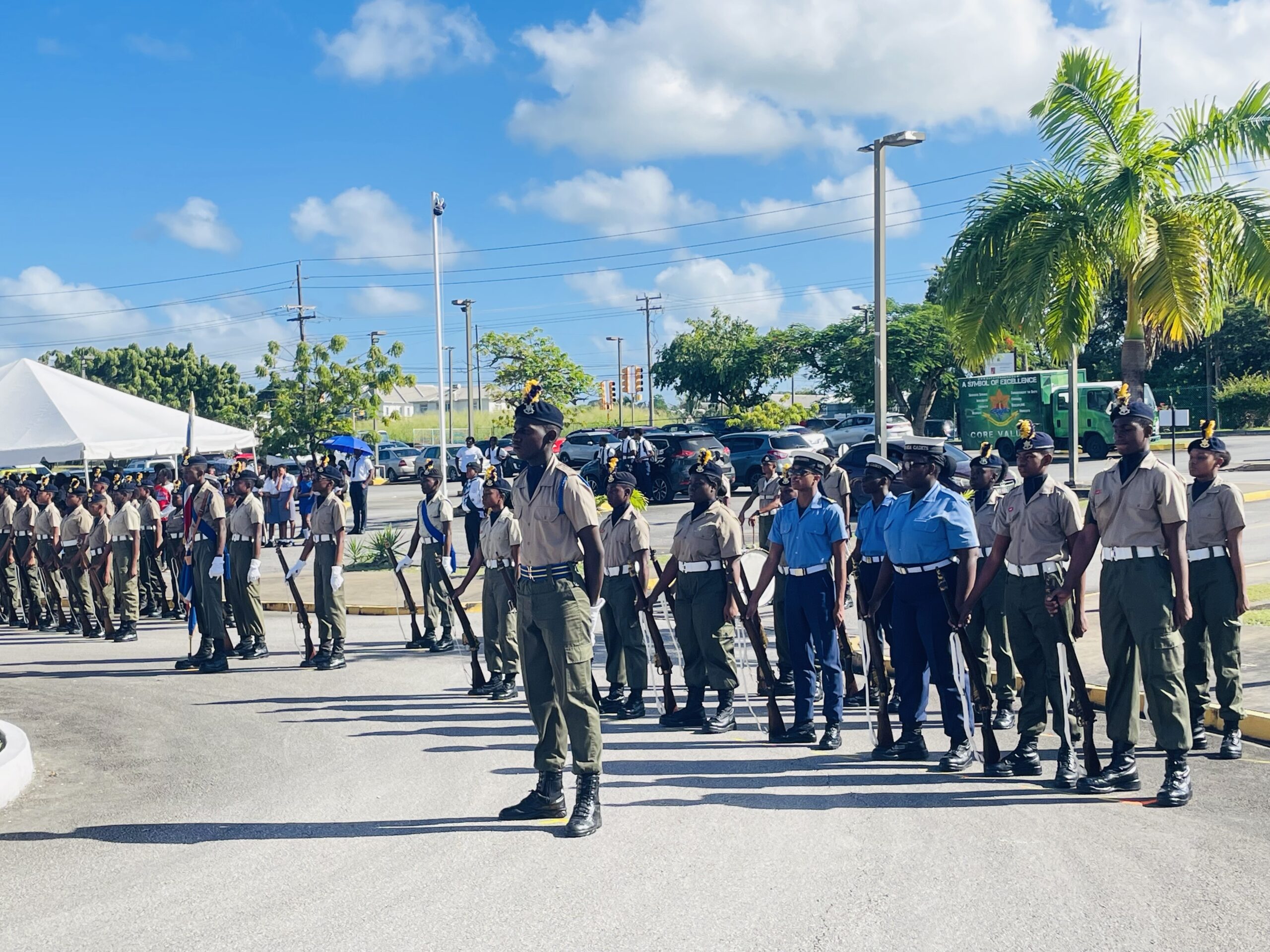
Queen’s College commemorated the 25th anniversary of its No. 21 Cadet Corps with a solemn yet celebratory event on Thursday. The occasion featured a military parade and a poignant Remembrance Day tribute, attended by prominent figures including President Dame Sandra Mason, CARICOM Ambassador David Comissiong, and other dignitaries. The ceremony, held at the Husbands, St James campus, underscored the cadet company’s legacy of discipline, leadership, and civic service. Lynda Holder, chair of the Queen’s College Board of Management, emphasized the collective pride in the cadet corps’ achievements, praising the contributions of founders, officers, instructors, parents, and generations of cadets. The event also honored the island’s fallen soldiers, with Holder urging current cadets to uphold the highest standards of character and civic duty. The school choir delivered a moving performance of *At Calvary*, while the cadets showcased their precision through drills and the playing of *Reveille*. President Mason unveiled a commemorative plaque inscribed with a message of remembrance and celebration. The ceremony concluded with artistic gestures, including the presentation of school memorabilia, an award-winning painting, and a bouquet of flowers to the president.
-

Phillip named ACC Offensive Player of the Year
Saint Lucian forward Donavan Gusto Phillip has emerged as a standout star in collegiate soccer, securing prestigious Atlantic Coast Conference (ACC) accolades on Wednesday. The North Carolina State University (NC State) junior was named to the All-Conference Team and crowned Offensive Player of the Year, capping off an exceptional season. Phillip, hailing from Marchand, Saint Lucia, is poised to transition to professional soccer in 2026, having signed with Major League Soccer’s Colorado Rapids. He also aspires to represent the Saint Lucia national team on the international stage. In his final collegiate campaign, Phillip dominated the ACC with impressive statistics, leading in shots (62), points (31), and goals (15), among other metrics. His contributions were instrumental in NC State’s success this season. Joining Phillip in the ACC honors were sophomore center-back Nikola Markovic, named Defensive Player of the Year, and senior goalkeeper Logan Erb, who claimed Goalkeeper of the Year. Senior midfielder Taig Healy, the conference leader in assists, also earned a spot on the All-ACC First Team. This collective achievement marks a historic moment for NC State, as it is the first time since 1984 that the program has placed four players on the All-ACC First Team, a feat achieved only twice in its history.
-

Bravo, Pollard named National Sports Ambassadors
In a significant move to celebrate national sporting excellence, Trinidad and Tobago officially appointed cricket legends Dwayne Bravo and Kieron Pollard as National Sports Ambassadors on Wednesday. The ceremony, held at the Ministry of Foreign and Caricom Affairs headquarters in St Clair, was presided over by Minister Dr. Sean Sobers. This appointment underscores the government’s dedication to recognizing athletes whose global achievements inspire citizens and enhance the nation’s international reputation. The initiative was first proposed in early September by Minister of Sport and Youth Affairs Phillip Watts, following a Cabinet meeting. Bravo’s recent success as coach of the Trinbago Knight Riders, who clinched the Caribbean Premier League title on September 21, further validated the decision. The victory ignited nationwide celebrations, culminating in a reception hosted by Prime Minister Kamla Persad-Bissessar on September 23. During the event, the Prime Minister announced that the TKR team would receive the Chaconia Gold medal and named TKR captain Nicholas Pooran, Pollard, and javelin champion Keshorn Walcott as Sports Ambassadors. While the official appointments for Pooran and Walcott are pending, the government expressed enthusiasm for its new partnership with Bravo and Pollard. The Ministry stated, “We look forward to collaborating with Mr. Bravo and Mr. Pollard as they champion excellence, teamwork, and national pride, while promoting Trinidad and Tobago’s global brand.”
-

Saint Lucians join Windwards squad after two-year absence
Kimani Melius, the former West Indies Under-19 captain, has made a triumphant return to the regional cricket scene, securing a spot in the Windward Islands squad for the upcoming CG United Super50 tournament. This marks his first appearance in List A cricket after a two-year hiatus. The 24-year-old right-handed batter from Boguis, Saint Lucia, is one of four Saint Lucians selected for the five-match series, which commences on Wednesday, November 19, in Trinidad and Tobago. The Windward Islands Cricket Board unveiled a 14-member squad for the tournament, aiming to add to their four 50-over titles since the competition’s inception in 1972. Melius joins allrounder Shadrack Descarte and fast bowlers Keon Gaston and McKenny Clarke in the final lineup. Wicketkeeper Noelle Leo and fast bowler Dillan John also participated in early October training sessions. Melius, who debuted for West Indies B in 2018, has played 23 List A matches, amassing 397 runs at an average of 17.26. His best performance came in his debut year, averaging 21.60 in five fixtures. Descarte, known for his T20 prowess, brings experience from the 2024 Republic Bank Caribbean Premier League (CPL) victory with Saint Lucia Kings. Gaston, despite limited regional experience, played a pivotal role in Saint Lucia’s Windwards title win this year. Clarke, a former West Indies Under-19 player, contributed to the Trinbago Knight Riders’ 2025 CPL triumph. The Windwards will kick off their campaign against the Leeward Islands Hurricanes at the Brian Lara Cricket Academy.
-

Windies falters, New Zealand seal T20 Victory
The West Indies’ T20 International series against New Zealand concluded on a disappointing note on Thursday, as the hosts delivered their weakest performance in the decisive fifth match, suffering an eight-wicket defeat that handed the series to the Black Caps. This loss highlighted the persistent issues that have troubled the Caribbean team throughout the contest, particularly a top-order batting collapse that proved fatal. Captain Shai Hope identified the team’s inability to adapt as the primary reason for their downfall. ‘The power play has been our Achilles heel for this series,’ Hope remarked. ‘As batters, we failed to assess and adapt quickly enough.’ Despite the setbacks, Hope praised the lower-order batsmen for their resilience, acknowledging their efforts to salvage the innings. He emphasized the need for smarter, more assertive batting to disrupt the opposition’s bowlers. ‘We need to be more precise with our stroke play and prevent good bowlers from settling,’ he explained. Hope also highlighted the importance of applying counter-pressure, a skill the team has lacked. Amid the criticism, he lauded all-rounder Romario Shepherd for his consistent performance and work ethic. ‘Sheppy has been a hard worker, and his success is becoming more consistent,’ Hope said, noting Shepherd’s crucial contributions with the ball. As the team shifts focus to the upcoming ODI series, Hope stressed that immediate improvements are essential to turn their fortunes around.
-
Tint inspection workers frustrated by pay delay
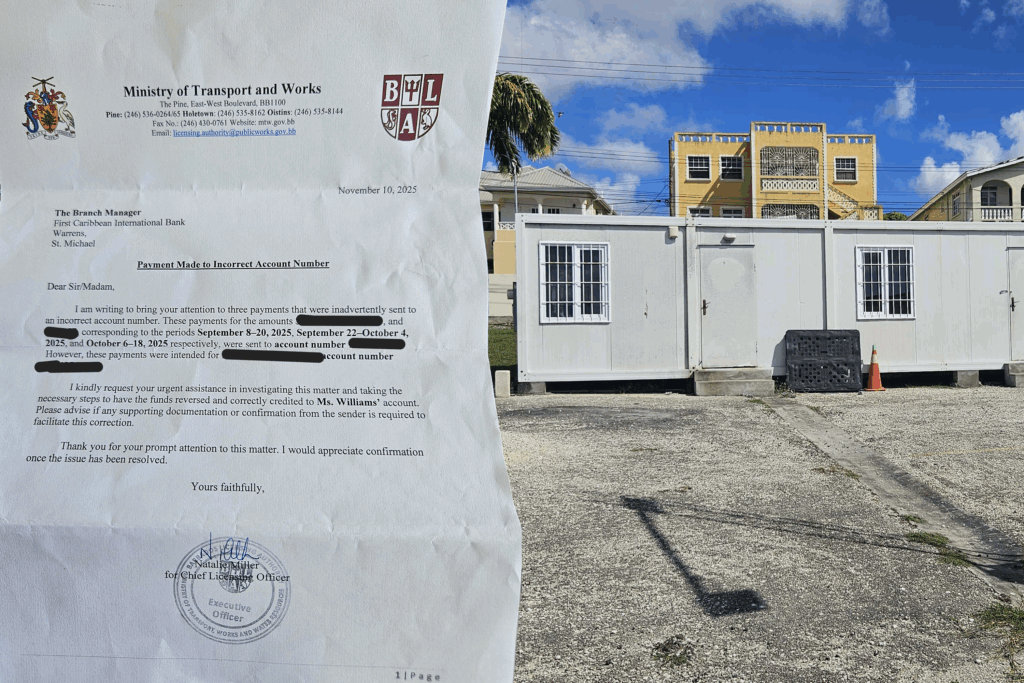
A group of young tint-testing officers in Barbados has raised concerns over significant delays in their wage payments, with some reporting they have not been paid for over two months. The Barbados Licensing Authority (BLA) has been criticized for poor communication, leaving the officers without clear answers. An investigation by Barbados TODAY revealed that several payments were mistakenly deposited into the wrong bank account, prompting the BLA to request reversals from the financial institution. The officers, stationed at the National Cultural Foundation’s car park, were contracted from September to December and are supposed to be paid fortnightly. However, seven out of nine officers have received only three payments instead of five, while two others have faced even greater delays, with one officer receiving only one payment and another, a 24-year-old mother of two, not receiving any payment since starting the job. The mother expressed her frustration, stating that she has bills to pay and children to support. She received a letter from the BLA confirming the error and requesting the bank to return the funds, but questioned why she was assured weeks ago that the issue was being resolved. The workers, mostly in their early 20s, feel they are being taken advantage of due to their age. They have called for better communication and clarity on when they will be paid. The BLA has acknowledged the error in a letter to CIBC FirstCaribbean International Bank, requesting urgent assistance to reverse the payments. The workers continue to seek answers and progress in resolving the issue.
-
CIBC Caribbean commits US$500 000 to Jamaica’s relief and restoration efforts
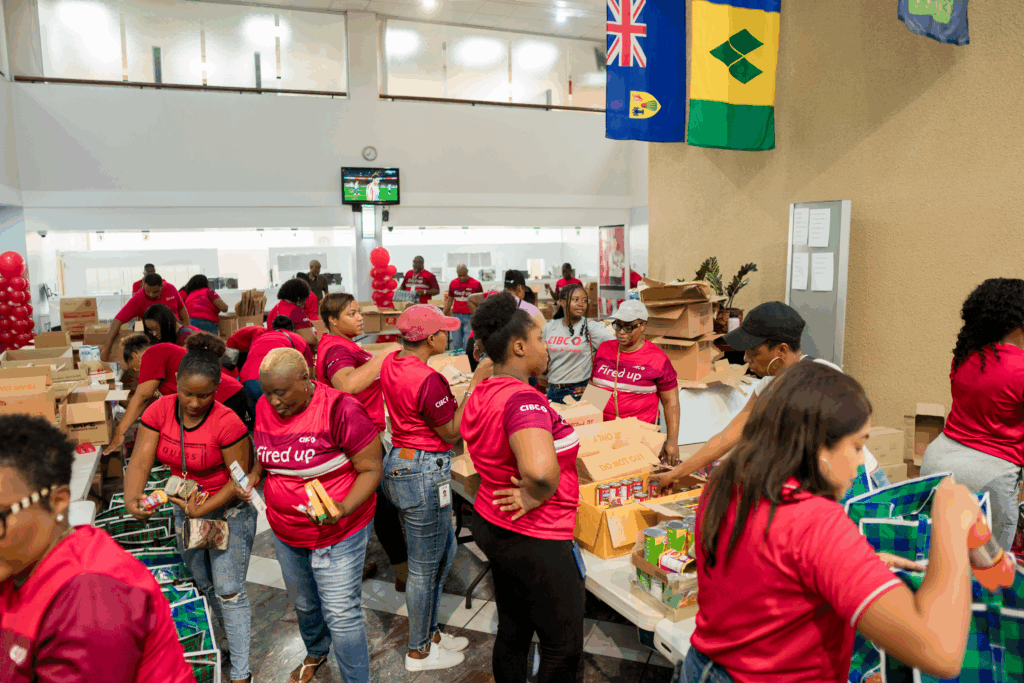
In the aftermath of Hurricane Melissa’s catastrophic impact on Jamaica, CIBC Caribbean has swiftly mobilized its resources and partners to provide critical relief to the affected communities. Through its ComTrust Foundation and in collaboration with the CIBC Foundation, the bank has committed substantial funds to support multiple initiatives aimed at alleviating the suffering caused by the disaster. Key efforts include providing immediate relief supplies to its 670 employees in Jamaica via Food for the Poor and funding the deployment of a Field Hospital Unit by the Barbados Defence Force to Savanna-La-Mar, one of the hardest-hit regions. Mark St Hill, CEO of CIBC Caribbean and chair of its charitable foundation, expressed deep empathy for the Jamaican people, emphasizing the shared vulnerability of Caribbean nations during hurricane season. The bank’s relief strategy began with ensuring the safety of its employees and repairing damaged homes, while also extending support to the broader community through cash donations. Annique Dawkins, Head of Country, commended her Kingston team for their rapid response, which included distributing essential supplies and restoring banking services, such as reactivating the ATM in Savanna-La-Mar. Donna Wellington, Chief Country Management Officer, highlighted the bank’s long-term commitment to Jamaica’s recovery, detailing a comprehensive relief package. This includes a $100,000 donation to Food for the Poor for sanitation equipment, tarpaulins, and other necessities, as well as a $250,000 contribution to outfit the Barbados Defence Force’s Field Hospital Unit. Additionally, the bank is offering $150,000 in pre-paid cards for essential purchases, redirecting unused scholarship funds to the University of the West Indies’ Student Hardship Fund, and providing financial assistance to clients through payment moratoriums, temporary financing options, and special credit relief. St Hill reiterated the bank’s dedication to the Caribbean region, stating, ‘We must be our brother’s keeper.’
-

Education without walls
Education has always been a fundamental human endeavor, rooted in curiosity and connection. Long before the advent of classrooms, syllabi, and standardized tests, people learned directly from the world around them. They observed natural phenomena, experimented with resources, and passed down knowledge through stories, songs, and lived experiences. However, over time, learning became confined within walls—both literal and symbolic—separating education from life itself. Today, there is a growing movement to reclaim the original spirit of learning by breaking down these barriers and integrating the world into the curriculum. This approach, often referred to as ‘education without walls,’ emphasizes nature, community, and lived experience as the true foundations of knowledge. It is not about dismantling schools but rather making them more permeable, allowing students to engage with the world directly. Imagine students testing water quality in local streams, designing solutions for community waste problems, or learning agriculture in actual gardens. These experiences intertwine science, social studies, language, art, and ethics in meaningful ways. When students connect with their environment and community, learning becomes relevant, relational, and rooted. This method fosters empathy, responsibility, and agency—qualities that traditional exams cannot measure but are essential for shaping engaged citizens. In regions like the Caribbean, where natural laboratories abound, this approach is particularly vital. It represents not just a teaching method but a cultural reclamation, affirming the value of local knowledge and history. Implementing such a shift requires courage from teachers, ministries, and parents alike. It demands a move from content delivery to experience design, trust in educators to create localized curricula, and an acceptance of the messiness of real-world learning. The skills needed for the future—collaboration, adaptability, innovation, and ethical decision-making—are best cultivated through hands-on experiences. Moreover, this model reconnects students with nature, fostering humility and environmental stewardship. Schools worldwide, from forest schools in Europe to place-based education models in Africa, have demonstrated the benefits of this approach. The Caribbean can develop its own version, rooted in its unique context and relationship with land and sea. Simple steps, such as connecting classes to community projects or partnering with local artisans, can make a significant impact. Assessment methods also evolve, with portfolios, reflection journals, and community presentations replacing traditional exams. At its core, education without walls is an act of trust—in students’ curiosity, teachers’ guidance, and the world’s capacity to teach. It is a call to prepare young people not just to pass exams but to navigate, heal, and innovate within the world they inhabit. If transformation is the goal, we must unbolt the doors, step outside, and learn anew from the soil, the sea, and the stories that shape us. The world is ready to teach, and we must be brave enough to listen.