标签: Bahamas

巴哈马

  • Darville pledges to pass laws for families abandoning patients

    Darville pledges to pass laws for families abandoning patients

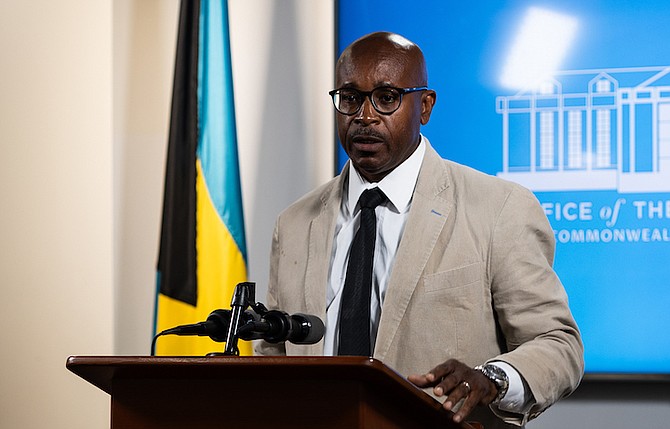
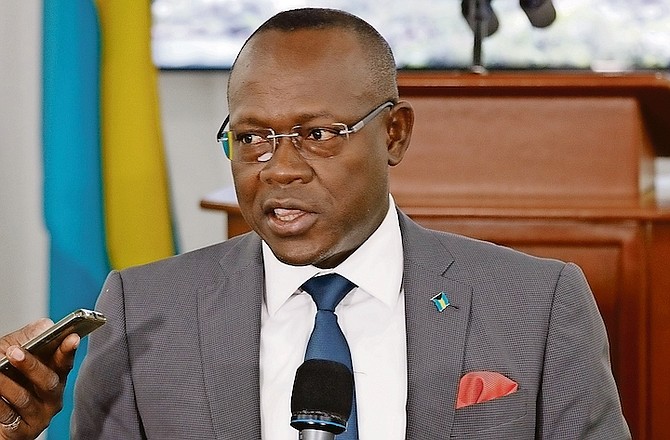
    The persistent crisis of family members abandoning elderly and long-term care patients in Bahamian public hospitals has spurred the incumbent Davis administration to announce plans for targeted accountability legislation if voters return the party to power for a second term, Health and Wellness Minister Dr. Michael Darville confirmed in a press briefing this week.

    Dr. Darville, who has repeatedly highlighted the growing problem of so-called “hospital boarders” — patients who no longer require acute medical intervention but remain occupying hospital beds — told reporters the vast majority of these boarders are elderly patients whose families have refused to remove them from public care facilities. The issue is most acute at two of the nation’s leading public hospitals, Princess Margaret Hospital and Rand Memorial Hospital, where constrained bed capacity has already created widespread care delays.

    According to Dr. Darville, the ongoing occupation of acute care beds by non-acute patients creates cascading disruptions across the entire public health system. It directly slows patient turnover in accident and emergency departments, and blocks timely transfers of stable patients from admission and assessment units to inpatient wards, leaving patients with urgent medical needs waiting longer for critical care. To mitigate existing strain, health officials have already partnered with private sector organizations to source alternative care placements and supportive housing for abandoned patients, but the burden on the public system remains unacceptably high.

    While the Ministry of Health maintains a compassionate approach to the vulnerable elderly patients caught in this situation, Dr. Darville emphasized that the systemic cost of inaction is too great to ignore. If re-elected, the proposed legislation will explicitly codify legal responsibility for family caregivers, with swift enforcement action targeted at households that collect National Insurance benefits to cover their relative’s care but still abandon them in public hospitals.

    This is not the administration’s first step to address the crisis. Back in October 2024, Dr. Darville announced the government was advancing serious regulatory and coordination reforms to improve long-term elderly care, amid a steady rise in the number of patients being left in public hospitals. At that time, officials confirmed cross-agency collaborations with the Department of Social Services and Sandilands Geriatric Facility to develop long-term strategies that both reduce pressure on acute care facilities and uphold the safety and dignity of abandoned elderly patients.

    Notably, the issue is not unique to The Bahamas. Neighboring Jamaica has grappled with the same problem for years, with local outlet The Jamaica Observer previously reporting that patient abandonment continues to restrict bed access and strain public health resources across Jamaican facilities, mirroring the challenges now facing Bahamian health officials.

  • Govt buys GB Power – promises 37% cut

    Govt buys GB Power – promises 37% cut

    One week ahead of the country’s hotly contested general election, the Bahamian government has finalized a deal to purchase all outstanding shares of the Grand Bahama Power Company (GBPC), a move Prime Minister Philip “Brave” Davis says will deliver an average 37 percent reduction in electricity bills for residential and commercial customers across the island.

    Under the terms of the acquisition, GBPC will align its pricing structure with the national tariff schedule already in use by Bahamas Power and Light (BPL), bringing Grand Bahama’s electricity rates in line with what consumers pay in other regions of The Bahamas. Davis confirmed that cost savings will appear on customer bills as early as the next billing cycle.

    “This decision was made with a clear purpose: to bring down the cost of electricity for the people of Grand Bahama and place this island inside our national energy strategy,” Davis told reporters. He added that the rate cut will reduce overall cost of living for local families and boost the competitiveness of Grand Bahama’s business community, supporting long-term economic growth on the island.

    The government executed the acquisition through a newly created special purpose entity, the Grand Bahama Electricity Company. The transaction received full funding from loans issued by Standard Chartered and Scotiabank, with the Bahamian government serving as guarantor for the borrowing.

    In addition to consumer savings, Davis outlined three core policy benefits of the move: it integrates Grand Bahama into the government’s national energy strategy, strengthening the island’s overall investment climate; it preserves all existing jobs, benefits and the current Bahamian management team at GBPC; and it lays the groundwork for GBPC to access international development support for future energy projects.

    The timing of the high-profile utility acquisition, coming just days before voters head to the polls, has sparked questions about political motivations behind the announcement. Davis rejected calls to delay the reveal until after the election, arguing that governing does not pause during campaign season.

    “Why do I have to defend a move?” Davis said. “Governance don’t stop because election is in the air. We still have to govern, and this transaction has been in the making for quite a while. The process just happened to be ending now. Should we abandon it when we’re going to be able to bring relief to the people of Grand Bahama immediately? We will bring relief now. I have nothing to defend, other than to say I’m bringing relief to Grand Bahama.”

    For the immediate future, GBPC will continue normal operations under a transitional framework designed to avoid service disruptions while pricing structures are aligned with national standards. Over time, the utility will be gradually integrated into the government’s ongoing national energy reform program. The acquisition brings an end to Canadian energy firm Emera’s 13-year tenure as the majority owner of GBPC, after Emera first acquired a stake in the company in 2010.

    Davis thanked Emera for its years of management of the utility, noting that additional details on the transitional process will be released to the public in the coming weeks. Karen Hutt, executive vice-president of corporate development for Emera in The Bahamas, framed the ownership transfer as a “watershed moment” for both the company and the island.

    “This transition of ownership from Emera to the government provides a historic opportunity for Grand Bahama power and the island of Grand Bahama to play a pivotal role in the nation’s energy future under The Bahamas comprehensive and progressive national energy policy,” Hutt said.

    Nikita Mullings, GBPC’s chief operating officer, reassured customers that the ownership change will not impact the utility’s core service commitments. “Today’s announcement is a big one for us here at Grand Bahama Power, but it does not change what defines us,” Mullings said. “Our commitment to safety, reliability and service excellence remains unchanged, and it does not change our shared responsibility to our customers and this community.”

    Energy Minister Jobeth Coleby-Davis explained that the acquisition will deliver tangible benefits to more than 17,000 households and over 1,500 small and medium-sized businesses across Grand Bahama, framing the move as a critical step toward pricing fairness and regulatory consistency across the country. For years, Grand Bahama consumers faced drastically higher electricity rates than customers in other parts of The Bahamas under the previous private ownership structure. To illustrate the gap, Coleby-Davis shared that a 495 kilowatt-hour bill in Grand Bahama’s Pineridge neighborhood cost $200.09, while the same usage on Long Island cost just $121.38 under BPL’s tariff— a difference of nearly $79, translating to a 39.3 percent savings after alignment. Similarly, a 1,424 kilowatt-hour bill in Grand Bahama’s West End cost $700.21, compared to $481.50 for the same usage in New Providence, delivering a 31.2 percent savings for local customers after the change.

    The minister added that the national policy’s low-income protection, which sets a zero base rate for households using less than 200 kilowatt-hours of electricity monthly, will now extend to Grand Bahama, putting thousands of dollars in annual savings back into the pockets of vulnerable families.

    Grand Bahama Minister Ginger Moxey noted that the acquisition addresses decades of constituent complaints about unsustainably high energy costs on the island. “For too long, families and businesses have carried the weight of extremely high electricity costs,” Moxey said. “This Davis administration has heard the cry and meaningful change is here to address this vexing legacy issue, not years down the road, but with your next billing.”

    Davis confirmed that the government has not yet made a decision to change GBPC’s name, and will consult local residents on any potential rebranding. He also linked the acquisition to his broader campaign promise to revitalize Freeport and Grand Bahama’s economy. “I have committed myself that while I have the ability to do it, I will try to bring back the magic to the city and I dare say we are well on the way,” Davis said.

  • Calls for bridge fix after father dies in Exuma crash

    Calls for bridge fix after father dies in Exuma crash

    A tragic fatal crash off a poorly maintained Bahamian bridge has reignited long-simmering calls for critical infrastructure upgrades, after a retired prison officer who was days away from reuniting with his family lost his life in an incident his loved ones say was entirely preventable.

    Preston McKenzie, a 60-something retired corrections official who had recently moved back to Exuma to be closer to extended family, was scheduled to board a flight to New Providence on April 30 to reunite with his wife and three children. He never arrived for the trip, and his body was later recovered from his partially submerged overturned blue Honda Civic near the Barraterre bridge, according to law enforcement and family statements.

    Authorities confirmed that the George Town Police Station received the initial distress call shortly before noon on April 30, after a local resident spotted the vehicle in the water off the bridge’s northern end. The good Samaritan used a hand tool to gain access to the car and helped pull McKenzie’s body from the wreckage before officers arrived. A local physician pronounced McKenzie dead at the scene, and preliminary police investigations indicate the driver lost control of the vehicle, causing it to veer off the curved bridge into the water below.

    For McKenzie’s daughter, Pruzyia McKenzie, the tragedy is not an accident — it is the avoidable consequence of years of unaddressed safety hazards on the Barraterre bridge. In an emotional interview, she explained that the family grew concerned after her father stopped responding to messages and missed his scheduled flight. The family soon received the devastating confirmation from a relative in Exuma that his body had been found in the water.

    Evidence from the scene backs up the family’s claims of long-standing danger. Video footage obtained by The Tribune shows McKenzie’s vehicle submerged after crossing over the bridge’s inadequate guardrail, with barely any visible signage warning drivers of the sharp curve ahead or the bridge edge. Pruzyia McKenzie noted that her father was not the first driver to go off the bridge — two previous motorists survived similar incidents, but she says repeated warnings about the structure’s flaws have gone unheeded.

    McKenzie was described by his daughter as a loving, humble man with a contagious joyful energy, who often served as the center of social gatherings. After a decades-long career in corrections where he recruited dozens of new officers — many of whom are now grieving his loss — he had been preparing to launch a new small business ahead of the upcoming annual Barraterre festival. The last video his family received from him, taken the night he is believed to have crashed, shows him sharing a toast with friends and repeatedly saying he was bound for heaven.

    Pruzyia McKenzie says the stiffness of her father’s body when it was recovered suggests he had been in the water for more than 12 hours, meaning emergency responders were not alerted to the crash until long after he was gone. She added that the bridge’s core hazards — non-existent nighttime lighting, a sharp curve that restricts driver visibility, insufficient guardrails, and a total lack of proper warning signage — make it a death trap waiting for more victims. Her family’s greatest hope now is that McKenzie’s death will finally force authorities to carry out the long-overdue upgrades, so no other family has to plan a funeral instead of welcoming a loved one home.

    “My daddy was supposed to be here,” Pruzyia McKenzie said through tears. “We were expecting to see my daddy not plan a funeral. We don’t want another life lost to this dangerous bridge.”

  • Super Value owner back home after health scare

    Super Value owner back home after health scare

    Nine weeks after being medically evacuated to a United States hospital for emergency treatment of severe pneumonia, one of The Bahamas’ most legendary business figures has returned to his home in New Providence, carrying a critical public health message for his fellow citizens.

    Rupert Roberts, 88, who founded the nation’s largest all-Bahamian grocery chain Super Value and shaped decades of commercial and banking growth across the country, expressed unbridled joy at returning to his home country’s iconic warm climate. “It’s such a blessing to be back in the sunshine,” he shared in an interview shortly after his arrival. In his message to Bahamians, he urged widespread prioritization of personal wellness, emphasizing: “Look after yourselves with a healthy diet and regular exercise. You could develop an illness that The Bahamas is not fully equipped to treat, and a serious medical condition can quickly spiral into costs far beyond what most families can afford.”

    When asked if his near-death health scare had prompted doctors to urge him to step back from his decades-long career, the self-identified workaholic laughed off the suggestion. “No, not at all!” he said. “They told me to keep going, never stop.”

    Roberts fell seriously ill with pneumonia in late February, triggering an outpouring of support from across the nation that he says was a critical part of his recovery. Hundreds of Tribune readers sent prayers and well-wishes, and dozens of Super Value employees answered an urgent call to donate blood to support his treatment when he first became sick.

    “I want to thank every single person — my family, my relatives, every employee, every customer, and the entire country for all their support and prayers,” Roberts said. “That support was more healing to me than any medical treatment, and it’s what brought me home. I had no idea how many people cared about me this way, and I can’t put my appreciation into words.”

    Throughout his nine-week treatment and recovery at St Mary’s, part of the world-renowned Mayo Clinic in Rochester, Minnesota, Roberts had constant, around-the-clock support from his wife Margaret and his granddaughter Paige Waugh, who works on the Super Value team. “I never would have made it through this without their love, care, and constant presence by my side,” he noted. He also expressed particular gratitude for a well-wish call from Prime Minister Philip “Brave” Davis, and for the early and consistent care from his personal Bahamian physician Dr Duane Sands, who is also former health minister and current chairman of the Free National Movement.

    Dr Sands visited Roberts two to four times a day in the early stages of his illness, coordinated his transfer to the Mayo Clinic, and set him up for a successful recovery. “I never felt any fear for my life at any point,” Roberts said. “I always knew I was in good hands, from the very start with Dr Sands. I’ve been treated at St Mary’s before several times, so it felt like home even in Minnesota. Doctors from multiple departments came to check on me, and I was even shocked when Bahamian Foreign Affairs Minister Fred Mitchell stopped by with a large bouquet of flowers. Having a fellow Bahamian visit made everything feel so much more comfortable.”

    Roberts confirmed that while he was in the US, medical teams also fixed a long-standing issue with his pacemaker, after one of the device’s leads slipped out of place and required reattachment. Beyond that minor procedure, he said he is now well on his way to a full recovery.

    Despite being away from his business interests for more than two months, Roberts said he never felt disconnected from daily operations. Thanks to a deeply trained management team and consistent communication with staff, “It was just as if I was sitting at my desk every day,” he explained.

    When asked what he missed most during his time in the cold northern US, he answered without hesitation: “The warm Bahamian weather. It’s so great to be back where all my favorite things are, in what I truly believe is the best place in the world to enjoy life. I’m so happy to be back to our 80-degree sunshine — that cold up north was absolutely horrid.”

    Beyond his iconic work building Super Value into the backbone of the Bahamian grocery industry, Roberts has long been a central figure in national banking development. Following the Bahamianisation of the nation’s finance sector, he was appointed chairman of Commonwealth Bank Limited, serving in the role from 1984 to 1992. During his tenure, he led the bank out of years of stagnation under foreign ownership, overseeing explosive growth: the bank relocated its headquarters to a new facility on East Bay Street, opened new branches in Oakes Field and Marsh Harbour, grew total assets by more than 700% to over $125 million, and increased net income from $1.3 million in 1984 to $4 million by 1992.

  • Abaco residents angry over wiped power bills

    Abaco residents angry over wiped power bills

    Six years after Hurricane Dorian devastated large swathes of Abaco, leaving thousands of residents homeless and economically shattered, anger is boiling over over the Davis administration’s last-minute pre-general election decision to erase all outstanding electricity bills for residents of Grand Cay and Moore’s Island – while leaving similarly devastated mainland Abaco communities without any comparable relief.

    Survivors across hard-hit mainland settlements including Marsh Harbour, Dundas Town, Spring City and Murphy Town have decried the selective relief as a transparent, insulting political gambit that ignores the ongoing suffering of thousands of Dorian survivors who have yet to recover from the 2019 storm.

    Neulessa Major, a lifelong Marsh Harbour resident whose home suffered catastrophic damage during Dorian, described the unequal treatment as a slap in the face to all mainland Abaco residents still picking up the pieces. Her $55,000 home roof was completely destroyed, all her personal belongings were ruined by storm surge and wind, and she was unable to move back into her repaired property until 2022. Today, she says massive outstanding utility bills burden most families and business owners across central Abaco – none of whom were offered the debt forgiveness extended to the two smaller island communities.

    “When I learned that only certain groups were getting their entire balances wiped clean, I was shocked,” Major said in an interview. “All of central Abaco was hit just as hard, with these enormous bills that people can’t possibly pay. Six years on, we still have people living in tents and temporary dome shelters. A lot of homes look finished from the street, but step inside and there aren’t even floor tiles. The government acts like everything is fine for us here, but it’s not.”

    The controversial debt cancellation came two weeks ahead of the national general election, after Prime Minister Philip “Brave” Davis visited Grand Cay and publicly promised the relief to voters there. Government officials defended the move, framing it as a resolution to long-running billing disruptions triggered first by Hurricane Dorian and later by the COVID-19 pandemic. Officials noted that Grand Cay and Moore’s Island residents faced unique hardships including limited banking access, extended travel and business restrictions, and that accumulated debt accrued through circumstances outside consumers’ control. The government confirmed the outstanding balances would be covered through an offsetting agreement with Bahamas Power and Light.

    But that explanation has done little to ease the anger among mainland Abaco residents, who point out they weathered the same storm and the same subsequent economic crisis, with many still struggling to rebuild. Major emphasized that many Marsh Harbour residents did not wait for government aid to begin rebuilding their homes and businesses, only to be saddled with crippling utility debt that the government has refused to address.

    She also called out the ruling Progressive Liberal Party (PLP) for a separate recently revealed government-funded gift card program that saw small $300 gift certificates distributed to Abaco residents just ahead of the vote – a move she dismissed as insufficient and politically motivated. The Tribune previously confirmed that more than $200,000 in public funds was used for the gift certificates, which bear the signatures of PLP officials despite being a government initiative.

    “A $300 gift certificate six years after we lost everything? What is that even supposed to cover?” Major asked. “A lot of people might celebrate a small handout right before an election, but that doesn’t fix what’s broken here. I was even offered $500 in cash at my door by campaign workers – I refused it. I don’t want a personal payout. I want the government to actually do something for our community.”

    Lorane Burrows, a Dundas Town resident whose home was damaged in Dorian, shared Major’s fury, noting she was forced to pay outstanding water and sewerage bills even after her storm damage left her facing major financial strain. “They need to get out,” Burrows said. “This was a slap in the face to all of us. They’ve done nothing for Abaco, nothing for people like me who are still hurting. They failed us entirely.” Burrows confirmed she and all eight voting members of her household will not support the PLP in the upcoming election.

    Rochelle Lightbourn, a 55-year-old Spring City resident who lost all her belongings when her rented home was destroyed in Dorian, argued the selective relief is a clear political calculation. “I think they’re doing this because they know they’re going to lose these districts, and they’re trying to buy back support,” she said. “It’s not going to work. I still haven’t even replaced everything I lost six years ago.”

    Lottie Williams, a 64-year-old Spring City resident who lost the entire back section of her home in the storm and had to be rescued by emergency crews, said relief should have been extended to every Abaco resident impacted by Dorian. “Ninety-five percent of the homes in Spring City were destroyed,” she noted. “I understand those outer cays have challenges, but we fought for our lives here, we came home and rebuilt on our own, and we got zero help from this government. High electricity bills affect all of us. It’s just not fair to only write off bills for two small communities when we’re all struggling. That money should have been spread out to everyone who needed it.”

    Many residents also recalled the slow, burdensome process of restoring power after the storm, noting that even long-term local residents were forced to produce extensive documentation just to reconnect service, despite the small community where most homeowners and occupants were already well-known to utility officials. For many, the compounding stress of Dorian’s destruction followed by the economic collapse of the COVID-19 pandemic left them unable to keep up with accumulated utility costs – a hardship the government has only chosen to address for a select few, weeks before voters head to the polls.

  • Mitchell tells PLPs ‘give more vouchers’

    Mitchell tells PLPs ‘give more vouchers’

    A political firestorm has erupted in the Bahamas over the distribution of Treasury-financed gift vouchers in Abaco that bear the names of non-government employed Progressive Liberal Party (PLP) election candidates and party officials, with Foreign Affairs Minister Fred Mitchell becoming the first sitting government leader to publicly endorse and defend the controversial program.

    Mitchell’s unapologetic support for the initiative puts him sharply at odds with many within his own party, where multiple PLP figures have privately voiced shock that more than $200,000 in taxpayer money was allocated to the voucher program. Prime Minister Philip Davis has also refused to publicly address the growing controversy, leaving Mitchell’s outlier stance even more notable in the context of intra-party dynamics.

    The decision to attach non-government PLP affiliates’ names to public-funded assistance has sparked intense debate over whether the program violates anti-electioneering laws. The Bahamas’ Parliamentary Elections Act explicitly criminalizes giving, offering, or funding gifts, cash or other benefits with the intent of swaying voter behavior or securing a candidate’s election to Parliament.

    Speaking at a raucous PLP campaign rally in Bimini Saturday night, Mitchell brushed off widespread criticism from the opposition, arguing that Abaco residents prioritize access to tangible assistance over quibbles over political branding on the vouchers. “Duane Sands is an amazing fella, he is complaining because vouchers were being given out in Abaco and he says the PLP is connected in giving out those vouchers,” Mitchell told the crowd. “Well, let me ask you this, you think the people in Abaco care whose name was on the voucher? They want the vouchers, they want the help, that’s all that is necessary, and I’m happy the PLP is connected with giving out the vouchers. Give out more vouchers, the more vouchers you give out, the better.”

    Mitchell also pivoted to attack the opposition’s own record of ethical missteps, pointing to a past court case involving former opposition figure Frank Smith where a judge cited a multi-million dollar contract awarded to a key prosecution witness. “He has no complaint to make about giving out vouchers and trying to influence voters,” Mitchell said of Sands.

    The foreign minister doubled down on his defense of the program, asserting the entire initiative was ethically sound and framing opposition pushback as a deliberate tactic to halt the PLP’s public outreach work. “The fact is, ladies and gentlemen, there is no offence connected with it,” he said.

    Opposition Free National Movement (FNM) leader Michael Pintard has strongly condemned the Davis administration, accusing the government of breaking national law by using public funds to distribute gift certificates branded with PLP candidates’ names. Pintard has called the action an “egregious” violation of election rules and is pushing for criminal charges to be filed against responsible parties.

    Chris Lleida, chief executive officer of Premier Importers, the firm handling the vouchers, confirmed that the certificates were issued at the formal request of the Bahamas’ Ministry of Finance, confirming the program’s official government backing.

  • PM: New airport to drive Cat Island trade, tourism

    PM: New airport to drive Cat Island trade, tourism

    In a landmark step toward spreading economic prosperity across The Bahamas’ outer Family Islands, officials have formally opened the renovated Arthur’s Town Airport on Cat Island, framing the infrastructure project as a cornerstone of the national government’s strategy to unlock new development outside major population centers.

    Speaking at the official commissioning ceremony, Prime Minister Philip Davis KC—who also serves as the Member of Parliament for Cat Island, Rum Cay and San Salvador—emphasized that the modernized facility will act as a catalyst for increased visitor arrivals, expanded cross-border trade, and new professional opportunities for local residents. He noted that while the government has laid the foundational infrastructure, the direction and benefits of future growth are ultimately in the hands of Cat Island’s community.

    “The opening of this airport will bring more people, more trade and more opportunity, but it is up to you, the people of Cat Island, to determine how you wish to expand that community, how you wish to share that tranquility, and how you wish to seize those opportunities,” Davis told attendees. Framing the project as an intergenerational investment, he added, “All that I’m looking forward to is that a good foundation is laid for the future. This is about the future, so my grandkids can be here to enjoy what I left behind.”

    Deputy Prime Minister Chester Cooper, who also holds portfolios for tourism, investments and aviation, described the upgraded airport as far more than a transportation hub, calling it a gateway to widespread economic renewal for Cat Island’s northern region.

    “This is the kind of investment that changes how people live, how they travel, how they do business and how they see the future of their own island. This airport is a major transformation,” Cooper said. He positioned the Arthur’s Town project as a key component of the most ambitious national airport expansion initiative in The Bahamas’ history, noting that the current administration has already delivered upgraded terminal facilities across multiple Family Islands.

    Infrastructure of this kind, Cooper explained, is the backbone of growing the country’s critical tourism sector and supporting small business expansion across outer islands. “These are not just airports. These are lifelines and engines for opportunity. They help our people move more easily. They help our visitors arrive more safely. They help our businesses grow. They help tourism to thrive,” he said.

    Cooper also confirmed that the project will deliver immediate connectivity gains, with the first scheduled international commercial air service set to launch on May 12. Makers Air will operate direct flights from Florida to Arthur’s Town twice weekly, on Tuesdays and Thursdays, opening direct international access to the island for the first time.

    Clay Sweeting, Bahamas’ Minister of Works and Family Island Affairs, added that the airport’s completion marks a fundamental shift in how the national government approaches infrastructure delivery for outer island communities. For decades, he noted, local residents had to adapt their daily lives and economic activity to inadequate, outdated infrastructure. Now, he said, the government has built infrastructure tailored to serve community needs.

    “Today is not just an opening of an airport. It’s about opening opportunities, because for far too long, Family Island communities like Arthur’s Town have had to work around infrastructure. Today, we are building infrastructure that works for you,” Sweeting said. He added that the improved facility will boost both connectivity and quality of life for local residents, bringing easier access to mainland services, safer travel, and stronger links to national and global markets.

    The opening of Arthur’s Town Airport caps years of planning and investment under the Davis administration’s flagship economic diversification strategy, which prioritizes spreading development beyond Nassau and Freeport to unlock the untapped economic potential of The Bahamas’ smaller outer islands.

  • Mother of missing teen condemns political use of missing son’s photo

    Mother of missing teen condemns political use of missing son’s photo

    Nearly two years after her son Devin Isaacs disappeared without a trace, Tashana Thompson is confronting a new, agonizing blow: the exploitation of her missing child’s image for partisan political gain ahead of an election in the Bahamas.

    Devin, who was 16 when he vanished from his Carmichael Road home in May 2024 and turned 18 last year, has become the centerpiece of a misleading, defamatory social media post shared from an unofficial Facebook account named Bahamas Royal over the recent weekend. The post circulated an old photo of Devin wearing a shirt affiliated with the Progressive Liberal Party (PLP), and tied the image to baseless claims that a vote for PLP Prime Minister Philip “Brave” Davis endangers children. The unsubstantiated post further went so far as to accuse the party of grooming young men and falsely claimed Devin had been sexually assaulted — claims backed by no evidence whatsoever.

    Thompson, speaking to The Tribune on Monday, condemned the post in sharp terms, saying the 2022 photo was captured in an entirely innocent context: Devin had volunteered that year at a back-to-school community event hosted by Golden Gates Member of Parliament Pia Glover-Rolle, a PLP representative. The mother, who has spent nearly two years holding out hope for her son’s safe return, said she was outraged and deeply shaken when she encountered the manipulated circulating content.

    “I’m physically, mentally, emotionally drained and weary,” Thompson told the publication. “God sees and knows it all. I hate how they’re using my child.” She labeled the post inhumane and irrational, noting that she has no insight into who operates the Bahamas Royal account, and is demanding the content be immediately removed from the platform.

    Devin’s disappearance has remained an open, unresolved case for Bahamian law enforcement. Four days after he was reported missing, police issued a Marco’s Alert to mobilize public assistance in locating him. In July 2024, Police Commissioner Clayton Fernander released publicly available closed-circuit television footage collected from the area of Devin’s home. The footage, recorded shortly after midnight on the day Devin vanished, shows a car parked two properties away from the Isaacs home. It captures Devin leaving his residence, returning briefly, then walking toward Carmichael Road. Additional surveillance footage later confirmed Devin was seen alone, walking west near the Rubis Service Station on the same road.

    From the early stages of the investigation, law enforcement has floated the theory that Devin may have left home of his own free will. But Thompson has consistently rejected that conclusion, and holds the unproven belief that her son is being held against his will somewhere in the country. She has made clear she will not abandon her search, no matter how much time passes.

    The family’s suffering has only intensified since Devin turned 18 last year, granting him legal adult status under Bahamian law. Thompson now harbors a growing fear that even if clues emerge pointing to Devin’s location, authorities will treat the case with less urgency than they would for a missing minor, slowing efforts to bring him home.

  • Long wait times and scenes of confusion plague advanced poll

    Long wait times and scenes of confusion plague advanced poll

    Long queues, multi-hour wait times, and widespread confusion during the Bahamas’ recent advance poll have thrown the Parliamentary Registration Department (PRD)’s preparedness into sharp question, stoking growing fears that the far larger and more complex general Election Day could face similar catastrophic dysfunction.

    The final ballot of the day was not cast until 10 p.m. – a full four hours after the official scheduled closing time of 6 p.m., marking a dramatic breakdown of the electoral process that unfolded against a backdrop of weeks of criticism from the opposition Free National Movement (FNM). Prior to the advance poll, the ruling government had repeatedly dismissed opposition concerns, defending the PRD’s ability to manage the election. This week’s voting, however, laid bare severe operational strain across polling stations nationwide: some electors waited more than five hours to cast their ballots, while countless others abandoned the process in frustration, and multiple locations kept voting open far past the official close to clear massive backlogs. Even some candidates from the ruling Progressive Liberal Party (PLP) were forced to acknowledge major shortcomings in the advance poll’s organization.

    Prime Minister Philip “Brave” Davis was visibly agitated during a visit to the Sadie Curtis polling location and declined to answer questions from press corps. Former PLP Cabinet minister and MP Leslie Miller, who accompanied Davis, told reporters he waited two and a half hours to vote at the Doris Johnson site, and called for a doubling of available polling space ahead of the general election. “It took me two and a half hours to vote today, okay, tremendous,” Miller said. Several other high-ranking PLP figures including Sebas Bastian, McKell Bonaby, Myles Laroda and Mario Bowleg echoed Miller’s call, noting that more space was urgently needed to reduce crowding, particularly for elderly and disabled voters. Bastian added that the problematic advance poll experience would guide necessary adjustments before Election Day.

    Operational issues were apparent from the moment polls opened at many locations. At Kendal Isaacs Gym, a site serving three major constituencies, delays began immediately when the exit door remained locked at opening, creating a massive bottleneck that sent lines swelling out into surrounding areas. Voter Tavia McIntosh said the check-in process inside the station functioned smoothly, but described the outdoor crowding as totally disorganized. “You see the crowd? It is unorganised,” she said. “I hope it [the general election] doesn’t be like this.” Commissioner of Police Shanta Knowles ultimately traveled to the site to intervene and restore order.

    At Thelma Gibson Primary School, voters reported widespread confusion over directional guidance, with many being sent to multiple wrong locations before finding their correct polling station. Seventy-six-year-old voter Cynthia Sealy told reporters she was redirected twice before reaching the correct spot. Other common complaints across sites focused on a lack of basic amenities for waiting voters, with many electors forced to stand for hours in direct sun without adequate shelter. At the CV Bethel polling location, FNM chairman Dr Duane Sands highlighted extreme overcrowding, noting that one advance polling room had been assigned to nearly 1,200 registered voters. “Perhaps one of the worst situations of the day is Bamboo Town has 1,200 people on the advanced poll, and one room,” Sands said. “One. One. One. So people have been waiting four, five, six hours. Okay?”

    Tensions boiled over at the HO Nash polling site after multiple people were permitted to cut in line, sparking loud protests from waiting voters who decried the process as unfair. Multiple elderly voters suffered medical distress amid the heat and long waits, with at least one voter fainting. A 75-year-old elector abandoned the line after just 45 minutes, saying he could not physically tolerate the conditions, and noted he had never seen such dysfunction in decades of voting. “This ain’t the first election these people been through,” he said. “They been through many and I ain’t never seen it like this.” Another voter, Michelle Dames of Mount Moriah, also left without casting a ballot, calling for systemic changes to better accommodate vulnerable groups. “Somebody just fell out over there from standing so long,” she said. “Even though some persons are trying to provide chairs, that ain’t cutting it.”

    Beyond basic operational management, FNM legal advisor Khalil Parker raised more serious procedural concerns. He pointed to reports of pre-signed ballots and completed counterfoils found before voters arrived at stations, the lack of a properly segregated voter list for advance poll participants, and a last-minute decision to allow electors with approved applications to vote even if their names did not yet appear on the official register. “So now, we have to deal with the fact that there’s going to need to be a reconciliation between those who voted, but were not on the register, and those who voted and were on the register to make sure that when we begin on election day, there is a mitigation or a correction or an updating of the official records at PRD, so that duplicating voters isn’t a substantive concern in that event,” Parker explained. He added that the FNM would demand an urgent meeting with PRD leadership to resolve all outstanding issues before the general election.

    Despite widespread cross-party criticism, the PRD has maintained it remains fully prepared for the upcoming general election, noting that Election Day will feature more polling stations, additional staffing, and expanded logistical support compared to the advance poll. The department acknowledged the delays and confusion, attributing the issues to an “unprecedented” level of voter turnout that outstripped official projections. “This is the first time in Bahamian history that this number of persons has participated in the advance poll, with especially strong participation among elderly voters,” the PRD said in a statement. The department added that it has launched an internal review to identify bottlenecks and will implement targeted adjustments to improve voter flow and inter-agency coordination before Election Day.

    Critics have already pushed back against the PRD’s turnout explanation, however, pointing out that all advance poll participants were required to pre-register, giving election officials an exact, advance count of how many voters were expected to cast ballots on advance polling day.

  • Questions raised over Fox’s conduct in campaign clash

    Questions raised over Fox’s conduct in campaign clash

    A viral campaign-season clash has put former NBA player turned parliamentary candidate Rick Fox under intense public and political scrutiny, after circulating footage showed him lunging at a local man during a heated dispute over public space for campaign tents. The confrontation, which unfolded on Wednesday in Garden Hills where Fox is running for a seat as Member of Parliament, sparked widespread debate online after the footage was picked up by major U.S. entertainment outlet TMZ, drawing international attention to the altercation.

    The widely shared video, which circulated publicly one day after the incident, captures the moment tensions boiled over during a disagreement over a pre-reserved spot for a campaign tent. The man involved, wearing a blue-and-yellow long-sleeve shirt, told Fox’s campaign team that he had already claimed the location for his own use. When Fox questioned whether his claim followed local event guidelines, the man dismissed the rules outright with an expletive-laden rejection. In response, Fox moved aggressively toward the man, forcing his campaign manager Carlyle Bethel to physically step in and restrain him as the situation escalated.

    Even as Bethel struggled to hold him back, Fox broke free of his manager’s grip, shouting that the opposing group were nothing but bullies. He then turned toward the person recording the video, flexed his muscles, and issued a public challenge, saying he was “right here for y’all, all day long.” Throughout the rest of the footage, Fox repeatedly labels those involved in the disagreement as bullies, as shouting matches continue between members of both groups.

    In the aftermath of the video going viral, Fox addressed reporters to push back against criticism of his actions, arguing that the circulating footage omitted critical context that preceded the confrontation. He claimed the incident was triggered by the man making violent threats against him, his campaign team, and Bethel specifically, framing his outburst as an act of self-defense and protection for the people working with him. “If you’re going to swear and threaten people’s lives, then I’m going to react. I’m going to defend my team, I’m going to defend myself, I’m going to defend anybody who is in the area,” Fox told reporters, adding that some local actors are accustomed to acting as bullies during campaign season, and that his campaign would not tolerate intimidation tactics. He also claimed that law enforcement had responded to the scene and charged the man involved with criminal offences related to the threats.

    However, official police statements directly contradict Fox’s account of the incident. Chief Superintendent Sheria King, a police department spokesperson, confirmed that no arrests or charges were filed in connection with the confrontation, and no evidence has been brought forward to support Fox’s claim that death threats were made against him or his campaign manager.

    The incident has raised urgent questions about Fox’s temperament and ability to serve in public office, as voters and political observers assess his conduct ahead of the upcoming election. What began as a local dispute over campaign logistics has quickly become a high-profile controversy that could shape voter perceptions of the candidate in the tightly contested Garden Hills race.