标签: Antigua and Barbuda

安提瓜和巴布达

  • Turner Praises Second Chance Programme for Helping 8,000 People and Achieving Top Exam Results

    Turner Praises Second Chance Programme for Helping 8,000 People and Achieving Top Exam Results

    During Monday’s Budget Debate, Social Transformation Minister Rawdon Turner delivered a powerful testimony to the remarkable achievements of the Second Chance Programme, highlighting its transformative impact on over 8,000 individuals throughout its near-decade of operation. The Youth Education and Empowerment Programme, commonly known as the Second Chance Programme, prepares to commemorate its tenth anniversary next year as one of the nation’s most effective educational initiatives for adult learners and youth seeking to complete their academic qualifications.

    Minister Turner specifically commended Dr. Allen, the department’s director, for steering a team that consistently achieves exceptional academic outcomes. The program has demonstrated extraordinary educational results, with participants achieving top CSEC results in Antigua and Barbuda in 2019. Most recently in 2025, the program surpassed multiple secondary schools and learning centers with an impressive 92% pass rate in both CXC and CAPE examinations.

    The program’s influence extends deeply into communities nationwide, including within the Speaker’s own constituency, where thousands of families have experienced direct benefits. Turner addressed program critics directly, urging them to cease their persistent attacks on the YIP department and its associated radio station, emphasizing the tangible differences the initiative continues to make in citizens’ lives.

    Among the program’s innovative features is the establishment of an on-site childcare facility, implemented under Dr. Allen’s leadership to eliminate participation barriers for parents. This critical support system enables students with young children to attend classes without childcare concerns, effectively removing a significant obstacle to educational access.

    Minister Turner concluded with a firm commitment to ongoing support, vowing to advocate within both Cabinet and Parliament for necessary resources to not only sustain but expand the program as it enters its landmark tenth year of operation.


  • Backyard Garden Competition Returning With a New Name and Theme

    Backyard Garden Competition Returning With a New Name and Theme

    A beloved community horticultural event is making its anticipated return this season, rebranded with a renewed purpose and contemporary focus. Previously known as the Backyard Garden Competition, the initiative has undergone a significant transformation, emerging with an innovative name and an updated thematic direction that reflects evolving environmental priorities.

    The revitalized program shifts emphasis from purely aesthetic judging criteria toward sustainable gardening practices, biodiversity promotion, and eco-friendly cultivation methods. Organizers indicate the reconceptualized event will incorporate educational components addressing climate-resilient gardening, water conservation techniques, and native species integration.

    Participation guidelines have been expanded to include various gardening formats, accommodating urban container gardens, community plot collaborations, and traditional backyard spaces. The competition will feature multiple categories recognizing achievements in sustainable practices, pollinator-friendly habitats, and innovative small-space gardening solutions.

    Local environmental organizations have partnered with municipal authorities to enhance the event’s impact, offering workshops and resources supporting participants’ gardening journeys. The initiative aligns with broader regional sustainability goals, encouraging citizens to contribute to green space expansion and urban ecosystem support.

    Registration opens next month with detailed criteria and submission guidelines available through community centers and online platforms. The relaunch represents a strategic effort to engage broader demographic participation while addressing contemporary environmental challenges through community-driven horticultural excellence.

  • Seed and Fencing Support Rolled Out Nationwide for Small Farmers

    Seed and Fencing Support Rolled Out Nationwide for Small Farmers

    The Government of Antigua and Barbuda has unveiled a comprehensive agricultural initiative set to launch nationwide in 2026, featuring the distribution of diverse seed varieties and fencing materials to small-scale farmers. Agriculture Minister Anthony Smith announced the program during the recent Budget Debate, positioning it as a strategic intervention to strengthen the nation’s farming infrastructure and food production capabilities.

    Minister Smith emphasized the program’s dual focus on immediate practical support and long-term agricultural development. The initiative will provide farmers with essential resources to protect crops from theft, roaming animals, and weather-related damage while simultaneously working to expand production capacity. Smith characterized the effort as direct response to the daily challenges faced by those who ‘feed our nation.’

    The seed and fencing distribution represents one component of a broader agricultural modernization strategy that includes infrastructure development, expanded land preparation services, and increased mechanization. These coordinated efforts aim to significantly boost sector productivity and establish conditions for sustainable food security.

    Notably, the program specifically addresses demographic challenges within Antigua and Barbuda’s agricultural sector. With an aging farming population, the government is implementing measures to lower barriers for new entrants while supporting experienced farmers. The provision of essential materials serves as both practical assistance and an incentive for younger participants to engage in farming.

    The initiative aligns with the administration’s commitment to ensuring local food producers have adequate resources to deliver affordable, accessible nutrition nationwide. Minister Smith described the program as a concrete step toward reinforcing food systems and sustaining the country’s agricultural foundation for future generations.

  • Solar Lights to Be Installed on Farms to Improve Security, Minister Says

    Solar Lights to Be Installed on Farms to Improve Security, Minister Says

    In a significant move to bolster national food security, the government of Antigua and Barbuda has unveiled a pioneering initiative to equip agricultural workers with solar-powered lighting systems. Agriculture Minister Anthony Smith presented the program to Parliament, detailing plans for the mass distribution and installation of these lights directly on farms across the twin-island nation.

    The program is designed to address two critical challenges faced by the agricultural community: security and operational flexibility. Minister Smith highlighted that producers in remote regions frequently contend with theft and inadequate visibility after sunset. The deployment of solar lights is a direct response to these issues, aiming to deter criminal activity and illuminate workspaces.

    Beyond enhancing security, the initiative seeks to usher in a transformative era for local agriculture. By enabling safe and efficient work during evening and nighttime hours, the government intends to provide growers with greater adaptability, particularly during intensive planting and harvesting seasons. This extension of productive hours is framed as a crucial step toward modernizing the sector and strengthening domestic food production capabilities.

    Minister Smith characterized the solar light distribution as a component of the ministry’s broader strategy to deliver tangible, immediate support to farmers. This effort reflects a committed push to empower food producers with practical tools, thereby fostering a more resilient and productive agricultural framework for the nation.

  • Christmas is almost here

    Christmas is almost here

    As the festive season envelops the globe in its characteristic warmth, the Christmas period emerges not merely as a time of celebration but as a strategic opportunity for profound societal transformation. While traditional carols echo messages of peace and communal harmony, contemporary observers note the striking contrast between seasonal benevolence and persistent year-round societal challenges including economic disparities, systemic injustices, and cultural tensions.

    The holidays create unique conditions for community building, economic stimulation, and personal reflection. With increased volunteerism, heightened consumer activity, and extended family gatherings, this period demonstrates humanity’s capacity for compassion and reconciliation. However, philosophers and social critics observe that this goodwill often functions as a temporary mask for deeper structural issues that resurface once festive decorations are stored away.

    A significant paradox emerges in the collective consciousness: societies enthusiastically embrace ‘peace on earth’ rhetoric during December while tolerating conflict and suffering throughout remaining months. The seasonal emphasis on consumption frequently overshadows genuine human connection, with togetherness sometimes driven more by social obligation than authentic desire.

    Yet within this contradiction lies extraordinary potential. The demonstrated ability to temporarily prioritize generosity over competition reveals that sustainable peace remains achievable through conscious effort. The challenge lies in institutionalizing seasonal compassion into permanent structures, narratives, and coalitions dedicated to lasting harmony.

    Personal transformation mirrors this societal opportunity. For isolated individuals, the holidays can spark creative renewal through writing, painting, or hobby exploration that potentially evolves into professional pathways. The post-holiday period need not represent a melancholic decline but rather a threshold moment for intentional living—a chance to replace festive indulgence with clarity of purpose.

    Forward-thinking communities are reimagining the holiday cycle as an ongoing process rather than a finite event. By extending festive initiatives beyond December, they transform seasonal rituals into year-round commitments to social welfare, economic justice, and cultural understanding. This approach frames Christmas not as a conclusion but as a catalyst for establishing new, sustainable norms centered on continuous improvement rather than cyclical tradition.

    The ultimate significance of the holiday season may reside in its demonstration effect: proving that human societies can choose compassion over conflict, thereby creating a blueprint for permanent positive change when commitment outlasts celebration.

  • Minister Announces Acquisition of Heavy-Duty Equipment to Support Farm Expansion and Soil Work

    Minister Announces Acquisition of Heavy-Duty Equipment to Support Farm Expansion and Soil Work

    In a significant move to transform agricultural capabilities, Agriculture Minister Anthony Smith has unveiled the establishment of a specialized heavy-duty equipment division within the Ministry of Agriculture. The groundbreaking initiative represents a multi-million dollar investment aimed at directly addressing critical infrastructure challenges facing the nation’s farming sector.

    The newly formed department will operate a comprehensive fleet of machinery including excavators, front-end loaders, bulldozers, rollers, and transport trucks. This strategic acquisition eliminates previous dependencies on the Ministry of Works, granting the agriculture sector autonomous control over essential land development operations.

    Minister Smith emphasized the transformative potential of these resources during his parliamentary address. “This modern equipment arsenal will enable us to independently mine construction materials, construct and maintain farm access roads, develop water retention ponds, and execute large-scale land clearing operations,” he stated.

    The infrastructure expansion includes the imminent arrival of four new tractors currently undergoing final preparations. These additions will substantially enhance land preparation services available to farmers nationwide.

    The initiative specifically targets perennial obstacles in agricultural productivity including soil management challenges, transportation limitations, and water accessibility issues. By establishing this dedicated machinery division, the government aims to create foundational infrastructure that attracts private investment while ensuring sustainable sector growth.

    Smith characterized the investment as a cornerstone development for long-term agricultural security. “Building robust infrastructure within agriculture isn’t merely about immediate efficiency gains—it’s about ensuring decades of growth by making strategic investments in our foundational capabilities,” he concluded.

  • Two New Abattoirs Planned as Government Targets Reduced Meat Imports

    Two New Abattoirs Planned as Government Targets Reduced Meat Imports

    In a strategic move to bolster national food security and reduce dependency on imports, Antigua and Barbuda’s government has unveiled a comprehensive agricultural modernization plan. Agriculture Minister Anthony Smith detailed during his 2026 Budget Debate address a multi-faceted initiative targeting the nation’s substantial annual meat import expenditure, which currently stands at approximately $75 million.

    The cornerstone of this agricultural transformation involves a significant infrastructure investment exceeding $4 million dedicated to revolutionizing the livestock processing sector. This funding will facilitate the construction of two specialized abattoirs alongside a complete renovation of the existing facility. The first new abattoir will exclusively handle poultry processing, while the second will be dedicated to pork and small ruminants. The retrofitted existing facility will transition to focus solely on beef production.

    Minister Smith emphasized the economic rationale behind this strategic investment, revealing that pork imports alone account for $20-25 million of the national import bill. He confirmed that local producers already possess the capacity to scale operations to meet domestic demand, indicating that the infrastructure development represents the missing component in the agricultural value chain.

    Beyond physical infrastructure, the ministry announced complementary support programs for agricultural workers nationwide. These initiatives include mass distribution of solar-powered lighting systems to enhance farm security, provision of seeds and fencing materials for crop farmers, and specialized wire for fisherfolk constructing fish pots.

    Smith, who has served as minister for approximately one year, framed these developments as part of a broader paradigm shift in agricultural policy that prioritizes affordability and sustainability alongside production metrics. The infrastructure expansion is strategically designed to attract private sector investment while creating a more resilient and self-sufficient food production system for the nation.

  • Pringle Broke the Law With Impunity and Promoted Lawlessness, PM Says

    Pringle Broke the Law With Impunity and Promoted Lawlessness, PM Says

    Antigua’s political landscape witnessed a dramatic confrontation this week as Prime Minister Gaston Browne justified the abrupt removal of an unauthorized beachfront structure at Morris Bay, citing what he characterized as incendiary parliamentary remarks from Opposition Leader Jamale Pringle.

    The controversy ignited during Tuesday’s budget debate proceedings when Pringle publicly challenged authorities to dismantle the contested tent establishment. Mere hours following this parliamentary exchange, enforcement officers from the Development Control Authority executed the removal operation, which government officials maintain was part of ongoing efforts to regulate coastal constructions.

    Prime Minister Browne addressed the situation with firm rhetoric, asserting that Pringle’s parliamentary comments constituted an unacceptable provocation that undermined legal authority. “The consequences of refusing to comply with legal requirements while simultaneously threatening rebellion cannot be tolerated,” Browne stated. “One cannot be both legally non-compliant and confrontational toward authorities.”

    The Prime Minister elaborated that the vendor operating the structure had received multiple formal and informal notifications regarding the violation. “Despite repeated written and verbal warnings, the response was not cooperation but further threats of non-compliance,” Browne explained. “Given these circumstances, authorities had no alternative but to take decisive action.”

    Browne emphasized the broader implications of the incident for national policy enforcement, noting that Pringle’s challenge risked encouraging widespread non-compliance among other vendors. “This necessary enforcement action serves as a message regarding the importance of adhering to regulatory frameworks,” he commented.

    The Prime Minister contrasted this case with the government’s approach toward cooperative vendors, stating that operators who engage constructively with authorities would receive accommodating solutions. “For those willing to collaborate with regulatory bodies, we will employ measured approaches to reorganize and identify suitable alternative arrangements,” Browne affirmed.

  • DCA Says Morris Bay Enforcement Was Years in the Making, Not a Targeted Crackdown

    DCA Says Morris Bay Enforcement Was Years in the Making, Not a Targeted Crackdown

    The Development Control Authority (DCA) of Antigua and Barbuda executed enforcement operations at Morris Bay Beach on December 10, 2025, marking a significant step in upholding national planning regulations. This action forms part of a sustained initiative to maintain compliance with the Physical Planning Act of 2003, focusing on the preservation of public safety, environmental conservation, and orderly development along the nation’s coastline.

    Since 2019, numerous unauthorized commercial operators occupying the Morris Bay beachfront have received multiple formal notifications regarding their regulatory violations. These communications—delivered both verbally and in writing—explicitly instructed vendors to either cease operations or seek official regularization through established national planning procedures.

    The DCA emphasizes three critical aspects of this enforcement campaign: First, the initiative is not directed at any specific individuals or groups but applies uniformly to all non-compliant operators. Second, violation notices were issued consistently and transparently over several years, providing ample opportunity for compliance. Third, all actions are strictly aligned with the Physical Planning Act and national development frameworks.

    This coastal restoration effort aims to rehabilitate the natural environment, enhance public safety measures, and ensure that beachfront activities align with national planning policies and broader public interests. The DCA reaffirms its commitment to collaborative engagement with all stakeholders and encourages current or prospective operators on public lands to consult with the Authority for guidance on obtaining necessary approvals.

  • DCA Demolishes Pringle Tent Amid Rising Tensions at Morris Bay

    DCA Demolishes Pringle Tent Amid Rising Tensions at Morris Bay

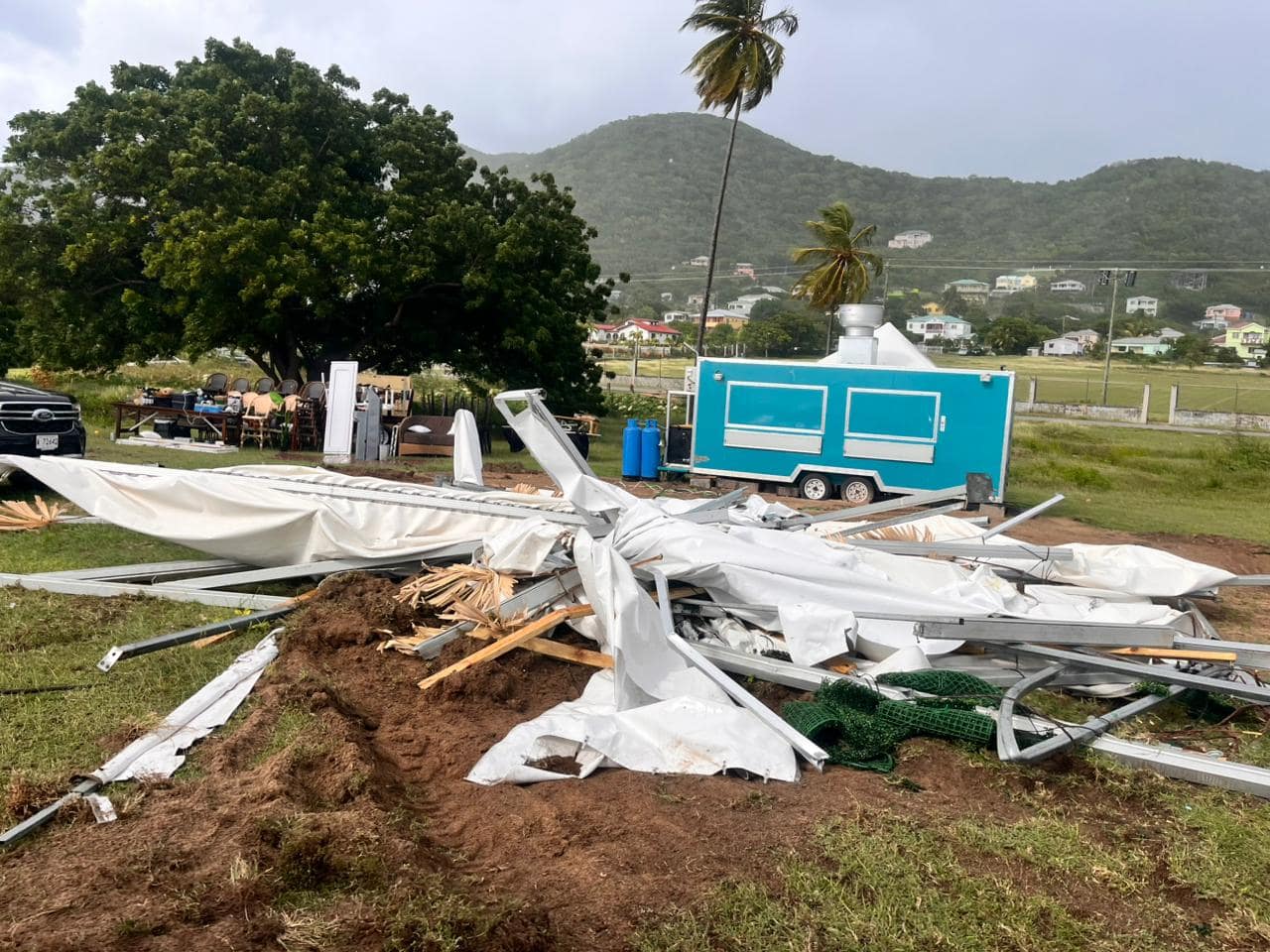
    Antigua’s political climate grew increasingly tense on Tuesday afternoon when state authorities dismantled a beachfront tent structure belonging to opposition parliamentarian Jamale Pringle at Morris Bay. The Development Control Authority (DCA), accompanied by police personnel, executed the removal operation while Pringle was engaged in parliamentary proceedings for the national budget debate.

    Eyewitness accounts confirm DCA officials arrived at the location shortly after noon and systematically disassembled the temporary structure without physical confrontation. The incident rapidly gained attention through community networks, drawing multiple opposition legislators to the scene where they consulted with gathered constituents.

    Local residents and vendor operators expressed profound apprehension following the demolition, interpreting the action as indicative of a broader regulatory crackdown on informal beachfront structures. Many voiced economic concerns, highlighting the potential threat to livelihoods dependent on coastal vending activities amidst current financial pressures.

    Neither the DCA nor law enforcement agencies have released official statements regarding the legal basis or timing of the enforcement action. The absence of public explanation has further intensified discussions regarding beach access regulations and property rights along Antigua’s coastline.

    The incident occurs against a backdrop of ongoing legislative discussions concerning public space utilization and commercial vendor regulations, highlighting escalating tensions between governance policies and community economic practices.