标签: Antigua and Barbuda

安提瓜和巴布达

  • APUA Repairs Leak After Water Supply Disruptions Hit Several Communities

    APUA Repairs Leak After Water Supply Disruptions Hit Several Communities

    Residents across a swath of communities relying on Grays Hill Reservoir for their daily water needs are facing service interruptions and reduced water pressure this week, after an overnight leak on a key supply line cut inflows to the storage facility, the Antigua Public Utilities Authority (APUA) Water Business Unit announced Friday.

    Grays Hill Reservoir, which supplies water to more than a dozen populated areas across the island, depends on combined output from two regional reverse osmosis facilities: the Ffryes and Barnacle Point plants. Both operations are tasked with serving multiple customer zones across Antigua, meaning coordinated water deliveries from both sites are required to keep the reservoir filled to levels that can meet consistent consumer demand.

    During routine overnight infrastructure monitoring, utility crews detected the unplanned leak along the main supply pipeline running from the Ffryes Reverse Osmosis Plant to the reservoir. The breach has reduced the total volume of treated water reaching the storage facility, dragging storage levels down below the threshold needed to maintain normal pressure and uninterrupted service for customers in the Grays Hill service area.

    The communities already experiencing degraded water service include St. John’s City and its outlying neighborhoods, Michael’s Village, Camacho Avenue, Lower Ottos, Nut Grove, Cooks, the corridor stretching from Grays Farm to Five Islands, and Denfields. APUA’s maintenance crews have scheduled full repair work to take place throughout the day of the announcement, targeting a fast resolution to the leak.

    Once repairs are fully completed, utility teams will immediately ramp up efforts to replenish Grays Hill Reservoir’s storage levels, with the goal of gradually restoring full normal water service to all affected communities in the reservoir’s service zone.

    Because the broken water main is located along the island’s southern supply route, additional temporary disruptions will be felt by customers outside the Grays Hill service area during repair work. All zones running from Ffryes Junction to Big Creek—including Orange Valley, Jennings, and Bolans—will see their water service cut temporarily while crews work to seal the leak.

    In a public statement released alongside the service alert, APUA apologized sincerely to all impacted residents for the inconvenience brought on by the unplanned outage, and thanked customers for their patience and understanding as crews work to resolve the infrastructure issue as quickly as possible.

  • Glasgow Sports Ministers’ Meeting to Shape Commonwealth Sport Talks in Antigua and Barbuda

    Glasgow Sports Ministers’ Meeting to Shape Commonwealth Sport Talks in Antigua and Barbuda

    Global sports governance and cross-nation collaboration will take center stage in Glasgow, Scotland, when the 12th Commonwealth Sports Ministers Meeting (CSMM) convenes on July 22, 2026, timed to coincide with the 2026 Commonwealth Games. Convened one day ahead of the Games’ official Opening Ceremony, the high-level gathering will bring together cabinet ministers from all 56 Commonwealth member nations to align on actionable, shared priorities that leverage sport as a tool to advance inclusive development, cross-border peace, and widespread economic prosperity across the bloc.

    Commonwealth Secretary-General Shirley Botchwey will join attending ministers, key global sporting partners, and leading international sports industry figures for the three-day talks. Discussion topics will center on how sport can accelerate progress across public health outcomes and improved governance frameworks, advance gender equality and broader social inclusion, and unlock new targeted investment to build more resilient national economies through strengthened cross-sector partnerships.

    In remarks previewing the upcoming gathering, Secretary-General Botchwey emphasized sport’s unique role as one of the Commonwealth’s most valuable shared resources. “Sport transcends borders, cultures, and generational divides, fostering excellence, discipline, and shared values that reinforce stronger, more connected communities,” she noted. “As ministers gather in Glasgow and athletes prepare to compete at the 2026 Games, this meeting marks a critical chance to map out how sport can deliver tangible, life-changing benefits for our 2.7 billion citizens – particularly young people, women and girls, and persons living with disabilities. This work extends far beyond elite competition: through this meeting, we are harnessing sport’s transformative power to build a more inclusive, resilient and prosperous Commonwealth.”

    The 12th CSMM will be chaired by Maree Todd MSP, the Scottish Government’s Minister for Mental Wellbeing, Public Health, Sport, Alcohol and Drugs, and will operate under the overarching theme “Reimagining the power of sport: towards healthier, fairer and equitable Commonwealth communities.”

    Todd expressed Scotland’s enthusiasm for welcoming the global delegation to Glasgow, noting that the talks will draw on Scotland’s own domestic policy priorities for sport and physical activity, including closing persistent participation gaps and leveraging sport to improve population-level public health outcomes. “This gathering is about turning collective ambition into coordinated action,” Todd said. “I look forward to working alongside fellow ministers to ensure sport delivers lasting, positive change for communities across every corner of the Commonwealth.”

    During the meeting, delegates will conduct a formal review of progress on previously agreed Commonwealth sport priorities, and consider a new, more structured framework for boosting cross-member collaboration and impact that extends beyond the 2026 Glasgow Games. This roadmap will cover upcoming major Commonwealth sporting events, including the 2027 Commonwealth Youth Games in Malta and the 2030 Commonwealth Games in Amdavad.

    Complementing the official ministerial talks, the Commonwealth Gather, Adjust, Prepare, Sustain (GAPS) initiative will host a dedicated camp on July 21, 2026 at the University of the West of Scotland, bringing together athletes, ministers, and sporting stakeholders to advance collaborative action on sport-driven inclusive development. Secretary-General Botchwey will also attend the 2026 Commonwealth Games Opening Ceremony and present medals on the first day of competition.

    Outcomes from the 12th CSMM will also provide a foundational framework for sport-focused policy discussions at the upcoming Commonwealth Heads of Government Meeting, scheduled to take place in Antigua and Barbuda in November 2026.

  • Beyond the Dollar: A Young Caribbean Finance Student’s Reflection on Understanding Money in a Changing World

    Beyond the Dollar: A Young Caribbean Finance Student’s Reflection on Understanding Money in a Changing World

    For most people, money is a constant presence in daily life, yet few take the time to unpack the full range of forces that shape how we interact with it. From earning a paycheck to covering monthly expenses, setting aside savings, or taking on loans, we make countless monetary choices every day. But behind every one of those choices lies far more than simple arithmetic: our relationship with money is molded by psychological biases, deeply held emotional beliefs, broader economic structures, and the unique social and environmental context we live in.

    As a final-year banking and finance student and youth leader based in the Caribbean, my perspective on money has expanded far beyond the textbook formulas, spreadsheets, and balance sheets that form the core of formal finance education. Over time, I have come to see that money is far more than a neutral economic tool: it is a mirror that reflects collective human behavior, the structural inequalities and systems that shape our societies, and the cumulative choices that will define the long-term trajectory of our shared future.

    Reading Morgan Housel’s acclaimed work *The Psychology of Money* proved to be a turning point in how I frame questions of personal and regional finance. The most impactful takeaway from the book is that money management is never a purely mathematical exercise. While core concepts like interest rates, valuation models, and macroeconomic theory certainly hold value, how people actually handle their money is far more heavily influenced by their lived experiences, core personal beliefs, unspoken emotional impulses, and unique individual circumstances.

    This insight leads to a pressing question for young people across the Caribbean region: do we truly recognize and understand the full spectrum of forces that shape our everyday financial choices?

    Mainstream conversations about financial literacy typically frame the concept as nothing more than mastering basic practical skills: creating a household budget, building a emergency savings fund, or picking investment assets. These skills are undeniably essential, but genuine financial awareness extends far beyond individual personal money management. It requires a holistic understanding of how capital flows through local and national economies, and how regional and global economic events ripple out to alter the daily circumstances of ordinary households and businesses.

    For small island developing states across the Caribbean, this nuanced understanding is not just helpful—it is critical. Regional economies are disproportionately vulnerable to external economic pressures: volatile global inflation, shifting global demand for key exports, sudden exchange rate swings, skyrocketing commodity prices, and widespread international economic uncertainty all hit harder in small, open markets. A spike in global fuel prices, a disruption to regional supply chains, or a shift in major global central bank interest rates can directly raise costs for households, strain small business margins, and upend government budget plans across the region.

    The rapid spread of financial technology has only amplified the urgency of expanding public financial awareness. Digital banking platforms, contactless mobile payments, and fully cashless transaction ecosystems have transformed how Caribbean people interact with their money, bringing unprecedented convenience and access to financial services for unbanked and underbanked communities. But these transformative innovations also come with new responsibilities. The frictionless nature of digital spending makes it far too easy for people to lose sight of their spending patterns and overextend their finances without intentional awareness of their choices.

    The recent global wave of persistent inflation has also driven home how critical it is to understand the changing nature of money’s value. Across the Caribbean, households of all income levels have struggled with steep rising costs for non-negotiable essentials: food, public and private transportation, housing, and basic household services. These ongoing cost shifts serve as a constant reminder that the purchasing power of money is not fixed, and a working understanding of how inflation erodes value is essential to making sustainable financial choices.

    For small island economies like those across the Caribbean, building long-term economic resilience to external shocks is a core national priority. Unforeseen events, from global economic recessions to climate-driven natural disasters to escalating geopolitical tensions, can deliver outsized damage to regional economies that lack the scale to absorb sudden disruptions. That makes cultivating a population of financially aware citizens not just a matter of personal responsibility, but a foundational pillar of stronger, more resilient regional societies.

    This conversation about expanding financial awareness is not intended to judge or criticize how individual people choose to spend their money. Instead, its core goal is to encourage broader curiosity, intentional awareness, and responsible decision-making around money. Developing a full understanding of money requires acknowledging both its technical, numbers-driven side and its deeply human, behavior-driven roots, as well as the broader economic systems that shape our communities and the internal biases that drive our individual choices.

    The next generation of Caribbean leaders will go on to fill every role that shapes regional economic outcomes: they will found new businesses, manage investment portfolios, write national economic policy, and make key decisions that shape the future of the region. Their collective ability to understand the full complexity of money will directly shape the long-term trajectory of Caribbean economies.

    At the end of the day, money is far more than what we earn in a paycheck or spend on goods and services. It is an interconnected system shaped by people, public institutions, government policies, and cumulative collective decisions. By cultivating a deeper, more holistic understanding of that system, young people across the Caribbean can make more informed choices for their own futures and contribute to building stronger, more economically resilient region for generations to come.

  • Passport Power Doubles as Global Peace Declines

    Passport Power Doubles as Global Peace Declines

    This year marks two decades since the launch of the Henley Passport Index, and its 20th anniversary edition lays bare a striking global paradox: while cross-border travel freedom has expanded dramatically across the past 20 years, worsening geopolitical conflict has created a wider gap than ever between the world’s most and least mobile citizens. When the index first launched in 2006, the average passport granted visa-free access to just 58 global destinations. Today, that number has nearly doubled to 108, a statistic that underscores how profoundly global mobility has grown over two decades.

    This expansion of travel freedom comes against a sharply contrasting backdrop from the also 20th anniversary Global Peace Index, released by the Institute for Economics & Peace. This year’s edition of the peace index paints the grimmest picture of global stability in its history. The world currently hosts more state-based conflicts than at any point since World War II, marking the 12th consecutive year that global peacefulness has declined. Out of the 163 nations measured, 119 are less peaceful today than they were in 2008, and 103 countries have participated in an external conflict over the past five years — almost twice the number recorded when the index launched.

    Despite this increasingly fractured geopolitical landscape, data from the International Air Transport Association (IATA) confirms that international mobility continues to evolve and expand. At the top of the 2026 Henley Passport Index, Singapore retains its title as the world’s most powerful passport, offering its citizens visa-free or visa-on-arrival access to 192 global destinations. The United Arab Emirates (UAE) claims second place, tied with Japan and South Korea, with access to 188 destinations.

    Notable shifts among top-ranked nations include the United Kingdom, which climbed one spot to 6th place so far this year after securing new visa-free access agreements for its citizens with China and Malawi. Canada also rose one position to 7th following similar reciprocal visa-waiver gains. The United States, by contrast, remains stuck in 10th place, and is one of the only high-ranked passports whose citizens still require a pre-travel visa to enter China.

    The UAE’s dramatic rise through the rankings over 20 years stands out as one of the index’s most remarkable success stories. It has recorded the largest improvement of any nation in the index’s 20-year history, adding 153 visa-free destinations and climbing from the middle of the rankings to the top tier. This transformation serves as a vivid case study of how consistent diplomatic outreach and intentional international cooperation can reshape a nation’s global mobility standing.

    Dr. Christian H. Kaelin, Chairman of Henley & Partners and creator of the Henley Passport Index, notes that the two 20-year datasets reveal a fundamental shift in how global power is expressed. “Twenty years of data show that passport power is one of the clearest expressions of a country’s geopolitical capital. It reflects far more than peace or prosperity alone. The world’s strongest passports belong to nations that other countries want as partners — for trade, investment, security, or cooperation. Mobility is ultimately a measure of the value other countries place on their relationship with you,” Kaelin explained.

    Across the board, global travel freedom has grown significantly over two decades. In 2006, the world’s strongest passports (held by the U.S., Denmark, and Finland) granted access to 130 visa-free destinations. Today, Singapore’s top ranking delivers access to 192 destinations. But this broad expansion has come with a sharp widening of the gap between the world’s most and least mobile citizens. In 2006, Afghanistan sat at the bottom of the index with just 12 visa-free destinations, creating an 118-destination gap between top and bottom. Today, Afghanistan remains last with only 22 destinations, pushing the gap to a record 170 destinations. Remarkably, Bolivia is the only nation in the world to have recorded a net loss of visa-free access over 20 years, dropping six destinations; every other ranking has improved.

    The makeup of the world’s top mobility elite has shifted dramatically since 2006, when the U.S. held first place and the U.K. ranked third. Two decades later, the U.S. is 10th and the U.K. is 6th, marking a clear long-term reallocation of mobility power away from traditional transatlantic leaders. Asian nations have surged to the top of the rankings: Singapore, which ranked 8th in 2006, now leads the index, while Japan and South Korea join the UAE in second place. Europe still maintains a strong presence in the upper rankings, but the balance of power has shifted there as well. Today, the top 10 tier of mobility includes more nations with narrower gaps in access than 20 years ago, reflecting a broader trend: while passport power has expanded globally, holding a top relative position has become far more competitive.

    New comparative analysis of 20 years of data from the Henley Passport Index (HPI) and the Global Peace Index (GPI) finds a strong positive correlation between national peacefulness and passport power (Spearman rank correlation ρ = 0.65, p < 0.001). The pattern holds at both ends of the rankings: most of the world’s most peaceful nations also hold the world’s strongest passports. Singapore ranks 8th on the GPI and 1st on the HPI, while Japan, Switzerland, Ireland, Austria, Portugal, Finland, Denmark, New Zealand, Canada, Czechia, and Malaysia all rank among global leaders on both indexes. At the opposite end, Afghanistan, Syria, and Yemen rank among the world’s least peaceful nations and hold the world’s weakest passports, demonstrating how conflict, instability, and state fragility erode international mobility. The most revealing insights come from the exceptions to this trend, however. Multiple nations hold passports that far outperform their GPI rankings would predict, including Israel (159th on GPI, 18th on HPI), the United States (134th on GPI, 10th on HPI), France (99th on GPI, 4th on HPI), Ukraine (160th on GPI, 31st on HPI), the UAE (73rd on GPI, 2nd on HPI), South Korea (57th on GPI, 2nd on HPI), Brazil (124th on GPI, 16th on HPI), Mexico (139th on GPI, 22nd on HPI), and Russia (163rd on GPI, 47th on HPI). Their positions confirm that while peace provides a foundational boost to mobility, diplomacy, geopolitical influence, economic strength, and regional integration can deliver even greater gains. The U.S. and Israel are the clearest statistical outliers. Though the U.S. falls in the bottom fifth of GPI rankings and Israel is among the five least peaceful nations in the world, both maintain exceptionally powerful passports. Their high rankings reflect decades of accumulated diplomatic capital, broad geopolitical influence, major economic importance, and international confidence in the integrity of their travel documents. Even amid ongoing regional tensions in the Middle East, their mobility strength makes clear that passport power is shaped by far more than just national peacefulness. France stands out as the primary European outlier. Its 99th place GPI ranking accounts for metrics including militarization and external conflict alongside domestic security, yet it shares 4th place on the HPI with 10 other European nations that all rank within the top 35 for peacefulness. France’s outperforming passport highlights the mobility dividend created by Schengen Area membership, European integration, and extensive global diplomatic and economic ties. Ukraine offers another distinct exception. Though it ranks 160th on the GPI due to its ongoing full-scale conflict with Russia, it holds 31st place on the HPI. Its strong passport position reflects the durability of long-standing mobility agreements and its deepening integration with the European Union, proving that international mobility access can persist even amid prolonged armed conflict. For many Global South nations, while peace creates the conditions for stronger passport power, mobility remains limited by weaker diplomatic leverage, fewer reciprocal visa-waiver agreements, and a global visa system that structurally favors wealthier, more influential states. As Professor Mehari Taddele Maru of the European University Institute and Johns Hopkins University argues in recent research published by Henley & Partners on EU visa reforms, modern visa policies often reinforce structural bias against African travelers, raising critical questions about fairness and equity in global mobility. The 20th anniversary findings set the stage for Henley & Partners’ upcoming Safe Haven Forum, a unique global convening that brings together leading geopolitical analysts, investors, heads of government, policymakers, and wealth advisors to explore how nations and families can build resilience through diversified residence, citizenship, and investment attraction strategies in an increasingly fragmented world. Internal client data from Henley & Partners shows that geopolitical uncertainty is increasingly shaping decision-making among high-net-worth families. In the first six months of 2026, the firm received applications from 86 nationalities across 47 residence and citizenship by investment programs, with more than 28% of applicants already residing outside their country of nationality. Americans remain the largest source market for the firm, and enquiries from UAE-based residents have risen 41% since conflict escalated in the Gulf in February, reflecting growing demand for contingency planning. Dr. Kaelin noted that the findings point to a broader shift in how both nations and families approach mobility. “For twenty years, we have measured how nations build freedom of movement for their citizens. Today, we are witnessing the same shift in how families think about their future. They recognize that true wealth is no longer defined solely by financial capital, but by the freedom to choose where they and future generations can live, work, study, invest, and belong. In an increasingly uncertain world, the greatest privilege is no longer simply the freedom to travel — it is the freedom to choose, to have access rights,” he said.

  • Auslando Davis Selected for Global Beverage Scholarship

    Auslando Davis Selected for Global Beverage Scholarship

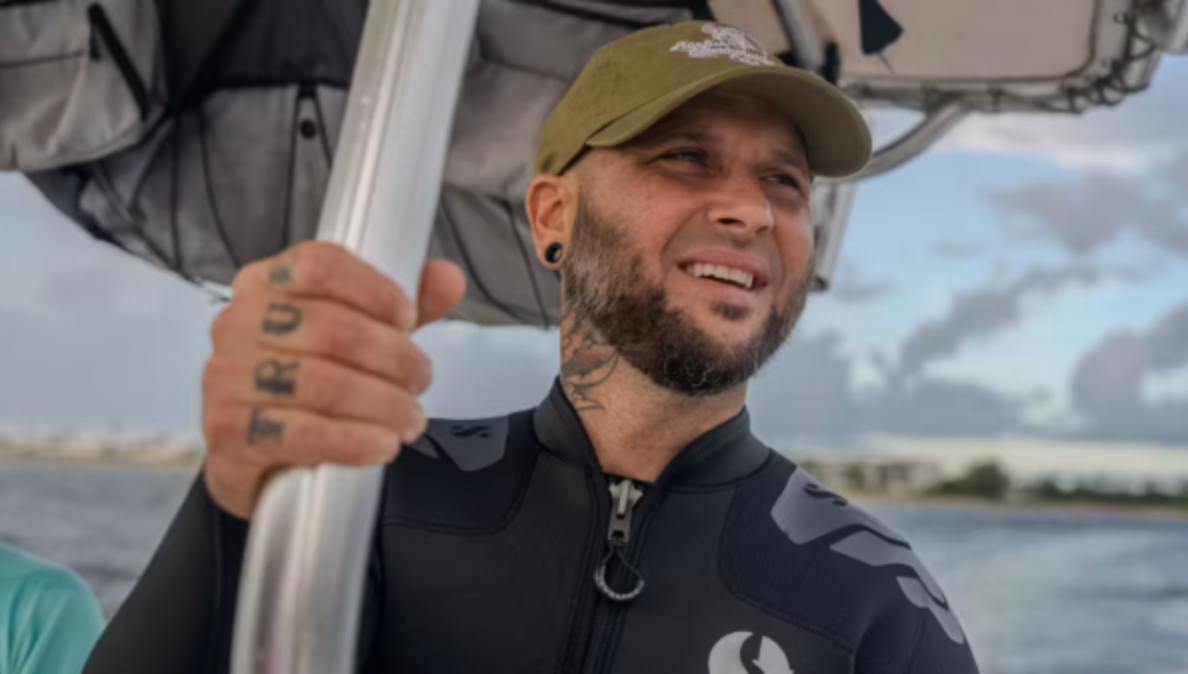
    A promising Antiguan hospitality professional has earned a spot among the beverage industry’s most exciting emerging talents, after securing a prestigious international scholarship that will open doors to global learning and professional development. Auslando Davis, who currently serves as assistant food and beverage manager at the renowned Curtain Bluff resort, beat out hundreds of high-caliber applicants from across the globe to claim the Tales of the Cocktail Foundation Global Beverage Scholarship.

    The award marks a major milestone for Davis, granting him full access to the 24th annual Tales of the Cocktail Conference, one of the beverage industry’s most influential professional gatherings, set to take place in New Orleans from July 19 to 26. During the week-long event, Davis will have the unparalleled chance to connect with leading beverage innovators, master distillers, award-winning bartenders and industry executives from every corner of the world. Through immersive workshops, panel discussions, hands-on demonstrations and networking sessions, he will deepen his expertise, learn cutting-edge industry practices and expand his professional network on a global scale.

    For Davis, the opportunity is far more than a personal career boost—it is a chance to lift up the entire hospitality sector of his home nation. In remarks following the announcement of his selection, Davis emphasized his commitment to bringing the knowledge and insights he gains back to Antigua and Barbuda. “This is a tremendous opportunity to learn from some of the best in the global beverage industry and bring that knowledge and experience back home,” he said. He went on to share his plan to use his new skills to mentor emerging local bartenders and beverage professionals, working collectively to raise the overall service standard of Antigua and Barbuda’s thriving hospitality industry, which is a core pillar of the nation’s economy.

    Davis’s inclusion in the scholarship program also puts Antigua and Barbuda front and center on the international beverage stage, joining a diverse roster of nations represented at the annual conference. The event, which draws thousands of beverage professionals each year, serves as a global hub for sharing innovation, celebrating cultural cocktail traditions and shaping the future of the international hospitality and beverage sector. For the small Caribbean nation, Davis’s participation opens new opportunities to showcase its growing hospitality talent and build stronger connections with global industry partners.

  • ECAB Launches the ECAB Game Changers Scholarship

    ECAB Launches the ECAB Game Changers Scholarship

    On July 20, 2026, the Eastern Caribbean Amalgamated Bank (ECAB) officially introduced its transformative new initiative, the ECAB Game Changers Scholarship, at the bank’s Redcliffe Street headquarters. The launch event drew key stakeholders from both local government and the regional sporting community, gathering to mark a new milestone in combined investment for youth athletic and academic growth.

    Designed to remove financial barriers for talented young competitors, the scholarship will award a one-time disbursement of 25,000 Eastern Caribbean dollars to one eligible recipient each year. To qualify, candidates must be between 14 and 21 years of age, have already secured a partial scholarship to study overseas, and compete at a high level in one of three core sports: swimming, track and field, or association football. The program’s core mission is to empower promising young athletes to pursue dual excellence in their academic studies and their athletic careers while studying abroad.

    Speaking at the launch, ECAB Chief Executive Officer Michael Spencer emphasized that the initiative represents far more than just financial support for recipients. He framed the scholarship as a tangible demonstration of the bank’s long-standing dedication to holistic youth development across the Eastern Caribbean. “This program is about recognizing and rewarding relentless perseverance, fostering the next generation of community leaders, and backing young people who will go on to carry pride for their hometowns and their nation onto regional and global sporting stages,” Spencer explained.

    Dwayne George, the Honorable Minister of Sports and Creative Industries, joined in praising the initiative, highlighting ECAB’s sustained track record of meaningful corporate investment in local communities. “ECAB has consistently shown it stands apart from other institutions when it comes to investing in the region. Their contributions to education, community advancement, and cultural development have not gone unrecognized by the public or the government. We once again applaud their ongoing work as a responsible, engaged corporate citizen,” George said.

    Young athletes who meet the eligibility criteria and are interested in applying have until August 21, 2026, to submit their completed applications. Full details on eligibility requirements and submission instructions are available directly through ECAB.

  • Police Investigating Social Media Claims of Alleged Human Remains Off Parham Coast

    Police Investigating Social Media Claims of Alleged Human Remains Off Parham Coast

    ST. JOHN’S, ANTIGUA AND BARBUDA – In an official public statement released July 20, 2026, the Royal Police Force of Antigua and Barbuda’s Office of Strategic Communications confirmed that authorities are treating unconfirmed reports of human remains found in waters off Parham Coast with the highest level of urgency, launching a full, active joint investigation with national defense partners.

    Two days prior, on July 18, a joint search and assessment operation was carried out by local police and the Antigua and Barbuda Defence Force (ABDF) Coast Guard in the general area flagged in the original reports. However, despite coordinated efforts, investigators have yet to pinpoint the exact location where the alleged discovery was reportedly made.

    Authorities emphasized that targeted underwater search operations require precise, actionable intelligence to deploy limited resources effectively. To that end, police and the ABDF Coast Guard have remained in close communication, working to cross-verify all incoming information and narrow down the location of the reported find. Without clear coordinates, a comprehensive, efficient underwater search cannot be executed, officials explained.

    In a public appeal, law enforcement is urging any member of the public with relevant details that could help pinpoint the alleged discovery site to step forward and share what they know. The investigation carries unique sensitivity, authorities noted, referencing the long list of unresolved missing person cases across the country that have left dozens of families waiting for answers and closure about their loved ones.

    Police Commissioner Everton Jeffers has publicly reaffirmed that both he and the entire Royal Police Force of Antigua and Barbuda remain fully committed to following every credible lead and examining every piece of information connected to the claim. Jeffers stressed that the force will leave no stone unturned in efforts to resolve this case and bring answers to waiting families.

    The Police Administration extended gratitude to the public for their ongoing cooperation and patience during the investigation, confirming that official updates will be released to the nation immediately once verified information becomes available. Members of the public with details to share can contact the Criminal Investigations Department directly at 462-3913 or 462-3914, call the national emergency line 911, or speak to any on-duty police officer. Anonymous tips can also be submitted through the Crime Stoppers hotline at 800-TIPS (8477).

  • Youth Parliament Raffle Proceeds Benefit Six Schools Across Antigua and Barbuda

    Youth Parliament Raffle Proceeds Benefit Six Schools Across Antigua and Barbuda

    A community-focused initiative led by the Youth Parliament of Antigua and Barbuda has turned a simple fundraising raffle into tangible support for educational institutions across the twin-island nation, with all proceeds going directly to benefiting six local schools. The project, which was organized over the course of several months by young parliamentary representatives, aimed to address pressing resource gaps that many regional schools have faced in recent years, from outdated learning materials to inadequate facility upgrades. Raffle tickets were sold to residents, local business owners, and community groups across both Antigua and Barbuda, drawing widespread participation that reflected broad public support for youth-led investment in education. Organizers of the raffle emphasized that the campaign was more than just a fundraiser—it was designed to demonstrate how young people can take meaningful action to strengthen their local communities and invest in the next generation of learners. After the draw concluded and all funds were counted, the total proceeds were distributed equally among the six selected schools, which serve students from primary to secondary levels across multiple parishes. Representatives from each beneficiary school have expressed gratitude for the unexpected funding, noting that it will be used for a range of high-priority needs, including new classroom technology, sports equipment, library book restocks, and minor accessibility improvements to school buildings. Education stakeholders across Antigua and Barbuda have praised the Youth Parliament for the successful initiative, highlighting that it sets a positive example for youth civic engagement and shows how targeted grassroots efforts can deliver immediate, lasting benefits to local communities. Moving forward, the Youth Parliament has indicated that it plans to explore similar community-focused fundraising projects in the future, with a continued focus on supporting education and youth development across the country.

  • AIDS Secretariat Strengthens Workplace Response Through Professional Development Workshop

    AIDS Secretariat Strengthens Workplace Response Through Professional Development Workshop

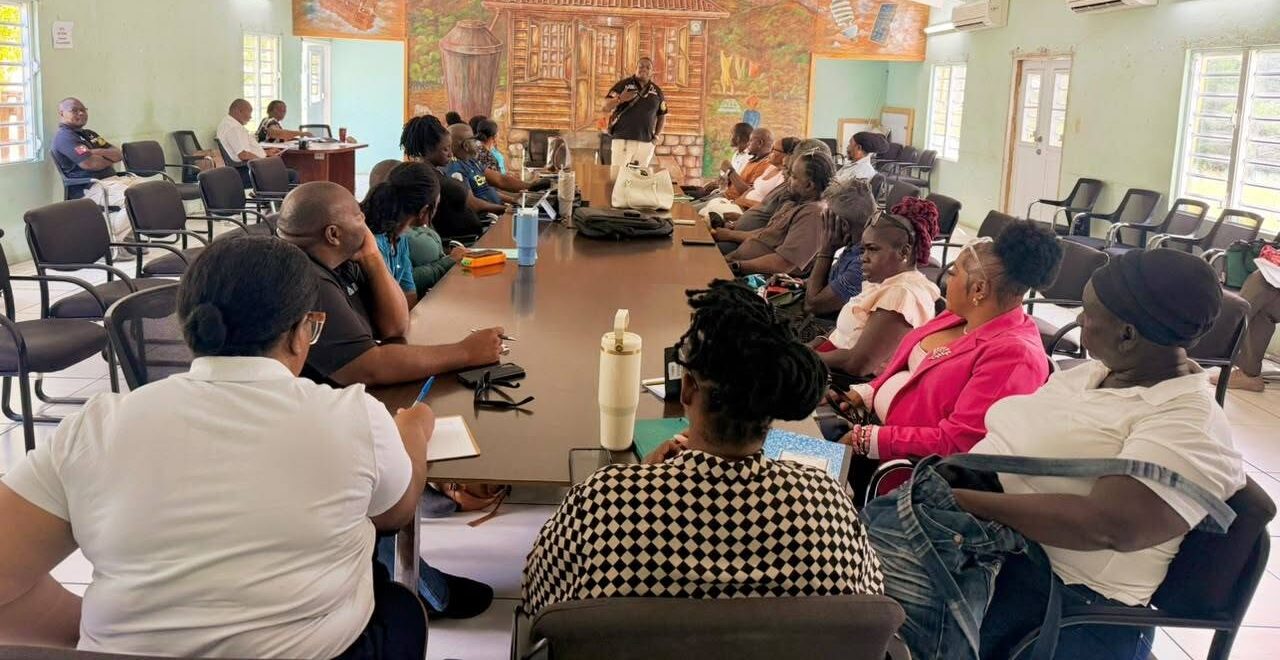
    A cross-sector gathering of public and private industry professionals kicked off this week in Antigua and Barbuda for a comprehensive five-day professional development workshop, hosted by the country’s AIDS Secretariat at the Multipurpose Cultural and Exhibition Centre. The targeted training initiative was crafted to deepen participants’ expertise and build core capacities to address HIV and AIDS, alongside connected public health and social issues, within workplaces — all while advancing the creation of inclusive, supportive environments free from discriminatory practices.

    Organizers have structured the workshop to cover a broad, interconnected set of topics that extend far beyond basic HIV and AIDS education. Session themes include mental health support, building healthy interpersonal relationships, the ongoing harms of stigma and discrimination, prevention and management of sexually transmitted infections (STIs), the critical importance of patient and client confidentiality, and the intersection of HIV care with substance abuse support. By working through these modules, participants are gaining actionable tools to better support employees, clients, and general community members who interact with their organizations, while helping to build workplaces rooted in shared values of respect, professional accountability, and compassion.

    In his opening keynote address, Hon. Michael Joseph, Minister of Health, Wellness, Environment and Civil Service Affairs, centered his remarks on the often unseen impacts of professional action on vulnerable communities. Joseph reminded attendees that countless people living with HIV navigate invisible daily burdens, and that the words, choices, and actions of working professionals across all sectors can reshape those experiences for better or worse.

    The minister emphasized that while decades of scientific progress have transformed HIV from a fatal diagnosis into a manageable chronic health condition, systemic barriers continue to block life-saving care. Stigma, cultural fear, widespread misinformation, and formal and informal discrimination remain the largest obstacles to widespread routine testing, consistent treatment, and equitable care access. Ending the national HIV epidemic, he argued, is not exclusively a medical or public health challenge — it is a shared social responsibility that demands widespread empathy, intentional understanding, and coordinated collaboration across every industry and sector.

    Joseph also expanded on the critical role of confidentiality in HIV care and support, noting that this standard is far more than a box-ticking professional requirement. It is a core promise to protect every individual’s inherent dignity and right to privacy. He closed his remarks by urging participants to carry the lessons and strategies learned throughout the workshop back to their home workplaces, building spaces where people feel safe seeking help, disclosing their status or concerns without fear of retaliation or discrimination, and accessing the targeted support they need to thrive.

    Delcora Williams, AIDS Programme Manager for the initiative, drew attention to shifting national trends in HIV spread, highlighting a worrying upward trend in new cases among the 16 to 24-year-old age group. Williams reinforced the importance of routine testing to help individuals know their status, and reminded attendees that accessible public education, early diagnosis, and supportive workplace policies are non-negotiable components of effective national prevention and care frameworks.

    Stacey Gregg-Paige, Permanent Secretary in the Ministry of Health, Wellness, Environment and Civil Service Affairs, also joined the official opening ceremony to mark the launch of the workshop.

    Overall, the five-day training represents a concrete commitment from both the Ministry of Health and the Antigua and Barbuda AIDS Secretariat to build the confidence, cultural sensitivity, and professional skill set of cross-sector professionals to address HIV and its connected social and health challenges. After completing the workshop, participants will bring their new knowledge and skills back to their home workplaces, with the goal of expanding environments where confidentiality is prioritized, stigma is actively challenged, and every person is treated with equal dignity and compassion.

  • LETTER: The Street Will Never Love You Back

    LETTER: The Street Will Never Love You Back

    On a quiet Sunday in Potters, a routine gathering turned into a senseless tragedy that cut short a young life. Twenty-nine-year-old Leyandrew Hubbard was killed when a gunman opened fire on a group of people playing cards under a simple roadside shed. A second man survived the attack but remains in hospital, fighting to recover from serious gunshot wounds, a stark reminder of how random violence leaves lasting scars on communities.

    As is all too common after such events, the wheels of official response have begun to turn: local police have launched an investigation into the shooting, elected officials have released formal statements of condolence to Hubbard’s family, and grieving friends have taken to social media to share old photos of the young man, paired with tearful broken-heart emojis. For most of the community, life will gradually return to its normal rhythm, the memory of this latest violence fading until the next tragedy makes headlines.

    But for one small group of young men who gather regularly at that same roadside shed, the routine is already set to resume. By tomorrow, they will pull up worn wooden chairs, reshuffle a well-worn deck of cards, light cigarettes, pass around cold drinks, and laugh as if the fatal gunfire that echoed through the area just days earlier never happened. This open letter is written specifically for them.

    Across too many marginalized communities, countless young men have grown so deeply anchored to life on “the block” that they no longer recognize how the street has become their prison. They wake each morning with no clear plans, no tangible goals to work toward, and no sense of urgency to build a safer, more fulfilling future. The street corner replaces a professional office; the informal gambling table becomes their daily “workplace.” The conversations stay the same, year after year, and their lives stagnate along with them.

    Then, without warning, a burst of gunfire shatters that hollow routine. Many of these young men cling to the false belief that they are safe because they are “not involved” in local gang or criminal activity. But bullets do not stop to check identification or ask whether a person is innocent. Random violence does not care if you only stopped by for an hour to socialize, or if you were just passing through the neighborhood on an errand. It only takes being in the wrong place at the wrong wrong time for a life to be destroyed.

    Every funeral held for a victim of community gun violence reinforces the same brutal, unchanging truth: life is precious, but it is also incredibly fragile. Even so, far too many young people continue to live as if they are guaranteed an unlimited number of tomorrows. This letter asks them to answer one simple, honest question: What has the street ever given you?

    Has life on the block helped you save for a home of your own? Has it taught you a marketable trade that can support you for a lifetime? Has it given you the tools to care for aging parents, raise your own children, or build the stable future you once dreamed of as a kid? Or has it simply eaten away your most precious years, convincing you that doing nothing with your potential is normal and acceptable?

    Idle hours turn into empty days, empty days stretch into unfulfilled years, and before you realize what has happened, the big dreams you once held have been pushed aside by lazy excuses. You become known not for the goals you achieved or the good you brought to the world, but for where you spent every idle afternoon.

    But there is always another choice. You can learn a skilled trade that will open new doors. You can start a small business that builds wealth for you and your family. You can go back to school to finish your degree or learn new skills. You can find a mentor who has built the life you want and learn from their example. You can volunteer in your community to build connections and gain experience. You can get a steady job that gives you purpose and stability. Most importantly, you can walk away from people who celebrate wasting time, and surround yourself with people who push you to demand more from yourself and your future.

    The most heartbreaking part of tragedies like the shooting in Potters is that they become routine. We scan the headlines, shake our heads in disappointment, and move on with our lives, waiting for the next shooting to shock us for a day or two. But it does not have to stay this way.

    If even one young man reads this and decides today that he has wasted enough time on the corner, and chooses to invest that time in himself instead, then Hubbard’s death will not be entirely for nothing – it may yet save another life from being cut tragically short. Do not wait until your family is forced to plan your funeral. Do not wait until your face is printed on a memorial T-shirt worn by grieving friends. Walk away from the corner while you still have the chance. The future you deserve is waiting somewhere else.

    Sincerely,
    A Concerned Citizen