标签: Antigua and Barbuda

安提瓜和巴布达

  • Senator Michael Freeland Pays Tribute to Teacher Gen’s Life and Legacy

    Senator Michael Freeland Pays Tribute to Teacher Gen’s Life and Legacy

    ANTIGUA AND BARBUDA – The nation came together this week to honor the extraordinary legacy of the revered educator known affectionately as ‘Teacher Gen,’ whose funeral service became a powerful testament to a life lived in service of others. The ceremony, attended by citizens from across the dual-island nation, served as a profound reflection on her enduring contributions to education and community development.

    Prominent political figures joined family members in paying heartfelt tributes. Senator Michael Freeland delivered a poignant eulogy, characterizing the departed as a foundational pillar of society. ‘We gather today to celebrate a true matriarch,’ Senator Freeland stated, ‘whose wisdom, compassion, and unwavering commitment to our children and community will never be forgotten.’

    Her daughter, The Reverend Denise Smith-Lewis, offered a personal perspective on her mother’s lifelong mission. She shared that Teacher Gen ‘stood firmly for family and community, and clearly understood her life’s assignment,’ framing her work as a divine calling rather than merely a profession.

    Further illuminating her profound personal impact, Hon. Anthony Smith Jr. eulogized his grandmother as ‘a remarkable life, a beacon of love, faith, and inspiration to all.’ He provided intimate details of her home, which he described as having long served as ‘a sanctuary for the abandoned… a place where unconditional love, structure, and discipline transformed lives.’

    The widespread attendance and unified outpouring of respect highlighted the deep and lasting imprint of Teacher Gen’s decades of dedication, cementing her status as a national figure whose influence transcended the classroom and shaped the very fabric of Antiguan and Barbudan society.

  • Antigua and Barbuda Among Nations Facing Stricter Canadian Visitor Visa Rules in 2026

    Antigua and Barbuda Among Nations Facing Stricter Canadian Visitor Visa Rules in 2026

    Canada is implementing a significant restructuring of its visitor entry framework set for 2026, creating a bifurcated system that simultaneously simplifies access for certain nationalities while imposing more rigorous vetting for others. This strategic shift represents a recalibration of immigration policy aimed at bolstering border security while selectively promoting tourism.

    The revised system establishes two distinct pathways. Travelers from a designated group of nations, primarily in the Caribbean and Latin America, will benefit from an expanded Electronic Travel Authorization (eTA) program. This includes citizens from Antigua and Barbuda, St. Kitts and Nevis, St. Lucia, Trinidad and Tobago, Argentina, Costa Rica, Panama, and Uruguay. Eligible eTA applicants can bypass traditional visa applications for stays up to six months, provided they meet specific conditions like holding a valid U.S. non-immigrant visa.

    Conversely, the standard visitor visa process is undergoing substantial tightening. All applicants face enhanced scrutiny across multiple criteria, including financial proof, travel history, and demonstrated intent to return to their home country. Immigration officers now exercise greater discretion in denying applications based on vague travel purposes, insufficient evidence of financial means, or weak ties to the applicant’s country of origin.

    This policy evolution occurs within a broader context of Canadian immigration reform, including recent restrictions on international student visas. The government appears to be pivoting toward encouraging short-term tourism revenue as a counterbalance to reduced long-term student migration. The changes also reflect ongoing global security concerns, with explicit grounds for inadmissibility including criminal history, human rights violations, and potential security risks.

    The geographical impact of these changes is uneven. While Western European and American travelers remain largely unaffected, applicants from countries with historically higher refusal rates—such as Mexico, Brazil, and Colombia—are likely to experience increased rejection rates and longer processing times. The overarching goal remains finding an equilibrium between secure borders and sustainable tourism growth.

  • Nationwide Cleanup Targets Rats, Mosquitoes and Illegal Dumping, CBH Says

    Nationwide Cleanup Targets Rats, Mosquitoes and Illegal Dumping, CBH Says

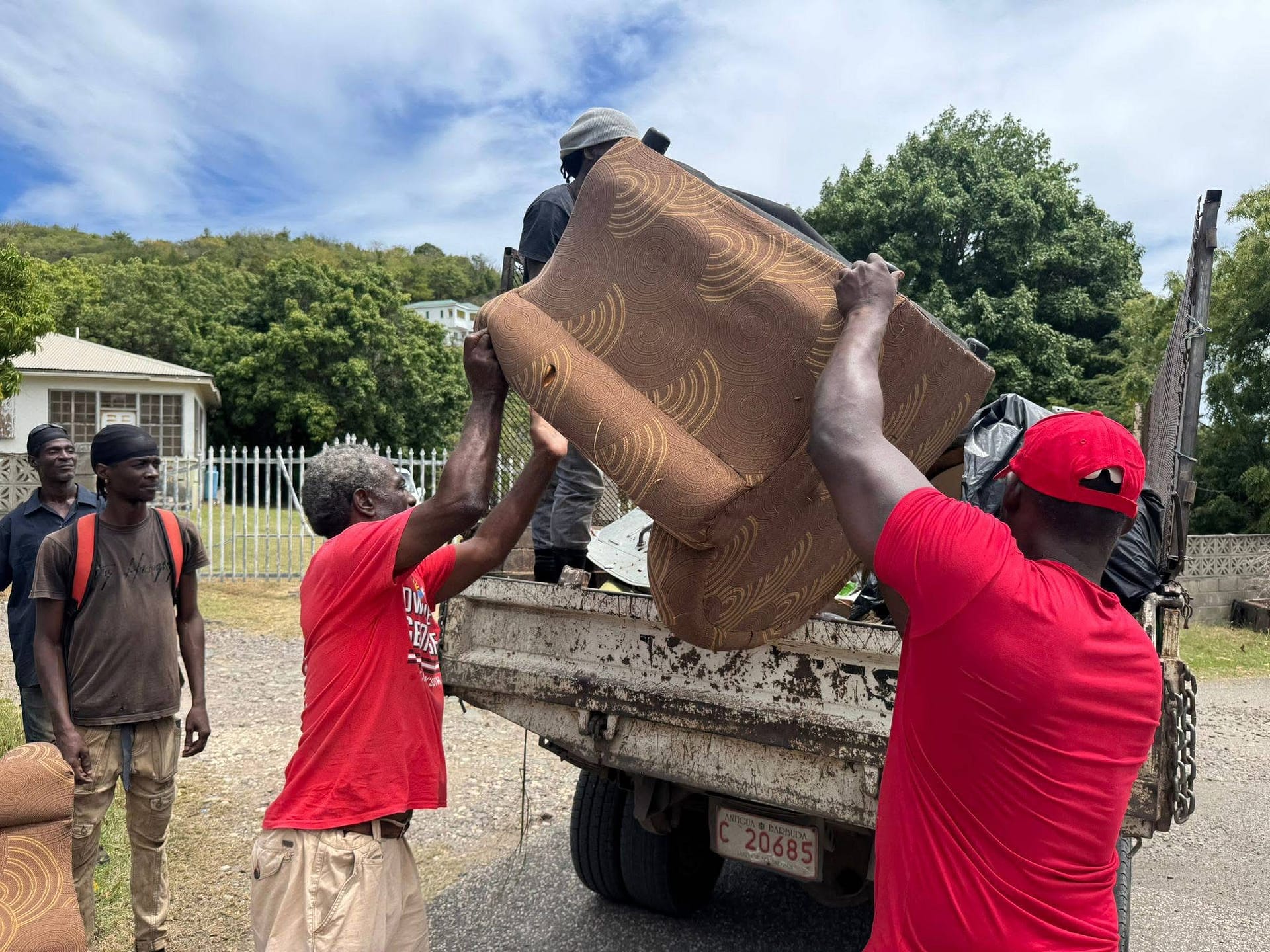
    A sweeping national public health campaign is currently in progress across Antigua and Barbuda, orchestrated by the Central Board of Health (CBH) to confront severe environmental health threats. This multi-agency operation unites the National Solid Waste Management Authority, the Royal Police Force, the Antigua and Barbuda Defence Force, and the Public Works Department in a targeted assault on communities plagued by severe illegal dumping, derelict vehicles, overgrown vegetation, and obstructed drainage systems.

    Julienne Mannix-Galloway, Principal Public Health Inspector at the CBH, emphasized that the initiative is a direct response to mounting risks of rodent and mosquito-borne diseases, including leptospirosis and dengue fever. She clarified the CBH’s regulatory mandate, which encompasses food safety, vector control, and environmental inspections, underscoring its pivotal role in mitigating conditions that facilitate pest proliferation and disease transmission.

    A critical tactical element of the campaign involves the strategic baiting of abandoned vehicles and structures prior to their removal. Mannix-Galloway explained this precaution is essential to prevent the mass migration of displaced rodents into adjacent residential areas, thereby exacerbating infestation problems. The comprehensive cleanup protocol further includes the eradication of bulk waste, clearing of vacant lots, trimming of dense vegetation, demolition of dilapidated buildings, and the flushing and deodorization of public drains. Due to constraints in staffing and equipment, operations are proceeding sequentially with an anticipated completion deadline by year’s end.

    Officials identified improper waste disposal by residents as a primary contributor to the crisis. Common practices such as leaving food waste exposed, overfeeding pets, and channeling kitchen refuse directly into open drains were cited as creating ideal breeding grounds for pests. In parallel, the CBH is intensifying scrutiny of food establishments, mandating the installation and maintenance of grease traps, and possessing the authority to shutter operations that present immediate public health dangers.

    The initiative also dovetails with national disaster preparedness objectives ahead of the annual hurricane season. By clearing drains and lots, the effort mitigates potential flooding risks and associated health hazards, a coordination effort that involves the National Office of Disaster Services in pinpointing vulnerable zones. At a strategic level, the CBH is advocating for more rigorous enforcement of the Litter Act, contending that perpetual cleanups are financially burdensome and unsustainable without a fundamental shift in public behavior and greater accountability. Mannix-Galloway concluded with an appeal for civic pride, urging citizens to maintain cleaned properties and adopt safer waste management practices.

  • Two Men Sentenced for Unlawful Possession of Cannabis

    Two Men Sentenced for Unlawful Possession of Cannabis

    In a decisive move underscoring the nation’s drug enforcement stance, the Antiguan judicial system has handed down significant financial penalties to two individuals convicted on cannabis possession charges. The rulings were delivered on Wednesday at the All Saints Magistrate’s Court, presided over by Magistrate Ngaio Emanuel.

    The first case involved Terrance Roberts, a 48-year-old resident of Federation Road. Roberts, who had previously entered a guilty plea, was found in possession of 267.8 grams of cannabis. The court imposed a substantial fine of $5,000 Eastern Caribbean Dollars, mandating full payment within a one-year period. Failure to comply with this financial penalty will result in a one-year custodial sentence at His Majesty’s Prison.

    In a separate and concurrent hearing, 32-year-old Roshawn Elliott from Potters Village faced sentencing after similarly pleading guilty. Elliott’s charges stemmed from the possession of a larger quantity—1.1 pounds (approximately 499 grams) of cannabis. Reflecting the greater amount seized, the court levied a more severe fine of $15,000 EC Dollars, also payable within a twelve-month timeframe. Defaulting on this payment will lead to an eighteen-month incarceration period.

    These consecutive sentencing procedures highlight the ongoing enforcement of cannabis legislation within Antigua and Barbuda, demonstrating the judiciary’s consistent application of penalties proportionate to the severity of the offense. The outcomes serve as a contemporary benchmark for drug-related convictions in the nation’s legal landscape.

  • OPINION: Caribbean Faces Rising Unemployment and Economic Uncertainty Amid Calls for Reform

    OPINION: Caribbean Faces Rising Unemployment and Economic Uncertainty Amid Calls for Reform

    The abolition of Caribbean slavery inaugurated a persistent struggle with employment, a complex issue often reduced to simplistic minimum wage debates and sterile statistics that obscure profound human suffering. The transition from plantation economies through post-colonial patriarchy to inadequate worker protection frameworks has left a fundamental question unresolved: what future awaits the region’s workforce?

    Global experiments offer little clarity. Finland’s Universal Basic Income trial provided unconditional payments to unemployed participants with inconclusive results, while India’s longstanding minimum hours protection for agricultural workers faces potential reform. The Cayman Islands recently implemented a hybrid approach emphasizing financial oversight and bureaucratic self-deception, even as the territory’s reputation suffers from yacht seizures and Ponzi scheme associations. Their entire financial sector now faces existential threat from proposed global corporate tax reforms targeting offshore havens.

    The heart of the unemployment crisis lies with disenfranchised youth who statistically drive regional criminal activity. Compounding this, efficiency gains, artificial intelligence, fiscal policies, and social spending demands are eliminating traditional lifetime employment for older workers—though not yet approaching Argentina’s pension crisis severity.

    Caribbean economies remain dangerously dependent on tourism, limited mineral resources, tax haven status, and remittances—a precarious foundation prompting some islands to explore military assistance economies akin to the Philippines. More alarmingly, formerly independent nations are increasingly functioning as U.S. detention facilities, trading sovereignty for economic survival.

    Remittance-dependent economies face additional pressure from American tax policies, while outsourcing sectors confront U.S. government opposition. Regional leadership promises 2026 solutions through economic diversification and sovereign wealth funds, but without substantive action, the future holds only intensified hardship and empty political rhetoric. The responsibility for meaningful change now rests entirely with Caribbean governance structures.

  • ABWU Condemns Government’s “Sporadic and Fragmented” Payment Offers to Former LIAT 1974 Workers

    ABWU Condemns Government’s “Sporadic and Fragmented” Payment Offers to Former LIAT 1974 Workers

    The Antigua and Barbuda Workers’ Union (ABWU) has issued a forceful response to Prime Minister Gaston Browne’s announcement of additional funds for former LIAT 1974 Ltd. employees, characterizing the government’s approach as fundamentally inadequate and unjust.

    While acknowledging that financial assistance provides temporary relief, the union maintains an uncompromising position that displaced aviation workers must receive their full severance entitlements. The ABWU emphasizes that severance constitutes an earned right resulting from years of dedicated service, not a charitable donation or discretionary gesture.

    The labor organization has condemned the administration’s persistent refusal to acknowledge workers’ legitimate claims to severance payments, describing the government’s posture as both cruel and unjust. This stance has reportedly inflicted extended hardship on hundreds of former employees and their dependent families.

    The union characterizes the government’s intermittent payment offers as insufficient measures that highlight official apathy toward affected workers. The ABWU suggests that a credible demonstration of good faith would involve honoring severance for those with smaller outstanding balances while establishing a transparent framework for addressing larger payments as resources permit.

    Contradicting Prime Minister Browne’s claims of maintained dialogue, the union reveals that the administration has systematically excluded legally appointed worker representatives from substantive discussions for five consecutive years. This exclusionary approach appears particularly inconsistent with the government’s professed ‘pro-labour philosophy.’

    The ABWU concludes by demanding the replacement of what it terms ‘domineering approaches’ with constructive dialogue aimed at achieving a fair and humane resolution that acknowledges workers’ dignity and rightful claims.

  • COMMENTARY: CBI is Dead. Long Live CBI – Premier Mark Brantley of Nevis

    COMMENTARY: CBI is Dead. Long Live CBI – Premier Mark Brantley of Nevis

    In a comprehensive policy statement, Premier Mark Brantley of Nevis has declared the Citizenship by Investment Program (CBI) effectively defunct while outlining an ambitious eleven-point strategy to fundamentally reshape the economy of St. Kitts and Nevis. The Premier’s vision calls for urgent economic diversification to reduce dependency on volatile sectors and build resilience against external economic shocks.

    The cornerstone of Brantley’s proposal involves accelerating renewable energy development, particularly geothermal resources, positioning the federation to become “the Norway of the Caribbean.” This energy transformation would support new industries requiring substantial cheap power, including artificial intelligence centers, while generating employment and reducing energy costs for residents and businesses.

    Agricultural security features prominently in the plan, with initiatives to establish a broiler industry and achieve self-sufficiency in eggs, poultry, and specific crops. The Premier emphasized that “food security is national security,” highlighting how domestic production would buffer against international market fluctuations.

    The proposal further advocates for full cannabis legalization across research, medicinal, and recreational applications, coupled with comprehensive public education programs. Additionally, Brantley calls for maximizing returns from the cruise industry by harmonizing head taxes across the Organization of Eastern Caribbean States to match higher regional standards.

    Creative economy investments would expand through established events like MusicFest and SugarMas, while special economic zones would target technology, AI, hospitality, education, and healthcare sectors. The plan also includes incentives for diaspora investment, small business development, comprehensive tax reform to stimulate local consumption, and growth of offshore education programs to attract international students.

    A particularly critical component addresses demographic challenges, with strategies to increase the national population through targeted migration and diaspora repatriation programs. Brantley noted the impossibility of serious national development with a working population below 30,000 people.

    The Premier concluded that with CBI programs declining and tourism remaining unpredictable, the federation stands at a crossroads requiring collective effort to establish a new sustainable economic paradigm.

  • ECAB Donates Books to Promote Financial Literacy at Urlings Primary School

    ECAB Donates Books to Promote Financial Literacy at Urlings Primary School

    In a significant boost to financial education initiatives, the Eastern Caribbean Amalgamated Bank (ECAB) delivered over 70 educational books to Urlings Primary School on January 7, 2026. This contribution forms part of the bank’s ongoing mission to enhance economic understanding among youth throughout the Eastern Caribbean region.

    The donation featured 73 copies of the acclaimed children’s publication ‘Aunty Honey’s Money: Introducing Children to Money Featuring the Eastern Caribbean Currency’ authored by Antiguan writer S. Latoya Weste. This creatively designed work transforms complex financial principles into accessible content suitable for elementary school readers, using relatable narratives and regional currency examples.

    ECAB representatives emphasized the critical importance of early financial education during the presentation ceremony. ‘Establishing financial literacy foundations during childhood creates essential safeguards against future economic challenges,’ a bank spokesperson noted. ‘We believe proactive education represents the most effective strategy for developing financially responsible citizens.’

    School faculty members Rashelle Aaron-Clarke and Lashawn Williams-Francis, both second-grade instructors, accepted the educational materials on behalf of Urlings Primary. They unanimously praised ECAB’s commitment to educational development, noting the donation’s dual benefit of supporting both financial education and regional literary talent.

    The books will be distributed to students across multiple educational levels, encompassing kindergarten through fourth grade classrooms. This initiative not only provides valuable learning resources but also demonstrates effective collaboration between financial institutions and educational establishments to address community development needs.

  • Lovell Demands Answers as U.S. Visa Bond Hits Antiguans

    Lovell Demands Answers as U.S. Visa Bond Hits Antiguans

    A prominent opposition figure in Antigua and Barbuda has launched a severe critique against the current administration’s handling of newly imposed U.S. visa bond requirements, alleging governmental secrecy and inadequate communication regarding what he characterizes as a critical national concern.

    Harold Lovell, former Finance Minister and United Progressive Party candidate for All Saints West, voiced his apprehensions during a recent media appearance. He emphasized that the mandate for citizens to secure bonds ranging from $5,000 to $15,000 for U.S. visitor visas universally impacts all passport holders and warrants thorough parliamentary discourse and complete governmental transparency.

    Lovell condemned the administration’s approach, describing it as shrouded in confidentiality and characterized by sporadic information releases that undermine public trust. He recalled that early indications of potential U.S. travel restrictions emerged last year, but were met with dismissive assurances from leadership that fostered a misleading sense of security among the populace.

    Contrary to initial claims of securing special arrangements, Lovell highlighted that Antigua and Barbuda ultimately faced the same stringent conditions as other nations on the U.S. list. He expressed bewilderment that such a significant issue was entirely omitted from recent budget debates in both parliamentary chambers.

    The opposition leader framed the visa bond requirement as a profound foreign affairs challenge demanding structured diplomatic engagement rather than casual exchanges. He pointed to the severe implications for students, medical patients, and business travelers, noting the exorbitant bond cost alone would deter many from seeking entry to the United States.

    Rejecting any partisan interpretation, Lovell insisted the matter transcends political colors and represents a fundamental test of parliamentary democracy. He called for immediate full disclosure from the government, a clear outline of impact mitigation strategies, and concerted efforts to restore national confidence.

  • Nation Bids Farewell to ‘Teacher Gen,’ Educator and Foster Mother Who Shaped Generations

    Nation Bids Farewell to ‘Teacher Gen,’ Educator and Foster Mother Who Shaped Generations

    The Spring Gardens Moravian Church in Antigua became a national gathering place this week as citizens from all walks of life united to honor the extraordinary legacy of Genevieve Catilda Smith, universally known as ‘Teacher Gen.’ The revered educator and foster mother received an official state funeral attended by Prime Minister Gaston Browne, government officials, clergy members, and countless former students whose lives she transformed.

    Smith’s remarkable 90-year journey exemplified selfless service through dual vocations: revolutionary educator and compassionate caregiver. Her innovative teaching methods—incorporating movement, song, and rhythm—pioneered inclusive education decades before such approaches became mainstream. She specialized in nurturing students others had dismissed as ‘unteachable,’ demonstrating unwavering belief in every child’s potential.

    Beyond the classroom, Smith’s home operated as a sanctuary for vulnerable youth. She formally fostered over 60 children and provided informal care to countless others escaping abuse, neglect, or poverty. Her household operated under two non-negotiable principles: education and faith. When space ran out, she creatively arranged housing with neighbors while covering all expenses personally.

    Her humanitarian impact expanded regionally during the Montserrat volcanic crisis, when she opened her doors to displaced families without hesitation. Deeply rooted in her Moravian faith, Smith continued teaching adult literacy classes well into her eighties while maintaining her own passionate pursuit of knowledge, frequently returning from book ships with bags overflowing with reading materials.

    The funeral service beautifully reflected the multidimensional nature of her contributions through scripture, original music performed by her son Rev. Dr. Olson Patmore Smith, and poetic tributes from her granddaughter Janora Smith-Kellman. In her eulogy, daughter Rev. Denise Smith-Lewis portrayed a woman who lived her faith through quiet action rather than public recognition.

    Clergy members appropriately characterized Smith as a ‘nation builder’ whose true legacy resides not in official titles but in generations of children she steadied—who themselves became parents, professionals, and community leaders. As the procession concluded at Floretta Gardens Cemetery in her native Potters village, the nation was left with Teacher Gen’s enduring lessons: that love always makes room, discipline harmonizes with compassion, and a single dedicated life can educate an entire nation.