标签: Antigua and Barbuda

安提瓜和巴布达

  • Visitor Spending Up 48% Over a Decade

    Visitor Spending Up 48% Over a Decade

    Antigua and Barbuda’s tourism sector has achieved unprecedented financial success, with Prime Minister Gaston Browne revealing a remarkable 48% surge in visitor expenditure over the past decade. The announcement came during Thursday’s parliamentary presentation of the 2026 national budget, where Browne disclosed that tourism receipts skyrocketed to a record-breaking $2.4 billion in 2024.

    The substantial growth transcends conventional leisure travel, driven instead by strategic positioning as a premier destination for high-value international gatherings. The Prime Minister highlighted several landmark events that significantly elevated the nation’s global standing while generating superior per-capita spending. Among these were the Fourth International Conference on Small Island Developing States (SIDS4), the Caribbean Travel Marketplace, and the Organization of American States General Assembly, each attracting thousands of delegates with substantial disposable income.

    ‘Our tourism product has transformed into one of the region’s most resilient economic assets,’ Browne declared before Parliament. This strategic pivot toward premium markets has established the dual-island nation as the Caribbean’s foremost meetings and conferences hub, effectively extending tourism beyond seasonal limitations.

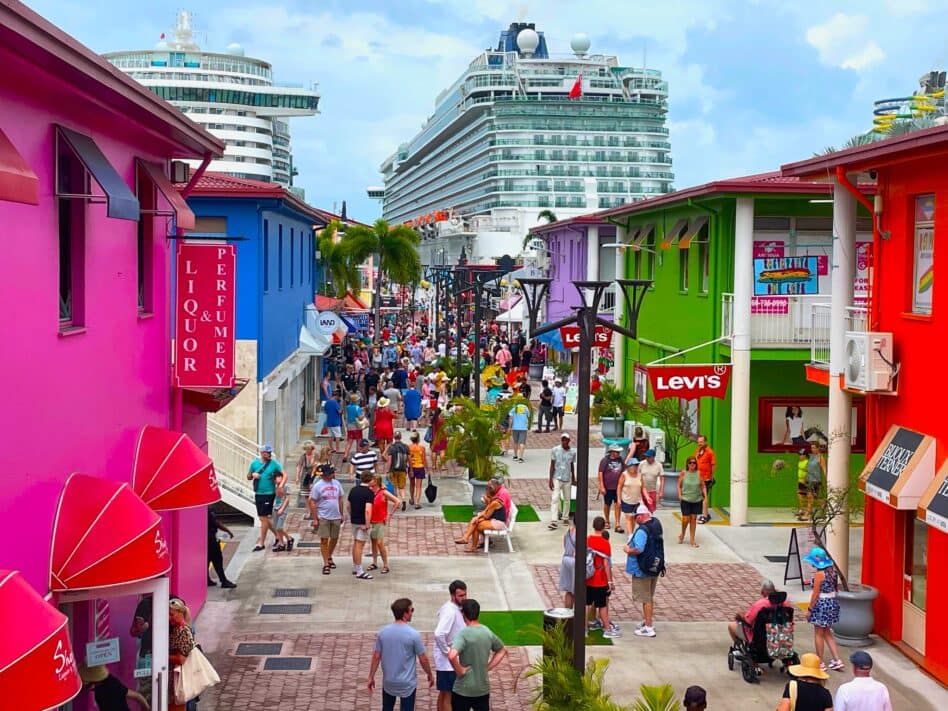
    Government investments in enhanced infrastructure have been instrumental in this success story. Modernization initiatives include the upgraded cruise port facility, expanded airlift agreements with international carriers, and diversified accommodation options spanning luxury hotels, boutique villas, and a rapidly growing Airbnb sector that now represents approximately 35% of visitor stays. This variety has democratized tourism benefits, distributing economic gains deeper into local communities.

    Additional contributors to the expenditure surge include the expanding luxury yachting industry, strengthened culinary tourism offerings, and innovative entertainment options. The positive trajectory is expected to continue with the upcoming 2026 Commonwealth Heads of Government Meeting, anticipated to draw thousands of high-spending attendees.

    Browne emphasized that tourism’s robust performance underscores its critical role in national development, supporting broader fiscal improvements including budget surpluses and increased capital investment. The parliamentary budget debate is scheduled to resume next week.


  • Kiz Johnson Thanks Supporters After Winning ABLP Primary in St. Philip’s South

    Kiz Johnson Thanks Supporters After Winning ABLP Primary in St. Philip’s South

    Kiz Johnson has emerged victorious from a competitive four-way primary race to become the Antigua and Barbuda Labour Party’s (ABLP) official candidate for the St. Philip’s South constituency. The decisive victory occurred during Sunday’s primary election, where Johnson expressed profound gratitude to her supporters for their demonstrated confidence.

    Johnson secured a commanding lead with 167 votes, substantially outpacing her competitors. Malcolm Charles received 113 votes, while Adrian Richardson and Lennox Weston garnered 49 and 44 votes respectively. This electoral outcome positions Johnson as both the ABLP’s designated candidate and caretaker representative for the constituency.

    In her victory address, Johnson acknowledged the significance of the electoral mandate, stating: ‘Thank you, St. Philip’s South. Your confidence, your belief, and your vote have spoken loudly.’ She further outlined her immediate plans, noting: ‘Tonight, we celebrate; tomorrow, we continue the work. We move boldly forward.’

    The victory carries substantial political implications as Johnson is now expected to be formally included on the ABLP’s slate for the upcoming general election. This development represents a crucial step in the party’s electoral preparation strategy, potentially influencing the political landscape in the constituency. The primary results demonstrate Johnson’s strong connection with the party base and suggest a consolidated support structure heading into the national elections.

  • Inflation Falls to 1.4% — Sharpest Drop Since the Pandemic, PM Reports

    Inflation Falls to 1.4% — Sharpest Drop Since the Pandemic, PM Reports

    The Caribbean nation of Antigua and Barbuda has achieved a remarkable economic milestone, recording its most significant inflation decline since the COVID-19 pandemic era. Prime Minister Gaston Browne revealed during Thursday’s 2026 national budget presentation that consumer prices increased by a mere 1.4 percent on average during the January-August 2025 period.

    This development marks a dramatic reversal from 2022’s peak inflation of nearly 10 percent, when global supply chain constraints and soaring fuel and food costs created substantial economic pressure. In a particularly noteworthy shift, September 2025 witnessed an overall price decrease of 1 percent—the first instance of deflation the nation has experienced in years.

    Prime Minister Browne attributed this positive trend to multiple factors, including improved global supply conditions, reduced freight expenses, and strategic government interventions designed to stabilize living costs. Key measures include sustained fuel and electricity subsidies, along with the government’s suspension of the 42 percent Common External Tariff on specific food imports.

    These policy decisions are anticipated to translate into tangible benefits for consumers, with Browne projecting “cheaper supermarket prices in the coming weeks” as importers obtain essential goods at reduced costs. The Prime Minister issued a stern warning to retailers against absorbing these duty savings, emphasizing that price reductions must be passed through to consumers.

    The administration’s collaboration with Guyana to import lower-cost staple goods is expected to further reinforce price stability into 2026. Browne confirmed the continuation of cost-of-living support programs, including expanded food vouchers, ongoing LPG subsidies, and assistance for approximately 7,000 pensioners and over 1,600 vulnerable households.

    Parliamentary budget discussions are scheduled to continue next week, where further economic measures will be examined.

  • Gov’t to Pursue Aggressive Tax Compliance Drive in 2026, PM Announces

    Gov’t to Pursue Aggressive Tax Compliance Drive in 2026, PM Announces

    Prime Minister Gaston Browne unveiled a comprehensive tax enforcement strategy on Thursday during his presentation of Antigua and Barbuda’s 2026 national budget, signaling a major shift in the nation’s fiscal policy approach. The government will implement an aggressive compliance campaign aimed at strengthening public finances and addressing significant revenue shortfalls.

    Despite acknowledging the country’s strong economic performance and sustained growth, Browne revealed that Antigua and Barbuda maintains the lowest tax revenue-to-GDP ratio within the Organization of Eastern Caribbean States (OECS). This position, he emphasized, has become unacceptable for a developing nation requiring substantial funding for expanding social programs and critical infrastructure projects.

    The Prime Minister outlined a multi-faceted approach to revenue enhancement that includes modernizing tax administration systems, implementing rotation strategies within customs and tax departments to prevent collusion, and conducting regular spot checks targeting businesses and individuals suspected of non-compliance. Browne issued a stern warning to potential tax evaders, stating that ‘those who get caught robbing the revenue will pay heavily.’

    These fiscal reforms are positioned as essential for maintaining the country’s improved fiscal position, which has seen budget surpluses and reduced public debt. The additional revenue generated is expected to fund priority areas including housing development, education initiatives, healthcare services, and climate resilience programs.

    With recurrent revenue projections of $1.49 billion for 2026, the government aims to close the gap between Antigua’s current tax performance and regional benchmarks. The campaign targets reaching the Eastern Caribbean Currency Union average of 20 percent tax-to-GDP ratio and ultimately aligning with the broader regional standard of 25 percent.

    The budget debate is scheduled to continue next week, where further details of the tax compliance measures are expected to be discussed.

  • Germany, ITC support Antigua-based SIDS Centre of Excellence with trade intelligence, investment support

    Germany, ITC support Antigua-based SIDS Centre of Excellence with trade intelligence, investment support

    In a significant move to bolster sustainable economic development for vulnerable island nations, Germany has formally committed $100,000 to the Small Island Developing States (SIDS) Centre of Excellence. The contribution was formalized at a signing ceremony at the International Trade Centre (ITC) headquarters in Geneva, featuring German Ambassador to the UN Antje Leendertse and ITC Executive Director Pamela Coke-Hamilton. The initiative, championed by Antigua and Barbuda’s UN Ambassador Aubrey Webson, aims to strengthen the Centre’s operational capacity in promoting trade-led growth.

    Small Island Developing States represent a coalition of 57 distinct economies spanning the Caribbean, Pacific, and the Atlantic, Indian Ocean, and South China Sea regions. These nations confront a unique constellation of challenges—geographic isolation inflates trade costs, limited resource bases create external market dependencies, and environmental vulnerabilities threaten economic stability. Achieving sustainable and inclusive socioeconomic development for SIDS hinges critically on their ability to access new international markets for priority goods and services.

    The German funding will directly enhance the Centre’s ability to deliver tailored support. A cornerstone of this effort involves deploying a SIDS-specific version of ITC’s Export Potential Map, a digital tool designed to identify and capitalize on untapped export opportunities. Furthermore, the contribution will enable comprehensive planning and programmatic support for the inaugural Island Investment Forum scheduled for 2026. This Forum is envisioned as a pivotal platform for forging strategic partnerships and attracting sustainable, mutually beneficial investments across SIDS economies.

    Hosted in Antigua and Barbuda, the SIDS Centre of Excellence operates as a flagship initiative under the Antigua and Barbuda Agenda for SIDS (ABAS). Its structure is built upon four core pillars: the SIDS Global Data Hub, an Innovation and Technology Mechanism, the Island Investment Forum, and a Debt Sustainability Support Service. The institution is steadily advancing towards full activation, with its brand identity recently unveiled and preparations intensifying at its Antiguan headquarters. Established as a key outcome of the Fourth International Conference on SIDS (SIDS4) in May 2024, the Centre is designed to be a practical mechanism for driving collaboration, innovation, and data-informed policymaking to fulfill the ABAS commitments for resilient prosperity.

  • By The Rivers Of Babylon

    By The Rivers Of Babylon

    In Antigua and Barbuda, a profound mental health crisis is unfolding that transcends clinical diagnoses and penetrates the national psyche. Drawing from personal experience with maternal mental illness, a medical professional reveals how the country’s deep political divisions have created a collective madness that stifles honest public discourse.

    The nation faces an paradoxical situation where citizens recognize the root cause of their societal illness yet persistently avoid confronting its consequences. This avoidance mechanism has created a dangerous dichotomy in the national consciousness, particularly evident in two critical areas: healthcare and cultural expression.

    Regarding healthcare management, the country struggles with noncommunicable diseases (NCDs) including cardiovascular conditions, diabetes, cancers, and mental health disorders. The World Health Organization identifies these as stemming from genetic, physiological, environmental, and behavioral factors. However, the author presents a compelling argument that behavioral changes required for health improvement cannot coexist with the suppression of political discourse. This psychological splitting creates a schizophrenic approach to national wellbeing.

    Similarly, in the cultural realm, the nation’s musical expression remains constrained by lyrical content and conventional structures. The absence of instrumental or symphonic compositions reflects a broader limitation in creative and intellectual freedom. Just as the healthcare dilemma demonstrates cognitive dissonance, the artistic landscape reveals an inability to transcend traditional boundaries when political expression remains suppressed.

    The article concludes with a poignant metaphor referencing the Babylonian exile, questioning how the nation might find its authentic voice while navigating this self-imposed psychological captivity. The central thesis maintains that until Antigua and Barbuda addresses its political divisions openly, the national madness will continue to manifest in both public health outcomes and cultural expression.

  • Pensioners Association Thanks the Department of Environment for Initiatives Which Benefited Pensioners Across Antigua and Barbuda

    Pensioners Association Thanks the Department of Environment for Initiatives Which Benefited Pensioners Across Antigua and Barbuda

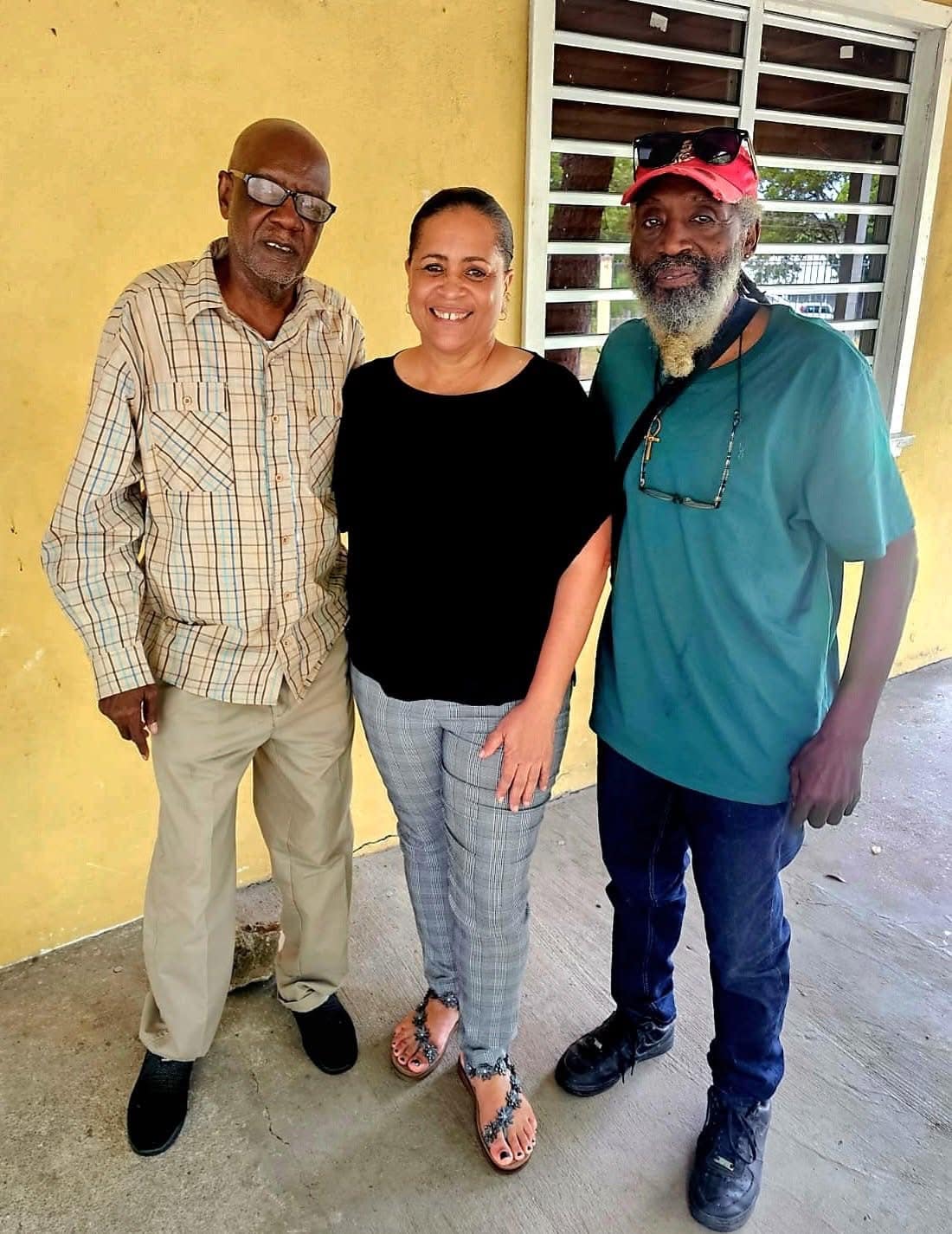
    The Department of Environment in Antigua and Barbuda has received formal recognition from the nation’s Pensioners Association for implementing critical climate-resilience programs that have substantially improved living conditions for elderly citizens. During a recent high-level meeting, Association representatives Winston Benett and Clement Hughes personally thanked Director Diann Black-Layne for the Department’s instrumental role in securing and administering international funding through the SIRF Fund mechanism. This partnership addresses a significant structural challenge: many NGOs lack the rigorous fiduciary standards required to directly access international climate financing, leaving vulnerable populations underserved. The Department has effectively bridged this gap by acting as both fund administrator and project implementer, ensuring stringent oversight and accountability measures throughout program execution. Among the most impactful initiatives are a solar-powered reverse osmosis system that has revolutionized water security at the Association’s farm, a Hurricane Shutters Programme that has dramatically improved storm safety for elderly residents, and an Air Conditioning Programme that has enhanced comfort in community centers frequented by pensioners. These comprehensive interventions have not only strengthened physical infrastructure but also fostered greater community engagement among pensioners nationwide. The Association has formally encouraged the government to continue these successful programs, citing their transformative effect on senior citizens’ quality of life. Director Black-Layne accepted the gratitude while praising the Association’s dedication to serving the nation’s elderly population.

  • $60 million spent on back pay since 2022 and more to come

    $60 million spent on back pay since 2022 and more to come

    The government of Antigua and Barbuda has announced another significant disbursement of retroactive wages to public servants this month, marking a continued effort to resolve longstanding payroll obligations. Prime Minister Gaston Browne revealed the initiative during his presentation of the national budget for 2026, emphasizing his administration’s commitment to rectifying historical financial debts owed to current and former civil servants.

    Since 2022, over $60 million in overdue wages has been distributed to eligible workers. The upcoming payment round will extend to individuals who exited public service prior to December 2022, ensuring comprehensive coverage of outstanding amounts. Browne characterized these payments as a manifestation of ‘caring leadership’ and ethical governance, acknowledging that employees should not endure prolonged delays for rightfully earned compensation.

    The accumulation of wage arrears originated from previous governments and protracted negotiation stalemates, but the current administration has prioritized addressing these liabilities through improved fiscal management. Browne attributed the capacity to fulfill these obligations to robust revenue performance and budget surpluses, which have created financial flexibility for settling legacy debts.

    Concurrently, the government is implementing structural reforms to the wage negotiation process to prevent future backlog development. These systemic changes aim to establish more efficient settlement timelines and promote greater accountability in public sector payroll management.

    Additional details regarding payment schedules and administrative reforms are anticipated during the resumed budget debate next week, where cabinet ministers are expected to elaborate on the mechanics of the ongoing regularization initiative.

  • Public Servants to Receive New Pay Increase by July 2026 as Reclassification Nears Completion

    Public Servants to Receive New Pay Increase by July 2026 as Reclassification Nears Completion

    The government of Antigua and Barbuda has unveiled a comprehensive modernization plan for public service compensation, with Prime Minister Gaston Browne announcing during Thursday’s 2026 national budget presentation that all civil servants will receive upgraded salaries by July 2026. This initiative comes as the administration completes an extensive nationwide reclassification exercise designed to contemporary compensation structures across the public sector.

    Browne detailed to Parliament that the salary enhancements will be integrated within a broader transformation of the wage negotiation framework, establishing a more systematic and predictable approach to compensation adjustments. The government has proactively engaged labor unions, already soliciting their proposals through a newly established framework intended to prevent the protracted delays that have historically characterized salary negotiations.

    “Civil servants will also benefit from a further upgrade in pay as a result of the reclassification that will be completed by July 2026,” Browne stated, emphasizing the government’s restructuring of the collective bargaining process to ensure implementation deadlines are met.

    The Prime Minister framed these measures as reflective of the administration’s dedication to equitable treatment, workplace stability, and enhanced conditions for public sector employees. He pointed to the government’s track record on worker compensation as evidence of its commitment to honoring obligations, citing the clearance of over $60 million in retroactive wages since 2022, with additional payments scheduled for this month. This comprehensive settlement includes former public servants who departed before December 2022, ensuring all eligible workers receive owed compensation.

    Browne concluded that these combined efforts—both the upcoming salary upgrades and ongoing systemic reforms—will cultivate a more modern and efficient public service apparatus. The budget debate is set to continue next week, with ministers expected to provide detailed analyses of how the reclassification and new wage negotiation system will impact specific sectors.

  • Education Gets Largest Share of 2026 Budget Allocations

    Education Gets Largest Share of 2026 Budget Allocations

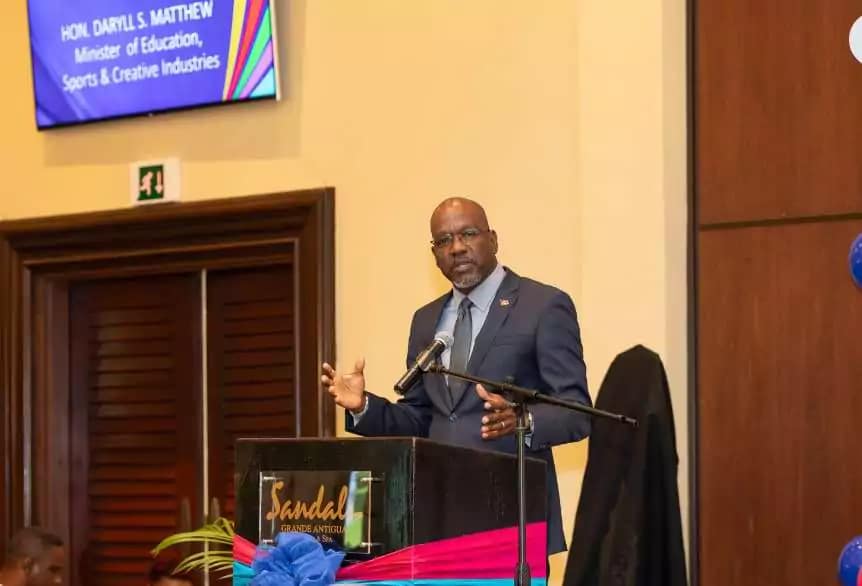
    In a significant parliamentary address on Thursday, Prime Minister Gaston Browne unveiled Antigua and Barbuda’s fiscal blueprint for 2026, positioning education as the cornerstone of the nation’s developmental agenda. The budget presentation revealed a strategic allocation of $220.1 million to the Ministry of Education, Sports and Creative Industries, marking it as the single largest recipient of recurrent expenditure funds. This substantial investment underscores the administration’s dedication to enhancing educational accessibility, particularly through the planned tuition-free initiative at the University of the West Indies Five Islands Campus following necessary infrastructure upgrades.

    The financial distribution further highlights substantial commitments to other critical sectors. The Prime Minister’s Ministry and Ministry of Finance & Corporate Governance secured the second-largest allocation at $196.9 million, followed by $147.5 million designated for the Ministry of Health, Wellness, the Environment and Civil Service Affairs. These funds are poised to bolster healthcare services, facility improvements, and staffing enhancements across the nation.

    Additional major allocations demonstrate a comprehensive approach to national development: $124.6 million for public safety and legal affairs through the Attorney General’s Office, $121.7 million for infrastructure and housing development, and significant funding for tourism ($39.1 million), foreign affairs ($35.5 million), social transformation ($31.9 million), agriculture ($29.5 million), and technology/energy sectors ($15.9 million).

    The broader fiscal framework for 2026 encompasses $1.21 billion in recurrent spending alongside $236.4 million in capital expenditure, with emphasis on infrastructure projects including roadworks and public building renovations. Personnel costs constitute the largest portion of recurrent expenses at $504.5 million for wages and salaries, followed by $336.4 million for pensions and transfers, $231.2 million for goods and services, and $138.4 million allocated for interest payments.

    Prime Minister Browne emphasized that these allocations reflect a government committed to economic stability, sustained growth, and equitable distribution of progress benefits. He noted the projected maintenance of both primary and overall surpluses for the third consecutive year, signaling continued fiscal responsibility. Parliamentary debate on the budget is scheduled to resume next week.