博客

  • Antigua and Barbuda represented by the Department of Environment in Guatemala

    Antigua and Barbuda represented by the Department of Environment in Guatemala

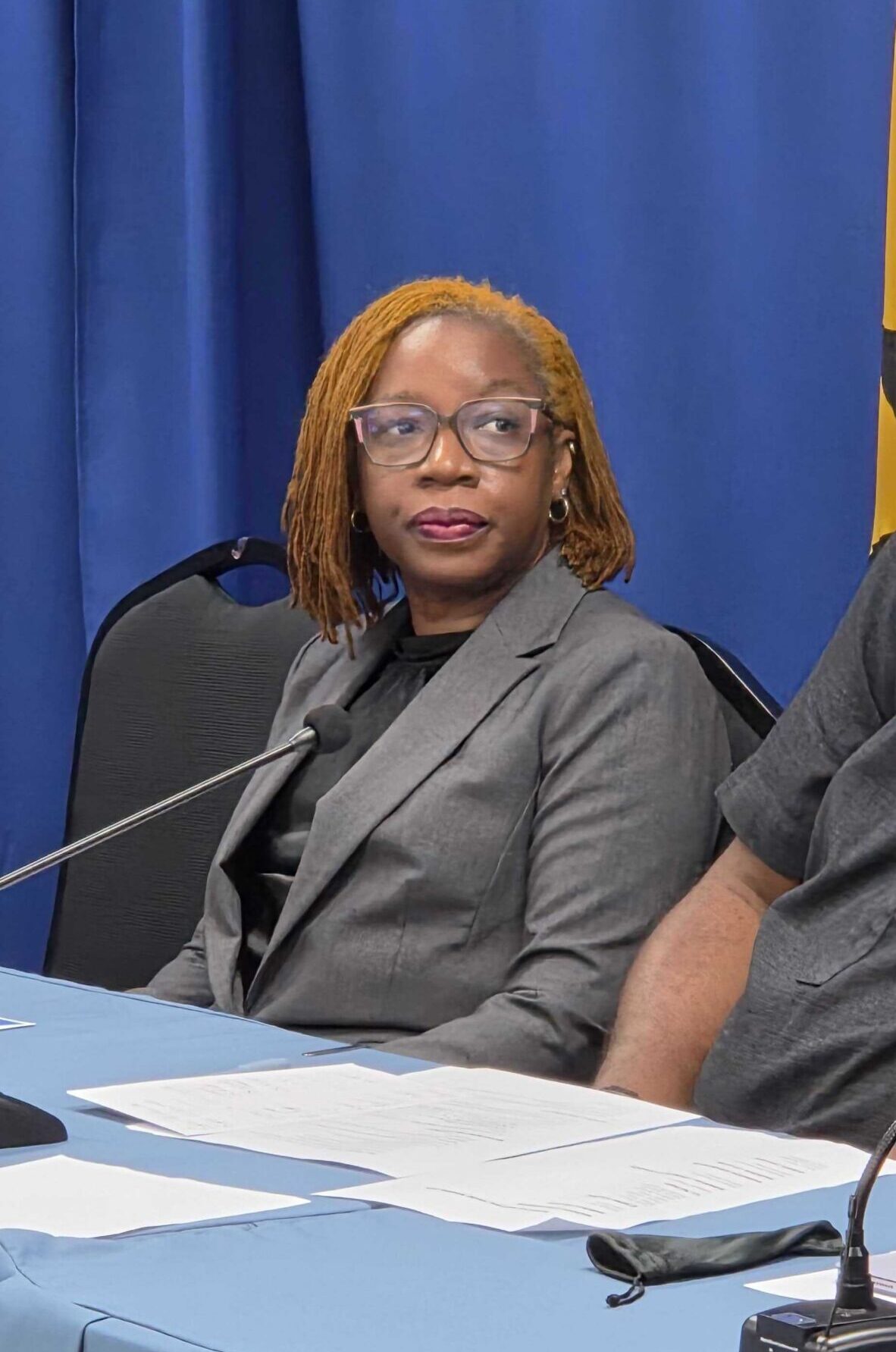
    From July 6 to 8, 2026, the 2026 CGE Hands-on Training Workshop for the Latin America and the Caribbean Region took place in Antigua, Guatemala, gathering climate action specialists from across the region to advance collective capacity for climate transparency under the Paris Agreement. Among the attendees were two representatives from Antigua and Barbuda’s Department of Environment: Anik Jarvis, a data consultant, and Garth Simon, a project technical officer.

    Organized around the central theme “Towards Improved BTRs, with a focus on Adaptation: Exchange of Experience, Good Practices and Lessons Learned,” the workshop was designed to equip national experts with the technical skills needed to draft and submit Biennial Transparency Reports (BTRs) on schedule. These reports are a core requirement of the Paris Agreement’s Enhanced Transparency Framework, which holds countries accountable for their climate commitments and supports global coordination on emissions reduction and resilience building.

    The three-day training curriculum covered a full spectrum of high-priority topics critical to robust BTR preparation. Participants deepened their expertise in documenting climate change impacts and adaptation actions, developing standardized adaptation indicators, designing effective Monitoring, Evaluation and Learning (MEL) systems, reporting on climate-related loss and damage, navigating flexibility provisions for developing nations, drafting targeted improvement plans for future reporting, and engaging properly in the post-submission processes of Technical Expert Review and Facilitative Multilateral Consideration of Progress. The workshop’s hands-on structure also created extensive space for peer-to-peer learning, allowing representatives from different nations to share context-specific challenges and successful local strategies.

    For Antigua and Barbuda, a small island developing state that is disproportionately vulnerable to the adverse effects of climate change, participation in this regional training aligns with ongoing national priorities. The knowledge and skills gained by Jarvis and Simon will directly support the country’s ongoing work to strengthen national climate transparency frameworks, refine adaptation reporting practices, upgrade national climate data management systems, and build long-term institutional capacity to meet future BTR submission requirements. By investing in this capacity building, Antigua and Barbuda is better positioned to access climate finance, communicate its climate action progress to the global community, and advance more effective adaptation planning to protect its communities and ecosystems.

    At the conclusion of the workshop, all participating representatives received official certificates to acknowledge their active engagement in the training program and their contributions to the regional peer-learning exchange.

  • 14 captured maroons executed: 9 July 1725

    14 captured maroons executed: 9 July 1725

    On the 9th of July 1725, a dark chapter unfolded in the colonial history of Grenada: 14 captured maroons — people who had escaped chattel slavery to build free communities in the island’s interior, one of whom was a woman — were put to death after being captured by French colonial forces. This violent conclusion capped off a year of growing tension between French plantation owners and the growing population of escaped enslaved people who had fled brutal working conditions on Grenada’s colonial estates.

    By 1725, large numbers of enslaved people were escaping Grenada’s plantations. Many joined scattered maroon bands that lived off the land in the island’s remote interior, while others built makeshift canoes and small boats to sail to Spanish-controlled territories like Margarita, where they were welcomed and granted freedom. As the maroon population grew, their activities shifted beyond small-scale nighttime theft of food for survival. Led by prominent chiefs including Petit-Jean, La Fortune, Samba, Jacob and Bernard, around 60 maroons began targeting larger livestock, stealing sheep, calves and full-grown cattle from colonial estates. Eventually, they launched direct attacks on isolated plantations across northern and eastern Grenada, striking at the heart of the colonial agricultural system that had enslaved them.

    Contemporary colonial records detail several violent encounters between maroons and white plantation inhabitants. In one incident, a maroon band attacked a woman named Luca who was home alone. After looting all of her belongings, they tore gold earrings from her ears; claims that she was sexually assaulted were never sufficiently verified in contemporary reports. In another well-documented case, at 9 o’clock in the morning, the young wife of a man named Cassé — who was traveling in France at the time — was attacked by a group of maroons armed with rifles, muskets and swords. Reports confirm the group burned her main house, kitchen and chicken coop, refusing to allow her to remove any of her personal property before the structures caught fire. Under the direct command of Petit-Jean, the maroons stole all of the estate’s cattle and poultry, then stood by to watch the buildings burn before beating drums and departing the property.

    A third incident, carried out in the early morning, involved a surprise attack on a household where several white men were staying. The men were beaten with rifle butts; one sustained a severe eye injury that colonial doctors predicted would result in permanent blindness. The man’s wife, who had recently given birth to an infant, was dragged across the ground by her hair and kicked by the maroons. The group threatened to smash her newborn child’s head against a wooden post, forcing the new mother to kiss their buttocks in exchange for sparing the child’s life before stealing her earrings as well.

    These coordinated attacks sparked widespread outcry among French colonial settlers, who pressured local authorities to take decisive military action to crush the maroon resistance. Settlers argued that the escaped slaves were in open revolt and demanded an immediate crackdown to protect colonial property and authority. In response, armed colonial militias launched large-scale “maroon hunting” expeditions across the island, killing 10 maroons during the operations and capturing 14 more. Among the captured were all of the maroon movement’s named leaders, plus a female maroon named Marion. The 14 captives were transported to Martinique for trial, and ultimately executed by colonial authorities on 9 July 1725. In a move that compensated slave owners for their lost “property,” the colonial state paid between 500 and 800 livres tournois to the owners of each executed enslaved person.

    In the aftermath of the crackdown, colonial Grenada’s planter class petitioned the French crown to create a permanent local court with the authority to try captured maroons, with the explicit goal of making harsh punishments a public example to deter any other enslaved people from escaping and resisting colonial rule. One year later, in 1726, the French government authorized the creation of the Royal Chambre in Grenada, a special court granted sole power to prosecute enslaved people for crimes committed against the colonial order.

  • Olierally en wereldwijde beursdalingen na twijfel Trump over wapenstilstand met Iran

    Olierally en wereldwijde beursdalingen na twijfel Trump over wapenstilstand met Iran

    Global financial markets faced sharp volatility on Wednesday, driven by contradictory comments from former U.S. President Donald Trump that cast deep uncertainty over a temporary ceasefire in the Iran conflict. The conflicting signals sent oil prices surging and put broad downward pressure on equity markets worldwide, as investors braced for potential disruptions to global energy supplies that could upend recent progress on taming inflation.

    After Trump first stated that the ceasefire between Israel and Iran was “over,” the benchmark S&P 500 initially dropped 1.1%. The index pared its losses later in the trading session after Trump walked back his remarks, clarifying that the recent escalation of violence did not necessarily mean a full-scale regional war would break out. When markets closed, the S&P 500 recorded a 0.3% decline, falling 21.14 points to settle at 7,482.71. The Dow Jones Industrial Average suffered steeper losses, dropping 576.76 points, or 1.1%, to close at 52,348.39. The Nasdaq bucked the downtrend, gaining 51.96 points to finish at 25,870.65, a 0.2% rise after an early session drop.

    Oil prices reacted far more strongly to the geopolitical uncertainty than equities. Brent crude, the global benchmark, jumped 5.2% to settle at $78.02 per barrel, at one point pushing above the $80 per barrel threshold. While this remains well below the nearly $120 per barrel peak hit during the height of the conflict earlier this year, the increase marked a stark reversal after oil prices had recently fallen back to pre-war levels.

    Investors’ top concern is that a resumption of full-scale conflict could disrupt shipping through the Strait of Hormuz, the strategic chokepoint through which roughly a fifth of global oil supplies pass. A blockade or major disruption would severely curtail crude oil exports from the Persian Gulf, sending energy prices higher across the board. For global economies already working to bring inflation down from multi-decade highs, a new energy-driven inflation surge would upend forecasts. Higher inflation would likely force central banks including the U.S. Federal Reserve to keep interest rates higher for longer, slowing economic growth and weighing on asset valuations.

    On Wall Street, the hardest-hit sectors reflected growing expectations of prolonged high interest rates. Homebuilding stocks came under intense selling pressure, as investors priced in higher mortgage rates driven by rising 10-year U.S. Treasury yields. Building materials supplier Builders FirstSource dropped 5.4%, while major homebuilders PulteGroup and D.R. Horton fell 5.4% and 4.6% respectively. Companies with high fuel costs also retreated: American Airlines shares declined 4%, and cruise operator Carnival fell 3.9%.

    Large-cap artificial intelligence stocks provided a key buffer against broader market losses, even as the sector has faced recent pressure from valuation concerns and questions about long-term profitability. Chipmaking giant Nvidia gained 3.7%, making it the largest single contributor to the S&P 500’s limited decline. Broadcom rose 4.8%, boosted by news of a new multi-year chip supply agreement with Apple that could be worth more than $30 billion.

    In the bond market, Treasury yields moved in line with rising oil prices, as investors priced in persistent inflation. The yield on 10-year U.S. Treasuries hit an intraday high of 4.60% before retreating to 4.57%, up from 4.55% the previous trading day and far above the 3.97% level recorded just before the Iran conflict escalated.

    European equity markets reacted sharply to Trump’s initial comments, with major benchmarks posting deep losses. Germany’s DAX and France’s CAC 40 both closed down 2.2% on the day.

    Asian markets also saw widespread volatility, though the region offered one notable bright spot for AI investors. South Korea’s Kospi index dropped 5.3%, swinging sharply as investors flipped between optimism and caution for domestic AI stocks. Hong Kong’s Hang Seng Index was an outlier, rising 3%, driven largely by a 13.4% jump in shares of Chinese artificial intelligence startup Zhipu, also known as Z.ai. The startup, which went public in January, was set to see its lock-up period for early large investors expire this week, a development that had sparked fears of major sell-offs that would push share prices down. However, state-run China National Radio reported that nearly 70% of early investors have committed to holding their positions, easing market concerns. Since its IPO, Zhipu’s share price has surged more than 1,300%, underscoring the overwhelming investor demand for AI exposure across Asian markets.

  • Privy Council reserves judgment in same-sex

    Privy Council reserves judgment in same-sex

    The Judicial Committee of the Privy Council, the highest appellate court for Trinidad and Tobago, has concluded initial hearings in a landmark constitutional challenge targeting colonial-era laws that still criminalize consensual same-sex intimate relations between adults, and has announced it will issue its ruling at a future date. The case, brought by Trinidad-born gay rights campaigner Jason Jones, centers on two key provisions of the country’s Sexual Offences Act—Sections 13 and 16, which outline the criminal offenses of buggery and serious indecency. The core legal question before the five-judge panel, led by Lord Reed and including Lords Briggs, Sales, Lloyd-Jones and Lady Rose, is whether these provisions remain protected from judicial invalidation under the Constitution’s controversial savings law clause.

    Jones’s legal challenge traces back to a 2018 High Court ruling, in which Justice Devindra Rampersad struck down the two provisions, finding they violated the fundamental constitutional rights to privacy, personal liberty, and equal treatment under the law guaranteed to all citizens. However, that landmark ruling was later overturned by the country’s Court of Appeal. The appellate court ruled that while the provisions did conflict with modern constitutional rights protections, they were preserved by the savings law clause because the offenses were originally enacted before Trinidad and Tobago gained independence, and were substantially re-enacted after self-rule. The Court of Appeal did reduce the harsh penalties attached to the offenses to align with the lower penalties outlined in the original colonial legislation, but left the criminalization intact.

    Anand Ramlogan, Senior Counsel representing Jason Jones, presented extensive arguments to the panel that the savings law clause should not apply to the current version of the Sexual Offences Act. Ramlogan emphasized that the 2000 Sexual Offences (Amendment) Act and the 2012 Children Act made sweeping, fundamental changes to the statutory framework of the original 1986 legislation. These changes, he argued, stripped the law of any constitutional immunity it may have held in the decades after independence, opening it up to full constitutional challenge.

    Ramlogan told the judicial panel that constitutional rights are explicitly designed to protect marginalized minority groups from majority discrimination, and should never be interpreted to perpetuate historical prejudice against vulnerable communities. “There is simply no justification in a democratic society with respect for fundamental rights for this to happen,” he told the court. Drawing parallels to other outdated discriminatory laws that have been struck down over time, he argued that legal frameworks must evolve to reflect modern commitments to equality, rather than preserve harmful, centuries-old prejudices. “Constitutional rights exist precisely because the majority is not always right,” Ramlogan stated, adding that Jones is not seeking special treatment for the LGBT community, only equal access to the same constitutional protections that every other citizen of Trinidad and Tobago enjoys. He further noted that history has repeatedly shown that practices once legally accepted, including chattel slavery, gender discrimination, and bans on interracial marriage, were later universally recognized as unjust and incompatible with democratic values. In a striking rhetorical appeal, Ramlogan asked: “Ultimately, we need to ask ourselves the hard legal conscience question of ‘who are we to volunteer that gay people should starve because we don’t like the meat that they eat’?”

    Peter Knox, King’s Counsel representing the Office of the Attorney General, defended the Court of Appeal’s ruling, arguing that the 1986 Sexual Offences Act was validly enacted by Parliament with the required three-fifths special majority. Knox contended that the legislation largely re-enacted long-standing criminal offenses that existed in Trinidad and Tobago for decades before independence, and should be evaluated through the lens of the social and historical context of the 1980s—including widespread public concern about the emerging HIV/AIDS epidemic at that time—rather than modern equality standards.

    Jones, who currently resides in the United Kingdom but travels regularly back to his native Trinidad and Tobago, has spoken publicly about the harm caused by the law. He says the legislation has subjected him and countless other LGBT Trinidadians and Tobagonians to systemic stigma, systematic discrimination, and physical and emotional abuse, forcing consenting adult same-sex couples to choose between living openly in their intimate relationships and avoiding criminal prosecution.

    In addition to the Attorney General’s Office, which serves as the primary respondent in the appeal, the Equal Opportunity Commission and the Trinidad and Tobago Council of Evangelical Churches are formal parties to the proceedings. Several regional and international LGBT advocacy groups, including Colours Caribbean, the Silver Lining Foundation, OutBermuda, the United Belize Advocacy Movement, and ILGA-NAC, were granted intervenor status to contribute arguments to the case. The Privy Council’s final ruling is expected to set a landmark precedent for LGBTQ+ rights across the Caribbean, where dozens of former British colonies still retain colonial-era laws criminalizing same-sex relations.

  • Caricom mobilising aid for Venezuela

    Caricom mobilising aid for Venezuela

    In the final press briefing of the 51st Regular Meeting of the Conference of Heads of Government of the Caribbean Community (Caricom) held in St. Lucia, regional leaders announced a coordinated, collective humanitarian response to support two neighboring nations, earthquake-stricken Venezuela and economically strained Cuba.

    Trinidad and Tobago Prime Minister Kamla Persad-Bissessar, one of the key figures leading the relief coordination, emphasized the deep interconnectedness of the Caribbean region that drives this collective action. Just seven nautical miles separate Trinidad from Venezuela, meaning any crisis unfolding across the border directly shapes social and economic conditions in Trinidad and Tobago, she explained. Persad-Bissessar added that she, alongside Barbados Prime Minister Mia Mottley and other regional heads, held extensive talks on the relief effort during a late-night session on the Tuesday of the conference.

    Following a series of destructive earthquakes that hit Venezuela, Caricom member states moved rapidly to launch assistance efforts, with regional governments aligning logistics to dispatch both essential supplies and emergency response personnel. Persad-Bissessar confirmed that immediately after the conference, a fully loaded cargo ferry would depart her country for Venezuela carrying tons of relief goods for affected communities. She noted that Guyana and Barbados had already deployed their own shipments of aid to Venezuela, aligning with the community-wide collective effort.

    Expanding on the Venezuela relief operation, Mottley shared that a single vessel coordinated by the Guyanese government is currently transporting 88 containers of aid donated by the vast majority of Caricom member states. Barbados, for its part, mobilized emergency response personnel through the Regional Security System (RSS) within 72 hours of the earthquakes to support search and rescue operations, she added.

    Additionally, Barbados has redirected a certified pre-deployed field hospital to Venezuela. The mobile medical unit was originally staged for response to Hurricane Melissa in Jamaica, and will now address the critical gap in medical care left by the earthquake, which has left thousands injured and stretched Venezuela’s already strained public health system to breaking point. Mottley emphasized that the regional bloc has maintained open communication with Venezuelan President throughout the response, noting that the Caribbean community shares a moral obligation to support neighbors in crisis: “as we said, there but for the grace of God goes any of us, and we believe that we have a responsibility morally to help the people of Venezuela.”

    Beyond the response to Venezuela’s earthquake, Caricom has also prioritized delivering life-saving humanitarian assistance to Cuba, which faces ongoing international trade restrictions that have limited access to essential goods. Mottley revealed that Barbados’ initial attempts to transfer funds earmarked for the purchase of baby formula were blocked twice, with the full amount being returned to regional authorities on two separate occasions. Acknowledging that political and economic external factors have complicated aid delivery to Cuba, Mottley said Caricom remains committed to advancing purely humanitarian goals, and is ready to facilitate dialogue between the United States and Cuba to resolve logistical and political barriers. “When you live in a neighbourhood, what happens in the neighbourhood affects everyone,” Mottley said, framing the entire Caribbean basin – stretching from Florida in the north to Suriname and Guyana in the south – as a single interconnected community.

    Caricom Chairman and St. Lucia Prime Minister Philip J Pierre brought a last-minute update on the Cuban aid effort, confirming that after three failed attempts to transfer the funds, the payment was successfully processed on the fourth attempt. The first shipment of baby milk is now cleared for delivery to Cuban communities in need. Pierre added that Caricom leaders also held preliminary discussions on establishing a dedicated permanent regional humanitarian relief fund to streamline future cross-community crisis response efforts.

  • 4 Municipal cops back on duty; firearms still missing

    4 Municipal cops back on duty; firearms still missing

    In the most recent development following a shocking fatal attack and mass arms theft at a Trinidad and Tobago municipal police station, four on-duty officers who were working alongside murdered acting corporal Anuska Eversley have resumed their active assignments. Sources confirmed to local outlet the Express that the four constables returned to their posts at the San Fernando Municipal Police Station this week, more than six months after the brutal incident that upended the service.

    The unprecedented attack unfolded in the overnight hours of April 18, when 41-year-old Eversley — a 17-year veteran of the Trinidad and Tobago Municipal Police Service (TTMPS) — was beaten and strangled by attackers who stormed the station. Her body was discovered in the station’s charge room at King’s Wharf, Lady Hailes Avenue in San Fernando in the early morning of April 19. After killing Eversley, the perpetrators emptied the station’s armoury, stealing a massive cache of 123 firearms and more than 4,000 rounds of ammunition.

    In the immediate aftermath of the attack, the four constables who were on shift with Eversley that night were placed on suspension as investigators conducted mandatory internal and criminal probes. To date, law enforcement has recovered an unspecified portion of the stolen weapons and hundreds of rounds of ammunition, and three suspects have been arrested and arraigned in connection with Eversley’s murder and the arms heist. The accused include TTMPS constable Jivan “Bigs” Cooper, 20-year-old construction worker Kwame Arnold, and 24-year-old scrap iron dealer Nicholas “Nico” Ramdass, all residents of Claxton Bay. The three suspects face a long list of charges, including illegal possession of 114 pistols, one revolver, six shotguns, two MPX sub-machine guns, 173 firearm magazines with intent to traffic, and possession of 4,355 rounds of 9mm ammunition, 30 rounds of 12-gauge ammunition, and ten rounds of .38 ammunition.

    The broader criminal investigation into the heist remains active, as senior investigators work to trace the dozens of missing weapons and rounds of ammunition that authorities believe have already been distributed to local criminal networks. Senior law enforcement sources confirm that investigative teams are continuing extensive interviews and forensic work to unpack the full scope of the attack and any potential broader complicity within the police service.

    Alongside the return of the four rank-and-file constables, the ongoing administrative fallout from the incident continues: former TTMPS head ACP Surrendra Sagramsingh remains on administrative leave, with Assistant Commissioner of Police Wayne Mystar still serving as the service’s interim leader following Sagramsingh’s removal. San Fernando Municipal Police Station Superintendent Dustan Renn, who is currently suspended, is expected to have his suspension lifted in the near future, according to sources close to the process.

    The brazen attack on a fully operational police station — which left a veteran officer dead and put hundreds of lethal weapons into the hands of criminals — sparked widespread public outcry and triggered major questions about gaps in internal security protocols, infrastructure oversight, and accountability across the TTMPS. The return of the four constables marks the first major step toward restoring regular operations at the San Fernando station in the months following the tragedy.

  • Kamla: T&T ferry to service region

    Kamla: T&T ferry to service region

    Following the conclusion of the 51st Regular Meeting of the Conference of Caricom Heads of Government in Saint Lucia, regional leaders have emerged with a unified public commitment to collective action, aiming to ease sky-high living costs for Caribbean communities and counter inflationary shocks stemming from global instability.

    Trinidad and Tobago Prime Minister Kamla Persad-Bissessar, who had previously publicly criticized Caricom over what she called the bloc’s failure to support her government during diplomatic tensions with the former Nicolas Maduro administration in Venezuela, even labeling the organization an “unreliable partner” on multiple occasions over recent months, has reaffirmed her nation’s unwavering dedication to the regional bloc. Addressing reporters at the closing press conference, Persad-Bissessar clarified that while she stands by her previous critiques of Caricom’s operational gaps, her core commitment to the organization has never shifted.

    “We have unwavering support for Caricom, as we work together to build a better region for all our citizens. That position has never changed,” she stated. The Prime Minister added that under the chairmanship of Saint Lucia Prime Minister Philip J Pierre, regional leaders have made meaningful progress addressing the concerns she had previously raised. Comparing Caricom to a family, she noted that internal disagreements are inevitable, and addressing open issues openly, rather than ignoring them, is the only path forward.

    To deliver on the summit’s core priority of cutting regional living costs, Trinidad and Tobago has pledged a tangible, immediate contribution: a temporary ferry for inter-island cargo transportation. Currently, regional leaders are working with the private sector to source and secure permanent ferries for regional cargo routes, a process that is expected to take up to 12 months to complete. Persad-Bissessar, alongside Barbados Prime Minister Mia Mottley and St Vincent Prime Minister Godwin Friday, will lead a pilot program to test the temporary Trinidadian vessel, laying the groundwork for permanent private sector-led service.

    Mottley outlined that the temporary ferry initiative is a core part of Caricom’s broader strategy to drive down freight costs, which are a major driver of inflation across the small island nations that make up the bloc. “We are singularly focused on cutting the cost of intra-island cargo. Combined with other measures we’ve taken to boost citizens’ disposable income, lower fuel costs, and reduce electricity rates, this initiative will help ease the inflationary pressure weighing on our communities,” Mottley explained. The Barbados Prime Minister added that leaders are currently working to finalize cross-border regulatory arrangements, including mutual recognition of operating licenses and insurance, as well as assessing port infrastructure upgrades needed to accommodate the new ferry service.

    Beyond cargo transportation, Trinidad and Tobago has also committed to helping the region reduce the cost of critical medical care. Persad-Bissessar announced that the Trinidad and Tobago National Prosthetic Centre will provide prosthetic limbs to Caricom nationals at a fraction of the current global market cost, where prosthetics can range from $3,000 to $120,000 USD per unit. The arrangement will also generate much-needed foreign exchange for Trinidad and Tobago, creating a mutually beneficial model for regional cooperation. The nation is also prepared to deploy fully trained medical personnel across the region, and the Couva Children’s Hospital will open its services to pediatric patients from across Caricom.

    In closing, Mottley shared that a Caricom subcommittee is currently reviewing adjustments to the bloc’s Common External Tariff for basic food goods. Multiple member states have already requested changes to the tariff framework that would remove import duties on key staples, further reducing the cost of essential goods for households across the region.

  • Wace partners with NDP gov’t to continue S. Grenadines recovery

    Wace partners with NDP gov’t to continue S. Grenadines recovery

    Two years after Category 5 Hurricane Beryl left a trail of catastrophic destruction across the southern Grenadines, a transformative public-private partnership has been launched to accelerate housing reconstruction and build long-term climate resilience for the storm-battered island chain.

    British investor Ian Wace is joining forces with the Government of St. Vincent and the Grenadines (SVG) to deliver the multi-million-dollar initiative, which targets the worst-hit islands of Canouan, Union Island, Mayreau, and will extend community support to neighboring Bequia. The partnership marks a continuation of Wace’s involvement in recovery efforts, even after last November’s general election that removed the Unity Labour Party (ULP) — which Wace publicly endorsed — from power.

    When Beryl made landfall in SVG on July 1, 2022, the storm damaged or destroyed an estimated 90% of all structures across the southern Grenadines, displacing hundreds of families and crippling local island economies. Wace first committed $25 million to recovery efforts under the previous ULP administration, with former Prime Minister Ralph Gonsalves securing five times the original contribution Wace had planned to give. Speaking at the hurricane’s first anniversary commemoration, Wace joked about the negotiation, saying, “I stand here having received an anal lobotomy of extraction of money, and I am unbelievably proud for having done so. But most of all, I’m unbelievably proud because we did all of this together.”

    Following the election, many observers questioned whether Wace would continue his recovery investment after the administration transition. But Housing Minister Andrew John, who heads the Ministry of Housing, Land Management, Urban Development, and Informal Settlement Upgrading, confirmed that the new New Democratic Party government has finalized a formal agreement with Wace for the new project. “There is an agreement negotiated between our government and himself to do that sort of work again,” John told NBC Radio, adding that Wace has “pledged millions of dollars to come on board” with the expanded program.

    Rebuilding the remote southern Grenadines comes with unique steep costs: transporting construction materials from SVG’s mainland to the outer islands drives up overall expenses dramatically, and the national government already faces constrained fiscal space after years of repeated disaster response. John emphasized that the public sector cannot deliver timely reconstruction alone, making private sector partnership critical. “This partnership is intended to push things along much faster and much more quickly than we on our own are able to do,” he explained, noting that the investment will ease pressure on public finances and avoid overreliance on new government borrowing. John also added that officials are already in informal talks with a second potential private investor who has expressed interest in supporting Grenadines housing recovery.

    As of the project launch, overall recovery in the southern Grenadines is only around 60% complete, with large swathes of Canouan, Union Island, and Mayreau still waiting for major repairs. Hundreds of displaced residents remain in temporary accommodation on mainland St. Vincent or in private rentals, holding back the revival of local tourism and service-based economies on the outer islands. “If we don’t get the people back, it’s going to be always slow on the economic take-off in Union Island,” John said, noting that key infrastructure like island wharves remains overstretched from storm damage. Already, government work has restocked construction material warehouses across the Grenadines, with more than 50 homes having completed window replacement, door installations set to begin shortly, allowing dozens of families to return to repaired properties in the coming weeks.

    Unlike earlier ad-hoc recovery efforts, the new project is designed not just to rebuild homes, but to construct back better with long-term hurricane resilience at its core. A centerpiece of the resilience agenda is the construction of purpose-built, storm-resistant hurricane shelters across the affected islands, with Bequia set to host the first new facility, followed by sites on Union Island, Mayreau, and Canouan. All shelters will be engineered to withstand the strongest severe hurricanes expected in the Atlantic basin.

    The initiative also integrates climate-friendly and cost-saving upgrades into all new and reconstructed homes. Ministry officials are currently in negotiations with a major solar energy provider to install rooftop solar systems, leveraging the Grenadines’ abundant year-round sunlight to cut household electricity costs and reduce dependence on expensive imported fossil fuels. The project also prioritizes water security, a persistent challenge for the outer islands that was amplified by severe regional drought earlier this year. All rebuilt homes will be fitted with rainwater harvesting tanks and guttering, while the government explores long-term desalination solutions to reduce the risk of annual water shortages.

    The launch of the project comes as SVG enters another Atlantic hurricane season, with the devastation of Beryl still a vivid memory for Grenadine communities. John used the announcement to urge residents to set aside complacency and prepare seriously for the 2024 season, rejecting the local saying that “God is a Vincentian” as a substitute for proactive preparation. He advised residents to trim overhanging trees that threaten properties, reinforce galvanized roofings by checking loose nails and screws, follow all official advisories from the National Emergency Management Organisation (NEMO), and complete preparations early when hurricane watches or warnings are issued. The government is also continuing its distribution of self-help building materials to support household-level preparation, with targeted support for elderly and vulnerable residents who require additional assistance.

    John framed the new partnership with Wace as a core commitment of the current administration to support Grenadine communities. “We remain committed to helping you rebuild… This project will support the repair and reconstruction of homes, improve housing in our communities, and help more families return to safe, secure homes,” he said, noting that the overarching goal is for residents to “go back stronger and better, more prepared” for future extreme weather events.

  • West Indies Names Squad for Women’s ODI Tour to Ireland

    West Indies Names Squad for Women’s ODI Tour to Ireland

    ST. JOHN’S, Antigua – July 9, 2026 – Cricket West Indies (CWI) has formally named its 15-player squad for the upcoming senior women’s One-Day International tour of Ireland, set to kick off on July 10. All three matches of the series will be hosted at Bready Cricket Club in Bready, Northern Ireland.

    The squad carries over most of the group that represented West Indies at the recent ICC Women’s T20 World Cup and the preceding tri-series against Ireland and Pakistan, with only one adjustment: all-rounder Realeanna Grimmond has been called up to replace Chinelle Henry, who was forced to withdraw due to injury.

    This series marks the third competitive fixture for West Indies in the new ICC Women’s Championship cycle. Every match in the cycle offers critical ranking points that bring the side closer to qualifying for the next 50-over Women’s ODI World Cup, making the Irish tour a key milestone in the team’s long-term qualifying campaign.

    West Indies head coach Shane Deitz emphasized the high stakes of the upcoming series in comments following the squad announcement. “Ireland will be a formidable opponent playing on their home turf, so we need to adjust to local conditions quickly and deliver consistent, high-quality cricket,” Deitz explained. “These points are invaluable for our World Cup qualifying push. Over the next six to eight months, every series we play will be critical to picking up wins, securing our position in the rankings, and keeping us in contention for a spot at the next ODI World Cup.”

    Coming off a strong semi-final finish at the recent ICC Women’s T20 World Cup in Bangladesh, West Indies captain Hayley Matthews said the squad has had time to review their T20 campaign, learn from their results, and shift focus to the 50-over series ahead. “We’ve had a little break to reflect on the World Cup and absorb the lessons from that run,” Matthews noted. “Right now, all of our attention is on this challenge ahead. The whole squad is excited to get back on the field, and this ODI series against Ireland is a perfect chance to build on the momentum we built from our semi-final run in the T20 World Cup.”

    For cricket fans unable to attend the matches in person, live coverage of the entire series will be available for free on Cricket Ireland’s official YouTube channel. Live score updates, behind-the-scenes content, and post-match coverage will also be posted to the official Windies Cricket website (windiescricket.com) and the team’s social media accounts @windiescricket.

    The full 15-member touring squad is: Hayley Matthews (captain), Aaliyah Alleyne, Shemaine Campbelle, Jahzara Claxton, Deandra Dottin, Afy Fletcher, Jannillea Glasgow, Realeanna Grimmond, Shawnisha Hector, Zaida James, Qiana Joseph, Mandy Mangru, Ashmini Munisar, Karishma Ramharack, and Stafanie Taylor.

    The confirmed match schedule for the series (all times given in Atlantic Standard Time and Jamaica Time) is:
    1st ODI: July 10, 5:45 AM AST / 4:45 AM JA at Bready Cricket Club
    2nd ODI: July 12, 5:45 AM AST / 4:45 AM JA at Bready Cricket Club
    3rd ODI: July 15, 5:45 AM AST / 4:45 AM JA at Bready Cricket Club

  • Saint Lucia Kings unveil overseas contingent for CPL 2026

    Saint Lucia Kings unveil overseas contingent for CPL 2026

    Ahead of the upcoming 2026 Republic Bank Caribbean Premier League (CPL), Saint Lucia Kings have officially pulled back the curtain on their international player contingent, assembling a diverse, world-class group that balances elite spin bowling, explosive power hitting and multi-faceted on-field versatility, the franchise announced in an official press release on July 8, 2026.

    Five overseas players have been confirmed for the 2026 campaign, drawing talent from four different cricketing nations across the globe. The roster includes young Afghan wrist spinner Noor Ahmad, New Zealand wicketkeeper-batter Tim Seifert, Sri Lankan duo Maheesh Theekshana (off-spin bowler) and Charith Asalanka (all-round batter), and fast bowler Shadley van Schalkwyk of the United States.

    The 2026 recruitment strategy crafted by the Kings’ front office sends a clear signal of the franchise’s title ambitions: the side has prioritized shoring up both its spin and fast bowling depth, while retaining the explosive top-order firepower that has become a defining trademark of the team in recent editions of the CPL.

    Leading the contingent is Noor Ahmad, widely regarded as one of the most in-demand white-ball spin bowlers in modern international cricket. The young Afghan talent makes his return to the Kings, tasked with bolstering the side’s middle-overs bowling attack. Already a standout across top T20 franchise leagues worldwide, Ahmad has earned a reputation for delivering decisive wickets at critical junctures of matches, and displaying a level of tactical cunning and control that belies his young age.

    Tim Seifert will rejoin the Kings for another campaign, having already cemented his status as one of the most destructive wicketkeeper-batters in the history of the CPL. The New Zealand international’s ability to slot into any position across the batting order, paired with his consistent strong form in franchise competitions around the world, cements his role as a foundational piece of the Kings’ top order for the 2026 season.

    Sri Lankan off-spinner Maheesh Theekshana makes his way to the Saint Lucia side, bringing with him sharp bowling variations and proven consistency in both the powerplay and death overs, the most high-stakes phases of modern T20 cricket. A regular standout in franchise competitions across the globe, Theekshana is highly valued for his tight line and length control, and his ability to outwit batters of all playing styles.

    Charith Asalanka, Theekshana’s compatriot, adds valuable depth to the Kings’ batting lineup and brings prior captaincy experience to the dressing room. The elegant left-handed batter is a proven match-winner, capable of anchoring a long innings to build a competitive total or accelerating aggressively in the final overs to chase down targets.

    Rounding out the five-member overseas group is Shadley van Schalkwyk, who injects much-needed pace and bounce into the Kings’ bowling unit. The American fast bowler has turned heads in global franchise cricket with his ability to generate awkward delivery angles for batters, and make meaningful contributions with both the new ball and in the closing death overs of an innings.