博客

  • Newton burial ground set for November opening

    Newton burial ground set for November opening

    As Barbados prepares to mark its 60th anniversary of independence this November, one of the country’s most significant sites of historical memory is on track to open to the public, the island’s Minister of Pan African Affairs and Heritage Trevor Prescod has confirmed. The Newton Slave Burial Ground, the final resting place for an estimated 600 enslaved African people held at Barbados’ Newton Plantation, will launch its new memorial site in parallel with national independence celebrations, honoring the lives and legacy of those who died in chattel slavery.

    In a recent update on construction progress, Prescod stressed that the core burial ground itself will remain entirely undisturbed, a deliberate choice to respect the dignity of the people interred there. All current development work is focused on upgrading peripheral features and adding visitor-focused infrastructure to the site. “The burial ground is the battleground, and there’s nothing much we can do about the battleground, but we just replace a number of features on the periphery of the burial ground itself, and we normally try to keep it well groomed,” Prescod explained.

    At the heart of the new development is a distinctive egg-shaped dome structure that will house an interpretation center, designed to share the history of the burial ground and the people buried there with visitors. Most structural elements of the dome are already in place, including 12 imported support pillars, which were sourced from overseas after suitable materials could not be obtained locally in Barbados or neighboring countries. Prescod noted that the pillars carry intentional symbolic weight: each one stands as a representation of the enslaved people laid to rest on the plantation land. While contractors are still completing final fine-tuning work on the structure, Prescod said they have given formal assurances the project will meet its November completion deadline.

    Beyond the central memorial dome, the site upgrade includes a range of new accessible features for visitors. A large, winding pedestrian boardwalk that loops from the entrance to the southern edge of the property is mostly complete, with Prescod confirming the pathway will be ready in time for the opening. The southern end of the site will also host an indigenous herbal garden reflecting Caribbean plant heritage and a naturally formed pond, while plans for a small outdoor gathering area are being adjusted to accommodate required land regrading work.

    Modern geospatial survey technology deployed during the pre-construction phase has already yielded new insights into the scope of the historic site. Surveys confirmed the burial ground’s footprint extends further west than initial 20th century surveys recorded, and there is a high likelihood of additional unrecorded burials in that expanded area. The technology also identified a distinct section of the site holding a large concentration of historical artifacts. Despite these promising discoveries, Prescod confirmed that no large-scale archaeological excavation will take place ahead of the November opening, with future study deferred to a later date to prioritize the timely launch of the memorial.

    As the project enters its final weeks, the project architect continues to conduct regular site inspections, and remaining finishing work including removal of temporary construction roofing is underway, putting the long-planned memorial on track to open as a centerpiece of Barbados’ 60th independence commemorations.


  • Barbados urged to revive spouge legacy

    Barbados urged to revive spouge legacy

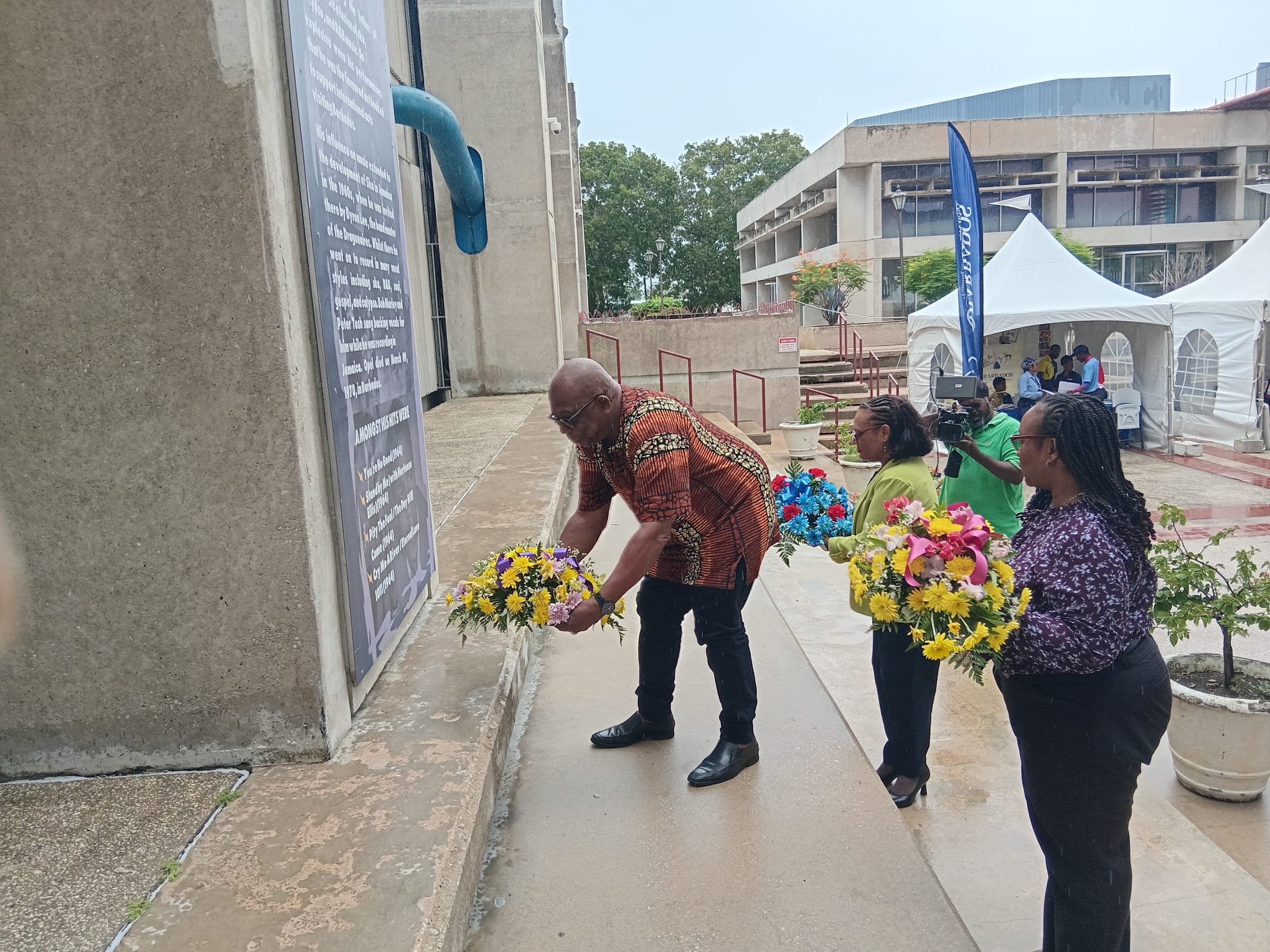
    On the 89th anniversary of legendary musician Jackie Opel’s birth, a new tribute initiative launched in Bridgetown has reignited calls for a nationwide renewal of spouge, the iconic Barbadian music genre Opel pioneered half a century ago. Speaking at the official opening of *This One’s For Jackie* held at the Jackie Opel Amphitheatre, Barbados’ Heritage Minister Trevor Prescod has pushed for the country’s citizens to reclaim and rebuild this one-of-a-kind musical style, while expressing deep regret that the genre has not seen sustained development over the past 50 years. Prescod framed Opel as a revolutionary cultural figure who forged a distinct sense of national pride and identity for all Barbadians. As the minister explained, Opel’s greatest innovation was a masterful fusion of reggae and soca rhythms that produced a completely original sound, which quickly became woven into the cultural fabric of Barbadian society. “It is troubling that the music of that type – the only type that Barbados has produced in the 20th century – could not continue to be developed by our musicians,” Prescod noted. Drawing from personal memories of Opel’s career, Prescod recalled the musician’s electrifying stage charisma, which regularly outperformed even high-profile international acts. One standout memory he shared was a 1960s performance at the Globe Theatre alongside iconic American soul singer Percy Sledge, where crowd energy ran so high that audience members rushed from the back of the venue to the stage just to touch Opel. “He gave Bajans a sense of pride… that we were equally as capable as any black man anywhere in the world,” Prescod said. Beyond his national impact, Prescod highlighted Opel’s far-reaching influence across the Caribbean music scene. In the 1960s, Opel resided in Jamaica, where he collaborated with foundational reggae pioneers including Bob Marley, Peter Tosh, and the iconic ska collective the Skatalites. Drawing from his own early career experience working in inventory management at West Indies Records Limited (WIRL), the region’s prominent record-pressing plant, Prescod also shared personal recollections of Opel’s final weeks before his sudden death in 1970. Opel’s life was cut short by a fatal car crash on Bridgetown’s Bay Street, when he was mid-way through recording a new collection of tracks. “There are so many things that happened around that man’s life that I can only see him as extraordinary,” Prescod added. The tribute event was organized and hosted by the Barbados Postal Service, which spearheaded the initiative to reactivate the underused Jackie Opel Amphitheatre located on the grounds of the General Post Office. Paula Harper-Grant, the service’s marketing officer and emcee for the launch, shared that the project grew out of her own realization that she had once completely forgotten the public amphitheatre even existed. That moment of awareness led her to question whether the broader public had forgotten both the venue and the cultural trailblazer it was named for. Harper-Grant emphasized that Opel was not required to push the boundaries of Caribbean music or create a entirely new sound for his home country, but chose to do so out of his passion for cultural innovation. “We believe that Jackie deserves to be remembered, and we believe this space deserves to live,” Harper-Grant said. “We want another generation of Barbadians to walk into this amphitheatre, see that name, and ask who Jackie Opel was—and we want to be able to tell them.” The launch event featured a full program of live spoken word pieces and musical performances celebrating Opel’s legacy, with supporting partnerships from the Ministry of Labour, the Ministry of Agriculture, the Financial Literacy Bureau and the Barbados Department of Archives.

  • PUP’s Sunday Showdown: Miller or Pollard?

    PUP’s Sunday Showdown: Miller or Pollard?

    A high-stakes internal contest is set to unfold this Sunday in Belize City, as the People’s United Party (PUP) holds its city convention to select its official mayoral candidate for next year’s municipal elections. The nomination race has narrowed to two local political figures: incumbent Deputy Mayor Eluide Miller and three-term city councillor Allan Pollard, each bringing distinct career trajectories and campaign platforms to the vote.

    In total, 787 registered PUP delegates will cast their ballots to decide the mayoral nominee, alongside voting for 10 councillor positions from a field of 19 competing candidates. The contest comes as the party finalizes its full municipal slate ahead of the general municipal vote scheduled for March 2027.

    For Pollard, a veteran local politician who previously served as deputy mayor, his campaign is rooted in his longstanding ties to Belize City and deep community roots, particularly in the South Side neighborhood. “A lot of people are familiar with my journey,” Pollard shared in the lead-up to the convention, referencing the full arc of his political career that has included challenges, setbacks, and measurable progress for his constituents. He argues that his consistent accessibility and ongoing on-the-ground involvement in community initiatives give him a clear edge in the race. “I’m from the city. I’m from South Side Belize City. I’m always engaged in the community,” he noted, adding that his campaign has focused on strengthening relationships built over years of public service and turning out delegate support on voting day.

    Miller, meanwhile, is framing his candidacy around his unique, rapid trajectory through the ranks of Belize City governance, which has given him a ground-up understanding of the city council’s operations. His political career began as an intern at City Hall back in 2019; he moved into a full-time staff role before winning election as a councillor in 2024, and stepping into the deputy mayor post shortly after. “I think my journey through the city council is a quite unique one,” Miller said, describing his career as a story of “constant growth and elevation.” That step-by-step progression, he argues, has given him intimate insight into the opportunities and institutional challenges that exist at every level of city government, preparing him to lead as mayor.

    As both candidates make their final outreach to delegates in the final days before the vote, the PUP national Secretariat has finalized preparations to oversee a smooth, transparent convention. A specialized election team, led by presiding officer John Bernard Wade and supported by senior party officials with extensive experience managing internal party conventions, has traveled from Belmopan to administer the vote and oversee counting.

    Notably, both candidates have emphasized that the competitive nomination race will not create lasting divisions within the PUP, with both pledging full unity ahead of the general municipal election next March. Pollard has already committed to fully supporting whoever emerges as the party’s nominee, while Miller stressed that the contest should remain rooted in policy and politics, not personal animosity. “Absolutely nothing in politics should be personal,” Miller said. “And so whoever it is that comes out of the convention, I will work along with them. I will work side by side with them to ensure that the PUP slate is successful come March of next year.”

    Local media outlet News Five has announced it will provide on-the-ground coverage of Sunday’s convention, with real-time updates posted to its social media platforms for followers following the race.

  • Darrel Bradley for UDP Leader…?

    Darrel Bradley for UDP Leader…?

    Nearly 11 years after his narrow electoral defeat, former Belize City mayor and long-time United Democratic Party (UDP) figure Darrel Bradley has opened the door to a potential political comeback – but only on the condition that his party commits to substantive, meaningful structural and policy reform.

    Bradley last appeared on a general election ballot in 2015, when he lost the Caribbean Shores constituency seat to People’s United Party incumbent Kareem Musa by a razor-thin margin of just 56 votes. Since that defeat, he has stepped back from active electoral politics, but in a recent statement, he confirmed that leadership ambitions remain and a return to the public political arena is not off the table.

    “I do have a desire to return to politics, and that could happen sooner rather than later,” Bradley said. “But I want to be clear: the change this country needs does not rise or fall on one individual. This is a responsibility I take very seriously, and any comeback I make will be part of a broader collective movement, not a solo return to the spotlight.”

    Bradley emphasized that meaningful national progress in Belize requires a coordinated team of leaders united by principled governance and a commitment to moving the country forward. “Change has to come from a cadre of people dedicated to high ideals, not just one person stepping back into politics,” he explained. “I am ready to take on the responsibility of leadership if that movement comes together, but that movement must include many other people working shoulder-to-shoulder to build a renewed, reformed Belize.”

    A core demand Bradley has laid out for the UDP is a shift away from protest and criticism alone toward the development of a concrete, actionable policy platform. For years, he noted, the party has focused on public demonstrations and calling out government shortcomings, but it has not prioritized articulating clear policy solutions that would drive change once in office.

    “We have spent a lot of time talking about protests and highlighting the problems facing our country, which is important, but now we need to double down on outlining exactly what concrete policies we will advance to deliver change,” Bradley said. “This is not some untested, complex concept – countries around the world grapple with these same challenges, and there are proven frameworks we can draw from.”

    He pointed to two key reform areas where Belize already has the legal foundation in place, but lacks meaningful enforcement: campaign finance regulation and whistleblower protection. Belize is already a signatory to the United Nations Convention Against Corruption (UNCAC), and model legislation for both policy areas already exists within the country’s legal framework, Bradley argued. The critical gap, he says, is strengthening enforcement mechanisms and holding all public officials – including party leaders – accountable for upholding these rules.

    Bradley’s comments come as the UDP navigates internal conversations about party renewal ahead of upcoming electoral cycles, with many grassroots members pushing for greater transparency and policy clarity to rebuild voter trust ahead of the next general election.

  • Residents renew call for Six Men’s, Shermans repairs

    Residents renew call for Six Men’s, Shermans repairs

    Residents of two coastal Barbadian communities, Six Men’s and Shermans in St. Peter, are once again raising urgent pleas to local authorities for long-delayed infrastructure repairs and hurricane recovery work, warning that unresolved hazards from crumbling roads to unaddressed coastal erosion have upended daily life for months.

  • Postal Service to revive Jackie Opel Amphitheatre

    Postal Service to revive Jackie Opel Amphitheatre

    Decades of silence will soon end at the long-underutilised Jackie Opel Amphitheatre located within the General Post Office complex in Cheapside, Barbados. Postmaster General Joann Busby has announced a bold strategic plan to breathe new life into the forgotten public space, transforming it into a permanent hub for cultural expression, youth artistic performance, and community heritage celebration. The announcement was timed to coincide with what would have been the 89th birthday of Jackie Opel, the groundbreaking Barbadian musician who invented the iconic spouge genre, who died prematurely 56 years ago at just 32 years old.

    “For far too long, this amphitheatre has stood largely empty and quiet,” Busby shared in her address marking the occasion. “Countless pedestrians pass it by without a second glance; some long-term residents have forgotten it exists, while many younger Barbadians never knew it was here at all. But public spaces like this were never meant to be static monuments locked away in history. They are meant to be living, breathing places where culture grows, meaningful community conversations take root, new artists are discovered, and Barbadians come together to share and write our national story.”

    Under the new operational framework outlined by Busby, the amphitheatre will host a regular, year-round lineup of events tailored to creators of all ages and backgrounds. Emerging musicians will use the stage to debut new work, spoken word poets will share their original perspectives, school students will get their first taste of public performance, and local families will gather to experience authentic, homegrown Barbadian art. The Barbados Postal Service, which manages the site, has taken the lead on the revitalisation project, a move Busby said aligns with the institution’s broader public service mission.

    Busby praised her team for their forward-thinking vision that turned an overlooked, underused asset into an opportunity to reconnect the nation to its cultural heritage. “Many people walked past this amphitheatre and only saw an empty, forgotten space, but the Barbados Postal Service saw a chance to properly honour one of our greatest national icons,” she explained. “Today, thanks to that vision, this space is already coming alive again with the sound of music, voices, laughter, and shared purpose. Preserving our national culture is not a responsibility that falls only to historians or museum curators. Culture belongs to every single Barbadian, and every public institution has a part to play in protecting and nurturing it.”

    For Busby, the project is far more than a simple infrastructure upgrade. It is an investment in Barbados’ collective national identity and intergenerational legacy. She emphasized that artists are just as foundational to a nation’s strength as politicians, educators, medical professionals, and business leaders. “Art shapes how a country sees itself. Artists hold onto our stories, capture our struggles, celebrate our wins, and give voice to our collective hopes, and that is exactly what Jackie Opel did when he created spouge,” she noted.

    Opel’s revolutionary approach to music saw him blend diverse existing genres – including calypso, ska, gospel, and rhythm and blues – to create something completely new, a unique sound that Barbadians could claim as their own. Though his life was cut short, his impact has endured: decades after his death, Opel is still taught in Barbadian schools, and contemporary musicians continue to draw inspiration from his innovative work. Busby used his legacy to challenge all Barbadians to think about the impact they can leave on their communities, noting that legacy building is not reserved for famous icons – it is open to everyone from parents and teachers to the postal workers who deliver mail across the island every day.

    Busby made a formal commitment on behalf of the Barbados Postal Service that the amphitheatre will not be allowed to fall back into disuse in the future. The department’s long-term strategic plan calls for close partnerships with the national Division of Culture, local educators, artistic collectives, and grassroots community organisations to build a consistent public events calendar. “Jackie Opel answered the question of legacy through his creative work, and each of us has to answer that question through the lives we choose to live,” Busby said in closing. “Barbados does not grow stronger by accident. It grows stronger when every citizen chooses to teach, to create, to mentor, and to serve. History is written by all of us, each contributing a line, a paragraph, or a chapter. As we reawaken this remarkable space, may we all leave inspired not just to celebrate a great legend, but to build a lasting legacy of our own.”

  • Police Provide Update on 77-Year-Old Killed Crossing Highway

    Police Provide Update on 77-Year-Old Killed Crossing Highway

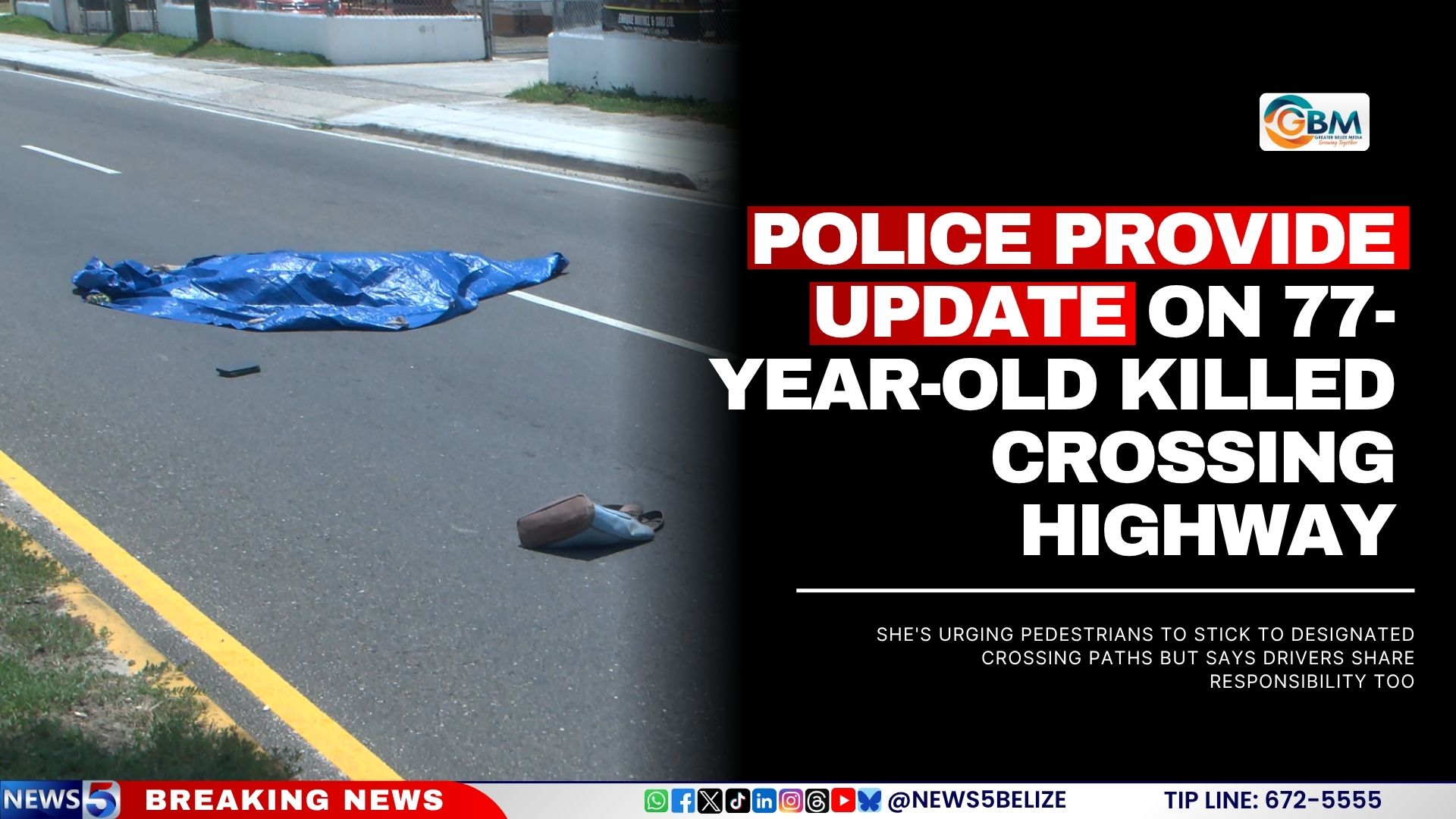
    A fatal traffic collision has claimed the life of a 77-year-old Belize City resident, prompting law enforcement to issue urgent public safety reminders after confirming the stretch of highway where the crash occurred has seen similar recent incidents.

    Retiree Erlene Gillett died Thursday after being struck by a vehicle while attempting to cross the Philip Goldson Highway within Belize City limits, according to an official update from Belize police released as an ongoing investigation gets underway.

    Assistant Superintendent of Police Stacy Smith confirmed details of the incident in a press briefing, noting that Gillett was hit by a Dodge Caravan driven by an adult male. As part of standard protocol for the investigation, the vehicle has been seized for forensic examination, and law enforcement has collected a urine sample from the driver to test for potential impairment. “What the investigation has shown so far is that Gillett was struck by the Dodge Caravan, which was being driven by the stated male person, as she was attempting to cross the highway. The motor vehicle has since been impounded as part of the ongoing investigation, and urine samples have been obtained from the driver,” Smith stated in her official comments.

    In a revealing detail that underscores growing safety concerns for the area, Smith confirmed this is not the first recent fatal or injurious incident involving a pedestrian hit on that section of the highway. “If memory serves well, I believe this is the second of such incidents in recent times when a pedestrian was struck seeking to cross the highway,” she added.

    With two incidents now recorded in a short timeframe, Smith is pushing all road users to prioritize safety, reminding both pedestrians and drivers of their shared responsibility to prevent collisions. She emphasized that even when pedestrians cross outside of officially marked zones, drivers carry an obligation to remain attentive, particularly since the highway segment falls within Belize City’s municipal boundaries, where pedestrian activity is expected.

    “There is an onus on drivers. It is still within city limits, and though the area was not a designated crossing area, persons travelling onboard motor vehicles have a duty to pay attention and be on the alert as they are operating these motor vehicles,” Smith said, urging pedestrians to only use marked crossing locations whenever possible to reduce their risk of harm.

    As of August 28, 2026, the investigation remains open, with police yet to release further details on potential charges or the results of toxicology testing for the driver.

  • Voices Beyond Violence: Movement born from St Omer’s death calls for change

    Voices Beyond Violence: Movement born from St Omer’s death calls for change

    The brutal killing of 24-year-old Joy St Omer in May 2024 sent shockwaves across the small Caribbean nation of Saint Lucia, igniting widespread public anger at the persistent crisis of gender-based violence. While many mourned and the national conversation began to fade as often happens after high-profile tragedies, three young local women refused to let St Omer’s death become just another forgotten statistic.

    Christa McFarlene, Angel Foster, and Hasana Emmanuel channeled their collective grief and frustration into founding Voices Beyond Violence SLU, a grassroots movement dedicated to supporting women and girls affected by violence, challenging harmful cultural narratives around gender-based harm, and demanding greater systemic accountability for protecting vulnerable communities.

    In an exclusive interview with local outlet *St. Lucia Times*, McFarlene and Foster detailed how the movement grew organically from a call for a peaceful gathering. Following St Omer’s killing, the trio invited concerned community members to join a vigil outside the Gros Islet Police Station, drawing hundreds of attendees including survivors of violence, young girls, local activists, and other citizens united in solidarity. The crowd gathered not only to grieve St Omer’s death but to demand that her killing spark lasting change, rather than being brushed aside by institutions and the public alike.

    From the earliest days, the founders knew they wanted to build more than a one-off protest. Unlike spontaneous demonstrations that often dissolve after the initial moment of outrage, Voices Beyond Violence was designed to create a sustained, accessible space for confronting the uncomfortable reality of rampant violence against women in Saint Lucia, deliver public education on the scope of the crisis, and organize collective action for systemic change.

    “We came together to grieve, as we absolutely should have,” McFarlene explained in the interview. “But we wanted to build something more than that: a space for education, a space to call out a crisis that should not be this widespread in our country.”

    For Foster, a core priority of the movement is to create a safe, supportive environment where women and girls feel empowered to share their own experiences of violence without fear of judgment or retaliation, knowing their voices will be taken seriously. She noted that St Omer’s case has amplified longstanding unanswered questions about whether women who reach out for help from authorities actually receive the protection they need.

    “Our goal is to build a Saint Lucia where women feel safe enough to speak out about what they are going through, to share their stories, and to know they will be heard,” Foster said.

    In the months since the movement launched, new cases of violence against women have added significant emotional weight to the young activists’ work. McFarlene acknowledged that grassroots activism is extraordinarily demanding, especially as the three founders balance their organizing work with full-time jobs and personal responsibilities. Even so, she stressed that the burden of addressing gender-based violence cannot fall exclusively on the shoulders of volunteer activists.

    “We have to remind ourselves that we are building one piece of the change Saint Lucia needs, but this fight is not all on our shoulders,” she said. Every action the movement takes, from social media advocacy to public marches, vigils, and protests, is intended to center survivors and their families and build toward a safer future for all Saint Lucian women.

    One of the movement’s long-term core goals is to push for stronger legal and social recognition of femicide as a distinct, pressing crime, and ultimately cut the number of women killed by gender-based violence across the country.

    A key cultural issue the organizers are working to challenge is the pervasive problem of victim blaming, a harmful attitude they say is deeply embedded in many sectors of Saint Lucian society. McFarlene explained that blaming victims often feels “safer” for many people than confronting perpetrators, especially in cases where community members may fear retaliation or personal connection to the accused. Foster added that society often creates an unrealistic standard of the “perfect victim,” requiring survivors to fit narrow expectations about their behavior before and after abuse to be deemed worthy of support.

    She argued that a range of social factors, including cultural background, social status, and personal popularity, often skew how victims and perpetrators are treated in public discourse, allowing powerful abusers to avoid accountability while survivors are judged and sidelined. The movement explicitly pushes back against harmful narratives that question what a victim was wearing, why they did not leave an abusive relationship earlier, or what they could have done to prevent their own harm.

    McFarlene tied these attitudes to the common psychological “just-world” bias, where people seek to explain tragedy by blaming the victim, in order to convince themselves that harm could never happen to them.

    While the movement’s primary focus is on supporting women and girls, who are disproportionately affected by gender-based violence in Saint Lucia, the co-founders emphasized that they recognize men and boys also experience sexual and other forms of violence, and that all survivors deserve support and justice.

    Even though Voices Beyond Violence is only a few months old, Foster said the movement has already shifted the national conversation around gender-based violence. “I’ve seen a clear change in how people talk about this issue,” she said. “Now more people are holding perpetrators, abusers, and the systems that fail victims accountable.” Social media has been a particularly powerful tool for the movement, with posts sparking widespread public discussion and being shared across Saint Lucian communities.

    Even so, Foster refuses to call early shifts in conversation a success, as long as women continue to be killed by gender-based violence across the country. “Voices Beyond Violence will never stop this conversation, and we will never stop fighting for justice for women, girls, and all victims,” she said.

    For McFarlene, one of the most meaningful early achievements of the movement has been creating spaces for collective grief and community solidarity that did not exist before. She recalled a vigil held at the site where St Omer was killed, where hundreds of people gathered with flowers and candles, sang hymns, and shared memories of the 24-year-old.

    The overwhelming public response to the movement has convinced the founders that a large share of the Saint Lucian public wants to see real change, but simply lack accessible opportunities to get involved and organize. “We already have so many people who care about this issue in Saint Lucia,” McFarlene said. “What we need now is coordinated mobilization to turn that care into lasting change.”

  • NTUCB Protests, Warns Government: ‘We Will Give Them Reasons to Listen’

    NTUCB Protests, Warns Government: ‘We Will Give Them Reasons to Listen’

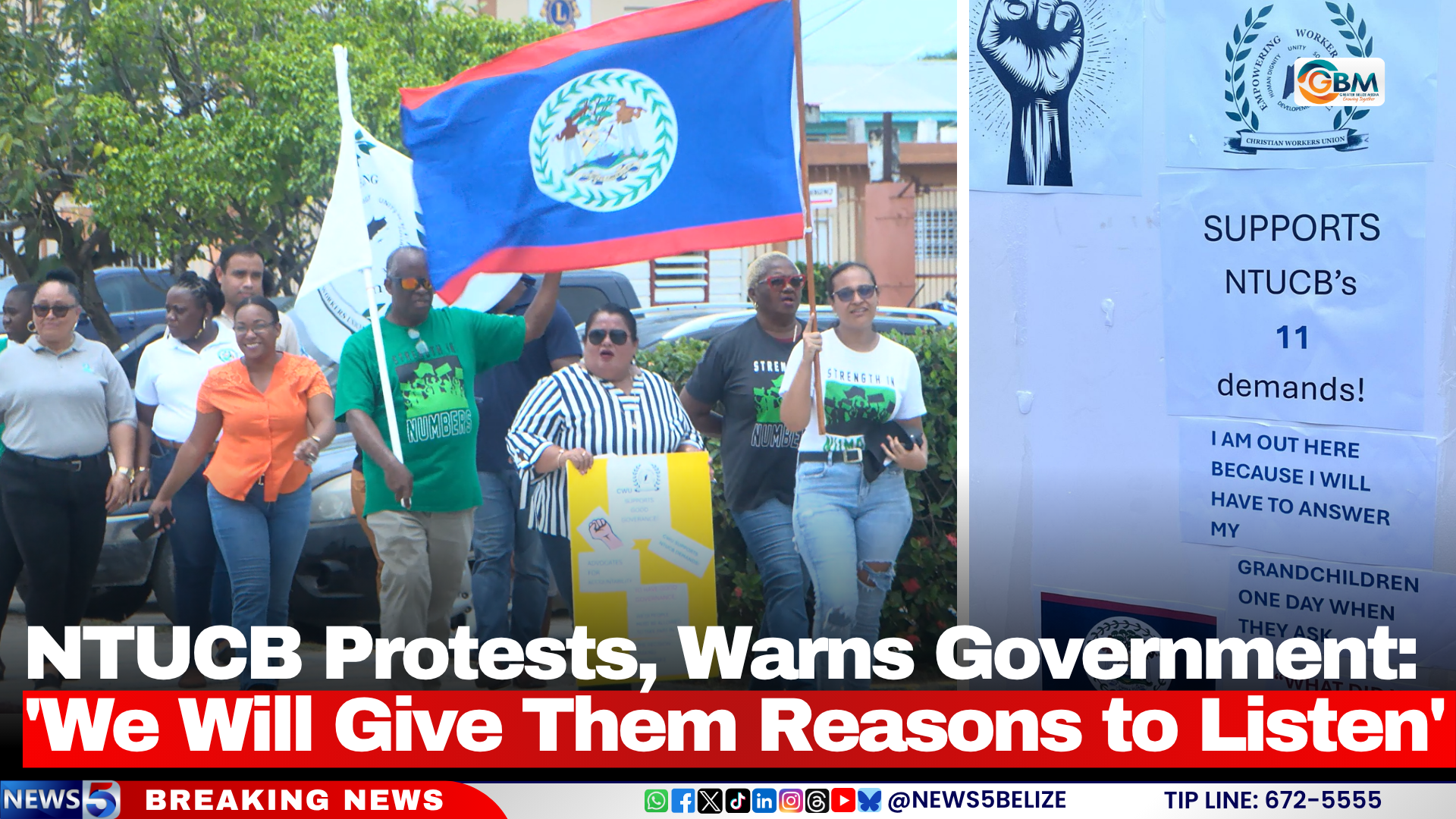
    On August 28, 2026, organized labor in Belize took public action against the Briceño administration, holding a targeted 15-minute lunchtime demonstration outside the Social Security Board (SSB) headquarters in downtown Belize City. Led by the National Trade Union Congress of Belize (NTUCB), the protest drew additional support from the Christian Workers Union (CWU) and its members employed at the SSB, turning a midday work break into a visible show of labor discontent.

    NTUCB President Ella Waight framed the demonstration as a purposeful “walk of demands,” a public reminder of the 11 formal policy and personnel requests the union submitted to the government earlier that week. The union had set an explicit deadline: the Briceño administration was required to deliver a formal response by the date of the protest. As of the demonstration, however, Waight confirmed that the NTUCB had received neither an official response nor even a formal acknowledgement of receipt of the union’s letter.

    One of the most high-stakes demands on the union’s list is the immediate removal of Markhelm Lizarraga from his post as Chairman of the Belize Telemedia Limited (BTL) Board of Directors. Waight emphasized that this call is not driven solely by the NTUCB’s leadership, but originates directly from frontline BTL workers — the employees whose daily work keeps the critical telecommunications provider operational. “It is a call not just from NTUCB, but from the workers at BTL, the ones who have the capacity to ensure BTL runs smoothly or create issues,” she noted.

    Waight acknowledged that Prime Minister John Briceño is currently traveling abroad, but pushed back on any implication that the government could use his absence as a reason for inaction. She noted that government operations continue seamlessly when the prime minister is out of the country, and the union only expected a basic confirmation of the letter’s receipt alongside a timeline for when official discussions could begin once the prime minister returned.

    Beyond the demand for Lizarraga’s removal, Waight clarified that many of the NTUCB’s 11 requests could be resolved quickly through open dialogue, and the union’s core goal is to secure a formal meeting with the prime minister and his administration to address the full list of concerns. Union Senator Glenfield Dennison framed the labor movement’s next steps bluntly: organized labor will continue escalating pressure to force government attention. “I am of the view that power does not listen if they don’t have a reason to listen,” Dennison said. “So, we are going to continue to give them reasons to listen.”

    Waight issued a clear warning if the administration fails to meet the union’s demand for dialogue: the NTUCB will escalate its targeted protest action to a full national demonstration. Similar localized protests are already scheduled across the country in the coming weeks to build momentum for the labor movement’s demands.

  • Atlas, Blackspurs secure promotion after playoffs

    Atlas, Blackspurs secure promotion after playoffs

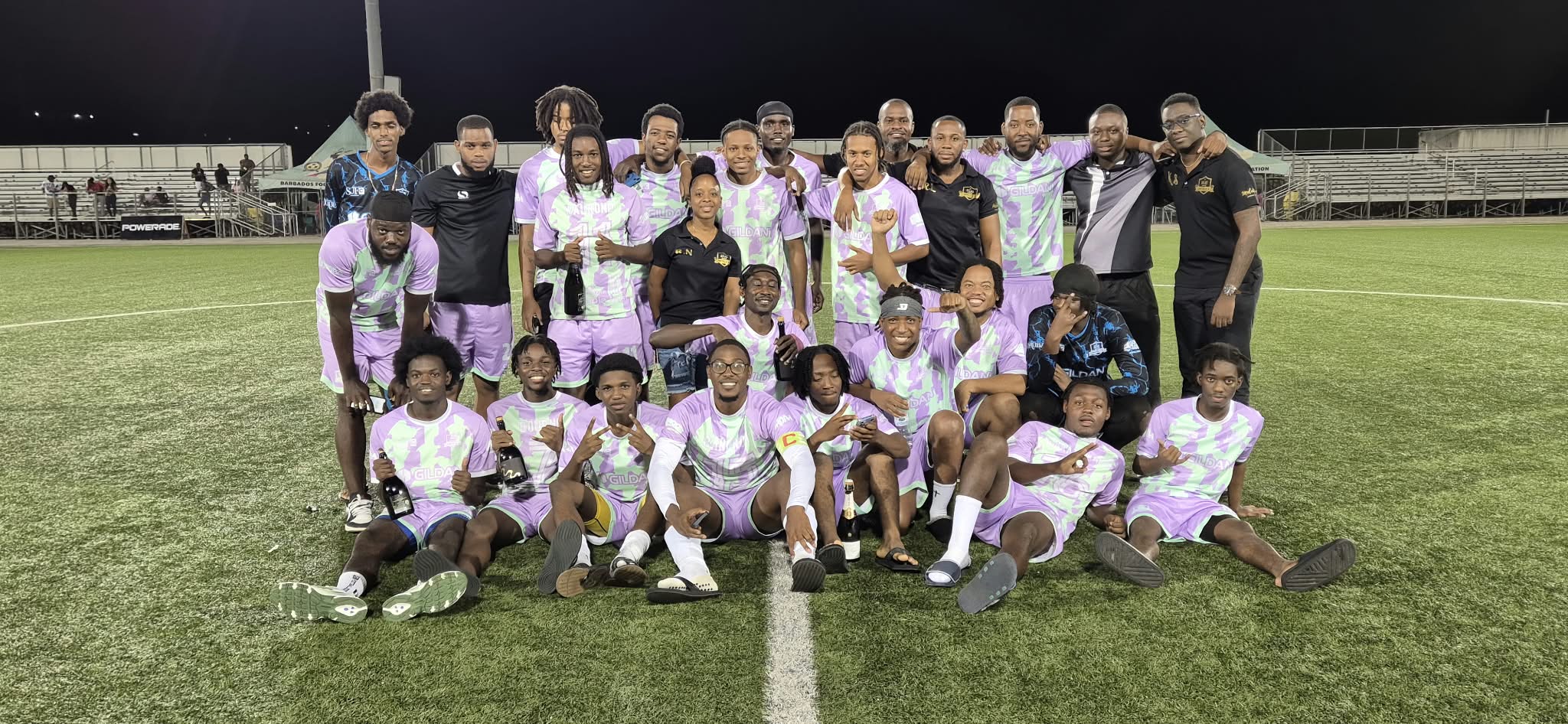
    Two Barbadian football clubs, Atlas and Blackspurs, have officially earned their spots in the Barbados Football Association (BFA) Division One for the upcoming season, wrapping up a dominant run through the Division Two playoffs with a dramatic final clash Thursday night.

    Hosted at the BFA Technical Centre in Wildey, the head-to-head playoff finale ended in a commanding 4-1 win for Atlas over Blackspurs, a result that did nothing to change promotion fate for both sides—both had already secured their place in the top division after finishing at the top of the playoff rankings. Atlas got off to a blistering start, with Joshua Bayne finding the back of the net just six minutes into the match to open the scoring. Four minutes later, Tyrell Waldron doubled the lead, putting Atlas firmly in control by the 10th minute. Shane Alleyne extended the advantage further in the 24th minute, putting Atlas up 3-0 before halftime.

    Blackspurs managed to pull one back just before the break, with Bishon Richards cutting the deficit to two goals, sparking faint hopes of a second-half comeback. Those hopes were dashed just 15 minutes after the interval, however, when Ross Bourne scored the match’s final goal in the 60th minute to lock in the 4-1 scoreline for Atlas.

    In the second playoff fixture of the night, Cave and L&R United played out a tight, goalless draw that did not shift the final promotion standings. Earlier in the week, Atlas delivered a crushing 7-0 defeat to Cave Hill, while L&R United and Blackspurs drew 1-1 in their earlier playoff matchup.

    In a post-promotion interview, Kreg Stuart—who serves as both head coach and president of Atlas Football Club—called the promotion the payoff for months of intentional planning and preparation focused on developing young talent. “When I spoke to you during the Mavericks Under 19 tournament last year, I told you that we had a strong group of young players,” Stuart explained. “We had a team of 25 when we started the season and 14 of them were under the age of 19. We intentionally came into this season, wanting to focus on younger players and giving them opportunities.”

    Stuart reflected on the team’s season trajectory, noting that after a strong opening round of fixtures, Atlas hit a minor slump in form before rolling off six consecutive wins to punch their ticket to the playoffs. He attributed the team’s success to an unusual commitment to consistent training, a challenge he acknowledged is common across Barbadian grassroots football. “They were willing to put in the work in terms of training and I know that’s something that we tend to have an issue with in Barbados, but I would say our players really put in the effort,” Stuart said. “We started our pre-season really in November, and we were willing to just keep practicing and they were always willing to learn. I think that having the young players really pushed us with their energy and enthusiasm for everything that we did.”

    While the club is formally based in Hoyte’s Village, St James, Stuart highlighted that Atlas’ roster draws players from diverse communities across the entire island. Looking ahead, both Atlas and other top promoted sides are now gearing up for the upcoming Prime Minister’s Cup, which kicks off on September 7. Stuart made clear that the team has no intentions of simply participating—they plan to compete at the same high intensity that carried them through Division Two. “For sure, our intention is to compete. We don’t want to come and just make up a number. We want to make sure that we carry the same intensity that we had in Division Two,” he said. “After that it’s about next season, preparing and resting and going strong again in Division One.”