博客

  • MURDER DILEMMA

    MURDER DILEMMA

    As Trinidad and Tobago closes in on the midpoint of 2026, national security officials are grappling with a persistent public safety crisis, after official data put the country’s cumulative murder toll at 203 as of July 13. Minister of Homeland Security Roger Alexander framed domestic dispute-related killings as one of the most intractable challenges facing the nation’s law enforcement apparatus, even as he noted a modest but encouraging drop in overall homicides compared to the previous year. In an exclusive interview with local outlet Express held at his Tunapuna constituency office on Monday, Alexander explained that while intelligence-led operations have allowed police to disrupt gang-related criminal activity effectively, impulsive, interpersonal violence often unfolds far faster than authorities can intervene. New statistics from the Trinidad and Tobago Police Service (TTPS) show that the 2026 murder count is 9 cases lower than the 212 recorded by the same date in 2025, representing a 6% year-over-year decline. So far in July, the country has reported 12 homicides, half the 22 logged over the same stretch in 2025. Alexander credited the ongoing state of emergency (SoE) – implemented without a widespread curfew – for the downward trend, saying the measure has granted law enforcement expanded authority to investigate criminal networks, collect evidence, and bring charges against suspects. “What we have done is give police the powers, the authority, to apprehend persons, secure evidence against persons and eventually charge them for offences,” Alexander noted. While the government views the lower homicide count as a welcome development, Alexander emphasized every lost life matters, and officials remain focused on addressing gaps in violence prevention. A deep dive into the 2026 homicide data reveals that a large share of killings stem from personal, unorganized conflicts rather than gang or organized criminal activity. “One of the things we are looking at, among that 200 plus, is a lot of domestic violence. Issues among persons, persons fighting over land and things like that. Persons in toxic relationships that lash out. Men in bars who get into an altercation and end up in stabbings…so there is a lot of domestic involvement,” Alexander explained. Unlike gang-related violence, which can be monitored and preempted through intelligence gathering, these domestic incidents often escalate suddenly with no prior warning to police, making proactive intervention extremely difficult. “Domestic murders is something that is difficult for the police to treat with beforehand,” Alexander said. Gang-related violence remains a top priority for the government and law enforcement, Alexander added, and the availability of intelligence on gang activity allows agencies to allocate targeted resources to disrupt plots and take criminal groups off the street. To curb domestic homicide rates, Alexander says police will need to expand community outreach and pre-emptive engagement efforts to identify at-risk conflicts before they turn deadly. Greater proactive engagement with local communities and private households, he argued, will help flag simmering tensions that might otherwise fly under the radar of official monitoring. “It’s about meeting people in their homes, and encouraging them to make reports,” Alexander said. Even with expanded outreach, however, Alexander acknowledged that many domestic violent acts happen with little to no warning, making full prevention a persistent challenge. “But then these things can also happen in the blink of an eye, so it’s difficult for the police to really get a handle on,” he stressed.

  • Penny: PNM has nothing to hide

    Penny: PNM has nothing to hide

    Trinidad and Tobago’s Opposition Leader Pennelope Beckles has issued a firm public declaration that the People’s National Movement (PNM) has no wrongdoing to conceal, and pledged to resist every effort by the ruling United National Congress (UNC) government to smear the main opposition party. Her remarks came in direct response to recent comments from Prime Minister Kamla Persad-Bissessar, who on Sunday called on the PNM to submit evidence proving the legal construction of its Port of Spain headquarters, Balisier House, to two independent state bodies — the national police service and the judiciary.

    The latest development in this unfolding political clash began last Friday, when High Court Justice Margaret Mohammed granted a court order to the Trinidad and Tobago Police Service (TTPS) forcing the PNM to explain the source of funding for the multi-million-dollar construction project. The TTPS has been carrying out an official inquiry into the building’s origins for some time. On the same day the order was granted, Police Commissioner Allister Guevarro — who had appointed acting Assistant Commissioner Ramdath Phillip to lead the investigation — authorized Phillip to file an application for a Preliminary Unexplained Wealth Order with the High Court, a step permitted under Section 58(1) of the 2019 Civil Asset Recovery and Management and Unexplained Wealth Act.

    In her official statement released this week, Beckles referenced a separate detailed comment issued the same day by PNM Chairman Marvin Gonzales, noting that after a meeting with the party’s top leadership, Gonzales was directed to release a clear response to a story published the previous Saturday in the *Express* newspaper.

    “The legacy of our longstanding political institution will not be tarnished by a government that would rather launch desperate political attacks than tackle the actual problems our country faces,” Beckles said. She described the PNM as a historic movement that has served Trinidad and Tobago with distinction for seven decades.

    Beckles argued that the UNC government, which is already facing growing public pressure over its failure to address spiraling crime, a stagnant economy, high unemployment, rising living costs and plummeting public trust in national leadership, has deliberately shifted focus to attacking the PNM’s headquarters to distract voters. She emphasized that the public’s top priority should be the UNC’s clear failure to deliver improved living standards for ordinary citizens.

    Going further, Beckles launched a scathing counter-attack on the ruling party, labeling the UNC as politically adrift, corrupt and fraudulent, claiming it has ties to alleged human traffickers, includes members currently free on bail, and is facing multiple active police investigations into the conduct of its own members of parliament.

    She stressed that the governing party will not be permitted to rewrite Trinidad and Tobago’s national political history, framing Balisier House as far more than just a physical office building. “Balisier House is the soul of the PNM. It embodies the blood, sweat and tears of generations of citizens who have dedicated themselves to this movement,” Beckles, who serves as the Member of Parliament for Arima, explained. She added that the building stands as a monument to the thousands of volunteers, supporters, party workers and patriotic citizens who have given their time and personal resources to the PNM out of a commitment to public service.

    “Under my leadership, the PNM will never stand by and allow anyone to erase these contributions from our nation’s political and physical landscape,” Beckles vowed. She repeated her call for the public to question why the government is prioritizing an attack on the main opposition when communities across the country are crying out for urgent action to curb violent crime, working families are struggling to keep up with skyrocketing living costs, and local businesses are grappling with widespread economic uncertainty.

    Closing her statement, Beckles reaffirmed her commitment to continuing her defense of the PNM, the country’s democratic system, and the fundamental right of citizens to have a robust opposition that holds the sitting government accountable for its actions and policies.

  • Probe after ‘$250,000 disappears’ during police search

    Probe after ‘$250,000 disappears’ during police search

    A formal misconduct investigation is underway targeting three members of the Trinidad and Tobago Police Service (TTPS), following allegations that $250,000 in cash went missing during a search of a scrap iron dealer’s Claxton Bay property in late June. The case has sparked accusations of police abuse of power amid the country’s current state of emergency, with the dealer’s attorney arguing the allegations expose serious misconduct by law enforcement.

    Akini Joseph, a scrap metal dealer widely known by the alias “Mundo,” was not at his residence when officers from the Marabella Police Station arrived on the evening of June 27. The officers stated their mission was to locate stolen brass on the property, and when Joseph was contacted mid-search by a concerned relative, he instructed his family to grant the search team full access to the compound, attorney Subhas Panday, who represents Joseph, confirmed to local outlet Express in a recent interview.

    According to Panday’s account of the search, the operation took an unexpected turn when officers probing a bedroom ceiling dislodged a five-dollar banknote. The lead corporal on the scene then ordered a constable to retrieve a ladder to access the attic space, where the team discovered a hidden box containing stacks of cash totaling $250,000. From that point, the cash was never recorded as evidence or returned to Joseph: the search team told Joseph’s family they had found no illegal materials on the property before concluding the operation.

    Independent police sources have confirmed that closed-circuit security footage from the property, a portion of which has been viewed by Express, captures one of the responding officers exiting the home and concealing an amount of cash in his uniform pockets. Investigators have also obtained additional corroborating details about the officers’ activities on the compound during the search.

    When Joseph returned home from the cricket match he was attending, a relative immediately alerted him that the search team had seized his hidden cash. When Joseph confronted the officers and demanded the money’s return, while stating his intention to contact legal representation, he was taken into police custody on allegations of making threats against officers, Panday explained. Joseph remained detained at the local police station for four days before he was formally questioned about the alleged stolen brass on July 1 — it was during this interrogation that Joseph first formally brought up the missing $250,000 to the lead corporal, according to his attorney.

    On July 6, Homeland Security Minister Roger Alexander signed a Preventive Detention Order (PDO) against Joseph, citing intelligence reports that place the dealer as a member of an informal organized crime group. The order links Joseph’s scrap business to the illegal disposal of stolen property, claims he threatened responding officers during the June 27 search, and alleges he is in illegal possession of firearms. Authorities further assert that intelligence indicates Joseph’s criminal network was planning to expand its illegal operations, including carrying out more frequent attacks on commercial properties across the region.

    Panday has since filed a formal application to challenge the PDO before the independent Review Tribunal, and as of the latest update, is still waiting for a hearing date to be scheduled. The attorney has issued a sharp rebuke of law enforcement actions in the case, arguing that officers are exploiting the existing state of emergency to enter the homes of private citizens without required search warrants and target innocent people.

    “They are abusing the state of emergency and going into innocent people’s homes without search warrants. Authorities must take steps to prevent this kind of behaviour, they are taking advantage of innocent people,” Panday told Express.

    The Professional Standards Bureau (PSB), the TTPS internal body mandated to investigate officer misconduct, corruption, and abuse of authority, is leading the probe into the three officers — one corporal and two constables. The official complaint against the officers was filed by Joseph’s relatives just hours after the search concluded, a timeline confirmed by Panday.

  • Verkeersveiligheidsinstituut slaat alarm na vier jonge verkeersdoden in vijf dagen

    Verkeersveiligheidsinstituut slaat alarm na vier jonge verkeersdoden in vijf dagen

    In a devastating five-day stretch that has sent shockwaves through road safety circles, four young people have lost their lives in traffic incidents across the Netherlands, prompting urgent alarm from the national Verkeersveiligheidsinstituut (VVI, the Institute for Road Safety) over the rapidly growing toll of fatal crashes involving young road users. Multiple of these recent deadly accidents involved moped riders and motorcyclists, a high-risk group that safety officials have long targeted for additional prevention efforts.

    The uptick in fatalities has drawn fierce concern from top national officials, including Minister of Justice and Police Harish Monorath, who has labeled the recent string of deaths as an issue of extreme severity. The VVI emphasized that this cluster of fatal incidents should not be dismissed as a series of isolated, random events; instead, it represents a critical wake-up call for the entire nation to address systemic gaps in road safety culture.

    VVI Director Joanne Kasno-Adraai described the consecutive deaths as an unmitigated tragedy. “Four young people never made it home,” she said, noting that grieving family members, partners, friends, and children are left to navigate overwhelming grief with few answers for why these losses occurred. On behalf of the entire institute, Kasno-Adraai extended heartfelt condolences to the bereaved, wishing them strength as they process their irreversible loss.

    Moving forward, the VVI confirmed that the Ministry of Justice and Police, led by Minister Monorath, will continue partnering with the institute and other relevant agencies to invest in expanded road safety education, public awareness campaigns, targeted prevention initiatives, and stricter enforcement of existing traffic rules. Even as institutional authorities commit to action, the institute stressed that individual road users bear a critical share of responsibility for preventing future deaths.

    In an urgent appeal directed at high-risk groups, the VVI called specifically on moped riders, motorcyclists, and all young road users to moderate their speed, always wear an approved, properly fitted safety helmet, and eliminate distractions including alcohol consumption and mobile phone use while on the road. The institute also issued a call to passenger vehicle drivers to increase their vigilance, reminding motorists to account for blind spots, maintain safe following distances, and give adequate space to two-wheeled road users.

    “One moment of rushing, recklessness, or inattention can change a life forever,” Kasno-Adraai said. “Instead of waiting for the next tragic report, let us work together to build safer roads for everyone.”

  • Column: Tijdelijke maatregelen vragen blijvende openheid

    Column: Tijdelijke maatregelen vragen blijvende openheid

    There is an old adage that holds true across many policy contexts: no measure is more permanent than a temporary policy that never gets scheduled for review. This principle is now playing out in Suriname, where a temporary fuel price cap implemented amid the outbreak of conflict in the Middle East continues to operate without the public transparency and scheduled evaluation that good governance demands.

    When regional hostilities sent international oil prices skyrocketing in early 2025, threatening to accelerate already strained inflation levels, the Surinamese government faced a critical policy choice. To protect household purchasing power and avoid adding additional pressure to already strained manufacturing and transportation sectors, authorities introduced a fuel price cap on March 18. The policy set maximum retail prices of 53.27 Surinamese dollars (SRD) per liter for diesel and 48.32 SRD per liter for unleaded gasoline. At the time of its introduction, the emergency measure was widely viewed as a justifiable decision to counter volatile market conditions.

    But every temporary intervention raises an unavoidable question over time: when and how will policymakers assess whether the policy is still needed? Since March, the global oil market has been anything but stable, with prices swinging sharply between steep increases and sudden drops before climbing again amid continued Middle Eastern geopolitical tensions. This volatility underscores just how challenging it is to implement and sustain fuel price policy in an unpredictable global economy – and that reality makes transparency all the more critical for public accountability.

    During recent parliamentary budget deliberations, Minister of Finance and Planning Adelien Wijnerman confirmed that the government would review the future of the fuel subsidy program in the near term. She also noted that a gradual phase-out of the cap would likely be more prudent than an abrupt end to the policy. Wijnerman added that without the current price cap, retail prices would rise to roughly 64 SRD per liter for diesel and 62 SRD per liter for unleaded gasoline.

    President Jennifer Simons has also shed light on the significant fiscal cost of the policy, revealing that the government foregoes approximately 300 million SRD in monthly revenue to keep fuel prices artificially low, through a reduction in state levies on fuel. This represents a major fiscal commitment: public funds can only be spent once, and every month that the state treasury forgoes hundreds of millions of Surinamese dollars means less budget available for critical investments in healthcare, education, public safety, infrastructure, and other core public services.

    This fiscal trade-off does not automatically mean the fuel subsidy must be eliminated entirely. But it does mean that Surinamese society has a right to know how policymakers are weighing these competing priorities. The core debate around this policy is not ultimately whether fuel prices should rise or fall – it is a question of responsible governance and an open, accountable government.

    Multiple critical questions remain unanswered for the public: How is the current price cap calculated on a monthly basis? Exactly how much revenue is the state actually foregoing? What is the current size of the effective subsidy, given that global oil prices have shifted dramatically multiple times since the cap was introduced? When will policymakers assess whether market conditions have changed enough to require policy adjustments? And when will these trade-off decisions be shared openly with the public?

    Beyond fiscal impacts, the price cap also reshapes competitive dynamics among private oil companies. Before the policy was introduced, companies competed on retail pump prices to attract customers; today, motorists pay nearly identical prices at every filling station across the country. This market intervention has spawned new questions: How does healthy competition still function in this regulated market? Is the subsidy calculated uniformly for every operating oil company? How will policymakers prevent unequal outcomes that stem from differing cost structures and price-building processes among companies? Precisely because the government has chosen to intervene directly in the fuel market, the full workings of this system deserve complete public transparency.

    Price stability for consumers is a legitimate policy goal, and no government is required to adjust retail fuel prices on a weekly basis to match shifts in global commodity markets. But stability does not justify silence on policy trade-offs. Precisely because the government made the deliberate choice in March to implement a sweeping market intervention, the public has a reasonable expectation that authorities will periodically explain how the system works, what trade-offs guide decision-making, and when the policy will next be evaluated. This approach also aligns with the original process the president used to develop the policy, which included open consultations with business groups, trade unions, independent economists, political parties, and other civil society organizations.

    Remarkably, almost no public information is currently available about how fuel prices under the cap are calculated. This information vacuum pushes public debate toward speculation rather than fact-based discussion – an outcome that serves no one, neither the government, operating oil companies, nor the Surinamese public.

    At its core, the debate over the temporary fuel price cap is not about the cost of a liter of gasoline. It is about how much transparency and open accountability good governance is worth. Temporary emergency measures can remain in place for extended periods when conditions justify it. But secrecy around those measures never can.

  • News : Zapping…

    News : Zapping…

    A collection of the latest developments from Haiti spanning multiple sectors this July 2026 brings a mix of athletic triumph, diplomatic clarification, legal enforcement and public service milestones.

    First, in a historic win for Haitian sports, competitive swimmer Christian Jérôme delivered a stunning performance at the 2026 Pan American Swimming Games hosted in Ibagué, Colombia. Jérôme left the multi-day competition with an unprecedented six medals for his home country: three gold medals earned in the men’s 100-meter butterfly, 50-meter butterfly, and 50-meter freestyle events, one silver medal from the 200-meter individual medley, and two bronze medals claimed in the 200-meter freestyle and 4 x 100-meter mixed medley relay. His achievement marks a standout moment for Haitian swimming on the regional competitive stage.

    Turning to regional security diplomacy, Dominican Republic President Luis Abinader has publicly clarified the nature of his country’s cooperation with Haiti’s Gang Suppression Force (GSF), a multinational mission tasked with quelling widespread gang violence in Haiti. Speaking in a media interview, Abinader emphasized that Dominican collaboration is strictly limited to two core areas: delivering humanitarian medical support and coordinating intelligence sharing with the international mission. He explicitly ruled out any direct participation by Dominican forces in offensive anti-gang operations within Haiti. The president confirmed that a permanent communication channel between the Dominican government and the GSF is already active, noting “Yes, we are in coordination with this multinational force. If there is a problem, they inform us and we prepare.” Addressing security along the shared Haiti-Dominican border, Abinader highlighted ongoing upgrades to the Dominican Armed Forces’ capabilities and infrastructure, confirming the force now has access to new armored vehicles and significantly improved weaponry. He added that military salaries have been tripled nationwide, with all personnel assigned to border posts receiving an additional special performance bonus.

    In domestic legal news, Haitian opposition figure Moïse Jean-Charles has been officially summoned to appear before the national prosecutor’s office following a series of inflammatory public remarks. The summons comes in response to repeated statements in which Jean-Charles called on the Haitian public to “destroy and burn everything”, repeated calls for “total annihilation” widely referenced by the slogan “boule tout bank”, and his most recent public appeal for widespread “dechoukaj”, a term referring to violent mass upheaval. Many Haitian citizens have argued that Jean-Charles’s rhetoric has exacerbated an already volatile national security climate, where armed gangs already carry out widespread acts of terror across the country. Observers note that inflammatory public speech that incites disorder carries tangible risks of unpredictable, harmful consequences for already vulnerable communities.

    The Port-au-Prince Prosecutor’s Office has also announced a sweeping new crackdown on the exploitation of minors, intensifying enforcement actions targeting nightclubs and hotels across the Haitian capital that permit underage girls to work and gather on their premises. According to Jean Fritz Patterson Dorval, Government Commissioner for the Port-au-Prince jurisdiction, targeted inspection operations launched last weekend are focused on combating the sexual exploitation and violence targeting 15- to 16-year-old girls in these entertainment and hospitality venues.

    In public health, the Haitian health community honored the contributions of international medical support last month. On June 20, the Lasile Community Reference Hospital (HCR) hosted a formal tribute ceremony for the Cuban Medical Brigade, recognizing the brigade’s central role in the success of the recent Free Surgical Caravan initiative. The ceremony was attended by senior Haitian health officials, including Dr. Esther Ceus Dumond, Nippes Department Health Director, and Eluderne Denius, coordinator of the Miragoâne District Health Unit and departmental coordinator for the caravan. Thanks to the brigade’s dedicated work, more than 100 low-income patients received completely free life-changing surgical procedures at the Lasile facility, bringing new hope to hundreds of vulnerable Haitian families who could not otherwise access care.

    Finally, in law enforcement training, the Haitian National Police Academy (ENP) officially launched the academic year for its 37th class of aspiring police officers on July 14, 2026. During the opening ceremony, new cadets received detailed briefings on training requirements and the core values the Haitian National Police requires all officers to uphold throughout their careers: strict discipline, professional ethics, and adherence to deontological standards. The ceremony, branded “First Civic Monday”, marks a key milestone in the integration of the new cohort, coming two weeks after the completion of their initial orientation period.

  • Minister Dwayne George Pleased with Carnival 2026 Preparations

    Minister Dwayne George Pleased with Carnival 2026 Preparations

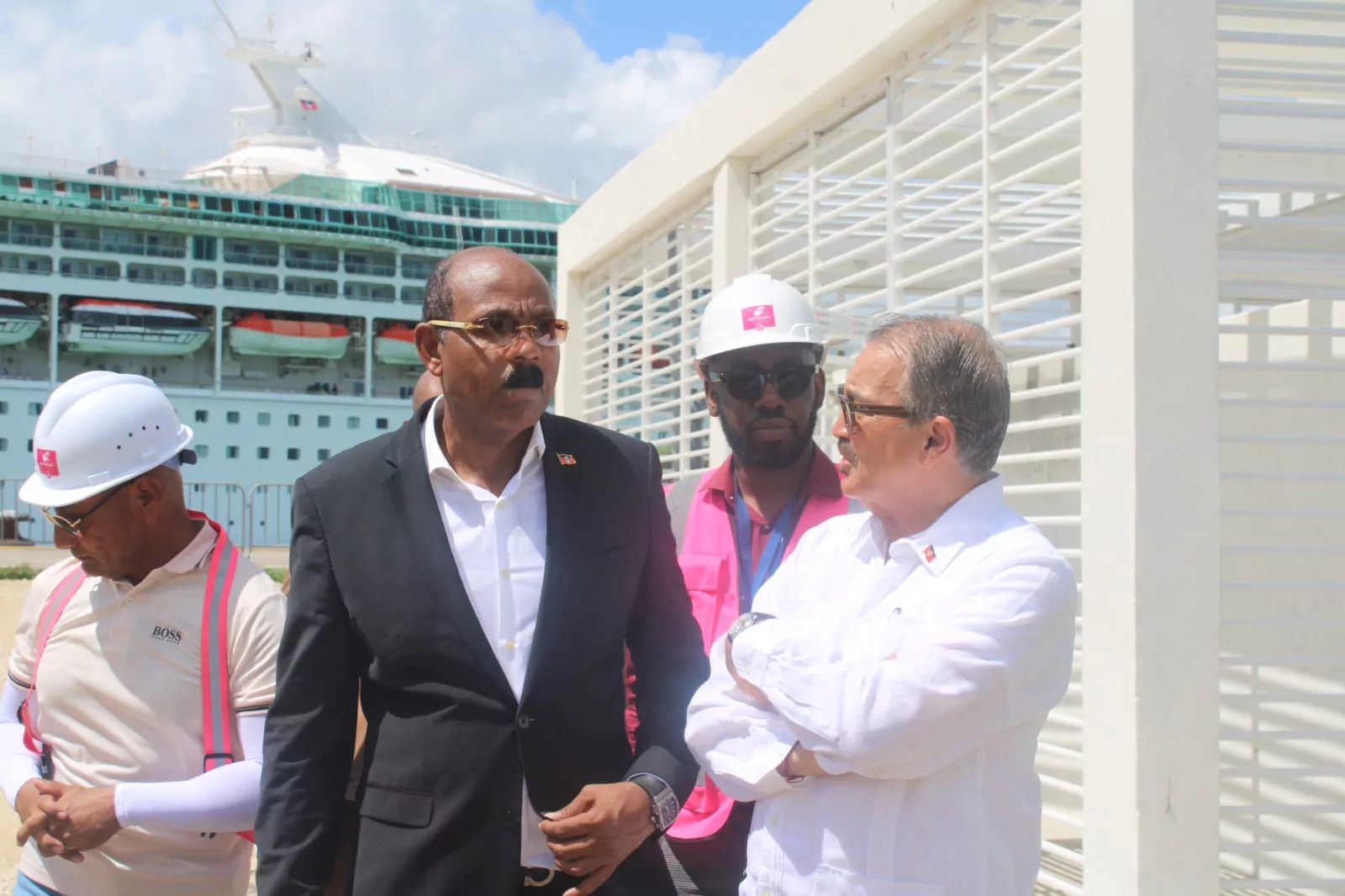
    During an on-site inspection of the Antigua Recreation Grounds this Monday, Dwayne George, Minister of Sports and Creative Industries of Antigua and Barbuda, affirmed that the nation is solidly on track to host what event organizers project will be the largest Carnival in the country’s history.

    Accompanied by Cleofoster Harris, Operations Lead for the Antigua and Barbuda Festivals Commission, George toured the venue that is currently undergoing extensive transformation into Carnival City, where he reviewed the pace and quality of ongoing pre-event work for the country’s flagship summer cultural celebration.

    After wrapping up the inspection, George told reporters he was deeply encouraged by the progress achieved so far, confirming that overall preparations are currently 70 percent complete ahead of the 2026 edition of the festival.

    “From everything I’ve seen and heard during today’s walkthrough, I can say we are in an incredibly strong position, and I’m thrilled with how prepared we are,” George shared during a post-inspection briefing. “Seventy percent of all work for Carnival 2026 is done, and I can already feel the excitement building – the rhythm of the celebration is already in the air.”

    The minister went on to issue a public appeal for widespread community participation, emphasizing that the long-term success of the iconic cultural festival hinges on active support from local residents.

    “Our unique cultural heritage cannot thrive unless we show up to support it in person, alongside our families,” he noted. He also extended gratitude to the Antigua and Barbuda Festivals Commission, the national government, corporate sponsors, and the local population for their consistent contributions to the event’s ongoing success over the years.

    As the country gears up to mark its 69th Carnival, George stressed that organizers are fully committed to delivering the most expansive and memorable edition of the festival in its decades-long history. He highlighted a series of major infrastructure upgrades being rolled out for this year’s event, headlined by a new nearly 100-meter modern performance stage, alongside fully upgraded lighting and audio systems that are designed to enhance the experience for both performers and attendees.

    “This expanded, state-of-the-art stage will give local artists a first-class platform to truly show off their craft and highlight the incredible creative talent that Antigua and Barbuda has to offer to the world,” George explained.

    He also commended the ongoing collaboration between the Festivals Commission and his ministry, as well as the generous backing from corporate sponsors, which have kept all preparation work moving according to the established timeline. Beyond core entertainment infrastructure, George shared that event organizers have prioritized improving the overall attendee experience, with upgrades to security protocols, sanitation facilities, and parking logistics all progressing smoothly.

    Reaffirming Antigua and Barbuda’s status as home to one of the Caribbean’s most prestigious cultural festivals, George extended an invitation to both local residents and international travelers to join the 2026 celebrations, helping to uphold the nation’s reputation as a top global Carnival destination.

    “Let’s come together to make this a landmark success,” he said. “Antigua and Barbuda already hosts one of the greatest summer festivals in the entire Caribbean. Let’s keep living up to that legacy, and continue setting an example for other nations to follow.”

  • Antigua and Barbuda Chamber of Commerce Introduces 2026–2027 Executive Team

    Antigua and Barbuda Chamber of Commerce Introduces 2026–2027 Executive Team

    The Antigua and Barbuda Chamber of Commerce, the leading business advocacy organization for the twin-island nation, has officially introduced its new slate of executive leadership set to serve the 2026–2027 term. The newly assembled team draws experienced professionals from a wide range of key domestic sectors, including banking, digital technology, telecommunications, maritime shipping, retail, and more, reflecting the diverse makeup of the country’s business community.

    Heading the incoming executive team is Celia Samuel, who will take on the highest leadership role of president. The core leadership structure also features Dr. Errol Samuel in the position of first vice president, Tamara Lowe-James stepping into the role of second vice president, and Jackie Ferracho-Williams serving as the group’s treasurer. Four industry professionals—Ragi Burton, Yasmin Ephraim, Priscilla Leonce, and Wayne Hull—have been appointed to serve as board directors, while Martin Cave will remain in his position as executive director to ensure institutional continuity.

    In a public statement confirming the new appointments, the Chamber expressed confidence in the new executive’s ability to steer the organization forward. The statement highlighted the leadership team’s shared commitment to three core priorities: bolstering the resilience and growth of Antigua and Barbuda’s private sector, delivering enhanced support and resources to all Chamber member businesses, and driving inclusive national economic development that benefits communities across both islands.

    The organization also concluded its announcement by extending formal congratulations to all newly appointed and returning executive members as they prepare to take up their responsibilities for the upcoming two-year term.

  • Caribbean Women Scientists, Including Those in Antigua and Barbuda, Invited to Apply for US$15,000 Research Grants

    Caribbean Women Scientists, Including Those in Antigua and Barbuda, Invited to Apply for US$15,000 Research Grants

    The fourth edition of the regional L’Oréal-UNESCO For Women in Science program has officially opened applications for early-career Caribbean women researchers working in science, technology, engineering, and mathematics (STEM) fields, program organizers L’Oréal Caribe and the UNESCO Office for the Caribbean have announced. The 2026 iteration will award two individual grants of $15,000 USD to selected recipients to advance their ongoing scientific work, marking another milestone in the global initiative’s mission to uplift underrepresented women in STEM across the region.

    The application window will run from May 19, 2026, through the final deadline of August 14, 2026. Eligible candidates include women scientists based in the Caribbean who are currently enrolled in doctoral degree programs, conducting postdoctoral research, or working in the early phases of their independent scientific research careers across approved STEM disciplines. Acceptable fields of research include formal sciences, life and environmental sciences, materials science, engineering, and technological sciences.

    This Caribbean program operates as a regional extension of the globally recognized L’Oréal-UNESCO For Women in Science movement, which was founded to expand women’s participation in scientific research and address the persistent gender gaps that continue to shape STEM sectors worldwide. In the Caribbean, the initiative is implemented in strategic partnership with two leading regional scientific bodies: the Caribbean Academy of Sciences and the Caribbean Division of the American Association for the Advancement of Science.

    Liana Camacho, Market Vice President of L’Oréal Caribe, emphasized the core value of gender diverse talent in addressing global and regional challenges. “At L’Oréal Caribe, we firmly believe that science needs the talent, creativity, and leadership of women to address the challenges of today and the future. Through For Women in Science, we seek to increase the visibility of and support women researchers who are generating knowledge and innovation with an impact on our region and the world,” Camacho said.

    UNESCO Director General Audrey Azoulay reaffirmed the organization’s long-standing commitment to removing systemic barriers for women in scientific fields. “UNESCO works to recognize and promote the talent of women in science, foster diverse perspectives, and break down the barriers that limit their professional development,” Azoulay stated.

    Beyond direct financial support, the awards also shine a spotlight on the critical contributions Caribbean women scientists make to solving pressing regional challenges. The program points to the 2025 cohort as a powerful example of this impact: last year’s recipients were two Jamaican researchers, Dr. Lori-Ann Fisher and Dr. Arianne Brown Jordan, whose work addresses urgent health and environmental priorities. Dr. Fisher’s research explores genetic risk factors for liver diseases, while Dr. Brown Jordan investigates the prevalence of waterborne bacterial diseases in distribution systems serving low-income, vulnerable communities. Both projects deliver actionable insights that directly improve quality of life across the Caribbean.

    Interested applicants can access full eligibility criteria and submit their applications through the official For Women in Science online application portal. All submissions must be completed before the August 14, 2026, deadline to be considered.

    As a regional division of the world’s leading beauty company, L’Oréal Caribe oversees operations across 25 Caribbean islands from its headquarters in Puerto Rico. The company’s mission centers on delivering inclusive, ethical, and sustainable beauty, with 31 international brands in its portfolio and ambitious carbon and sustainability targets under the global L’Oréal for the Future program.

  • Team Antigua & Barbuda Concludes ECVA U20 Beach Volleyball Championship With Strong Performances And Major Development Milestones

    Team Antigua & Barbuda Concludes ECVA U20 Beach Volleyball Championship With Strong Performances And Major Development Milestones

    The 2026 Eastern Caribbean Volleyball Association (ECVA) U20 Beach Volleyball Championship wrapped up recently in St. Kitts and Nevis, and the Antigua and Barbuda Amateur Volleyball Association (ABAVA) is highlighting the strong showing and meaningful progress its delegation achieved at the regional tournament. Beyond competitive results that exceeded many expectations, the nation also notched critical off-court wins that will strengthen volleyball development across the country for years to come.

    On the competitive side of the tournament, Antigua and Barbuda’s young rosters brought unwavering determination and fierce national pride to every match, going head-to-head with some of the most promising up-and-coming beach volleyball talent across the Eastern Caribbean.

    In the women’s division, the pairing of Faith Gibson and Philisha Burnette turned heads with their consistent calm and poise under tournament pressure. After a grueling, hard-won three-set victory over St. Vincent and the Grenadines – decided by final scores of 14-21, 22-20, 15-9 – the duo closed out their run with another impressive three-set win against St. Eustatius. Tacking on scores of 21-13, 17-21, 20-18, the win earned Gibson and Burnette a solid fifth-place finish overall, a standout result for the young pairing.

    For the men’s team, partners George Freeland and Miguel Peña-Lugo displayed incredible toughness and tenacity throughout every set they played. The pair advanced to a thrilling three-set semifinal matchup against Dominica, taking the opening set in dominant fashion before a late shift saw them fall 1-2 (21-8, 15-21, 7-15). Undeterred by the narrow semifinal loss, Freeland and Peña-Lugo advanced to the bronze medal match against host nation St. Kitts and Nevis, pushing the heavily favored home team to the limit before dropping a tight two-set match 0-2 (19-21, 15-21) to claim fourth place overall.

    While the team did not claim a podium finish, ABAVA leaders emphasize that the competitive experience gained at the regional tournament will be an invaluable asset as Antigua and Barbuda continues to invest in growing its youth beach volleyball programs and building a pipeline of talent for future international competitions.

    Beyond the on-court results, the trip to St. Kitts and Nevis delivered major milestones for Antigua and Barbuda’s technical volleyball ecosystem. ABAVA has formally congratulated Coach Braulio Estrada López on his successful completion of the ECVA Beach Volleyball Coaches Course, a qualification that expands the country’s pool of expertly trained coaches and supports more structured long-term athlete development across the nation.

    Two other Antigua and Barbuda delegates also earned key regional credentials: Randy St. Jean and Josanne Lewis recently graduated from the ECVA National Beach Volleyball Referee Course, expanding the country’s roster of internationally certified match officials. This certification marks a critical step forward for Antigua and Barbuda, allowing local officials to officiate higher-profile regional and international competitions moving forward.

    Finally, ABAVA recognized the foundational work of team leaders Jamarie James and Rosemarie Simon, whose meticulous preparation, steady leadership, and unwavering commitment to the athletes supported the national delegation throughout the entire tournament. ABAVA notes that their contributions off the court were a core factor in enabling the athletes to deliver their best performances when it mattered most.