博客

  • Government to launch new bus route in Ciudad Colonial starting early 2026

    Government to launch new bus route in Ciudad Colonial starting early 2026

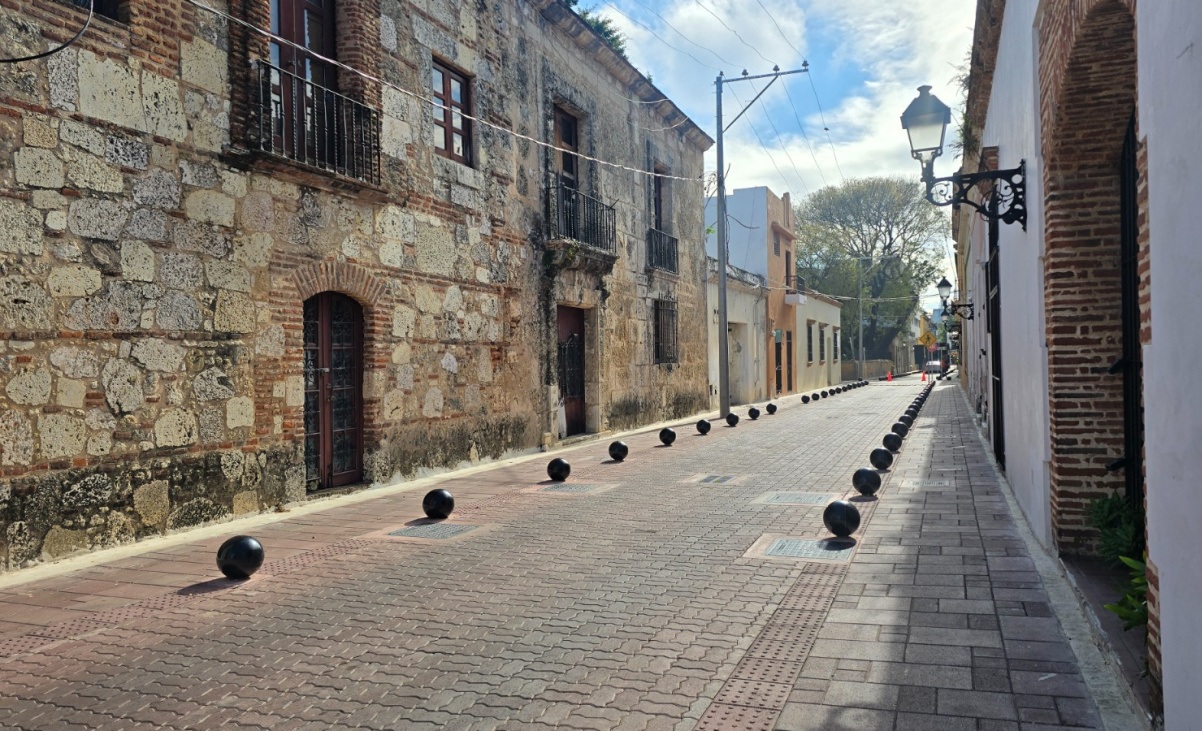
    Santo Domingo has unveiled plans for a groundbreaking public transportation initiative set to launch in early 2026. The government announced a new electric bus route specifically designed to serve the historic Ciudad Colonial district, marking a significant step in urban mobility enhancement and heritage area revitalization.

    The innovative transit solution will deploy a fleet of five fully electric buses along a 12.5-kilometer route featuring approximately 30 strategically placed stops. Sixteen stops will be situated within the historic zone’s core, while 14 additional stops will connect surrounding areas. Each vehicle incorporates universal design principles with capacity for 22 passengers, dedicated wheelchair spaces, and priority seating for elderly and mobility-impaired individuals.

    This new service will establish crucial connectivity between Ciudad Colonial and the Plaza de la Cultura while integrating seamlessly with Santo Domingo’s existing public transit network, including direct links to Metro Line 1 for broader metropolitan access. Operational management will be shared between local bus operators and the national transit authority.

    Government officials emphasize multiple anticipated benefits including enhanced accessibility to the historic center, reduced traffic congestion, decreased air and noise pollution, and improved mobility options for both residents and tourists. In a notable commitment to gender equity, the pilot project will feature an all-female driving workforce—surpassing initial targets of 60% female representation. All operators have received specialized eco-driving training.

    The transportation initiative forms part of comprehensive infrastructure rehabilitation efforts currently underway in the historic district, encompassing heritage facade restoration, street and public space renovations, and social housing improvements.


  • FLASH : First infos on international contributions to the GSF

    FLASH : First infos on international contributions to the GSF

    NEW YORK – Preliminary details have emerged regarding international commitments to Haiti’s Gang Suppression Force (GSF) following a pivotal December 9th coordination meeting at United Nations headquarters. While official confirmations remain pending, multiple nations have declared concrete support for the offensive security mission aimed at combating gang violence in the Caribbean nation.

    Substantial military contributions form the backbone of the international response. The Republic of Chad has committed 1,500 combat personnel, representing one of the largest single troop deployments. Five additional nations, whose identities remain confidential pending formal agreements, have collectively pledged over 3,000 military specialists to support the operation’s offensive capabilities.

    The multinational coalition includes diverse support from across the globe. Canada, France, Argentina, Benin, Burundi, The Gambia, Gabon, Djibouti, and the Dominican Republic have all announced various forms of assistance. Beyond troop deployments, participating nations have promised specialized mobile units, aerial surveillance assets, and naval support components to ensure comprehensive operational coverage.

    Financial backing for the mission has reached significant levels. Canada has reportedly committed $40 million in direct funding, while the Dominican Republic has pledged $10 million to the GSF Trust Fund alongside offering critical medical facilities for treating wounded personnel. Notably, Haiti itself will contribute $50 million to the mission through combined monetary and in-kind support, marking a substantial domestic investment in the security initiative.

    Participating nations have until February 2026 to formalize their commitments through detailed memoranda of understanding and operational agreements. The international response demonstrates growing consensus on addressing Haiti’s security crisis through coordinated multinational action with robust offensive capabilities.

  • Attorney General defends new criminal-procedure code as “most rights-guaranteeing in Ibero-America”

    Attorney General defends new criminal-procedure code as “most rights-guaranteeing in Ibero-America”

    SANTO DOMINGO – In a robust defense of the nation’s judicial overhaul, Dominican Attorney General Yeni Berenice Reynoso has positioned the newly implemented criminal-procedure reform as a landmark advancement for human rights. Declaring it the most protective legal framework in Ibero-America, Reynoso characterized opposition to Law 97-25 as emanating from entities with vested interests, including sectors affiliated with organized crime.

    The Attorney General refuted claims that the reform curtails due process, asserting instead that it fortifies judicial equity. A central point of contention involved attempts by critics to mandate private legal representation for filing complaints, a measure Reynoso argued would systematically disenfranchise economically vulnerable citizens from seeking justice.

    Reynoso clarified that the legislation does not expand the powers of the Public Prosecutor’s Office beyond their pre-2004 scope but rather refines procedural mechanisms. Key enhancements include extended deadlines for defense arguments, provisions for counter-expert evaluations, and the expanded application of plea agreements across all trial phases. Furthermore, the code introduces structured sentencing guidelines to promote legal predictability, enshrines a comprehensive charter of victims’ rights, and integrates stronger legal instruments to combat organized criminal networks.

    Emphatically challenging detractors, Reynoso invited scrutiny to identify any specific power granted to prosecutors that did not exist two decades ago. The reform took immediate effect upon promulgation, with prosecutors swiftly applying its statutes in active cases, notably in the high-profile ‘Operation Cobra’ corruption investigation.

  • Pringle Broke the Law With Impunity and Promoted Lawlessness, PM Says

    Pringle Broke the Law With Impunity and Promoted Lawlessness, PM Says

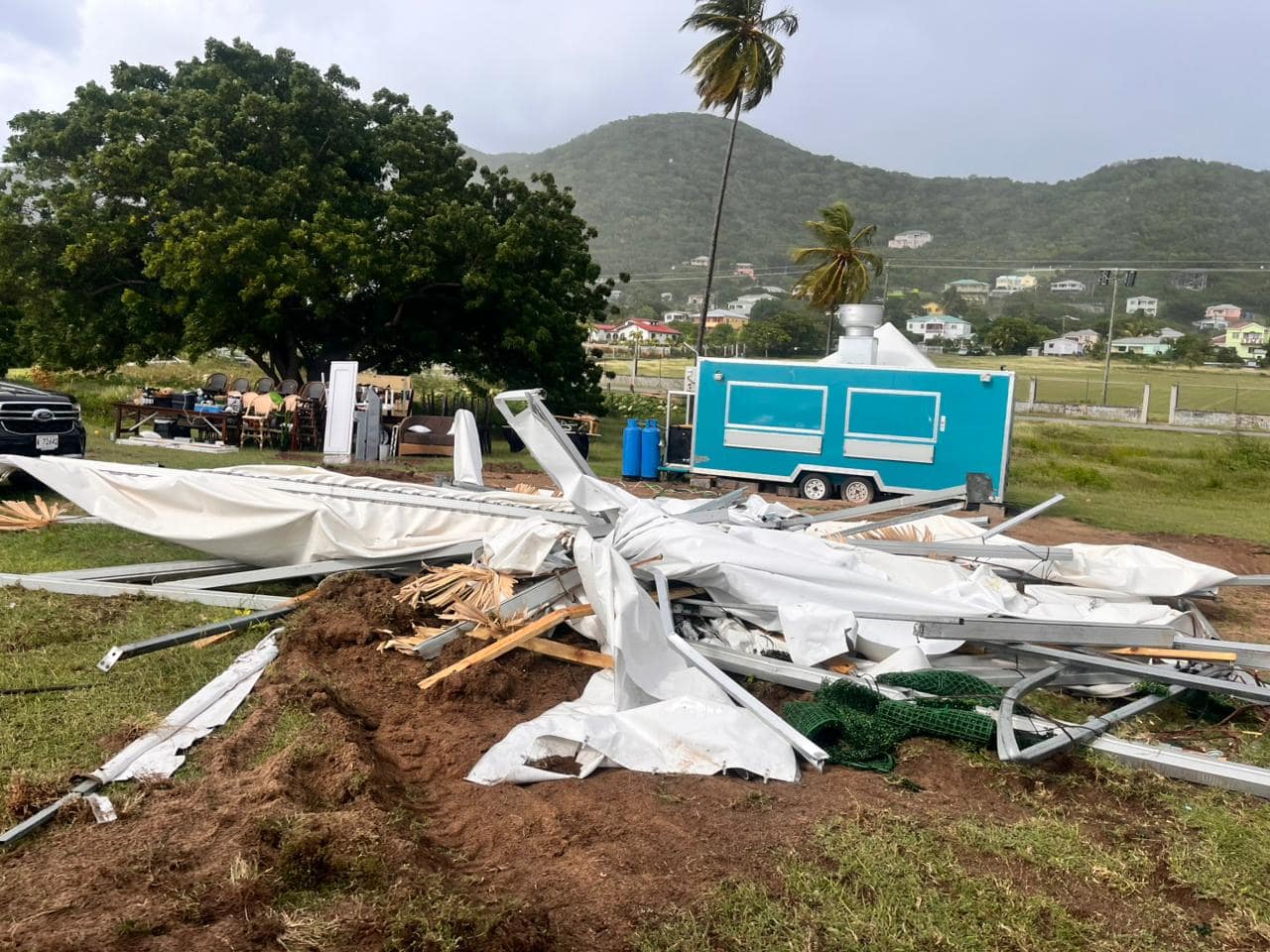
    Antigua’s political landscape witnessed a dramatic confrontation this week as Prime Minister Gaston Browne justified the abrupt removal of an unauthorized beachfront structure at Morris Bay, citing what he characterized as incendiary parliamentary remarks from Opposition Leader Jamale Pringle.

    The controversy ignited during Tuesday’s budget debate proceedings when Pringle publicly challenged authorities to dismantle the contested tent establishment. Mere hours following this parliamentary exchange, enforcement officers from the Development Control Authority executed the removal operation, which government officials maintain was part of ongoing efforts to regulate coastal constructions.

    Prime Minister Browne addressed the situation with firm rhetoric, asserting that Pringle’s parliamentary comments constituted an unacceptable provocation that undermined legal authority. “The consequences of refusing to comply with legal requirements while simultaneously threatening rebellion cannot be tolerated,” Browne stated. “One cannot be both legally non-compliant and confrontational toward authorities.”

    The Prime Minister elaborated that the vendor operating the structure had received multiple formal and informal notifications regarding the violation. “Despite repeated written and verbal warnings, the response was not cooperation but further threats of non-compliance,” Browne explained. “Given these circumstances, authorities had no alternative but to take decisive action.”

    Browne emphasized the broader implications of the incident for national policy enforcement, noting that Pringle’s challenge risked encouraging widespread non-compliance among other vendors. “This necessary enforcement action serves as a message regarding the importance of adhering to regulatory frameworks,” he commented.

    The Prime Minister contrasted this case with the government’s approach toward cooperative vendors, stating that operators who engage constructively with authorities would receive accommodating solutions. “For those willing to collaborate with regulatory bodies, we will employ measured approaches to reorganize and identify suitable alternative arrangements,” Browne affirmed.

  • Victim Speaks After Belize City Shooting

    Victim Speaks After Belize City Shooting

    A tranquil evening in Belize City turned into a scene of terror when gunshots rang out in the Lake Independence district on Tuesday night. The incident, occurring approximately at 7:30 PM near the intersection of M & J Street and La Croix Boulevard, resulted in three civilians sustaining injuries from the indiscriminate shooting.

    Among the victims was Julia Vialto, who provided a harrowing account of the sudden violence that disrupted her journey to a church service. ‘I observed an individual approaching on bicycle before another emerged from a side street,’ Vialto recounted. ‘Without warning, the explosive sound of gunfire filled the air. I instinctively dove for cover but sustained a bullet wound to my foot.’ The chaos that ensued remains fragmented in her memory, though she vividly recalls the compassion of neighbors who facilitated her urgent transport to medical facilities.

    The triage response transported all three victims—two adolescent males and the 60-year-old Vialto—to Karl Heusner Memorial Hospital for emergency treatment. Medical authorities have since discharged two patients while the third remains under clinical observation.

    In the aftermath, Vialto expressed profound trauma and growing apprehension about urban security. ‘This terrifying experience has left me profoundly shaken,’ she confessed. ‘We are living with constant fear as violence escalates uncontrollably. Authorities must implement stricter protective measures to prevent innocent civilians from paying the ultimate price.’

    Law enforcement agencies have coordinated a robust security response, deploying additional police units, Belize Defence Force soldiers, and GI3 officers to intensify neighborhood patrols. Despite these measures, investigators have not made any arrests related to the shooting, leaving residents anxious about ongoing threats to community safety.

  • Saint Lucian activists join global call to end online abuse

    Saint Lucian activists join global call to end online abuse

    Saint Lucia has emerged as a frontline responder in the global battle against digital violence, culminating its UN 16 Days of Activism with a Youth Awareness Fair at Derek Walcott Square on Human Rights Day. This grassroots initiative coincides with the Royal Saint Lucia Police Force’s innovative TikTok challenge launched Tuesday, designed to generate crucial dialogue about online abuse prevention.

    These local efforts align with this year’s international campaign theme ‘No Excuse for Online Abuse,’ running from November 25 to December 10, which addresses the escalating threats women and girls face in digital environments. The spectrum of digital violence ranges from harassment and coercion to invasive surveillance and deepfake exploitation, creating urgent safety concerns worldwide.

    Alarming UN statistics reveal that gender-based violence affects one in three women during their lifetime. Digital violence impacts between 16-58% of women and girls, with an estimated 90-98% of malicious deepfake content featuring non-consensual sexual imagery targeting females.

    The UN emphasizes that while digital harm occurs online, its consequences manifest in tangible reality—silencing journalists through threats, forcing activists to abandon platforms, undermining girls’ confidence, and in extreme cases, leading to physical violence including stalking, rape, and murder.

    This crisis intensifies as funding cuts force women’s organizations globally to reduce or terminate anti-violence programs. Saint Lucia’s community-driven response demonstrates how local initiatives are bridging this critical gap.

    The police department’s TikTok challenge invites 30-60 second awareness videos, offering laptop prizes for participants under 18 and $500 cash awards for adults. Complementing these efforts, the UN has published a comprehensive safety guide ‘Explainer: Online Safety 101 – What Every Woman and Girl Should Know’ available at unwomen.org, detailing digital abuse forms, warning signs, and protective measures.

  • “All of this lee-bit-lee-bit, it’s putting more money in Belizean people pockets”

    “All of this lee-bit-lee-bit, it’s putting more money in Belizean people pockets”

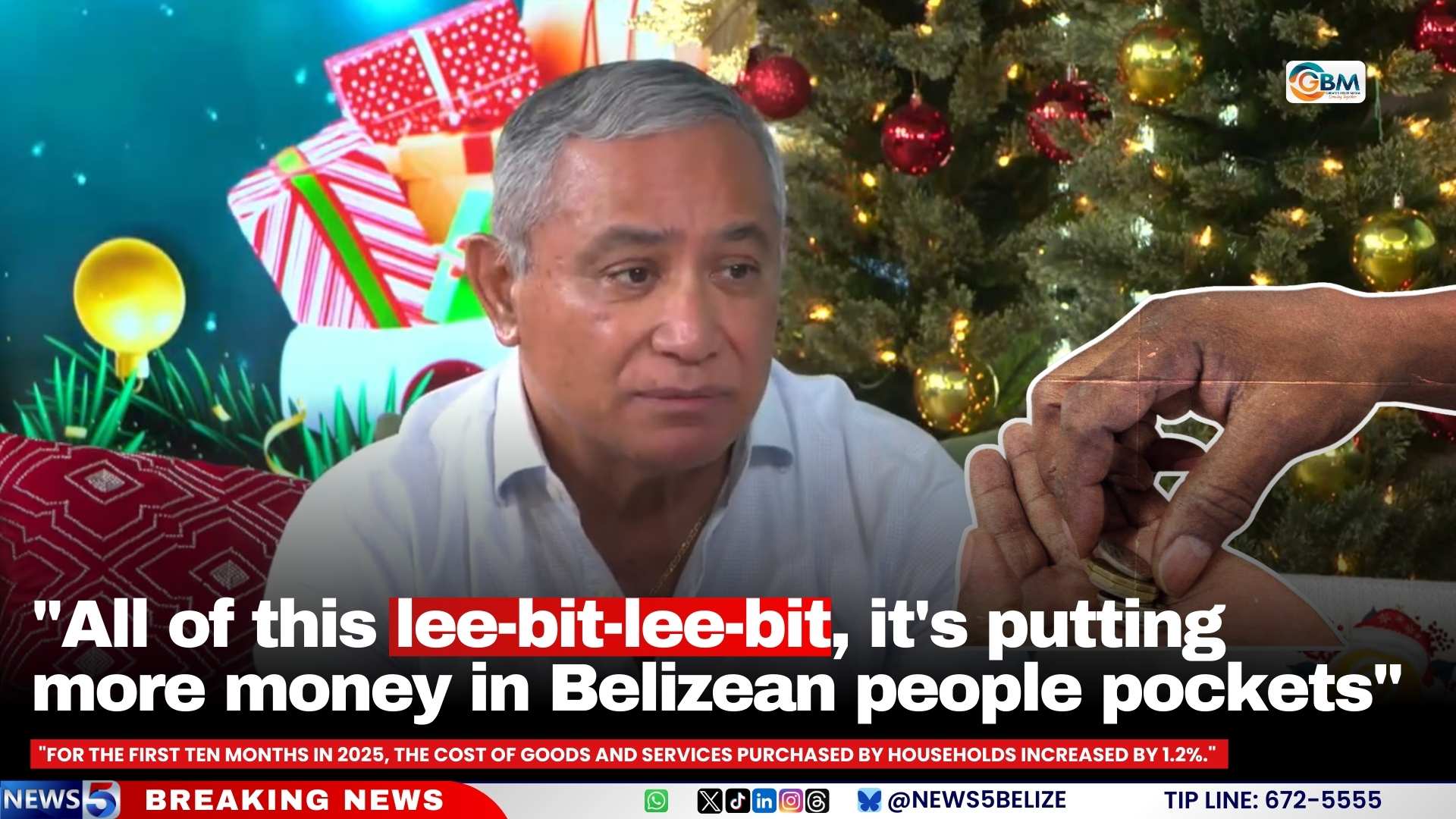
    Belizean Prime Minister John Briceño has publicly countered opposition criticism regarding the nation’s escalating cost of living, defending his administration’s economic measures during a recent appearance on the ‘Open Your Eyes’ program. The United Democratic Party (UDP) has intensified its critique of government policies, claiming many citizens are experiencing severe financial strain from rising prices.

    Prime Minister Briceño acknowledged the inflationary pressures affecting imported goods while emphasizing his government’s multifaceted approach to alleviate economic burdens on citizens. ‘We understand the issue of the cost of goods, but we do not have control of it. These goods are imported,’ Briceño stated, redirecting focus toward his administration’s proactive interventions.

    The government’s economic relief strategy includes several key initiatives: implementation of a higher national minimum wage, expansion of scholarship programs, provision of meals for approximately 15,000 schoolchildren, and free education access for tens of thousands of students. Additionally, the administration has significantly broadened National Health Insurance coverage, now serving about 22,000 Belizeans at minimal cost.

    Briceño highlighted targeted tax relief measures including GST-free weekends during Christmas and back-to-school periods, characterizing these incremental benefits as collectively ‘putting more money in Belizean people pockets.’

    Contrasting this optimistic assessment, UDP Second Deputy Miguel Guerra presented a starkly different perspective during a press conference, asserting that everyday expenses—particularly grocery costs—have reached unsustainable levels for many households. Guerra emphasized that the cost of living crisis represents an urgent reality that cannot be overlooked by policymakers.

    New data from Belize’s Statistical Institute indicates a 1.2% increase in household goods and services costs during the first ten months of 2025 compared to the same period in 2024, providing statistical context to the ongoing economic debate.

  • DCA Says Morris Bay Enforcement Was Years in the Making, Not a Targeted Crackdown

    DCA Says Morris Bay Enforcement Was Years in the Making, Not a Targeted Crackdown

    The Development Control Authority (DCA) of Antigua and Barbuda executed enforcement operations at Morris Bay Beach on December 10, 2025, marking a significant step in upholding national planning regulations. This action forms part of a sustained initiative to maintain compliance with the Physical Planning Act of 2003, focusing on the preservation of public safety, environmental conservation, and orderly development along the nation’s coastline.

    Since 2019, numerous unauthorized commercial operators occupying the Morris Bay beachfront have received multiple formal notifications regarding their regulatory violations. These communications—delivered both verbally and in writing—explicitly instructed vendors to either cease operations or seek official regularization through established national planning procedures.

    The DCA emphasizes three critical aspects of this enforcement campaign: First, the initiative is not directed at any specific individuals or groups but applies uniformly to all non-compliant operators. Second, violation notices were issued consistently and transparently over several years, providing ample opportunity for compliance. Third, all actions are strictly aligned with the Physical Planning Act and national development frameworks.

    This coastal restoration effort aims to rehabilitate the natural environment, enhance public safety measures, and ensure that beachfront activities align with national planning policies and broader public interests. The DCA reaffirms its commitment to collaborative engagement with all stakeholders and encourages current or prospective operators on public lands to consult with the Authority for guidance on obtaining necessary approvals.

  • Court orders psychiatric treatment for man who threatened Dominican president Abinader

    Court orders psychiatric treatment for man who threatened Dominican president Abinader

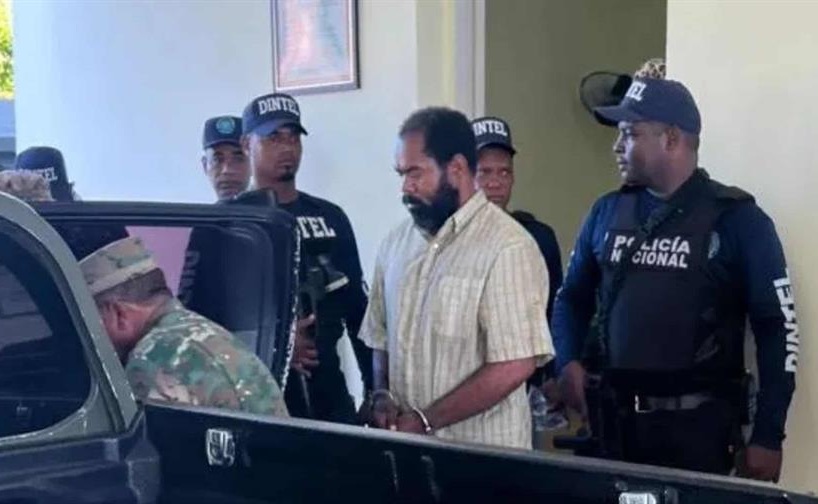
    A Dominican court has mandated psychiatric intervention and financial guarantees for a man who issued violent threats against President Luis Abinader in a widely circulated social media video. The Judicial District of El Seibo delivered the ruling on Wednesday following a preliminary hearing that prioritized the defendant’s mental health assessment.

    Identified as Héctor Julio Mercedes Rodríguez, the individual was taken into custody last Friday after posting a video that allegedly showed him brandishing a high-caliber weapon while making explicit threats against the nation’s leader. The footage rapidly gained traction across digital platforms, prompting immediate law enforcement response.

    The court’s disposition requires Mercedes Rodríguez to undergo a six-month psychiatric treatment program at Teófilo Hernández Provincial Hospital. Additionally, he must post bond amounting to RD$100,000 (approximately US$1,700) and remain under continuous family supervision throughout his therapeutic regimen.

    Legal representative Alberto Mercedes Ruiz presented medical documentation indicating his client has battled a degenerative condition since 2022, resulting in significant anxiety and psychological disturbances. The defense successfully argued that these mitigating circumstances warranted rehabilitative measures rather than incarceration.

    While the Public Prosecutor’s Office maintains an active investigation, the judicial outcome demonstrates an attempt to balance public safety concerns with appropriate mental health considerations. The accused currently remains at liberty under strict conditions requiring periodic medical evaluations and ongoing judicial monitoring as proceedings continue.

  • PM Claims No Role in BTL Buyout of Speednet

    PM Claims No Role in BTL Buyout of Speednet

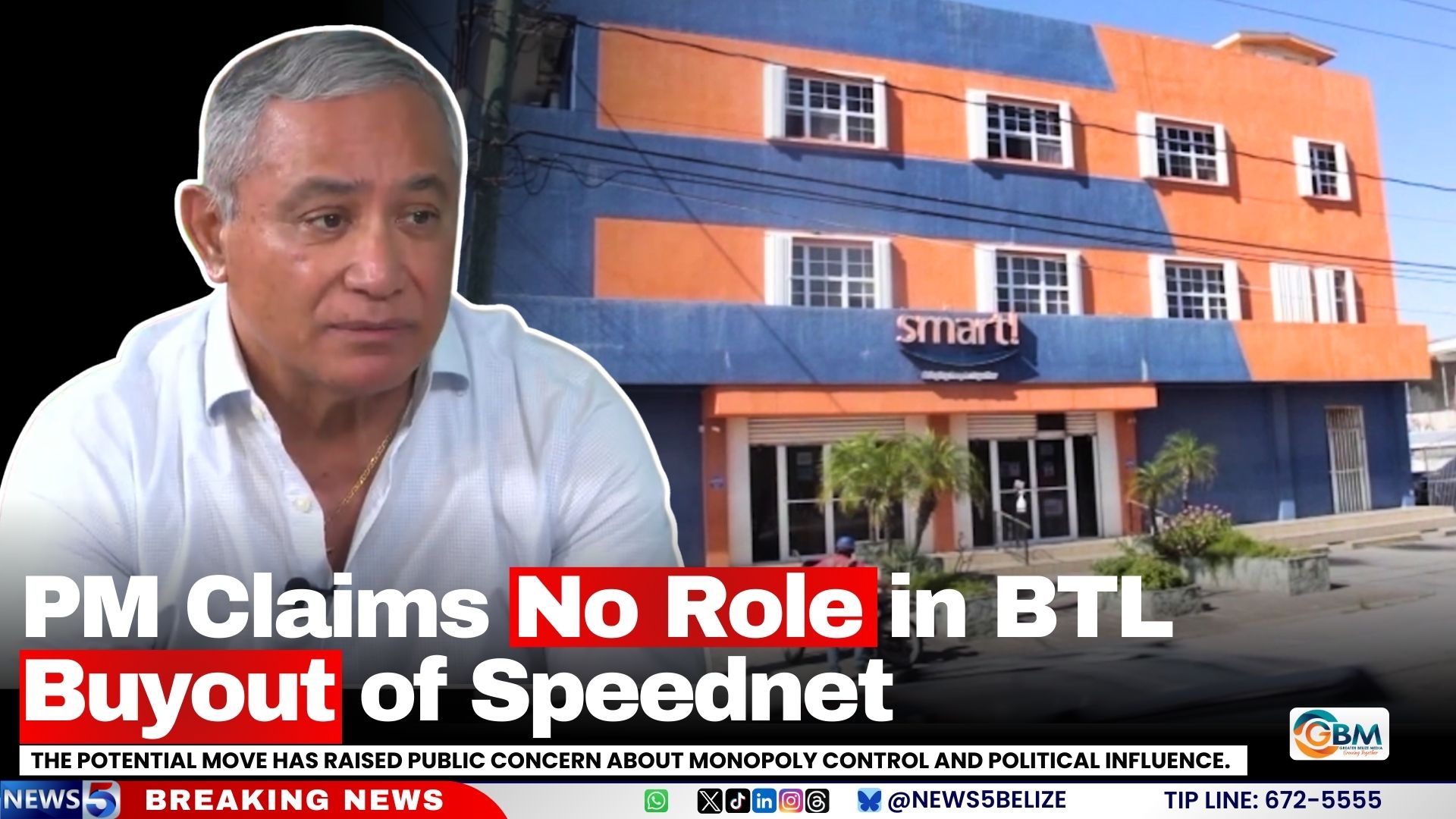
    BELIZE CITY – Prime Minister John Briceño has publicly addressed growing concerns regarding potential monopoly formation in Belize’s telecommunications sector, following revelations that government-owned Belize Telemedia Limited (BTL) is considering acquiring Speednet Communications and multiple cable providers.

    Speaking on December 10, 2025, PM Briceño firmly rejected suggestions that his family connections to Speednet created a conflict of interest, stating: “Belize is a small country. I have never lived off my government salary. I do investments with my family. I do not have any direct investments with Speednet, so I have none. It’s my brother.”

    The Prime Minister emphasized that despite BTL being 95% government-owned, the company operates under a commercial structure. “As a private company, we allow them to manage the company and make whatever decisions they believe are in the company’s best interest. I am not involved in that discussion. I’ve stayed away from that,” Briceño clarified.

    The situation has gained complexity since June, when Speednet—parent company of SMART—was granted judicial review permission to challenge the Government of Belize. The legal dispute centers on two “ConnectED” contracts awarded to BTL for providing internet services to schools, which Speednet claims should have undergone competitive tender processes as required by the Finance and Audit (Reform) Act for contracts exceeding $5 million.

    Public apprehension now focuses on the prospect of a single dominant provider controlling mobile, internet, and cable services nationwide. PM Briceño identified the Public Utilities Commission (PUC) as the primary regulatory safeguard, noting: “The PUC regulates. The PUC has to set the rates. BTL, BEL, and BWS just can’t set any rates as they wish.” He added that the PUC “will have to become even more vigilant in ensuring that the rates being set will not be taking advantage of the Belizean public.”