博客

  • Three Years Later, State to Compensate Families of Crash Victims

    Three Years Later, State to Compensate Families of Crash Victims

    In a landmark ruling three years after a devastating highway accident, the High Court of Belize has determined that the government holds primary liability for the tragic collision that claimed the lives of two young students. The incident occurred on October 11, 2022, near Ranchito Village, when a taxi van carrying students from Centro Escolar Mexico Junior College collided head-on with an ambulance. The crash resulted in eleven injuries and the immediate death of 21-year-old Jorge Vargas. Seventeen-year-old Jaheem Williams succumbed to his injuries two months later.

    Justice Lisa Shoman Nabi, presiding over the case, concluded that while all three drivers involved shared some responsibility, the ambulance driver and the state bore the majority of the blame. The court noted that the ambulance’s emergency lights and sirens were not activated at the time of the accident. The ambulance, driven by Louis Canelo, was reportedly attempting to overtake a truck en route to the Northern Regional Hospital when the collision occurred.

    In the aftermath of the tragedy, the school honored Vargas by erecting a memorial altar and planned to award his family an honorary associate degree. The court’s ruling now mandates the Belizean government to provide compensation to the families of the victims, marking a significant step toward accountability and justice for the affected families.


  • Caribbean Centre for Child Neurodevelopment launches fatherhood programme

    Caribbean Centre for Child Neurodevelopment launches fatherhood programme

    A groundbreaking initiative in Grenada, titled ‘Coaching4Dads,’ is set to tackle the root causes of crime and violence by focusing on the emotional development of young fathers. Spearheaded by the Caribbean Centre for Child Neurodevelopment (CCCN) and funded by the Government of Canada through the Canada Fund for Local Initiatives (CFLI), this 16-week pilot project will conduct workshops and group sessions in St. David and St. George’s. Unlike traditional parenting programs that predominantly target mothers, Coaching4Dads shifts the spotlight to fathers, a group often overlooked in early childhood development discussions. The program will engage 24 men who are fathers of young children (ages 0–3), equipping them with the knowledge, skills, and coaching support needed to parent with empathy, confidence, and non-violence. Modeled after the successful Saving Brains Grenada (SBG) framework, this initiative aims to foster physically and emotionally healthy children while breaking generational cycles of violence. Jerry Bascombe, a seasoned Conscious Discipline Coach in Grenada, leads the program, which arrives at a crucial time as the nation grapples with rising violence among young males and increasing father absence in families. Stephanie Sprott, Political Counsellor at the High Commission of Canada to Barbados and the Eastern Caribbean, emphasized Canada’s commitment to supporting fathers as a cornerstone for safer societies. ‘Investing in strong households is investing in national security,’ she stated. ‘When men are supported to be present, emotionally healthy caregivers, we expect stronger households, more resilient communities, and fewer young people drawn into cycles of crime and violence.’ The workshops will cover emotion regulation, mental health, positive discipline strategies, child development, and creating safe, nurturing environments. The long-term goals of Coaching4Dads are ambitious yet essential, aiming to improve fathers’ mental health and parenting confidence, reduce corporal punishment and intimate partner violence, strengthen emotional bonds between fathers and children, and shift cultural perceptions of fatherhood and masculinity in Grenada. The project is part of a broader effort to reduce family-based violence and enhance developmental outcomes for young children in the region.

  • Who stands to lose?

    Who stands to lose?

    The 2025 election in St. Vincent is not just another political event; it is a historic moment that lays bare the stark inequalities within the nation. For 25 years, a significant portion of the population has struggled to make ends meet, with opportunities flowing disproportionately to a privileged few. This select group, comfortably ensconced in their green pastures, has reaped the benefits of multiple jobs, real estate advantages, and exclusive opportunities, while the majority has been left to survive on the scraps tossed their way. The prospect of change threatens the lifestyle these elites have enjoyed for decades, and they are prepared to take extreme measures to preserve it. However, the tide is turning. Vincentians are awakening, no longer blinded by propaganda or fear. They are thinking collectively, not just individually. On election day, it will be clear who stands to lose: not the struggling single mother, the young graduate, the farmer, or the nurse, but the fattened cows on the green pasture who refuse to share the field. The people of St. Vincent are done groveling for scraps; they are ready to rise, eat well, and prosper. The battle is not against flesh and blood but against the principalities and powers in high places. The question echoing across the nation is: who, exactly, stands to lose? The answer is clear: it will not be the people.

  • Open letter to National Bank of Dominica: Recommendations on ways to improve the MoBanking experience

    Open letter to National Bank of Dominica: Recommendations on ways to improve the MoBanking experience

    In a recent social media post on June 8th, 2024, Grayson J. Stedman Jr., a Business Technology Solutions Consultant at Eclypse Technologies, shared a series of recommendations aimed at improving the MoBanking experience offered by the National Bank of Dominica Ltd (NBD). The post garnered significant attention, receiving over 200 reactions, 100 comments, and 70 shares, though NBD has yet to respond. Stedman’s suggestions focus on streamlining user interactions and expanding the app’s functionality, particularly for businesses and individual users. Key recommendations include enabling QR code generation and scanning for peer and merchant additions, eliminating redundant Mobile ID entries during peer transactions, and enhancing transaction details to include sender account numbers and names. Additionally, Stedman proposed integrating real-time notifications for account activities and developing a Point-of-Sale (POS) feature to facilitate faster and more secure transactions. He emphasized the potential for NBD to collaborate with local IT experts or existing POS providers to implement these features, leveraging the bank’s technical expertise while addressing its resource constraints. These improvements, if adopted, could significantly enhance MoBanking’s usability and appeal, particularly for small businesses and self-employed individuals who rely on the platform for financial transactions.

  • Independent Stanley Felix outlines plans to revive Castries Central

    Independent Stanley Felix outlines plans to revive Castries Central

    Stanley Felix, former President of the Senate and independent candidate, officially kicked off his campaign season with a public meeting in New Village on Tuesday night. Under the banner ‘Serving People, Stirring Change,’ Felix unveiled his comprehensive plans to address key social issues in Castries Central, including improved housing access, support for single mothers, and government-sponsored bus passes for schoolchildren. Felix, who announced his independent candidacy on October 13 via DBS Television, is making a political comeback after narrowly losing the Castries Central seat in 2011. This time, he will face Richard Frederick, now representing the Labour Party, and Rosh Clarke of the United Workers Party (UWP), both running as independents. Felix emphasized that his decision to re-enter politics stems from a commitment to directly serve the people and tackle long-standing challenges in the constituency. He pledged to make land more accessible for young families, enabling them to build stable lives. Additionally, Felix proposed a government-funded bus pass program for schoolchildren, addressing the financial burden on parents. He also highlighted the struggles of single mothers, promising to introduce social programs and after-school workshops to empower them. Reflecting on Castries Central’s past as a thriving hub of sports, culture, and talent, Felix vowed to restore its vitality and urged residents to join his ‘Orange Movement’ for transformative change.

  • A Donald Trump in St. Vincent and the Grenadines?

    A Donald Trump in St. Vincent and the Grenadines?

    Vincentians, much like people worldwide, hold strong and often polarized views on former U.S. President Donald Trump. Given the significant Vincentian diaspora in North America, these opinions are shaped by both local and global contexts. Trump’s presidency, marked by controversy and unconventional leadership, has sparked reflections on what a ‘Vincy Donald Trump’ might resemble. This analysis delves into key aspects of Trump’s tenure, drawing parallels to familiar leadership traits observed in Vincentian society.

    Trump’s presidency was marred by numerous allegations of sexual misconduct, with multiple women coming forward to accuse him of assault. This pattern of behavior, coupled with recorded instances of disparaging remarks about women, raises questions about respect and accountability in leadership. Such conduct, while shocking to some, may resonate with Vincentians who have witnessed similar dynamics in their own political landscape.

    Another notable feature of Trump’s administration was the appointment of family members to key government positions, leading to accusations of nepotism. This concentration of power within a familial circle mirrors practices that some Vincentians may recognize in their own governance structures.

    Trump’s involvement in the Epstein scandal, though not fully disclosed, has raised eyebrows. His party’s efforts to block the release of related files suggest a potential misuse of influence to protect allies. This tactic of shielding information from the public may strike a chord with Vincentians familiar with opaque political maneuvers.

    During his presidency, Trump frequently blamed Democrats for government shutdowns, despite his party’s control of Congress. This deflection of responsibility is a strategy that some Vincentians may find reminiscent of local political rhetoric.

    Trump’s 2024 campaign, which focused heavily on the age of his opponent, Joe Biden, despite his own advanced years, highlights a tendency to project criticism onto others. This tactic of deflecting scrutiny may resonate with Vincentians who have observed similar political strategies.

    Finally, Trump’s call for supporters to protest on January 6, 2021, and the subsequent push for a third term, underscore his relentless pursuit of power. This ambition, even at the cost of democratic norms, may mirror leadership behaviors familiar to Vincentians.

    In conclusion, the parallels between Trump’s leadership and certain traits observed in Vincentian politics invite reflection on the nature of power, accountability, and governance. As Vincentians critique Trump, they are also prompted to examine their own political landscape with a critical eye.

  • Gov’t announces commencement of potato season and arrival of seeds

    Gov’t announces commencement of potato season and arrival of seeds

    The Ministry of Agriculture, Fisheries, Blue and Green Economy has unveiled plans for an early start to the 2025/26 white potato planting season. This initiative follows the arrival of a significant shipment of seed potatoes on the island, comprising 1,160 bags of two high-yielding varieties: Desiree and Spunta. The seeds, imported to bolster local agricultural output, will first undergo rigorous testing by the Division of Agriculture’s Plant Quarantine Unit to ensure they meet stringent quality standards and are free from diseases. Upon successful inspection, the seeds will be made available for purchase starting mid-November 2025. The Ministry has also committed to releasing detailed pricing and package information soon, which will include seeds, agro-chemicals, inputs, tilling services, and transportation. Planting is slated to occur from December 2025 through January 2026, with harvests expected between March and April 2026, approximately 90 to 110 days post-planting. To streamline the process, the Ministry is encouraging farmers and cooperative members to pre-register with their Extension Officer or at local Farmer Service Centres to secure necessary inputs and technical support. Agriculture officials emphasize that white potatoes remain a profitable short-term crop with strong market demand, urging farmers to capitalize on this opportunity to enhance local production and income. For further details, interested parties can contact the Main Office Division of Agriculture at Vanoulst House, Goodwill Road, or via phone at 266-3994/3807/3271.

  • Police defend decision to deny UPP permission for political event

    Police defend decision to deny UPP permission for political event

    The Royal Police Force of Antigua and Barbuda has officially denied a request from the United Progressive Party (UPP) to conduct a whistle stop event in the Constituency of Rural East. The decision, announced on Wednesday, 12th November 2025, was based on a thorough evaluation of operational and security concerns, including the proposed timing, which overlapped with peak traffic periods and raised potential safety issues. Despite the denial, the Police Administration approved a motorcade event scheduled for Sunday, 16th November 2025, following a prior application by the UPP. Formal approval was communicated to the UPP General Secretary on Tuesday, 11th November 2025. Acting Commissioner of Police Everton Jeffers emphasized the force’s commitment to maintaining public safety and order, stating that all decisions are guided by safety considerations and the efficient allocation of police resources. He called for continued cooperation from citizens and organizations to ensure a peaceful environment. The Police Administration reaffirmed its dedication to fairness, professionalism, and integrity in serving the citizens and residents of Antigua and Barbuda.

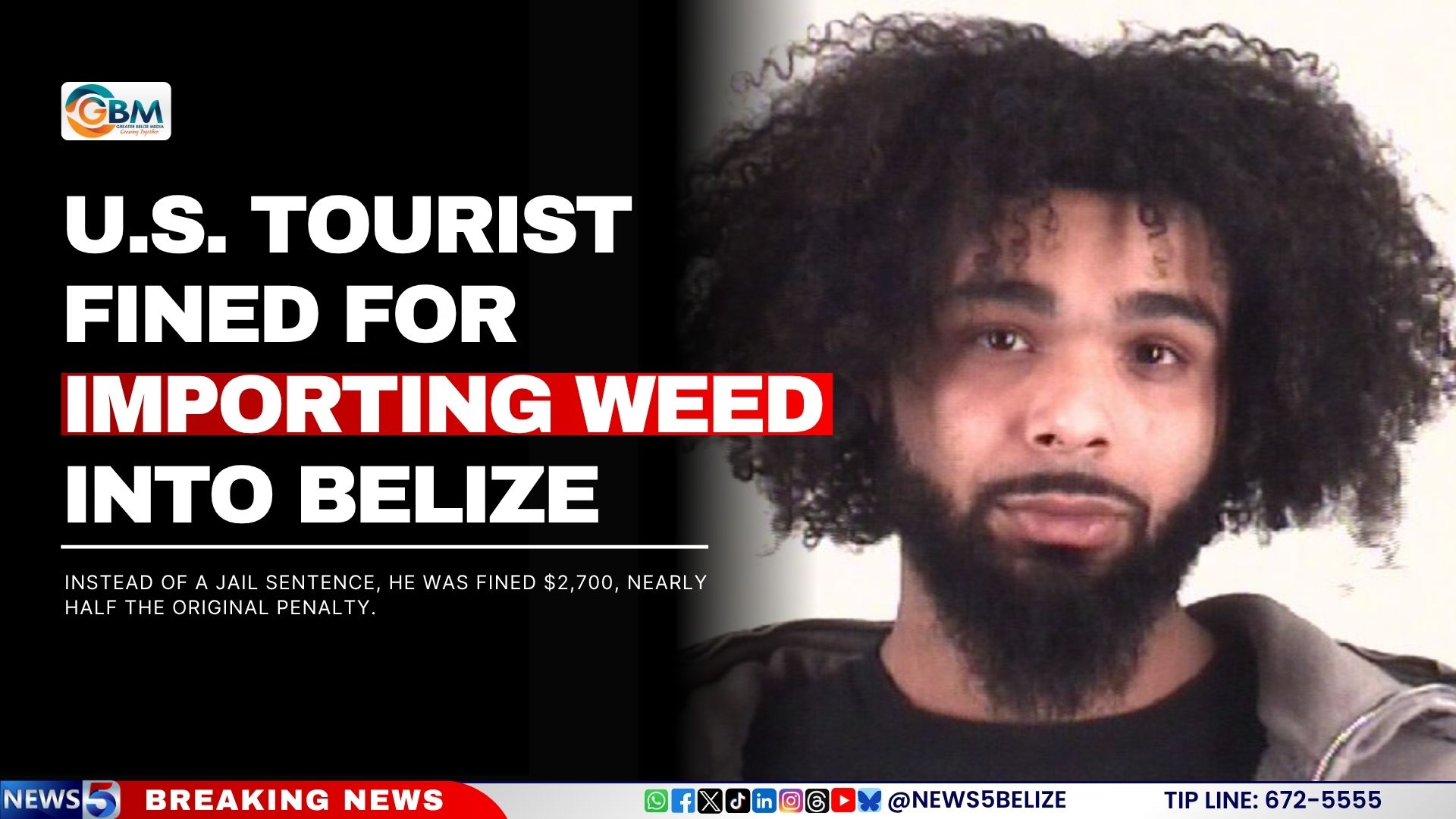
  • U.S. Tourist Fined for Importing Weed into Belize

    U.S. Tourist Fined for Importing Weed into Belize

    A 25-year-old American entertainer’s vacation in Belize took an unexpected turn when customs officials discovered marijuana in his luggage upon arrival. Elijah Quartey Mack, a Texas native, landed at Philip Goldson International Airport on Monday via a Delta flight from Atlanta. During a routine baggage inspection, officers uncovered three vacuum-sealed bags of cannabis, totaling just over a quarter pound.

    The following day, Mack appeared before a senior magistrate without legal representation. He entered a guilty plea, expressed remorse, and clarified that he had no intention of disrespecting Belizean laws, acknowledging the differing marijuana regulations between the U.S. and Belize. While recreational cannabis is legal in some U.S. states, Texas, Mack’s home state, maintains strict prohibitions against possession of any amount. Even in Atlanta, where his journey began, only small quantities (less than an ounce) have been decriminalized.

    Rather than facing jail time, Mack was fined $2,700, a reduction from the original penalty. He promptly paid the fine and was released the same day. The incident highlights the importance of understanding and adhering to local laws when traveling internationally.

  • Chief Election Officer says voter confirmation process ‘going well’ thus far

    Chief Election Officer says voter confirmation process ‘going well’ thus far

    Chief Election Officer Anthea Joseph has announced that more than 4000 individuals have applied for voter confirmation since the process commenced on October 15, 2025. Speaking during a recent statement, Joseph expressed satisfaction with the progress, acknowledging minor issues that have arisen but emphasizing that they are being addressed promptly. She highlighted the importance of appropriate attire for photo identification at the confirmation centers, explicitly prohibiting hats, sunglasses, and headbands. Despite rumors and negative comments circulating on some radio stations and within communities, Joseph noted that many applicants have reported a smooth and transparent process. She encouraged individuals, including those who cannot read or write, to participate without hesitation, assuring them of assistance from enrollment officers. Joseph underscored the significance of the confirmation process, stating that it is a democratic right and a prerequisite for inclusion on the new voters list. She warned that failure to confirm would result in exclusion from future electoral processes in Dominica, stressing the necessity of a voter ID card for participation in upcoming elections.