博客

  • Attorney General Suggests The Need for A Senate Should Be Reviewed in Constitutional Reform Push

    Attorney General Suggests The Need for A Senate Should Be Reviewed in Constitutional Reform Push

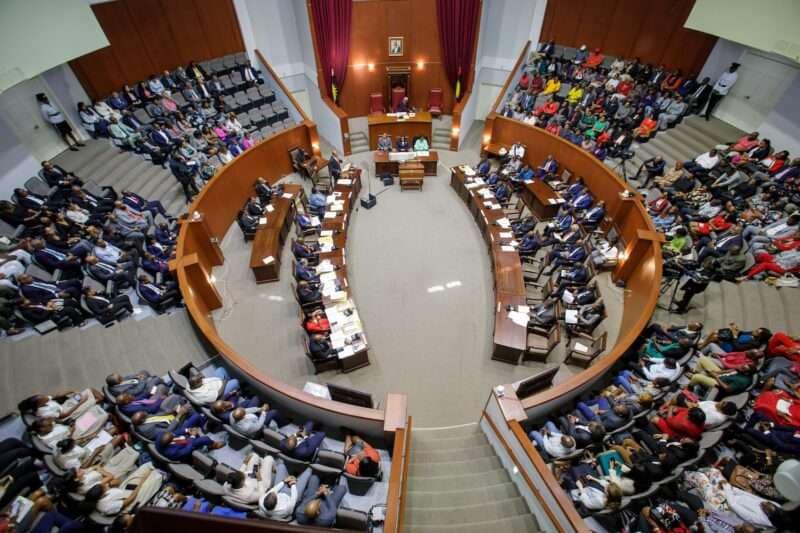
    Antigua and Barbuda’s Attorney General Sir Steadroy “Cutie” Benjamin has ignited a constitutional debate by questioning whether the nation’s Senate remains necessary for effective governance. During parliamentary proceedings on Tuesday, Benjamin challenged longstanding political structures, suggesting the country should consider transitioning to a single-chamber parliamentary system.

    The senior legal official contrasted the theoretical role of upper chambers with Caribbean realities, noting that while senates in systems like Britain’s serve to review legislation and provide corrective guidance, this ideal has not materialized in the regional context. “In the Caribbean, it is not exactly the case,” Benjamin observed, referencing regional discussions about eliminating senates entirely, as occurred in Dominica.

    Benjamin’s remarks form part of a comprehensive push for constitutional modernization that has been delayed for decades. He emphasized that no institution should be immune from scrutiny in serious constitutional reviews, framing the issue as one of national maturity rather than partisan politics. While not explicitly calling for immediate abolition, the Attorney General made clear that the Senate’s relevance and functionality warrant thorough examination.

    This Senate debate occurs alongside other proposed constitutional changes, including transitioning to a republic status, modifying oaths of allegiance, and acceding to the Caribbean Court of Justice. Benjamin urged Parliament to initiate formal discussions under constitutional reform provisions, asserting that the time has come for proper review of the nation’s foundational document.


  • Island Supermarket Targeted in Apparent Arson

    Island Supermarket Targeted in Apparent Arson

    A recently inaugurated Island Supermarket in San Pedro Town’s Tres Cocos district became the target of a deliberate arson assault in the predawn hours of Sunday. The establishment, which had commenced operations merely 72 hours prior, was violated between 3:00 and 4:00 a.m. by unidentified perpetrators.

    According to preliminary investigations, the assailants executed a methodical attack. After gaining unlawful entry, they assembled a shopping cart, intentionally ignited its contents, and propelled the flaming cart into store shelving before fleeing the scene. Notably, authorities confirmed no merchandise was stolen during the incident, indicating destruction rather than theft as the primary motive.

    Emergency services, including police and fire response teams, promptly answered distress calls regarding the blaze. Preliminary assessments confirm no casualties resulted from the fire, though official damage evaluations remain ongoing as law enforcement continues their investigation into this calculated act of property destruction.

  • Attorney General Says Time Has Come for Antigua and Barbuda to Become a Republic

    Attorney General Says Time Has Come for Antigua and Barbuda to Become a Republic

    In a landmark parliamentary address, Antigua and Barbuda’s Attorney General Sir Steadroy “Cutie” Benjamin has formally advocated for initiating national discourse on transitioning to a republican form of government. The senior legal official asserted that the nation’s developmental progress and historical context necessitate completing its separation from the British monarchy.

    Benjamin presented a compelling historical narrative, detailing how the Caribbean nation endured over three centuries of colonial administration before attaining independence in 1981. “From the mid-17th century until 1967, we existed under colonial governance,” he reminded legislators, emphasizing that while independence represented crucial progress, true sovereignty remains incomplete while pledging allegiance to a foreign monarch.

    The Attorney General challenged parliamentary members to examine regional attitudes toward sovereignty, posing the provocative question: “Have we in this region grown complacent regarding our independence?” He vigorously countered assertions that the nation lacks preparedness for such constitutional evolution, highlighting the substantial legal expertise within the Ministry of Legal Affairs and enumerating the advanced qualifications of senior judicial officials.

    Benjamin directed his appeal specifically to Prime Minister Gaston Browne, urging immediate action rather than continued postponement. “At minimum, we must initiate these conversations,” he insisted, advocating for comprehensive discussions about national self-determination.

    The push for republican status forms part of broader constitutional reform initiatives, with Benjamin emphasizing that this transition should coincide with addressing other longstanding constitutional matters. “Our Constitution requires substantial revision,” he concluded, framing the republican movement as both a natural evolution and professional obligation in his capacity as the nation’s chief legal officer.

  • Calls for Action Mount Once More Over Abused Horses

    Calls for Action Mount Once More Over Abused Horses

    A fresh wave of public indignation has swept through Belize City following the emergence of distressing images depicting abused horses, reigniting demands for comprehensive animal welfare reforms. The latest incident, publicized during a rain-drenched weekend, showcased photographs of equines in visibly deteriorated health—including one specimen lying incapacitated with severe leg injuries.\n\nAnimal rights advocate Michelle Rudon has amplified her longstanding campaign for urgent intervention, issuing a stark online appeal condemning the pervasive mistreatment. \”Horses do not belong here, being raced on scorching concrete streets and being beaten and starved daily,\” Rudon asserted, emphasizing the urgency for municipal authorities to enact protective measures. Her statements reflect years of frustration over recurrent abuse reports, noting multiple fatalities among malnourished and overworked animals.\n\nThis crisis previously reached formal political channels during a May 2025 City Council Regular Meeting, where Councillor Kaya Cattouse presented residents’ concerns regarding underage riders exploiting underfed and injured horses. The deliberations included a grim account of a discovered horse carcass requiring municipal removal. Cattouse proposed multilayered solutions involving welfare inspections, police collaboration, ownership registration protocols, and public awareness initiatives.\n\nWhile Mayor Bernard Wagner acknowledged the severity of the situation, he indicated jurisdictional limitations, stating the matter \”does not fall directly within the council’s mandate.\\” Instead, his administration advocated for stakeholder consultations and educational campaigns through the council’s public relations channels. The City Administrator confirmed ongoing coordination with public health officials, veterinarians, and the Humane Society to address the complex issue.\n\nThe persistence of these incidents highlights systemic challenges in animal protection enforcement, with advocates now demanding tangible progress beyond bureaucratic discussions.

  • The Dominica Calypso Association publishes results of December 13 Calypso Eliminations show

    The Dominica Calypso Association publishes results of December 13 Calypso Eliminations show

    ROSEAU, DOMINICA – The Dominica Calypso Association has officially released the roster of artists progressing to the next stage of the national competition following a decisive elimination show held on December 13, 2025. The announcement marks a pivotal moment in the island’s prestigious cultural calendar, setting the stage for the upcoming performances.

    The twelve qualifying calypsonians, announced in a randomized listing to maintain competitive impartiality, are: Haxey, Jerd, Mighty D, Royette, Sandy, Mystrie, Jamma B, Liberator, Redz, Mighty Omee, Kalpha P, and Inoah. This diverse group of performers will now advance to compete for the highly coveted calypso crown.

    Furthermore, the Association has designated three reserve artists to ensure the seamless continuation of the competition should any unforeseen circumstances arise. The reserve performers, listed in order of priority, are Myka, Lulu, and Nini. This structured approach highlights the organization’s commitment to a well-managed and professional event series.

    The calypso elimination show is a traditional and critical fixture in Dominica’s entertainment landscape, serving as a platform for artistic expression and social commentary through music. The Association has encouraged public engagement and inquiries, providing dedicated contact numbers (1-767-235-0573 and 1-767-618-3794) for further information on the event schedule and ticket availability.

  • Broken Bottle Attack Sparks Debate Over Alcohol Consumption

    Broken Bottle Attack Sparks Debate Over Alcohol Consumption

    A violent familial altercation in San Antonio Village, Toledo District, has culminated in the detention of a 27-year-old woman following a brutal attack on her two brothers with a broken bottle in the early hours of Sunday, December 15th, 2025. The incident, now under active investigation by local police, has ignited a fervent public discourse on the societal impact of alcohol consumption.

    According to official reports, the conflict originated from a social gathering that escalated into a heated argument. Roberto Pop, one of the victims, informed authorities that when he and his brother attempted to depart the premises, their sister obstructed them. The situation deteriorated rapidly, culminating in the alleged assault with the shard of glass. Police discovered one brother unconscious with significant neck injuries, while the other sustained severe facial wounds. Both received immediate medical attention.

    The case has provoked intense reactions on social media platforms, with many commentators drawing connections to broader issues of alcohol-related violence within communities. A poignant testimony from a Facebook user highlighted a generational pattern, stating, ‘Two drinks and my father, a Maya man, would be stone drunk and want to fight anybody and anything.’ The user further reflected on a troubled past, noting that correctional facilities were frequently occupied by individuals from his community engaged in alcohol-fueled conflicts, often reconciling shortly thereafter. This incident has served as a catalyst for a deeper examination of the socio-cultural dynamics surrounding alcohol and familial violence in the region.

  • Why do libraries still matter today? Part 1

    Why do libraries still matter today? Part 1

    In an era dominated by digital information, the enduring relevance of libraries faces renewed scrutiny. This examination, the first in a four-part series exploring library significance, traces the institution’s remarkable evolution from ancient origins to contemporary community centers.

    Historical records reveal libraries have existed for over five millennia, originating in Mesopotamia where clay tablets and papyrus scrolls contained humanity’s earliest documented knowledge. Access remained restricted to scribes, religious figures, and government officials during these formative periods, with royalty maintaining private collections. This historical context demonstrates civilization’s long-standing recognition of knowledge preservation—a fundamental need that persists despite technological transformation.

    The digital revolution has fundamentally altered information access patterns. Where libraries once served as primary repositories for physical materials, modern society now experiences constant information saturation through portable devices. This paradigm shift has introduced new challenges including information overload, misinformation proliferation, and digital inequality.

    Contemporary libraries have responded by transforming into dynamic community institutions that transcend their traditional roles. They now provide critical digital literacy training, facilitate lifelong learning opportunities, and actively bridge the digital divide. The International Federation of Library Associations and Institutions (IFLA), representing 1,500 members across 150 nations, exemplifies this global transformation through initiatives like their 2025 theme “Uniting Knowledge, Building the Future.”

    At the T.A. Marryshow Community College (TAMCC) Library, this evolution manifests through innovative programs including the Gilda Campos Outreach initiative serving schools and senior facilities, Storytime @ TAMCC Library promoting local culture through artistic expression, and an upcoming student-led Book Club integrating community service requirements. These programs collectively address reading promotion while strengthening community bonds.

    Despite operating with limited resources, libraries continue adapting to societal needs. Their continued evolution suggests these institutions will remain essential as long as information requires curation, accessibility, and contextualization within communities.

  • Attorney General Says Bill Coming to Change Oath of Allegiance Pledge To British Monarch

    Attorney General Says Bill Coming to Change Oath of Allegiance Pledge To British Monarch

    In a landmark parliamentary address, Attorney General Sir Steadroy “Cutie” Benjamin declared that Antigua and Barbuda will introduce legislation to eliminate its constitutional oath of allegiance to the British monarchy, marking a significant step toward full republican status. The proposed bill, scheduled for presentation later in the parliamentary session, seeks to replace the pledge to the monarch with a commitment to national sovereignty.

    Benjamin passionately argued that maintaining loyalty to a foreign sovereign fundamentally contradicts the nation’s independent status, achieved in 1981 after three centuries of colonial rule. “How long are we going to swear allegiance to His Majesty? How long are we going to do that?” the Attorney General challenged lawmakers during his Tuesday presentation.

    The constitutional reform initiative represents part of a broader movement toward redefining national identity in the post-colonial era. Benjamin emphasized that true independence must extend beyond governance to encompass national symbols and pledges, questioning whether the Caribbean region has become “unconcerned about our independence.”

    As the government’s chief legal officer, Benjamin framed the proposed legislation as both his constitutional duty and a necessary evolution in the nation’s journey toward complete self-determination. He explicitly called for initiating formal discussions on transitioning to a republic, urging the Prime Minister and administration to “at least invite the talk. Have discussions on those matters.”

    The Attorney General’s announcement signals a growing momentum toward constitutional revision across Caribbean Commonwealth realms, with several nations reconsidering their historical ties to the British monarchy in contemporary geopolitical contexts.

  • NDMD Conducts Island-wide Simulation Exercise to Strengthen Community Emergency Preparedness across Nevis

    NDMD Conducts Island-wide Simulation Exercise to Strengthen Community Emergency Preparedness across Nevis

    The Nevis Disaster Management Department (NDMD) has successfully executed a full-scale, island-wide emergency simulation, marking the culmination of its 2025 Community Emergency Response Team (CERT) Training initiative. Conducted across all five parishes on December 12, the intensive drill was meticulously designed to replicate realistic disaster scenarios, rigorously testing community-level emergency preparedness and response capabilities.

    This comprehensive exercise represents a strategic component of NDMD’s broader mission to fortify disaster resilience at both national and grassroots levels. CERT volunteers were immersed in high-pressure environments that demanded swift decision-making, cohesive teamwork, decisive leadership, and effective crisis communication under strict adherence to established emergency protocols.

    Critical operational competencies were evaluated throughout the simulation, including: advanced scene assessment and situational analysis; coordinated search and rescue operations across varied conditions; medical triage procedures and life-saving interventions; inter-team command structure and communication efficiency; and emotional resilience management during traumatic scenarios. The data collected on response times, safety protocol compliance, and leadership dynamics will directly inform future training enhancements and strategic planning.

    Multiple simulated emergencies unfolded simultaneously, requiring volunteers to manage crowd control, execute victim extraction, provide emergency medical care, and coordinate evacuations while maintaining seamless communication with national response agencies. The exercise concluded with structured debriefing sessions where participants and evaluators collaboratively identified operational strengths and areas requiring improvement.

    NDMD officials emphasized that all activities were carefully controlled simulations posing no public safety risk, with regular emergency services remaining fully operational throughout the event. The department extended commendations to all volunteers, facilitators, and partner agencies for their exceptional professionalism and commitment to community safety, while also acknowledging public cooperation and support as essential components of building collective disaster resilience.

  • FAO and partners help Grenada to use One Health Approach

    FAO and partners help Grenada to use One Health Approach

    Seventy-two officials from public health, agriculture, and environmental sectors across four Eastern Caribbean nations have completed a groundbreaking series of workshops to combat emerging health threats. Conducted in Grenada, St Vincent and the Grenadines, St Lucia, and St Kitts and Nevis, these sessions focused on prioritizing zoonotic diseases using advanced methodological frameworks.

    The initiative received substantial technical backing from major international organizations, including the Food and Agriculture Organisation of the United Nations (FAO) and the Pan American Health Organisation (PAHO). Specialized support was provided through PANAFTOSA (The Pan American Centre for Foot-and-Mouth Disease and Veterinary Public Health) and PAHO’s Eastern Caribbean office.

    Participants engaged in a comprehensive evaluation of 40 zoonotic diseases utilizing PANAFTOSA’s adapted prioritization methodology. The assessment incorporated multiple critical factors: human transmissibility patterns, animal-to-human transmission potential, severity indicators, public health consequences, economic ramifications, surveillance feasibility, climate sensitivity, and impacts on vulnerable populations. This evidence-based approach enabled each nation to identify their most concerning zoonotic threats, establishing a robust foundation for policy development within the One Health framework.

    The workshops produced concrete action plans featuring strengthened multisectoral surveillance systems, harmonized case definitions, improved information-sharing protocols, and enhanced private veterinarian engagement. Additional priorities include developing national emergency response plans and implementing long-term initiatives such as simulation exercises and integrated surveillance infrastructure.

    Dr. Frédérique Dorleans, PAHO/WHO Advisor for Social and Environmental Determinants for Health Equity, emphasized the workshops’ critical importance: “This collaborative effort represents a significant advancement in regional preparedness against emerging infectious threats. The project establishes common ground for strategic activities targeting surveillance, prevention, and optimized resource allocation.”

    Tania de Getrouwe Hoost, FAO’s Lead Technical Officer for the project, highlighted the technical rigor of the methodology: “The prioritization exercises applied an evidence-based approach integrating epidemiological, environmental, and socioeconomic criteria to guide national decision-making. This process represents a crucial technical step toward operationalizing the One Health approach at national levels.”

    These workshops constitute a vital component of the broader “Strengthening Prevention, Preparedness and Response to Health Emergencies in the Eastern Caribbean Countries” project, supported by the Pandemic Fund and implemented through collaboration between national governments, PAHO/WHO, FAO, and the World Bank.