博客

  • Robbers on Motorcycle Attempt to Hold Up Delivery Worker

    Robbers on Motorcycle Attempt to Hold Up Delivery Worker

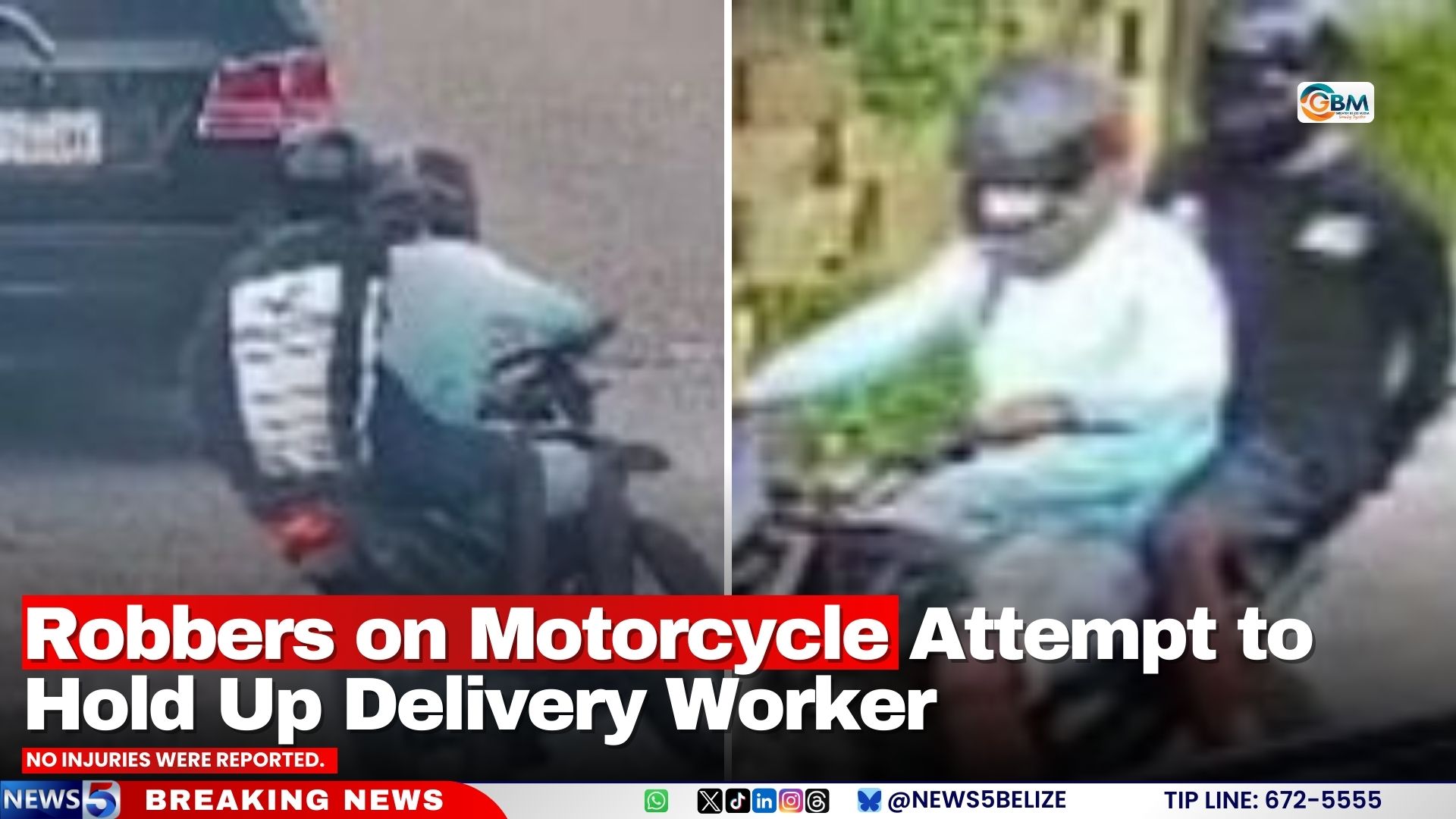
    A delivery worker in Belize City narrowly escaped an armed robbery attempt on Saturday afternoon thanks to the courageous intervention of nearby citizens. The incident unfolded at approximately 4:00 p.m. near the intersection of 1st Street and St. Peter’s Street, directly in front of the Ceviche Express establishment.

    According to eyewitness accounts, two unidentified males mounted on a motorcycle targeted an employee from a local tortilla factory during his delivery route. The assailants brandished a firearm and made explicit demands for monetary compensation from the delivery personnel.

    The potentially violent situation was defused when alert bystanders began shouting at the perpetrators, causing them to abandon their criminal endeavor and flee the scene without obtaining any possessions. Law enforcement authorities have been formally requested to initiate a comprehensive investigation into this attempted armed robbery.

    Medical authorities confirmed that the delivery worker sustained no physical injuries during the confrontation. The swift community response highlights the effectiveness of collective vigilance in preventing street crime in urban environments. This incident represents the latest in a series of security concerns affecting service industry workers in the region.

  • Police Chief Promises Modernisation, Tougher Policing

    Police Chief Promises Modernisation, Tougher Policing

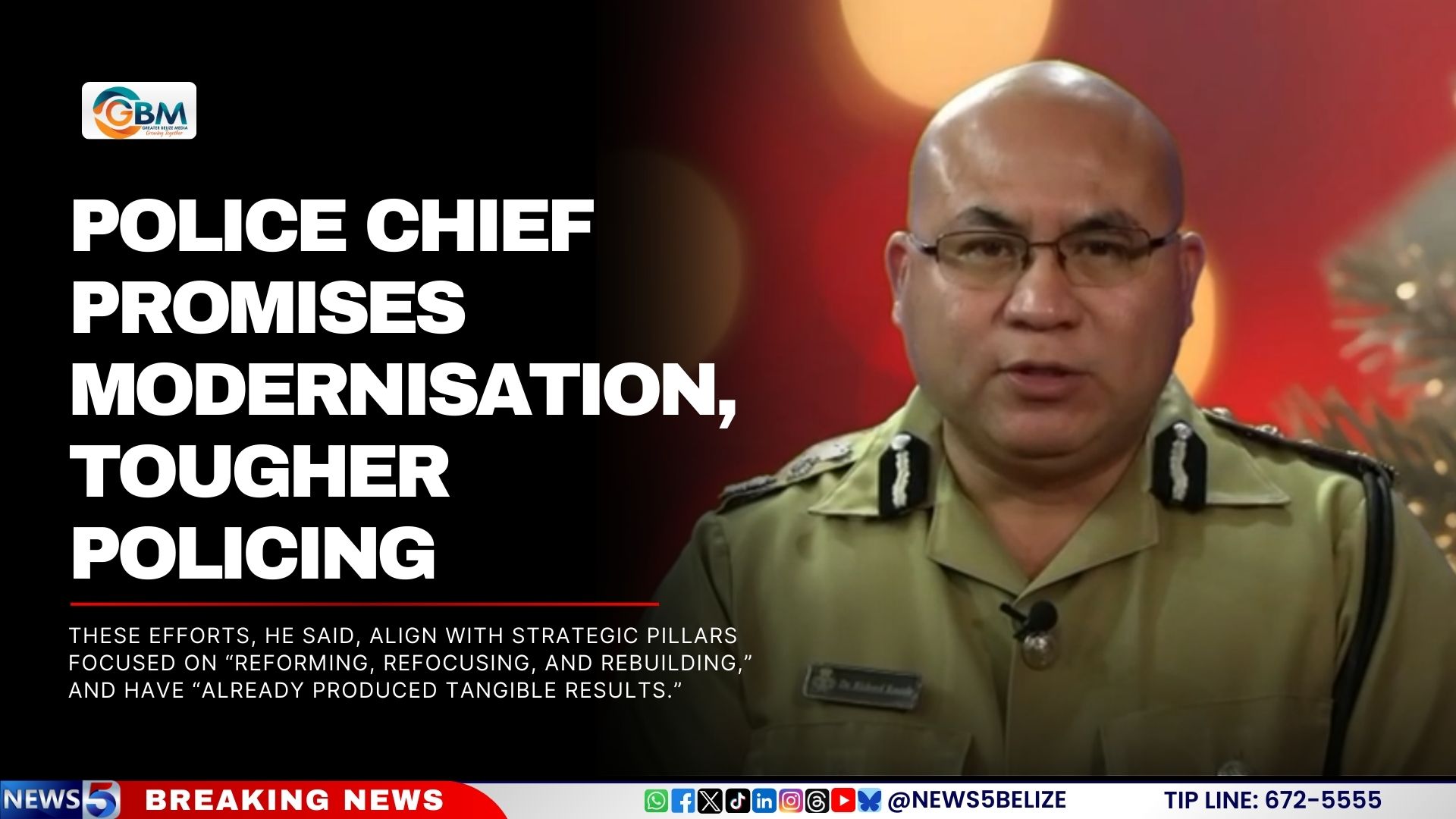
    BELIZE CITY – In his annual Christmas address, Police Commissioner Dr. Richard Rosado unveiled comprehensive plans to advance the modernization of Belize’s law enforcement apparatus while strengthening community partnerships heading into the new year.

    The Commissioner characterized the holiday season as an opportunity for “collective reflection, social unity, and renewed professional purpose,” urging citizens to transcend differences and embrace core values of service, compassion, and civic generosity.

    Reflecting on 2025 as a transformative period for national policing, Dr. Rosado highlighted several institutional achievements. These included organizational restructuring initiatives targeting ISO certification, the operational launch of the Crime Fusion Center to enhance data-driven law enforcement, and the consolidation of intelligence operations through the integration of joint intelligence coordination with Interpol frameworks.

    Additional milestones involved the creation of a specialized interdiction unit and expanded professional development programs across departmental ranks. These measures form part of the strategic “reforming, refocusing, and rebuilding” pillars that have already yielded “tangible operational outcomes,” according to the Commissioner.

    Looking toward 2026, Dr. Rosado committed to intensifying technological integration, broadening community outreach initiatives, and implementing advanced crime-fighting methodologies to address violent offenses and enhance public security. He emphasized that departmental progress stems from “collaborative national effort” rather than isolated institutional actions.

    The Commissioner extended appreciation to citizens for their “sustained trust and cooperation” while commending both uniformed and civilian personnel for their “unwavering dedication amid operational constraints.”

  • Southwestern Colombia shaken by a 4.6 magnitude earthquake

    Southwestern Colombia shaken by a 4.6 magnitude earthquake

    A significant seismic event rattled multiple regions of Colombia on Thursday morning, initiating a sequence of tremors across the nation’s central and southwestern territories. According to the Colombian Geological Service (SGC), the initial earthquake, registering a notable magnitude, struck with an epicenter depth of 34 kilometers at precisely 9:05 a.m. local time.

    The tremors were perceptibly felt across a wide geographical expanse, including the urban centers of Garzon, Armenia, Ibague, Cali, Popayan, and Florencia, alongside numerous other municipalities. Local media outlets documented the widespread nature of the event, which prompted momentary alarm among residents.

    Subsequent to the primary quake, the SGC seismic monitoring network detected two additional aftershocks. The first, a milder tremor measuring 3.1 in magnitude, was recorded at 9:36 a.m. with its epicenter located in San Jose del Palmar, within the northwestern department of Choco. A third seismic event, further diminished at a magnitude of 2.6, occurred at 10:10 a.m. near the municipality of Murindo in the Antioquia department.

    Despite the unsettling series of events, national authorities have provided preliminary assurances that no structural damage or personal injuries have been reported in the immediate aftermath. Emergency response teams remain on high alert, conducting standard preliminary assessments across the affected zones to verify the initial reports.

  • What the return of US hemispheric primacy means for Saint Lucia and CARICOM

    What the return of US hemispheric primacy means for Saint Lucia and CARICOM

    The Trump Administration has initiated a profound transformation in US-Caribbean relations, placing Saint Lucia and the CARICOM bloc under unprecedented strategic scrutiny. This geopolitical shift represents the most significant reorientation of American foreign policy toward the region in decades, marked by a more assertive posture that prioritizes bilateral engagement over multilateral frameworks.

    The cornerstone of this transformation is the 2025 National Security Strategy (NSS), which dramatically elevates Latin America and the Caribbean to the status of ‘Very High’ strategic importance—the top global priority for Washington. This represents a stark departure from previous administrations that consistently ranked the region as having low to moderate significance throughout the post-Cold War era.

    This strategic recalibration manifests through concrete policy changes. The administration has imposed visa restrictions on citizens of Antigua and Barbuda and Dominica, signaling a willingness to leverage travel access as a diplomatic tool. Simultaneously, Washington has abandoned the non-reciprocal trade preferences established under the Caribbean Basin Economic Recovery Act, implementing instead a bilateral tariff regime that treats CARICOM states individually rather than collectively.

    The NSS explicitly frames the Caribbean as a privileged sphere of US interest, aiming to prevent strategic competitors—particularly China, Russia, Iran, Cuba, and Venezuela—from establishing dominant positions in the region. This modern interpretation of the Monroe Doctrine, termed the ‘Trump Corollary,’ asserts America’s right to maintain hemispheric primacy through unilateral action when necessary.

    For Saint Lucia, the implications are multifaceted and profound. The nation’s Citizenship by Investment Program faces heightened scrutiny over potential homeland security concerns. Foreign policy alignment, especially regarding relationships with Venezuela and China, will attract increased Washington attention. Additionally, the region faces potential economic consequences through possible travel advisories, expanded visa restrictions, and maritime enforcement actions that could impact tourism and investment flows.

    The fundamental challenge for CARICOM lies in Washington’s deliberate shift toward bilateralism, which undermines the bloc’s collective bargaining power and ability to advance regional interests cohesively. With the United States reengaging the Caribbean on its own terms, Saint Lucia and its neighbors must develop strategic responses that preserve sovereignty while navigating renewed great power attention.

  • Peruvian diplomat suggests debate on proposed alliance with the US

    Peruvian diplomat suggests debate on proposed alliance with the US

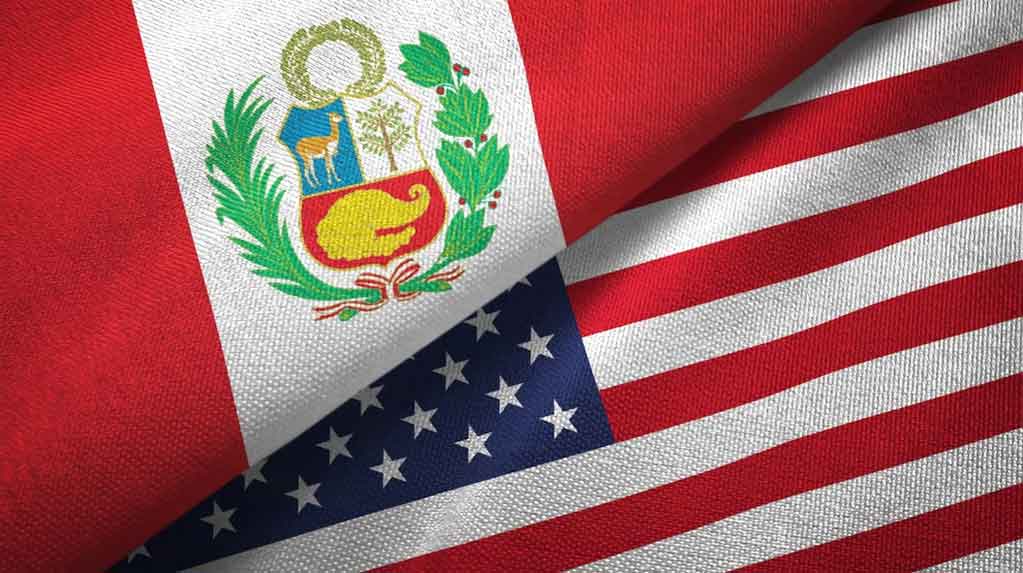
    In a comprehensive analytical piece, retired career diplomat Jorge Castaneda has called for a crucial national dialogue regarding Peru’s potential designation as a Major Non-NATO Ally (MNNA) of the United States. The seasoned ambassador’s assessment, published on Efectividat Consultores’ digital platform, presents a balanced examination of the strategic partnership recently proposed by the Trump administration.

    Castaneda emphasizes that any definitive decision must be predicated on a fundamental national discourse that clarifies Peru’s aspirations as an international actor. He insists this deliberation must objectively weigh the tangible benefits against the established principles of autonomy and alliance diversification that have traditionally guided Peruvian foreign policy.

    The diplomatic expert issues a significant cautionary note, stating that only through a coherent, long-term state strategy can Peru determine whether MNNA status would serve as a valuable instrument for national objectives or instead represent an unnecessary and potentially counterproductive commitment. He underscores that the effectiveness of such designation critically depends on the recipient nation’s strength, cohesion, and strategic clarity.

    Central to Castaneda’s argument is the assertion that Peruvian foreign policy—not the partnering nation—must unequivocally define the utilization parameters and limitations of any diplomatic or security arrangement. This positioning reaffirms the necessity of maintaining sovereign control over international engagements while considering enhanced cooperation frameworks.

  • Trinidad Prime Minister Says CARICOM “Dysfunctional”

    Trinidad Prime Minister Says CARICOM “Dysfunctional”

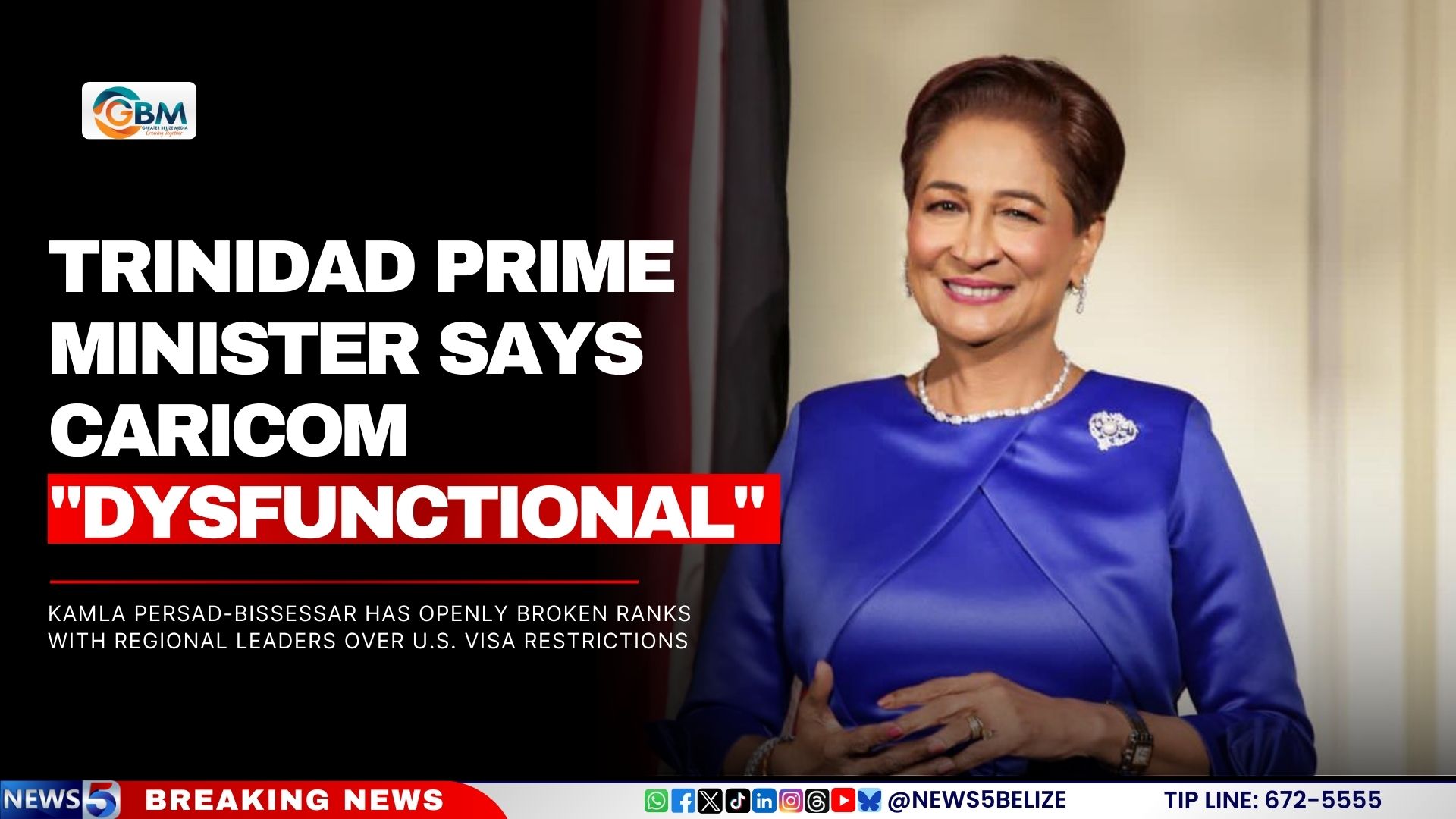
    In an unprecedented diplomatic rupture within the Caribbean Community, Trinidad and Tobago’s Prime Minister Kamla Persad-Bissessar has publicly denounced CARICOM as “dysfunctional” and declared her nation’s separation from the regional bloc’s stance on recent U.S. visa restrictions.

    The dramatic break occurred following the December 16, 2025, U.S. decision to implement visa category restrictions for foreign nationals. While CARICOM leadership collectively criticized the American move, Prime Minister Persad-Bissessar issued a scathing statement asserting that “the Republic of Trinidad and Tobago is not a party to the statement issued by the Bureau of the Conference of Heads of Government.”

    The Prime Minister defended Washington’s sovereign right to implement policies serving its national interests, characterizing the U.S. action as “a measured response.” Her statement delivered a blistering assessment of CARICOM’s current state, describing the organization as “not a reliable partner at this time” and warning of “widening fissures that if left unaddressed will lead to its implosion.”

    Persad-Bissessar attributed the regional body’s deterioration to “poor management, lax accountability, factional divisions, destabilising policies, private conflicts, and the inappropriate meddling in the domestic politics of member states.” She called for confronting “the rot within the organisation with transparency and honesty.”

    In perhaps her most controversial charge, the Prime Minister accused CARICOM of “disparaging our greatest ally the United States” while allegedly supporting “the Maduro narco-government headed by a dictator who has imprisoned and killed thousands.”

    Concluding with a stark warning about repercussions for CARICOM’s stance, Persad-Bissessar unequivocally prioritized national sovereignty: “CARICOM will not determine our future, only the citizens of our country will choose our path.”

  • Brilliant proposal by Irfaan

    Brilliant proposal by Irfaan

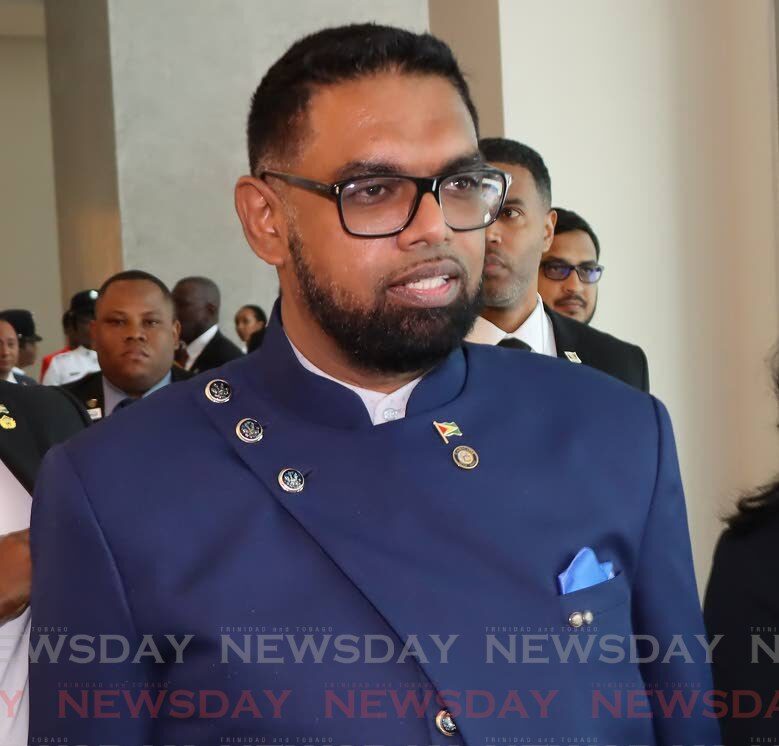
    In a bold geopolitical maneuver, Guyana President Dr. Irfaan Ali has garnered significant praise for his resolute pursuit of a cooperative agreement with the United States. This strategic partnership emerges against a backdrop of prolonged territorial tensions with Venezuela, which have intensified following renewed claims over the oil-rich Essequibo region.

    The historical context traces back to the 1899 Paris Arbitral Award, which definitively recognized Guyana’s sovereignty over Essequibo. Despite this settled matter, Venezuela has recently revitalized its expansionist ambitions, creating regional instability. The letter writer emphatically supports President Ali’s diplomatic approach, characterizing Venezuela as the Caribbean’s primary aggressor that has systematically engaged in moral brutality against Guyana while allegedly serving as a major conduit for narcotics and arms trafficking throughout the region.

    A particularly strategic proposition suggests incorporating a US military installation within the disputed territory as a permanent deterrent against Venezuelan aggression. Such presence would establish a definitive frontera—both physical and symbolic—protecting Guyana’s sovereignty while ensuring regional stability. This perspective gains credibility following Trinidad and Tobago’s recent acceptance of US radar infrastructure at Tobago airport, which has already demonstrated operational success through a landmark $171 million drug interdiction in the Caroni Swamp.

    The emerging US-Caribbean security architecture represents a pragmatic realignment against Venezuelan expansionism, with the author concluding that American partnership offers superior regional security outcomes compared to enduring Venezuelan threats. This geopolitical calculus positions military cooperation as essential for safeguarding Caribbean sovereignty and maintaining peace through demonstrated deterrence capabilities.

  • Shallow’s dilemma

    Shallow’s dilemma

    A deepening crisis within Cricket West Indies (CWI) has sparked intense scrutiny of President Dr. Kishore Shallow’s leadership, with critics arguing his dual political role and poor decision-making have severely damaged Caribbean cricket.

    The core controversy centers on Shallow’s divided responsibilities between his elected parliamentary position in St. Vincent and the Grenadines and his CWI presidency. This dual commitment inevitably creates scheduling conflicts where governmental duties take precedence, leaving West Indies cricket administration neglected during a period of critical decline.

    Performance metrics under Shallow’s nearly three-year tenure reveal alarming regression. The West Indies team has consistently underperformed internationally, with critics highlighting disastrous personnel decisions including the controversial appointment of Daren Sammy as head coach and sole selector. This move proved particularly damaging after Sammy replaced Andre Coley, who had achieved notable successes including ending a 24-year victory drought against Australia in February 2024 and securing a series draw against Pakistan in early 2025.

    The administration’s tactical approach has drawn fierce criticism for lacking innovation or strategic vision. Rather than implementing new systems or development programs, Shallow’s leadership has maintained ineffective methods despite mounting losses and diminishing fan enthusiasm across the cricket-loving Caribbean region.

    Governance concerns extend to Shallow’s apparent failure to recognize his own limitations. Despite the team’s prolonged struggles and his acknowledged divided attention, he maintains confidence in his indispensability to CWI—a position critics describe as dangerously detached from reality.

    The article concludes that graceful resignation represents Shallow’s most honorable option, allowing fresh leadership to attempt rescuing West Indies cricket from its current trajectory toward irrelevance. The ultimate responsibility, analysts note, rests with leadership rather than players when organizations consistently fail.

  • Agriculture minister hosts children’s Xmas party

    Agriculture minister hosts children’s Xmas party

    In a heartwarming display of seasonal generosity, Minister of Agriculture and Fisheries Ravi Ratiram orchestrated a large-scale Christmas celebration for ministry staff families on December 21. The National Cycling Velodrome in Couva transformed into a festive wonderland, welcoming approximately 800 children for an afternoon of merriment and community bonding.

    The event exemplified the ministry’s dedication to staff welfare and family-oriented engagement practices. Minister Ratiram emphasized the significance of creating nurturing environments for children during his address, stating, ‘Christmas reminds us of what truly matters: family, love, kindness, gratitude and hope. When we invest in our children and create spaces where they feel valued and cherished, we are planting seeds for a stronger future for Trinidad and Tobago.’

    The celebration featured an array of entertainment including games, musical performances, and special surprises that delighted both children and parents alike. The minister personally acknowledged the crucial role that families play in supporting public officers, drawing a direct connection between domestic values and professional excellence.

    Ratiram also expressed profound appreciation for ministry staff, recognizing their commitment to national food security initiatives and sustainable agricultural development. He noted that the dedication shown by employees in their official capacities reflects the same values they demonstrate within their households.

    Concluding the festivities, Minister Ratiram extended heartfelt seasonal greetings to all attendees, wishing them a safe, joyful Christmas and prosperous New Year. The event successfully reinforced themes of unity, generosity, and goodwill that characterize the holiday season while strengthening institutional morale.

  • Avoiding aches, injuries during the holidays

    Avoiding aches, injuries during the holidays

    As Christmas approaches, a concerning trend emerges: countless individuals inadvertently pushing their bodies beyond limits through festive preparations. Dr. Nicole de Freitas, a seasoned physical therapist with 23 years of experience and clinical doctorate from the University of St Augustine for Health Sciences, warns that December’s intensified activities—from decorating to entertaining—create perfect conditions for physical strain and injury.

    Dr. de Freitas, owner of Total Rehabilitation Centre Limited in Trinidad and certified ergonomic specialist, emphasizes that ergonomics extends far beyond office environments. “Ergonomics represents the study between job characteristics and the worker,” she explains, noting that ‘job’ encompasses parenting, household management, cooking, and seasonal decorating. The Christmas period particularly amplifies both mental and physical demands, requiring heightened body awareness and movement intelligence.

    According to her research, most injuries occur when exhaustion sets in—typically late in the day when people override their body’s signals. The holiday combination of limited rest, alcohol consumption, and nutritional compromises creates a vulnerability cascade where bodies eventually “break down” without proper support.

    The specialist provides specific preventive strategies:

    For heavy lifting: Secure assistance for items exceeding 50 pounds, and break loads into manageable 20-25 pound segments. When retrieving overhead items, use sturdy ladders with staggered stance positioning.

    For decorating: Utilize stools for low-level work to avoid bending, maintain proximity to tasks, and alternate between sitting and standing positions during extended activities like gift wrapping.

    For cooking marathons: Segment tasks—sitting for vegetable chopping or leaf folding—and wear cushioned footwear with arch support rather than flat slippers. Avoid asymmetrical “stork standing” and practice knee bending instead of waist flexion when handling heavy turkeys or hams.

    For travelers: Acknowledge that seated positions increase spinal disc pressure significantly. Combat stiffness through frequent movement breaks, supplemental back support with towel rolls or pillows, and compression stockings for circulation. Maintain legroom for stretching and utilize neck pillows for additional support.

    For shoppers: Distribute weight through multiple trips, consider trolleys instead of carrying loads, and recognize when to pause.

    When injuries occur, Dr. de Freitas recommends immediate position changes followed by gradual movement within tolerable ranges—avoiding complete immobilization. Persistent pain beyond 48 hours, especially when accompanied by sharp sensations, weakness, or bladder/bowel control issues, warrants urgent medical attention.

    Her overarching philosophy: “Your best posture is your next posture.” Regular movement, maintained strength, nutritional density, and proper hydration collectively sustain the body machine. Most importantly, she reminds perfection-seekers that meaningful celebrations don’t require flawless execution—preserving one’s wellbeing ultimately defines successful holiday experiences.