博客

  • Fire Service responds to 13 000 emergency calls in 2025

    Fire Service responds to 13 000 emergency calls in 2025

    The Saint Lucia Fire Service (SLFS) experienced a significant escalation in operational demand throughout 2025, responding to a total of 13,480 emergency and assistance calls according to its year-end operational report. This volume represents a notable five percent increase compared to the 12,839 incidents handled in the previous year, underscoring growing public reliance on the agency’s services.

    An in-depth breakdown of response data reveals a fundamental shift in the nature of emergencies confronting the fire service. Medical emergencies constituted the predominant category, accounting for 6,723 responses. These interventions addressed critical health crises including cardiac arrests, acute respiratory distress, and various life-threatening medical situations requiring immediate pre-hospital care.

    Trauma-related incidents formed the second largest category with 2,194 responses, encompassing accidents, falls, and injuries resulting from violent encounters. Meanwhile, traditional fire emergencies accounted for 679 responses, involving structural fires across residential, commercial, and industrial settings, alongside vegetation fires, vehicle blazes, electrical fires, and smoke-related incidents.

    The service also dedicated substantial resources to 3,884 non-emergency calls, providing essential public assistance, conducting minor investigations, and performing safety inspections throughout communities across the island.

    This operational data illustrates the SLFS’s evolution beyond conventional firefighting into a comprehensive emergency response organization. The statistics highlight the service’s critical function as a primary first responder for medical and trauma emergencies, in addition to its traditional fire suppression role.

    SLFS Press Officer Sherise John reaffirmed the organization’s commitment, stating: ‘The Saint Lucia Fire Service remains dedicated to serving our community and ensuring safety for all residents,’ emphasizing the agency’s preparedness to meet diverse public safety needs.


  • School term to begin on January 6

    School term to begin on January 6

    The Ministry of Education, Youth Development, Sports and Digital Transformation has officially confirmed the academic calendar for the upcoming school term in a December 31 announcement. According to the ministerial release, educational institutions across the nation will resume operations with students returning to classrooms on Tuesday, January 6, 2026, marking the commencement of the second academic term.

    The ministry has outlined specific reporting protocols for educational staff to ensure a seamless transition into the new term. School administrators, teaching faculty, and support personnel are required to resume their duties on Monday, January 5, 2026 – one day prior to student arrival. This strategic scheduling allows educational professionals to complete essential preparatory work, including classroom organization, administrative planning, and curricular alignment before welcoming students back to academic institutions.

    The coordinated approach emphasizes the government’s commitment to maintaining educational continuity and operational efficiency within the national school system. By establishing clear timelines for both staff and students, the ministry aims to facilitate an organized restart of academic activities following the term break, ensuring minimal disruption to the educational calendar while maximizing instructional effectiveness from the first day of term.

  • NUPW reflects on gains, eyes stronger advocacy in 2026

    NUPW reflects on gains, eyes stronger advocacy in 2026

    The National Union of Public Workers (NUPW) of Barbados has declared its unwavering commitment to aggressively champion improved wages, enhanced job security, and better working conditions for public servants throughout 2026. President Kimberley Agard delivered this firm pledge in her New Year’s address, highlighting the critical timing of upcoming salary negotiations amid escalating living expenses and economic pressures facing workers.

    Reflecting on the achievements of 2025, Agard acknowledged significant progress in regularizing positions for officers who had been acting in various roles for over three years, ending prolonged periods of professional uncertainty. This development marked a substantial victory for job security within the public sector.

    The union leader emphasized that the NUPW would maintain vigilant oversight of national priorities affecting public workers, particularly the ongoing Job Evaluation Exercise, which serves as a crucial mechanism for ensuring equitable and transparent compensation structures. Agard also addressed the transition of government departments into State-Owned Enterprises, asserting that such organizational changes must not compromise workers’ rights or conditions.

    With salary negotiations imminent, the NUPW’s approach will extend beyond mere monetary increases to encompass comprehensive improvements in employment terms and conditions. The union intends to ensure that compensation packages accurately reflect the substantial contribution of public servants to national development while addressing the realities of current economic challenges.

    Additionally, the organization plans to strengthen industrial relations frameworks, enhance the capabilities of shop stewards, and guarantee that workers’ perspectives are integral to all decision-making processes affecting their livelihoods. Agard concluded by expressing gratitude for members’ resilience and reaffirming the union’s dedication to professionalism, progress, and people-centered development throughout Barbados’s public sector.

  • Forestry Department condemns killing of 5 Saint Lucia boas

    Forestry Department condemns killing of 5 Saint Lucia boas

    Authorities in Saint Lucia have launched a formal investigation and pledged to pursue maximum legal penalties following the brutal killing of multiple protected snakes, an incident captured in a viral social media video that has sparked official outrage.

    The Forestry Department issued a forceful condemnation on December 31st after being alerted to a deeply disturbing video circulating online. The footage graphically depicted five Saint Lucia boas (locally known as ‘Tete Chien’) being bludgeoned to death. This endemic species holds protected status under the nation’s Wildlife Protection Act.

    In an official statement, the Department characterized the act as ‘extreme cruelty’ and ‘unacceptable,’ confirming it constitutes a major criminal offense under Chapter 6.03 of the Wildlife Protection Act, last revised in 2001. The legislation explicitly prohibits hunting, capturing, or killing protected wildlife without specific authorization, with additional provisions banning cruel methods of execution.

    The Department emphasized its zero-tolerance stance toward such ‘irresponsible and indiscriminate killing,’ asserting it will exhaust all legal avenues to ensure perpetrators face full prosecution. Officials are collaborating closely with national police forces to advance the investigation.

    Under the Act, penalties for such wildlife crimes can reach up to EC $5,000 per animal killed, potential imprisonment, or both. The Department has confirmed it will be seeking the most severe sanctions available.

  • Pringle Warns Citizenship Programme May Be Doing More Harm Than Good, UPP Reviewing CIP

    Pringle Warns Citizenship Programme May Be Doing More Harm Than Good, UPP Reviewing CIP

    In a significant political development, United Progressive Party (UPP) Leader Jamale Pringle has announced a comprehensive internal review of Antigua and Barbuda’s Citizenship by Investment Programme (CIP). This decisive action comes amid mounting international scrutiny and newly implemented restrictions affecting visa access to the United States for Antiguan and Barbudan nationals.

    During his 2026 New Year’s address, Pringle revealed that his opposition party is critically examining whether the controversial program continues to serve the nation’s best interests. He emphasized that the current administration has created excessive dependency on CIP revenues, with even essential government obligations like monthly Social Security Scheme payments now relying on the program’s proceeds.

    “Our caucus is actively evaluating the viability of our Citizenship by Investment Programme,” Pringle stated. “Due to the Browne Administration’s inadequate management, numerous critical governmental functions have become disproportionately dependent on CIP revenues.”

    The opposition leader outlined plans to engage financial experts, policy analysts, and key stakeholders to conduct a thorough risk-benefit analysis. This consultation aims to determine whether the program’s advantages still justify the associated challenges and international concerns.

    Pringle directly connected the CIP review to recent visa access issues, noting that since January 1st, many citizens have found themselves unable to obtain certain categories of U.S. visas. He criticized the government’s diplomatic approach, stating that despite Prime Minister Gaston Browne’s assurances of resolution through diplomatic channels, the restrictions remain firmly in place.

    The UPP leader pledged that a future administration under his leadership would prioritize restoring positive relations with the United States and preventing additional restrictions that could destabilize the nation’s economy. Pringle framed the CIP evaluation as part of a broader initiative to reestablish governance credibility and protect Antigua and Barbuda’s international reputation throughout 2026 and beyond.

  • PM Browne Urges Young People to Pursue Skills or Degrees in 2026

    PM Browne Urges Young People to Pursue Skills or Degrees in 2026

    In a comprehensive New Year’s address to the nation, Prime Minister Gaston Browne of Antigua and Barbuda articulated a transformative vision for national development centered on educational advancement, continuous skill acquisition, and community harmony. The leader positioned 2026 as a pivotal year for the twin-island nation, emphasizing that sustainable progress hinges on cultivating a knowledgeable, adaptable citizenry dedicated to perpetual self-improvement.

    Browne’s address specifically targeted the nation’s youth, urging them to aggressively pursue both academic qualifications and technical proficiencies. He characterized education as the fundamental catalyst for enabling meaningful participation in the workforce and driving comprehensive national development. The Prime Minister’s message, however, extended beyond young citizens, challenging adults to embrace learning as an ongoing civic responsibility rather than a concluded chapter of early life.

    The Prime Minister framed productivity and national competitiveness as direct outcomes of this collective commitment to growth, asserting that progress must transcend traditional barriers of political affiliation, age, and socioeconomic status. In a significant connection, Browne explicitly linked educational attainment and personal discipline to social stability, calling for a unified rejection of crime and violence. He posited that destructive behaviors fundamentally erode community foundations and cripple the collaborative effort required to build a resilient society.

    Browne concluded by asserting that true national development transcends economic policy alone, identifying shared values, disciplined cooperation, and social cohesion as the indispensable drivers of lasting advancement. He called upon all citizens to approach the coming year with renewed purpose and responsibility, framing education, lifelong learning, and peaceful coexistence as the cornerstones of Antigua and Barbuda’s future prosperity.

  • US to impose 1% tax on cash remittances in 2026

    US to impose 1% tax on cash remittances in 2026

    Beginning January 1, 2026, the United States will implement a groundbreaking federal excise tax that will significantly alter the cost structure of international money transfers for Caribbean communities and other migrants sending funds abroad. The newly enacted 1% levy targets specifically cash-based remittances, marking a fundamental shift in how cross-border financial support is taxed.

    This fiscal policy, embedded within Section 4475 of the Internal Revenue Code, was legislated by the US Congress in July 2025 as a component of the comprehensive ‘One Big Beautiful Bill’ package. The tax represents the first federal imposition on international money transfers, which previously only incurred service charges and exchange rate margins without direct government taxation.

    The regulatory framework specifically applies to remittances facilitated through physical cash transactions at brick-and-mortar locations including grocery stores, pharmacies, and dedicated money transfer outlets. Paper-based payment instruments such as money orders and cashier’s checks also fall within the taxable category. Both US citizens and foreign nationals utilizing American remittance services will be subject to the tax when using cash or cash-equivalent methods.

    Critical exemptions exist for digital and electronic transfer mechanisms. The Internal Revenue Service clarifies in Notice 2025-55 that bank account transfers, debit/credit card transactions, wire transfers, and digital wallet services (including Apple Pay and Google Pay) remain exempt from the additional levy. This creates a distinct advantage for technologically-enabled remittance channels over traditional cash-based methods.

    For Caribbean-American communities, where remittances constitute vital financial lifelines covering educational expenses, medical bills, and household necessities, the tax introduces new economic considerations. The legislation does provide potential relief through a tax credit mechanism for senders possessing Social Security numbers, contingent upon proper transaction reporting by remittance providers. However, the IRS has yet to issue final implementation guidelines regarding credit claims procedures.

  • VS kondigt nieuwe sancties aan tegen de Venezolaanse oliesector

    VS kondigt nieuwe sancties aan tegen de Venezolaanse oliesector

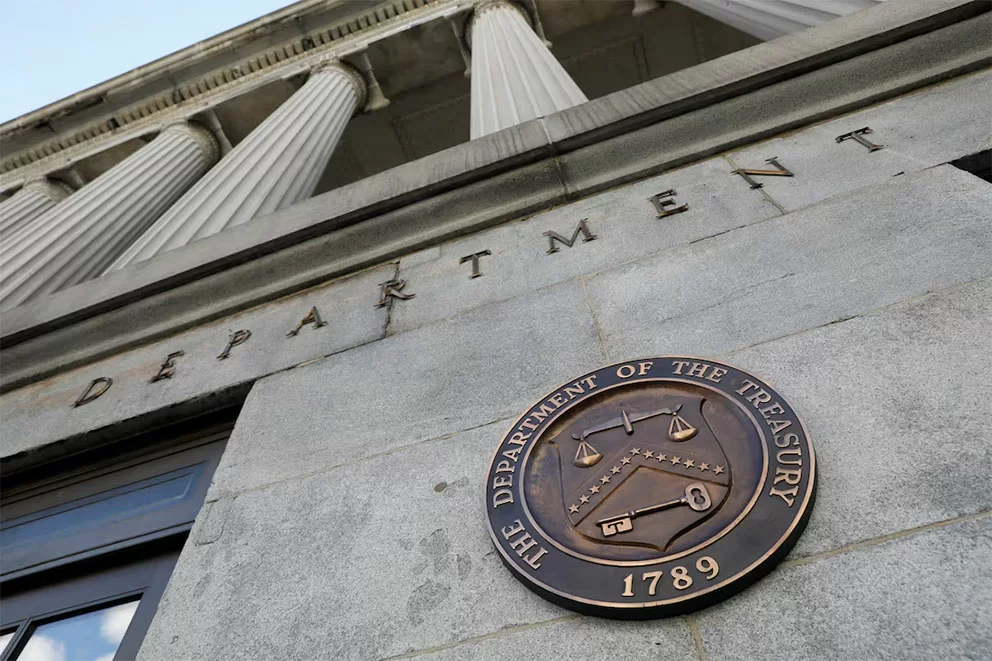
    The United States has intensified its economic pressure campaign against Venezuelan President Nicolás Maduro’s administration by imposing sanctions on four companies operating in Venezuela’s oil sector along with their associated oil tankers. The Treasury Department announced these measures on Wednesday as part of President Donald Trump’s ongoing strategy to isolate Maduro’s government.

    These latest sanctions represent an escalation in Washington’s multifaceted approach, which has previously included enhanced U.S. military presence in the region and interdiction operations against vessels suspected of drug trafficking in Pacific and Caribbean waters. Earlier this month, Trump implemented a blockade preventing sanctioned ships from entering or exiting Venezuelan territorial waters, a move that has already cut Venezuela’s oil exports by approximately half compared to November levels.

    The targeted entities include oil traders allegedly facilitating sanctions evasion for Maduro’s government, with four tankers identified as part of what officials term a ‘shadow fleet’ – aging vessels with opaque ownership structures that transport sanctioned oil without required insurance coverage, operating outside international standards observed by major oil companies and ports.

    Among the specifically sanctioned vessels are the Panama-flagged Nord Star, Guinea-flagged Lunar Tide, and Hong Kong-flagged Della, all of which have transported Venezuelan crude oil or fuel to destinations in Asia and the Caribbean this year according to internal documents from Venezuela’s state energy company PDVSA and ship tracking data. The Hong Kong-flagged supertanker Valiant, owned by sanctioned company Aries Global Investment LTD, appears not to have carried Venezuelan crude based on available records.

    The Treasury Department emphasized that ‘today’s action makes clear that those involved in Venezuela’s oil trade continue to face significant sanctions risks.’ This follows earlier sanctions imposed this month against six additional Venezuela-linked tankers.

    Treasury Secretary Scott Bessent stated: ‘President Trump has been clear: we will not allow Maduro’s illegitimate regime to profit from oil exports while flooding the United States with deadly drugs.’ Venezuelan officials have consistently denied involvement in criminal activities and accuse the U.S. of pursuing regime change to control Venezuela’s substantial oil reserves.

    The cumulative effect of these measures has virtually paralyzed Venezuela’s export capabilities, creating fuel storage backups that threaten to force PDVSA to take extreme measures to prevent refinery shutdowns, as previously reported by Reuters.

  • New Year’s Day Message ABEC’s Chairman Ambassador Arthur G.B Thomas

    New Year’s Day Message ABEC’s Chairman Ambassador Arthur G.B Thomas

    In his annual New Year’s address, Chairman of the Antigua and Barbuda Electoral Commission (ABEC) Ambassador Arthur G.B. Thomas articulated a comprehensive vision for democratic consolidation throughout 2026. The message emphasized the Commission’s ongoing dedication to enhancing electoral integrity through systematic modernization initiatives while honoring the nation’s democratic legacy.

    The commencement of the new year represents a pivotal moment for national reflection and renewed commitment to constitutional principles that form the foundation of Antigua and Barbuda’s governance structure. Throughout the previous year, ABEC has implemented strategic measures to reinforce electoral safeguards and advance systemic modernization, operating under core values of transparency, professional excellence, and institutional integrity.

    Chairman Thomas formally acknowledged critical partnerships that have supported these efforts, specifically highlighting Canadian Bank Note as the Commission’s principal technology provider. Their technical expertise has proven instrumental in developing essential electoral infrastructure components. The Commission additionally expressed gratitude toward dedicated staff members, civil society organizations, and political representatives whose collaborative engagement remains vital to successful election administration.

    The address included solemn recognition of the late Sir Gerald Watt, whose profound contributions to democratic institution-building and constitutional governance established an enduring legacy. His exemplary public service continues to inspire current democratic strengthening initiatives.

    Looking toward future electoral processes, the Commission urged all eligible citizens to complete voter registration procedures and confirmed registrants to verify their identification documents remain current. ABEC reaffirmed its commitment to promoting active civic participation, comprehensive voter education, and informed citizenship as fundamental pillars of democratic vitality.

    Chairman Thomas concluded by reiterating ABEC’s dedication to collaborative governance through open consultation and shared responsibility with the citizens of Antigua and Barbuda. This cooperative approach aims to ensure democratic institutions maintain responsiveness, credibility, and public trust throughout the coming year and beyond.

  • Six long weekends in 2026

    Six long weekends in 2026

    The government of Saint Lucia has officially released its 2026 public holiday calendar, revealing an exceptional year featuring six distinct three-day weekends complemented by a special four-day Easter break. This scheduling arrangement provides numerous extended leisure periods throughout the year, offering significant opportunities for both tourism promotion and enhanced work-life balance for residents.

    The extended weekend pattern begins immediately in January with the observance of New Year’s Day on Friday, January 2, creating the first three-day weekend from January 2-4. The most substantial break occurs during Easter celebrations in April, where the consecutive holidays of Good Friday (April 3) and Easter Monday (April 6) combine to form an extended four-day weekend.

    May delivers two separate long weekends, beginning with Labour Day on Friday, May 1, followed by Whit Monday on May 25, which extends the weekend from Saturday, May 23 through Monday, May 25. The summer season brings another leisure period with Carnival Monday observed on July 20, creating a holiday weekend from July 18-20.

    The extended weekend pattern continues into the final quarter with Thanksgiving Day in October providing a break from October 3-5. The year concludes with a Christmas holiday weekend running from December 25-27, offering residents a festive three-day period to conclude the calendar year.

    This strategic distribution of public holidays creates optimal conditions for domestic tourism development while providing structured opportunities for family time and community celebrations throughout the year.