博客

  • If you can’t govern them, silence them

    If you can’t govern them, silence them

    A controversial attempt by Trinidad and Tobago’s Homeland Security Minister Roger Alexander to petition the US Embassy for revoking visas of American-based critics has ignited profound concerns about democratic erosion in the Caribbean nation. The move, revealed through official ministry correspondence, suggests an alarming trend toward authoritarian tactics reminiscent of Venezuela’s Nicolás Maduro regime.

    The minister’s justification centers on claims that YouTube commentators and dual nationals are destabilizing the country—a narrative that critics argue externalizes governmental failures rather than addressing legitimate governance shortcomings. This approach mirrors the playbook of authoritarian leaders who silence dissent rather than engage with substantive criticism.

    Political analysts note the extraordinary nature of a sitting minister seeking foreign intervention to police Trinidadian speech abroad, effectively acknowledging the weakness of domestic democratic institutions. The situation represents a dangerous precedent where sovereignty is weaponized against citizens rather than protecting their fundamental rights.

    All eyes now turn to Prime Minister Keith Rowley, whose response—or lack thereof—will signal whether this represents isolated ministerial overreach or official state policy. The silence from the administration’s highest office risks validating what many fear constitutes a systematic dismantling of democratic norms through increasingly authoritarian measures.

    The developing situation reflects broader regional patterns where democratic facades crumble under the weight of leadership that prioritizes narrative control over transparent governance and accountability.
  • NPATT proud of you young parranderos

    NPATT proud of you young parranderos

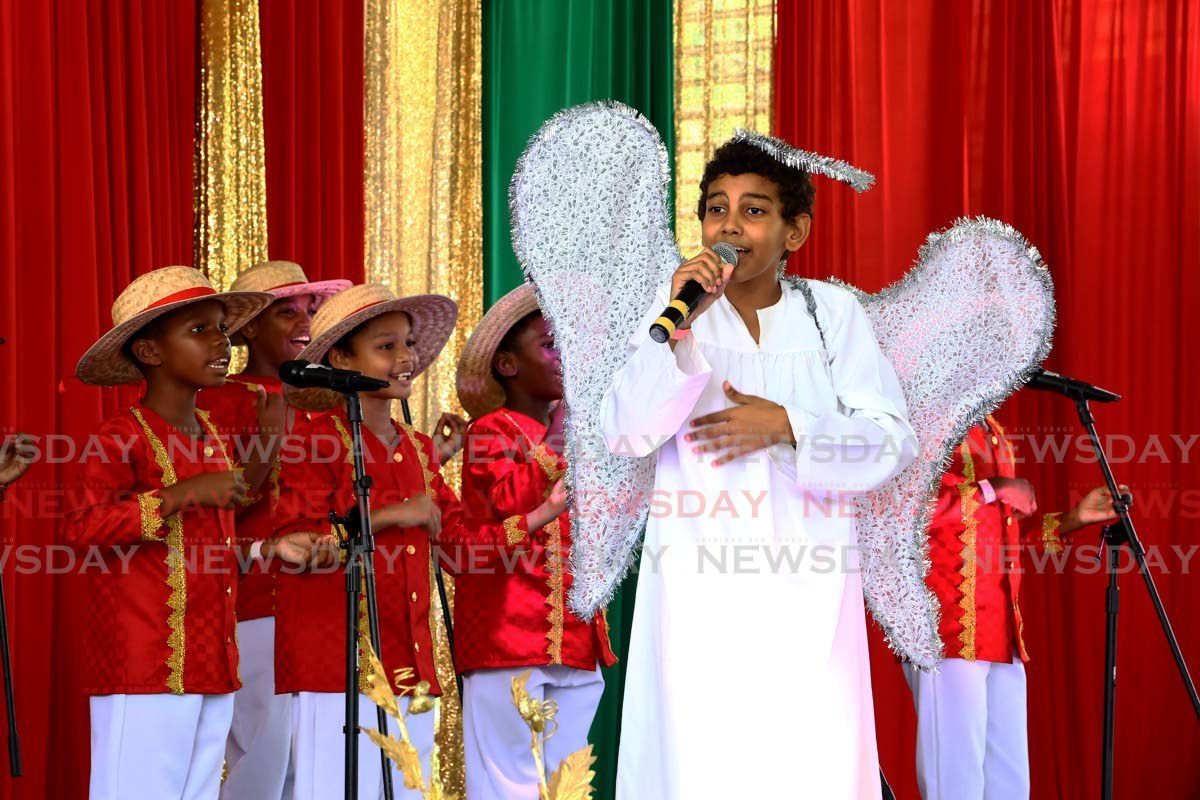
    The National Parang Association of Trinidad and Tobago (NPATT) has issued a powerful statement of support for young parang performers following what appears to be public criticism targeting student participants. In a letter published by Newsday, NPATT’s youth officer Joseph Bertrand articulated the organization’s unwavering commitment to youth engagement in this traditional art form.

    NPATT emphasized the vital importance of their Junior Parang Festival initiatives, which include both the National Primary and Secondary Schools Parang Competitions and the recently introduced Tribute to the Icons presentations. These programs are specifically designed to preserve and transmit the complete cultural package of parang—encompassing its musical traditions, linguistic heritage, and underlying values—to younger generations through deliberate and respectful methodology.

    The association expressed concern about commentary that minimizes student efforts or undermines the substantial work undertaken by educational institutions, instructors, mentors, families, and established parang figures. NPATT contends such negative observations conflict with the fundamental principles of community, perseverance, and cultural dignity that parang embodies.

    Addressing young paranderos directly, the organization encouraged continued dedication to their craft, invoking the traditional Spanish phrase ‘con alma y corazón’ (with soul and heart). NPATT positioned these young performers as crucial connectors between the foundational icons who established the tradition and future generations who will inherit it.

    The association pledged ongoing support for youth development within the parang community, vowing to safeguard the art form’s authenticity while fostering an environment where parang can flourish through unity, mutual respect, and joyful expression.

  • Progressive policy on older vehicles

    Progressive policy on older vehicles

    In a significant policy shift, Trinidad and Tobago’s UNC government has implemented sweeping reforms to the nation’s vehicle import regulations, fundamentally altering access to classic, antique, vintage, and foreign-used automobiles. The transformative changes, announced during a November 20 post-Cabinet briefing by Transport and Civil Aviation Minister Eli Zakour, establish a formal classification system for historic vehicles while substantially relaxing age restrictions on imported cars.

    The newly approved regulatory framework introduces three distinct categories for heritage vehicles: ‘classic’ for cars 25 years or older, ‘antique’ for those exceeding 45 years, and ‘vintage’ for exceptional vehicles reaching 95 years of age. This classification system provides legal recognition and road-use authorization for historically significant automobiles that previously operated in a regulatory gray area.

    Concurrently, the Ministry of Trade, Investment and Tourism has dramatically revised import rules for foreign-used vehicles. The permissible age for right-hand-drive private car imports has been extended from three years to under eight years, while light commercial vehicles may now be up to ten years old. These changes directly fulfill campaign promises made in the UNC’s 2025 manifesto to increase vehicle affordability and reverse what the administration characterized as overly restrictive policies under the previous PNM government.

    The economic implications of these reforms are substantial. Global market analyses indicate the classic car industry represents a $32-40 billion market worldwide, with the automotive restoration sector projected to reach nearly $8 billion by the early 2030s, growing at approximately 10% annually. The policy changes position Trinidad and Tobago to participate in this valuable economic ecosystem, potentially generating skilled employment in restoration crafts and heritage mechanics—fields that command significant wage premiums in developed markets.

    Beyond economic considerations, the reforms address practical mobility concerns for citizens by making reliable transportation more accessible. The previous three-year import restriction had priced many Trinidadians out of the vehicle market, particularly affecting middle-income families seeking quality transportation options. The expanded age allowances are expected to improve mobility without compromising vehicle safety or reliability.

    The government’s initiative also creates formal pathways for cultural preservation, enabling the establishment of restoration businesses, enthusiast clubs, and heritage events that celebrate automotive history. This structured approach aligns with international standards for historic vehicle conservation while generating tangible economic opportunities within the heritage sector.

    Transport Minister Zakour emphasized that the previous regulatory vacuum had constrained lawful use of historic vehicles and limited their economic potential. The new framework aims to unlock value both for automotive enthusiasts and ordinary citizens seeking affordable transportation solutions, representing what the administration describes as a balanced approach to regulatory modernization, economic stimulation, and cultural preservation.

  • Boyd shines but TT lose to Canada in Fiba 3×3 AmeriCup

    Boyd shines but TT lose to Canada in Fiba 3×3 AmeriCup

    In a thrilling display of 3×3 basketball prowess, Trinidad and Tobago’s national team delivered a spirited performance against Canada during their opening Group C match at the 2025 FIBA 3×3 AmeriCup in León, Mexico on November 28. Despite a spectacular individual effort from star guard Ahkeel “Smally” Boyd, the Caribbean squad ultimately succumbed to a 21-16 defeat against their North American opponents.

    The game commenced with Boyd establishing immediate dominance, single-handedly scoring Trinidad and Tobago’s first five points. The dynamic guard initiated the scoring with a crafty layup before stepping beyond the arc to sink a dramatic two-point shot, granting his team an early 3-0 advantage. However, Canada’s Jerome Derosiers shifted the momentum with a crucial jumper that propelled his team to a 5-4 lead—an advantage they would maintain throughout the remainder of the contest.

    Boyd’s exceptional performance culminated in a game-high ten points, including three impressive shots from deep range. His final long-distance conversion brought Trinidad and Tobago within striking distance at 18-16 with just over one minute remaining in the fast-paced ten-minute encounter. Despite this late surge, Canada’s experienced players demonstrated composure under pressure. Steve Sir connected on a critical jumper to extend the lead to 20-16, before Grant Audu sealed the victory with an uncontested layup following precise ball movement from Derosiers.

    Supplementary scoring for Trinidad and Tobago came from center Tyrik Singh with three points, while Boyd’s brother Ahkeem “Fato” Boyd contributed two points to the team’s total.

    The tournament journey began promisingly for the Trinidadian squad during the qualification phase, where they secured three consecutive victories. Their campaign commenced with a dominant 21-7 triumph over St Kitts and Nevis, followed by a hard-fought 21-18 win against Uruguay, and concluded with a default victory against Bahamas. The Boyd brothers were instrumental in these successes, combining for 17 points in the opener against St Kitts and 15 points in the crucial matchup against Uruguay.

    Following the Canada match, Trinidad and Tobago prepared to face Argentina later that evening. The tournament structure mandates that the top two teams from each of the four groups will advance to the quarterfinals scheduled for November 30, with the championship finale set for 8:55 PM that same evening.

  • Magnificent roasts

    Magnificent roasts

    In the realm of comfort food, few dishes rival the divine flavor and heartwarming appeal of expertly roasted meats. Culinary expert Wendy Rahamut presents a masterclass in transforming simple ingredients into extraordinary culinary experiences through traditional roasting techniques that yield crispy, well-browned perfection.

    Pot roasting emerges as an exceptional method for enhancing less tender cuts of beef. Through slow cooking and braising in aromatic marinades, even tougher meats transform into flavorful, tender masterpieces. These roasts not only serve as perfect main courses but also create exceptional leftovers for sandwiches.

    Wendy’s comprehensive guide details three distinct roasting approaches:

    Beef Pot Roast Preparation:
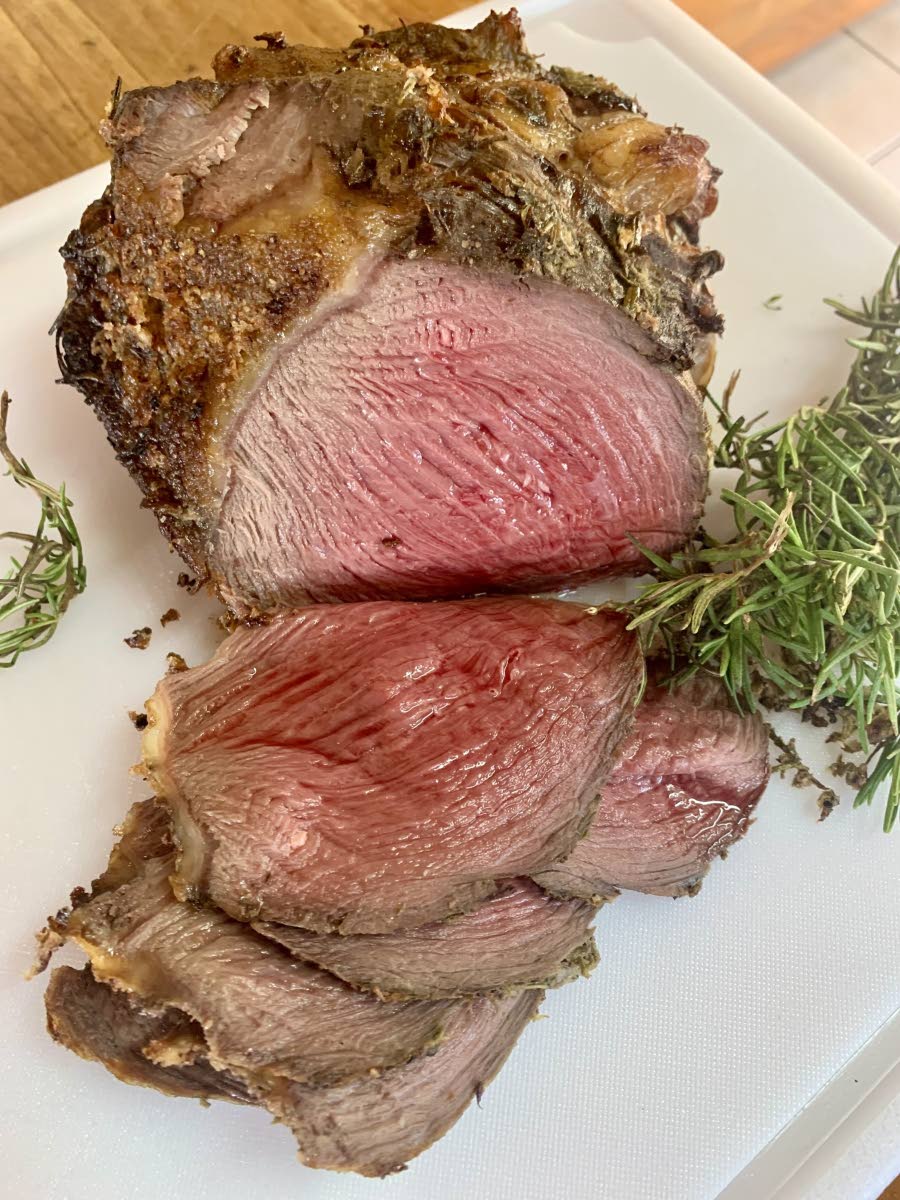
    A 3½-4 lb prime rump undergoes overnight marination in a sophisticated blend of minced garlic, olive oil, fresh thyme, black pepper, red wine vinegar, Dijon mustard, and red wine. The cooking process involves careful browning, slow roasting at 350°F with periodic basting using beef or chicken stock, and precise temperature monitoring to achieve ideal doneness.

    Garlic-Infused Leg of Lamb:
    A 4 lb bone-in leg of lamb receives an intense marinade of Dijon mustard, minced garlic, red wine vinegar, cracked black pepper, fresh rosemary, and olive oil. After overnight marination, the roast cooks at 375°F until reaching the optimal internal temperature of 140°F, followed by essential resting before carving.

    Herb-Roasted Chicken Technique:
    A 4 lb chicken undergoes meticulous preparation with a paste of chopped chives, garlic, olive oil, red wine vinegar, thyme, and black pepper. The bird marinates overnight before roasting at 375°F with continuous basting, resulting in exceptionally juicy meat with perfectly crisp skin.

    Each recipe emphasizes the importance of marination time, temperature control, proper resting periods, and sauce preparation techniques that transform pan drippings into flavorful accompaniments. These methods demonstrate how traditional cooking approaches can produce restaurant-quality results in home kitchens, celebrating the timeless appeal of roasted meats as both culinary centerpieces and versatile ingredients for subsequent meals.

  • Playwrights Workshop launches three plays for December

    Playwrights Workshop launches three plays for December

    Trinidad’s vibrant theatre community is set to host an extraordinary week of theatrical presentations during the first week of December. Three prominent organizations—Playwrights Workshop Trinbago (PWT), Trinidad Theatre Workshop (TTW), and Torch Theatre Company (TTC)—have joined forces to present a diverse program of performances and readings that highlight both emerging and established Caribbean talent.

    The cultural festivities commence on December 3 at 7 PM with PWT’s Monthly Readers Theatre Series, featuring a cold reading and audience discussion of ‘HerStory’ by Arnetia Thomas. This compelling drama explores the emotional journey of Claudette, a woman who channels her maternal instincts toward her extended family while grappling with her own inability to conceive. The narrative examines how personal pain can unconsciously affect relationships, following Claudette’s path toward self-discovery and empowerment.

    Thomas, an accomplished creative professional active since 2014, brings multifaceted experience to her writing. Holding a theatre arts degree from UWI, she has excelled as an actress, dancer, traditional mas performer, fire breather, educator, and director. She currently teaches theatre arts at Belmont Secondary School while co-managing her own theatre company, De Drama FacTTory, and traditional mas group Les Reines Djabbes.

    The theatrical journey continues on December 5 at 7 PM with a landmark off-script performance of Althea Milliband’s ‘Jury of Peers,’ directed by Marvin L Ishmael. This innovative production marks the first fully-staged interpretation of Milliband’s absurdist legal drama, which was inspired by a viral video depicting a crab wielding a knife. The play imaginatively explores the judicial implications of a crustacean potentially causing human fatality, questioning whether such an act could constitute self-defense, murder, manslaughter, or even suicide.

    Milliband, who describes herself as a revolutionary and aspiring playwright, developed this unconventional narrative after the bizarre video captured her creative imagination.

    Concluding the week’s events, Torch Theatre Company presents ‘Dat Is Mih Family’ on December 6 at 7 PM and December 7 at 6 PM. This improvisational Christmas comedy promises warmth and hilarity, offering audiences a lighthearted seasonal performance.

    All events will be hosted at the Trinidad Theatre Workshop’s venue at 6 Newbold Street, St Clair, Port of Spain. The Monthly Readers Theatre Series serves as a critical developmental platform for emerging playwrights, providing opportunity for script refinement through audience feedback and professional input. PWT encourages actors, directors, producers, and theatre enthusiasts to participate in these readings, as volunteers from the audience often contribute to the dramatic interpretations.

    Playwrights seeking to have their work featured in future readings must submit scripts for consideration through the MRTS program. Additional information regarding submissions and upcoming events can be obtained by emailing playwrightsworkshoptt@gmail.com, calling/texting/WhatsApping 351-6293, or visiting their social media channels @playwrightsworkshoptt on Facebook and Instagram.

  • The Marionettes Chorale ushers in Christmas at Queen’s Hall

    The Marionettes Chorale ushers in Christmas at Queen’s Hall

    The Marionettes Chorale, one of the Caribbean’s most prestigious performing arts ensembles, announces its highly anticipated annual Christmas concert series scheduled for December 5-7 at Queen’s Hall’s Winifred Atwell Auditorium. This cherished holiday tradition promises to deliver musical excellence through three public performances and an exclusive matinée dedicated to care home residents.

    Under the artistic direction of Gretta Taylor, Joshua Joseph, and guest conductor Dr. Nathan Nagir—a Trinidad and Tobago-born musician and Texas State University faculty member—the chorale will present a diverse repertoire spanning traditional carols, classical pieces, gospel arrangements, musical theater selections, calypso rhythms, and parang music. The program showcases both the adult and youth choirs alongside acclaimed soloists including Jacqueline Johnson, Debbie Nahous, Errol James, and Khadija Huggins.

    This year’s production features two special guest artists: renowned tenor Nigel Floyd and Payge Turner, the multi-talented singer-songwriter who gained national recognition on season 19 of NBC’s The Voice. Turner will perform a specially arranged piece alongside her mother, Jacqueline Johnson, marking a memorable family collaboration on stage.

    Established in 1963 and incorporated as a non-profit organization in 2005, the Marionettes Chorale has maintained six decades of artistic excellence, having premiered works by Caribbean and international composers, toured globally, and produced eight professional recordings. Their Christmas concerts have become cultural fixtures that annually draw multi-generational audiences.

    The 2025 series receives support from One Caribbean Media Ltd, Flow (Columbus Communications), AVIT Support Ltd, and Music Radio 97.1FM. Performance times are set for 7:00 PM on December 5-6 and 5:00 PM on December 7. Ticket information is available through orders@marionetteschorale.com, telephone inquiries at 790-1751, or via Queen’s Hall Box Office at 298-9089/376-5699 and queenshalltt.com.

  • Red Force skipper on Super50 final: Play smart, win for Jason

    Red Force skipper on Super50 final: Play smart, win for Jason

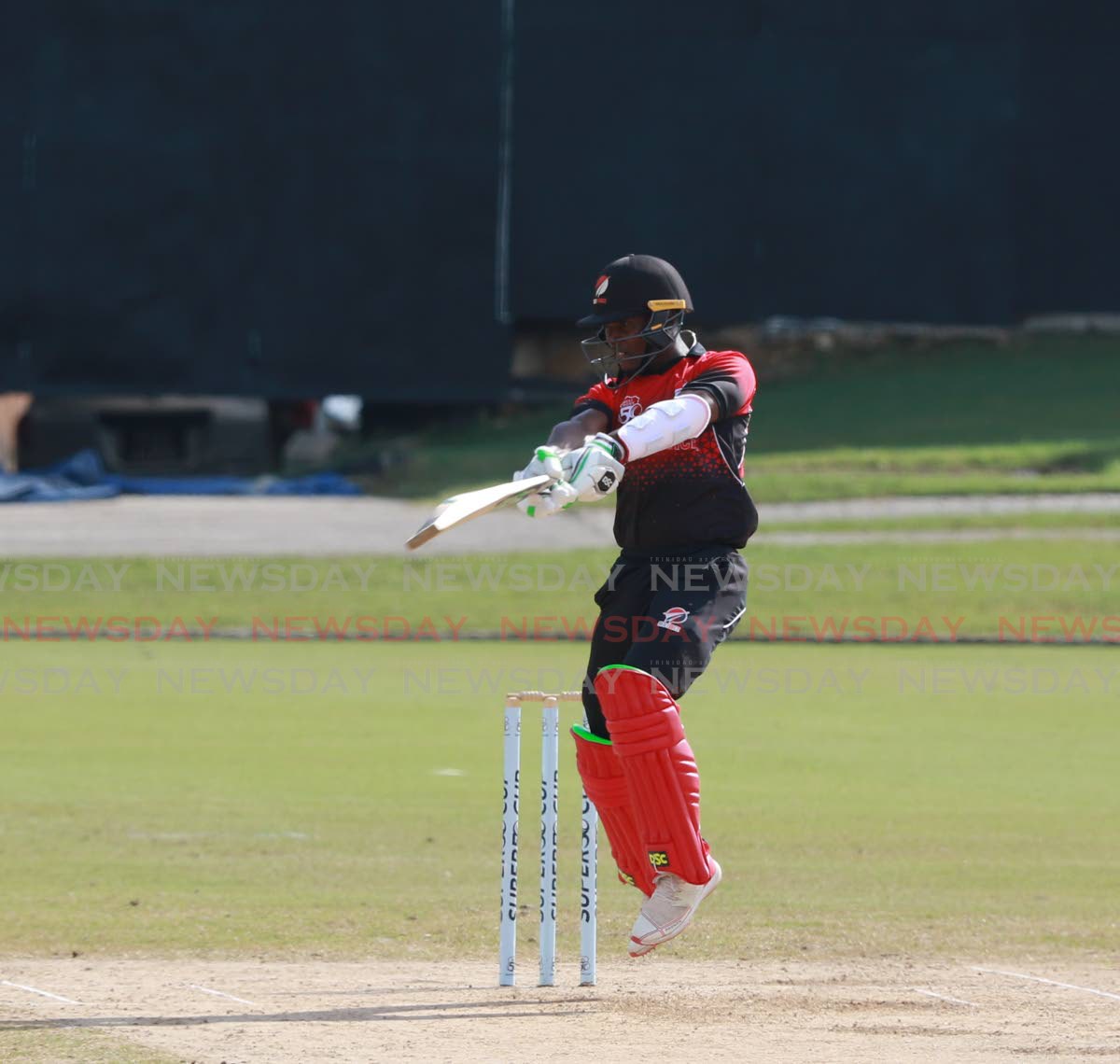
    The Brian Lara Cricket Academy in Tarouba sets the stage for a poignant CG United Super50 Cup final showdown on November 29, where Trinidad and Tobago Red Force confront Barbados Royals in a match laden with historical significance and emotional undertones. This championship clash represents more than mere silverware—it marks the final 50-over appearance for veteran all-rounder Jason Mohammed, 39, whose distinguished career concludes amid his team’s pursuit of regional glory.

    Under the leadership of captain Joshua Da Silva, Red Force advanced decisively to the final with an emphatic eight-wicket semi-final victory over Leeward Islands Hurricanes on November 27. Da Silva, yet to secure a senior national title as skipper, emphasized the critical importance of disciplined execution against Barbados’ seasoned lineup. “We must play intelligent cricket,” he stated. “Barbados possesses considerable experience, but our focus remains on sustaining quality performance throughout to reclaim the title.”

    The tournament’s narrative has been persistently interrupted by adverse weather conditions throughout Trinidad, resulting in multiple abandoned matches. Red Force emerged atop the six-team standings with three victories from five outings, while Barbados secured second position with two wins amid three rain-affected fixtures. Despite these disruptions, TT’s comprehensive semi-final triumph established formidable momentum entering the championship decider.

    Strategic reinforcements have strengthened Red Force’s campaign, particularly the inclusion of international batsman Amir Jangoo following opener Kjorn Ottley’s tournament-ending back injury. Jangoo’s unbeaten 72 during the semi-final, complemented by Tion Webster’s 83 and Jyd Goolie’s 23 not out, demonstrated the squad’s batting depth at crucial moments.

    Mohammed’s impending retirement adds profound sentimental dimension to the contest. The all-rounder stands as the competition’s all-time leading run-scorer with 3,815 runs—a achievement he describes as allowing him to “lift my head high and say I’ve done good things for TT cricket.” His farewell coincides with head coach Rayad Emrit’s opportunity to secure his maiden Super50 trophy since assuming leadership.

    Both squads present formidable lineups: TT features Da Silva’s strategic captaincy alongside experienced campaigners including Cariah, Charles, and Webster, while Barbados counters with international quality through Mayers, Brathwaite, and Jordan. The final promises competitive intensity heightened by historical context and personal narratives, transforming a cricket match into a compelling sporting spectacle.

  • Military expert on Tobago installation: ‘War on US radar’

    Military expert on Tobago installation: ‘War on US radar’

    Tobago has become the site of a significant military installation as the United States positions a battlefield operational radar system at Crown Point’s ANR Robinson International Airport. This development occurs against a backdrop of intensifying geopolitical friction between the US and Venezuela, signaling potential preparation for aerial combat operations according to military analysts.

    The advanced intelligence surveillance and reconnaissance system, with an operational range of 50-100 miles, represents the first-ever deployment of American military hardware on Tobagonian soil. Equipment components arrived via multiple C-17 aircraft transports, with installation proceedings commencing immediately.

    This strategic move follows the recent diplomatic engagement between US Joint Chiefs of Staff Chairman General Dan Caine and Trinidad and Tobago Prime Minister Kamla Persad-Bissessar. During their meeting at St. Ann’s Diplomatic Centre, discussions presumably addressed regional security concerns and military cooperation frameworks.

    Prime Minister Persad-Bissessar initially treated the radar deployment as a matter of heightened national security confidentiality. However, following media disclosure of the Tobago installation, she confirmed plans for an additional radar system in Trinidad while acknowledging the compromised secrecy surrounding the operations.

    Military sources suggest Tobago may represent a secondary option after Grenada’s refusal to host similar US equipment last month. The island’s proximity to Venezuela makes it strategically valuable for monitoring potential air operations in the escalating conflict scenario.

    Local political leadership has expressed strong opposition to the deployment. Tobago Chief Secretary Farley Augustine emphatically declared the island’s neutrality stance, stating: “Tobago not going to be a part of no war! We have adopted a position of neutrality, which means we ent pro or anti anybody.” He emphasized that conflicts between US and Venezuelan leadership should remain their exclusive concern.

    Opposition leader Ancil Dennis of the Tobago Island Council has challenged Augustine’s professed ignorance of the developments, suggesting prior awareness and demanding unified resistance from political, religious, and civil society leaders against the federal government’s military cooperation decisions.

  • PM: Farley didn’t have to be told beforehand’

    PM: Farley didn’t have to be told beforehand’

    A diplomatic clarification has emerged regarding the installation of a temporary US military radar system in Tobago, revealing tensions between national security protocols and regional governance transparency. Prime Minister Kamla Persad-Bissessar confirmed that Tobago’s Chief Secretary Farley Augustine was deliberately excluded from prior notifications regarding the defense installation, citing his non-membership in the National Security Council.

    The radar system, currently being established with approximately 100 fluctuating US personnel, represents a temporary solution to address critical gaps in Trinidad and Tobago’s surveillance capabilities. According to the Prime Minister’s statements to Newsday via WhatsApp on November 28, the existing radar infrastructure inherited by the current government operated sporadically and failed to provide comprehensive coverage of the nation’s territory. The Coast Guard reportedly lacked real-time data access, with the system additionally compromised by unspecified vulnerabilities.

    This development follows Chief Secretary Augustine’s November 28 declaration of Tobago’s neutrality in ongoing US-Venezuela geopolitical tensions. The Office of the Chief Secretary disclosed that Augustine had demanded comprehensive details about the installation during a Wednesday night telephone conversation with the Prime Minister and intends to convene formal meetings with involved Cabinet ministers regarding the radar’s purpose and operational scope.

    Prime Minister Persad-Bissessar defended the secrecy surrounding the deployment, explaining that public disclosure would have alertedly notified narcotraffickers and human smugglers about enhanced surveillance capabilities. The premature exposure by Guardian Media, she contended, eliminated the strategic advantage of covert implementation. The temporary system will remain operational until Trinidad and Tobago can procure and install a permanent, upgraded radar system independently. US personnel currently in Tobago include members of the Marine Expedition Unit conducting joint training exercises with the Trinidad and Tobago Defence Force alongside technical specialists establishing access roads and installation infrastructure.