博客

  • Grenada in competitive match against Concacaf’s #3 ranked Costa Rica

    Grenada in competitive match against Concacaf’s #3 ranked Costa Rica

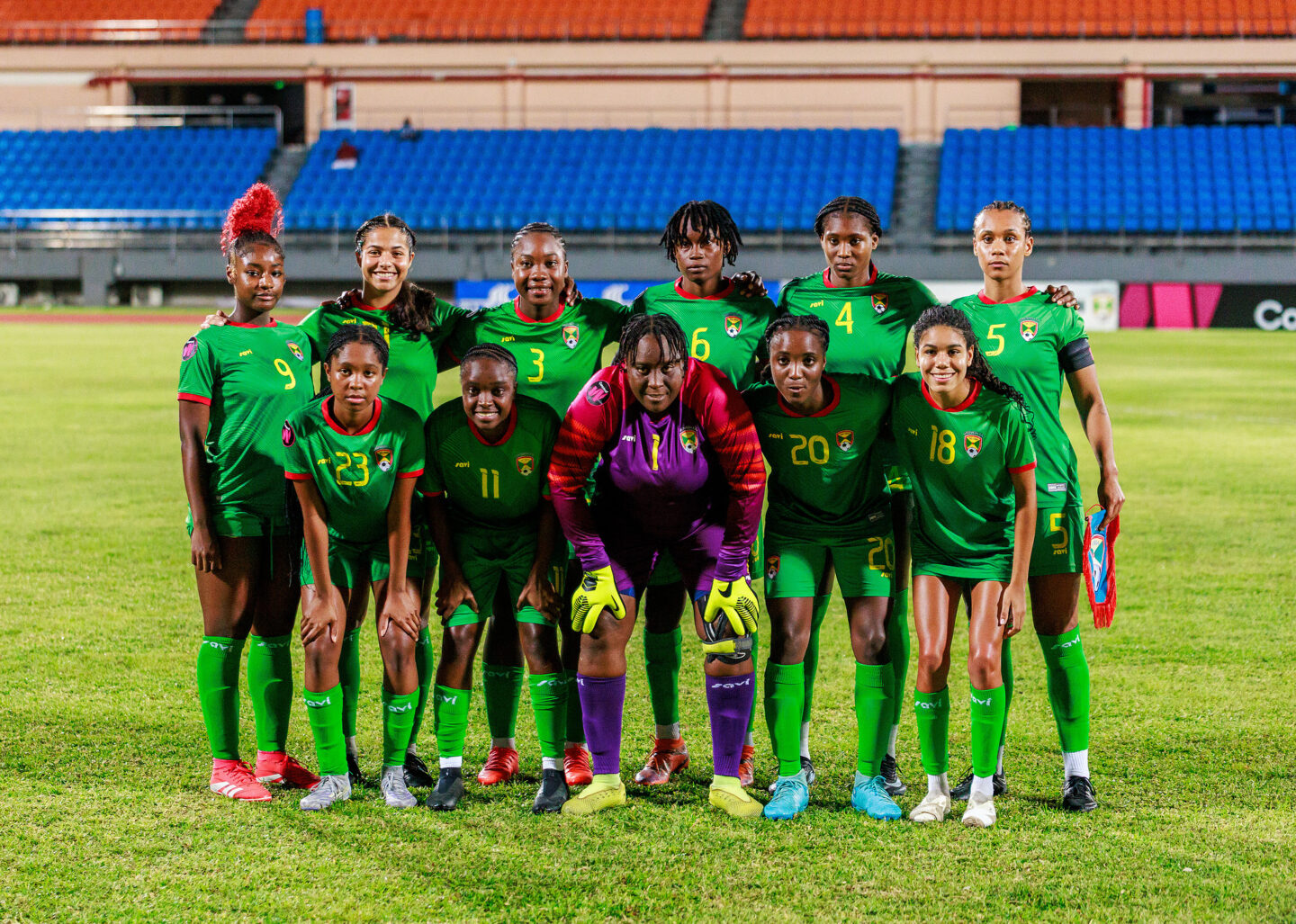
    In a display of emerging football prowess, Grenada’s Senior Women’s National Team delivered an impressive performance against CONCACAF powerhouse Costa Rica on Saturday evening at Kirani James Athletics Stadium. Despite ultimately falling 2-1 to their higher-ranked opponents, the match signaled a significant evolution in Grenada’s competitive capabilities on the international stage.

    The breakthrough moment arrived in the 32nd minute when defender Naomi Bedeau expertly converted a set-piece opportunity, sending the home crowd into celebrations with a well-executed goal. Costa Rica responded with strategic precision just before halftime, with Priscila Chinchilla finding the equalizer during stoppage time at 45+2′. The visitors secured their victory in the 61st minute through Melissa Herrera’s decisive finish.

    Under the tactical guidance of head coach Melanie Thomas, Grenada demonstrated exceptional defensive organization and relentless determination throughout the contest. The team’s disciplined approach and effective transitions consistently challenged Costa Rica, forcing the regional favorites to maintain maximum concentration until the final whistle.

    Grenada Football Association President Marlon Glean expressed profound pride in the team’s performance, stating: ‘The players exhibited tremendous heart, discipline, and belief from the opening minute to the conclusion. This match represents another crucial milestone in our commitment to advancing women’s football development throughout Grenada.’

    Coach Thomas reinforced this perspective, noting: ‘We recognized Costa Rica’s quality as opponents, but our squad responded with exceptional courage and unity. We’re systematically building a competitive team, and tonight’s performance confirms our progressive trajectory.’

    The match forms part of the 2025/26 CONCACAF W Qualifiers where Grenada competes in Group C alongside Costa Rica, Guatemala, Bermuda, and the Cayman Islands. While the result didn’t favor the home side, the performance underscored Grenada’s growing reputation as an emerging force capable of challenging established football nations.

    The GFA considers this encounter as foundational preparation for future competitions, reaffirming their dedication to providing sustained support, developmental resources, and competitive opportunities for the women’s national program. Supporters and stakeholders are encouraged to maintain their backing as the team continues its qualification journey, writing a new chapter defined by resilience, ambition, and national pride.

  • Skerrit congratulates St. Lucia’s Phillip J. Pierre on second consecutive election victory

    Skerrit congratulates St. Lucia’s Phillip J. Pierre on second consecutive election victory

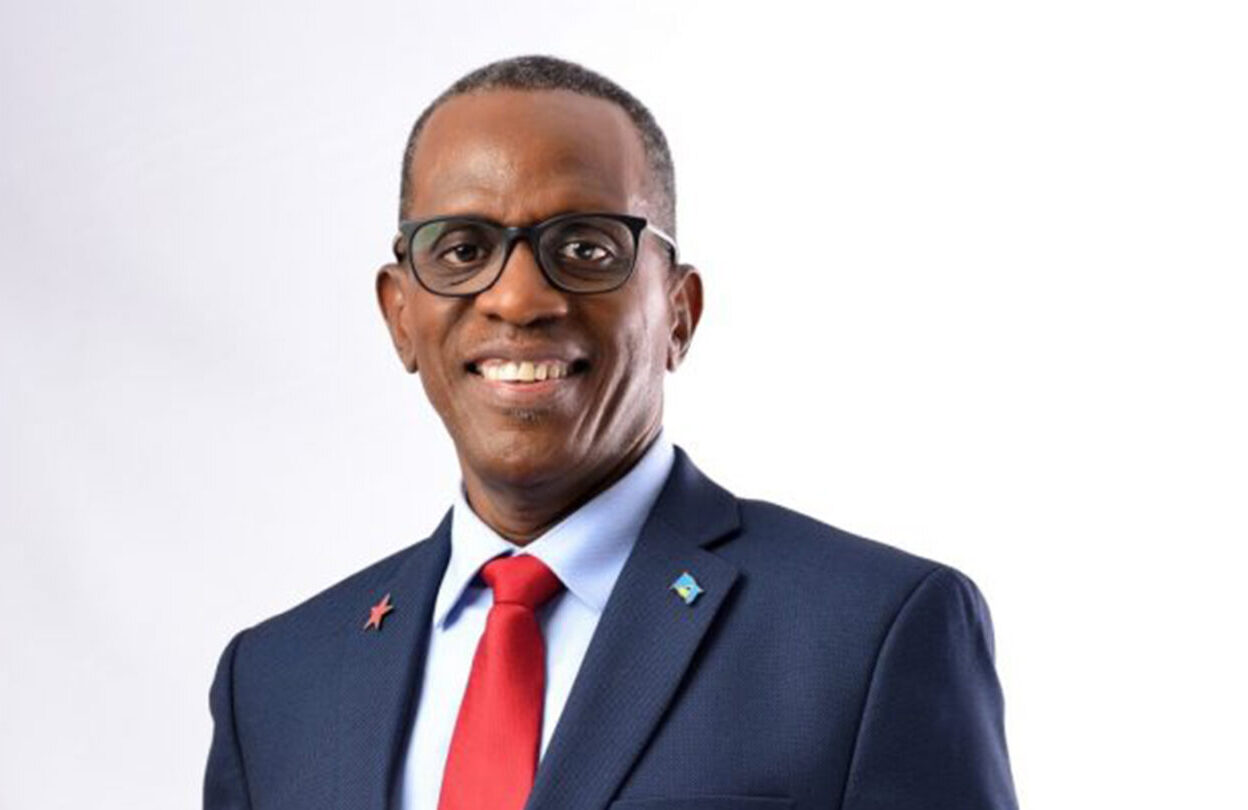
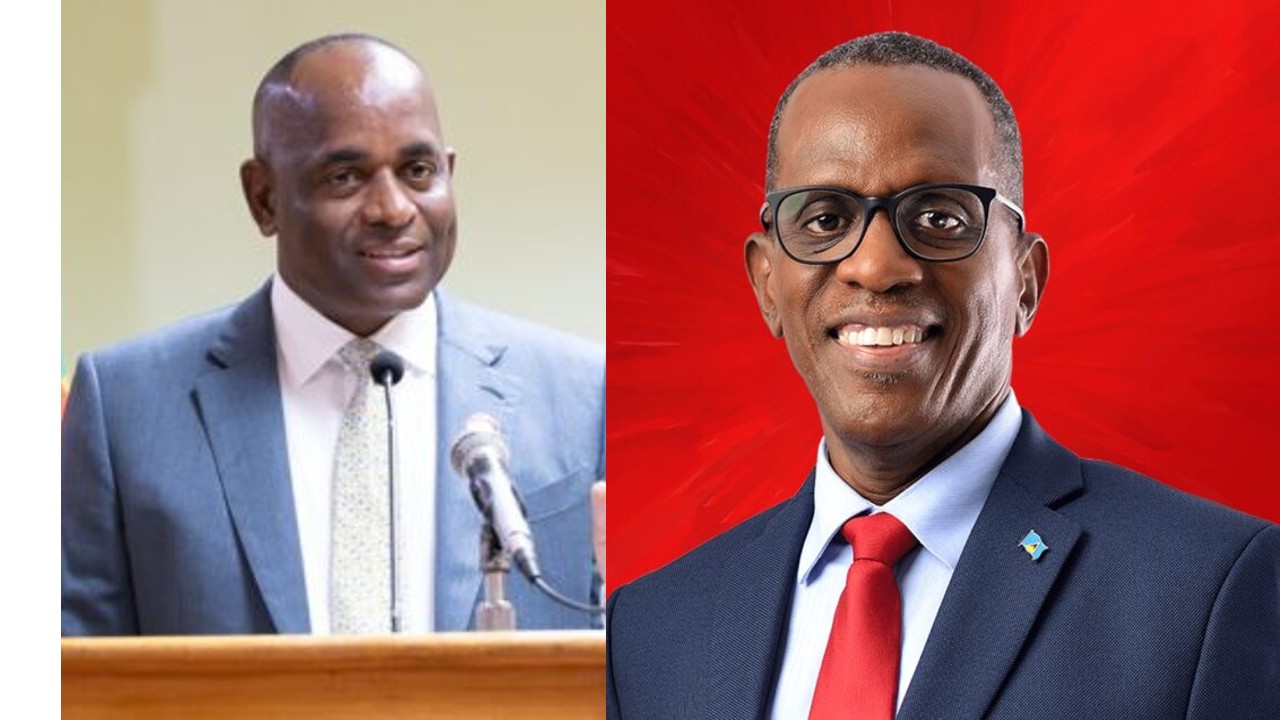
    In a significant display of regional political solidarity, Dominica’s Prime Minister Roosevelt Skerrit has extended heartfelt congratulations to St. Lucia’s Prime Minister-elect Phillip J. Pierre following his party’s decisive electoral victory. The St. Lucia Labour Party secured an overwhelming mandate, capturing 14 of the 17 parliamentary seats in what analysts are calling a remarkable affirmation of public trust.

    The electoral outcome represents a substantial political triumph for Pierre, who has maintained continuous parliamentary representation since 1997. His principal opponent, United Workers Party leader Allen Chastanet, managed to retain only his personal constituency seat, while independent candidates secured the remaining two positions in the legislative assembly.

    Prime Minister Skerrit characterized the victory as “massive” in scale and significance, attributing the success to Pierre’s unwavering commitment to accessible governance. “When leadership remains proximate to the citizens and acknowledges that ultimate authority resides with the populace, they willingly entrust you with their power,” Skerrit observed in his post-election analysis.

    The Dominican leader elaborated on the philosophical underpinnings of effective political leadership, emphasizing that longevity in public service derives not from temporal endurance but from sustained emotional connection with constituents. “The critical factor isn’t material provision or rhetorical eloquence,” Skerrit noted, “but rather the capacity to make citizens feel understood, valued, and represented in their aspirations and challenges.”

    Drawing historical parallels, Skerrit referenced veteran politician Stephenson King’s enduring parliamentary presence since the late 1980s as exemplary of this people-centered approach. The commentary suggests a emerging regional governance model where political success correlates directly with leaders’ demonstrated empathy and relational consistency with their electorate.

    This electoral endorsement, according to Skerrit’s assessment, validates the principle that governmental legitimacy and effectiveness emerge from continuous engagement with citizen needs rather than ideological positioning or policy promises alone. The victory stands as testament to the enduring relevance of empathetic leadership in contemporary Caribbean politics.

  • Modern Slavery Surges to 50 Million Victims Worldwide, ILO Warns

    Modern Slavery Surges to 50 Million Victims Worldwide, ILO Warns

    A disturbing global assessment from the International Labour Organisation (ILO) reveals a significant escalation in modern slavery, with an estimated 50 million individuals trapped in exploitative conditions in 2021—a staggering increase of 10 million victims since 2016. This umbrella term, encompassing forced labour, debt bondage, coerced marriage, and human trafficking, signifies situations where individuals cannot escape due to threats, violence, or deception.

    The geographical spread of this crisis is pervasive, transcending ethnic and economic boundaries. Contrary to common perception, over half (52%) of all forced labour and a quarter of forced marriages are documented in upper-middle or high-income nations. The Asia-Pacific region bears the highest absolute burden with 15.1 million victims, though the Arab States show the highest prevalence per capita.

    Financially, this exploitation is a colossal illicit enterprise. The ILO estimates that forced labour alone generates an annual $236 billion in illegal profits—funds effectively stolen from vulnerable workers. This massive capital drain exacerbates poverty, reduces remittances for migrant families, deprives governments of tax revenue, and empowers criminal networks, thereby undermining the rule of law.

    The private sector is the primary perpetrator, responsible for 86% of cases. This breaks down to 63% for labour exploitation and 23% for sexual exploitation across industries like manufacturing, services, agriculture, and domestic work. State-imposed forced labour accounts for the remaining 14%.

    In response, the international community observes the International Day for the Abolition of Slavery on December 2nd, reinforcing commitments to eradicate these contemporary forms of servitude. The ILO’s legally binding Protocol to combat forced labour, active since November 2016, aims to strengthen global efforts, yet the data indicates a pressing and growing challenge that demands urgent, coordinated action worldwide.

  • COMMENTARY: A note on the electoral defeat of Ralph Gonsalves, the decline of the 1970s Caribbean left, and lessons earned across a lifetime

    COMMENTARY: A note on the electoral defeat of Ralph Gonsalves, the decline of the 1970s Caribbean left, and lessons earned across a lifetime

    The recent electoral defeat of Dr. Ralph Gonsalves in St. Vincent & the Grenadines represents far more than the conclusion of a lengthy political career. This watershed moment signifies the ultimate collapse of a progressive tradition that once dominated Caribbean political thought during the 1970s—a movement that inspired generations but ultimately failed to develop into a sustainable, democratic force capable of institution-building.

    The historical context traces back to the Black Power Revolution of 1970, when the Trinidad Regiment mutinied under Geddes Granger’s leadership. This anti-colonial uprising inspired young Sandhurst graduates like Rafiq Shah and Rex LaSalle to challenge established structures. Across Dominica and other islands, educational institutions such as St. Mary’s Academy became hotbeds of revolutionary thinking, with students including the late Dr. Wellsworth Christian embracing calls for Black dignity and regional sovereignty.

    While the socialist ideals of that era provided a necessary antidote to colonial oppression, retrospective analysis reveals critical shortcomings. The movement fundamentally misunderstood democratic principles, undervalued the rule of law, and dismissed the importance of private enterprise in economic development. Ironically, certain colonial-era institutions—independent judiciary systems, competent healthcare frameworks, and professional civil services—proved more effective than their replacements despite their problematic origins.

    The progressive generation that produced leaders like Gonsalves ultimately succumbed to power’s corrupting influence. Rather than building sustainable institutions, they created political machines prioritizing spectacle over substance. The region now faces multiple crises: collapsing scientific innovation, epidemic crime rates, and systemic corruption that has transformed civil services into extensions of political parties.

    This analysis identifies deeper philosophical failures—the abandonment of fundamental values like nonpartisan service and moral integrity that were once taught in Caribbean households. True development requires rebuilding institutional frameworks based on humility, restraint, and genuine public service rather than dynastic ambition and power consolidation.

    The Caribbean’s future stability depends on cultivating sober thinking, disciplined citizenship, and robust institutions that can withstand political turbulence. This necessitates honest historical reckoning and courageous breaks from the intoxication of power that has characterized regional politics for decades.

  • Triumphant Pierre Makes History With Longest Unbroken Run as MP

    Triumphant Pierre Makes History With Longest Unbroken Run as MP

    In a monumental political achievement, Prime Minister Philip J. Pierre has carved his legacy in Saint Lucian history by securing an unprecedented seventh consecutive term as Member of Parliament for Castries East. His Saint Lucia Labour Party (SLP) delivered a decisive mandate in the December 1, 2025 general election, capturing 14 of 15 parliamentary seats.

    Addressing supporters from his constituency office in Marchand on Monday evening, the 71-year-old leader expressed profound gratitude toward his supporters and campaign team. He emphasized the ‘special relationship’ he has cultivated with Castries East constituents since first contesting the seat in 1997, noting that some original campaign team members remain with him nearly three decades later.

    The Prime Minister condemned the personal attacks directed at his daughter during the campaign, describing them as representing a troubling low in Saint Lucian political discourse. Despite these challenges, Pierre extended conciliatory gestures toward the opposition, specifically congratulating Allen Chastanet, the sole United Workers Party candidate to retain a parliamentary seat.

    Reflecting on his political journey from parliamentary representative to cabinet minister and ultimately Prime Minister, Pierre acknowledged former Prime Minister Kenny Anthony for initially bringing him into cabinet leadership. He pledged immediate action on campaign promises, including implementing VAT-free days and ensuring public servants receive promised back pay.

    The Prime Minister is scheduled to be formally sworn in by week’s end, with his new cabinet appointments expected shortly thereafter. Pierre concluded with a forward-looking statement: ‘This country is on the right trajectory, and we have to move forward together.’

  • 19-year-old charged with more than 30 deception counts

    19-year-old charged with more than 30 deception counts

    A significant financial crime case has emerged in Barbados as a 19-year-old resident faces comprehensive criminal deception charges. Raquan Ricardo Clarke from North Wildey, St Michael, has been formally charged with over 30 counts of fraudulent activities spanning multiple police jurisdictions across the island.

    The Financial Crime Investigations Unit (FCIU) conducted a thorough investigation into Clarke’s alleged activities between May and October 2025. According to police reports, the suspect targeted numerous victims through sophisticated deception schemes, resulting in approximately $32,979 worth of stolen property.

    The extensive charges reveal a pattern of criminal behavior across three major police districts. Central Station records indicate Clarke allegedly deceived Peter Carter through eight separate incidents between May 11 and September 18, followed by sixteen additional counts against Joseph Atherley from July through October. The Central Station charges also include single and double counts against Gracelyn Wiles and Anne-Marie Persid respectively.

    Further allegations involve two counts of criminal deception against Janet Mullin in the Hastings/Worthing area during July, and three additional counts targeting Jarvis Perry in District ‘A’ between September 22-24, plus a final count against Katrina Bend in early October.

    Clarke is scheduled to appear before the District ‘A’ Criminal Court to answer these serious charges. The case highlights growing concerns about financial crimes targeting multiple victims through systematic deception schemes. Law enforcement officials emphasize their commitment to addressing complex financial crimes that affect community members across different regions.

  • Grenada congratulates Philip J Pierre on his re-election

    Grenada congratulates Philip J Pierre on his re-election

    The Government of Grenada has formally extended its congratulations to Prime Minister Philip J Pierre following his resounding electoral victory in St. Lucia’s recent general elections. Prime Minister Pierre’s Saint Lucia Labour Party achieved a commanding mandate, securing an overwhelming 14 out of 17 parliamentary seats in the legislative body.

    This decisive electoral outcome demonstrates strong public confidence in Prime Minister Pierre’s leadership capabilities and his administration’s developmental vision for the nation. Grenadian officials particularly noted the successful execution of the electoral process, highlighting it as a testament to St. Lucia’s robust democratic traditions and institutional stability.

    The two Eastern Caribbean nations maintain deep historical connections through shared cultural heritage and regional cooperation frameworks. Grenada anticipates strengthened bilateral engagement with St. Lucia across multiple sectors, with particular emphasis on enhanced collaboration within the Caribbean Community (CARICOM) architecture.

    Grenadian Prime Minister Dickon Mitchell personally conveyed his government’s well-wishes for Prime Minister Pierre’s new term, expressing confidence that his leadership will bring continued progress and prosperity to the people of St. Lucia. Both administrations have signaled commitment to advancing regional integration initiatives and addressing common challenges through coordinated policy approaches.

    The Office of the Prime Minister of Grenada issued the formal statement of congratulations, reaffirming the nation’s dedication to maintaining and strengthening diplomatic relations with its Caribbean neighbor throughout Prime Minister Pierre’s upcoming term.

  • Governor General Attends the Antigua and Barbuda Horticultural Society’s Annual Fair & Flower Show

    Governor General Attends the Antigua and Barbuda Horticultural Society’s Annual Fair & Flower Show

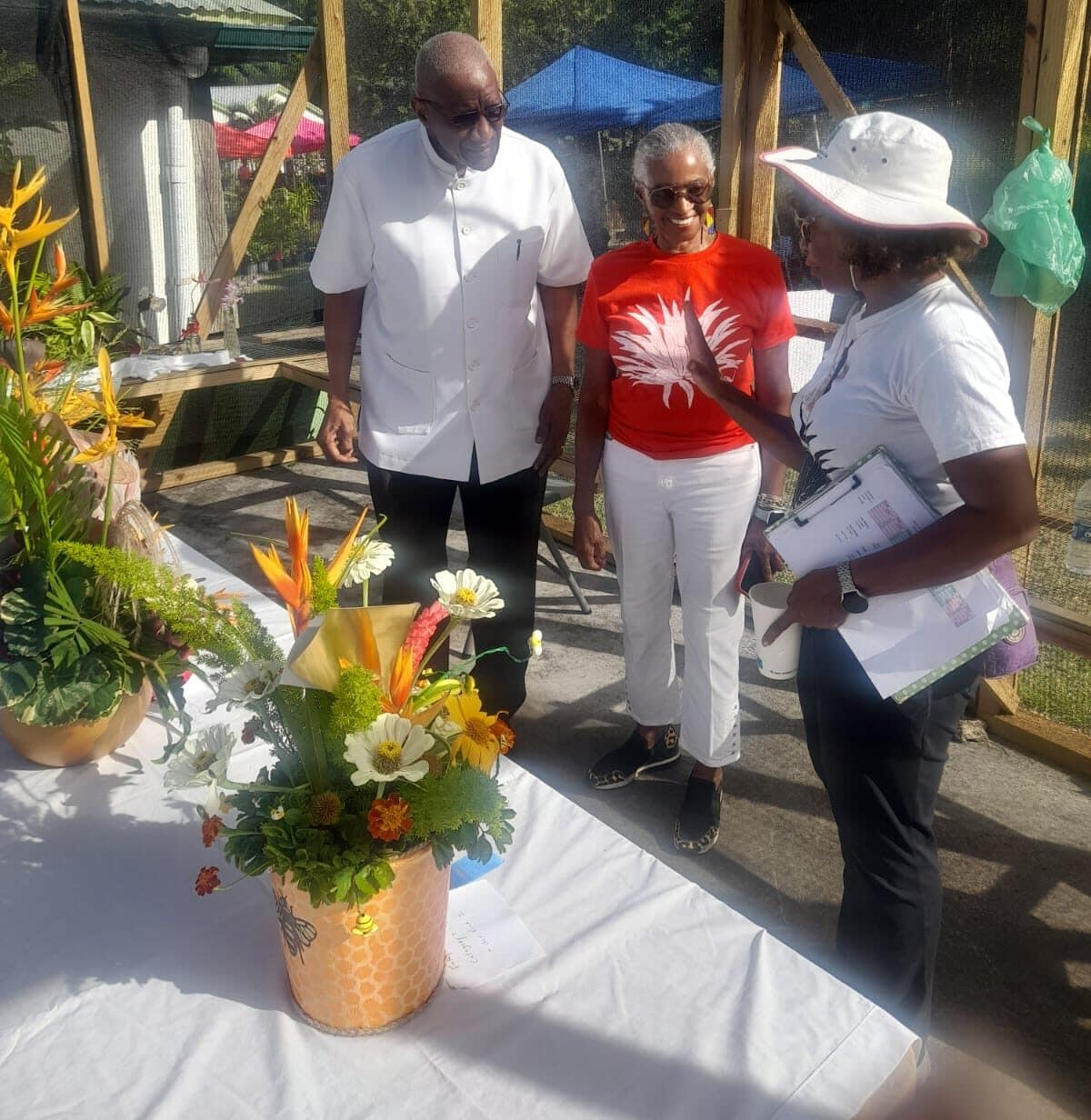
    The tranquil Agave Gardens served as the picturesque backdrop for the Antigua and Barbuda Horticultural Society’s Annual Fair & Flower Show this past Saturday, where His Excellency Sir Rodney Williams, Governor-General, made a distinguished appearance. The event transformed the society’s headquarters into a vibrant hub of botanical excellence, attracting plant enthusiasts, floral designers, local vendors, and community members for an afternoon dedicated to horticultural innovation and sustainable gardening practices.

    President Mrs. Barbara Japal personally escorted the Governor-General through the meticulously curated floral exhibition room, where member Ms. Jackie Ferracho presented an impressive array of locally crafted floral arrangements and botanical displays. Sir Rodney Williams commended the society for its ongoing commitment to environmental stewardship, gardening education, and the enhancement of natural beauty throughout the nation.

    The Governor-General engaged with numerous exhibitors during his tour, including Denise’s Plants and Lorilyn Walker’s diverse presentation of ornamentals, succulents, and tropical foliage. The marketplace atmosphere buzzed with energy, reflecting the growing island-wide interest in home gardening and eco-conscious horticultural methods.

    The afternoon’s highlight emerged during the Floral Design Competition awards ceremony. Mr. Frankie Pereira accepted dual honors on behalf of Lorraine Davis, who achieved top accolades in multiple categories including the prestigious Best in Show award for her innovative ‘Let’s Pollinate’ creation. Additionally, Ms. Sandra Patrick of Exclimations received recognition for Best Booth, celebrating her exceptional creative presentation and audience engagement.

    Other notable participants included Rene Potter from Prickly Plant Nursery, who introduced an extensive variety of cacti and succulents, and Ralph’s Trees, which featured a remarkable collection of rare fruit trees with historical significance. Fresh produce from Ann Ferkin’s garden provided attendees with locally grown fruits and vegetables.

    In his closing remarks, the Governor-General expressed profound appreciation to organizers, exhibitors, and attendees for creating an inspiring community event that fosters local talent and strengthens communal bonds through shared appreciation for horticultural arts.

  • 16-year-old charged with firearm use, endangering four lives

    16-year-old charged with firearm use, endangering four lives

    A 16-year-old resident of St. George is confronting serious legal consequences after being formally charged with multiple criminal offences involving firearms and endangerment. The accused, identified as Demario David Michael Williams from Eastlyne, St. George, was apprehended by officers from the Criminal Investigations Department (South) in relation to incidents allegedly occurring on November 27, 2025.

    The charges against Williams include the use of a firearm and four separate counts of endangering life involving individuals identified as Akiel Jackson, Sachin Etwaroo, Chad Bynoe, and Brandon Devonish. Additionally, he faces charges of criminal damage against properties belonging to Janelle Russell and Patel Puckerin.

    The case is proceeding through the judicial system with Williams scheduled to make his appearance before the District ‘B’ Criminal Court. This development marks a significant escalation in the legal proceedings surrounding the alleged November incidents, drawing attention to youth involvement with firearms and violent crime in the community.

    Law enforcement authorities have emphasized the seriousness of the charges, particularly highlighting the multiple endangerment counts that suggest potentially widespread risk to public safety. The formal charges indicate that investigators have gathered sufficient evidence to proceed with prosecution despite the youth of the accused.

    The upcoming court appearance will determine the next steps in the judicial process for the teenager, whose case represents ongoing concerns about youth crime and firearm-related offenses in the region. The matter continues to be handled by specialized criminal investigation units within the police force.

  • Election day gunfire hits Dennery

    Election day gunfire hits Dennery

    Saint Lucia’s emergency services responded to two separate shooting incidents within 36 hours, including one occurring on Election Day in Rich Fond, Dennery. The Saint Lucia Fire Service reported attending to an adult male with gunshot wounds to his calves at approximately 1 p.m. Monday, who was found seated under police supervision at the scene.

    Medical personnel conducted on-site treatment following standardized trauma protocols before transferring the victim to a medical facility for specialized care. This incident followed another violent episode in Grand Ravine during the early hours of Sunday, where emergency crews discovered an adult male lying supine with a critical chest wound.

    The Fire Service detailed that the first victim sustained a penetrating injury to the right side of his chest, requiring immediate medical intervention before being rushed to a nearby healthcare facility. Both cases demonstrate the emergency response system’s protocol-driven approach to trauma care, though they highlight concerning patterns of violence occurring in close temporal proximity during a significant national event.