博客

  • Coach Nurse: WI U-19s ready for anything at Youth World Cup

    Coach Nurse: WI U-19s ready for anything at Youth World Cup

    With unwavering confidence and thorough preparation, the West Indies men’s under-19 cricket team has commenced their campaign for ICC World Cup glory in Africa. Head coach Rohan Nurse declared his squad fully equipped to handle diverse challenges—from formidable opponents to arid pitch conditions—as they pursue cricket’s most prestigious youth championship running from January 15 to February 6.

    The 15-member contingent, featuring captain Joshua Dorne and 2024 World Cup standout Jewel Andrew, departed from Barbados’ Grantley Adams International Airport on January 6. Their journey follows an impressive preparatory phase that included Youth ODI series victories against Sri Lanka (4-3) and England (5-2) in late 2025, providing crucial momentum ahead of the global tournament co-hosted by Namibia and Zimbabwe.

    West Indies will engage in preparatory matches against Ireland (January 10) and Japan (January 13) before launching their Group D campaign against Tanzania on January 15. Subsequent group stage matches against Afghanistan (January 18) and South Africa (January 22) at Windhoek’s High Performance Oval will determine their progression to the Super Six phase. The tournament structure advances top three teams from each group, with semi-finals scheduled for February 3-4 and the championship finale at Harare Sports Club on February 6.

    Coach Nurse emphasized the squad’s tactical versatility: “We’ve assembled a balanced attack featuring quality fast bowlers and attacking wrist-spinners. Our players have demonstrated adaptability in both setting targets and chasing totals during recent series, which positions us favorably for World Cup challenges.”

    The team draws inspiration from West Indies’ historic 2016 under-19 World Cup triumph in Bangladesh, where current international stars like Shimron Hetmyer and Alzarri Joseph secured victory against India. Nurse has incorporated this legacy into motivational sessions while emphasizing the opportunity for this generation to create their own history.

    “We’re daring to dream,” Nurse stated. “Our minimum objective is advancing beyond the previous tournament’s performance. These young men understand the significance of representing the Caribbean and are ready to embrace this platform for professional development and regional pride.”

  • PM urges church partnership to help further reduce Jamaica’s murder rate

    PM urges church partnership to help further reduce Jamaica’s murder rate

    KINGSTON, Jamaica — In a landmark address at the 20th ‘Heal the Family, Heal the Nation’ Day of Prayer Service, Prime Minister Andrew Holness issued a compelling appeal for ecclesiastical collaboration in Jamaica’s ongoing battle against violent crime. Speaking at Power of Faith Ministries in Portmore, St Catherine, the leader outlined an ambitious strategy to transform religious institutions into active participants in crime prevention.

    The nation has achieved a notable milestone with fewer than 700 homicides recorded in 2025—the lowest figure in thirty-one years. Despite this progress, the administration remains focused on an even more ambitious objective: reducing murder rates to match the regional standard of 15 per 100,000 residents. Current statistics indicate the nation is approaching this benchmark, with rates now dipping below 25 per 100,000.

    Holness emphasized that achieving this goal requires addressing the root causes of social violence, including domestic altercations, intimate partner conflicts, and neighborhood disputes that frequently escalate into fatal encounters. “We require the church’s assistance beyond spiritual support—we need concrete action,” he asserted. “Society must hear from pulpits everywhere that violence is unacceptable as a conflict resolution mechanism.”

    The Prime Minister highlighted the unique positioning of religious organizations to implement immediate intervention strategies. Churches can offer counseling services and diversion programs to at-risk youth before they become entangled in criminal networks. “Many young people in our communities could just as easily join church choirs as they might join gangs,” Holness observed. “The difference often lies in which group extends the invitation first. We need the church’s army to redirect these youngsters toward positive alternatives.”

    Holness envisions a collaborative framework where religious institutions work alongside law enforcement and military units to foster what he defines as true peace: the capability to resolve disagreements without violence. He additionally called for prayers to influence those involved in criminal enterprises, urging them to abandon violence and voluntarily surrender their weapons.

    The event, organized by Power of Faith Ministries International under the theme ‘Reunite and Build the Family with Love and Forgiveness’, coincided with Jamaica’s sixth Annual National Day of Prayer, underscoring the government’s commitment to integrating spiritual approaches with security policy.

  • Chief justice lauds  performance of  parish courts

    Chief justice lauds performance of parish courts

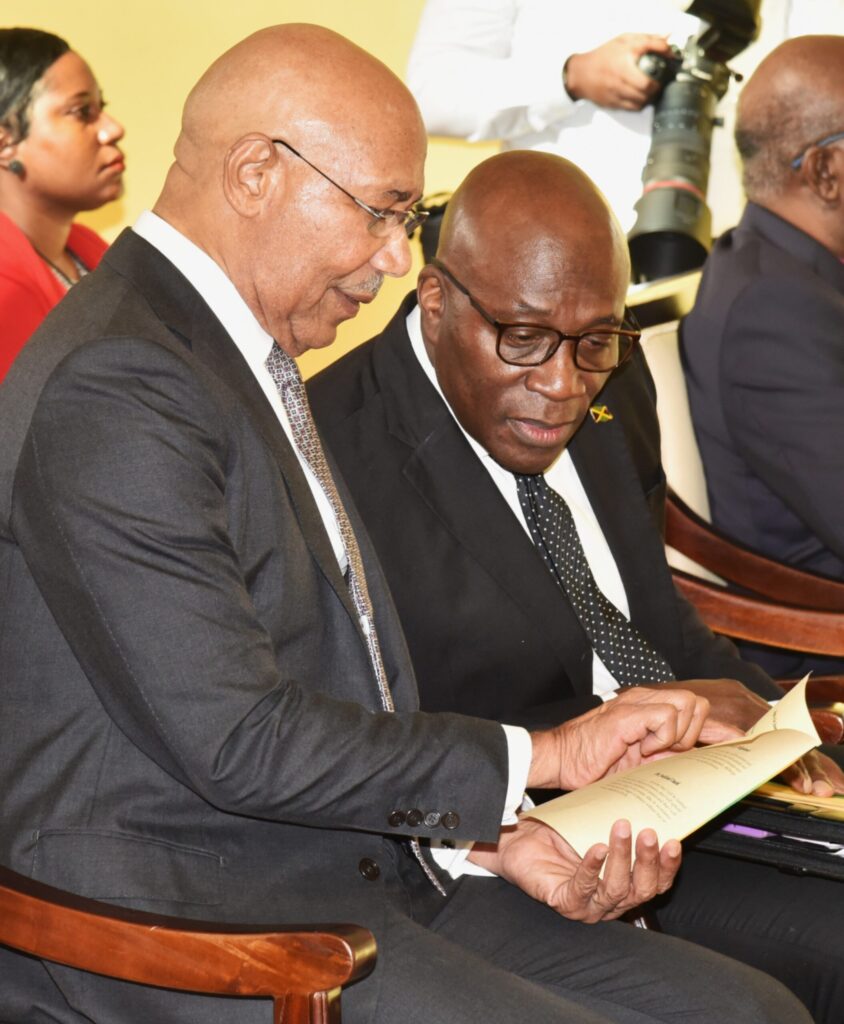
    KINGSTON, Jamaica — The Jamaican judicial system is demonstrating significant progress in case management and operational efficiency, according to Chief Justice Bryan Sykes. Speaking at a recent swearing-in ceremony for six newly appointed judicial officers at King’s House, Justice Sykes highlighted several key achievements and ongoing reform initiatives.

    The parish courts have maintained exceptional performance levels despite facing substantial challenges, including inadequate physical infrastructure and disruptions caused by Hurricane Melissa. Notably, these courts have successfully reduced their net case backlog to under three percent, even with a tightened time standard of 20 months for case resolution.

    Justice Sykes reported that the Court of Appeal continues to excel regionally, delivering an impressive 56 judgments for every 10 cases reserved. This performance metric establishes Jamaica’s appellate court as one of the most efficient within the Caribbean region.

    Substantial structural reforms are underway at the Supreme Court, particularly within the civil registry system. With support from the Ministry of Finance, the judiciary is implementing a docket system that will organize judges, masters, and administrative staff into specialized teams. This reorganization will assign each team responsibility for cases from initial assignment through final disposition, creating greater accountability and streamlined processing.

    In a landmark development, multiple judicial entities including the Court of Appeal, the High Court Division of the Gun Court in Kingston, the St. Thomas Parish Court, and the Court Administration Division are expected to receive ISO certification within approximately twelve weeks. This certification will establish measurable service standards and enhance accountability throughout the judicial process.

    Justice Sykes simultaneously called for comprehensive reforms to address systemic challenges. He identified the circuit court system as inadequate for handling modern case volumes and complexities, noting that ‘there is no such thing as a simple case anymore.’ The four-week circuit court sessions, even with highly efficient judges, prove insufficient for addressing complex evidentiary matters.

    The Chief Justice advocated for reevaluating jury trials, citing international precedents. He referenced England and Wales, where officials are considering curtailing jury trials to address a massive backlog of 78,000 cases projected to reach 100,000 by 2030. Similarly, he pointed to the United States federal system, where over 97% of cases are resolved through plea bargaining.

    With Jamaica facing approximately 3,000 backlogged cases—over 1,000 concentrated in the Home Circuit Court alone—Justice Sykes urged the Office of the Director of Public Prosecutions to develop positions for case resolution in every matter. He emphasized that trying all cases conventionally is impossible and previously discussed reform necessities with the justice minister.

    Finally, Justice Sykes called for increased judicial control over capital budgeting to better address the system’s operational needs and modernization requirements.

  • From ‘Texaco must go’ to silence on Venezuela

    From ‘Texaco must go’ to silence on Venezuela

    A pointed editorial critique has emerged questioning the Oilfields Workers’ Trade Union (OWTU)’s current stance regarding Venezuela’s oil sovereignty amid US foreign policy pressures. The analysis draws stark comparisons between the union’s historically principled position on Trinidad and Tobago’s energy independence and its present-day silence.

    The piece recalls the OWTU’s legacy under George Weekes, whose iconic “Texaco must go” mobilization represented a defiant stand against foreign corporate domination of national resources. This historical context is directly contrasted with the union’s current position as the Trump administration pursues aggressive measures—including sanctions and threats of force—aimed at overturning Venezuela’s control of its nationalized oil industry.

    Criticism centers on the perceived contradiction between the OWTU’s past principles and its present political alignment with Trinidad’s government, which publicly supports the US hardline approach toward Venezuela. The editorial argues this alignment has compromised the union’s independence and muted its voice on matters of economic sovereignty that once defined its mission.

    The analysis frames Trump’s strategy as “economic strangulation masked as diplomacy,” characterizing it as a modern iteration of the same corporate domination the OWTU historically resisted. The fundamental principle articulated is that sovereignty cannot be selective—if foreign control of Trinidad’s oil was wrong, then foreign coercion of Venezuela’s resources cannot be right.

    The editorial concludes with a powerful invocation of George Weekes’ legacy, suggesting that remaining silent on Venezuela’s sovereignty crisis while celebrating historical resistance empties that legacy of meaning. The piece serves as both criticism and call to action, emphasizing that history judges not only those who act but those who choose silence when principle demands resistance.

  • When morality trumps international law

    When morality trumps international law

    The controversial extraction of Venezuelan President Nicolás Maduro from Caracas by US forces has ignited intense global discourse, balancing accusations of sovereignty violation against humanitarian justification. While international observers report widespread jubilation among Venezuelan diaspora communities, critics of the Trump administration challenge the characterization of Maduro as a narco-terterrorist and question the evidence supporting claims of electoral theft.

    The central philosophical conflict emerges from competing principles: national sovereignty versus moral obligation to intervene in humanitarian crises. Proponents of the intervention point to the unprecedented exodus of over eight million Venezuelans (21% of the population) during Maduro’s tenure as evidence of systemic failure and authoritarian oppression. They argue that when domestic institutions fail to protect citizens, external intervention becomes morally justified despite international legal conventions.

    International law recognizes Venezuela’s continued sovereignty through its defined territory, population, governing institutions, and control over domestic affairs—regardless of electoral integrity. However, the practical application of sovereignty depends on diplomatic recognition, creating the current situation where Maduro maintains some international support while facing rejection from major powers including the United States.

    The Trump administration frames its actions as responding to humanitarian catastrophe while simultaneously advancing strategic interests. The commitment to rebuild Venezuela’s oil infrastructure promises mutual economic benefit, though skeptics suspect resource acquisition motivated the intervention more than human rights concerns.

    With Vice President Delcy Rodriguez assuming acting presidency while maintaining allegiance to Maduro, the political situation remains volatile. The administration has threatened further military action if loyalists resist transition efforts. As the United States temporarily manages Venezuelan affairs, global observers await November’s US election outcomes, hoping temporary measures don’t create irreversible consequences requiring reversal by subsequent administrations.

  • Jamaicans in US keeping low profile amid Trump’s immigration crackdown

    Jamaicans in US keeping low profile amid Trump’s immigration crackdown

    The re-election of President Donald Trump has precipitated a significant shift in daily behaviors and social patterns among Jamaican immigrants across the United States. Following his January 2025 inauguration after defeating Democratic candidate Kamala Harris, the administration has intensified border control measures and immigration enforcement, creating an environment of heightened anxiety within immigrant communities.

    Immigration advocates report profound behavioral adaptations among Jamaicans regardless of legal status. Many now avoid public gatherings, religious services, and cultural events due to fears of encountering Immigration and Customs Enforcement (ICE) officials. Some residents have adopted the practice of carrying passports during routine activities, while others have significantly reduced participation in traditional social activities, including nighttime gatherings and cultural celebrations.

    Irwine Clare of Caribbean Immigrant Services in Queens described a new reality where ICE vehicles deliberately patrol areas with high Jamaican concentration, including White Plains Road, creating an atmosphere of intimidation. This psychological impact has extended to travel patterns, with many Jamaican immigrants avoiding international travel due to concerns about re-entry challenges under expanded enforcement protocols.

    The Laken Riley Act, passed shortly after Trump’s inauguration, has substantially broadened detention criteria for non-citizens to include misdemeanor offenses such as shoplifting and burglary. This legislative change has created additional vulnerabilities for green card holders and those with pending citizenship applications.

    Economic repercussions are emerging within immigrant-dominated sectors, particularly New York’s food and restaurant industries. Business owners report increased caution about hiring practices, while workers experience heightened anxiety about informal employment arrangements. Community organizations have even suspended public forums about status regularization due to safety concerns, with advocates describing such gatherings as potentially leading ‘lambs to the slaughter.’

    Despite these challenges, community leaders emphasize adaptation rather than confrontation. Dr. Rupert Francis, chairman of the Jamaica Diaspora Crime Intervention and Prevention Task Force, advocates for collaboration with government institutions while acknowledging the need to balance compliance with advocacy for more humane policies. The current climate represents a fundamental transformation in how immigrant communities navigate daily life under strengthened enforcement regimes.

  • Principals encouraged to utilise SBA concession offered by CXC

    Principals encouraged to utilise SBA concession offered by CXC

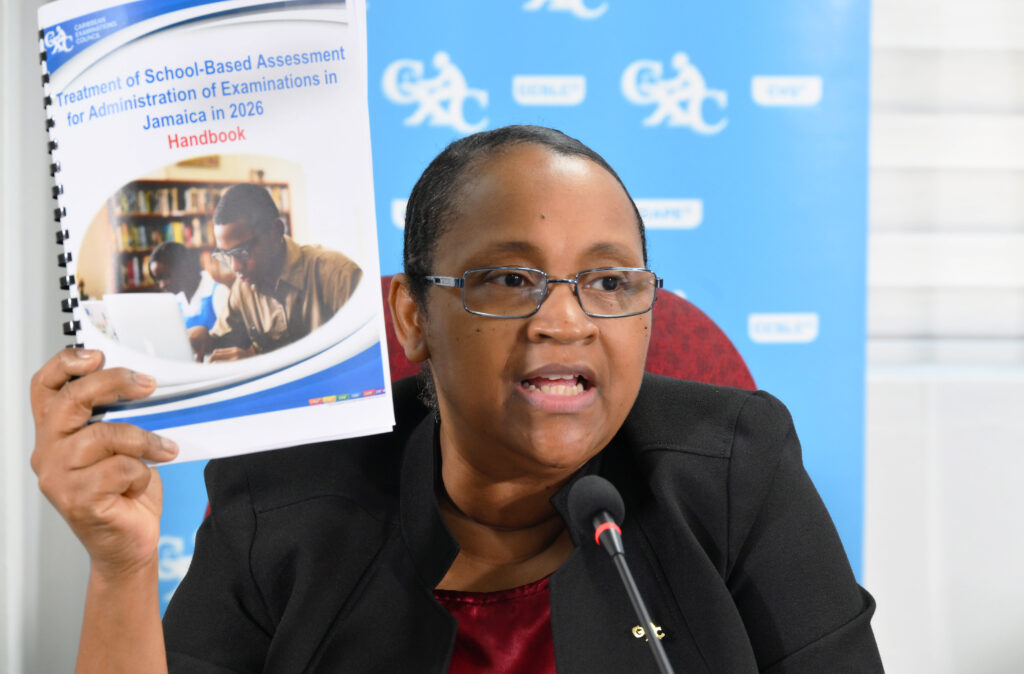
    Jamaican educational authorities are urging school principals to implement special academic concessions approved by the Caribbean Examinations Council (CXC) for students affected by recent natural disasters. The accommodations specifically address challenges related to School-Based Assessments (SBAs) for the May/June 2026 examination period.

    Dr. Nicole Manning, Director of Operations at CXC, emphasized the urgency during a press conference at the Overseas Examinations Commission headquarters in Kingston. She detailed how the concessions allow for certain components to be omitted from the assessment process, particularly for candidates reattempting their SBAs. Students currently have approximately three to four months to complete these modified requirements under the extended submission deadline of June 15 for teachers.

    The concessions were developed in response to the devastating impact of Hurricane Melissa, which struck Jamaica on October 28. The hurricane caused significant educational disruptions, including the destruction of completed SBAs and personal belongings. Dr. Manning explained that while some students had advanced substantially in their two-year SBA preparation for the Caribbean Secondary Education Certificate (CSEC), many others suffered catastrophic losses requiring institutional compassion.

    Notably, the concessions extend beyond general assessment requirements to include specific accommodations for science disciplines. Laboratory work requirements have been substantially reduced—for instance, physics practicals have been cut from the traditional 16 labs to a minimum of 8, while maintaining essential educational standards.

    The special provisions document remains exclusively available to Jamaican educational institutions through the Ministry of Education, Skills, Youth and Information, with strict instructions against external distribution. This targeted approach ensures that support reaches those most affected while maintaining assessment integrity.

  • Gov’t allocates $100 million for Shettlewood–Anchovy road project

    Gov’t allocates $100 million for Shettlewood–Anchovy road project

    The Jamaican Government has announced a substantial investment of $100 million JMD to address critical infrastructure needs along the vital roadway connecting Anchovy in St. James to Shettlewood in Hanover. This initiative, operating under the GO Road Rehabilitation Programme, will specifically prioritize the Mount Carey to Montpelier corridor as part of a broader strategy to enhance regional connectivity and stimulate economic activity across western Jamaica.

    Scheduled to commence in the third week of January 2024, the rehabilitation work will follow the completion of pipe-laying activities conducted by the Jamaica Social Investment Fund (JSIF) for the Shettlewood to Anchovy Pipeline Project. This carefully coordinated timeline between the National Works Agency (NWA) and JSIF aims to maximize efficiency, prevent costly rework, and ensure optimal use of public funds.

    The comprehensive repairs will target sections severely compromised by surface deterioration, including potholes, edge breaks, and areas damaged by both natural wear and recent excavation activities. Upon completion, the project is expected to deliver significantly improved road safety standards and smoother driving conditions for thousands of daily users, including local residents, public transportation operators, commercial enterprises, and agricultural transporters.

    Robert Nesta Morgan, Minister with responsibility for Works in the Ministry of Economic Growth and Infrastructure Development, emphasized the strategic importance of this infrastructure investment. He noted that the corridor serves as a crucial economic link between Savanna-la-Mar in Westmoreland and Montego Bay in St. James, facilitating the movement of people, goods, and services across the western region.

    This targeted rehabilitation effort forms part of the expanded GO Road Rehabilitation Programme, which now totals $1.7 billion JMD and began with initial works in Kingston and St. Andrew in December. The government’s approach demonstrates a commitment to practical infrastructure improvements through coordinated planning and execution, ensuring that rehabilitation work meets required standards and delivers lasting benefits to communities.

  • Di AMO Cawna Library opens in Cheshire Village with inclusive, accessible design

    Di AMO Cawna Library opens in Cheshire Village with inclusive, accessible design

    KINGSTON, Jamaica — In an innovative approach to literacy advocacy, the Di Cawna Library organization has inaugurated its seventh community facility in Cheshire Village, marking a significant expansion of its unique program that converts discarded refrigerators into functional bookcases. The newly established Di AMO Cawna Library, officially opened on December 11, 2025, features inclusive design elements ensuring accessibility for both able-bodied and differently-abled community members.

    The project represents a collaborative effort between international and local supporters, including Friends of Annette Martin Ozaltin (AMO) and the American International School of Kingston (AISK) community. Their combined contributions have transformed repurposed appliances into vibrant educational hubs integrated within neighborhood settings.

    Founded on the principle that literacy constitutes a fundamental right rather than a privilege, the initiative directly brings literature to communities by creatively converting once-discarded items into spaces fostering imagination, learning, and opportunity. During the opening ceremony, founder Rachael McDonald emphasized the organization’s core philosophy: ‘Di Cawna Library emerged from the conviction that books must be universally accessible, and that every individual—regardless of age—deserves the chance to read, dream, and develop personally.’

    The launch event gathered diverse stakeholders including community residents, parents, students, educators, authors, and national and multilateral partners. Notably, Minister of Finance and the Public Service Fayval Williams delivered formal remarks and received recognition as the first governmental minister to publicly endorse the Di Cawna Library initiative approximately three years prior. Minister Williams commended the project and expressed aspirations for its replication across additional Jamaican communities.

  • Charles Jr commends senior citizens embracing digital skills through GetConnected Programme

    Charles Jr commends senior citizens embracing digital skills through GetConnected Programme

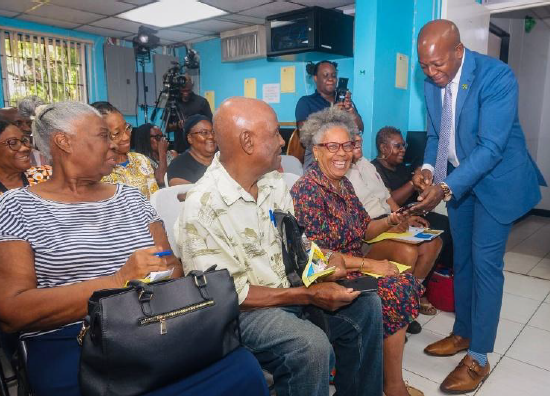
    KINGSTON, Jamaica — In a significant push toward digital inclusion, Jamaica’s Labour and Social Security Minister Pearnel Charles Jr has publicly praised elderly citizens engaging with the government’s GetConnected Digital Literacy Programme. During an impromptu visit to the National Council for Senior Citizens on West Kings House Road, the minister witnessed Cohort 3 of the initiative in progress, where 33 seniors are currently mastering essential digital competencies.

    Minister Charles Jr emphasized that the program dismantles the notion that senior citizens are merely observers of technological progress. “Every time I see this programme in action, it sends a powerful message — our senior citizens are not on the sidelines of development; they are active participants in Jamaica’s future,” he stated.

    The comprehensive curriculum is designed to foster active and healthy aging by equipping participants with practical skills. These include operating computers and mobile devices, maintaining social connections through digital platforms, accessing online services, and implementing crucial safety measures in cyber environments. The minister highlighted that beyond reducing social isolation, these skills enhance personal independence and can potentially lead to new economic opportunities.

    Adding international credibility to the initiative, the program utilizes globally recognized training materials and offers participants the chance to obtain certification from City & Guilds. This aspect reinforces that age presents no barrier to achieving technological proficiency.

    With Safer Internet Day approaching in February, Minister Charles Jr also stressed the inseparable link between digital access and cybersecurity awareness, particularly for vulnerable demographics. “Digital empowerment must go hand in hand with digital protection. Confidence, safety, and responsible online engagement are just as important as access,” he remarked.

    The minister extended an invitation to all eligible senior citizens across Jamaica to enroll in future sessions by contacting the National Council for Senior Citizens, reaffirming the government’s dedication to creating inclusive opportunities throughout all stages of life.