博客

  • French tourist dies while climbing Pico Duarte

    French tourist dies while climbing Pico Duarte

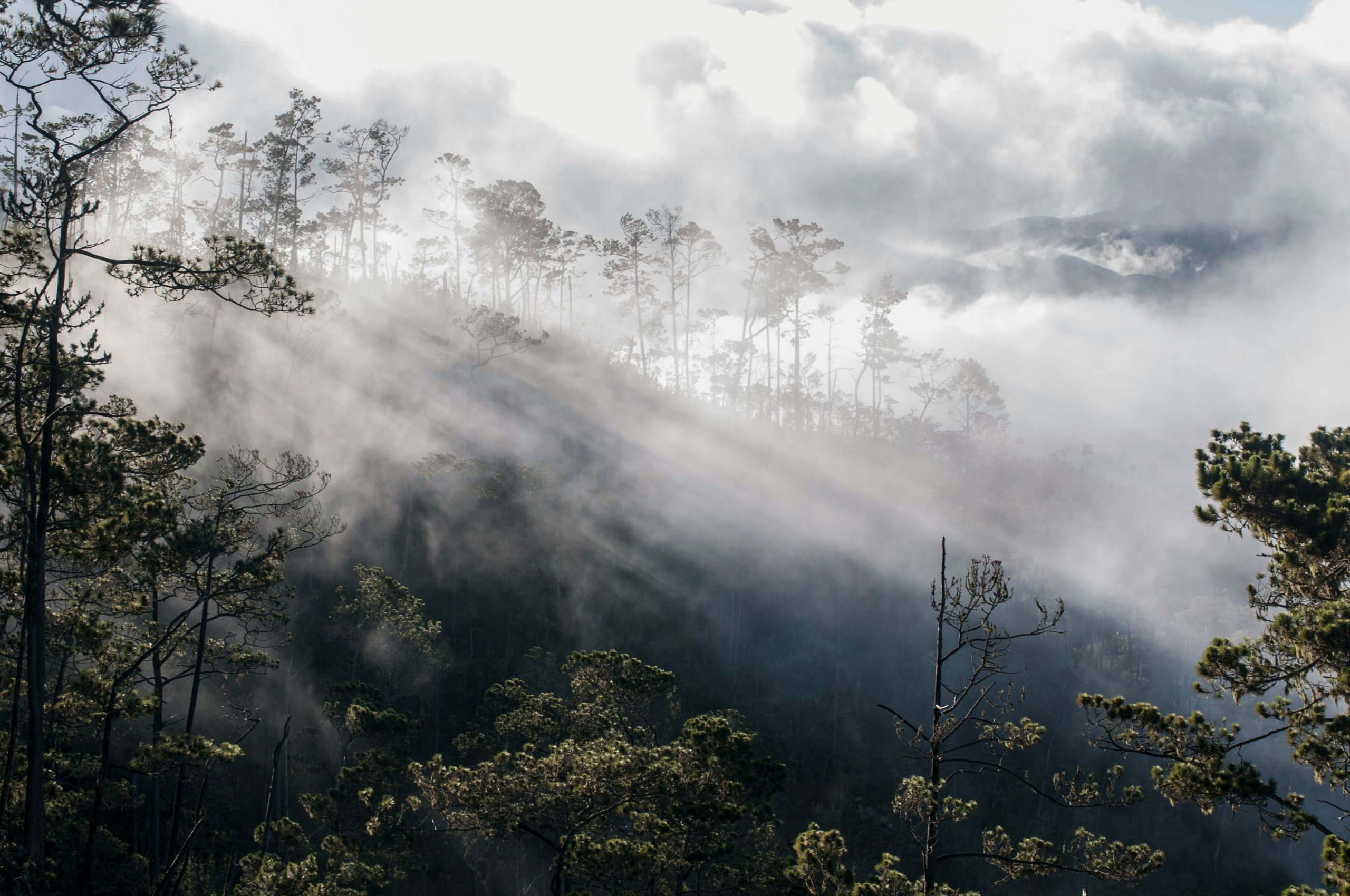
    A tragic mountaineering incident claimed the life of a French national during an expedition to Pico Duarte, the Caribbean’s highest peak, on Wednesday. The emergency unfolded in the Manabao sector of Jarabacoa as the tourist was ascending with a hiking group toward the summit.

    According to official statements from Dominican authorities, the individual experienced a suspected sudden cardiac arrest. Fellow expedition members immediately alerted local emergency services. Specialized mountain guides and rescue teams were dispatched to the remote location despite challenging terrain conditions.

    Medical personnel confirmed the absence of vital signs upon arrival at the scene. The recovery operation involved transporting the deceased from the mountainous region to facilitate necessary forensic procedures. Authorities have initiated coordination with French consular representatives for repatriation arrangements.

    The investigation remains ongoing with officials withholding the victim’s identity pending family notifications. Additional details regarding the expedition’s organization, participant demographics, and precise medical circumstances have not been disclosed as the inquiry continues. This incident marks one of the rare fatal occurrences recorded on Pico Duarte, which attracts adventurous travelers seeking to conquer its 3,098-meter elevation.

  • President over relatie Nederland: Gelijkwaardig en psychologisch zelfstandig

    President over relatie Nederland: Gelijkwaardig en psychologisch zelfstandig

    Surinamese President Jennifer Simons has declared that King Willem-Alexander’s state visit to Suriname has inaugurated a transformative phase in bilateral relations between the two nations. Speaking at a press conference in Commewijne, Simons emphasized that future ties must be founded upon principles of equality, mutual respect, and psychological independence rather than historical dependencies.

    The three-day royal visit, which concluded recently, demonstrated Suriname’s confident trajectory in shaping its national future while signaling the Netherlands’ recognition that it must adopt a fundamentally new approach toward its former colony. President Simons articulated that while the 1975 independence granted constitutional sovereignty, the nation must now pursue ‘psychological independence’—liberating itself from patronage mentality, dependency thinking, and historical sensitivities that have long strained bilateral relations.

    ‘Suriname stands on its own feet, with its distinct identity and unique challenges. The Netherlands must respect this reality, while Suriname must project this self-assurance confidently,’ Simons stated during the address.

    The president characterized the state visit as both a symbolic and practical reboot, describing how both nations ‘unpacked a new package’ that establishes framework for a mature relationship moving forward. ‘We progress as two friends with a shared history, but with a future where we support each other as equal partners,’ she explained, noting that both countries must learn to operate within this redefined dynamic.

    While welcoming cooperation in education, culture, economic development, river management, and infrastructure, Simons clarified that such collaboration must exclusively occur through modalities that strengthen Suriname’s autonomy. The signed cooperation documents between ministerial departments and the presence of a substantial Dutch business delegation during the visit were cited as concrete steps toward this new partnership model.

    A particularly symbolic moment occurred along the Suriname River, where both nations metaphorically ‘laid the burdens of the past upon the waters,’ followed by calls for pragmatic, businesslike cooperation without guilt or inferiority complexes from either side.

    Looking ahead, Suriname plans to continue discussions with the Netherlands in coming months regarding visa procedure reforms and humane treatment of applicants, educational exchanges at vocational and university levels, cultural collaboration and heritage preservation, economic development opportunities, and improved flight connectivity with reasonable pricing.

  • ‘White Oats’-packaged ganja intercepted at Ogle Airport

    ‘White Oats’-packaged ganja intercepted at Ogle Airport

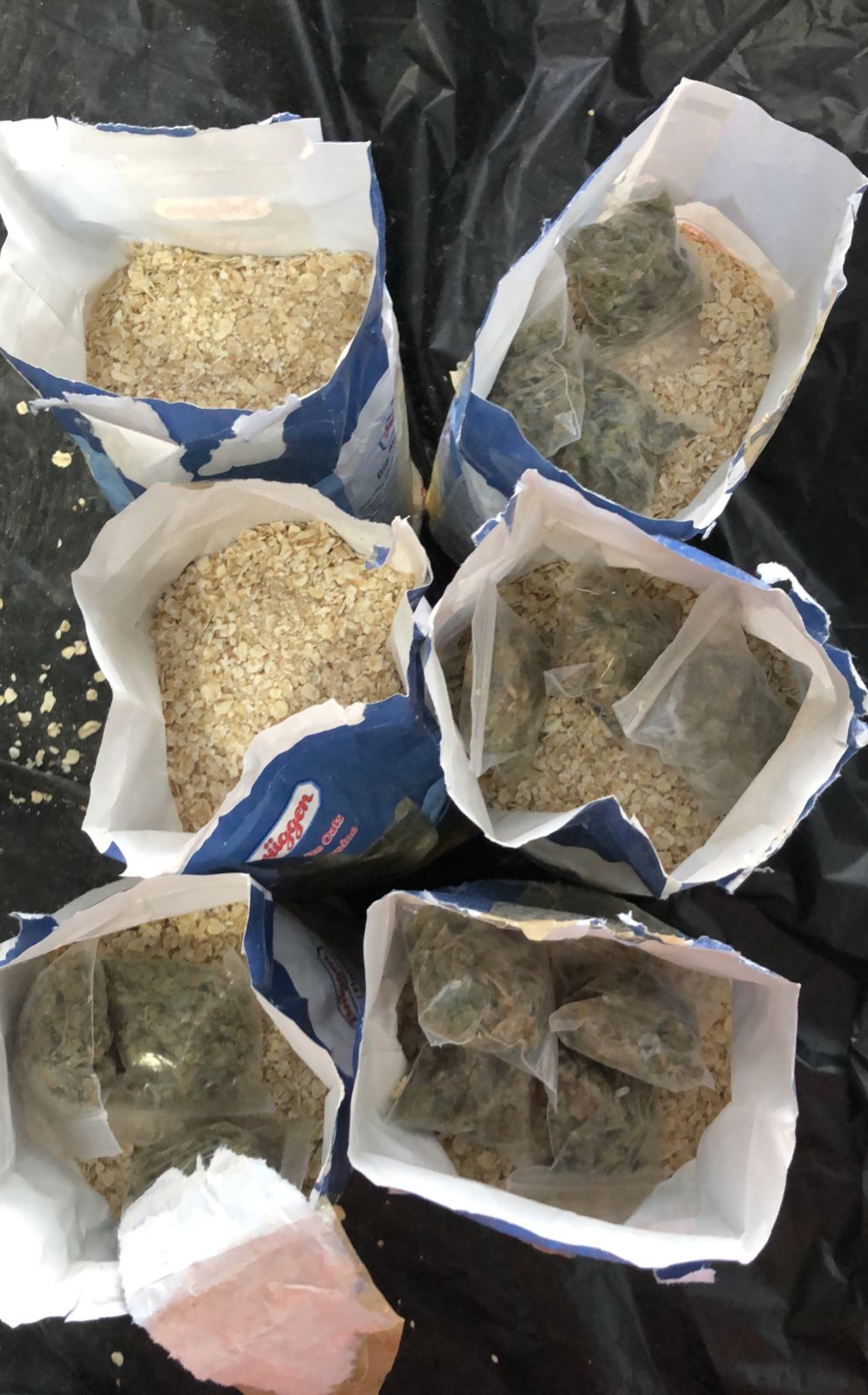
    Authorities at Guyana’s Eugene F. Correia International Airport, commonly known as Ogle Airport, intercepted a sophisticated drug smuggling operation on Wednesday, December 3, 2025. The discovery occurred when narcotics officials identified approximately 60 grams of marijuana meticulously concealed within four commercial white oats packaging containers.

    The illicit substance was distributed across thirteen individual Ziplock bags hidden inside the seemingly legitimate food product packages. According to police reports, the contraband was detected during routine cargo inspection procedures at approximately 11:25 AM local time.

    The intercepted shipment was destined for Chi-Chi village in Region 7 (Cuyuni-Mazaruni), indicating potential distribution networks in Guyana’s remote interior regions. The sophisticated concealment method demonstrates evolving tactics employed by drug traffickers attempting to bypass airport security measures.

    Despite the successful interception, law enforcement officials confirmed that no arrests have been made in connection with the incident. The Guyana Police Force has launched a comprehensive investigation to identify those responsible for the smuggling attempt and determine potential connections to broader narcotics distribution networks.

    This incident highlights ongoing challenges in combating drug trafficking through commercial aviation channels and underscores the importance of vigilant cargo screening procedures at the nation’s airports.

  • Haiti Moves Towards First General Election Since 2016

    Haiti Moves Towards First General Election Since 2016

    In a landmark decision signaling potential democratic renewal, Haiti’s transitional presidential council has formally ratified a long-awaited electoral law, initiating the process for the nation’s first general elections since 2016. This crucial development, reported by NBC News, represents the most substantial progress toward reestablishing constitutional governance after years of political paralysis and instability.

    Council President Laurent Saint-Cyr emphasized the historic significance of this move, declaring on social media platform X that this action finally provides the Haitian populace with “the opportunity to freely and responsibly choose those who will lead them.” He further affirmed the council’s unwavering dedication to reestablishing national security and guiding Haiti toward “democratic legitimacy and stability.”

    The approval process revealed underlying political tensions within the governing body. According to local newspaper Le Nouvelliste, the late Monday vote witnessed notable absences, with three of the seven voting council members failing to attend the session. This occurred amid internal pressures from several members advocating for the removal of Prime Minister Alix Didier Fils-Aimé.

    Electoral authorities have outlined a tentative calendar projecting initial voting in August 2026, with a subsequent final round scheduled for December of that year. However, officials have concurrently issued cautions that pervasive gang violence throughout the country presents substantial security challenges that could potentially disrupt this timeline.

    Haiti’s political vacuum has persisted since the shocking assassination of President Jovenel Moïse at his private residence in July 2021, compounding the governance crisis that began when the country last failed to hold scheduled elections nearly a decade ago.

  • Pistols, ammo, GY$8.5 million seized in Linden, one arrested

    Pistols, ammo, GY$8.5 million seized in Linden, one arrested

    In a significant law enforcement operation in the mining town of Linden, Guyana, authorities have uncovered an illegal arsenal and substantial cash reserves hidden within a local businessman’s residence. The Wednesday evening raid resulted in the seizure of two sophisticated firearms and a considerable ammunition stockpile.

    Acting on intelligence, officers from the Guyana Police Force (GPF) discovered a Glock 19 9mm pistol alongside a customized Polymer 80 handgun, concealed beneath the flooring of a bedroom in the upper flat of the property. The search, conducted with the 30-year-old businessman present, yielded fifty-six rounds of 9mm ammunition alongside the weapons.

    The operation escalated when additional搜查 uncovered significant financial assets hidden within a bedroom wardrobe. Police confiscated a combined total of GY$8.5 million in local and foreign currency, including GY$6,915,000 and US$7,445 in cash.

    The suspect remains in police custody while forensic examinations and investigations continue. All seized items – including the firearms, ammunition, and currency – have been officially logged as evidence. This operation marks one of the most significant arms and cash interceptions in the region this year, highlighting ongoing efforts to combat illicit activities in the area.

  • Water Returns to Unitedville, But For How Long?

    Water Returns to Unitedville, But For How Long?

    Unitedville residents have finally seen water service restoration following days of disruptive outages, though underlying systemic problems threaten long-term water security. The immediate crisis originated from a critically failed pump, now replaced, which had deprived households of reliable access to clean drinking water.

    The prolonged service interruption ignited substantial community frustration, with social media platforms becoming arenas for vocal complaints directed at the local Water Board. Residents detailed severe daily disruptions caused by persistently dry taps that compromised basic living necessities.

    Terree Westby, Unitedville Water Board billing clerk, countered these accounts by characterizing reports of week-long outages as significantly exaggerated. Westby revealed her small team contends with extensive operational challenges beyond equipment failure, including suspected acts of infrastructure sabotage near critical pump sites and pipeline networks. “We face deliberate interference—individuals severing lines, tampering with electrical wiring, and even shutting reservoir valves,” Westby stated.

    Despite online criticism characterizing the board’s efforts as inadequate, Westby emphasized her team’s dedication to maintaining service under trying conditions. Former board chairman Mike Juan, who led operations for fifteen years, contextualized the current situation within historical patterns of water management difficulties. While acknowledging persistent issues like well depletion and pump failures across multiple administrations, Juan affirmed that current leadership demonstrates committed effort within existing constraints.

    The perennial discussion around a permanent solution continues to focus on integrating Unitedville into Belize Water Services’ national pipeline network. This proposed transition carries significant implications—while offering modernized infrastructure, it would also subject residents to stringent payment enforcement policies without the leniency historically extended by the local board. As Juan summarized: “BWS could provide the solution, but compliance comes with financial rigor.” This fundamental trade-off between reliable service and payment flexibility now confronts Unitedville villagers with a critical community decision.

  • Caribbean Airlines to end Dominica–Puerto Rico flights, restructure Barbados hub

    Caribbean Airlines to end Dominica–Puerto Rico flights, restructure Barbados hub

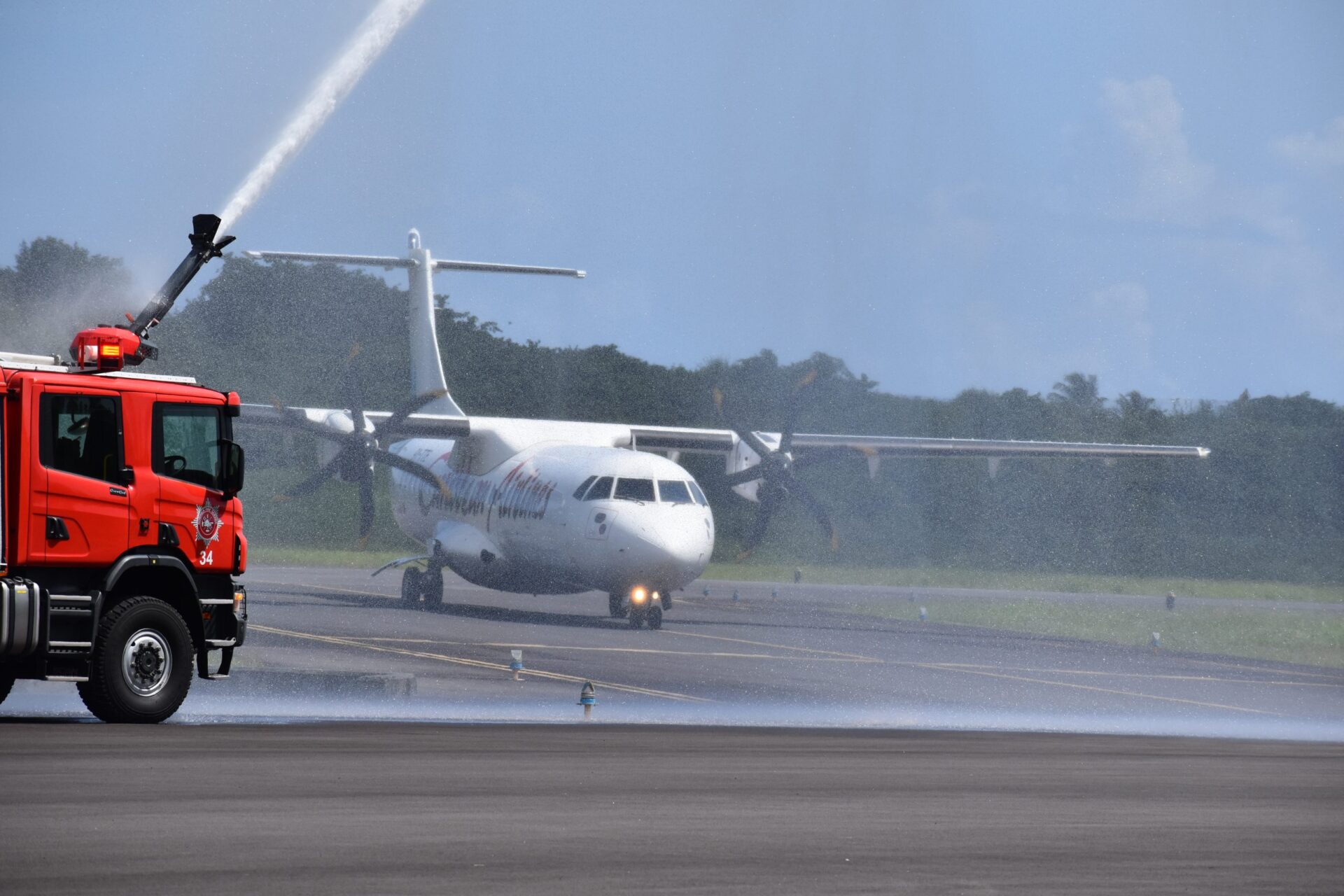
    Caribbean Airlines has unveiled significant operational changes that will sever vital air connections within the Eastern Caribbean starting January 2026. The carrier confirmed it will terminate its Roseau-San Juan service effective January 10, 2026, eliminating a crucial link that facilitated connections between Dominica and North American destinations.

    The discontinued flights, designated BW 296 (Trinidad–Dominica–Puerto Rico) and BW 297 (Puerto Rico–Dominica–Trinidad), represented a key transportation artery for regional travelers. The airline has initiated direct communication with affected passengers holding reservations beyond the termination date, guaranteeing full refunds where applicable.

    This route suspension forms part of a comprehensive network optimization strategy that extends beyond Dominica. Caribbean Airlines will completely withdraw from both its Tortola, British Virgin Islands and San Juan, Puerto Rico routes, simultaneously discontinuing flights BW 292 (Trinidad–Barbados–Tortola–Puerto Rico) and BW 293 (Puerto Rico–Tortola–Barbados–Trinidad).

    In a parallel restructuring move, the airline announced it will reconfigure its Barbados hub operations beginning February 2026. Aircraft and crew currently stationed in Barbados will be relocated to Trinidad, while maintaining continued service to and from Barbados under a revised flight schedule. Company officials emphasized that these operational shifts will preserve seamless connectivity throughout the Northern and Eastern Caribbean regions.

    Acting CEO Nirmala Ramai characterized these measures as essential components of the airline’s strategic plan to enhance service reliability while optimizing resource allocation. ‘These adjustments are critical to delivering reliable service while managing our resources responsibly,’ Ramai stated, underscoring the airline’s dual commitment to maintaining regional connectivity while ensuring long-term operational sustainability and competitive positioning.

    The Trinidad-based carrier expressed gratitude to customers for their understanding during this transitional period, reaffirming its dedication to providing dependable air service across its network as it implements these structural changes to strengthen its overall travel offerings.

  • Belize Is Failing Children With Disabilities

    Belize Is Failing Children With Disabilities

    A groundbreaking situational analysis by UNICEF, conducted in collaboration with Belize’s Ministry of Human Development, reveals a troubling reality: the nation is systematically failing its children with disabilities. Published on the first anniversary of the Disabilities Act implementation, the report identifies multiple critical barriers including pervasive discrimination, severely limited service accessibility, inadequate funding mechanisms, and substantial information deficiencies.

    The investigation highlights the absence of a national disability registry and a severe shortage of specialized professionals as fundamental structural problems. Legal and data framework gaps further compound these issues, creating insurmountable obstacles to education and healthcare access. UNICEF Monitoring and Evaluation Specialist Paulette Wade emphasized that these findings validate what families have experienced daily, particularly noting the extreme challenges facing children in remote districts like Punta Gorda where transportation infrastructure remains completely inaccessible.

    Educational shortcomings form another major concern, with the report documenting insufficient teacher training and a lack of inclusive pedagogical approaches. Despite policy commitments to inclusive education, children with disabilities remain consistently marginalized from development agendas according to Wade.

    Francisco Cuellar, President of the Belize Association for Persons with Diverse Abilities, characterized the report as a long-overdue wake-up call, noting that no substantive progress has occurred since the Disabilities Act became law. The advocacy leader called for immediate action on physical accessibility, transportation modifications, and fundamental attitude shifts toward respect and support for the disabled community.

    UNICEF intends to utilize these findings to advocate for evidence-based policy reforms, prioritizing programs specifically designed to address the unique needs of children with disabilities rather than blanket approaches that continue to leave the most vulnerable behind.

  • GPHC boasts of being Caribbean’s leading kidney transplant centre;  each recipient saves almost GY$90 million

    GPHC boasts of being Caribbean’s leading kidney transplant centre; each recipient saves almost GY$90 million

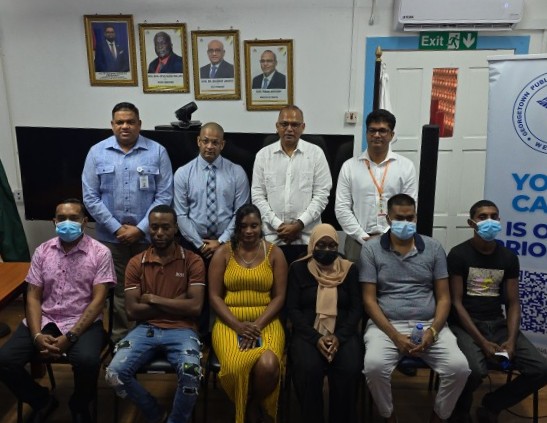
    The Georgetown Public Hospital Corporation (GPHC) has established itself as the Caribbean’s premier kidney transplant center, achieving regional medical leadership through innovative surgical programs and substantial cost savings for patients. Health officials announced Wednesday that the Guyanese institution has performed more transplants than any other Caribbean facility in 2025, with 13 procedures completed this year alone.

    GPHC’s transplant program delivers extraordinary financial benefits to recipients, saving patients between US$400,000-$500,000 (approximately GY$87.2-109 million) compared to market rates for equivalent surgeries elsewhere. The hospital has provided these life-saving procedures completely free of charge, including for patients from several Caribbean nations such as Antigua and Barbuda, Barbados, The Bahamas, and Trinidad and Tobago.

    CEO Robbie Rambarran highlighted the hospital’s pioneering achievements, including performing the Caribbean’s first kidney transplant on a 20kg infant in 2023 and conducting the region’s first laparoscopic donor nephrectomy in 2024. The institution recently achieved another milestone by completing its first chain transplant surgery—an intricate process involving multiple donor-recipient pairs that demonstrates sophisticated medical coordination.

    Multi-organ transplant specialist Dr. Kishore Persaud emphasized the entirely local nature of these accomplishments: “Culturally, there is sometimes a belief that outsiders can do it better than our own. Today, I proudly sit here to say that these surgeries were performed entirely by the doctors and staff of the Georgetown Public Hospital Corporation.”

    Despite these successes, hospital officials revealed concerning statistics about kidney disease in Guyana. From 2023 to present, GPHC has registered 2,200 individuals diagnosed with kidney disease, with 368 patients currently on dialysis—246 of whom began treatment this year. Rambarran noted that demand for dialysis and transplants “exceeds our capacity,” describing this as a “call to action.”

    Health Minister Dr. Frank Anthony indicated that while services remain free for now, the government might eventually charge foreign patients for these “very, very expensive” surgeries as the program develops. The ministry plans to enhance capabilities through international training partnerships with institutions in Spain, Brazil, India, and Canada, and will soon send a doctor to India’s Apollo Hospital to advance HLA testing capabilities.

    Patient testimonials highlighted the exceptional care received. Samantha Ault, who experienced transplants in both Trinidad and Tobago and at GPHC, praised the “amazing transplant team” in Georgetown. David Singh, who previously received treatment in the United States, commended the local doctors’ accessibility: “I’ve never seen a team of doctors that are so loving and caring.” Donor Akeem Ault reported that his experience “changed my entire narrative that I had about hospitals especially Georgetown Hospital.”
  • Trump hints at imminent expansion of U.S. travel ban list following national guard shooting incident

    Trump hints at imminent expansion of U.S. travel ban list following national guard shooting incident

    The Trump administration is evaluating a significant expansion of its travel restriction policies in response to last week’s shooting incident in Washington D.C. that left two National Guard personnel wounded. Homeland Security Secretary Kristi Noem announced via social media platform X that she has met with the President and recommended comprehensive travel prohibitions targeting nations she accused of “flooding our nation with killers, leeches, and entitlement junkies.”

    This potential policy escalation builds upon existing travel restrictions announced earlier this summer targeting 19 countries, with seven under partial bans affecting specific visa categories. The current list includes Afghanistan, Iran, Venezuela, and several African nations, with varying restrictions based on diplomatic relations and security assessments.

    The administration’s consideration gained momentum after authorities identified the suspected shooter in last week’s incident as a 29-year-old Afghan national. While neither Trump nor Noem has specified which additional countries might face restrictions, leaked documents reveal the administration had already been evaluating 36 potential additions to the ban list, predominantly from sub-Saharan Africa.

    According to diplomatic cables obtained by media outlets, the State Department had given these nations 60-day notices to improve travel documentation practices and address issues related to citizens residing illegally in the United States. Failure to demonstrate compliance would result in inclusion in the expanded restrictions.

    The proposed expansion aligns with President Trump’s recent declaration that he would “permanently pause migration from all Third World Countries to allow the U.S. system to fully recover,” signaling a fundamental shift in immigration policy that prioritizes security concerns and systematic recovery over traditional immigration pathways.