博客

  • From Cocorite to the Rhine – Tyreka Russell’s waterworld

    From Cocorite to the Rhine – Tyreka Russell’s waterworld

    Tyreka Russell’s transition from the warm shores of Cocorite to becoming a professional chemical water analyst in Germany exemplifies a remarkable journey of personal and professional transformation. Her story began in October 2018 when she boarded a flight to Germany, unaware of how profoundly this decision would reshape her life trajectory.

    Growing up in a tightly-knit family environment, Russell developed early connections to nature through Sunday hikes with her aunt, a Trinbago Backpackers hike leader, discovering Trinidad and Tobago’s hidden natural treasures. At St Francois Girls’ College in Belmont, she cultivated her academic interests through environmental science, geography, and biology courses, initially aspiring toward marine biology as a means to combine her passion for swimming with environmental conservation.

    The pivotal turning point emerged during a career fair at the Hyatt hotel where Russell discovered Rhein-Waal University of Applied Sciences (HSRW) in Kamp-Lintfort. The institution offered English-taught degrees with free tuition—requiring only living expenses—making international education accessible without German language prerequisites. She enrolled in the BSc Environment and Energy program, despite Germany not being among her original considered destinations (the US, Canada, or UK).

    Her arrival in Germany presented significant cultural adaptations: mastering punctual public transportation systems, enduring colder climates (below 22°C), and navigating academic structures vastly different from Trinidad’s system. During her initial semester, Russell avoided solo train travel due to navigation anxieties, relying on international student communities for support while gradually building German language proficiency.

    The professional breakthrough occurred through an internship at Lower Left Rhine Drainage Corporation (LINEG) in 2022, where she joined the chemistry department at their central laboratory. This hands-on experience proved instrumental in developing technical skills through authorized independent analyses. Her thesis research—”Detection of Sulphate in Different Water Matrices Using Raman Spectroscopy”—provided particularly valuable practical experience in sample collection, measurement, and results presentation.

    Russell’s exceptional performance led to a part-time position offer, coinciding with her pursuit of a B1 German certificate at the Goethe Institute in Düsseldorf—a crucial factor in her subsequent hiring. Upon graduation in 2024, LINEG offered her a full-time chemical analyst position, validating her professional value while presenting emotionally complex decisions about extended stay in Germany.

    Collegial support proved essential to her integration, with LINEG colleagues assisting both laboratory techniques and societal navigation, including immigration procedures. While German language remains an ongoing challenge, Russell notes how linguistic improvement transformed her social integration and unlocked previously inaccessible opportunities.

    Despite culinary nostalgia for Trinidadian flavors and profound family connections, Russell recognizes Germany’s superior resources for professional development in environmental science. She maintains openness to eventual return to contribute to Trinidad and Tobago’s environmental monitoring and sustainability initiatives, though currently envisions her career future in Germany.

    Her advice to prospective international students emphasizes courageous risk-taking: “Studying or working abroad opens doors you don’t know exist yet. Even short international exposure can transform perspectives, build confidence, and reveal opportunities unavailable domestically.” Reflecting on her journey from Cocorite to Kamp-Lintfort, Russell summarizes: “Challenging and overwhelming—but worth it. I’m proud of what I’ve achieved.”
  • Ferdie Ferreira’s legacy

    Ferdie Ferreira’s legacy

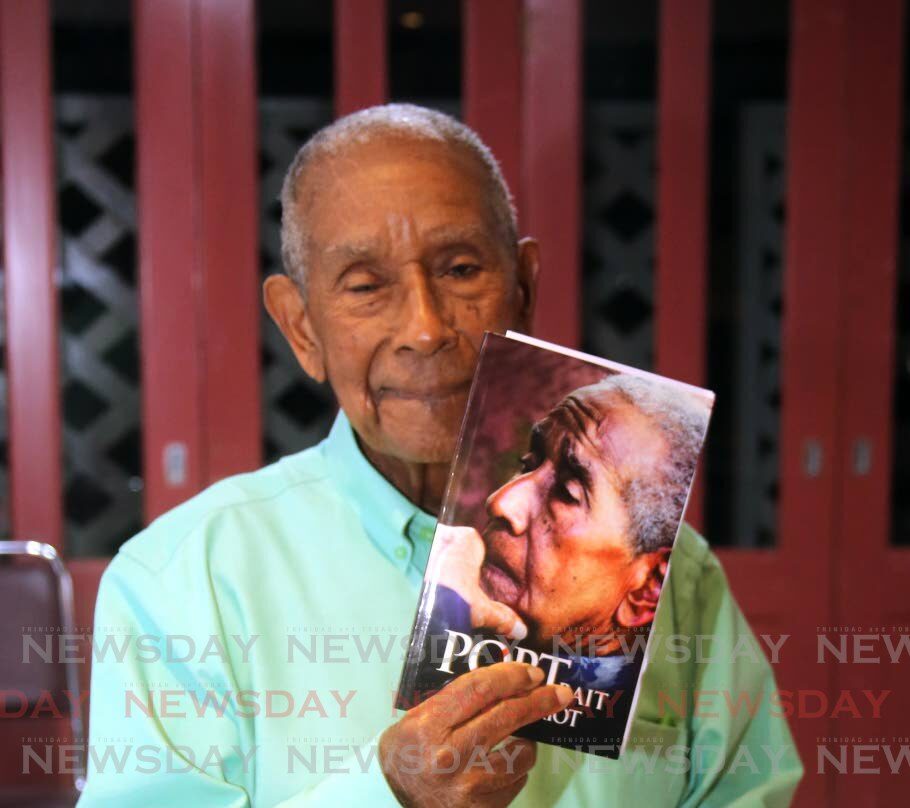
    The political landscape of Trinidad and Tobago has lost one of its most distinguished voices with the passing of Ferdinand “Ferdie” Ferreira at age 93. A former key advisor to founding Prime Minister Dr. Eric Williams, Ferreira represented a vanishing breed of political thinkers who viewed governance as genuine public service rather than political theater.

    Ferreira’s remarkable journey began humbly on the Port of Spain docks, where his formal education ended at age 14. His political awakening commenced in 1946 as a member of Butler’s Army of Liberation, with his informal education unfolding through vigorous debates at Woodford Square—the renowned open-air university that shaped generations of Trinidadian thinkers.

    Despite his unwavering identification as a PNM loyalist, Ferreira distinguished himself through his uncommon willingness to engage respectfully with opposing viewpoints. He transformed political disagreement into an art form, consistently maintaining civil discourse without descending into rancor or personal attacks. His commitment to principled governance sometimes placed him at odds with his own party, most notably in 1980 when he was expelled from the PNM for questioning Dr. Williams’ demand for undated resignation letters from cabinet members.

    This principled stance led Ferreira to help establish the Organisation for National Reconstruction and later contribute to building the National Alliance for Reconstruction before returning to the PNM fold in 1992 under Patrick Manning’s leadership. Throughout his six decades of political engagement—expressed through columns, letters to editors, and interviews—Ferreira never tempered his advocacy for transparent governance and mutual respect in parliamentary proceedings.

    Even in his final years, he remained an outspoken commentator, challenging political conventions and amplifying dissenting voices within his party. His fearless commentary following the PNM’s April defeat and his balanced assessment of Opposition Leader Pennelope Beckles demonstrated his enduring commitment to honest political discourse.

    The University of Trinidad and Tobago recognized his contributions with an Honorary Doctorate of Humane Letters in 2021, while his published works—including “Political Encounters 1946-2016” and his 2022 autobiography “Portrait of a Patriot”—stand as testaments to his intellectual legacy.

  • Water warriors – Candice Santana, Laurayne Lucky

    Water warriors – Candice Santana, Laurayne Lucky

    In a groundbreaking development for regional water management, the Caribbean Water and Wastewater Association (CWWA) has achieved a historic milestone with Candice Santana and Laurayne Lucky assuming simultaneous leadership as president and executive director respectively. This marks the first time since the organization’s establishment in 1991 that both top positions are held by women, signaling a transformative shift in governance approaches to the region’s pressing water and sanitation challenges.

    The significance of this leadership transition was highlighted during the CWWA’s 21st Higher Level Forum in Belize, where ministers and utility heads from across the Dutch, Spanish, English, and French Caribbean convened. Santana notably pointed out the persistent gender imbalance at senior levels, observing that only two women were present among the region’s top water management officials.

    Both leaders bring substantial credentials to their roles, with Santana, 39, having joined the CWWA board in 2016 and serving six years before her 2024 presidential election, while Lucky, 44, oversees the association’s secretariat operations. Their appointments represent not merely symbolic progress but substantive expertise gained through decades of professional and academic preparation.

    Santana emphasizes the importance of merit-based advancement rather than token appointments to fulfill diversity quotas. ‘Do not put me in the ring to just tick a box, especially if you don’t really want to hear what I have to say,’ she asserts, reflecting on her experiences as a young woman facing dual categorization for both age and gender representation.

    The new president also addresses the challenge of unsolicited advice frequently directed at young female leaders, advocating for strategic discernment amid external opinions. ‘You need to sit back from all the advice and use your discernment… bring your innovation to the table and understand the best direction for the organization,’ she advises.

    Lucky echoes these sentiments, acknowledging the particular challenges women face in the STEM-focused water and sanitation sector while emphasizing the field’s inherent difficulties for all professionals. Their leadership partnership aims to model substantive gender inclusion while addressing the Caribbean’s critical water infrastructure needs through experienced, qualified guidance rather than symbolic representation.

  • Budding parang star, Beltino Ramdeen

    Budding parang star, Beltino Ramdeen

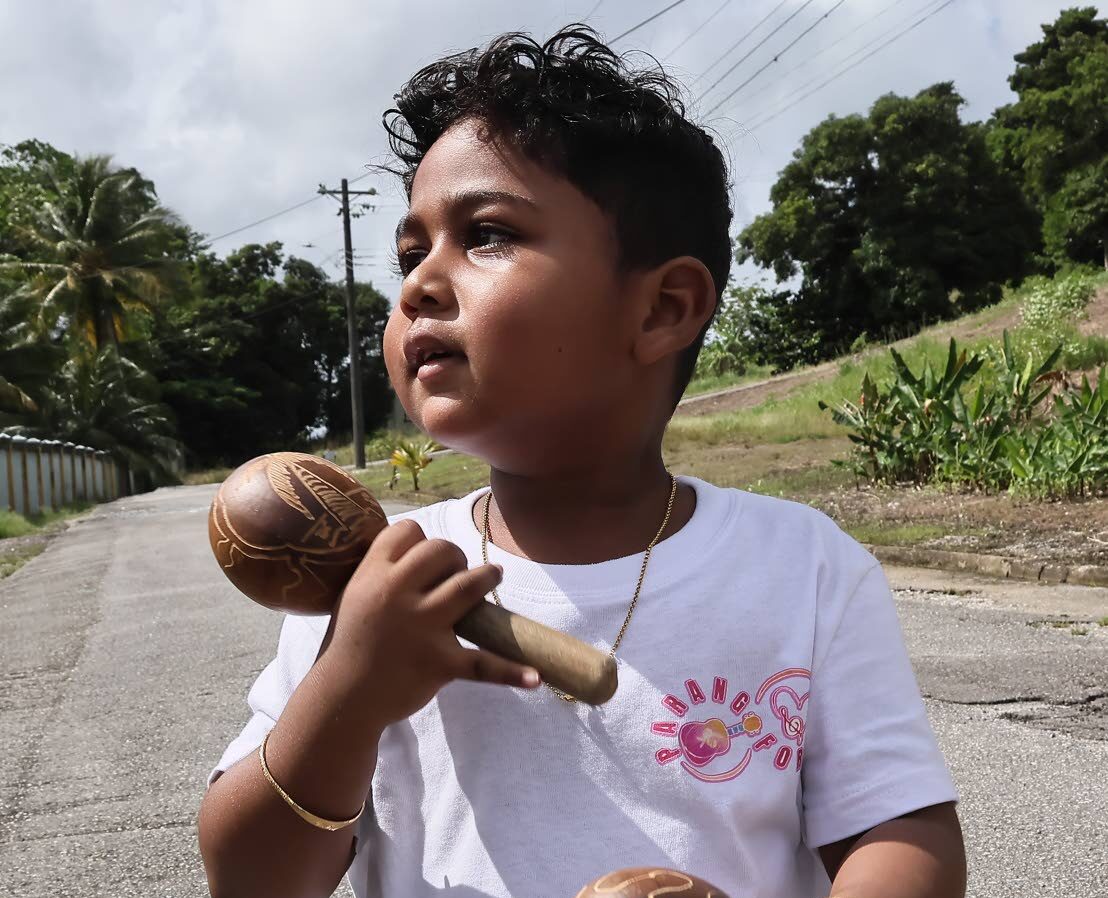
    In the small village of Sangre Chiquito near Sangre Grande, Trinidad and Tobago, a preschooler has become an unexpected viral sensation through his authentic embrace of traditional parang music. Four-year-old Beltino Chandlin Ramdeen, whose spontaneous maracas performance captivated the nation, demonstrates a natural musicality that runs deep in his family’s heritage.

    The heartwarming story began when Beltino’s grandmother, Allyson Bengochea-Gyton—an established parang vocalist—shared video footage of her grandson confidently shaking maracas (known locally as chac-chac) while dancing with uninhibited joy. The clip rapidly accumulated thousands of views, resonating with viewers across the country who were charmed by the child’s genuine enthusiasm.

    Parang, derived from the Spanish word ‘parranda’ meaning a festive celebration, represents an integral part of Trinidad and Tobago’s Christmas traditions. Typically, parranderos move between households, spreading seasonal cheer through vibrant music, dance, and communal sharing of food and drink while celebrating the birth of Christ.

    For Beltino, however, parang transcends seasonal celebration—it constitutes his daily reality. ‘We don’t wait for Christmas to play music,’ Bengochea-Gyton explained. ‘Some of our videos with him were completely spontaneous—just sitting in the afternoon doing nothing, and he will put on music and start shaking his maracas.’

    The young boy’s musical inclination appears deeply genetic. His grandmother leads her own parang and Latin ensemble, Ritmos Calientes, while his late grandfather, Hanuman Ramdeen, played both maracas and cuatro. The musical legacy continues with his step-grandfather Leo Gyton, a lead vocalist and skilled cuatro player, plus multiple extended family members who actively participate in Trinidad’s music scene.

    Beltino’s relationship with his grandmother is particularly harmonized through music. ‘He calls me his Nani,’ she shared, ‘so he will always say, “Nani, sing for me and I will play.”‘ His learning capacity astonishes the family—he recently absorbed Spanish lyrics simply through listening, without formal instruction. His current favorite is a Latin piece by Peruvian band Corazón Serrano.

    This Christmas, the four-year-old has requested a cuatro from Santa Claus, supplementing the maracas he already guards possessively. His family remains committed to nurturing his talent, with plans for music school should his interest persist. Meanwhile, Beltino himself dreams of becoming a doctor—potentially while leading the family band.

  • Karyn Forbes trades football boots for public service

    Karyn Forbes trades football boots for public service

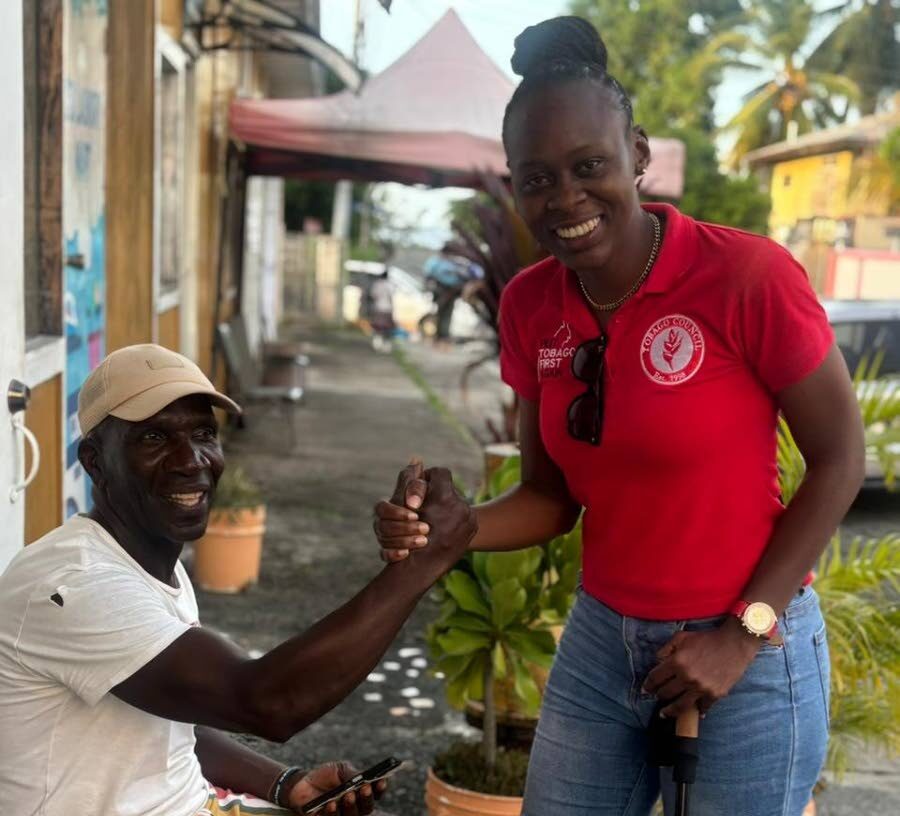
    Tobago’s political landscape witnesses a remarkable transition as former national football captain Karyn “Baby” Forbes steps into the electoral arena. The celebrated athlete, boasting 15 years and over 70 appearances representing Trinidad and Tobago, has been officially nominated as the People’s National Movement (PNM) candidate for Plymouth/Black Rock in the upcoming Tobago House of Assembly elections scheduled for January 12.

    Forbes will contend against Kern Alexis of the Tobago People’s Party in what marks a significant career shift from athletic leadership to political service. In an exclusive interview, Forbes emphasized that her political engagement evolved gradually rather than emerging as a sudden impulse. “This decision grew out of years of listening,” she stated. “Leadership doesn’t end when the game is on pause – it deepens.”

    The Plymouth native articulated her alignment with PNM as a choice grounded in principle rather than convenience. “I chose the PNM because I believe in building things that last,” Forbes explained. “Not handouts. Not season promises. Real structures that serve generations.”

    Forbes demonstrates acute awareness of her constituency’s challenges, noting struggling families, particularly single-parent households, youth lacking clear pathways despite their abilities, and elderly residents feeling increasingly marginalized. She prioritizes addressing deteriorating sports facilities and community infrastructure requiring urgent attention.

    Her political philosophy combines realism with visionary planning. “I don’t pretend to have magical solutions. What I bring is structure and follow-through,” Forbes asserted. Her agenda emphasizes people-first governance, family empowerment, community space revitalization, and leveraging sports, education, and entrepreneurship as opportunity gateways.

    If elected, Forbes commits to establishing robust foundations within her first year: “Systems that work, spaces that feel alive again, and people who feel seen. Because service is not about power: It’s about responsibility.”

    The athlete-turned-candidate views her role as bridging sports and community development. While embracing her athletic identity, Forbes stresses that “empowerment doesn’t end with sport.” She prepares to release two books—”Woman of Substance” and “Beyond the Whistle”—sharing her journey including mental battles, setbacks, and moments of faith to demonstrate that “success is not linear, and strength isn’t perfection.”

    Forbes considers her candidacy fundamentally inspirational: “My candidacy is about showing young people that your background doesn’t box you in. Whether you come from the field, the classroom, the block, or the church, you belong in leadership spaces too.”

    She characterizes Tobago’s current situation as pivotal, demanding “stamina, empathy, and integrity” alongside practical understanding of “teamwork and accountability, not in theory, but in practice.”

    Despite recently suffering a fractured ankle during training before Trinidad and Tobago’s October 28 friendly against Jamaica, Forbes has begun rehabilitation therapy following cast removal. She remains technically available for national team selection while transitioning toward political service.

    Forbes acknowledges the challenges ahead: “Sport has clear rules; life doesn’t. But the same courage it takes to step onto the pitch against stronger opponents is the courage needed to step into leadership when change is necessary.”

    She believes football instilled essential values for public service—discipline, accountability, and respect for team roles—understanding that “you may not always score the goal, but your position still matters.” Forbes applies the athletic principle that “preparation beats talent when talent stops working” to governance, emphasizing that “we don’t need more noise. We need preparation, planning, and consistent delivery.”

    Ultimately, Forbes frames her political engagement not as power pursuit but responsibility continuation: “I’m not here because it’s comfortable. I’m here because it’s required.” Her perspective redefines leadership as commitment extending far beyond the football pitch, embracing broader community stewardship.

  • Sundiata’s visions of the mind

    Sundiata’s visions of the mind

    After nearly five decades of dedicated artistic practice, Barbadian-born Trinidad-based painter Winston Stewart, professionally known as Sundiata, unveils his comprehensive exhibition \”Visions\” at Arnim’s Art Galleria in Port of Spain. The 75-year-old artist presents approximately 40 oil and mixed-media works that represent the culmination of his lifelong engagement with visual expression.\n\nSundiata’s artistic philosophy centers on raw authenticity, allowing each piece to communicate directly with viewers without intermediary interpretation. \”They’re just an insight into my interests, of how I perceive things and see things,\” the artist explained regarding his exhibition. His creative inspiration derives from continuous engagement with his environment—visual, mental, and social—translated through the distinctive language of art.\n\nThe artist’s background reflects a remarkable synthesis of disciplines. Holding formal qualifications in art, science, and economics, Sundiata received training at the University of Reading in the UK, studied constructivist art in Moscow, and pursued artistic development across multiple countries. This multidisciplinary approach informs his perspective that creative individuals inherently possess capabilities far exceeding societal expectations.\n\nSundiata’s professional journey began with a definitive commitment at age 23 when he abandoned conventional career paths despite societal pressures that dismissed artists as \”crazy or gay.\” His early determination manifested through self-organized exhibitions when traditional galleries rejected his work, eventually leading to international recognition through collector interest and institutional validation.\n\nThe exhibition showcases Sundiata’s stylistic evolution from realism to more expressive forms, featuring architectural elements, figures, still life, and abstract compositions that incorporate aspects of Trinidadian culture. Works including \”Boogsie is Sharp,\” \”Frontline,\” \”St James Hosay,\” \”Femmes aux Mangoes,\” and \”Morning Greetings\” demonstrate his refusal of rigid categorization.\n\nNow celebrating 45 years of marriage and fatherhood, Sundiata maintains his daily artistic practice while rejecting commercial considerations or trends. He creates from genuine motivation rather than market expectations, valuing artistic honesty above external validation. Despite his extensive experience, he remains committed to continuous learning and exploration within his craft.\n\n\”Visions\” runs from December 15 through January 9 at Arnim’s Art Gallery in Port of Spain, offering viewers an intimate glimpse into the mind of an artist who has devoted his life to authentic creative expression.

  • Police identify Annisette’s son as murder victim

    Police identify Annisette’s son as murder victim

    In a tragic incident that has shocked the community, Micah Annisette—son of prominent trade union leader Michael Annisette—was identified as the victim of a fatal shooting in Sangre Chiquito on December 12.

    The attack occurred around 3 pm when two assailants in another vehicle opened fire on a car carrying Annisette and two other men. The driver attempted to evade the attackers by reversing, but crashed into a nearby property. The gunmen continued their assault, firing additional rounds into the vehicle.

    Two other victims, Akiel King, 21, from Malabar, Arima, and Sherwin Ross, 44, of North Manzanilla Road, Manzanilla, sustained injuries and remain hospitalized. One occupant managed to escape serious harm.

    The getaway car was later discovered abandoned in James Smart Village, Sangre Chiquito, shortly after the violent episode.

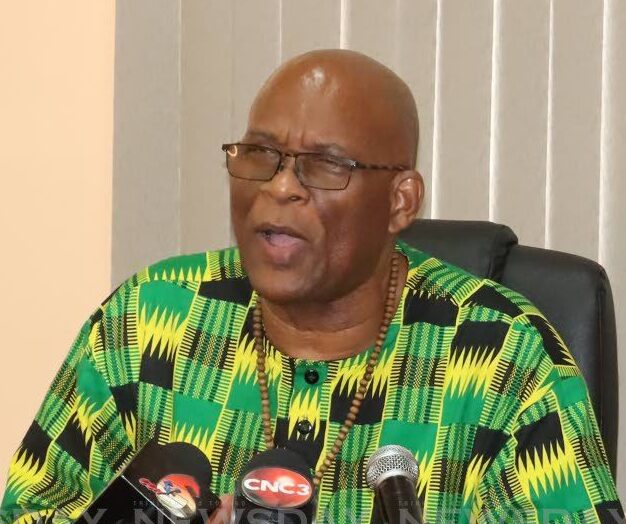
    Michael Annisette, president of the Seamen and Waterfront Workers’ Trade Union (SWWTU), confirmed via WhatsApp on December 13 that the deceased was his relative. His philosophical response reflected profound grief: ‘Life is a mystery that the ordinary mind cannot understand. In this physical world, the acceptance of what is and what you have no control over is the source of understanding and peace of mind. Life goes on even after death.’

    This tragedy echoes a previous family incident—in November 2018, another of Annisette’s sons, Dwayne King, was wounded in a shooting along the Beetham Highway in Port of Spain. At that time, Annisette vehemently dismissed social media speculation about his son’s alleged criminal associations, asserting his belief that ‘darkness could never conquer light’ and that truth would ultimately prevail.

  • Homeland Security Minister: Fire Service cleared in former MP’s death

    Homeland Security Minister: Fire Service cleared in former MP’s death

    A year after the devastating fire that claimed the lives of former D’Abadie/O’Meara MP Lisa Morris-Julian and her two children, Homeland Security Minister Roger Alexander has disclosed key findings from the investigative report while declining to make the full document public.

    The December 16, 2024 tragedy at the family’s Farfan Street, Arima residence resulted in the deaths of Morris-Julian, who served as minister in the Ministry of Education, her 25-year-old daughter Xianne Julian, and six-year-old son Jesiah Julian. Autopsy results confirmed all three victims succumbed to smoke inhalation.

    Minister Alexander revealed the investigation uncovered no evidence of foul play and exonerated fire service personnel who responded to the emergency. The report, completed in June 2025 under the previous administration, determined the fire originated in a specific area of the home, with investigators satisfied regarding its probable cause.

    “A Cabinet-level decision was made that the report not be made public,” Alexander stated, “as we didn’t want the deceased family to relive those tragic events on that unforgettable day.” He emphasized the government would share details with surviving family members upon request but would not proactively distribute the document to avoid causing further distress.

    The investigation was prompted by conflicting accounts between the fire service and then-public utilities minister Marvin Gonzales regarding water availability during firefighting efforts. A three-member committee comprising safety experts and legal professionals was appointed to examine response times, water supply issues, and arrival/departure logs of emergency crews.

    Family members expressed mixed reactions to the developments. Morris-Julian’s uncle, James Purcell, stated he would “believe it when I see it” regarding the exoneration of fire services, emphasizing that hearing statements from officials and seeing actual evidence remained different matters. The family plans to commemorate the anniversary with a parang celebration near the destroyed home, seeking to remember their loved ones “in a joyous way” rather than through solemn observance.

  • Jamaica watching reported planned US shift on cannabis, says Seiveright

    Jamaica watching reported planned US shift on cannabis, says Seiveright

    Jamaica’s regulated cannabis industry is maintaining a vigilant watch on potential landmark policy shifts in the United States, where President Donald Trump may issue an executive order to reclassify marijuana from Schedule I to Schedule III under federal controlled substances laws. This anticipated move follows an extensive multi-year review by US health and justice authorities that concluded with a recommendation for rescheduling.

    The potential reclassification would represent a seismic shift in international drug policy, moving cannabis from its current classification alongside heroin—deemed to have no accepted medical use and high abuse potential—to Schedule III, which acknowledges medical applications and reduced abuse risk. Jamaican State Minister Delano Seiveright of the Ministry of Industry, Investment and Commerce characterized the possible US action as “one of the most consequential developments in global cannabis policy in decades.”

    Minister Seiveright emphasized that while Jamaica approaches these developments with caution pending formal US confirmation, the implications for the Caribbean nation’s strictly regulated medical cannabis program could be transformative. The current US federal prohibition has created significant banking challenges for Jamaican licensed operators, with international financial institutions maintaining conservative approaches due to cannabis’s Schedule I status.

    “The Schedule I classification has fed a very conservative approach among international banks and has contributed to serious correspondent banking challenges for otherwise fully compliant, licensed operators in Jamaica and beyond,” Seiveright explained. He noted that rescheduling to Schedule III would significantly lower the federal risk profile, potentially easing restrictions that prevent Caribbean banks from maintaining stable correspondent banking relationships.

    The international context remains complex, as cannabis retains its Schedule I status under the UN’s 1961 Single Convention on Narcotic Drugs, despite its removal from Schedule IV in 2020. A US policy shift could accelerate global policy alignment, given America’s influential financial and regulatory systems.

    Jamaica’s cannabis program, administered by the Cannabis Licensing Authority since 2015, focuses exclusively on medical, therapeutic and scientific purposes. Minister Seiveright underscored that a more rational global environment would strengthen Jamaica’s ability to attract credible investors, deepen research partnerships, and expand value-added exports while maintaining high public health and security standards.

    However, officials caution that rescheduling would not equate to federal legalization, with many restrictions likely remaining. The Jamaican government continues monitoring developments and stands ready to assess implications for its regulatory framework and banking arrangements once official US clarity emerges.

  • Massive relief response from Diaspora clogs Jamaican ports

    Massive relief response from Diaspora clogs Jamaican ports

    NEW YORK, USA — A critical humanitarian crisis is unfolding as severe port congestion in Jamaica threatens to derail vital hurricane relief efforts. Diaspora organizations and shipping companies across the United States report mounting concerns that essential supplies may not reach hurricane survivors in time, creating a perfect storm of logistical challenges.

    The catastrophic Category 5 Hurricane Melissa, which made landfall on October 28, 2025, has triggered an unprecedented surge in relief shipments to the island nation. This influx has overwhelmed port facilities in Kingston and Montego Bay, where cargo backlogs have reached breaking point capacity. The situation is further exacerbated by seasonal shipping patterns, as thousands of Jamaicans traditionally send barrels home for Christmas celebrations during this period.

    Dwight P. Bailey, a Queens resident, expressed his frustration: “I shipped three barrels of essential items for my relatives on December 5, hoping they would arrive before Christmas. Now I fear they may be stuck indefinitely in this port chaos.”

    Peter Gracey, the Global Jamaica Diaspora Council representative for the Southern United States, issued a sobering video advisory warning travelers attempting to clear relief items to reconsider their plans. He revealed that numerous local groups that promised to clear and distribute donated items have failed to fulfill their commitments, leaving containers stranded and creating systemic gridlock.

    “Contrary to popular belief,” Gracey emphasized, “door-to-door delivery services provide no solution to this crisis. These services cannot bypass the fundamental port congestion issue—they can only operate once containers are finally cleared.”

    The logistical nightmare has forced shipping companies to implement emergency measures. Feurtado Shipping Company based in Queens temporarily suspended acceptance of barrels and relief items before resuming operations under constrained circumstances.

    Anthony Harding of Besco Shipping in Philadelphia confirmed the industry-wide strain: “Every shipping company is overwhelmed by the extraordinary volume of cargo. Nobody anticipated this scale of logistical challenges following the hurricane.”

    Michelle Mohamed of Lara’s Shipping in Orlando offered a different perspective, suggesting that consignees share responsibility for delays: “In many instances, the failure to clear freight promptly rests with recipients themselves. This isn’t primarily the government’s or shipping companies’ fault.”

    Amid the distribution challenges, relief organizations continue mobilization efforts. The Vincent HoSang Family Foundation has raised $20,000 to support communities in the hardest-hit parishes—St Elizabeth, St James, Hanover, Westmoreland, Trelawny, Manchester, and Clarendon. The foundation is additionally collecting non-perishable goods including clothing, baby supplies, elderly care items, and hygiene products through designated drop-off locations.

    The convergence of humanitarian need, seasonal shipping patterns, and infrastructure limitations has created one of the most complex relief coordination challenges in recent Caribbean history, with thousands of hurricane survivors awaiting critical assistance.