博客

  • Belize Targets Digital Asset Boom with New Compliance Rules

    Belize Targets Digital Asset Boom with New Compliance Rules

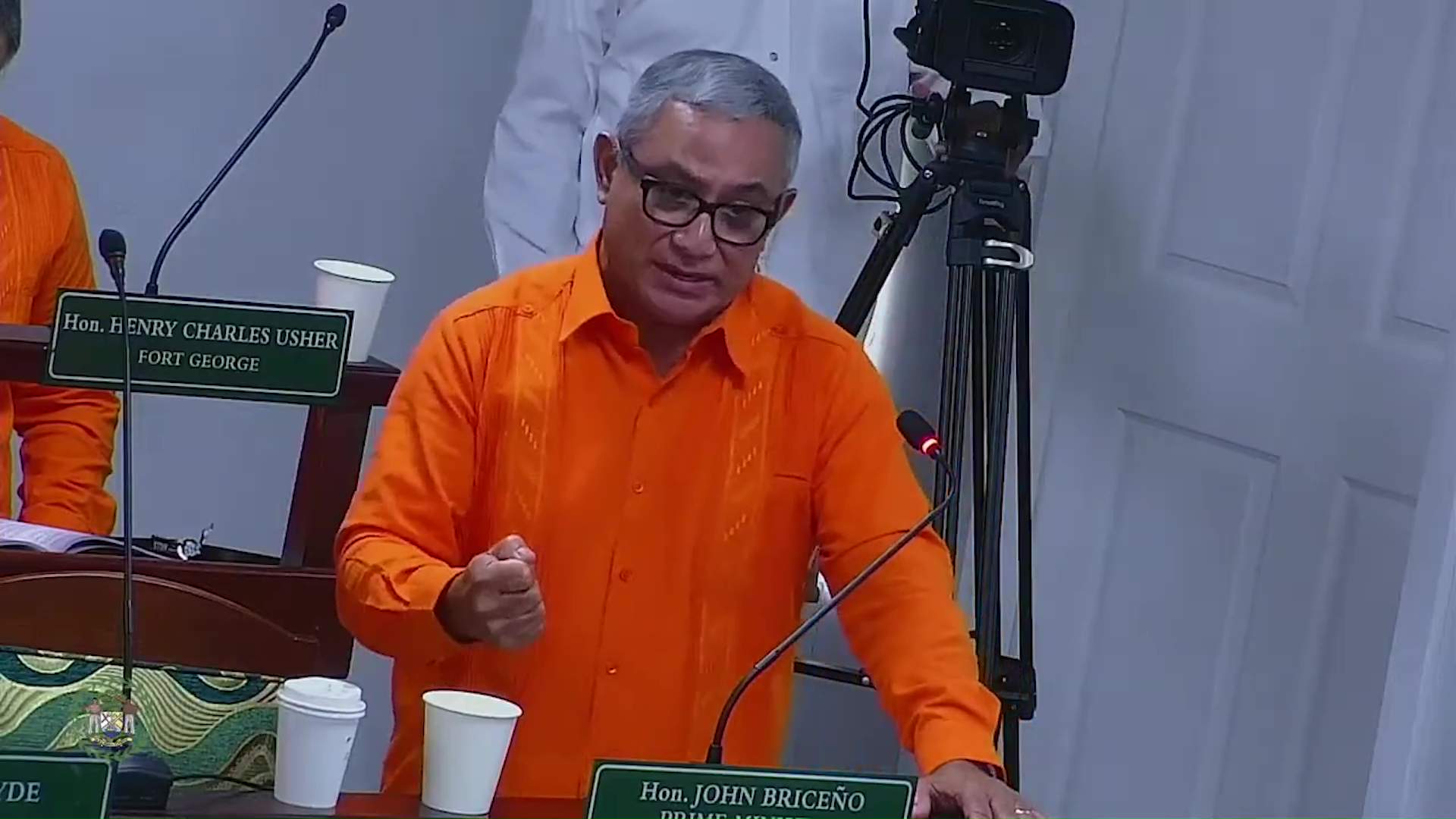
    The Central American nation of Belize is positioning itself at the forefront of digital asset regulation with comprehensive new legislation designed to establish robust oversight of cryptocurrency and digital asset markets. The proposed bill, currently under consideration in the House of Representatives, introduces stringent compliance requirements including enhanced customer verification protocols, secure digital record-keeping systems, and international information sharing mechanisms.

    Prime Minister John Briceño emphasized the urgency of regulatory adaptation during his address to lawmakers. “The global landscape for digital assets is changing rapidly,” Briceño stated. “While the United States previously maintained strong opposition to these activities, the current administration under President Trump has significantly shifted its stance, with substantial family investments entering this sector.”

    The legislative initiative directly responds to updated standards from the Financial Action Task Force (FATF), specifically Recommendation 15, which mandates that jurisdictions implement risk-based measures to regulate emerging technologies and digital asset services. Briceño highlighted that Belize cannot afford regulatory stagnation as digital currencies achieve mainstream adoption, noting that alignment with international standards is crucial for the nation’s financial security and economic development.

    The regulatory framework aims to balance innovation facilitation with consumer protection, establishing clear guidelines for digital asset service providers while preventing financial crimes. This move positions Belize among a growing number of nations developing structured approaches to cryptocurrency regulation amidst increasing global acceptance of digital assets.


  • Animal Abuse in Belize City Ignites Public Outcry and Reform Push

    Animal Abuse in Belize City Ignites Public Outcry and Reform Push

    A series of disturbing animal abuse incidents in Belize City has triggered widespread public condemnation and intensified demands for legislative reform. The escalating crisis highlights systemic failures in animal welfare protection and enforcement mechanisms.

    The controversy erupted when residents of Jane Usher community witnessed an injured horse collapse on a neighborhood street and remain unattended for hours until its death. Local accounts describe the animal lying deceased for extended periods near playing children, creating both health hazards and traumatic scenes for the community.

    Animal welfare organizations identify this incident as symptomatic of broader institutional neglect. Michelle Rudon of the Society for the Promotion of Animal Rescue and Kindness (SPARK) advocates for removing horses entirely from urban environments, citing patterns of daily abuse and malnutrition. Volunteer Georgia Aranda-Lewis corroborates these concerns, emphasizing the absence of effective response systems despite repeated complaints to municipal and law enforcement authorities.

    The advocacy movement gained additional momentum when Premier League footballer Latrell Middleton violently kicked a stray dog that wandered onto the playing field during a nationally televised match. While Middleton subsequently issued a written apology and football authorities condemned the act, animal rights activists dismissed these responses as insufficient without substantive disciplinary action.

    This incident echoes previous cases of animal cruelty, including a April attack where youths assaulted a horse with machetes. Although those perpetrators faced judicial proceedings and the horse recovered after rehabilitation, advocates argue these remain isolated successes rather than systemic solutions.

    SPARK representatives emphasize that current animal protection legislation lacks adequate penalties and enforcement mechanisms. They advocate for strengthened legal frameworks that would impose meaningful consequences for abuse, including criminal prosecution and substantial fines.

    The convergence of these incidents has created unprecedented public awareness and political pressure for comprehensive animal welfare reform in Belize, with advocates vowing to maintain momentum until substantive changes are implemented.

  • Belize Builds Caribbean’s First Sugar Refinery

    Belize Builds Caribbean’s First Sugar Refinery

    Belize is poised to revolutionize the Caribbean sugar industry with the construction of the region’s first-ever sugar refinery, marking a significant advancement in agricultural value chain development. The transformative $40 million project, funded by U.S.-based SUCRO Sourcing and implemented through Santander Sugar, represents a strategic leap for Belize’s agricultural sector currently under development with an anticipated operational date of April 2026.

    This groundbreaking initiative will enable Belize to transition from primarily exporting raw, plantation white, and brown sugar to producing refined sugar—a commodity that Belize and numerous CARICOM member states currently import from outside the region. The investment agreement was formalized during the Belize Investment Summit and received formal endorsement from CARICOM through its Council for Trade and Economic Development (COTED).

    Beverly Burke, Public Relations Manager at Santander Sugar, revealed that the refinery concept has been part of the company’s strategic vision for over a decade. “A refinery was our plan from the very inception from the day Santander came to Belize,” Burke stated. “It’s a natural fit that represents the next evolutionary stage for our growing operations.”

    The project addresses a significant gap in the Caribbean market, where all refined sugar is currently imported despite the region’s substantial sugar production capabilities. Burke emphasized the expected economic impact: “The economic impact is definitely going to be significant. New Belizean hires will be coming on board to ensure continuity.”

    The refinery initiative promises enhanced regional production capabilities, value-added manufacturing development, and reduced dependency on extra-regional imports while contributing to social security, income tax revenues, and the nation’s overall GDP. The operation aims to deliver affordable, accessible refined sugar while maintaining competitive pricing and sustainable operations.

  • Weekend Warriors Crash, IBL Champions Crowned, and Belize Shines in Jiujitsu

    Weekend Warriors Crash, IBL Champions Crowned, and Belize Shines in Jiujitsu

    In an eventful week for Belizean sports, multiple disciplines witnessed dramatic turns of events ranging from concerning injuries to championship victories and international acclaim.

    The sporting community extends its support to Santiago Castillo Jr., who sustained significant injuries during the Annual Weekend Warriors Ham and Turkey Cycling Classic. According to Troy Gabb Junior, Chairman of the Weekend Warriors Club, Castillo suffered a broken rib and punctured lung after becoming entangled in a multi-rider collision at approximately mile eleven. Despite the severity of his injuries, Castillo has maintained remarkably high spirits during his hospitalization. The competition continued despite the incident, with Brandon Cattouse claiming victory in the male category and his sister Kaya Cattouse dominating the female division.

    Basketball witnessed a decisive championship conclusion as the Bowen and Bowen Brewers captured the 2025 Interoffice Basketball League title. Demonstrating absolute dominance in game two of the best-of-three series, the Brewers secured a commanding seventy-eight-point victory, establishing a thirty-three-point lead at their peak performance. Tournament MVP Joshua Westby, celebrating his birthday with the championship win, attributed the victory to six months of intensive training and conditioning under Head Coach Troy Gabb Junior.

    Belize’s jiujitsu practitioners achieved extraordinary success at the international level, bringing honor to the nation at the Bahia Open 4 Jiu Jitsu Tournament in Mexico. The national team delivered an outstanding performance, accumulating twenty medals including eight gold, seven silver, and five bronze medals. William Robinson, one of the gold medalists, described the victory as a testament to Belize’s growing prowess in the discipline. Fellow competitor Herlshell Baldres emphasized the nerve-wracking yet ultimately rewarding experience of representing Belize on the international stage.

    The weekend also crowned new high school basketball champions through the National Secondary School Sports Association tournament. Maud Williams Male Team claimed gold with a decisive 59-41 victory over Sacred Heart College, while Russel Bailey earned MVP honors. In the female category, Bishop Martin High School emerged victorious with Jahzara Pascual receiving the MVP award.

    Completing Belize’s successful sporting week, the National Female Under-Fifteen Volleyball Team secured bronze at the Second Annual Central American Volleyball Invitational in Managua, Nicaragua. Team member Miley Armstrong received dual recognition as Best Libero and Best Defense, highlighting individual excellence within team achievement.

  • Dominican Republic urges institutional prudence at OAS over Honduras elections

    Dominican Republic urges institutional prudence at OAS over Honduras elections

    Santo Domingo spearheaded international diplomatic efforts this Monday by convening an extraordinary session of the Organization of American States (OAS) Permanent Council to address mounting concerns surrounding Honduras’ contested electoral process. The high-level meeting, initiated at the Dominican Republic’s formal request, focused on the November 30 presidential elections that have drawn global scrutiny.

    Participating via virtual connection, Dominican Foreign Minister Roberto Álvarez delivered a decisive address urging institutional restraint and procedural safeguards. He called for Honduran security forces to maintain their constitutional mandate supporting the National Electoral Council (CNE) while emphasizing the critical preservation of all electoral materials.

    The session featured a comprehensive briefing from Ambassador Eladio Loizaga, head of the OAS Electoral Observation Mission in Honduras, who provided an authoritative assessment of the current electoral landscape. Minister Álvarez articulated fundamental democratic principles, stating that rule of law must be grounded in due process and verifiable evidence rather than external pressures.

    Álvarez issued a stark warning against political, institutional, or media influences attempting to sway the CNE’s deliberations. He reinforced that the National Electoral Council remains the sole entity legally authorized to administer elections and declare official results. The Dominican diplomat further urged the OAS to maintain vigilant oversight against any actions potentially compromising the integrity, independence, and legitimacy of Honduras’ electoral proceedings. He concluded by affirming that the sovereign will expressed by Honduran voters through democratic channels remains inviolable and non-negotiable.

  • Antigua and Barbuda Reparations Support Commission Pays Tribute to Elder and Rastafarian Leader Glasford “King Osagyefu” Mack

    Antigua and Barbuda Reparations Support Commission Pays Tribute to Elder and Rastafarian Leader Glasford “King Osagyefu” Mack

    The Antigua and Barbuda Reparations Support Commission has issued a formal tribute honoring the life and profound contributions of Glasford ‘King Osagyefu’ Mack, the esteemed Rastafarian elder and spiritual guide who recently passed away. As a foundational pillar of the Big Creek Nyabinghi Theocracy, Mack dedicated his life to advancing Rastafari principles and African cultural consciousness.

    Mack emerged as a formidable advocate for institutional recognition of Rastafarian traditions, drawing philosophical inspiration from Marcus Mosiah Garvey’s teachings that positioned Africa as the birthplace of civilization and Black liberation. His activism extended beyond spiritual leadership into tangible reparatory justice initiatives, where he served as a crucial bridge connecting cultural preservation with contemporary social movements.

    The Commission specifically highlighted Mack’s decades-long participation in annual Watchnight ceremonies and Emancipation events, where his spiritual guidance and ceremonial presence deepened the historical significance of these observances. Through prayers, chants, and reflective teachings, he reinforced the sacred connection between ancestral remembrance, resistance to oppression, and the ongoing pursuit of reparations.

    Mack’s legacy places him within the continuum of distinguished Rastafarian advocates including the late Ras King Frank I and Ras Colin Bone Cumberbatch, previous Commission members whose work fundamentally shaped the organization’s mandate. His interdisciplinary approach merged cultural stewardship with political advocacy, ensuring that Rastafarian traditions remained dynamically engaged with modern justice movements.

    The Commission extended heartfelt condolences to Mack’s family, the Big Creek Nyabinghi community, and the Rasfreeman Foundation Unification of Rastafari, recognizing the immeasurable void left by his transition. His lifetime of service established an enduring template for intergenerational cultural transmission and activist spirituality that will continue to influence reparations discourse globally.

  • Costa Fascinosa begins home port operations at Sans Souci, strengthening Santo Domingo as a Caribbean cruise hub

    Costa Fascinosa begins home port operations at Sans Souci, strengthening Santo Domingo as a Caribbean cruise hub

    Santo Domingo has cemented its position as a premier Caribbean cruise destination with the formal inauguration of home port operations for the Costa Fascinosa at the Port of Sans Souci. This strategic development, orchestrated by the Dominican Port Authority (APORDOM), represents a significant advancement for the nation’s maritime tourism sector and will serve as the vessel’s operational base throughout the current cruise season.

    APORDOM Executive Director Jean Luis Rodríguez characterized this milestone as a cornerstone of the government’s broader strategy to establish the Dominican Republic as the Caribbean’s foremost cruise hub. The initiative is designed to amplify passenger volumes, stimulate economic activity through enhanced port operations, and solidify the country’s competitive standing in the global maritime tourism market.

    The commencement of operations was marked by a ceremonial exchange of commemorative plaques between port authorities and cruise line representatives. This time-honored maritime tradition symbolizes mutual cooperation, institutional confidence, and the cultivation of enduring partnerships. APORDOM has reiterated its dedication to implementing measures that boost the operational efficiency, competitive edge, and international prominence of Dominican ports, thereby reinforcing Santo Domingo’s emergence as a pivotal embarkation point for Caribbean cruise itineraries.

  • IPSC sluit sportjaar af met succesvolle Tanfoglio Exhibition Match

    IPSC sluit sportjaar af met succesvolle Tanfoglio Exhibition Match

    The Surinamese IPSC Shooters Association culminated its sporting year with the successful Tanfoglio Exhibition Match, a Level 1 competition sponsored by Tanfoglio-Tomahawk. Held at the NorthISH shooting range in Weg naar Zee instead of the usual Rijstdijk venue, the event aimed to enhance public awareness of dynamic shooting sports while providing athletes with a celebratory season finale.

    The competition featured three stages across five classifications, maintaining a spirited yet relaxed atmosphere despite intense competitive rivalries. Hongan Bai emerged as the standout performer, securing victory in both the Standard class (ahead of Andy Liu and Stanley Lau) and Senior class (followed by Liu and Marcel Tjon Kon Joe).

    Tamani Stuger claimed top honors in the Ladies’ category while achieving an impressive fourth-place overall ranking. The Open class witnessed Bruce Djosetiko demonstrating superior skill against Mingpei Gao, with Andrew Wilson completing the podium. Will Liu dominated the PCC classification ahead of Calvin Baank and surprise contender Damian Chung.

    Additional category victories included Alex Stuger’s Production Optics win over Darren Tjon Kon Joe and Jeff Yang, while Nigel Sloot triumphed in Production class with Lin Feng as runner-up.

    A notable event feature allowed spectators to experience newly introduced Tanfoglio competition firearms under IPSC association supervision. This interactive initiative generated substantial interest and appreciation among attendees, potentially expanding the sport’s participant base.

    With this successful season conclusion, IPSC Suriname anticipates an even more dynamic competitive calendar in 2026.

  • TSA annuls ruling ordering compensation for land in Cotubanamá National Park

    TSA annuls ruling ordering compensation for land in Cotubanamá National Park

    In a landmark judicial decision, the Second Chamber of the Superior Administrative Court (TSA) in Santo Domingo has reversed a prior ruling that mandated state compensation for disputed lands within the Cotubanamá National Park. The court determined that the territory in question constitutes protected public domain property, rendering it constitutionally inalienable.

    The judicial panel, comprising Judges Antonio Sánchez Mejía and Úrsula Carrasco Márquez, upheld an unconstitutionality exception presented by the General Directorate of National Assets (DGBN). Their ruling challenged Article 40 of Law 1494-47, which established a one-year statute of limitations for such claims. The court found this provision violated constitutional guarantees of justice access when matters of collective national heritage are involved, specifically contradicting Articles 6 and 16 of the Dominican Constitution that designate protected areas as inalienable, unseizable, and imprescriptible.

    This decision nullifies ruling No. 0030-03-2022-SSEN-00193, which had previously favored claimants Sonia Yolanda Cedeño Valdez and Castillo Cedeño, SRL. The TSA identified critical legal deficiencies in the original proceedings, including improper notification of the state and the omission of Decree 722-75 that originally established the area’s protected status in 1975. The court further acknowledged parallel litigation in the Land Court of La Altagracia, where the government is contesting the validity of property titles and investigating potential fraudulent activities during land regularization processes.

  • Crypto Capital Eyes Nevis — But Can Private Governance Work In The Caribbean? | News Americas Now

    Crypto Capital Eyes Nevis — But Can Private Governance Work In The Caribbean? | News Americas Now

    A contentious proposal to establish a semi-autonomous, technology-focused community on the Caribbean island of Nevis has ignited intense debate throughout the federation of St. Kitts and Nevis. Dutch cryptocurrency entrepreneur Olivier Janssens is advancing the ambitious ‘Destiny’ project, which aims to create a self-contained enclave tailored for global entrepreneurs, digital asset investors, and technologists seeking crypto-friendly infrastructure and alternative governance frameworks.

    The initiative operates under the recently enacted Special Sustainability Zones Authorization Act, which permits designated zones for testing innovative approaches to governance, technology, and sustainability. The project has already begun acquiring substantial coastal land parcels along Nevis’s southern coast, with architectural plans including luxury villas, commercial offices, medical facilities, and supporting infrastructure designed by prominent global firm Skidmore, Owings & Merrill.

    At the core of the controversy lies a proposal to implement private arbitration mechanisms for resolving certain legal disputes within the zone, potentially bypassing the nation’s established court system. Proponents argue this represents a forward-thinking approach to attract new capital streams to the Caribbean, particularly from global investors seeking jurisdictions receptive to digital asset innovation and fintech advancement. Janssens maintains the project would provide expedited, predictable dispute resolution for international commercial transactions while remaining compliant with national laws.

    However, the proposal has generated significant apprehension among local residents, legal professionals, and political leaders. Critics express concerns about creating a ‘state within a state,’ questioning the extent of governmental oversight that would remain if dispute resolution shifts to private judicial mechanisms. Additional worries center on land use patterns, environmental consequences, strain on public infrastructure, and the broader implications of privatized governance models in small island nations.

    The Destiny project aligns with the emerging ‘network state’ concept promoting digitally interconnected communities with shared governance frameworks operating alongside traditional nation-states. While gaining traction in technology circles, previous attempts to implement similar models elsewhere have encountered regulatory resistance, legal challenges, and financial instability—particularly during cryptocurrency market volatility.

    Analysts note that the interest from crypto investors highlights a broader trend of global capital seeking alternative development models in the Caribbean, especially in technology, digital services, and infrastructure. The critical challenge for governments involves distinguishing between speculative ventures and projects capable of delivering sustainable economic benefits while respecting legal frameworks and social cohesion.

    The project’s ultimate realization will depend on multiple factors: governmental supervision, community involvement, investor confidence, and successful integration of private governance mechanisms with public legal systems. This development serves as a significant case study examining both the potential benefits and risks of crypto-driven initiatives in small island economies, potentially influencing how Caribbean governments approach unconventional investment and governance proposals in an evolving global landscape.