博客

  • COMMENTARY: Human‑Centered Intelligence: A New Blueprint for Caribbean development

    COMMENTARY: Human‑Centered Intelligence: A New Blueprint for Caribbean development

    The Caribbean region stands at a pivotal juncture where technological acceleration converges with evolving traveler expectations. A groundbreaking approach merging artificial intelligence with behavioral psychology is emerging as the cornerstone for comprehensive regional development. This innovative fusion enables the creation of systems designed around actual human behavior rather than theoretical assumptions, forging a new path toward enhanced trust, competitiveness, and connectivity across the archipelago.

    This transformative strategy, termed the ‘Caribbean Human-Centered Intelligence Framework,’ represents a paradigm shift in regional development philosophy. It integrates three critical sectors—governance, tourism, and air transportation—into a cohesive strategy specifically tailored to the Caribbean’s unique cultural and geographical context. Rather than merely implementing technology, this framework positions human understanding as the central driver of progress.

    In governance, the synergy between AI’s pattern recognition capabilities and behavioral psychology’s insights into human motivation creates predictive systems that anticipate citizen needs. Governments can now design services that address frustrations before they escalate, test policies virtually before implementation, and communicate through culturally resonant messages rather than bureaucratic language.

    The tourism sector, being the Caribbean’s global identity, undergoes revolutionary changes through this approach. AI analyzes traveler search patterns and destination preferences while behavioral psychology deciphers why authenticity matters and how emotional connections influence travel decisions. This enables the creation of culturally-powered experiences that distinguish Caribbean tourism on the global stage.

    Aviation, described as the region’s bloodstream, benefits from AI’s ability to optimize passenger flows and booking patterns combined with psychological understanding of what truly drives traveler loyalty—reliability over price, respect over convenience, and symbolic gestures that carry cultural significance. This synergy fosters passenger-centered aviation networks that strengthen regional connectivity.

    The framework’s true transformative power emerges when these sectors operate interdependently, sharing intelligence to anticipate visitor movements, optimize resource allocation, and enhance route viability. This represents more than modernization—it constitutes a fundamental reimagining of Caribbean development that harmonizes technological capability with human understanding, creating a region that is both smarter and stronger.


  • COMMENTARY: Price Reduction Promise & Scandal

    COMMENTARY: Price Reduction Promise & Scandal

    In a striking case of political deflection, the Antigua and Barbuda government faces mounting criticism for erroneously blaming retailers for delayed price reductions that stem directly from administrative failures. The controversy centers on the implementation of CARICOM-mandated tariff reductions on essential food items that were supposed to provide consumer relief.

    The timeline reveals systemic governmental delays: While CARICOM members agreed to rate reductions effective July 1, 2025, Antigua’s Cabinet only approved the measure on October 8, 2025, with implementation scheduled for January 1, 2026. Surprisingly, officials then announced in December 2025 that reductions were immediately effective—creating an impossible situation for retailers who had already paid full duties on Christmas season inventory.

    Retail experts explain the practical realities: Businesses cannot immediately adjust prices on existing stock without incurring significant losses, particularly when 40% duties were already paid. The process requires selling existing inventory, updating point-of-sale systems, and importing new stock under revised tariffs—a process that realistically extends into February 2026 for most establishments.

    Compounding the problem, the government excluded numerous essential items from reductions including chicken, pork, tuna, pasta, and various juices. The administration’s rushed December implementation during peak business season further demonstrated poor understanding of retail operations.

    Rather than acknowledging these structural issues, government officials have universally condemned retailers as price gougers—a narrative that ignores the administration’s five-month delay in implementing CARICOM agreements that neighboring countries adopted in mid-2025. This pattern mirrors previous policy implementation failures, including the bungled minimum wage revision.

    The current impasse reflects deeper governmental dysfunction in Antigua and Barbuda, where blame deflection appears institutionalized rather than addressing administrative deficiencies that truly delay consumer relief.

  • Elite Island Resorts, Through its Wishing Well Foundation, Donates EC$10,000 to Meals on Wheels Programme

    Elite Island Resorts, Through its Wishing Well Foundation, Donates EC$10,000 to Meals on Wheels Programme

    In a significant boost to community welfare efforts, Elite Island Resorts’ philanthropic division, the Wishing Well Foundation, has contributed EC$10,000 to sustain the Rotary Club of Antigua’s Meals on Wheels Programme. This substantial donation will fund food assistance operations for January and February, ensuring continued support for approximately 100 vulnerable community members monthly.

    The contribution was formally presented by Managing Director Sanjay Ambrose, who emphasized the Foundation’s commitment to honoring the legacy of its late founder, Sir Robert Barrett. Established under Barrett’s vision, the Foundation maintains its dedication to education, community development, and medical support initiatives across the region.

    ‘Our actions are driven by potential impact rather than public recognition,’ Ambrose stated during the presentation ceremony. ‘We prioritize tangible differences in people’s lives and were delighted to support this meaningful cause while anticipating future collaborative opportunities.’

    Rotary Club of Antigua President Elisa Graham accepted the donation with profound gratitude, acknowledging the critical timing of the support. Paul Ryan, Director of Service Projects and Past President, revealed the program requires approximately EC$5,000 monthly to maintain food provision services. ‘This generous contribution arrives at a crucial moment and will significantly enhance our capacity to assist those experiencing food insecurity,’ Ryan confirmed.

    The injection of funds will primarily offset operational expenses, guaranteeing uninterrupted delivery of essential nutritional support to community members in need, demonstrating effective corporate-community partnership in addressing social welfare challenges.

  • Dirt floors, the reality that the Dominican Republic wants to leave in the past

    Dirt floors, the reality that the Dominican Republic wants to leave in the past

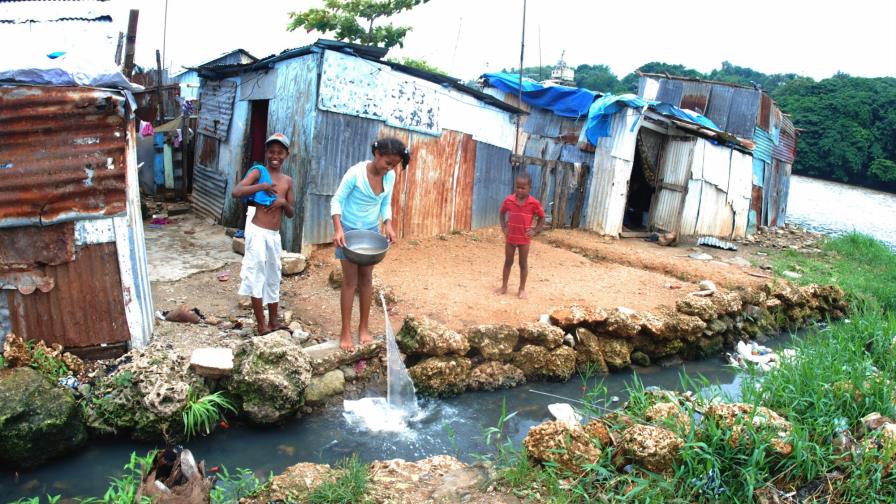
    The persistence of dirt-floor dwellings continues to symbolize the profound vulnerability confronting families entrenched in extreme poverty across the Dominican Republic. These substandard living conditions, characterized by pervasive dust and unhygienic environments, pose significant health risks to inhabitants. Compounding these dangers, the frequently inadequate construction materials offer minimal protection against severe weather events and natural disasters.

    In a landmark policy decision, the Dominican Government identified the elimination of dirt floors among fifty critical initiatives during its inaugural Council of Ministers session on January 11. This comprehensive poverty alleviation strategy simultaneously targets the phase-out of traditional wood and charcoal stoves, addressing multiple dimensions of housing insecurity.

    According to the most recent 2022 National Population and Housing Census, the scale of this challenge has been precisely quantified. Among the nation’s 3,694,060 occupied dwellings, 69,620 residences (1.9%) still maintain dirt floors—with 25,366 located in urban zones and 44,254 in rural communities.

    Geographic distribution reveals surprising patterns: despite rapid urbanization, Santo Domingo Province records the highest concentration with 11,409 dirt-floor homes. This exceeds the figures for San Juan (6,010) and Azua (4,277). Conversely, Hermanas Mirabal (304), Santiago Rodríguez (402), and Samaná (649) demonstrate the most significant progress in eliminating these substandard conditions.

    Historical comparison with the 2002 census data reveals substantial progress, with nationwide dirt-floor residences declining from 150,123 to current levels—representing a reduction of more than half over two decades.

    A multi-sector approach has emerged to accelerate this transformation. Since 2020, the Ministry of Housing and Buildings has implemented the “Change of Dirt Floor for Cement Floor” program, successfully converting 13,905 homes between 2021 and 2024. Simultaneously, humanitarian organization Habitat for Humanity contributed to replacing 530 dirt floors with polished cement surfaces in the latter half of 2023, with ambitious plans to address 1,888 additional households throughout 2024.

  • Banks DIH Holdings Inc to appeal High Court injunction on capping share capital, voting rights

    Banks DIH Holdings Inc to appeal High Court injunction on capping share capital, voting rights

    In a significant corporate governance development, Banks DIH Holdings Inc. has announced its intention to appeal a High Court injunction that prevented the implementation of a controversial cap on shareholder voting rights. The ruling, issued on Friday, January 30, 2026, temporarily blocked the company from proceeding with amendments that would limit any single entity’s voting power to 15% of total shares, regardless of their actual shareholding percentage.

    Company Chairman and Managing Director Clifford Reis addressed shareholders during Saturday’s Annual General Meeting at Thirst Park, East Bank Demerara, confirming the company’s compliance with the court order while simultaneously preparing an appeal. ‘As a law-abiding and responsible corporate citizen, we will comply with the judge’s order. However, the company proposes to appeal this matter to the Full Court for the discharge of this injunction,’ Reis declared, flanked by legal counsel.

    The legal challenge was initiated by stock brokerages Guyana Americas Merchant Bank Inc and Beharry Stockbrokers Limited. Reis emphasized that Guyana Americas Merchant Bank does not currently hold shareholder status in Banks DIH Holdings, having missed the registration cutoff for the AGM.

    The proposed Amendment to By-Law Article 8 represents a substantial shift in corporate governance policy. It would establish a strict 15% ceiling on voting rights, even for shareholders possessing larger stakes. The amendment broadly defines ‘person’ to include corporate entities, partnerships, trusts, and any coordinated groups acting in concert. Should any entity exceed this threshold, their excess votes would be rendered invalid during shareholder meetings.

    Banks DIH Holdings has raised procedural objections to the injunction process, claiming Corporate Secretary Kavorn Kyte-Williams was denied the opportunity to file an opposing affidavit. The company further contends that Justice Sandil Kissoon’s judgment referenced non-existent ‘Articles of Association’ rather than the actual governing documents—Articles of Incorporation and By-Laws—fundamentally undermining the legal basis of the ruling.

    Concurrently, Reis unveiled an ambitious initiative to expand shareholder participation, setting a target of 20,000 individual shareholders—a nearly 200% increase from current levels. ‘We want to see 20,000 small shareholders in this company—drivers, service workers, farmers, teachers, plant operators,’ he stated, distributing enrollment forms to attendees.

    The proposed amendment includes provisions for appointing a Special Registrar to monitor compliance and enforce disclosure requirements aligned with Section 115 of Guyana’s Securities Industry Act. The outcome of the appeal will significantly influence corporate governance structures and shareholder democracy within one of Guyana’s prominent publicly traded companies.

  • India AI  ziet Suriname als strategische partner in AI-ontwikkeling Global South

    India AI ziet Suriname als strategische partner in AI-ontwikkeling Global South

    Suriname stands at the forefront of an emerging technological partnership that could redefine its digital future, as India actively cultivates alliances with Global South nations to advance human-centric artificial intelligence frameworks. This strategic positioning comes ahead of the landmark India–AI Impact Summit 2026, scheduled for February 16-20 in New Delhi—the first global AI convening specifically focused on the Global South’s priorities.

    The summit represents a significant pivot in international AI discourse, shifting emphasis from purely safety-oriented discussions toward practical implementation, sustainable development, and measurable societal benefits. Core themes include ‘AI for All’ initiatives, female leadership in technology (‘AI by Her’), and youth-driven innovation ecosystems, collectively aiming to foster responsible and inclusive AI development.

    India’s relevance to Suriname stems from its distinctive approach to technological democratization. Unlike Western tech giants that typically operate closed systems and data monopolies, India has championed open-source AI models, data sovereignty, and affordable technological solutions. The nation now boasts approximately 16% of global AI talent and hosts the world’s fastest-growing community of AI developers, creating technologies specifically designed to function on low-cost devices with limited or unstable internet connectivity—conditions familiar to many Surinamese communities.

    This collaboration builds upon existing bilateral agreements, including a 2023 Memorandum of Understanding covering digital infrastructure and technological development. India’s proven digital platforms—such as the Aadhaar identity system and UPI payment network—offer tangible models for inclusive digitization that Suriname could enhance with AI integration. According to Indian Ambassador Subhash Gupta, this could translate to improved governance efficiency, enhanced public services, and greater financial inclusion.

    The partnership extends beyond government systems to address Suriname’s economic needs. As artificial intelligence disrupts traditional Business Process Outsourcing (BPO) sectors worldwide, India’s experience in retraining millions of workers for AI-driven roles—including data annotation, system monitoring, and quality control—could help Suriname future-proof its labor market. Additionally, Indian AI applications show particular promise for Suriname in agriculture (soil and pest analysis), healthcare delivery, judicial systems, climate services, disaster preparedness, education, and the emerging oil and gas sector.

    India’s Bhashini project, focusing on AI-powered multilingual translation, holds special significance for linguistically diverse Suriname, offering tools to bridge communication gaps across its multicultural society.

    Through participation in the New Delhi summit, Suriname gains not only access to cutting-edge technology and expertise but also a voice in shaping international AI ethics, regulatory frameworks, and responsible implementation guidelines. Ambassador Gupta emphasizes that this moment represents a critical strategic opportunity for Suriname to position itself not merely as an adopter of technology, but as an active co-creator of AI solutions that balance economic advancement with social inclusion.

  • Technology : Commissioning of technological tools at the service of education

    Technology : Commissioning of technological tools at the service of education

    In a significant stride toward educational modernization, Haiti’s North-East Department has launched a comprehensive digital transformation initiative aimed at revolutionizing school administration and learning outcomes. On January 30, 2026, Luckner Mompremier, Departmental Director of Education for the North-East (DDE-NE), unveiled three groundbreaking technological platforms during a press conference with educational stakeholders.

    The innovative suite comprises SCAPPED, a mobile application for attendance tracking and educational progress monitoring; an Intelligent Assistance System serving as a 24/7 digital concierge for the educational community; and enhanced SIGEEE capabilities for real-time student and teacher management. These tools represent a concerted effort to bridge technological gaps in regions with connectivity challenges while promoting administrative transparency.

    SCAPPED’s offline functionality enables reliable staff presence verification and data collection in low-connectivity areas, ensuring uninterrupted administrative oversight. The Intelligent Assistant provides instant, around-the-clock support for teachers, principals, parents, and partners seeking remote communication with the DDE-NE. SIGEEE’s upgraded features empower school directors with real-time monitoring capabilities including attendance management, academic record consultation, and student transfer processing.

    During the presentation, educators expressed both enthusiasm and practical concerns regarding implementation. Director Mompremier addressed these by announcing comprehensive training programs to facilitate seamless technology integration. The initiative marks a pivotal moment in Haiti’s educational development, demonstrating how targeted technological solutions can enhance governance, strengthen communication channels, and ultimately improve educational quality in challenging environments.

  • These are the nine provinces where there are 10 homicides per 100,000 inhabitants

    These are the nine provinces where there are 10 homicides per 100,000 inhabitants

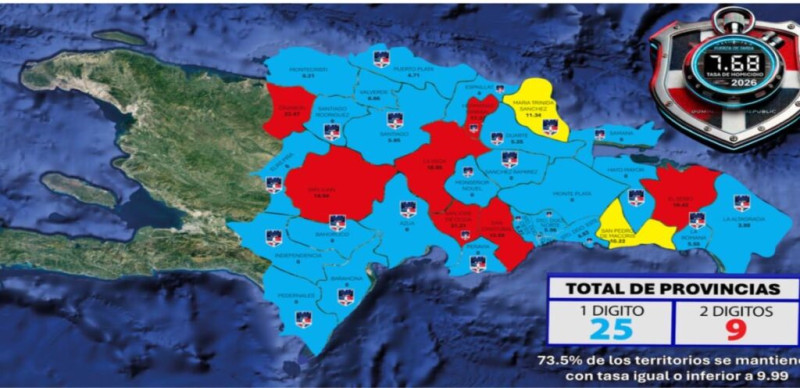
    The Dominican Republic’s National Police, through its Joint Task Force, has released its 132nd weekly crime statistics report revealing a complex national security landscape as of January 23, 2026. While approximately 15 provinces recorded zero homicides throughout January, nine demarcations remain classified in the high-risk ‘red’ category due to exceeding 10 homicides per 100,000 inhabitants.

    The comprehensive data visualization indicates that 25 provinces maintain a homicide rate of 7.68 (approximately eight) per 100,000 inhabitants. However, seven specific provinces—El Seibo, San Cristóbal, San José de Ocoa, La Vega, Salcedo, San Juan, and Dajabón—show concerning double-digit rates approaching 10 homicides per 100,000 residents according to monthly and accumulated reports.

    Two additional provinces, San Pedro de Macorís and María Trinidad Sánchez, appear in yellow on the official crime map, though the report’s accompanying statement did not clarify the specific significance of this color designation.

    The most encouraging finding emerges from longitudinal analysis: January 2026 demonstrates a 0.74% reduction in homicides compared to the same period over the previous four years. The statistical trend reveals a consistent downward trajectory, with rates declining from 11.59 in 2023 to 11.48 in 2024, then significantly dropping to 8.42 in 2025 before reaching the current 7.68 per 100,000 inhabitants in early 2026.

  • Donte Hunkins Recaptured

    Donte Hunkins Recaptured

    ST. JOHN’S, ANTIGUA AND BARBUDA – In a significant breakthrough, the Royal Police Force of Antigua and Barbuda has successfully recaptured fugitive Donte Hunkins, marking the conclusion of an extensive month-long search operation. The apprehension occurred on Saturday, January 31, 2026, when law enforcement officers located Hunkins hiding within an abandoned structure in the Whenner Road district.

    Hunkins, who had previously escaped from lawful custody, was taken into police custody without incident. Authorities confirmed he is currently cooperating with ongoing investigations related to fraud charges alongside the additional serious charge of escaping lawful custody.

    In a related development, officers discovered a 17-year-old female at the same location during the operation. She has likewise been detained as part of the continuing investigation, though her specific involvement remains under examination by investigators.

    The Police Administration issued an official statement expressing profound gratitude to community members for their vital assistance throughout the investigation. Public cooperation proved instrumental in generating actionable intelligence that ultimately led to the successful location and capture of the suspect, demonstrating effective collaboration between law enforcement and citizens.

    This case highlights ongoing efforts by Antiguan and Barbudan authorities to maintain public safety and judicial integrity, particularly concerning individuals who attempt to evade the legal system. The successful resolution of this manhunt reinforces the importance of community-police partnerships in addressing criminal activities.

  • Justice : Bar Association President Patrick Pierre-Louis asks the CPT to be held accountable

    Justice : Bar Association President Patrick Pierre-Louis asks the CPT to be held accountable

    In a strongly worded official statement dated January 28, 2026, the Port-au-Prince Bar Association has issued a stark condemnation of Haiti’s transitional leadership. Under the presidency of Patrick Pierre-Louis, the legal body has called for immediate accountability from members of the Presidential Transitional Council, citing catastrophic failures in strengthening the nation’s justice system during 19 months of exceptional transitional governance.

    The Association’s declaration highlights multiple systemic failures, particularly emphasizing the unresolved assassination of President Monferrier Dorval after sixty-five months of investigation. The statement further condemns the absence of effective judicial and security policies to combat terrorist acts perpetrated by armed gangs against vulnerable populations.

    Expressing profound concern about the deterioration of rule of law institutions, the Bar Association warned of impending crises within the criminal justice system. These deficiencies are expected to manifest when addressing numerous legal cases involving investigations, judicial decisions, and enforcement of judgments related to offenses committed during the transition period.

    The statement specifically references the exhaustion of the April 3, 2024 Political Agreement by the February 7, 2026 deadline, noting the grave dangers this situation poses to governmental structures and national sovereignty. The Association expressed outrage at public displays of petty squabbles among highest state authorities, which they characterize as being driven by clan or individual biases rather than national concerns.

    Despite these criticisms, the Bar Association emphasized the necessity of preserving general interest through constructive dialogue among the nation’s vital forces. The statement serves as both a reminder of the Political Agreement that provided normative basis for the Council’s legitimacy and an invitation for leadership to account for their governance exercises, enabling the nation to learn from this critical transitional experience.