博客

  • Jeremy Floyd, 19, Remanded After Guilty Plea in Modified Flare Gun Case

    Jeremy Floyd, 19, Remanded After Guilty Plea in Modified Flare Gun Case

    In a significant courtroom development this week, 19-year-old Jeremy Floyd of George Street remains in custody after pleading guilty to a serious weapons violation, while three other defendants saw their charges abruptly dismissed. The case stems from a December 27th police intervention during a routine mobile patrol in the island’s western district.

    Appearing before Acting Chief Magistrate Ngaio Emanuel, Floyd admitted to charges of possessing a modified flare gun—an item classified as a prohibited firearm under local statutes due to its potential conversion into a live-round discharging weapon. Law enforcement officials reported discovering the altered device concealed beneath a seat of a silver Honda Fit vehicle during a traffic stop.

    The judicial proceedings took a surprising turn when prosecutors withdrew all charges against co-accused Niah Joseph, 19; Devontia Summer, 21; and Duran Benjamin, 21. The three were subsequently released from custody despite initially facing identical weapons allegations following the joint arrest.

    Legal experts note that modified flare guns represent growing concerns for law enforcement agencies, as such devices can be potentially reconfigured to fire conventional ammunition, posing significant public safety risks. The court has remanded Floyd until January 5th, when sentencing deliberations are scheduled to occur. The contrasting outcomes highlight both the judicial system’s emphasis on individual accountability and prosecutorial discretion in determining charge viability based on evidentiary considerations.

  • From Elite Military Service to Global Business Vision: The Journey of Alfonso Magaña

    From Elite Military Service to Global Business Vision: The Journey of Alfonso Magaña

    A remarkable transformation from military excellence to business leadership is unfolding in Belize through the journey of Alfonso Magaña, whose elite Special Forces background now fuels one of the nation’s most dynamic luxury real estate ventures.

    Magaña’s path to entrepreneurship began with one of Belize’s most rigorous selection processes. Of approximately 40 candidates entering the Belize Defence Force officer selection, only three succeeded—Magaña among them. His military career became a testament to exceptional performance, ranking first academically and across multiple performance metrics during intensive recruit training that tested physical endurance, mental fortitude, and leadership capabilities.

    His distinguished service earned him placement at the prestigious Royal Military Academy Sandhurst, where he trained alongside international officers and further honed strategic thinking and adaptive leadership skills. Upon returning to Belize, Magaña joined the elite Belize Special Forces, spending approximately one year operating in high-stakes environments that demanded precise judgment and absolute accountability.

    The transition to civilian life marked not an abandonment of military principles but their strategic application. In 2025, Magaña founded Alpha Real Estate, leveraging the same discipline, risk assessment methodologies, and execution excellence that defined his military career. The company has rapidly emerged as a dominant force in Belize’s luxury property market, specializing in premium residential, commercial, and resort properties while also facilitating large-scale development projects.

    Beyond domestic operations, Alpha Real Estate now represents high-value Belizean assets in international markets, positioning the country within global investment conversations. Magaña attributes his business success directly to military values: “My background taught me that results come from discipline and clarity under pressure. Whether in the military or in business, excellence is never accidental.”

    His journey represents a growing trend of elite military professionals transitioning their leadership skills to the business sector, demonstrating how specialized training in high-pressure environments can create competitive advantages in civilian entrepreneurship. The company continues to expand with a focus on global competitiveness while maintaining roots in Belizean leadership standards and trusted execution.

  • Public Appeal Launched to Help Beloved Sports Figure Fight Cancer

    Public Appeal Launched to Help Beloved Sports Figure Fight Cancer

    A remarkable display of community solidarity has emerged in Bolans as residents mobilize to support Judy Thomas-Ward, a 43-year-old public servant facing a critical health crisis. The urgent fundraising initiative aims to secure specialized cancer treatment abroad that is unavailable locally.

    Thomas-Ward, a dedicated employee at the Ministry of Labour, requires advanced medical care in Colombia following her cancer diagnosis. The comprehensive treatment package, including medical procedures, travel arrangements, and accommodation, carries an estimated price tag of $85,000. Organizers have identified an immediate need for $40,000 to cover initial medical expenses during her first four-month treatment phase.

    Beyond her civil service role, Thomas-Ward has made substantial contributions to national sports as both a former youth and senior national football player, certified referee, softball athlete, and executive member of the Football Referees Association. Her athletic legacy and community involvement have inspired the widespread support campaign.

    The mother of five children now faces the dual challenge of battling cancer while ensuring her family’s wellbeing. Supporters emphasize that successful treatment would not only restore her health but also enable her to continue her parenting responsibilities and community service.

    Donation channels have been established through cheques payable to the NPMT Community League. Additional information regarding contribution methods is available through dedicated contact numbers: 780-4816, 780-8099, 780-0929, or 771-4727.

    Campaign organizers are making impassioned appeals to individual donors, corporate entities, and diaspora members, emphasizing that each contribution directly impacts Thomas-Ward’s access to life-saving medical intervention. The community’s collective effort demonstrates the powerful role of social support in addressing healthcare accessibility challenges.

  • OP-ED: Our children deserve better – The case for education reform in CARICOM

    OP-ED: Our children deserve better – The case for education reform in CARICOM

    The Caribbean educational landscape is confronting a profound crisis, marked by persistently declining academic outcomes and systemic governance failures. Recent data from the 2024 Caribbean Examinations Council (CXC) results reveal a startling reality: merely 4.9% of 200,000 students achieved passes in five or more CSEC subjects, including essential Mathematics and English, while the regional Mathematics pass rate stood at a dismal 36%. These figures, showing negligible improvement into 2025, underscore a deepening regional learning emergency that threatens both individual futures and broader economic competitiveness.

    Structural deficiencies in primary education foundations, curriculum alignment, instructional quality, and assessment reliability have been exposed as root causes. Socioeconomic disparities continue to disproportionately shape student achievement, uniting parents, educators, and learners in demanding meaningful accountability from regional institutions.

    In April 2025, the CXC initiated a strategic repositioning aimed at modernizing its governance and expanding stakeholder representation—a move widely acknowledged as necessary yet long overdue. However, the proposed framework limits parental influence to Parent-Teacher Association (PTA) delegates, failing to incorporate the region’s full diversity of parental voices. Genuine accountability, stakeholders argue, requires broad, independent, and empowered parental participation, not merely symbolic representation.

    Persistent operational challenges further erode trust in the examination body. Throughout 2025, reports surfaced of grading anomalies, examination paper errors, aggressive pushes for electronic testing despite inadequate ICT infrastructure, and opaque grade review processes. For students whose futures hinge on these results, such issues are life-altering. The consistent difficulty in obtaining timely, substantive responses from CXC has widened a critical trust gap, highlighting significant deficiencies in the fundamental principles of exam reliability, validity, and fairness.

    The region’s response to past critiques remains shrouded in opacity. Key recommendations from the 2020 Independent Review Team (IRT), convened after widespread public outcry over grading and moderation processes, have never been publicly accounted for. Similarly, a 2021 UNICEF call to action—urging addressed anxieties over exam fairness, transparency, and appeals—remains largely unanswered four years later, signaling a failure to implement sustained, systemic reform.

    International partners have amplified the alarm. World Bank Director Lilia Burunciuc emphasized in 2025 that low numeracy and literacy proficiency directly threaten the Caribbean’s long-term economic resilience, positioning educational quality as a core development imperative.

    A critical, often overlooked dimension is the governance structure of CXC itself. As an institution of the Caribbean Community (CARICOM), it operates with a high degree of self-regulation, reporting ultimately to regional Heads of Government. This arrangement, lacking robust external oversight and independent accountability mechanisms, is increasingly seen as the root of unresolved challenges.

    Amid the crisis, 2025 emerged as a watershed year for parental advocacy. From direct presentations to CARICOM Heads of Government to central roles in symposia like the CDB’s CARICOM Education Symposium, parental partnership was officially recognized as indispensable. Barbados has led with tangible steps, appointing parents to National Curriculum Development Committees and involving them in discussions to amend the Education Act.

    Barbados’s ambitious educational transformation agenda aims to modernize curricula, strengthen teacher professionalization, and overhaul governance within five years. While the aspiration signals bold leadership, the scale of reform highlights the complexity of achieving such targets amid limited resources and deep-seated structural challenges.

    The collective call from parents, children, and teachers is not for perfection but for fairness, transparency, and respect. As the region looks to 2026, the mandate is clear: collaborative, transparent, and externally accountable reforms are essential to rebuild trust and reaffirm the commitment to the rights and futures of Caribbean children.


  • Old Year’s night bookings surge along the south coast

    Old Year’s night bookings surge along the south coast

    Coastal restaurants along Barbados’s southern shoreline are experiencing unprecedented reservation patterns for Old Year’s Night celebrations, with many establishments reporting complete sell-outs months ahead of the traditional holiday period. Industry professionals note a significant shift in booking behaviors and consumer preferences during this year’s festive season.

    At Champers Restaurant in Worthing, proprietor Chiryl Newman observes exceptionally robust demand that surpasses previous years’ performance metrics. ‘Our reservation system reached capacity considerably earlier than historical patterns would indicate,’ Newman disclosed to Barbados TODAY. ‘While we traditionally maintain full bookings, this year’s pace has been remarkably accelerated with patrons securing tables as early as July and August.’

    The tourism sector appears to be driving this anticipatory reservation trend, with international visitors accounting for the majority of advanced bookings. This contrasts with the more spontaneous dining patterns typically demonstrated by local residents.

    Buzo Osteria Italiana in Hastings mirrors this commercial success, with General Manager Danny Mansour reporting consistently strong performance throughout the entire holiday period. ‘The Christmas season demonstrated remarkable stability without the customary fluctuations between peak and off-peak periods,’ Mansour explained. ‘Our local clientele has maintained steady support while international visitors complement our business foundation.’

    The establishment has strategically opted to maintain its traditional à la carte service model rather than implementing special holiday menus, responding to customer preferences for authentic dining experiences over curated holiday offerings. Service will conclude at 9:00 PM to accommodate guests’ subsequent celebration plans.

    Conversely, Bubbas restaurant in Worthing has adopted an alternative operational strategy. Owner Adrian Jones has prioritized staff welfare over potential revenue generation, choosing to close early on New Year’s Eve to allow employees to participate in holiday celebrations. ‘Our team deserves opportunity to enjoy seasonal festivities after their dedicated service throughout the year,’ Jones affirmed.

    The locally-focused establishment reports sustained success through its community-oriented approach, with plans underway to commemorate three decades of operation in April 2026. Jones attributes this longevity to consistent local patronage and maintained service quality.

  • Trinidad and Tobago PM to make official visit in new year

    Trinidad and Tobago PM to make official visit in new year

    The Prime Minister of Trinidad and Tobago, Kamla Persad-Bissessar SC, is preparing for an official diplomatic visit to Grenada in early 2026, marking a significant milestone in bilateral energy cooperation between the Caribbean nations. While specific dates remain unconfirmed, Press Secretary Neila Ettienne acknowledged the planned visit following widespread speculation across social media platforms.

    The upcoming high-level engagement traces its origins to technical energy discussions that gained momentum throughout 2025. The potential visit was initially referenced during an October 2025 town hall meeting where Nazim Burke and members of Grenada’s oil and gas Technical Working Group provided progress updates on cross-border energy collaboration.

    Technical Consultant Geoscientist Helena Innis, representing Trinidadian expertise, revealed that Trinidad’s Energy Minister Dr. Roodal Moonilal had previously conducted an unofficial working visit to Grenada. During his August 23-24, 2025 mission, Dr. Moonilal engaged in high-level discussions with Grenadian Prime Minister Dickon Mitchell and other officials, expressing Trinidad and Tobago’s commitment to supporting Grenada’s hydrocarbon sector development.

    Innis elaborated that both nations have established a functional cooperation framework operationalized through a six-member steering committee with equal representation from both countries. The collaboration, formalized through a 2012 Memorandum of Understanding on energy development, encompasses technical cooperation and strategic marketing of Grenada’s natural gas resources through Trinidad and Tobago’s established energy infrastructure.

    The anticipated prime ministerial visit signifies the elevation of energy cooperation from technical working groups to the highest diplomatic levels, potentially unlocking new economic opportunities for both Caribbean neighbors while strengthening regional energy security.

  • Missing man traced safe

    Missing man traced safe

    Authorities in St Michael have successfully concluded a search operation for a missing individual from the Deacons area. Ricardo Antonio Hinds, a 25-year-old resident of Block 3B, Madison Terrace, who was reported missing on Monday, December 29, has been located and confirmed to be in good health. The local police department officially closed the case after verifying his safety and well-being. In a public statement, law enforcement officials extended their gratitude to both citizens and media outlets for their vital assistance and collaborative spirit throughout the investigation. The coordinated effort between the community and authorities demonstrates the effectiveness of public partnership in resolving such urgent matters, ultimately ensuring a positive outcome for all involved parties.

  • CIBC Caribbean delivers US$159.7 million profit

    CIBC Caribbean delivers US$159.7 million profit

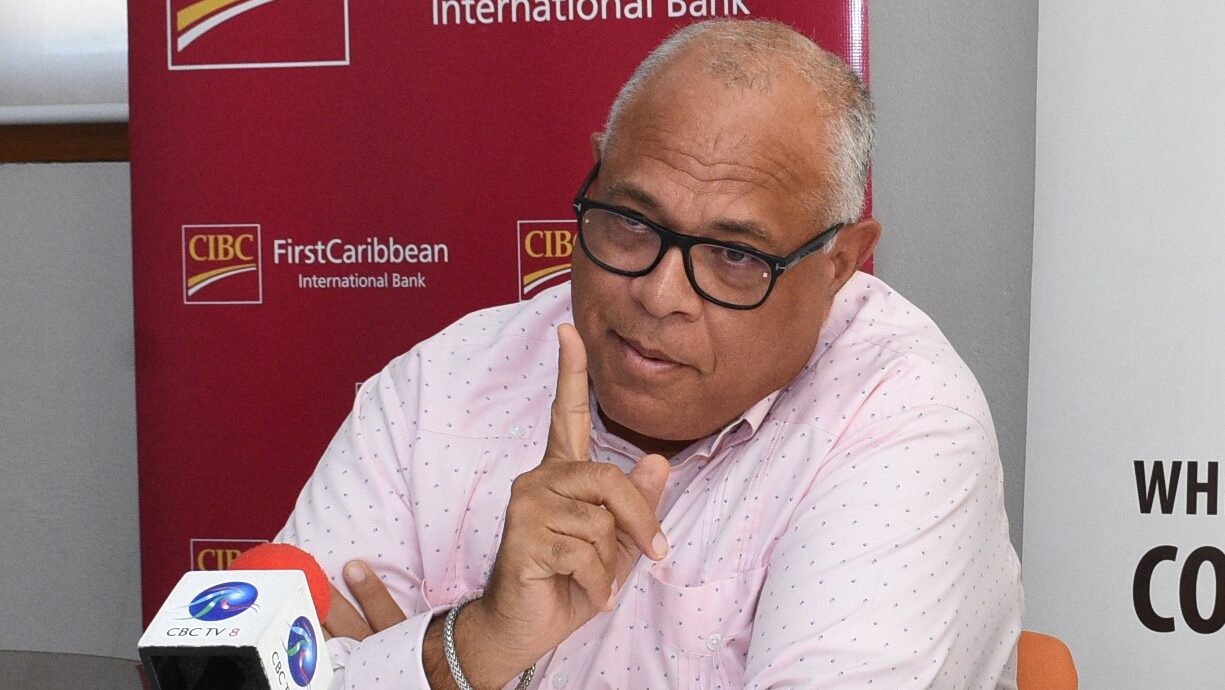
    CIBC Caribbean Bank Limited has demonstrated financial resilience by remaining profitable throughout 2025, despite absorbing a substantial loss from a non-core investment. The institution reported net earnings of US$159.7 million for the fiscal year concluding October 31, representing a decline from the previous year’s US$277.5 million.

    CEO Mark St Hill attributed the diminished figures to elevated credit costs, recently implemented tax regulations, and an exceptional investment loss. The bank’s headline performance was significantly affected by atypical financial elements, including a US$56.2 million fair value depreciation on a non-core investment, partially mitigated by a US$2.4 million net gain from previously announced divestitures.

    When excluding these extraordinary items, the bank’s adjusted net income reached US$213.5 million, compared to US$285.2 million in 2024. This underlying performance was primarily pressured by increased provisions for credit losses and heightened income taxes resulting from the Bahamas’ adoption of the Global Minimum Tax Framework.

    Despite these financial headwinds, CIBC Caribbean successfully expanded its lending operations across the region. The bank’s client-centric strategy, supported by a robust capital foundation, facilitated the development of its largest performing loan portfolio in history. This achievement enabled the institution to maintain solid core operational performance while managing specific credit and operational challenges.

    The broader Caribbean economic landscape witnessed moderated expansion in 2025, with tourism growth decelerating across several markets. Inflationary pressures generally receded alongside declining commodity prices, while fiscal conditions improved in certain territories.

    Looking forward, the region faces persistent risks including evolving global trade policies, geopolitical tensions, and weather-related disruptions. Nevertheless, the regional outlook remains broadly stable entering 2026.

    Financially, strong loan portfolio growth effectively counterbalanced the negative impact of lower US interest rates on net interest income. Operating expenses increased by 6% (US$26 million) due to elevated personnel costs and continued investments in technological infrastructure and strategic initiatives.

    The bank reinforced its provision for credit losses, primarily driven by impaired securities and enhanced risk modeling methodologies. CIBC Caribbean maintained strong capital adequacy, with tier one and total capital ratios standing at 18.3% and 20.8% respectively at fiscal year-end. Reflecting this financial strength, the board authorized a quarterly dividend of US$0.0125 per share, payable January 15, 2026.

  • Petition calling for Nicki Minaj to be deported gathers over 50,000 signatures

    Petition calling for Nicki Minaj to be deported gathers over 50,000 signatures

    A controversial petition demanding the deportation of rapper Nicki Minaj to her birthplace of Trinidad and Tobago has rapidly accumulated over 50,000 signatures on Change.org. The campaign emerged following Minaj’s appearance at Turning Point USA’s AmericaFest, where she publicly endorsed former President Donald Trump and Vice President JD Vance while sharing the platform with prominent conservative figures.

    The petition specifically addresses U.S. government agencies including ICE, the FBI, and the White House, urging authorities to review Minaj’s residency status. It cites multiple grievances including her verbal attacks on The Carters (Beyoncé and Jay-Z), her marriage to registered sex offender Kenneth Petty, and allegations that she has intimidated her husband’s victims. The petition argues that ‘deporting Nicki Minaj back to her home country, Trinidad, seems the most viable solution to curtail her harmful actions’ and would ‘send a clear message that harassment and support of criminal activity will not be tolerated.’

    Many signatories have expressed concerns about Minaj’s apparent political pivot, which marks a significant departure from her previous advocacy for LGBTQ+ rights and racial justice. One signee commented on the petition’s platform about unequal treatment of immigrants, drawing parallels to their own family’s experiences with the immigration system.

    While the petition appears to contain satirical elements—the organizer identifies as ‘Pedonika Minaj’—it touches on factual aspects of Minaj’s immigration status. During a recent TikTok live session, Minaj confirmed she is not a U.S. citizen but holds a green card, while controversially suggesting she deserved honorary citizenship due to taxes paid.

    Legal experts emphasize that such petitions hold no binding authority and deportation proceedings against a long-term legal resident like Minaj would be highly improbable, particularly given her established residency since childhood. Despite its lack of legal standing, the campaign highlights the intense polarization surrounding celebrity political endorsements and the evolving expectations of artists in sociopolitical discourse.

  • U.S. Remittance Tax Set to Pinch Belizean Wallets

    U.S. Remittance Tax Set to Pinch Belizean Wallets

    A newly enacted U.S. legislative measure is poised to create significant financial pressure for numerous Belizean households reliant on international monetary support. Effective January 1, a uniform one-percent levy will be imposed on select outbound remittances from the United States, directly impacting transfers destined for Belize.

    This fiscal policy, embedded within President Trump’s comprehensive ‘One Big Beautiful Bill’ legislation, will have tangible consequences in Belize despite being implemented stateside. Remittances constitute an essential economic lifeline for thousands of Belizean families, frequently serving as their primary means of securing basic necessities.

    Financial service providers including Western Union and money order systems will transmit reduced amounts to recipients. These diminished transfers will inevitably affect household capacities to cover fundamental expenses including nutritional requirements, housing costs, educational expenditures, and healthcare services.

    The macroeconomic implications extend beyond individual families to Belize’s national economic landscape. Data from the Inter-American Development Bank reveals that Belize received approximately $173 million in remittances through November this year, with 84% originating from U.S. sources. The traditionally high-volume Christmas transfer period amplifies the potential impact of this taxation measure.

    While a one-percent reduction might appear negligible initially, its aggregate effect could generate substantial economic reverberations throughout Belize. Reduced household income typically correlates with decreased local consumer spending, potentially creating downstream effects on businesses and public services across the nation.