博客

  • Prime Minister Gaston Browne says he was forced to address allegations that reached the White House linking him to Venezuela’s Maduro

    Prime Minister Gaston Browne says he was forced to address allegations that reached the White House linking him to Venezuela’s Maduro

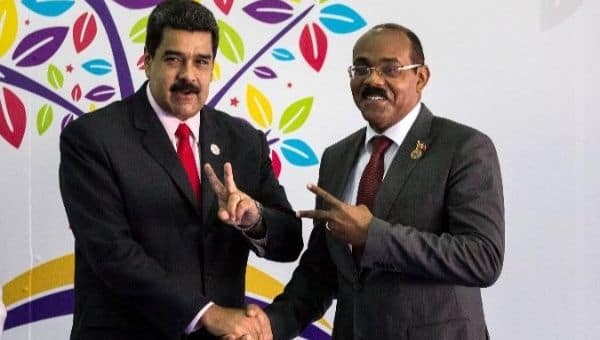
    Prime Minister Gaston Browne of Antigua and Barbuda has publicly refuted what he characterizes as entirely fabricated allegations of conducting business with Venezuelan President Nicolás Maduro’s administration, claims he says had circulated within the White House. The Caribbean leader disclosed that he learned of these accusations through a senior intermediary after submitting correspondence intended for U.S. President Donald Trump.

    Browne detailed the incident during his weekly appearance on Pointe FM’s ‘Browne and Browne Show,’ revealing that within minutes of delivering his letter, the intermediary contacted him regarding circulating information about alleged business dealings between Browne’s family and the Venezuelan government. The Prime Minister promptly issued additional written denials to counter what he labeled as politically motivated falsehoods.

    According to Browne, these allegations originate from coordinated efforts between Antiguan political opposition figures and U.S.-based attorneys involved in ongoing legal proceedings concerning the controversial sale of the Alfa Nero yacht. He categorically denied any involvement by himself or family members in illegal commodity trading with Venezuela, specifically mentioning gold and oil transactions.

    The Caribbean leader framed these allegations as part of a broader campaign to damage both his personal reputation and Antigua and Barbuda’s international standing. In response, Browne has retained legal counsel to pursue defamation claims against those responsible for spreading the allegations.

    Browne emphasized that his comments regarding Venezuela have consistently focused on maintaining regional stability rather than expressing support for any particular foreign leader. He stressed that his primary concern remains protecting the economic interests of small, tourism-dependent Caribbean nations like Antigua and Barbuda from the effects of regional instability.

  • At least eight respiratory viruses attacked the population in 2025.

    At least eight respiratory viruses attacked the population in 2025.

    SANTO DOMINGO, Dominican Republic — The Dominican Republic’s public health landscape for 2025 reveals a complex epidemiological picture with both concerning increases and significant improvements across various disease categories, according to the latest data from the Ministry of Public Health’s National Directorate of Epidemiology.

    While several pathogens remained under special epidemiological surveillance throughout the year—including respiratory viruses, dengue, malaria, leptospirosis, diphtheria, pertussis, tetanus in non-neonatal ages, and meningococcal disease—only three showed increased case numbers compared to 2024: leptospirosis, pertussis, and meningococcal disease. All other monitored conditions demonstrated declining incidence rates as the epidemiological year approached its conclusion.

    The nation’s sentinel surveillance system detected multiple circulating respiratory viruses throughout 2025, comprising influenza A(H1N1) pdm09, influenza A (H3N2), influenza B Victoria, adenovirus, SARS-CoV-2, respiratory syncytial virus (RSV), parainfluenza, and metapneumovirus. Notably, the final four weeks of the year witnessed a substantial surge in respiratory cases, primarily driven by RSV activity.

    According to the epidemiological bulletin for week 51 (through December 19, 2025), confirmed case numbers stood at: 325 dengue infections, 874 malaria cases, 182 leptospirosis incidents, 1 human rabies case, 12 diphtheria patients, 22 non-neonatal tetanus occurrences, 47 pertussis infections, and 34 meningococcal disease cases. The report also documented 174 maternal deaths and 1,789 infant fatalities.

    RSV demonstrated a distinctive seasonal pattern, with analysis revealing significant increased activity between epidemiological weeks 43 and 46, followed by a declining trend through week 50. Health authorities attribute this pattern to multiple factors including holiday population dynamics, weather conditions, and interactions among respiratory viruses.

    The Pan American Health Organization/World Health Organization (PAHO/WHO) simultaneously reported increased global circulation of influenza A(H3N2) subclade K virus (J.2.4.1), particularly in European and East Asian regions where it accounted for nearly half of sequences reported between May and November 2025. The international health body recommends strengthened genomic surveillance, maintained high vaccination coverage, and preparedness for potentially early or intense activity during the 2025-26 season.

    The Dominican Republic’s public health achievements in 2025 include zero cases of vaccine-preventable diseases such as measles and rubella, attributed to sustained vaccination campaigns and robust epidemiological surveillance. The country recorded no cholera cases (100% reduction), a 76% decrease in dengue cases, and a 17% reduction in malaria infections compared to 2024. Maternal mortality declined to 163 deaths from 170 in 2024, while infant mortality dropped 18.93% to 1,764 fatalities through week 51 compared to 2,176 during the same period last year.

  • PM Browne says Antigua could accept non-criminal deportees from the United States, with needed skills

    PM Browne says Antigua could accept non-criminal deportees from the United States, with needed skills

    In a significant diplomatic development, Antigua and Barbuda has articulated a nuanced immigration stance regarding the acceptance of certain deportees from the United States. Prime Minister Gaston Browne, during a recent appearance on the ‘Browne and Browne Show’ on Pointe FM, detailed the nation’s conditional openness to individuals being repatriated.

    The Prime Minister clarified that the twin-island nation is prepared to welcome deportees or refugees who, despite minor infractions, possess valuable skills that could contribute to the country’s development. This position, however, is strictly contingent upon the exclusion of individuals with serious criminal backgrounds. ‘If they have refugees, or deportees for that matter, who may be involved in minor matters but have skills that can help us, we gladly take them,’ Browne stated. He was unequivocal in adding, ‘we’re not taking the criminal refugees from the third country.’

    This policy framework is not a recent reaction but was formally communicated to U.S. authorities approximately ninety days prior to the latest U.S. visa proclamation. Browne emphasized his administration’s commitment to transparency, ensuring the public was informed of these high-level discussions. The dialogue culminated in a formal agreement between the two nations. A critical component of this pact is that it explicitly preserves Antigua and Barbuda’s sovereign authority to vet and approve all individuals on a case-by-case basis. Furthermore, it mandates intelligence sharing from U.S. authorities to facilitate informed decision-making.

    Prime Minister Browne framed the agreement as a testament to pragmatic international cooperation that safeguards national security and upholds the principles of sound governance. The arrangement demonstrates a balance between engaging with global partners on complex immigration issues and protecting the nation’s interests and sovereignty.

  • Training : The Royal Bahamas Defence Force trains Haitian coast guards

    Training : The Royal Bahamas Defence Force trains Haitian coast guards

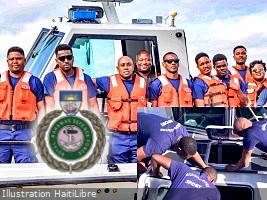
    In a significant regional security cooperation initiative, the Royal Bahamas Defence Force (RBDF) has concluded an extensive two-week training program for 20 members of the Haitian National Police Coast Guard. The capacity-building exercise, which concluded recently, represents a strategic partnership between the Caribbean nations aimed at enhancing maritime security capabilities.

    The comprehensive curriculum, developed and delivered by the RBDF’s Port Patrol Unit Engineering Section, encompassed both theoretical knowledge and practical skills essential for modern coast guard operations. Participants received intensive instruction in fundamental maritime disciplines including advanced navigation techniques, precision vessel handling, and complex docking maneuvers under various conditions.

    Beyond basic seamanship, the program incorporated critical safety and emergency response training covering navigational aids deployment, distress flare utilization protocols, and sophisticated search and rescue methodologies. A substantial portion of the curriculum focused on advanced mechanical systems, with Haitian personnel receiving hands-on training in diagnostic procedures for fuel systems, electrical circuits, and outboard motor ignition mechanisms.

    The technological component included instruction on digital diagnostic tools and innovative remote assistance practices, enabling future collaboration between Bahamian and Haitian mechanics through real-time communication platforms. RBDF engineers additionally provided targeted guidance on resolving persistent technical issues affecting the Haitian Coast Guard’s operational fleet.

    This training initiative occurs against the backdrop of Haiti’s ongoing security challenges and represents international efforts to strengthen the nation’s maritime law enforcement capabilities. The Haitian Coast Guard, as an integral division of the Haitian National Police, maintains responsibility for maritime security, law enforcement, and search and rescue operations across Haiti’s territorial waters.

  • 2026 World Cup : Over 150 million ticket requests in 15 days

    2026 World Cup : Over 150 million ticket requests in 15 days

    The 2026 FIFA World Cup, set to be co-hosted across the United States, Canada, and Mexico from June 11 to July 19, is generating unprecedented global interest alongside significant controversy over ticket accessibility. Recent data reveals overwhelming public demand that has far exceeded all previous sporting events.

    FIFA President Gianni Infantino announced at the World Sports Summit in Dubai that tournament organizers have received a staggering 150 million ticket requests within just 15 days of sales opening. This remarkable figure, averaging 10 million daily requests, represents a volume 30 times greater than the actual ticket availability and surpasses the cumulative attendance of all 22 previous World Cup tournaments since 1930.

    The massive demand has highlighted serious concerns about pricing structure and accessibility. Despite initial promises from FIFA leadership that the 2026 event would be the ‘most inclusive’ World Cup ever organized, published ticket prices have drawn widespread criticism from supporter associations worldwide.

    The pricing structure divides tickets into four categories based on seating location, with Category 1 representing the most premium lower-tier seats and Category 4 comprising the most affordable upper-tier options. In response to international backlash over what critics have termed ‘astronomical’ pricing, FIFA introduced a new Supporter Entry category priced at $60 per match.

    However, this accessibility measure appears largely symbolic. The discounted tickets represent only 1.6% of the 8% allocation reserved for participating national federations, translating to approximately 1,000 $60 tickets per match to be divided equally between competing teams’ supporters. Distribution of these limited affordable tickets will be managed by individual national associations without standardized oversight procedures.

    The discrepancy between massive public demand and limited affordable access has created tension surrounding what promises to be the largest World Cup in history, featuring 48 teams competing across 104 matches in state-of-the-art venues across North America.

  • Cuba strongly condemns the cowardly aggression of the United States against Venezuela and expresses its absolute support for that sister nation

    Cuba strongly condemns the cowardly aggression of the United States against Venezuela and expresses its absolute support for that sister nation

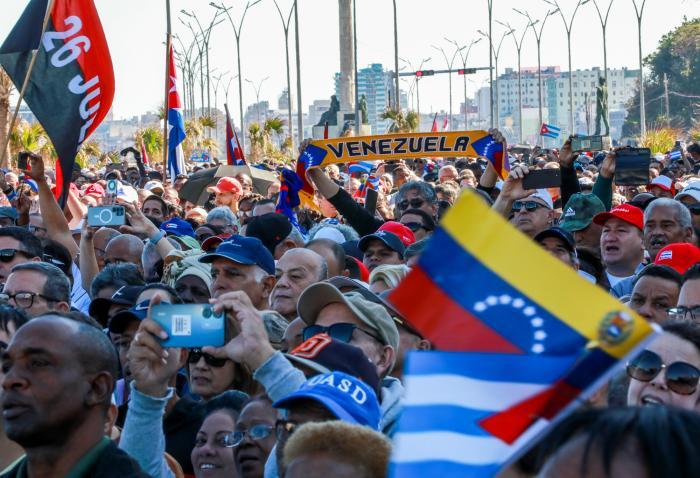
    In a strongly worded official statement released on January 3, 2026, the Cuban Revolutionary Government has issued a comprehensive condemnation of what it describes as “cowardly U.S. military aggression” against Venezuela. The Havana administration declared its absolute solidarity with the Bolivarian Republic and its constitutional government while demanding immediate proof of life for President Nicolás Maduro Moros and his wife Cilia Flores, whom it claims have been captured by American forces.

    The Cuban government characterized the operation as a blatant violation of international law and the United Nations Charter, representing a dangerous escalation of Washington’s prolonged campaign against Venezuela. According to the statement, this aggression constitutes part of a broader strategy rooted in the Monroe Doctrine, aimed at establishing U.S. hegemony throughout Latin America and securing unrestricted access to the region’s natural resources.

    Havana’s declaration endorsed earlier demands by Venezuelan Executive Vice President Delcy Rodríguez for verification of the detained leaders’ wellbeing. The statement further emphasized Venezuela’s peaceful nature, noting that the South American nation has not engaged in aggression against the United States or any other country.

    The Cuban government placed full responsibility for casualties and material damage on the Trump administration, specifically naming the President and his Secretary of State, along with what it described as “aggressive elements and enemies of Latin America and the Caribbean” who have gained political influence in the United States.

    Recalling the 2014 Proclamation of Latin America and the Caribbean as a Zone of Peace, signed unanimously by regional governments in Havana, the statement warned that this aspiration is now under direct attack. The Revolutionary Government called upon global governments, parliaments, social movements, and citizens to condemn the operation, which it labeled an act of “state terrorism” threatening international peace and security.

    The declaration concluded with a rallying cry of “Homeland or Death” and expressed Cuba’s willingness to “give, as we did for Cuba, even our own blood” for Venezuela and its people, signaling Havana’s unwavering commitment to regional solidarity against perceived American imperialism.

  • Brianna Genao Rosario, a young girl, has been missing since December 31st.

    Brianna Genao Rosario, a young girl, has been missing since December 31st.

    A profound sense of anguish has gripped the community of Barrero in the Dominican Republic following the mysterious disappearance of Brianna Genao Rosario. The young girl was last seen on December 31st at approximately 5:00 p.m., triggering an extensive multi-agency search operation that has now entered a critical phase with intensified efforts.

    Search and rescue teams comprising National Police officers, Civil Defense personnel, Fire Department specialists, and numerous community volunteers have launched a comprehensive ground operation across multiple locations within the municipality of Imbert. The collective mission continues to be driven by the unwavering hope of locating Brianna alive and reuniting her with her family.

    Authorities have released a crucial identifying detail: at the time of her disappearance, Brianna was wearing distinctive pink clothing. This information has been widely circulated to assist the public in recognizing the missing minor.

    Law enforcement officials have urgently appealed to citizens to report any potentially relevant information immediately through the dedicated hotline at 829-754-0126 or by contacting the nearest police station. Even seemingly insignificant details could prove vital to the investigation.

    The emotional toll on Brianna’s family was palpable as her grandfather made a heartfelt public plea: ‘I implore our community to continue helping us find my granddaughter. We cannot find peace until she is safely home with us.’ His words captured the family’s desperate determination.

    Echoing this sentiment, Brianna’s mother delivered an emotional appeal: ‘To anyone who might have information about my daughter’s whereabouts, I beg you to come forward. Regardless of circumstances, we need to bring her home. No child should be separated from their family like this.’

    The search operation represents a remarkable collaboration between official agencies and local residents, all united in their determination to bring closure to this distressing case that has captured national attention.

  • Captured Venezuelan leader Maduro arrives in New York with his wife

    Captured Venezuelan leader Maduro arrives in New York with his wife

    In a significant geopolitical development, prominent Venezuelan opposition leader Leopoldo López has arrived in New York City accompanied by his wife, Lilian Tintori. This arrival follows a dramatic series of events that culminated in his capture and subsequent release by the Venezuelan government of Nicolás Maduro.

    López, a central figure in the Venezuelan opposition movement and the founder of the Voluntad Popular party, had been a political prisoner for years before seeking refuge in the Spanish embassy in Caracas in 2019. His recent capture by Venezuelan authorities and the conditions of his release remain shrouded in intense diplomatic intrigue, with sources suggesting high-level negotiations involving international actors.

    His presence in the United States is anticipated to significantly reshape the dynamics of the Venezuelan opposition in exile. Analysts suggest his arrival could galvanize anti-Maduro efforts, potentially influencing U.S. foreign policy towards the Caracas regime. The move is seen by many as a strategic maneuver, possibly brokered to facilitate broader diplomatic talks or as a concession by the Maduro government under mounting international pressure. The long-term implications for Venezuela’s protracted political crisis are yet to be fully understood, but this event marks one of the most notable shifts in the political stalemate in recent years.

  • OAS roept op tot de-escalatie en respect voor internationaal recht

    OAS roept op tot de-escalatie en respect voor internationaal recht

    The Organization of American States (OAS) is intensifying diplomatic efforts to address Venezuela’s rapidly deteriorating political situation. Secretary General Albert Ramdin confirmed the regional body is closely monitoring developments and has engaged in high-level consultations with multiple member state governments.

    Ramdin revealed that while there is widespread concern across the Western Hemisphere regarding Venezuela’s crisis, OAS member states maintain divergent perspectives on appropriate responses. The secretary general emphasized that his office prioritizes facilitating a peaceful resolution that respects international law and the Inter-American legal framework. Fundamental principles include peaceful dispute resolution, human rights protection, and safeguarding civilian infrastructure.

    The OAS leadership asserts that Venezuela’s political future must reflect popular will through good governance practices. Ramdin stressed that existing institutional arrangements, particularly constitutional order, provide essential foundations for stability. He noted that sustainable stability and democratic legitimacy can only emerge through peaceful means, inclusive dialogue, and strengthened institutions.

    Preparing for coordinated regional action, Ramdin announced the convening of an OAS Permanent Council meeting. This gathering will enable member states to openly discuss recent developments and consider collective next steps. The secretary general confirmed the OAS secretariat stands ready to support de-escalation initiatives aimed at achieving a peaceful, democratic solution serving Venezuelan citizens’ interests.

    Ramdin issued a direct appeal to all Venezuelan stakeholders, urging unified and constructive participation in preserving peace, rule of law, and democratic coexistence.

  • Nieuwsmedia: Venezolaanse leider Maduro arriveert in New York

    Nieuwsmedia: Venezolaanse leider Maduro arriveert in New York

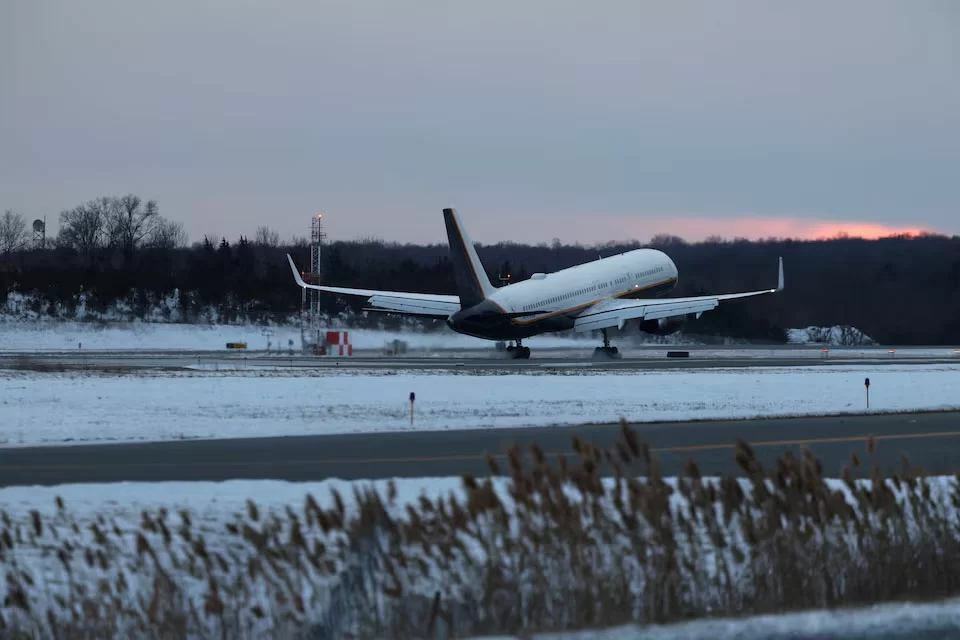
    In an unprecedented military operation marking the most aggressive U.S. regime change action since the 2003 Iraq invasion, Venezuelan President Nicolas Maduro was forcibly removed from power and transported to American soil on January 3, 2026. The dramatic nighttime arrest culminated with Maduro and his wife Cilia Flores landing at Stewart International Airport in Newburgh, New York, approximately 97 kilometers northwest of New York City.

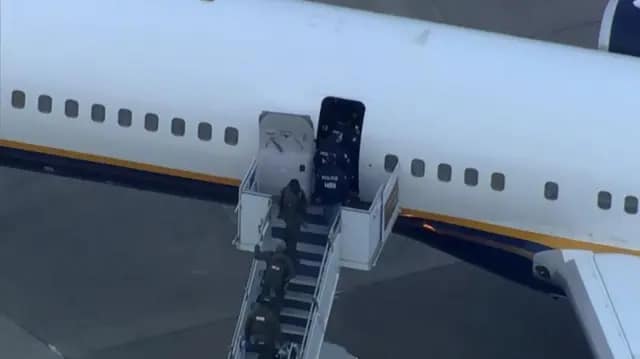
    Video footage captured the moment a aircraft carrying the Venezuelan leader touched down at the airbase, followed by FBI personnel in full tactical gear boarding the vessel. Major news networks including CNN, Fox News, and MS Now confirmed Maduro’s identity among those disembarking from the plane.

    The operation, which involved explosive disturbances rocking Venezuela’s capital in the early hours of Saturday, resulted in Maduro and Flores being transported via U.S. warship to face conspiracy to commit narcoterrorism charges at Manhattan’s federal courthouse. Legal experts note this extraordinary action surpasses even the most notable historical precedents of U.S. interventions against autocratic regimes in Panama and Iraq.

    President Donald Trump declared following the operation that the United States would temporarily “govern” Venezuela and leverage the nation’s substantial oil reserves for international sale. The Trump administration justified the military intervention—along with previous lethal attacks on vessels in the Caribbean Sea—as necessary measures to combat dangerous drug trafficking networks.

    The bold maneuver raises significant legal and diplomatic questions regarding the legitimacy of U.S. actions within its broader campaign against the South American nation, potentially setting new precedents for international power projection and regime change tactics.